HRM Report: Contemporary HR Practices in Tesco and Asda Retail
VerifiedAdded on 2019/12/28
|10
|3103
|141
Report
AI Summary
This report provides an in-depth analysis of human resource management (HRM) practices within the retail giants, Tesco and Asda. It delves into key HRM functions, including talent management, training and development, workforce planning, recruitment strategies, and reward systems. The report highlights how contemporary HRM practices positively impact the growth of these companies, focusing on attracting skilled employees, implementing effective training programs, and creating motivational reward systems. It examines the importance of job analysis, employee engagement, and the role of HRM in enhancing productivity and profitability. The report also covers the importance of workforce planning to ensure that these businesses have the right number of employees with the necessary skills. The report explores the strategies employed by Tesco and Asda to optimize their human capital and maintain a competitive edge in the retail market.

Managing the Human
Resource
Resource

Paraphrase This Document
Need a fresh take? Get an instant paraphrase of this document with our AI Paraphraser
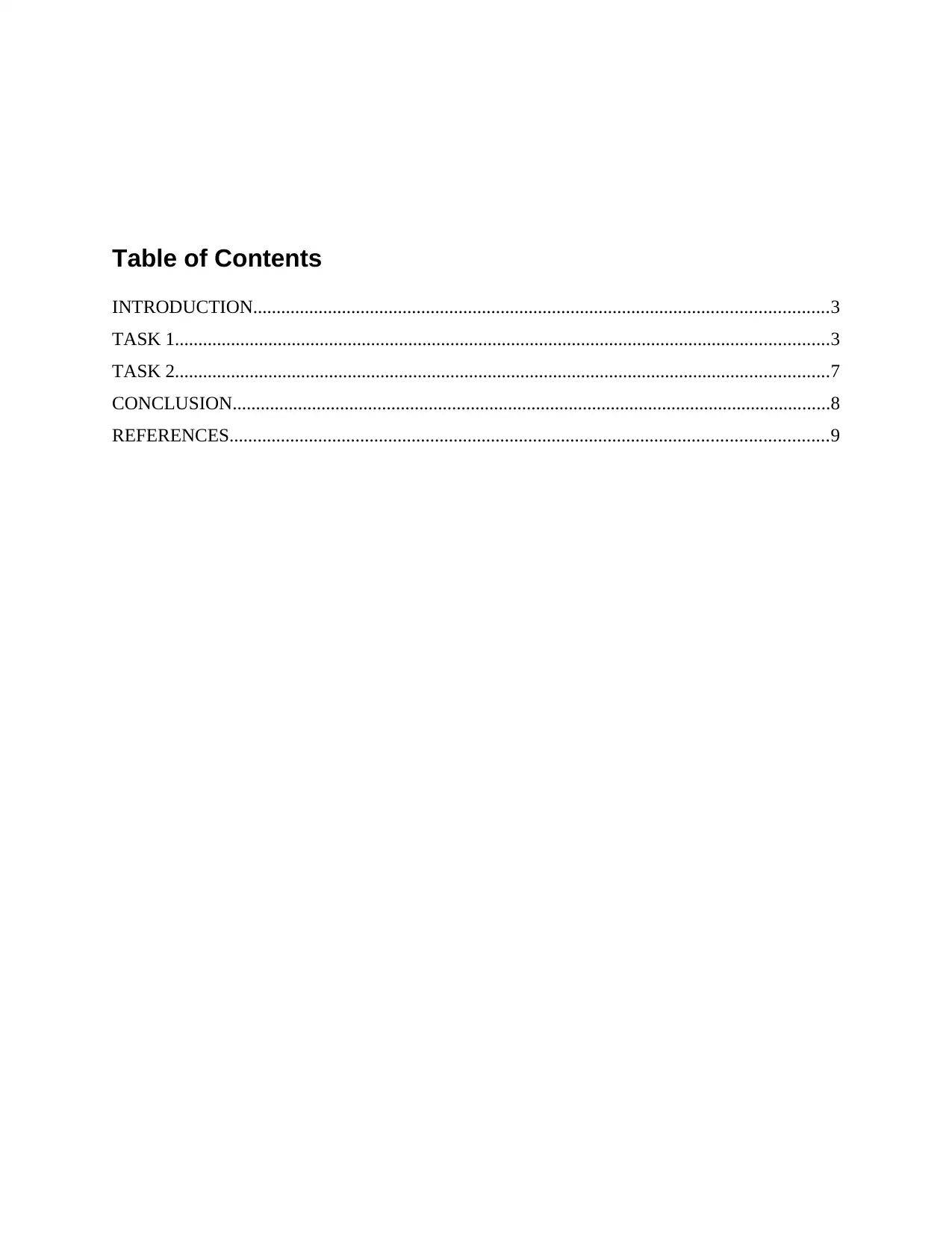
Table of Contents
INTRODUCTION...........................................................................................................................3
TASK 1............................................................................................................................................3
TASK 2............................................................................................................................................7
CONCLUSION................................................................................................................................8
REFERENCES................................................................................................................................9
INTRODUCTION...........................................................................................................................3
TASK 1............................................................................................................................................3
TASK 2............................................................................................................................................7
CONCLUSION................................................................................................................................8
REFERENCES................................................................................................................................9
INTRODUCTION
The human resource management can be simply defined as the process of hiring and
increasing the number of employees so that they are treated as an asset for the organisation
(Armstrong and Taylor 2014). The HRM involves the conduction of job analysis, plan the
personnel basic needs, recruitment of the right person for the job, orientation and training, the
management of wages, giving the benefits and incentives , evaluation of the performance,
resolution of the conflicts and the task of communication with all the workers at every level. The
present report is based on the human resource management. The report is explaining the roles of
human resource management in the Tesco and Asda that are doing the retail business of foods.
The HRM task to maintain the recruitment process of employees in the corporation very
effectively. The roles of HR is also covered in this report. The HR is proved to be very beneficial
for increasing the profit of the company.
TASK 1
The contemporary practices of HR positively impacts the growth of the Teso and Asda.
Some of the important practices are discussed below:
Talent management: The talent management can be seen as a skill of attracting the best
skilled employees for the development of the organisation. The new workers are
integrated and giving training so that they can effectively meet the business objectives of
the corporation (Boxall and Purcell, 2011). The enterprise that are involved in the
management of talent strategy are shifting the responsibility of the workers from the
human resources sector to every managers that are present in throughout the company.
The process of attracting and hiring the profit making employees is increasing day by
day among all of the firms of the UK and known as the war of the talent. The talent
management is also called the HCM that is Human Capital Management. To maintain the
process of managing the talent is performed by adopting the following ways:
Arranging meetings: The heads of the company should arrange the meeting of the
team members and the aims or objectives should be decided. For example the Tesco aims
is to develop the healthy and tasty food items so that the demand of the product increases.
The team members should focus on recruiting the skilled workers in this regard. They
should define a criteria for the new comers like the freshers should be comfortable in
doing the 24*8 hours job, they should posses an effective communication skills so that
The human resource management can be simply defined as the process of hiring and
increasing the number of employees so that they are treated as an asset for the organisation
(Armstrong and Taylor 2014). The HRM involves the conduction of job analysis, plan the
personnel basic needs, recruitment of the right person for the job, orientation and training, the
management of wages, giving the benefits and incentives , evaluation of the performance,
resolution of the conflicts and the task of communication with all the workers at every level. The
present report is based on the human resource management. The report is explaining the roles of
human resource management in the Tesco and Asda that are doing the retail business of foods.
The HRM task to maintain the recruitment process of employees in the corporation very
effectively. The roles of HR is also covered in this report. The HR is proved to be very beneficial
for increasing the profit of the company.
TASK 1
The contemporary practices of HR positively impacts the growth of the Teso and Asda.
Some of the important practices are discussed below:
Talent management: The talent management can be seen as a skill of attracting the best
skilled employees for the development of the organisation. The new workers are
integrated and giving training so that they can effectively meet the business objectives of
the corporation (Boxall and Purcell, 2011). The enterprise that are involved in the
management of talent strategy are shifting the responsibility of the workers from the
human resources sector to every managers that are present in throughout the company.
The process of attracting and hiring the profit making employees is increasing day by
day among all of the firms of the UK and known as the war of the talent. The talent
management is also called the HCM that is Human Capital Management. To maintain the
process of managing the talent is performed by adopting the following ways:
Arranging meetings: The heads of the company should arrange the meeting of the
team members and the aims or objectives should be decided. For example the Tesco aims
is to develop the healthy and tasty food items so that the demand of the product increases.
The team members should focus on recruiting the skilled workers in this regard. They
should define a criteria for the new comers like the freshers should be comfortable in
doing the 24*8 hours job, they should posses an effective communication skills so that
⊘ This is a preview!⊘
Do you want full access?
Subscribe today to unlock all pages.

Trusted by 1+ million students worldwide
they could communicate to their client easily, they must know the cooking well so that
they can prepare healthy food items, there should be polite nature of employees towards
their clients as well as their heads, etc. The members of the corporation should decide the
colleges where they have to conduct recruitment. After that they visit such colleges or
universities to hire the top most students of food and technology department and also the
students of Hotel management. The company should also conduct online interviews in
this regard.
Conducting surveys: The corporation should conduct the surveys to identify the demand
of the consumers. They should examine the life styles of the local peoples. The taste of
different age group must be recognized so that the productivity is done as their taste. The
teenagers likes most of junk foods like pizza, burger, chow-min, noodles, chocolates, etc.
On the other hand the elders ones that have age between 30 to 40 focus on the healthy
foods (Bratton and Gold, 2012). Hence the firms should develop their product as per
their choices. So that the company would gain benefits and their customers would
increases.
Making strategies: After taking the ideas of the consumers demand the manufacturing
plans should be develop. The plans may contain relevant information like what task is
assigned to which worker, from where the raw materials should purchased, the charges of
the transportation, packaging, etc. are decided in this task.
Implementing strategies and risk handing : The strategies that are developed in the
previous task is being implemented and a sample of the product is manufactured. If there
seen any demerits in the product then that is again created and their quality is tested by
the quality management team (Chelladurai and Kerwin, 2017).
Manufacturing & launching of the goods: Then the manufacturing of the food items is
carried on as per the sample product. After manufacturing the total costing and the
several taxes of the product is calculated. Then the corporation decides the maximum
retail price of the goods and launch this product in the market.
Training and development: The other practices of the human resource management is
training and development. The HRM regards this practise as a function that is related
with the activities of the organisation. The aim or goal of this task is improve the quality
of job performance of all the employees working in the corporation. The training and
they can prepare healthy food items, there should be polite nature of employees towards
their clients as well as their heads, etc. The members of the corporation should decide the
colleges where they have to conduct recruitment. After that they visit such colleges or
universities to hire the top most students of food and technology department and also the
students of Hotel management. The company should also conduct online interviews in
this regard.
Conducting surveys: The corporation should conduct the surveys to identify the demand
of the consumers. They should examine the life styles of the local peoples. The taste of
different age group must be recognized so that the productivity is done as their taste. The
teenagers likes most of junk foods like pizza, burger, chow-min, noodles, chocolates, etc.
On the other hand the elders ones that have age between 30 to 40 focus on the healthy
foods (Bratton and Gold, 2012). Hence the firms should develop their product as per
their choices. So that the company would gain benefits and their customers would
increases.
Making strategies: After taking the ideas of the consumers demand the manufacturing
plans should be develop. The plans may contain relevant information like what task is
assigned to which worker, from where the raw materials should purchased, the charges of
the transportation, packaging, etc. are decided in this task.
Implementing strategies and risk handing : The strategies that are developed in the
previous task is being implemented and a sample of the product is manufactured. If there
seen any demerits in the product then that is again created and their quality is tested by
the quality management team (Chelladurai and Kerwin, 2017).
Manufacturing & launching of the goods: Then the manufacturing of the food items is
carried on as per the sample product. After manufacturing the total costing and the
several taxes of the product is calculated. Then the corporation decides the maximum
retail price of the goods and launch this product in the market.
Training and development: The other practices of the human resource management is
training and development. The HRM regards this practise as a function that is related
with the activities of the organisation. The aim or goal of this task is improve the quality
of job performance of all the employees working in the corporation. The training and
Paraphrase This Document
Need a fresh take? Get an instant paraphrase of this document with our AI Paraphraser
development can be defined as a process of giving education to the employees which
includes the sharpening of the knowledge, the skills, the concepts, altering the attitudes
and make it positive towards the job. The aim of training is to insure that the newly
joined group can achieve more and more knowledge of their jobs so that there might any
issues in the future can be handled by them without the help of other workers.
As per the view point of Sparrow and et. al. (2016)talent management is very essentials
part of the industry. The head of the corporation have to hire talented persons so that their
profitability would increase. On the contrary the Armstrong (2011) says that it is not necessary
and treated as waste of money because the company needs not to hire fresher they can recruit
only experienced hold personalities.
There are three main activities that are performed in practices of training and development that
are listed below:
Training: This task of training is covered effectively by the Tesco and Asda as they
hired the freshers who have no knowledge of the corporate world. They are assigned to
work under some team leaders who will help them in learning new things or the daily
work of the corporation (Armstrong, 2011.). This training is given for a certain period of
time like 3 months or 6 months and the employees are paid according to that. The main
goal of this training is to make the workers more talented or passionate so that they can
develop the best quality product. This is proved to be very effective in increasing the turn
over of the company in future or upcoming days. This is very important because without
training the employees are not ready to do any type of job of enterprise. If they do so then
the product developed will be of extremely bad quality. So, training is very necessary
before hiring the freshers.
Education: The eduction is something different from training. The task of educating
people consists of different programs like giving new information to their employees
regarding the corporation that are not known by them (Huselid and Becker, 2011). The
education of manufacturing goods, communicating with the abroad clients, maintaining
discipline at the work place, etc. The workers should focus on these terms so that they
can successfully complete their training period and may be hired as team heads for the
next employees that are hired in future. Educating the freshers as well as skilled workers
is quite important as in this process they are taught new or advanced techniques to handle
includes the sharpening of the knowledge, the skills, the concepts, altering the attitudes
and make it positive towards the job. The aim of training is to insure that the newly
joined group can achieve more and more knowledge of their jobs so that there might any
issues in the future can be handled by them without the help of other workers.
As per the view point of Sparrow and et. al. (2016)talent management is very essentials
part of the industry. The head of the corporation have to hire talented persons so that their
profitability would increase. On the contrary the Armstrong (2011) says that it is not necessary
and treated as waste of money because the company needs not to hire fresher they can recruit
only experienced hold personalities.
There are three main activities that are performed in practices of training and development that
are listed below:
Training: This task of training is covered effectively by the Tesco and Asda as they
hired the freshers who have no knowledge of the corporate world. They are assigned to
work under some team leaders who will help them in learning new things or the daily
work of the corporation (Armstrong, 2011.). This training is given for a certain period of
time like 3 months or 6 months and the employees are paid according to that. The main
goal of this training is to make the workers more talented or passionate so that they can
develop the best quality product. This is proved to be very effective in increasing the turn
over of the company in future or upcoming days. This is very important because without
training the employees are not ready to do any type of job of enterprise. If they do so then
the product developed will be of extremely bad quality. So, training is very necessary
before hiring the freshers.
Education: The eduction is something different from training. The task of educating
people consists of different programs like giving new information to their employees
regarding the corporation that are not known by them (Huselid and Becker, 2011). The
education of manufacturing goods, communicating with the abroad clients, maintaining
discipline at the work place, etc. The workers should focus on these terms so that they
can successfully complete their training period and may be hired as team heads for the
next employees that are hired in future. Educating the freshers as well as skilled workers
is quite important as in this process they are taught new or advanced techniques to handle
any job. The new comers are educate so that they become familiar with culture and work
environment of the enterprise.
Development: The development is a term dealing with the improvement in the
productivity and it is achieved only when there is a skilful workers. After training the
employees, they effectively contribute in the manufacturing process and generating the
best quality products. The generation of the quality product surely makes the Tesco a
recognizable brand as the demand of the goods rises. The development should be needed
in each sector of corporation so that the motto of manufacturing quality product will be
completed. This effectively aids in enhancing the turn over of company. This can only be
achieved when training and education of employees are done properly.
The main function of the human resource management is to develop a business that
consists of right number of workers having the good skills and qualities that is needed to meet
the present and future requirements. This is called the workforce planning. A developing
business like Tesco requires to hire new persons on regular basis so that the creation of talent for
the upcoming days and keeping the skills or knowledge of the business because the older
workers may retire one day. Before hiring the new employee in the organisation, a job analysis
should be carried on. It is nothing but a process of identifying the task that is required from
certain roles and the skills , strength and experience are needed to complete the job
responsibilities effectively. The data which is obtained by this analysis is used in advertising the
vacancy. The internal and external activities of recruiting are performed to fill the vacancies
(Buller and McEvoy, 2012). Internally recruitment is carried on when the workers who is
already working in the company is hired. This is most beneficial as the cost of recruitment is
reduced in this case. Additionally the less time is consumed in this process. On the contrary, the
external recruitment is done when the workers are introduced from outside the organisation. This
gives the advantage of bringing new or creative ideas and experiences into the corporation. This
might be expensive than the internal recruitment as the persons are hired from the outside and it
is time consuming also.
Reward management: The regard management is relating with the motivational
approaches arranging by the company. The Asda and Teso focuses on the reward
management also. In this practice, the employees are given prizes or bonus who
performed the best with in a month or year and contributed in enhancing the profitability
environment of the enterprise.
Development: The development is a term dealing with the improvement in the
productivity and it is achieved only when there is a skilful workers. After training the
employees, they effectively contribute in the manufacturing process and generating the
best quality products. The generation of the quality product surely makes the Tesco a
recognizable brand as the demand of the goods rises. The development should be needed
in each sector of corporation so that the motto of manufacturing quality product will be
completed. This effectively aids in enhancing the turn over of company. This can only be
achieved when training and education of employees are done properly.
The main function of the human resource management is to develop a business that
consists of right number of workers having the good skills and qualities that is needed to meet
the present and future requirements. This is called the workforce planning. A developing
business like Tesco requires to hire new persons on regular basis so that the creation of talent for
the upcoming days and keeping the skills or knowledge of the business because the older
workers may retire one day. Before hiring the new employee in the organisation, a job analysis
should be carried on. It is nothing but a process of identifying the task that is required from
certain roles and the skills , strength and experience are needed to complete the job
responsibilities effectively. The data which is obtained by this analysis is used in advertising the
vacancy. The internal and external activities of recruiting are performed to fill the vacancies
(Buller and McEvoy, 2012). Internally recruitment is carried on when the workers who is
already working in the company is hired. This is most beneficial as the cost of recruitment is
reduced in this case. Additionally the less time is consumed in this process. On the contrary, the
external recruitment is done when the workers are introduced from outside the organisation. This
gives the advantage of bringing new or creative ideas and experiences into the corporation. This
might be expensive than the internal recruitment as the persons are hired from the outside and it
is time consuming also.
Reward management: The regard management is relating with the motivational
approaches arranging by the company. The Asda and Teso focuses on the reward
management also. In this practice, the employees are given prizes or bonus who
performed the best with in a month or year and contributed in enhancing the profitability
⊘ This is a preview!⊘
Do you want full access?
Subscribe today to unlock all pages.
Trusted by 1+ million students worldwide
as well as productivity of the enterprise. The company offers the schemes of incentives in
which the workers can gain more money apart from their wages by giving extra time to
the corporation or completing extra works (Wright and McMahan, 2011). Reward
management is very essential task that is carried out in an organisation in which in order
to grow the productivity, certain schemes are used like giving incentives, foo ding
facility, transportation facility , etc. This inspires the workers to do more and better work
than previous.
The one who is demotivated and have negative feelings about their jobs and who are
thinking about switching the jobs are provided inspiration to complete their jobs by giving
examples of the talented workers. They are also given awards or rewards when they perform well
and provided them a recognizable image among all the staffs. In order to attract a large number
of employees the corporation provided the living, foo ding and transportation facilities to them.
The workers are not need to hard labour in their personal lives also as company is proving
healthy food and snacks or tea- coffee. Also work from home facility is provided where the
workers who are not able to come office due to some urgent work, can complete their work from
home. The two days( Saturday and Sunday) are kept as holiday by the norms of the firms. This
would also generate a good feelings among the staffs.
As per the view point of Alfes, K. and et.al.( 2013) the HRM is a best remedy for the
corporation to increase the productivity and turnover. Because it is the responsibilities of the
HRM department to hire the quality employees who suits the environment of the Tesco as well
as Asda. On the other hand the Kehoe and Wright( 2013) says that it is not necessary to
perform the human resource management activities to increase the turn over of the enterprise
because Tesco can also hire the right person without taking the help of HRM. According to the
Albrech ( 2011)the training and development is the basic need of the Tesco to educate the
freshers about their jobs so that they also give well performance in the organisation after some
months. But the Mossholder, K.W and et.al. (2011)said that the company should not waste
money on the training as the corporation can also recruit the experienced holders workers that
have already the knowledge of the work that they have to perform. This will save a large amount
of revenue of the enterprise as the living, foo ding, transportation charges are not counted. As per
the view point of Guest (2011) reward management is very necessary for the Tesco and Asda so
that the employees can be inspired to do their work at proper time by maintaining the quality.
which the workers can gain more money apart from their wages by giving extra time to
the corporation or completing extra works (Wright and McMahan, 2011). Reward
management is very essential task that is carried out in an organisation in which in order
to grow the productivity, certain schemes are used like giving incentives, foo ding
facility, transportation facility , etc. This inspires the workers to do more and better work
than previous.
The one who is demotivated and have negative feelings about their jobs and who are
thinking about switching the jobs are provided inspiration to complete their jobs by giving
examples of the talented workers. They are also given awards or rewards when they perform well
and provided them a recognizable image among all the staffs. In order to attract a large number
of employees the corporation provided the living, foo ding and transportation facilities to them.
The workers are not need to hard labour in their personal lives also as company is proving
healthy food and snacks or tea- coffee. Also work from home facility is provided where the
workers who are not able to come office due to some urgent work, can complete their work from
home. The two days( Saturday and Sunday) are kept as holiday by the norms of the firms. This
would also generate a good feelings among the staffs.
As per the view point of Alfes, K. and et.al.( 2013) the HRM is a best remedy for the
corporation to increase the productivity and turnover. Because it is the responsibilities of the
HRM department to hire the quality employees who suits the environment of the Tesco as well
as Asda. On the other hand the Kehoe and Wright( 2013) says that it is not necessary to
perform the human resource management activities to increase the turn over of the enterprise
because Tesco can also hire the right person without taking the help of HRM. According to the
Albrech ( 2011)the training and development is the basic need of the Tesco to educate the
freshers about their jobs so that they also give well performance in the organisation after some
months. But the Mossholder, K.W and et.al. (2011)said that the company should not waste
money on the training as the corporation can also recruit the experienced holders workers that
have already the knowledge of the work that they have to perform. This will save a large amount
of revenue of the enterprise as the living, foo ding, transportation charges are not counted. As per
the view point of Guest (2011) reward management is very necessary for the Tesco and Asda so
that the employees can be inspired to do their work at proper time by maintaining the quality.
Paraphrase This Document
Need a fresh take? Get an instant paraphrase of this document with our AI Paraphraser
The incentives, bonus, etc. are some of the ways that feel the employees good or special and they
would show their high potential in completing the extra work at the same time also. Whereas the
Daley ( 2012) says that is is not necessary to give regards or awards to the employees in order to
improve their work quality because it is the responsibility of the individual employees to do their
work properly as the company is providing them attractive wages in return of this.
TASK 2
Covered in the PPT
CONCLUSION
From the above based report it has been concluded that the Human Resource
Management effectively improves the profitability as well as the productivity of the Tesco and
Asda. It uses various motivational tools and techniques like providing bonus, incentives, food
and transportation facilities, giving two holidays in a week, etc. The talent management is carried
on the corporation by hiring the right or skilled employees for the jobs. This also aids in
improving the work quality of the enterprise. The training and development practices is
performed by the HRM in which proper training is provided to the employees to make them
expert of the job.
would show their high potential in completing the extra work at the same time also. Whereas the
Daley ( 2012) says that is is not necessary to give regards or awards to the employees in order to
improve their work quality because it is the responsibility of the individual employees to do their
work properly as the company is providing them attractive wages in return of this.
TASK 2
Covered in the PPT
CONCLUSION
From the above based report it has been concluded that the Human Resource
Management effectively improves the profitability as well as the productivity of the Tesco and
Asda. It uses various motivational tools and techniques like providing bonus, incentives, food
and transportation facilities, giving two holidays in a week, etc. The talent management is carried
on the corporation by hiring the right or skilled employees for the jobs. This also aids in
improving the work quality of the enterprise. The training and development practices is
performed by the HRM in which proper training is provided to the employees to make them
expert of the job.
REFERENCES
Books & journal
Armstrong, M. and Taylor, S., 2014. Armstrong's handbook of human resource management
practice. Kogan Page Publishers.
Boxall, P. and Purcell, J., 2011. Strategy and human resource management. Palgrave Macmillan.
Bratton, J. and Gold, J., 2012. Human resource management: theory and practice. Palgrave
Macmillan.
Chelladurai, P. and Kerwin, S., 2017. Human resource management in sport and recreation.
Human Kinetics.
Berman, E.M. and et.al., 2012. Human resource management in public service: Paradoxes,
processes, and problems. Sage.
Sparrow, P. and et.al., 2016. Globalizing human resource management. Routledge.
Storey, J., 2014. New Perspectives on Human Resource Management (Routledge Revivals).
Routledge.
Armstrong, M., 2011. Armstrong's handbook of strategic human resource management. Kogan
Page Publishers.
Lengnick-Hall, C.A and et.al., 2011. Developing a capacity for organizational resilience through
strategic human resource management. Human Resource Management Review. 21(3).
pp.243-255.
Huselid, M.A. and Becker, B.E., 2011. Bridging micro and macro domains: Workforce
differentiation and strategic human resource management.
Wright, P.M. and McMahan, G.C., 2011. Exploring human capital: putting ‘human’back into
strategic human resource management. Human resource management
journal.21(2).pp.93-104.
Buller, P.F. and McEvoy, G.M., 2012. Strategy, human resource management and performance:
Sharpening line of sight. Human resource management review.22(1). pp.43-56.
Bloom, N. and Van Reenen, J., 2011. Human resource management and productivity. Handbook
of labor economics. 4. pp.1697-1767.
Alfes, K. and et.al., 2013. The link between perceived human resource management practices,
engagement and employee behaviour: a moderated mediation model. The international
journal of human resource management.24(2). pp.330-351.
Kehoe and Wright, 2013.The impact of high-performance human resource practices on
employees’ attitudes and behaviors. Journal of management.39(2).pp.366-391.
Albrech, 2011. Handbook of employee engagement: Perspectives, issues, research and practice.
Human Resource Management International Digest. 19(7).
Mossholder, K.W and et.al., 2011. Human resource systems and helping in organizations: A
relational perspective. Academy of Management Review. 36(1). p.33.
Daley, 2012. Strategic human resource management. Public Personnel Management. pp.120-125.
Books & journal
Armstrong, M. and Taylor, S., 2014. Armstrong's handbook of human resource management
practice. Kogan Page Publishers.
Boxall, P. and Purcell, J., 2011. Strategy and human resource management. Palgrave Macmillan.
Bratton, J. and Gold, J., 2012. Human resource management: theory and practice. Palgrave
Macmillan.
Chelladurai, P. and Kerwin, S., 2017. Human resource management in sport and recreation.
Human Kinetics.
Berman, E.M. and et.al., 2012. Human resource management in public service: Paradoxes,
processes, and problems. Sage.
Sparrow, P. and et.al., 2016. Globalizing human resource management. Routledge.
Storey, J., 2014. New Perspectives on Human Resource Management (Routledge Revivals).
Routledge.
Armstrong, M., 2011. Armstrong's handbook of strategic human resource management. Kogan
Page Publishers.
Lengnick-Hall, C.A and et.al., 2011. Developing a capacity for organizational resilience through
strategic human resource management. Human Resource Management Review. 21(3).
pp.243-255.
Huselid, M.A. and Becker, B.E., 2011. Bridging micro and macro domains: Workforce
differentiation and strategic human resource management.
Wright, P.M. and McMahan, G.C., 2011. Exploring human capital: putting ‘human’back into
strategic human resource management. Human resource management
journal.21(2).pp.93-104.
Buller, P.F. and McEvoy, G.M., 2012. Strategy, human resource management and performance:
Sharpening line of sight. Human resource management review.22(1). pp.43-56.
Bloom, N. and Van Reenen, J., 2011. Human resource management and productivity. Handbook
of labor economics. 4. pp.1697-1767.
Alfes, K. and et.al., 2013. The link between perceived human resource management practices,
engagement and employee behaviour: a moderated mediation model. The international
journal of human resource management.24(2). pp.330-351.
Kehoe and Wright, 2013.The impact of high-performance human resource practices on
employees’ attitudes and behaviors. Journal of management.39(2).pp.366-391.
Albrech, 2011. Handbook of employee engagement: Perspectives, issues, research and practice.
Human Resource Management International Digest. 19(7).
Mossholder, K.W and et.al., 2011. Human resource systems and helping in organizations: A
relational perspective. Academy of Management Review. 36(1). p.33.
Daley, 2012. Strategic human resource management. Public Personnel Management. pp.120-125.
⊘ This is a preview!⊘
Do you want full access?
Subscribe today to unlock all pages.
Trusted by 1+ million students worldwide
Guest, 2011. Human resource management and performance: still searching for some answers.
Human resource management journal. 21(1). pp.3-13.
Online
Project Initiation.2107. [Online]. Available through
<https://opentextbc.ca/projectmanagement/chapter/chapter-7-project-initiation-project-
management/>. [Accessed on 5th June 2017].
Project Initiation Phase.2107. [Online]. Available through <http://www.method123.com/project-
initiation-phase.php>. [Accessed on 5th June 2017].
Human resource management journal. 21(1). pp.3-13.
Online
Project Initiation.2107. [Online]. Available through
<https://opentextbc.ca/projectmanagement/chapter/chapter-7-project-initiation-project-
management/>. [Accessed on 5th June 2017].
Project Initiation Phase.2107. [Online]. Available through <http://www.method123.com/project-
initiation-phase.php>. [Accessed on 5th June 2017].

1 out of 10


Related Documents


Your All-in-One AI-Powered Toolkit for Academic Success.
+13062052269
info@desklib.com
Available 24*7 on WhatsApp / Email
![[object Object]](/_next/static/media/star-bottom.7253800d.svg)
Unlock your academic potential
Copyright © 2020–2026 A2Z Services. All Rights Reserved. Developed and managed by ZUCOL.