Human Services Internship Report: Maine Immigrant and Refugee Services
VerifiedAdded on 2023/01/19
|9
|2322
|70
Report
AI Summary
This report details a student's internship experience at Maine Immigrant and Refugee Services, focusing on the organization's structure, mission, goals, and strategies. The report examines the office environment, client support systems, and the role of case documentation. It highlights the importance of professional ethics and the need for counseling skills among professionals. The organization's mission is to unite immigrants and refugees with Maine communities by providing them with skills, support, and opportunities, using empowerment and education strategies. The report also analyzes the organization's funding model, which includes private donations, grants, and hybrid funding approaches. Furthermore, it provides insights into the questions used to gather background information from clients to address their needs. This report offers a comprehensive overview of the internship and the organization's impact on the immigrant and refugee community.
Name 1
Student’s Name
Professor’s Name
Subject
Date
Human Services Internship
Chapter 2.1
Maine Immigrant and refugees Service offers the best learning environment for an
internship. The office environment of the organization is structured in an appealing and
professional way. The definition of this work environment is pure service delivery where a
glimpse of the office shows people seriously engaged in their work and attending to different
environments. The most important values that this organization seeks to offer the people who
come here is the support system. Therefore the environment here can simply be defined as a
support system since it addresses the issues of different people here from male to female and
children to adult. Thus Maine Immigrant and Refugee Services seeks to enable these
communities to build new communities with the people that they meet here. The support
environment is the message that is conveyed to everybody through the nature of reception that
every person who comes here receives.
In my first time, I have to say that I was welcomed well but I was not given enough time
to settle down since there was no time for that. I was quickly assigned a case documentation
form and given the basics on how to fill the form. I have to say that was my welcoming gift since
within the first thirty minutes of my first day at the internship, I had been given a case. However,
clients here are welcomed well and are given individualized care. Every client who comes here is
treated in a professional way through the use of a laid down procedure for documenting, identify
Student’s Name
Professor’s Name
Subject
Date
Human Services Internship
Chapter 2.1
Maine Immigrant and refugees Service offers the best learning environment for an
internship. The office environment of the organization is structured in an appealing and
professional way. The definition of this work environment is pure service delivery where a
glimpse of the office shows people seriously engaged in their work and attending to different
environments. The most important values that this organization seeks to offer the people who
come here is the support system. Therefore the environment here can simply be defined as a
support system since it addresses the issues of different people here from male to female and
children to adult. Thus Maine Immigrant and Refugee Services seeks to enable these
communities to build new communities with the people that they meet here. The support
environment is the message that is conveyed to everybody through the nature of reception that
every person who comes here receives.
In my first time, I have to say that I was welcomed well but I was not given enough time
to settle down since there was no time for that. I was quickly assigned a case documentation
form and given the basics on how to fill the form. I have to say that was my welcoming gift since
within the first thirty minutes of my first day at the internship, I had been given a case. However,
clients here are welcomed well and are given individualized care. Every client who comes here is
treated in a professional way through the use of a laid down procedure for documenting, identify

Paraphrase This Document
Need a fresh take? Get an instant paraphrase of this document with our AI Paraphraser
Name 2
and resolve the needs that they present. Through these behaviors, professional helping behavior
is what is conveyed to these people. This means that the professional code of ethics in human
services is what defines the relationships that the professionals engage the clients with.
Chapter 2.3
My role here is working with the case documentation officer who is in charge of the
human services organization. This means that together with my supervisor we document the
cases by interviewing the clients to obtain basic information and assessing the needs of the
clients so that they can be referred to the relevant officers. This means that the case
documentation office is the basic area where the client presents the case so that the options for
assistance can be determined. In this role, proper documentation is supposed to be gathered from
the client to ensure that proper knowledge is gathered from the patient. In this case, my role is to
explore the issues that the client presents, document them and refer to the specific case officer.
For example, in children are mostly traumatized with immigration issues especially when they
are displaced in their original homeland through conditions
However, I would have wished that this role also entails basic counseling services since
this is like the first point of contact that the client meets with the professional. This means that
the client is supposed to get a sign of relief from the professional who offers basic counseling
knowledge to the client to ensure that they are assisted to settle down and feel that they will get
the required assistance from the organization. Thus the supervisor needs to adjust the roles that
are played in this role belong referral services. Kabir (119) suggests that proffesional need to be
equiped with counselling skills to deal with organizatioonal challenges that the clients they serve
present. This means that a basic counseling plan needs to be developed to assist clients who may
come in and are more disturbed thus being unable to communicate well.
and resolve the needs that they present. Through these behaviors, professional helping behavior
is what is conveyed to these people. This means that the professional code of ethics in human
services is what defines the relationships that the professionals engage the clients with.
Chapter 2.3
My role here is working with the case documentation officer who is in charge of the
human services organization. This means that together with my supervisor we document the
cases by interviewing the clients to obtain basic information and assessing the needs of the
clients so that they can be referred to the relevant officers. This means that the case
documentation office is the basic area where the client presents the case so that the options for
assistance can be determined. In this role, proper documentation is supposed to be gathered from
the client to ensure that proper knowledge is gathered from the patient. In this case, my role is to
explore the issues that the client presents, document them and refer to the specific case officer.
For example, in children are mostly traumatized with immigration issues especially when they
are displaced in their original homeland through conditions
However, I would have wished that this role also entails basic counseling services since
this is like the first point of contact that the client meets with the professional. This means that
the client is supposed to get a sign of relief from the professional who offers basic counseling
knowledge to the client to ensure that they are assisted to settle down and feel that they will get
the required assistance from the organization. Thus the supervisor needs to adjust the roles that
are played in this role belong referral services. Kabir (119) suggests that proffesional need to be
equiped with counselling skills to deal with organizatioonal challenges that the clients they serve
present. This means that a basic counseling plan needs to be developed to assist clients who may
come in and are more disturbed thus being unable to communicate well.
Name 3
Chapter 2.4
The goal of Maine Immigrant and Refugee Services is to unite immigrants and refugees
with other Maine communities by providing them with skills, support, and opportunities (Maine
Immigrant and Refugees Service 4). The mission of the agency conveys a micro-practice since it
focusses on ensuring that the immigrants settled down quickly in Maine. In most cases, people
who are displaced and immigrate have challenges that make it difficult for them to adjust to the
new settings. This is why the agency is dedicated to assisting the immigrants to settle down in
the new environment with other migrants that they do not know have to learn how to cope side
by side with them.
The goal of the organization is to educate and empower Maine immigrants and families
by specifically focusing on the youth and their families (Maine Immigrant and Refugees Service
4). This means that the agency seeks to ensure that the immigrants and refugees are empowered
and educated with skills that assist them to navigate the environment as well as overcome the
issues that they face.
Two strategies are being used to meet the agency’s goals and objectives. The first is
empowerment which seeks to develop the abilities of these refugees and immigrants to deal with
the issues that they face in the new environment. One strategy that is used in the empowerment
process is the use of group action, where the youths are brought together to learn how to address
the issues that they face in Maine (Wiggins 359). One way that the group can be linked together
is through connecting them through social media groups that allow them to interact and address
the issues that they face. Further, education programs are designed to address issues like
sexuality, drug use, and peer pressure which are some of the common challenges that such youth
face. This means that by teaching them and empowering them with the right skills, the
Chapter 2.4
The goal of Maine Immigrant and Refugee Services is to unite immigrants and refugees
with other Maine communities by providing them with skills, support, and opportunities (Maine
Immigrant and Refugees Service 4). The mission of the agency conveys a micro-practice since it
focusses on ensuring that the immigrants settled down quickly in Maine. In most cases, people
who are displaced and immigrate have challenges that make it difficult for them to adjust to the
new settings. This is why the agency is dedicated to assisting the immigrants to settle down in
the new environment with other migrants that they do not know have to learn how to cope side
by side with them.
The goal of the organization is to educate and empower Maine immigrants and families
by specifically focusing on the youth and their families (Maine Immigrant and Refugees Service
4). This means that the agency seeks to ensure that the immigrants and refugees are empowered
and educated with skills that assist them to navigate the environment as well as overcome the
issues that they face.
Two strategies are being used to meet the agency’s goals and objectives. The first is
empowerment which seeks to develop the abilities of these refugees and immigrants to deal with
the issues that they face in the new environment. One strategy that is used in the empowerment
process is the use of group action, where the youths are brought together to learn how to address
the issues that they face in Maine (Wiggins 359). One way that the group can be linked together
is through connecting them through social media groups that allow them to interact and address
the issues that they face. Further, education programs are designed to address issues like
sexuality, drug use, and peer pressure which are some of the common challenges that such youth
face. This means that by teaching them and empowering them with the right skills, the
⊘ This is a preview!⊘
Do you want full access?
Subscribe today to unlock all pages.

Trusted by 1+ million students worldwide
Name 4
organization ensures that the immigrants attain the right skills to deal with the issues that they
face.
The mission, goals, objectives, and strategies of the organization reflect the philosophy of
adjustment and development of the individual. Adjustment focusses on ensuring that they are
able to adjust to the new environment while development focusses on equipping the immigrants
with the skills that they require to navigate the environment (Maine Immigrant and Refugees
Service 6). Therefore, what the organization is accomplishing for the immigrants and their
families is assisting them to adjust adapt and be able to live freely within the new Maine
immigration environment.
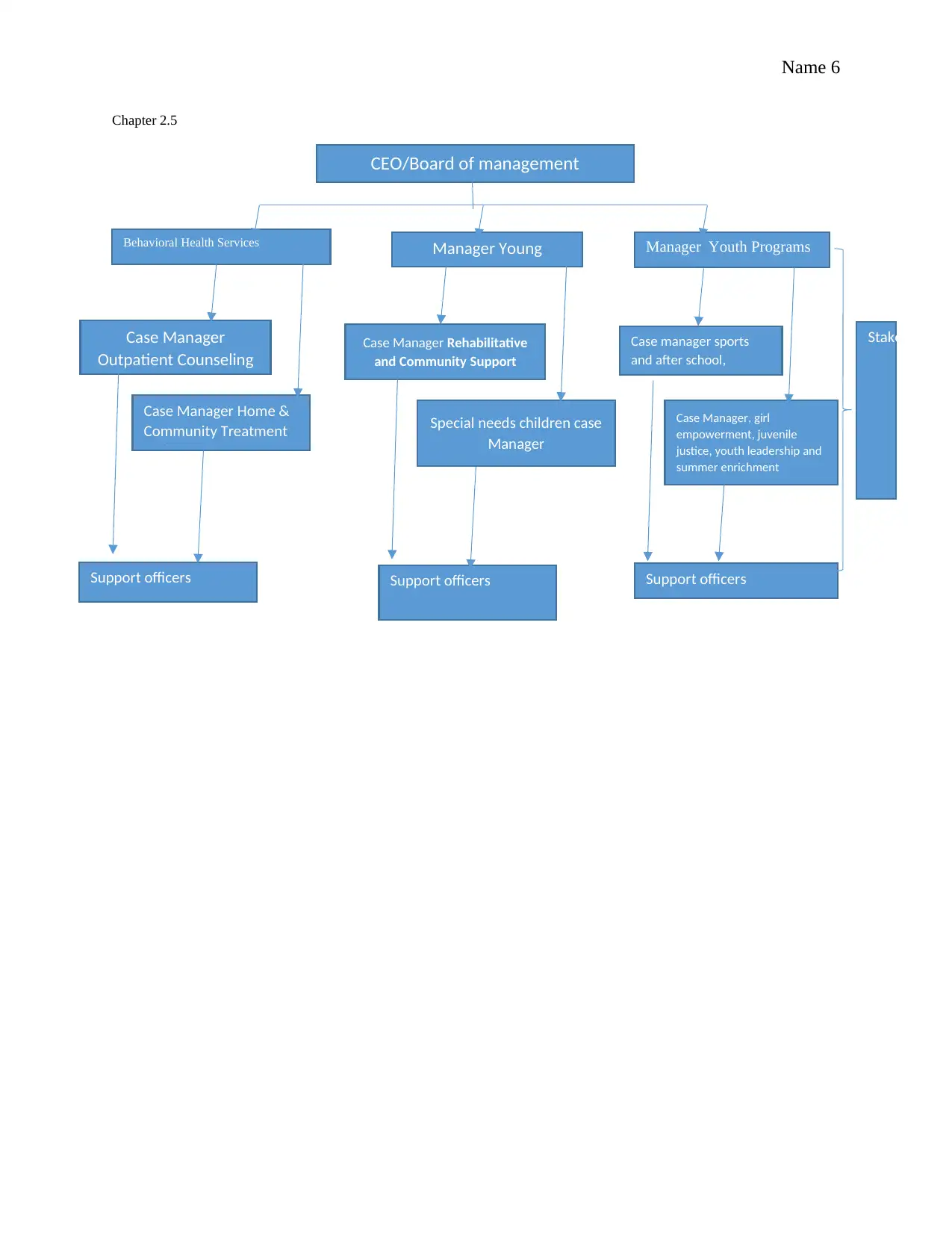
Lunenburg (15) states that the formal organization structure helps to set a fixed set of
roles for the employees of the organization so that each individual can know the relationship that
every position holds and plays to the whole organization. In this structure, the CEO and the
board of management are in charge of the overall organizational decision making while the
functional managers are in charge of implementing and coordinating the required processes to
achieve the required objectives. There are stakeholders who also part of the organizational
activities that are charged with the responsibility of offering support to different elements of the
organization. One importance of this structure is the coordination of tasks which leads to
increased efficiency and achievement of organizational goals. Through this structure roles and
responsibilities are assigned for each person thus increasing accountability of individuals in the
organization. According to Ahmady, Mehrpour, and Nikooraves (457), this structure offers the
best outcome for the organization since it leads to increased coordination of tasks and control
thus making it easy to achieve the organizational goals. Unlike the informal structure, tasks are
adequately coordinated to achieve the intended outcomes.
organization ensures that the immigrants attain the right skills to deal with the issues that they
face.
The mission, goals, objectives, and strategies of the organization reflect the philosophy of
adjustment and development of the individual. Adjustment focusses on ensuring that they are
able to adjust to the new environment while development focusses on equipping the immigrants
with the skills that they require to navigate the environment (Maine Immigrant and Refugees
Service 6). Therefore, what the organization is accomplishing for the immigrants and their
families is assisting them to adjust adapt and be able to live freely within the new Maine
immigration environment.
Lunenburg (15) states that the formal organization structure helps to set a fixed set of
roles for the employees of the organization so that each individual can know the relationship that
every position holds and plays to the whole organization. In this structure, the CEO and the
board of management are in charge of the overall organizational decision making while the
functional managers are in charge of implementing and coordinating the required processes to
achieve the required objectives. There are stakeholders who also part of the organizational
activities that are charged with the responsibility of offering support to different elements of the
organization. One importance of this structure is the coordination of tasks which leads to
increased efficiency and achievement of organizational goals. Through this structure roles and
responsibilities are assigned for each person thus increasing accountability of individuals in the
organization. According to Ahmady, Mehrpour, and Nikooraves (457), this structure offers the
best outcome for the organization since it leads to increased coordination of tasks and control
thus making it easy to achieve the organizational goals. Unlike the informal structure, tasks are
adequately coordinated to achieve the intended outcomes.
Paraphrase This Document
Need a fresh take? Get an instant paraphrase of this document with our AI Paraphraser
Name 5
Rabbinz (23) some organizations have informal structures that mostly develop from the
organizational culture that defines the way people work together in the organization. In most
cases, organizational culture shapes the tasks that are done in the organization and how members
of Maine rehabilitation services may coordinate and work with each other. This means that
during the daily activities in the organization, employees will develop informal procedures that
fit their needs rather than following the general formal structure. For example, in the
organization that I worked for, I realized that there are informal arrangements that exist between
different people in the organization at different levels that define how the relationships that
people have been formed. This means that there could be issues like collaboration and sharing of
task activities which are not defined by the formal structure but rather this is a local arrangement
between the members of the organization to increase efficiency and coordination of tasks.
Rabbinz (23) some organizations have informal structures that mostly develop from the
organizational culture that defines the way people work together in the organization. In most
cases, organizational culture shapes the tasks that are done in the organization and how members
of Maine rehabilitation services may coordinate and work with each other. This means that
during the daily activities in the organization, employees will develop informal procedures that
fit their needs rather than following the general formal structure. For example, in the
organization that I worked for, I realized that there are informal arrangements that exist between
different people in the organization at different levels that define how the relationships that
people have been formed. This means that there could be issues like collaboration and sharing of
task activities which are not defined by the formal structure but rather this is a local arrangement
between the members of the organization to increase efficiency and coordination of tasks.
Name 6
Chapter 2.5
CEO/Board of management
Behavioral Health Services Manager Young
children
Manager Youth Programs
Case Manager
Outpatient Counseling
Case Manager Home &
Community Treatment
Service
Case manager sports
and after school,
Case Manager Rehabilitative
and Community Support
Case Manager, girl
empowerment, juvenile
justice, youth leadership and
summer enrichment
Special needs children case
Manager
Support officers Support officers Support officers
Stakeholders
Chapter 2.5
CEO/Board of management
Behavioral Health Services Manager Young
children
Manager Youth Programs
Case Manager
Outpatient Counseling
Case Manager Home &
Community Treatment
Service
Case manager sports
and after school,
Case Manager Rehabilitative
and Community Support
Case Manager, girl
empowerment, juvenile
justice, youth leadership and
summer enrichment
Special needs children case
Manager
Support officers Support officers Support officers
Stakeholders
⊘ This is a preview!⊘
Do you want full access?
Subscribe today to unlock all pages.
Trusted by 1+ million students worldwide
Name 7
Chapter 2.6
Maine Immigrant and refugees Service is a private organization that is funded by private
individuals and organizations that are non-profit. This means that the activities that the
organization runs are purely humanitarian rather than profit related. The organization is funded
by different agencies who are interested in the activities that it runs and even individuals
(Kearns, Bell and Deem 129). There are two levels of contributing or donating towards the
organization. The first way of participating in the activities of the organization is through
donations and grants that are sent directly to the organization. Maine Immigrant and refugees
Service does not specifically define what can be donated but rather encourages donors to
contribute their resources towards any of the activities that it engages its clients. The second way
is through volunteering and offering support services to the existing activities that are run by the
organization. This includes professional services that the organization requires. This means that
people are encouraged to channel their contributions to the organization through the material and
in-kind donations.
Smith (221) suggests that in most cases, organization adopt the hybrid model of funding
to be able to manage their activities because in most cases, it is difficult for private non-profit
organizations to raise enough resources with the private non-profit. Thus the organization
engages in corporate activities that assist in raising higher funds. This includes elements like
corporate dinner, field activities like sports and even marathon events to raise resources for the
organization. Thus Maine Immigrant and refugees Service is really focused on achieving higher
resource domains through different sources of funding that entail the use of hybrid funding
approaches that do not compromise the basic approach of the organization.
Chapter 2.8
Chapter 2.6
Maine Immigrant and refugees Service is a private organization that is funded by private
individuals and organizations that are non-profit. This means that the activities that the
organization runs are purely humanitarian rather than profit related. The organization is funded
by different agencies who are interested in the activities that it runs and even individuals
(Kearns, Bell and Deem 129). There are two levels of contributing or donating towards the
organization. The first way of participating in the activities of the organization is through
donations and grants that are sent directly to the organization. Maine Immigrant and refugees
Service does not specifically define what can be donated but rather encourages donors to
contribute their resources towards any of the activities that it engages its clients. The second way
is through volunteering and offering support services to the existing activities that are run by the
organization. This includes professional services that the organization requires. This means that
people are encouraged to channel their contributions to the organization through the material and
in-kind donations.
Smith (221) suggests that in most cases, organization adopt the hybrid model of funding
to be able to manage their activities because in most cases, it is difficult for private non-profit
organizations to raise enough resources with the private non-profit. Thus the organization
engages in corporate activities that assist in raising higher funds. This includes elements like
corporate dinner, field activities like sports and even marathon events to raise resources for the
organization. Thus Maine Immigrant and refugees Service is really focused on achieving higher
resource domains through different sources of funding that entail the use of hybrid funding
approaches that do not compromise the basic approach of the organization.
Chapter 2.8
Paraphrase This Document
Need a fresh take? Get an instant paraphrase of this document with our AI Paraphraser
Name 8
The field site of Maine Immigrant and refugees Service serves the youth, children and their
families.
Questions of concern
What is your name and which area do you come from?
How long has it taken you to reach here?
What specifically happened in the place that displaced you?
Do you have any family members that you came with, are you with them or you do not
where they are?
Are there specific events in your life that happened from the events of displacement up to
reaching here that you feel we need to know?
Do you intend to go back to your place when things settle down or you ear going back?
Are there special things about you that we need to know like, medical conditions or any
other challenges that you think may require special care?
The above questions are used to gather background information about the client and their
families to establish some factors in their life that require specific concerns. To answer some of
these questions, background information that the client gives about where they come from and
the events that led to their displacement can be verified online. Personal related information can
be obtained by searching for information in the government database to ascertain the validity of
some of the issues that the patient presents.
The field site of Maine Immigrant and refugees Service serves the youth, children and their
families.
Questions of concern
What is your name and which area do you come from?
How long has it taken you to reach here?
What specifically happened in the place that displaced you?
Do you have any family members that you came with, are you with them or you do not
where they are?
Are there specific events in your life that happened from the events of displacement up to
reaching here that you feel we need to know?
Do you intend to go back to your place when things settle down or you ear going back?
Are there special things about you that we need to know like, medical conditions or any
other challenges that you think may require special care?
The above questions are used to gather background information about the client and their
families to establish some factors in their life that require specific concerns. To answer some of
these questions, background information that the client gives about where they come from and
the events that led to their displacement can be verified online. Personal related information can
be obtained by searching for information in the government database to ascertain the validity of
some of the issues that the patient presents.
Name 9
Works Cited
Ahmady, Gholam Ali, Maryam Mehrpour and Aghdas Nikooraves. "Organizational Structure."
Procedia - Social and Behavioral Sciences 230 (2016): 455-462.
Kabir, Syed Muhammad Sajjad. "COUNSELING APPROACHES." Abosar Prokashana
Sangstha, Banglabazar, Dhaka. Essentials of Counseling. New Delhi: Kerela Books,
2010. 117-204.
Kearns, Kevin P., David Bell and Bobbi Deem. "How Nonprofit Leaders Evaluate Funding
Sources: An Exploratory Study of Nonprofit Leaders." Nonprofit and Voluntary Sector
Quarterly 43.1 (2012): 121–143.
Lunenburg, Fred C. "Organizational Structure: Mintzberg’s Framework." International Journal
of Scholarly Academic Intellectual Diversity 14.1 (2012): 11-24.
MaineImmigrantandrefugeesService. 2019. <https://meirs.org/about-us/>.
Rabbinz, S. The basics of organizational management. London: Wiley, 2015.
Smith, Steven Rathgeb. "Hybridization and nonprofit organizations: The governance challenge."
Policy and Societ0 29.3 (2017): 219-229.
Wiggins, N. "Popular education for health empowerment and community empowerment: a
review of the literature." Health Promotion International, 27.3 (2012): 356-371.
Works Cited
Ahmady, Gholam Ali, Maryam Mehrpour and Aghdas Nikooraves. "Organizational Structure."
Procedia - Social and Behavioral Sciences 230 (2016): 455-462.
Kabir, Syed Muhammad Sajjad. "COUNSELING APPROACHES." Abosar Prokashana
Sangstha, Banglabazar, Dhaka. Essentials of Counseling. New Delhi: Kerela Books,
2010. 117-204.
Kearns, Kevin P., David Bell and Bobbi Deem. "How Nonprofit Leaders Evaluate Funding
Sources: An Exploratory Study of Nonprofit Leaders." Nonprofit and Voluntary Sector
Quarterly 43.1 (2012): 121–143.
Lunenburg, Fred C. "Organizational Structure: Mintzberg’s Framework." International Journal
of Scholarly Academic Intellectual Diversity 14.1 (2012): 11-24.
MaineImmigrantandrefugeesService. 2019. <https://meirs.org/about-us/>.
Rabbinz, S. The basics of organizational management. London: Wiley, 2015.
Smith, Steven Rathgeb. "Hybridization and nonprofit organizations: The governance challenge."
Policy and Societ0 29.3 (2017): 219-229.
Wiggins, N. "Popular education for health empowerment and community empowerment: a
review of the literature." Health Promotion International, 27.3 (2012): 356-371.
⊘ This is a preview!⊘
Do you want full access?
Subscribe today to unlock all pages.
Trusted by 1+ million students worldwide

1 out of 9


Related Documents


Your All-in-One AI-Powered Toolkit for Academic Success.
+13062052269
info@desklib.com
Available 24*7 on WhatsApp / Email
![[object Object]](/_next/static/media/star-bottom.7253800d.svg)
Unlock your academic potential
Copyright © 2020–2025 A2Z Services. All Rights Reserved. Developed and managed by ZUCOL.