Analysis of Hurricane Impact and Healthcare Management Solutions
VerifiedAdded on 2020/05/04
|11
|3600
|108
Report
AI Summary
This report examines the impact of hurricanes on healthcare facilities, specifically focusing on a case study involving the North Shore LIJ Hospital group during Hurricanes Irene and Sandy. The report details the consequences of hurricanes, including loss of life, economic impact, flooding, and wind damage, and analyzes the challenges faced by hospital management in disaster preparedness and response. It discusses the decision-making process between evacuation and sheltering patients, highlighting the need for robust infrastructure, economic planning, and proactive measures to mitigate the effects of natural disasters. Furthermore, the report explores various solutions, such as building strong infrastructure, implementing effective economic measures, and ensuring preparedness to minimize the negative impact on hospitals, patients, and staff. The analysis provides recommendations for healthcare organizations to enhance their resilience and improve their management strategies in the face of natural disasters.

NAME
STUDENT ID
SUBJECT
TOPIC
DATE
1
STUDENT ID
SUBJECT
TOPIC
DATE
1

Paraphrase This Document
Need a fresh take? Get an instant paraphrase of this document with our AI Paraphraser
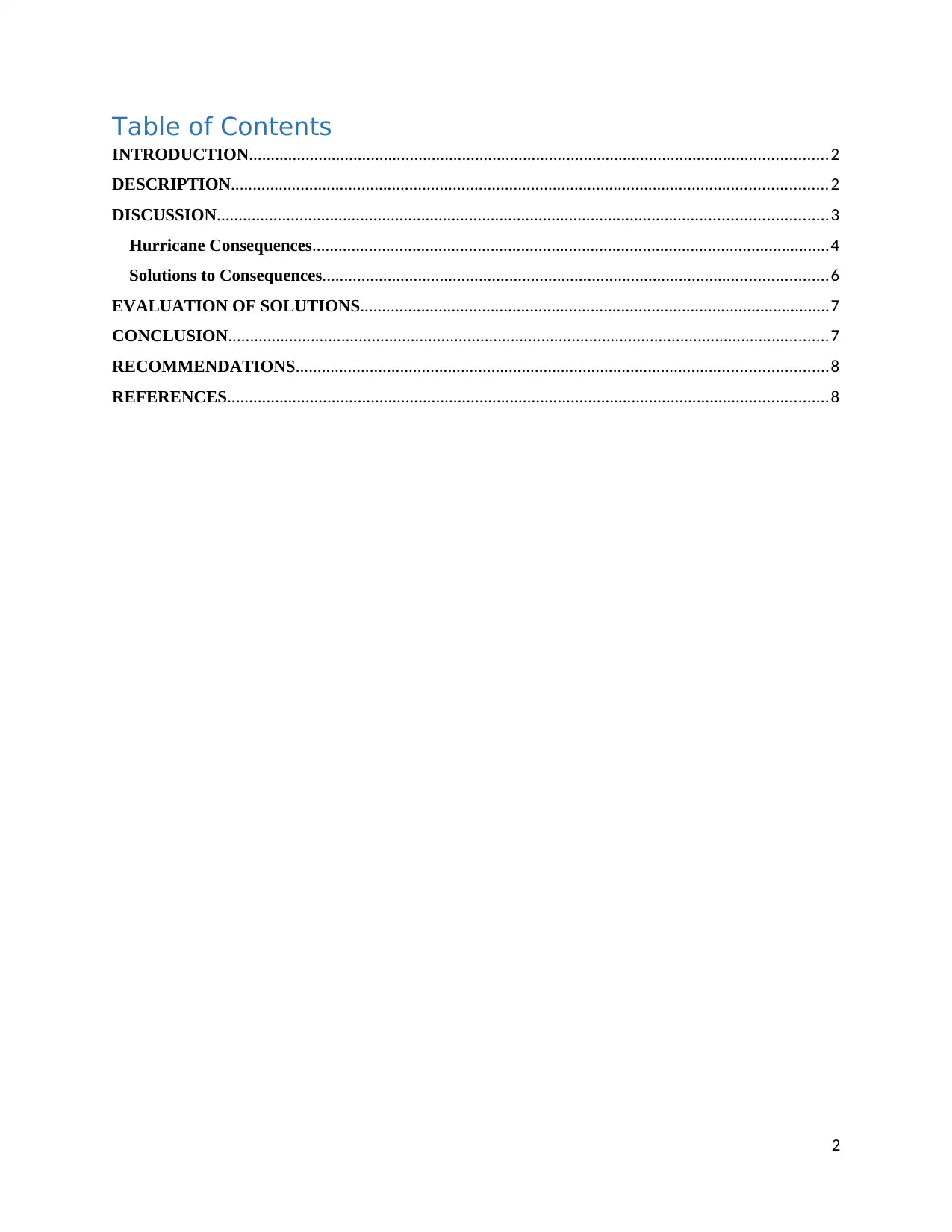
Table of Contents
INTRODUCTION.....................................................................................................................................2
DESCRIPTION.........................................................................................................................................2
DISCUSSION............................................................................................................................................3
Hurricane Consequences.......................................................................................................................4
Solutions to Consequences....................................................................................................................6
EVALUATION OF SOLUTIONS............................................................................................................7
CONCLUSION..........................................................................................................................................7
RECOMMENDATIONS..........................................................................................................................8
REFERENCES..........................................................................................................................................8
2
INTRODUCTION.....................................................................................................................................2
DESCRIPTION.........................................................................................................................................2
DISCUSSION............................................................................................................................................3
Hurricane Consequences.......................................................................................................................4
Solutions to Consequences....................................................................................................................6
EVALUATION OF SOLUTIONS............................................................................................................7
CONCLUSION..........................................................................................................................................7
RECOMMENDATIONS..........................................................................................................................8
REFERENCES..........................................................................................................................................8
2
INTRODUCTION
A hurricane, also known as a tropical cyclone, a cyclone or a typhoon is a cyclonic storm that
occurs mostly around or in regions near oceans. However, in most cases, these terms are used in
different regions or locations or are basically determined by the storm’s origin(10). In the Atlantic
and North East Pacific, the word used is mostly Hurricane, in Northwest Pacific, the word used
is Typhoon while in South Pacific and Indian Ocean the term used is Cyclone. A Hurricane is
basically categorized as a serious natural disaster that causes or is capable of causing massive
negative effects to the affected people or regions, e.g. decline in economic growth, causes or
emergence of diseases, environmental destruction, loss of lives, loss of human basic needs like
shelter, food and clean water, business operations disruptions to name just but a few(4). However,
to say the least, a hurricane being categorized as a natural disaster, then it is always said to be a
catastrophic event that is simply caused by nature or the natural processes of the earth(6). In the
world, there have been various hurricane occurrences around the world, e.g. hurricane Harvey
(occurred recently, 2017 in USA), hurricane Katrina, hurricane Irene, Hurricane Mathew and Ike
among others. All of these hurricanes have caused immense destruction and loss to the people
living in the affected areas. Generally, there are different ways to deal with these kinds of natural
disasters, their effects as well as a way to prevent the effects themselves. There are two ways
which include either evacuating the people in that area or sheltering them from the disaster(11).
These two methods are effective in their own ways and are also determined by the type of
disaster. In addition to that, it is important to note that both of these methods are costly, labor
intensive and at most times unrealistic operations.
DESCRIPTION
Just as earlier mentioned, hurricanes are basically natural disaster occurrences. Hurricanes
however, mostly occur in any world ocean or any mid-tropical latitudes. Additionally, just like
any other business industry location or branch, there are hospitals spread across the whole world,
even near oceans and mid-tropical latitudes(13). This means that in case of a hurricane occurrence
in any of these regions, these health care institutions will be affected as well as the patients.
Therefore, it is important to ensure these institutions have functional, capable and effective
management system especially the natural disaster management team, to ensure that lives and
organizations are saved or rather prioritized in case of a hurricane occurrence in these regions(1).
In this assignment I will focus on the case study hurricane information. From the case study:
3
A hurricane, also known as a tropical cyclone, a cyclone or a typhoon is a cyclonic storm that
occurs mostly around or in regions near oceans. However, in most cases, these terms are used in
different regions or locations or are basically determined by the storm’s origin(10). In the Atlantic
and North East Pacific, the word used is mostly Hurricane, in Northwest Pacific, the word used
is Typhoon while in South Pacific and Indian Ocean the term used is Cyclone. A Hurricane is
basically categorized as a serious natural disaster that causes or is capable of causing massive
negative effects to the affected people or regions, e.g. decline in economic growth, causes or
emergence of diseases, environmental destruction, loss of lives, loss of human basic needs like
shelter, food and clean water, business operations disruptions to name just but a few(4). However,
to say the least, a hurricane being categorized as a natural disaster, then it is always said to be a
catastrophic event that is simply caused by nature or the natural processes of the earth(6). In the
world, there have been various hurricane occurrences around the world, e.g. hurricane Harvey
(occurred recently, 2017 in USA), hurricane Katrina, hurricane Irene, Hurricane Mathew and Ike
among others. All of these hurricanes have caused immense destruction and loss to the people
living in the affected areas. Generally, there are different ways to deal with these kinds of natural
disasters, their effects as well as a way to prevent the effects themselves. There are two ways
which include either evacuating the people in that area or sheltering them from the disaster(11).
These two methods are effective in their own ways and are also determined by the type of
disaster. In addition to that, it is important to note that both of these methods are costly, labor
intensive and at most times unrealistic operations.
DESCRIPTION
Just as earlier mentioned, hurricanes are basically natural disaster occurrences. Hurricanes
however, mostly occur in any world ocean or any mid-tropical latitudes. Additionally, just like
any other business industry location or branch, there are hospitals spread across the whole world,
even near oceans and mid-tropical latitudes(13). This means that in case of a hurricane occurrence
in any of these regions, these health care institutions will be affected as well as the patients.
Therefore, it is important to ensure these institutions have functional, capable and effective
management system especially the natural disaster management team, to ensure that lives and
organizations are saved or rather prioritized in case of a hurricane occurrence in these regions(1).
In this assignment I will focus on the case study hurricane information. From the case study:
3
⊘ This is a preview!⊘
Do you want full access?
Subscribe today to unlock all pages.

Trusted by 1+ million students worldwide
In the year 2011, a hurricane occurred in the USA, spreading immensely in two regions which
were the Long Island and the New York City. Apparently, the North Shore Long Island Jewish
Hospitals (LIJ) group originally owned three hospital branches in those two locations. Therefore,
in the occurrence of the hurricane (known as Hurricane Irene), these three health care centers
were basically affected and their operations put in jeopardy. Due to the fear of losing both human
lives and the infrastructure, the hospitals management team decided to evacuate the three
hospitals into a secure location. By the end of that same month, there were approximately 947
patients who were evacuated by the end of the process.
However, even after the evacuation operation, there were still major destructions or problems
(not specifically identified) that were caused by the hurricane which later affected the population
adversely. After around fourteen months later, there was a repeat of the same disaster which was
then called Hurricane Sandy. This hurricane was also able to destroy the hospitals’ operations as
well as the operations of other business organizations and industries located in the affected areas.
North Shore LIJ Hospital management team therefore was challenged greatly by the hurricane’s
extend and strength. This was simply because of the miscalculation or misinterpretation provided
by the weather forecasting experts concerning hurricane occurrence in the specified regions once
more. Basically, the team had determined and announced that the hurricane would occur on
October 29th, 2013 but it occurred one year later, October 26th 2012. Since the management had
relied heavily on this information, its preparations about hurricane management, prevention and
effect management plans were still underway, hence could not be completely effective or
efficient at that time the hurricane. The team experienced a dilemma in whether evacuating the
hospitals again or make shelter for the hurricane victims but mostly its patients. This left the
management with the option of either evacuating the patients or sheltering them from the
disaster. Therefore, the assignment is will provide the best course of action for the management
in my own view.
4
were the Long Island and the New York City. Apparently, the North Shore Long Island Jewish
Hospitals (LIJ) group originally owned three hospital branches in those two locations. Therefore,
in the occurrence of the hurricane (known as Hurricane Irene), these three health care centers
were basically affected and their operations put in jeopardy. Due to the fear of losing both human
lives and the infrastructure, the hospitals management team decided to evacuate the three
hospitals into a secure location. By the end of that same month, there were approximately 947
patients who were evacuated by the end of the process.
However, even after the evacuation operation, there were still major destructions or problems
(not specifically identified) that were caused by the hurricane which later affected the population
adversely. After around fourteen months later, there was a repeat of the same disaster which was
then called Hurricane Sandy. This hurricane was also able to destroy the hospitals’ operations as
well as the operations of other business organizations and industries located in the affected areas.
North Shore LIJ Hospital management team therefore was challenged greatly by the hurricane’s
extend and strength. This was simply because of the miscalculation or misinterpretation provided
by the weather forecasting experts concerning hurricane occurrence in the specified regions once
more. Basically, the team had determined and announced that the hurricane would occur on
October 29th, 2013 but it occurred one year later, October 26th 2012. Since the management had
relied heavily on this information, its preparations about hurricane management, prevention and
effect management plans were still underway, hence could not be completely effective or
efficient at that time the hurricane. The team experienced a dilemma in whether evacuating the
hospitals again or make shelter for the hurricane victims but mostly its patients. This left the
management with the option of either evacuating the patients or sheltering them from the
disaster. Therefore, the assignment is will provide the best course of action for the management
in my own view.
4
Paraphrase This Document
Need a fresh take? Get an instant paraphrase of this document with our AI Paraphraser
DISCUSSION
A hurricane consist of a low pressure center with thunderstorms accompanied by very strong
winds and extremely high and heavy rainfall. This shows that hurricanes are natural disaster
occurrences that are related to changes in weather conditions. In this case study, the main issue
lies on the best and most effective way for a healthcare center to deal with a natural disaster
occurrence, i.e. a hurricane. The organization in question is the North Shore LIJ which is a group
that owns three branches of hospitals in the locations where the hurricane has occurred. These
hospitals have a number of patients already being and waiting be served which means that when
the hurricane occurred, there were many lives at stake and needed to be protected. The main role
and responsibility for hospitals is to provide care and protect the patients, hence saving human
lives. Therefore, the management team responsible for these three hospitals must make a sound
decision on which is the best course of action, either to evacuate the patients, assisting relatives
and the employees or offer them shelter from the hurricane. It is important to note that, the
management team was had already chosen to evacuate the victims of the previous hurricane
(Hurricane Irene) and then after fourteen months they had to make the best decision relating
Hurricane Sandy which occurred much earlier than anticipated. However, it is important for a
management team to always be ready and capable to protect and provide care to their patients
and employees. On the contrary, North Shore LIJ’s managers were simply not ready to perform
their duty during hurricane Sandy.
Hurricane Consequences
There are a number of problems caused by hurricanes or any other natural disaster occurrence. In
this case study, both Hurricane Irene and Sandy were capable of causing some of the following
problems:
Loss of Lives
Often, there are a lot of lives lost in case of a hurricane occurrence. Hurricanes basically start as
small winds that grow into large storms with heavy rains and thunderstorms(17). Basically, a
hurricane can develop within a very short period of time which means that the residents of those
locations have less chances to be saved or seek shelter(2). Lives are often lost during evacuation
processes. However, when the people in charge decide to provide shelter to the victims, not all
people are saves, some lives are often lost in the process as well. In the case study, the hospital
5
A hurricane consist of a low pressure center with thunderstorms accompanied by very strong
winds and extremely high and heavy rainfall. This shows that hurricanes are natural disaster
occurrences that are related to changes in weather conditions. In this case study, the main issue
lies on the best and most effective way for a healthcare center to deal with a natural disaster
occurrence, i.e. a hurricane. The organization in question is the North Shore LIJ which is a group
that owns three branches of hospitals in the locations where the hurricane has occurred. These
hospitals have a number of patients already being and waiting be served which means that when
the hurricane occurred, there were many lives at stake and needed to be protected. The main role
and responsibility for hospitals is to provide care and protect the patients, hence saving human
lives. Therefore, the management team responsible for these three hospitals must make a sound
decision on which is the best course of action, either to evacuate the patients, assisting relatives
and the employees or offer them shelter from the hurricane. It is important to note that, the
management team was had already chosen to evacuate the victims of the previous hurricane
(Hurricane Irene) and then after fourteen months they had to make the best decision relating
Hurricane Sandy which occurred much earlier than anticipated. However, it is important for a
management team to always be ready and capable to protect and provide care to their patients
and employees. On the contrary, North Shore LIJ’s managers were simply not ready to perform
their duty during hurricane Sandy.
Hurricane Consequences
There are a number of problems caused by hurricanes or any other natural disaster occurrence. In
this case study, both Hurricane Irene and Sandy were capable of causing some of the following
problems:
Loss of Lives
Often, there are a lot of lives lost in case of a hurricane occurrence. Hurricanes basically start as
small winds that grow into large storms with heavy rains and thunderstorms(17). Basically, a
hurricane can develop within a very short period of time which means that the residents of those
locations have less chances to be saved or seek shelter(2). Lives are often lost during evacuation
processes. However, when the people in charge decide to provide shelter to the victims, not all
people are saves, some lives are often lost in the process as well. In the case study, the hospital
5
management team certainly lost some lives especially those patients that were difficult to
evacuate during the Hurricane Irene.
Economic Impact
In any occasion where a natural disaster like floods, fire, earthquake and hurricanes have
occurred, there has always been damage as well as loss of property. These are basically people’s
livelihoods and life investments. This means that these livelihoods are swiped away and
destroyed which in most cases takes many years, effort and funds to build back again. They may
include things like homes, real estate investments and businesses among others(15). These
facilities and the community itself is severely damaged and destroyed. As a result of that, victims
and other people are forced to stay at home without doing businesses hence no making money. In
addition to that, the country’s economic plans are disrupted especially when the government
spend large sums of money preparing for such disasters as well as building back up the affected
regions after the disaster has already occurred(16). Governments in every country must always
plan and budget for such occurrences, e.g. by preparing emergency groups and organizations,
rebuilding materials especially those that relate to infrastructure. In this case study, the effects
will directly affect both the hospitals development and the government development(16). When
the hurricane occurred, there were no of fewer patients certainly were able to visit the hospital
which means that the hospitals’ revenue declined hence less government revenue as well. This
basically decreases the national development besides that of the affected health institution itself.
Floods
Due to the heavy rains accompanied by hurricanes, there are often floods in areas where the
storms might have stroke originally and the regions where it may just have passed through(14).
When the hurricane storm is moving slowly, the likelihood of the rainfall being extremely high is
very high hence more floods in that location(12). However, even if a hurricane often starts from a
tropical depression, it can also affect the inland locations as well as other regions that may not
reach hurricane strength. From this impact, lives may be lost and facilities damaged and
destroyed(7) (e.g. hospitals). In the case study, at the occurrence of Hurricane Irene, the
management decided to evacuate the hospital probably because it was completely flooded and no
operations could be conducted in such a scenario. When a hospital is flooded, the nurses, doctors
and other employees find difficulties when performing their duties and therefore may lose hope
6
evacuate during the Hurricane Irene.
Economic Impact
In any occasion where a natural disaster like floods, fire, earthquake and hurricanes have
occurred, there has always been damage as well as loss of property. These are basically people’s
livelihoods and life investments. This means that these livelihoods are swiped away and
destroyed which in most cases takes many years, effort and funds to build back again. They may
include things like homes, real estate investments and businesses among others(15). These
facilities and the community itself is severely damaged and destroyed. As a result of that, victims
and other people are forced to stay at home without doing businesses hence no making money. In
addition to that, the country’s economic plans are disrupted especially when the government
spend large sums of money preparing for such disasters as well as building back up the affected
regions after the disaster has already occurred(16). Governments in every country must always
plan and budget for such occurrences, e.g. by preparing emergency groups and organizations,
rebuilding materials especially those that relate to infrastructure. In this case study, the effects
will directly affect both the hospitals development and the government development(16). When
the hurricane occurred, there were no of fewer patients certainly were able to visit the hospital
which means that the hospitals’ revenue declined hence less government revenue as well. This
basically decreases the national development besides that of the affected health institution itself.
Floods
Due to the heavy rains accompanied by hurricanes, there are often floods in areas where the
storms might have stroke originally and the regions where it may just have passed through(14).
When the hurricane storm is moving slowly, the likelihood of the rainfall being extremely high is
very high hence more floods in that location(12). However, even if a hurricane often starts from a
tropical depression, it can also affect the inland locations as well as other regions that may not
reach hurricane strength. From this impact, lives may be lost and facilities damaged and
destroyed(7) (e.g. hospitals). In the case study, at the occurrence of Hurricane Irene, the
management decided to evacuate the hospital probably because it was completely flooded and no
operations could be conducted in such a scenario. When a hospital is flooded, the nurses, doctors
and other employees find difficulties when performing their duties and therefore may lose hope
6
⊘ This is a preview!⊘
Do you want full access?
Subscribe today to unlock all pages.
Trusted by 1+ million students worldwide
in doing so which may lead to loss of lives. In addition to that, it is difficult for patients to pay a
visit to a hospital that is probably experiencing hurricane effects, probably flooding.
Winds
It is typically one of the two consequences that cause most damage in case of a hurricane
occurrence, besides storm surges. Winds are often responsible for a lot of structural destruction
caused by hurricanes. High and extreme winds uproot tress, un-roof buildings and tear down
power lines among other things. In most cases, the winds associated with hurricanes are always
very high and are effective in destruction when accompanied by storms(1). It is important to note
that, in both hurricanes that occurred in the case study, were certainly accompanied by winds(10).
These winds had the capability of bringing down the hospital itself down, un-roofing the hospital
and many other effects. If the power lines of a hospital are brought down, then the hospital loses
many lives that depend solely on electric power to survive or to be served. Therefore, the North
Shore LIJ Hospitals were definitely at the risk of being affected by winds.
Other consequences include, infrastructure destruction, storm surge, tornadoes, rip tides, high
waves, disease immergence and spread and general environmental destruction among others(5).
All of these consequences have the capability of affecting and causing problems to the hospital
employees and the management team hence risking human lives.
Solutions to Consequences
The following are some of the solutions that can be used to prevent, avoid and manage a natural
disaster like a hurricane occurrence.
Infrastructure Destruction
Ensuring that buildings are strongly built and are airtight. This can be done by including storm
shutters over exposed glass of the buildings which prevents high winds and using hurricane
straps to reduce building blow-offs. This applies mostly in buildings that are being built or are to
be built in places likely to experience hurricane disaster occurrence(18).
7
visit to a hospital that is probably experiencing hurricane effects, probably flooding.
Winds
It is typically one of the two consequences that cause most damage in case of a hurricane
occurrence, besides storm surges. Winds are often responsible for a lot of structural destruction
caused by hurricanes. High and extreme winds uproot tress, un-roof buildings and tear down
power lines among other things. In most cases, the winds associated with hurricanes are always
very high and are effective in destruction when accompanied by storms(1). It is important to note
that, in both hurricanes that occurred in the case study, were certainly accompanied by winds(10).
These winds had the capability of bringing down the hospital itself down, un-roofing the hospital
and many other effects. If the power lines of a hospital are brought down, then the hospital loses
many lives that depend solely on electric power to survive or to be served. Therefore, the North
Shore LIJ Hospitals were definitely at the risk of being affected by winds.
Other consequences include, infrastructure destruction, storm surge, tornadoes, rip tides, high
waves, disease immergence and spread and general environmental destruction among others(5).
All of these consequences have the capability of affecting and causing problems to the hospital
employees and the management team hence risking human lives.
Solutions to Consequences
The following are some of the solutions that can be used to prevent, avoid and manage a natural
disaster like a hurricane occurrence.
Infrastructure Destruction
Ensuring that buildings are strongly built and are airtight. This can be done by including storm
shutters over exposed glass of the buildings which prevents high winds and using hurricane
straps to reduce building blow-offs. This applies mostly in buildings that are being built or are to
be built in places likely to experience hurricane disaster occurrence(18).
7
Paraphrase This Document
Need a fresh take? Get an instant paraphrase of this document with our AI Paraphraser
Economic Impact
This can be prevented by ensuring that effective and efficient economy measurement has been
done at all times, especially in regard to the expenses to the incurred in case of a hurricane
occurrence. Also, the country’s (and in this case the hospitals’ management team) should ensure
that the potential effects relating to damages and destruction of the building and human life loss
are identified and budgeted for(3).
Winds, Storm Surges and Floods
The groups or associations related to weather conditions and environmental changes should also
be thorough, clear and direct especially when it comes to determining a hurricane occurrence(9).
Loss of Lives
The country’s government should ensure that all measures are taken into consideration with the
aim to save the patients’ lives(8). This may involve ensuring earlier and certain plans relating to
managing a hurricane disaster occurrence especially after(19&20), e.g. communication and
involvement of various emergency organizations and creation of healthcare emergency
organizations, NGO’s and charity associations, training of individuals in the charity
organizations before it occurs.
EVALUATION OF SOLUTIONS
According to the case study, the hospital should certainly abide to the solutions mentioned above
if it desires to save its patients’ and employees’ lives as well as the facility. The management
should have better strategies that relate to each and every consequence for them to implement
before or after a hurricane occurrence.
8
This can be prevented by ensuring that effective and efficient economy measurement has been
done at all times, especially in regard to the expenses to the incurred in case of a hurricane
occurrence. Also, the country’s (and in this case the hospitals’ management team) should ensure
that the potential effects relating to damages and destruction of the building and human life loss
are identified and budgeted for(3).
Winds, Storm Surges and Floods
The groups or associations related to weather conditions and environmental changes should also
be thorough, clear and direct especially when it comes to determining a hurricane occurrence(9).
Loss of Lives
The country’s government should ensure that all measures are taken into consideration with the
aim to save the patients’ lives(8). This may involve ensuring earlier and certain plans relating to
managing a hurricane disaster occurrence especially after(19&20), e.g. communication and
involvement of various emergency organizations and creation of healthcare emergency
organizations, NGO’s and charity associations, training of individuals in the charity
organizations before it occurs.
EVALUATION OF SOLUTIONS
According to the case study, the hospital should certainly abide to the solutions mentioned above
if it desires to save its patients’ and employees’ lives as well as the facility. The management
should have better strategies that relate to each and every consequence for them to implement
before or after a hurricane occurrence.
8
CONCLUSION
Hurricanes are disasters that have been occurring since ages ago and are still occurring even
now. Recently, there have been two hurricanes that have occurred in USA. Generally, hurricanes
cause large and serious problems to various aspects of a country, e.g. the human lives, economic
aspect, environmental, infrastructure to name a few. Just like any other natural disaster,
hurricanes cause loss of lives, destructions to roads and building or facilities, economic decline
and other destructions like environmental destructions caused by floods, winds, storm surges and
tornadoes. In the case study, the North Shore LIJ Hospitals have basically experienced two
hurricanes that occurred in very close time proximities of each other. During the first hurricane
occurrence (Hurricane Irene), the hospitals’ management team decided to evacuate the three
branches of the hospitals that were affected by the hurricane. However, when the second
hurricane occurred in an unexpected manner and time, the management was not fully prepared
on exactly what choice to make, whether evacuate the hospital or basically provide shelter to the
patients and employees. However, despite all the possible problems and consequences that any
hurricane can cause to a region or its inhabitants, these problems can be avoided, prevented and
managed with proper planning and effective strategy implementations. For instance, ensuring
effective and efficient measurement for the economic impacts that relate to a hurricane
occurrence in a country or an organization. This involves measuring the potential expenses in
case of an evacuation, costs of rebuilding infrastructure and buildings, human life loss etc.
RECOMMENDATIONS
I would recommend the hospital to ensure that a re-establishment and advancement of primary
healthcare delivery processes. The hospital should ensure that the employees (nurses, doctors and
other healthcare workers) are effectively trained on natural disaster management and response,
especially a hurricane occurrence.
The hospital management team should also improve its methods and processes of decision
making. This will be able to reduce the time period meant to decide which option to implement
when a hurricane occurs drastically. This means that they should always be ready to execute a
plan no matter when a disaster has occurred.
9
Hurricanes are disasters that have been occurring since ages ago and are still occurring even
now. Recently, there have been two hurricanes that have occurred in USA. Generally, hurricanes
cause large and serious problems to various aspects of a country, e.g. the human lives, economic
aspect, environmental, infrastructure to name a few. Just like any other natural disaster,
hurricanes cause loss of lives, destructions to roads and building or facilities, economic decline
and other destructions like environmental destructions caused by floods, winds, storm surges and
tornadoes. In the case study, the North Shore LIJ Hospitals have basically experienced two
hurricanes that occurred in very close time proximities of each other. During the first hurricane
occurrence (Hurricane Irene), the hospitals’ management team decided to evacuate the three
branches of the hospitals that were affected by the hurricane. However, when the second
hurricane occurred in an unexpected manner and time, the management was not fully prepared
on exactly what choice to make, whether evacuate the hospital or basically provide shelter to the
patients and employees. However, despite all the possible problems and consequences that any
hurricane can cause to a region or its inhabitants, these problems can be avoided, prevented and
managed with proper planning and effective strategy implementations. For instance, ensuring
effective and efficient measurement for the economic impacts that relate to a hurricane
occurrence in a country or an organization. This involves measuring the potential expenses in
case of an evacuation, costs of rebuilding infrastructure and buildings, human life loss etc.
RECOMMENDATIONS
I would recommend the hospital to ensure that a re-establishment and advancement of primary
healthcare delivery processes. The hospital should ensure that the employees (nurses, doctors and
other healthcare workers) are effectively trained on natural disaster management and response,
especially a hurricane occurrence.
The hospital management team should also improve its methods and processes of decision
making. This will be able to reduce the time period meant to decide which option to implement
when a hurricane occurs drastically. This means that they should always be ready to execute a
plan no matter when a disaster has occurred.
9
⊘ This is a preview!⊘
Do you want full access?
Subscribe today to unlock all pages.
Trusted by 1+ million students worldwide
REFERENCES
Jacob B, Mawson AR, Marinelle P, Guignard JC. Disaster mythology and fact: Hurricane
Katrina and social attachment. Public Health Reports. 2008 Sep; 123(5):555-66.
Burger J, Gochfeld M. Health concerns and perceptions of central and coastal New Jersey
residents in the 100days following Superstorm Sandy. Science of the Total Environment. 2014
May 15; 481:611-8.
Genovese E, Przyluski V. Storm surge disaster risk management: the Xynthia case study in
France. Journal of Risk Research. 2013 Aug 1;16(7):825-41.
Kortenhaus A, Kaiser G. Lessons learned from flood risk analyses at the North Sea Coast.
Journal of Coastal Research. 2009 Jan 1(56):822.
Lane K, Charles-Guzman K, Wheeler K, Abid Z, Graber N, Matte T. Health effects of coastal
storms and flooding in urban areas: a review and vulnerability assessment. Journal of
environmental and public health. 2013 May 30;2013.
Apte A. Humanitarian logistics: A new field of research and action. Foundations and Trends® in
Technology, Information and Operations Management. 2010 Mar 25;3(1):1-00.
Pou AM. Hurricane Katrina and disaster preparedness. New England journal of medicine. 2008
Apr 3;358(14):1524-.
Bailey JH, Deshazo RD. Providing healthcare to evacuees in the wake of a natural disaster:
opportunities to improve disaster planning. The American journal of the medical sciences. 2008
Aug 31;336(2):124-7.
Mata-Lima H, Alvino-Borba A, Pinheiro A, Mata-Lima A, Almeida JA. Impacts of natural
disasters on environmental and socio-economic systems: what makes the difference?. Ambiente
& Sociedade. 2013 Sep;16(3):45-64.
Mohan P, Strobl E. The economic impact of hurricanes in history: evidence from sugar exports
in the Caribbean from 1700 to 1960. Weather, Climate, and Society. 2013 Jan;5(1):5-13.
Okie S. Dr. Pou and the hurricane—Implications for patient care during disasters. New England
Journal of Medicine. 2008 Jan 3;358(1):1-5.
10
Jacob B, Mawson AR, Marinelle P, Guignard JC. Disaster mythology and fact: Hurricane
Katrina and social attachment. Public Health Reports. 2008 Sep; 123(5):555-66.
Burger J, Gochfeld M. Health concerns and perceptions of central and coastal New Jersey
residents in the 100days following Superstorm Sandy. Science of the Total Environment. 2014
May 15; 481:611-8.
Genovese E, Przyluski V. Storm surge disaster risk management: the Xynthia case study in
France. Journal of Risk Research. 2013 Aug 1;16(7):825-41.
Kortenhaus A, Kaiser G. Lessons learned from flood risk analyses at the North Sea Coast.
Journal of Coastal Research. 2009 Jan 1(56):822.
Lane K, Charles-Guzman K, Wheeler K, Abid Z, Graber N, Matte T. Health effects of coastal
storms and flooding in urban areas: a review and vulnerability assessment. Journal of
environmental and public health. 2013 May 30;2013.
Apte A. Humanitarian logistics: A new field of research and action. Foundations and Trends® in
Technology, Information and Operations Management. 2010 Mar 25;3(1):1-00.
Pou AM. Hurricane Katrina and disaster preparedness. New England journal of medicine. 2008
Apr 3;358(14):1524-.
Bailey JH, Deshazo RD. Providing healthcare to evacuees in the wake of a natural disaster:
opportunities to improve disaster planning. The American journal of the medical sciences. 2008
Aug 31;336(2):124-7.
Mata-Lima H, Alvino-Borba A, Pinheiro A, Mata-Lima A, Almeida JA. Impacts of natural
disasters on environmental and socio-economic systems: what makes the difference?. Ambiente
& Sociedade. 2013 Sep;16(3):45-64.
Mohan P, Strobl E. The economic impact of hurricanes in history: evidence from sugar exports
in the Caribbean from 1700 to 1960. Weather, Climate, and Society. 2013 Jan;5(1):5-13.
Okie S. Dr. Pou and the hurricane—Implications for patient care during disasters. New England
Journal of Medicine. 2008 Jan 3;358(1):1-5.
10
Paraphrase This Document
Need a fresh take? Get an instant paraphrase of this document with our AI Paraphraser
Lamb S, Walton D, Mora K, Thomas J. Effect of authoritative information and message
characteristics on evacuation and shadow evacuation in a simulated flood event. Natural hazards
review. 2011 Nov 10;13(4):272-82.
Lane K, Charles-Guzman K, Wheeler K, Abid Z, Graber N, Matte T. Health effects of coastal
storms and flooding in urban areas: a review and vulnerability assessment. Journal of
environmental and public health. 2013 May 30;2013.
Cole J, Walters M, Lynch M. Part of the solution, not the problem: the crowd's role in emergency
response. Contemporary Social Science. 2011 Nov 1;6(3):361-75.
Sastry N. Tracing the effects of Hurricane Katrina on the population of New Orleans: The
displaced New Orleans residents pilot study. Sociological methods & research. 2009
Aug;38(1):171-96.
Brubaker M, Berner J, Chavan R, Warren J. Climate change and health effects in Northwest
Alaska. Global health action. 2011 Dec 1;4(1):8445.
Kortenhaus, A. and Kaiser, G., 2009. Lessons learned from flood risk analyses at the North Sea
Coast. Journal of Coastal Research, (56), p.822.
Höppner C, Buchecker M, Bründl M. Risk communication and natural hazards. CapHaz project.
Birmensdorf, Switzerland. 2010 Nov.
Stewart AE. Minding the weather: The measurement of weather salience. Bulletin of the
American Meteorological Society. 2009 Dec;90(12):1833-41.
Venette S. Risk as an inherent element in the study of crisis communication. Southern
Communication Journal. 2008 Jul 22;73(3):197-210.
11
characteristics on evacuation and shadow evacuation in a simulated flood event. Natural hazards
review. 2011 Nov 10;13(4):272-82.
Lane K, Charles-Guzman K, Wheeler K, Abid Z, Graber N, Matte T. Health effects of coastal
storms and flooding in urban areas: a review and vulnerability assessment. Journal of
environmental and public health. 2013 May 30;2013.
Cole J, Walters M, Lynch M. Part of the solution, not the problem: the crowd's role in emergency
response. Contemporary Social Science. 2011 Nov 1;6(3):361-75.
Sastry N. Tracing the effects of Hurricane Katrina on the population of New Orleans: The
displaced New Orleans residents pilot study. Sociological methods & research. 2009
Aug;38(1):171-96.
Brubaker M, Berner J, Chavan R, Warren J. Climate change and health effects in Northwest
Alaska. Global health action. 2011 Dec 1;4(1):8445.
Kortenhaus, A. and Kaiser, G., 2009. Lessons learned from flood risk analyses at the North Sea
Coast. Journal of Coastal Research, (56), p.822.
Höppner C, Buchecker M, Bründl M. Risk communication and natural hazards. CapHaz project.
Birmensdorf, Switzerland. 2010 Nov.
Stewart AE. Minding the weather: The measurement of weather salience. Bulletin of the
American Meteorological Society. 2009 Dec;90(12):1833-41.
Venette S. Risk as an inherent element in the study of crisis communication. Southern
Communication Journal. 2008 Jul 22;73(3):197-210.
11

1 out of 11


Related Documents


Your All-in-One AI-Powered Toolkit for Academic Success.
+13062052269
info@desklib.com
Available 24*7 on WhatsApp / Email
![[object Object]](/_next/static/media/star-bottom.7253800d.svg)
Unlock your academic potential
Copyright © 2020–2026 A2Z Services. All Rights Reserved. Developed and managed by ZUCOL.