Analysis of Accounting Issues: IAS 8 and Exposure Drafts

Verified

Added on  2023/06/04

|15
|2300
|446
Report
AI Summary
This report provides a detailed analysis of an assignment focused on an exposure draft related to IAS 8, concerning accounting policies, changes in accounting estimates, and errors. The assignment begins with an introduction to exposure drafts and their role in the accounting field, followed by an overview of the specific draft initiated in the context of IAS 8. The report then identifies key issues highlighted in the draft, such as the distinction between accounting estimates and accounting policies, and their implications for financial statements. It further examines the agreements and disagreements among professionals and institutions regarding the proposed changes. The report then explores arguments for and against the proposed regulations. Finally, it applies regulation theories, including public interest, private interest, and capture theory, to the context of the exposure draft, evaluating the underlying assumptions of these theories. The assignment concludes with a list of references used.
Document Page
Assignment
tabler-icon-diamond-filled.svg

Paraphrase This Document

Need a fresh take? Get an instant paraphrase of this document with our AI Paraphraser
Document Page
1
By student name
Professor
University
Date: 30th Sep 2018.
1 | P a g e
Document Page
2
Contents
Part 2...........................................................................................................................................................3
Introduction.................................................................................................................................................3
Key issues reported in the exposure drafts.................................................................................................4
Agreement and disagreement between the parties....................................................................................5
Arguments ‘for’ or ‘against’ regulation......................................................................................................10
Application of regulation theories (Public interest, private interest and capture theory).........................11
Evaluation of underlying assumptions and assumptions of the theories of regulation.............................12
References.................................................................................................................................................13
2 | P a g e
Document Page
3
Part 2
There are lot of exposure drafts that are circulated in the professional websites and people are asked to
give their opinion on that and what they think about the things that the draft exposure is stating. When
it comes to dealing with challenges and opinions, draft exposures are a great way for the authorities to
understand how the companies and professional are conceiving the latest amendments that are made
by them. It can also be seen that it is helpful for the authorities in many ways as they can analyze all the
opinions on such drafts and then decide what they want to publish and implement. Exposure drafts are
a brief description of what the authorities are planning in respective accounting fields and provides the
details of amended changes in a very brief manner (Abdullah & Said, 2017). In the given assignment one
of such draft exposure that was published on the website of the IASB has been taken into consideration
and has been discussed and all-important points that are related to that along with analysis of the
comments that are made on that draft exposure has been stated in the given assignment.
Introduction
There are many exposure drafts that are there and people have a choice to comment on them
based on their agreement or disagreement to the proposed changes. In this assignment the draft
exposure that has been initiated in the context of IAS 8 Accounting Policies, Changes in Accounting
Estimates and Errors is a point of discussion for the authorities. The article helps in stating the difference
between accounting estimates and accounting Policies so that stakeholders have clear knowledge about
that, and they know what is the implication of their application on the overall accounting that is done by
the companies (Alexander, 2016). It is very important that accountants and professionals should know
3 | P a g e
tabler-icon-diamond-filled.svg

Paraphrase This Document

Need a fresh take? Get an instant paraphrase of this document with our AI Paraphraser
Document Page
4
what accounting policies and accounting estimates are as they are people who deal with the preparation
of the financial statements, if they are not aware then there are high chances of misstatement which
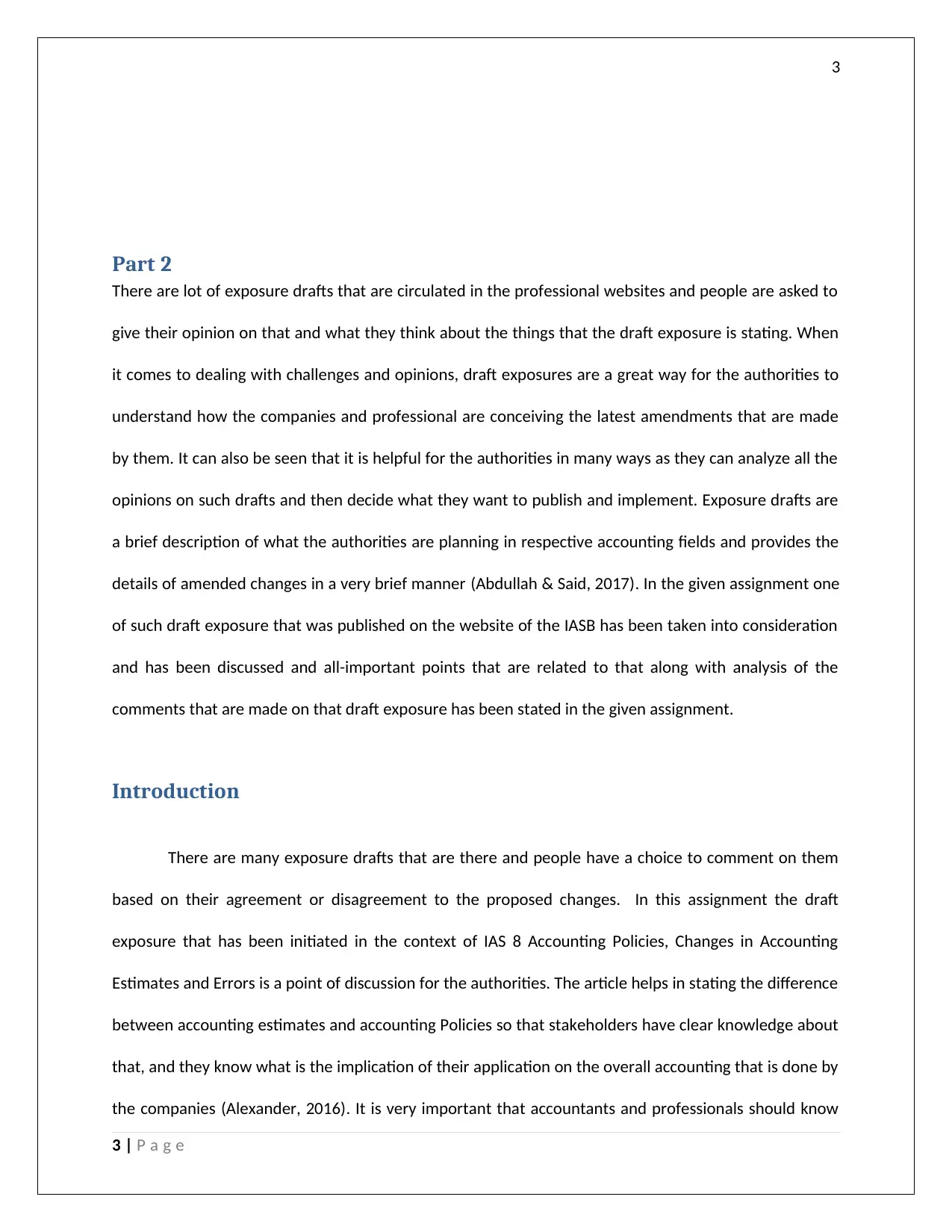
will not be as per the policies of the governmentAn extract of the exposure draft is given below:
Figure 1: “Exposure Draft and comment letters—Accounting Policies and Accounting Estimates
(Amendments to IAS 8) 2018”.
Source of the exposure draft is given below: : https://www.ifrs.org/projects/work-plan/accounting-
policies-and-accounting-estimates/comment-letters-projects/exposure-draft-accounting-policies-
and-accounting-estimates/#consultation
Key issues reported in the exposure drafts
4 | P a g e
Document Page
5
As per the exposure draft, accounting estimates are those items that affects the item of the profit and
loss account directly and are material in nature and whenever the management makes an accounting
estimate they need to state it clearly in their notes to account. Accounting Estimates includes items like
method of depreciation, rate of discounted cash flow, method of valuation of the inventories etc. They
have clear impact on the material type of the companies and hence they need to make sure that the
accountants are well-versed with them else it will cause errors in the books of account. Accounting
policies on the other hand are the rules and guidelines that guides the way companies should prepare
the books of accounts for the company. It is important that rules and regulations should be followed
because in case they are not followed then that might lead to major discrepancies and the management
would be held responsible for the same. Therefore, both accounting estimate and accounting
assumptions are important for the companies and both cannot be ignored and the companies need to
follow them properly (Bouret, 2017).
There are large number of accounting theories that can be linked to the issues which are found in this
article. Few of these involve Normative accounting theory, standard-setting process and international
accounting. There are various rules and regulations that companies need to follow for the valuation of
the asset or liabilities, as we see that different ways are there in which different assets are valued, some
are valued at historical cost or fair value cost of accounting and that represents the normative theory.
Agreement and disagreement between the parties
There are few comments that the professionals have stated for the following exposure drafts-
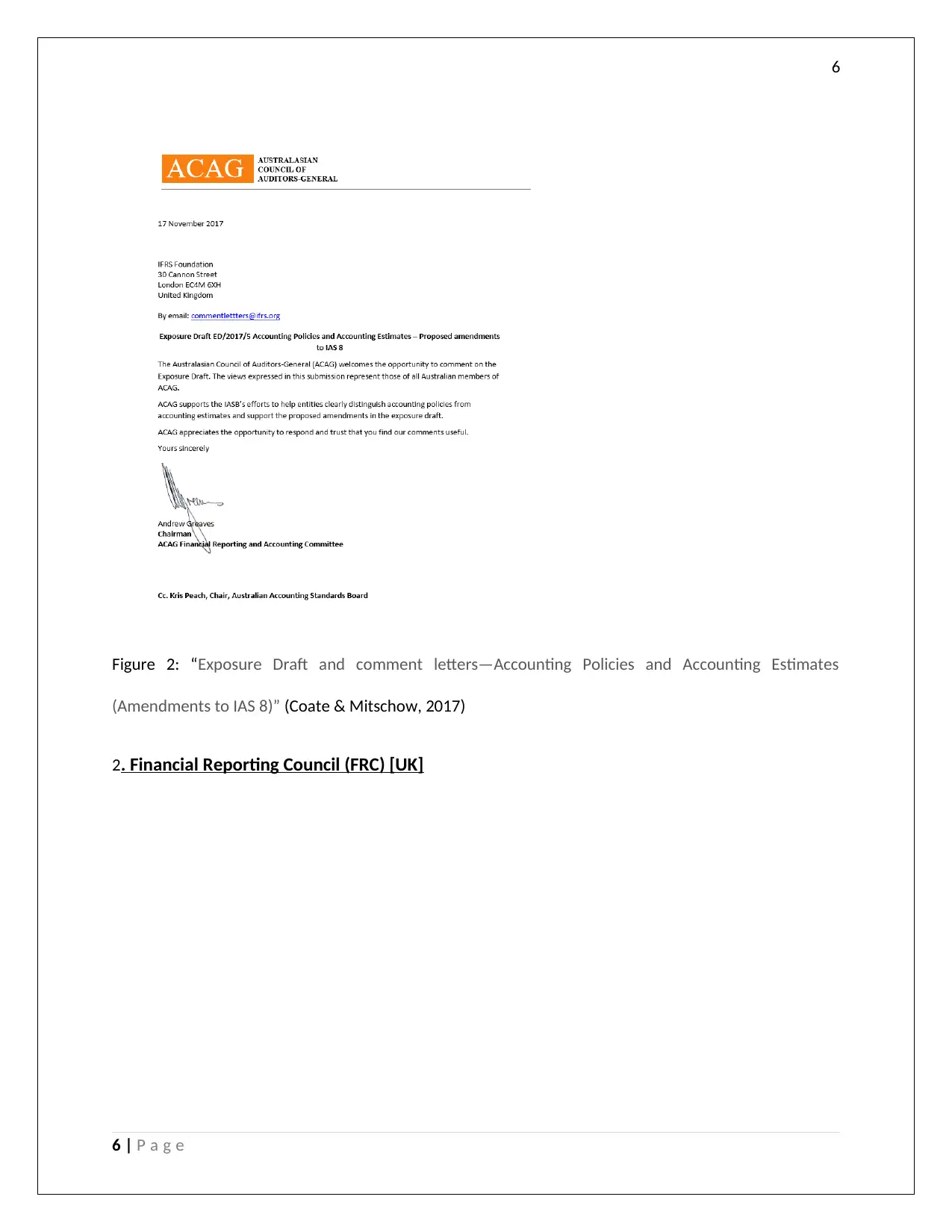
1. Australasian Council of Auditors-General (ACAG)
5 | P a g e
Document Page
6
Figure 2: Exposure Draft and comment letters—Accounting Policies and Accounting Estimates
(Amendments to IAS 8)” (Coate & Mitschow, 2017)
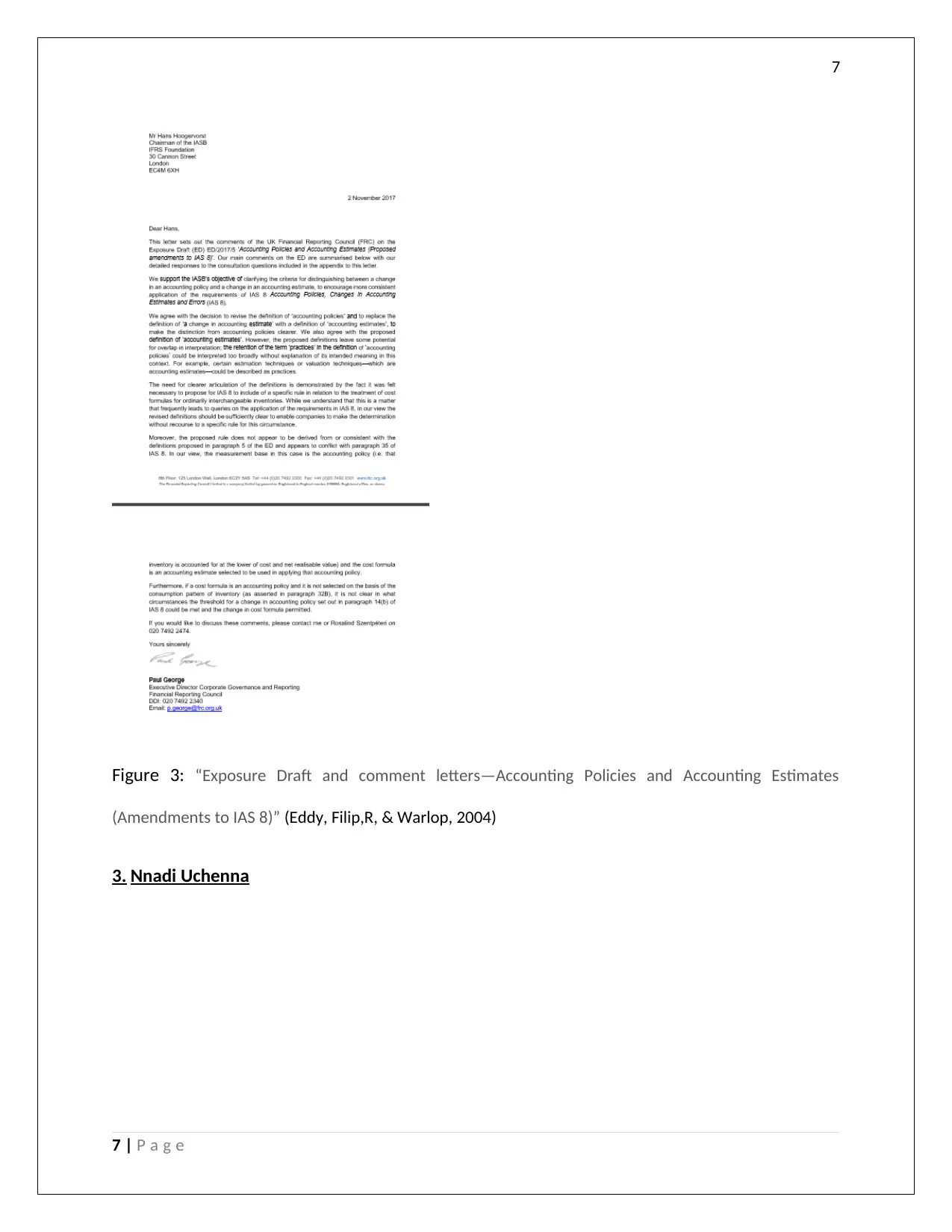
2. Financial Reporting Council (FRC) [UK]
6 | P a g e
tabler-icon-diamond-filled.svg

Paraphrase This Document

Need a fresh take? Get an instant paraphrase of this document with our AI Paraphraser
Document Page
7
Figure 3: “Exposure Draft and comment letters—Accounting Policies and Accounting Estimates
(Amendments to IAS 8)” (Eddy, Filip,R, & Warlop, 2004)
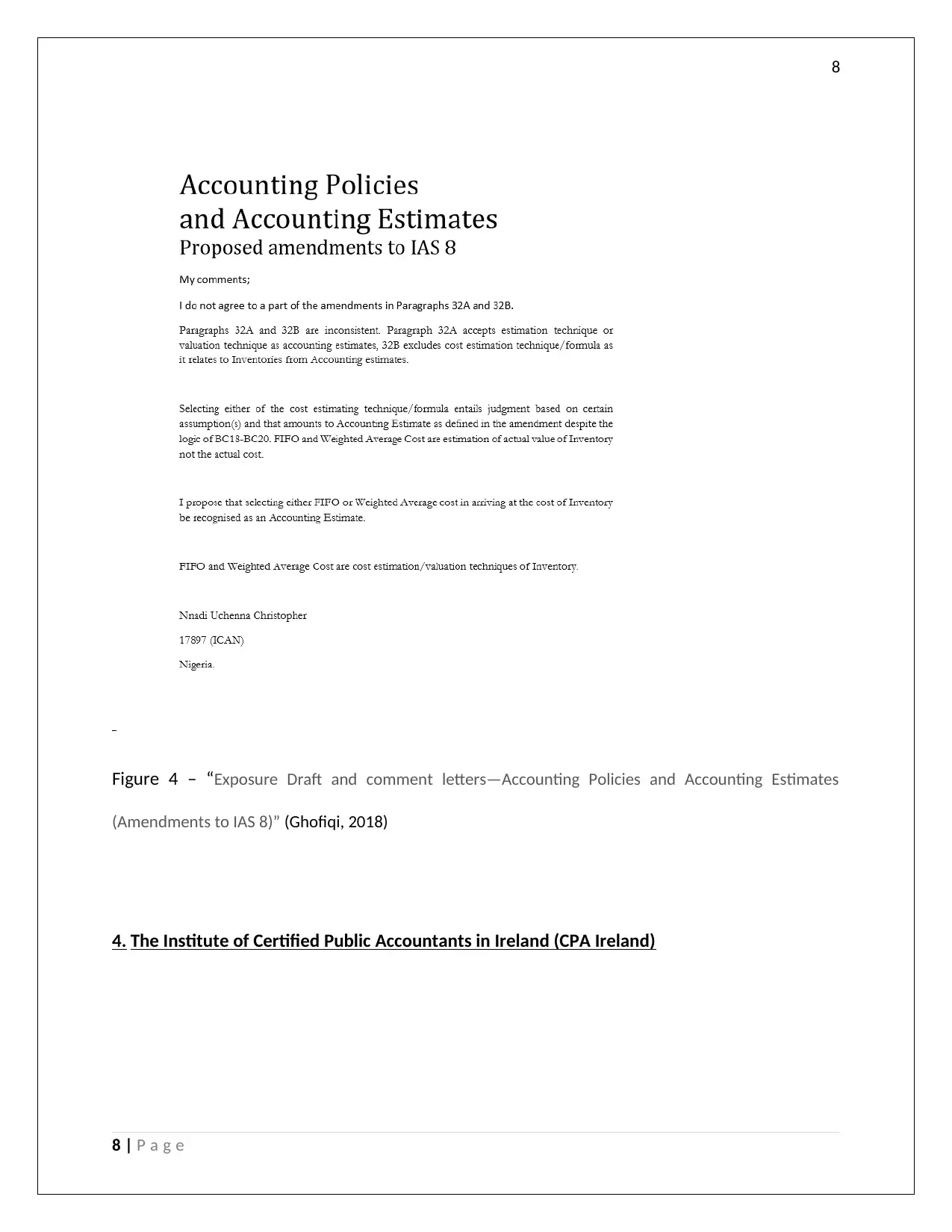
3. Nnadi Uchenna
7 | P a g e
Document Page
8
Figure 4 – “Exposure Draft and comment letters—Accounting Policies and Accounting Estimates
(Amendments to IAS 8)” (Ghofiqi, 2018)
4. The Institute of Certified Public Accountants in Ireland (CPA Ireland)
8 | P a g e
Document Page
9
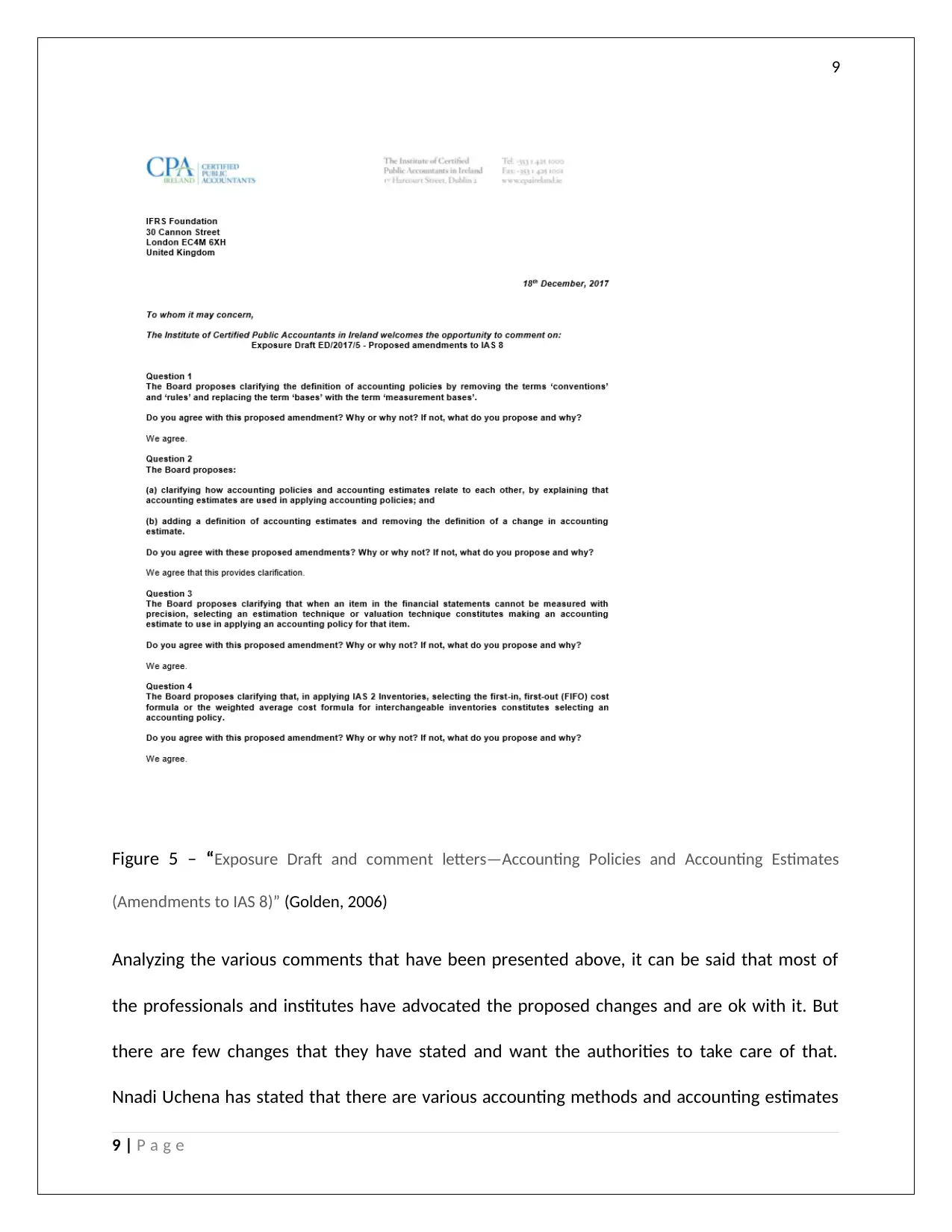
Figure 5 – Exposure Draft and comment letters—Accounting Policies and Accounting Estimates
(Amendments to IAS 8)” (Golden, 2006)
Analyzing the various comments that have been presented above, it can be said that most of
the professionals and institutes have advocated the proposed changes and are ok with it. But
there are few changes that they have stated and want the authorities to take care of that.
Nnadi Uchena has stated that there are various accounting methods and accounting estimates
9 | P a g e
tabler-icon-diamond-filled.svg

Paraphrase This Document

Need a fresh take? Get an instant paraphrase of this document with our AI Paraphraser
Document Page
10
that the companies need to follow. There are measure of costing which are adverse and it
depends on companies to companies on how they are following it. Basically, the aim is that
accountants and the stakeholders should understand that the basic difference between the
accounting standards and accounting estimates and they should apply it accordingly. All the
above comments have agreed to this amendment but there are few changes that they want
and the authorities should consider it accordingly (Iggers, 2018).
Arguments ‘for’ or ‘against’ regulation
Most of the amendments that have stated in the following draft exposure are for the
betterment of the conceptual reporting framework that companies need to follow when they
are applying their financial statements. These methods make it clear what are the overall
differences between accounting regulation and accounting estimates. If one is applied in place
of another then that may affect the basic accounting guidelines and can make the financial
statements materially misstated and thus the authorities have proposed such changes and the
management needs to make sure that professionals have proper knowledge about that so
those can be the ‘for’ reasons (Gullet, Kilgore, & Geddie, 2018). But there are lot of complexities
involved and there is a thin line between accounting regulation and accounting estimates and
sometimes both need to work in combination for the betterment of the accounting framework
(Johan, 2018). So, given the complexity involved these amendments are not enough to make
the professionals realize and make them understand the difference between these aspects of
accounting so they are not complete and thus not that helpful as they have mentioned.
10 | P a g e
Document Page
11
The main aim of these amendments is that they should not cause any material misstatement
and cause undervalue or overvaluation of the assets and liabilities and thus the investors should
get the correct picture about the position of the company and their financials.
Application of regulation theories (Public interest, private interest and
capture theory)
1. Public Interest theory
The given amendments are in the pretext of the public as common people are not aware
about the differences between the accounting estimates and accounting policies. The
common people needs to analyze the annual reports to understand whether they need to
invest in the company or not based on their overall financial statements (Kusnadi & Wei,
2017).
Private Interest Theory
It helps in stating the needs of the stakeholders and aims at wealth maximisation of the
shareholders by transferring them maximum interest for their investments. (Charles H,
Giovanna, Dennis M, & Robin W, 2015). It is important that the stakeholders needs to
understand what are the areas in which they need to invest and what are the areas in which
there might be some element of risk involved. Thus we see it helps in improving the overall
efficiency of the stakeholders (Lepistö & Ihantola, 2018).
Capture Theory – As per the capture theory the amendments are made to capture the needs of
the parties that are affected by it. So in this case also these topics are related to the
11 | P a g e
chevron_up_icon
1 out of 15
circle_padding
hide_on_mobile
zoom_out_icon
[object Object]