ICT Strategy Development for the Public Sector Commission: Report
VerifiedAdded on 2019/09/30
|37
|5871
|124
Report
AI Summary
This report provides a comprehensive overview of the ICT strategy developed for the Public Sector Commission by an intern, detailing the project's objectives, methodology, and outcomes. The project, managed using a tailored PRINCE2 approach, involved identifying the Commission's current and future ICT states, resulting in an ICT strategy, a list of strategic activities, and an explanatory report. The report highlights project completion against agreed criteria, deviations from the original scope due to the absence of a supporting business strategy, and the development of alternative deliverables. It assesses business benefits such as improved ICT governance and strategic planning, offers recommendations for continuous development and environmental scanning, and includes appendices with project documentation. The report also reflects on issues faced and lessons learned during the project, emphasizing the unusual nature of the project given the use of an intern and the positive feedback received from the Commission regarding the intern's performance and the quality of the deliverables.

ICT strategy for Public
Sector Commission
A summary of the work undertaken with the Public Sector Commission to
help them draft their first ICT Strategy, and help define some strategic
activities to support them during its implementation over the coming
years
Richard Hughes
10375697
MAN 6310
Sector Commission
A summary of the work undertaken with the Public Sector Commission to
help them draft their first ICT Strategy, and help define some strategic
activities to support them during its implementation over the coming
years
Richard Hughes
10375697
MAN 6310

Paraphrase This Document
Need a fresh take? Get an instant paraphrase of this document with our AI Paraphraser

1 CONTENTS
2 Executive Summary...............................................................................................................................4
3 Outcome Analysis.................................................................................................................................5
3.1 Project Completion........................................................................................................................5
3.1.1 Project Approach.....................................................................................................................5
3.1.2 Products and Project Measured Against Assessment Criteria.................................................5
3.1.3 Time........................................................................................................................................7
3.1.4 Budget.....................................................................................................................................7
3.1.5 Scope.......................................................................................................................................7
3.2 Scope Management.......................................................................................................................8
3.3 Project Implementation.................................................................................................................9
3.4 Project Deviations..........................................................................................................................9
3.4.1 Deviation 1: Strategic Plan......................................................................................................9
3.4.2 Deviation 2: ‘Roadmap’.........................................................................................................10
3.5 Final Project Schedule..................................................................................................................10
4 Description of the Products................................................................................................................12
4.1 ICT strategy..................................................................................................................................12
4.2 List of Strategic Activities.............................................................................................................12
4.3 Explanatory Report......................................................................................................................12
5 Assessment of Business Benefits........................................................................................................13
5.1 Development of an ICT strategy...................................................................................................13
5.2 ICT Governance............................................................................................................................13
5.3 Awareness of the Changing Environment....................................................................................13
5.4 Strategic Planning........................................................................................................................14
6 Recommendations..............................................................................................................................15
6.1 Continuous Development............................................................................................................15
6.2 Environmental Scanning...............................................................................................................15
6.3 Identifying and Managing Projects and Risks...............................................................................15
7 Project Review....................................................................................................................................16
7.1 Issues Faced and Lessons Learned...............................................................................................16
7.2 What Went Well...........................................................................................................................16
2
2 Executive Summary...............................................................................................................................4
3 Outcome Analysis.................................................................................................................................5
3.1 Project Completion........................................................................................................................5
3.1.1 Project Approach.....................................................................................................................5
3.1.2 Products and Project Measured Against Assessment Criteria.................................................5
3.1.3 Time........................................................................................................................................7
3.1.4 Budget.....................................................................................................................................7
3.1.5 Scope.......................................................................................................................................7
3.2 Scope Management.......................................................................................................................8
3.3 Project Implementation.................................................................................................................9
3.4 Project Deviations..........................................................................................................................9
3.4.1 Deviation 1: Strategic Plan......................................................................................................9
3.4.2 Deviation 2: ‘Roadmap’.........................................................................................................10
3.5 Final Project Schedule..................................................................................................................10
4 Description of the Products................................................................................................................12
4.1 ICT strategy..................................................................................................................................12
4.2 List of Strategic Activities.............................................................................................................12
4.3 Explanatory Report......................................................................................................................12
5 Assessment of Business Benefits........................................................................................................13
5.1 Development of an ICT strategy...................................................................................................13
5.2 ICT Governance............................................................................................................................13
5.3 Awareness of the Changing Environment....................................................................................13
5.4 Strategic Planning........................................................................................................................14
6 Recommendations..............................................................................................................................15
6.1 Continuous Development............................................................................................................15
6.2 Environmental Scanning...............................................................................................................15
6.3 Identifying and Managing Projects and Risks...............................................................................15
7 Project Review....................................................................................................................................16
7.1 Issues Faced and Lessons Learned...............................................................................................16
7.2 What Went Well...........................................................................................................................16
2

8 Appendix A - Overview of Creation of Strategy...................................................................................17
9 Appendix B – Project Gantt Chart.......................................................................................................18
10 Appendix C – Sample Daily Log.........................................................................................................19
11 Appendix D – Weekly Status Reports................................................................................................20
12 Appendix E – Weekly Checkpoint Meetings with The Commission...................................................26
13 Appendix F – Basecamp Entries........................................................................................................32
14 References........................................................................................................................................33
3
9 Appendix B – Project Gantt Chart.......................................................................................................18
10 Appendix C – Sample Daily Log.........................................................................................................19
11 Appendix D – Weekly Status Reports................................................................................................20
12 Appendix E – Weekly Checkpoint Meetings with The Commission...................................................26
13 Appendix F – Basecamp Entries........................................................................................................32
14 References........................................................................................................................................33
3
⊘ This is a preview!⊘
Do you want full access?
Subscribe today to unlock all pages.

Trusted by 1+ million students worldwide

2 EXECUTIVE SUMMARY
This project required an intern to work with the Public Sector Commission to develop an ICT strategy,
roadmap and supporting guidance. The project began on 11th January 2016, and was completed on time
after 176 hours of work by the intern. The project was managed in line with a tailored version of
PRINCE2, and proper project documentation was maintained to demonstrate this.
The scope of the original project was to identify the current state of the Commission’s strategic
approach to ICT, and following research and consultation, to identify the likely future state of ICT as
envisaged through the creation of a comprehensive ICT strategy. This was to include a roadmap of
activities and supporting guidance to assist the Commission to deliver the strategy.
Once the project was underway, it was apparent that the Commission did not have a business strategy
that would support the development of an ICT strategy. This was because the Commission’s Executive
Board prefers to interpret the Public Sector Management Act 1994 as an alternative to developing a
business strategy. The senior managers in the Commission, however, recognise the external strategic
drivers that are compelling them to create an ICT strategy. Consequently, and in agreement with the
Commission, the project used the external strategic drivers in order to help fill the strategic void.
This helped the Commission to develop its understanding of the strategy gap, and to begin to construct
components for an ICT strategy. Furthermore, since it would be difficult to create a roadmap, an
alternative was agreed with the Commission whereby a list of strategic activities for the next few years
was identified. These activities linked back to the strategic drivers and provide the Commission with the
strategic plan to be used until they develop an ICT strategy to align with their future business strategy.
The final products that have been developed for the Commission include:
An ICT strategy presented on a single page to help employees visualise the reasons behind the
strategy
A list of strategic activities containing headline details of projects, project tasks and other
activities through the use of 4 work streams that are necessary to ensure the delivery of the ICT
strategy
An explanatory report and additional guidance that provides information about program and
project governance, and other ICT issues
The intention is that the Commission will use an existing ICT governance group to oversee the delivery of
the strategy and the associated activities, but will maintain flexibility to develop these as the external
drivers shift their emphasis. The project hopes that this will also encourage changes within the
Commission regarding the development of general business strategy.
The use of an intern to develop an ICT strategy for a major public sector agency is unusual. Ordinarily,
this is unlikely to be an approach that would attract significant support from business strategists. The
Commission have reported that they found the process to be extremely useful, and it has helped to
develop their organisational learning.
4
This project required an intern to work with the Public Sector Commission to develop an ICT strategy,
roadmap and supporting guidance. The project began on 11th January 2016, and was completed on time
after 176 hours of work by the intern. The project was managed in line with a tailored version of
PRINCE2, and proper project documentation was maintained to demonstrate this.
The scope of the original project was to identify the current state of the Commission’s strategic
approach to ICT, and following research and consultation, to identify the likely future state of ICT as
envisaged through the creation of a comprehensive ICT strategy. This was to include a roadmap of
activities and supporting guidance to assist the Commission to deliver the strategy.
Once the project was underway, it was apparent that the Commission did not have a business strategy
that would support the development of an ICT strategy. This was because the Commission’s Executive
Board prefers to interpret the Public Sector Management Act 1994 as an alternative to developing a
business strategy. The senior managers in the Commission, however, recognise the external strategic
drivers that are compelling them to create an ICT strategy. Consequently, and in agreement with the
Commission, the project used the external strategic drivers in order to help fill the strategic void.
This helped the Commission to develop its understanding of the strategy gap, and to begin to construct
components for an ICT strategy. Furthermore, since it would be difficult to create a roadmap, an
alternative was agreed with the Commission whereby a list of strategic activities for the next few years
was identified. These activities linked back to the strategic drivers and provide the Commission with the
strategic plan to be used until they develop an ICT strategy to align with their future business strategy.
The final products that have been developed for the Commission include:
An ICT strategy presented on a single page to help employees visualise the reasons behind the
strategy
A list of strategic activities containing headline details of projects, project tasks and other
activities through the use of 4 work streams that are necessary to ensure the delivery of the ICT
strategy
An explanatory report and additional guidance that provides information about program and
project governance, and other ICT issues
The intention is that the Commission will use an existing ICT governance group to oversee the delivery of
the strategy and the associated activities, but will maintain flexibility to develop these as the external
drivers shift their emphasis. The project hopes that this will also encourage changes within the
Commission regarding the development of general business strategy.
The use of an intern to develop an ICT strategy for a major public sector agency is unusual. Ordinarily,
this is unlikely to be an approach that would attract significant support from business strategists. The
Commission have reported that they found the process to be extremely useful, and it has helped to
develop their organisational learning.
4
Paraphrase This Document
Need a fresh take? Get an instant paraphrase of this document with our AI Paraphraser

A number of lessons have been learnt as a result of the project, and these include greater initial scrutiny
of internship requests for projects such as these.
5
of internship requests for projects such as these.
5
3 OUTCOME ANALYSIS
3.1 PROJECT COMPLETION
3.1.1 Project Approach
The project was managed in accordance with a tailored version of PRINCE 2. The project brief was the
initial advertisement for the internship, from which the project was initiated. The project management
team comprised 2 members of staff from the Commission (working ad hoc hours) and the Project
Manager. The outline business case was the project proposal produced for the Capstone Integration
Unit. This included sections dealing with project feasibility, risks, roles and responsibilities, scope,
timescales and quality.
The Executive Director at the Commission undertook the role of Project Board, and the ICT Manager was
project sponsor. Commission-wide oversight was provided through formal presentations by the Project
Manager to the Commission’s Information Systems Governance Group (ISGG). Products were agreed in
the project proposal, and milestones set. The Gantt chart is shown in Appendix B. Weekly checkpoint
meetings were kept and details of these are shown in Appendix E. A daily log was also maintained, and
an extract of this shown in Appendix C. In addition, weekly summaries were provided to the university
Unit Coordinator via Basecamp (Appendix D and Appendix F). These mechanisms enabled issues and
lessons to be captured and tracked.
3.1.2 Products and Project Measured Against Assessment Criteria
The agreed assessment criteria were as follows:
1. Confirmation that the project has been undertaken in line with PRINCE2 project management
principles
2. Completion of the project against the agreed proposal
3. Satisfactory and appropriate communication with the Unit Coordinator and the Commission
4. Feedback from the Commission regarding the conduct and performance of the intern together
with views regarding the quality of the products
5. Feedback from the Commission regarding the contribution made by the intern to the ICT and
Communications Directorate
Assessment Criteria 1 – Project undertaken using PRINCE2 Principles
The project was undertaken using a tailored set of PRINCE2 principles. These are outlined in section
3.1.1 above.
Assessment Criteria 2 – Completion of the project against the agreed proposal
The project has delivered 3 products as agreed in the initial proposal. The variations from the proposal
were agreed with the client during the early stages of the project, and the reasons for the variations are
outlined in section 3.4.1 and 3.4.2.
6
3.1 PROJECT COMPLETION
3.1.1 Project Approach
The project was managed in accordance with a tailored version of PRINCE 2. The project brief was the
initial advertisement for the internship, from which the project was initiated. The project management
team comprised 2 members of staff from the Commission (working ad hoc hours) and the Project
Manager. The outline business case was the project proposal produced for the Capstone Integration
Unit. This included sections dealing with project feasibility, risks, roles and responsibilities, scope,
timescales and quality.
The Executive Director at the Commission undertook the role of Project Board, and the ICT Manager was
project sponsor. Commission-wide oversight was provided through formal presentations by the Project
Manager to the Commission’s Information Systems Governance Group (ISGG). Products were agreed in
the project proposal, and milestones set. The Gantt chart is shown in Appendix B. Weekly checkpoint
meetings were kept and details of these are shown in Appendix E. A daily log was also maintained, and
an extract of this shown in Appendix C. In addition, weekly summaries were provided to the university
Unit Coordinator via Basecamp (Appendix D and Appendix F). These mechanisms enabled issues and
lessons to be captured and tracked.
3.1.2 Products and Project Measured Against Assessment Criteria
The agreed assessment criteria were as follows:
1. Confirmation that the project has been undertaken in line with PRINCE2 project management
principles
2. Completion of the project against the agreed proposal
3. Satisfactory and appropriate communication with the Unit Coordinator and the Commission
4. Feedback from the Commission regarding the conduct and performance of the intern together
with views regarding the quality of the products
5. Feedback from the Commission regarding the contribution made by the intern to the ICT and
Communications Directorate
Assessment Criteria 1 – Project undertaken using PRINCE2 Principles
The project was undertaken using a tailored set of PRINCE2 principles. These are outlined in section
3.1.1 above.
Assessment Criteria 2 – Completion of the project against the agreed proposal
The project has delivered 3 products as agreed in the initial proposal. The variations from the proposal
were agreed with the client during the early stages of the project, and the reasons for the variations are
outlined in section 3.4.1 and 3.4.2.
6
⊘ This is a preview!⊘
Do you want full access?
Subscribe today to unlock all pages.
Trusted by 1+ million students worldwide

Assessment Criteria 3 – Satisfactory and appropriate communication with the Unit Coordinator and
the Commission
Weekly communication was undertaken with the Commission via checkpoint meetings. These are
documented in Appendix E. Additional communications were undertaken through personal meetings,
emails and workshops.
Weekly communication was undertaken with the Unit Coordinator via Basecamp. These are
documented in Appendix D and Appendix F. Additional communications were undertaken through
personal meetings and emails.
Assessment Criteria 4 – Feedback from Commission regarding the conduct and performance of the
intern together with views regarding the quality of the products
Verbal feedback from the Commission has been extremely positive regarding both the conduct and
performance of the intern, and the quality of the products has been rated highly. Written feedback has
been requested and will be forwarded when available.
Assessment Criteria 5 – Feedback from the Commission regarding the contribution made by the intern
to the ICT and Communications Directorate
Verbal feedback from the Public Sector Commission ICT and Communications Directorate has been
extremely positive regarding the contribution made by the intern. This has included running workshops
with other Directorates in the Commission in order to impress the importance of ICT as an enabling
service in order to support defined business processes.
7
the Commission
Weekly communication was undertaken with the Commission via checkpoint meetings. These are
documented in Appendix E. Additional communications were undertaken through personal meetings,
emails and workshops.
Weekly communication was undertaken with the Unit Coordinator via Basecamp. These are
documented in Appendix D and Appendix F. Additional communications were undertaken through
personal meetings and emails.
Assessment Criteria 4 – Feedback from Commission regarding the conduct and performance of the
intern together with views regarding the quality of the products
Verbal feedback from the Commission has been extremely positive regarding both the conduct and
performance of the intern, and the quality of the products has been rated highly. Written feedback has
been requested and will be forwarded when available.
Assessment Criteria 5 – Feedback from the Commission regarding the contribution made by the intern
to the ICT and Communications Directorate
Verbal feedback from the Public Sector Commission ICT and Communications Directorate has been
extremely positive regarding the contribution made by the intern. This has included running workshops
with other Directorates in the Commission in order to impress the importance of ICT as an enabling
service in order to support defined business processes.
7
Paraphrase This Document
Need a fresh take? Get an instant paraphrase of this document with our AI Paraphraser
3.1.3 Time
The original timescales for completion of the project have been met.
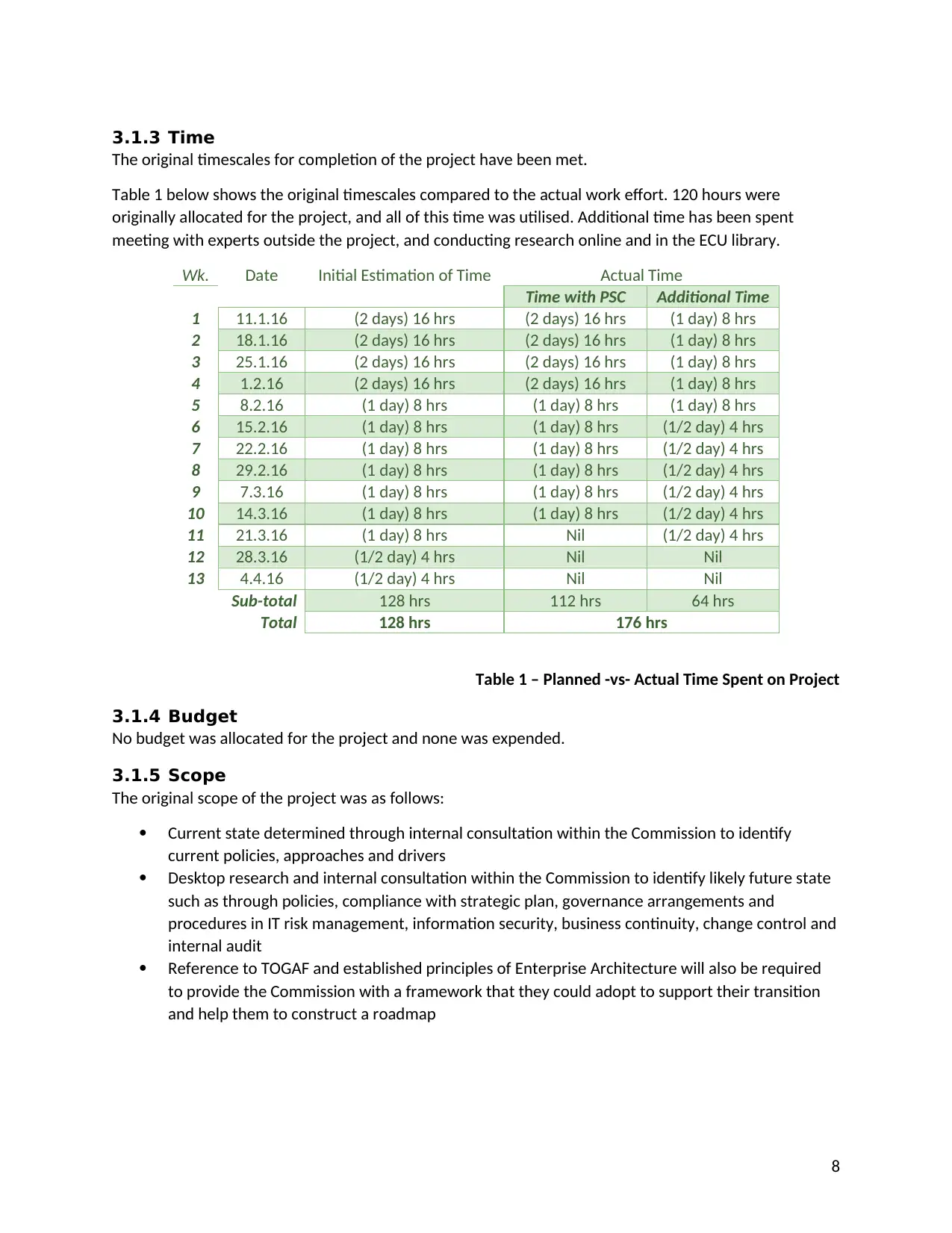
Table 1 below shows the original timescales compared to the actual work effort. 120 hours were
originally allocated for the project, and all of this time was utilised. Additional time has been spent
meeting with experts outside the project, and conducting research online and in the ECU library.
Wk. Date Initial Estimation of Time Actual Time
Time with PSC Additional Time
1 11.1.16 (2 days) 16 hrs (2 days) 16 hrs (1 day) 8 hrs
2 18.1.16 (2 days) 16 hrs (2 days) 16 hrs (1 day) 8 hrs
3 25.1.16 (2 days) 16 hrs (2 days) 16 hrs (1 day) 8 hrs
4 1.2.16 (2 days) 16 hrs (2 days) 16 hrs (1 day) 8 hrs
5 8.2.16 (1 day) 8 hrs (1 day) 8 hrs (1 day) 8 hrs
6 15.2.16 (1 day) 8 hrs (1 day) 8 hrs (1/2 day) 4 hrs
7 22.2.16 (1 day) 8 hrs (1 day) 8 hrs (1/2 day) 4 hrs
8 29.2.16 (1 day) 8 hrs (1 day) 8 hrs (1/2 day) 4 hrs
9 7.3.16 (1 day) 8 hrs (1 day) 8 hrs (1/2 day) 4 hrs
10 14.3.16 (1 day) 8 hrs (1 day) 8 hrs (1/2 day) 4 hrs
11 21.3.16 (1 day) 8 hrs Nil (1/2 day) 4 hrs
12 28.3.16 (1/2 day) 4 hrs Nil Nil
13 4.4.16 (1/2 day) 4 hrs Nil Nil
Sub-total 128 hrs 112 hrs 64 hrs
Total 128 hrs 176 hrs
Table 1 – Planned -vs- Actual Time Spent on Project
3.1.4 Budget
No budget was allocated for the project and none was expended.
3.1.5 Scope
The original scope of the project was as follows:
Current state determined through internal consultation within the Commission to identify
current policies, approaches and drivers
Desktop research and internal consultation within the Commission to identify likely future state
such as through policies, compliance with strategic plan, governance arrangements and
procedures in IT risk management, information security, business continuity, change control and
internal audit
Reference to TOGAF and established principles of Enterprise Architecture will also be required
to provide the Commission with a framework that they could adopt to support their transition
and help them to construct a roadmap
8
The original timescales for completion of the project have been met.
Table 1 below shows the original timescales compared to the actual work effort. 120 hours were
originally allocated for the project, and all of this time was utilised. Additional time has been spent
meeting with experts outside the project, and conducting research online and in the ECU library.
Wk. Date Initial Estimation of Time Actual Time
Time with PSC Additional Time
1 11.1.16 (2 days) 16 hrs (2 days) 16 hrs (1 day) 8 hrs
2 18.1.16 (2 days) 16 hrs (2 days) 16 hrs (1 day) 8 hrs
3 25.1.16 (2 days) 16 hrs (2 days) 16 hrs (1 day) 8 hrs
4 1.2.16 (2 days) 16 hrs (2 days) 16 hrs (1 day) 8 hrs
5 8.2.16 (1 day) 8 hrs (1 day) 8 hrs (1 day) 8 hrs
6 15.2.16 (1 day) 8 hrs (1 day) 8 hrs (1/2 day) 4 hrs
7 22.2.16 (1 day) 8 hrs (1 day) 8 hrs (1/2 day) 4 hrs
8 29.2.16 (1 day) 8 hrs (1 day) 8 hrs (1/2 day) 4 hrs
9 7.3.16 (1 day) 8 hrs (1 day) 8 hrs (1/2 day) 4 hrs
10 14.3.16 (1 day) 8 hrs (1 day) 8 hrs (1/2 day) 4 hrs
11 21.3.16 (1 day) 8 hrs Nil (1/2 day) 4 hrs
12 28.3.16 (1/2 day) 4 hrs Nil Nil
13 4.4.16 (1/2 day) 4 hrs Nil Nil
Sub-total 128 hrs 112 hrs 64 hrs
Total 128 hrs 176 hrs
Table 1 – Planned -vs- Actual Time Spent on Project
3.1.4 Budget
No budget was allocated for the project and none was expended.
3.1.5 Scope
The original scope of the project was as follows:
Current state determined through internal consultation within the Commission to identify
current policies, approaches and drivers
Desktop research and internal consultation within the Commission to identify likely future state
such as through policies, compliance with strategic plan, governance arrangements and
procedures in IT risk management, information security, business continuity, change control and
internal audit
Reference to TOGAF and established principles of Enterprise Architecture will also be required
to provide the Commission with a framework that they could adopt to support their transition
and help them to construct a roadmap
8

The agreed products to be delivered as a result of the project were as follows:
A draft 3-year ICT strategy aligned with the Commission’s current strategic business plan, the
2014 Auditor-General’s recommendations, and the GCIO’s ICT strategy. The ICT strategy will
address issues such as maintaining good governance, operational planning, procurement
options and the prioritisation of information systems development.
A supporting draft 3-year roadmap showing how the Commission will develop ICT.
A covering report summarising the research and rationale behind the draft ICT strategy and
supporting roadmap.
The project has delivered the 3 agreed products that meet the requirements of the client, and were of
the quality they expected.
3.2 SCOPE MANAGEMENT
It is unlikely that many organisations would assign the production of an important strategy to an
external post-graduate intern. By their very nature, strategies set long-term goals and objectives
together with appropriate courses of action and allocation of resources needed to carry out the goals
(Chandler, 1962, p. 13). Put simply, strategic management is a process of assessing ‘what we are’ and
deciding and implementing ‘what we intend to be and how we are going to get there’ (Larson, Honig,
Gray, Dantin, & Baccarini, 2014, p. 27). Once agreed, it sets the theme and focus for the organisation’s
future direction. This requires consistency of action at all levels including the myriad of projects
necessary to implement the objectives that have been set (Larson et al., 2014, p. 27). It is interesting
that Larson et al. (2014) notes that many organisations can formulate strategy successfully, but struggle
with implementation.
In this project, an argument could be made that the Commission struggles with formulating strategy.
The risk is that it could reduce the ICT strategy project to one of ‘document production’ and not
‘strategy creation’. Administratively, it is difficult to guarantee that an intern would have the requisite
professional experience, business acumen, language skills, commitment, project management ability or
facilitation experience to create one. This is further compounded by the expectation that the ICT
strategy be completed in 120 hours using voluntary work.
Furthermore, using an external actor could remove strategic managers from the essential process of
defining and agreeing the business strategy, arguably a core function for which they are employed.
Both of these issues made it difficult to produce and manage a scope for the project that would deliver
acceptable and lasting results. The reconciliation of these issues was partially resolved when it became
apparent that the Commission viewed strategy from a different perspective from many other
organisations. This is explained in the deviations section of this report. By adopting an approach
designed to help them build their understanding, rather than trying to force a strategic approach on
them that would not work, the resulting scope was far easier to manage, and the products were then
tailored to meet the Commission’s expectations.
The degree to which this is ultimately successful for the Commission is beyond the scope of this project.
It will require the senior managers to develop a meaningful business strategy, and to then agree to
adopt the basic principles of this project’s ICT strategy (if they align with it). Both will then need to be
9
A draft 3-year ICT strategy aligned with the Commission’s current strategic business plan, the
2014 Auditor-General’s recommendations, and the GCIO’s ICT strategy. The ICT strategy will
address issues such as maintaining good governance, operational planning, procurement
options and the prioritisation of information systems development.
A supporting draft 3-year roadmap showing how the Commission will develop ICT.
A covering report summarising the research and rationale behind the draft ICT strategy and
supporting roadmap.
The project has delivered the 3 agreed products that meet the requirements of the client, and were of
the quality they expected.
3.2 SCOPE MANAGEMENT
It is unlikely that many organisations would assign the production of an important strategy to an
external post-graduate intern. By their very nature, strategies set long-term goals and objectives
together with appropriate courses of action and allocation of resources needed to carry out the goals
(Chandler, 1962, p. 13). Put simply, strategic management is a process of assessing ‘what we are’ and
deciding and implementing ‘what we intend to be and how we are going to get there’ (Larson, Honig,
Gray, Dantin, & Baccarini, 2014, p. 27). Once agreed, it sets the theme and focus for the organisation’s
future direction. This requires consistency of action at all levels including the myriad of projects
necessary to implement the objectives that have been set (Larson et al., 2014, p. 27). It is interesting
that Larson et al. (2014) notes that many organisations can formulate strategy successfully, but struggle
with implementation.
In this project, an argument could be made that the Commission struggles with formulating strategy.
The risk is that it could reduce the ICT strategy project to one of ‘document production’ and not
‘strategy creation’. Administratively, it is difficult to guarantee that an intern would have the requisite
professional experience, business acumen, language skills, commitment, project management ability or
facilitation experience to create one. This is further compounded by the expectation that the ICT
strategy be completed in 120 hours using voluntary work.
Furthermore, using an external actor could remove strategic managers from the essential process of
defining and agreeing the business strategy, arguably a core function for which they are employed.
Both of these issues made it difficult to produce and manage a scope for the project that would deliver
acceptable and lasting results. The reconciliation of these issues was partially resolved when it became
apparent that the Commission viewed strategy from a different perspective from many other
organisations. This is explained in the deviations section of this report. By adopting an approach
designed to help them build their understanding, rather than trying to force a strategic approach on
them that would not work, the resulting scope was far easier to manage, and the products were then
tailored to meet the Commission’s expectations.
The degree to which this is ultimately successful for the Commission is beyond the scope of this project.
It will require the senior managers to develop a meaningful business strategy, and to then agree to
adopt the basic principles of this project’s ICT strategy (if they align with it). Both will then need to be
9
⊘ This is a preview!⊘
Do you want full access?
Subscribe today to unlock all pages.
Trusted by 1+ million students worldwide

iteratively developed in line with normal business practice. It was for this reason that some project
efforts were expended on developing appropriate governance for the ICT strategy, arguably necessary
but slightly beyond the originally agreed scope.
3.3 PROJECT IMPLEMENTATION
Both the Executive Director and ICT Manager are extremely pleased with the products of the project.
The Project Manager was personally thanked during an ISGG meeting on 16th of March, and during
meetings at Dumas House in Perth. They both acknowledge that the presence of an experienced Project
Manager has helped to highlight issues that they have found difficult to raise with other senior
managers. They have confirmed that the products meet their expectations, and will be turned into a
series of official internal documents for use during their work with the GCIO.
The Commissioner is currently preparing a forward for the documents, and will sign these off at the next
ISGG meeting in April. This will position the Commission to be able to develop further products in line
with the GCIO strategy when it is endorsed by Cabinet in a few weeks’ time.
3.4 PROJECT DEVIATIONS
3.4.1 Deviation 1: Strategic Plan
After a few days of working with the Commission, it was evident that the project was more about
facilitating how the Commission understood ‘strategy’ and about linking it to the use of ICT, rather than
that of producing a detailed ICT strategy. The latter would not be understood, and would not contribute
to the Commission’s development.
From the outset, there was a disconnect between the written statements of the Commission and the
business practices they were employing. Initially these presented difficulties for management of the
scope. For example, in the advertisement for the internship, the requested products were a mix of
strategic and tactical documents which would not normally fit with the development of an ICT strategy.
This suggested confusion between tactics and strategy. In the event, the project agreed on set of
products that were strategic and from which subsequent tactical initiatives could later be developed.
It took a couple of weeks before the source of the confusion was traced. Despite having a publically
available three-year strategic business plan for 2014 to 2017, the Commission largely ignores this and
develops strategy based on their interpretation of the Public Sector Management Act 1994.
This Act sets out the remit of the Commission. As with most primary legislation, the Act is capable of
being interpreted in a number of ways (Renton, 1982), and provides a constant source of options when
decisions are required (Walshaw, 2014). It is difficult to envisage how this approach can adequately
support the development of either a modern business strategy or an accompanying ICT strategy. In
many organisations, including those in the public sector, ICT is now a strategic and not merely a
technological issue (Stace, 2012), and requires clear articulation so that enabling projects are focused
and have clearly defined benefits.
The senior executive managers in the Commission were not empowered (or prepared) to change their
existing approach, although a number recognised the risks associated with using the Act.
10
efforts were expended on developing appropriate governance for the ICT strategy, arguably necessary
but slightly beyond the originally agreed scope.
3.3 PROJECT IMPLEMENTATION
Both the Executive Director and ICT Manager are extremely pleased with the products of the project.
The Project Manager was personally thanked during an ISGG meeting on 16th of March, and during
meetings at Dumas House in Perth. They both acknowledge that the presence of an experienced Project
Manager has helped to highlight issues that they have found difficult to raise with other senior
managers. They have confirmed that the products meet their expectations, and will be turned into a
series of official internal documents for use during their work with the GCIO.
The Commissioner is currently preparing a forward for the documents, and will sign these off at the next
ISGG meeting in April. This will position the Commission to be able to develop further products in line
with the GCIO strategy when it is endorsed by Cabinet in a few weeks’ time.
3.4 PROJECT DEVIATIONS
3.4.1 Deviation 1: Strategic Plan
After a few days of working with the Commission, it was evident that the project was more about
facilitating how the Commission understood ‘strategy’ and about linking it to the use of ICT, rather than
that of producing a detailed ICT strategy. The latter would not be understood, and would not contribute
to the Commission’s development.
From the outset, there was a disconnect between the written statements of the Commission and the
business practices they were employing. Initially these presented difficulties for management of the
scope. For example, in the advertisement for the internship, the requested products were a mix of
strategic and tactical documents which would not normally fit with the development of an ICT strategy.
This suggested confusion between tactics and strategy. In the event, the project agreed on set of
products that were strategic and from which subsequent tactical initiatives could later be developed.
It took a couple of weeks before the source of the confusion was traced. Despite having a publically
available three-year strategic business plan for 2014 to 2017, the Commission largely ignores this and
develops strategy based on their interpretation of the Public Sector Management Act 1994.
This Act sets out the remit of the Commission. As with most primary legislation, the Act is capable of
being interpreted in a number of ways (Renton, 1982), and provides a constant source of options when
decisions are required (Walshaw, 2014). It is difficult to envisage how this approach can adequately
support the development of either a modern business strategy or an accompanying ICT strategy. In
many organisations, including those in the public sector, ICT is now a strategic and not merely a
technological issue (Stace, 2012), and requires clear articulation so that enabling projects are focused
and have clearly defined benefits.
The senior executive managers in the Commission were not empowered (or prepared) to change their
existing approach, although a number recognised the risks associated with using the Act.
10
Paraphrase This Document
Need a fresh take? Get an instant paraphrase of this document with our AI Paraphraser

Consequently, and in order to make the project relevant to the Commission, it was sensible to identify
all the strategic drivers, and then link these together as a set of ‘strategic approaches’. This would allow
for the creation of a simplified ICT strategy that would help support this newly defined approach. This
method was supported by the Executive Director who had responsibility for ICT, and resulted in the
scope of the project becoming far easier to manage. It required the following activities to be completed:
1. Identifying the four main strategic ‘drivers’ behind the need to create an ICT strategy
2. Translating these into ‘strategic guiding principles’, leading to outcomes and a delivery
mechanism
3. Creating delivery work-streams from these, against which projects and activities could be placed
4. Drawing up a list of strategic / project activities for the next three years aligned to the strategic
guiding principles, and capable of being traced back to the strategic drivers
5. Placing a governance mechanism over the work-streams with a mandate to select projects and
activities based on the principles and drivers
This is illustrated in Appendix A.
By securing early agreement from the Commission regarding this approach, the scope became far
clearer and much easier to manage, although it was not what was originally requested by the
Commission in the advertisement for the internship.
3.4.2 Deviation 2: ‘Roadmap’
Ordinarily, a technology roadmap would seek to match short-term and long-term goals with specific
technology solutions to help meet those goals, and would assist in reaching a consensus about how
technology can be used to support business requirements (Lee, Phaal, & Lee, 2011). In practical
everyday language, a roadmap shows how to get from one place to another. It appears fundamental
therefore that the existence of a technology roadmap assumes that an organisation knows where it is
currently positioned, and where it needs to go.
The difficulty with the Commission was that the business strategy was opaque and liable to change.
Given the medium to long-term activities that accompany the planning and procurement of technology,
a changing business strategy risks destabilising planned ICT activities. The ICT strategy created through
the project could not assess (or address) the strategic problems within the Commission, and this was
recognised by the managers. The solution was to create a list of strategic ICT projects and activities that
could support the identified strategy. Principles were drawn from enterprise architecture and TOGAF.
This is several steps removed from being a roadmap, or is masquerading as one. In the event the
Executive Director still preferred to call it a ‘roadmap’, and was delighted with the result. In project
terminology, this product met the customer’s expectations (Rose, 2005, p. 17), and in the light of the
context of the project does not mean that this has been a failure. By one view, the product is a
pragmatic solution to the client’s problems, and could be a first step to creating a true roadmap if the
strategic business approach of the Commission is aligned with current business practice.
3.5 FINAL PROJECT SCHEDULE
The initial project schedule indicated that the work could not be completed in 120 hours. ICT strategies
and roadmaps of equal quality in other public sector organisations took many months to develop. So
although the Commission wanted a roadmap, they were not in a position to develop one. A substitute
11
all the strategic drivers, and then link these together as a set of ‘strategic approaches’. This would allow
for the creation of a simplified ICT strategy that would help support this newly defined approach. This
method was supported by the Executive Director who had responsibility for ICT, and resulted in the
scope of the project becoming far easier to manage. It required the following activities to be completed:
1. Identifying the four main strategic ‘drivers’ behind the need to create an ICT strategy
2. Translating these into ‘strategic guiding principles’, leading to outcomes and a delivery
mechanism
3. Creating delivery work-streams from these, against which projects and activities could be placed
4. Drawing up a list of strategic / project activities for the next three years aligned to the strategic
guiding principles, and capable of being traced back to the strategic drivers
5. Placing a governance mechanism over the work-streams with a mandate to select projects and
activities based on the principles and drivers
This is illustrated in Appendix A.
By securing early agreement from the Commission regarding this approach, the scope became far
clearer and much easier to manage, although it was not what was originally requested by the
Commission in the advertisement for the internship.
3.4.2 Deviation 2: ‘Roadmap’
Ordinarily, a technology roadmap would seek to match short-term and long-term goals with specific
technology solutions to help meet those goals, and would assist in reaching a consensus about how
technology can be used to support business requirements (Lee, Phaal, & Lee, 2011). In practical
everyday language, a roadmap shows how to get from one place to another. It appears fundamental
therefore that the existence of a technology roadmap assumes that an organisation knows where it is
currently positioned, and where it needs to go.
The difficulty with the Commission was that the business strategy was opaque and liable to change.
Given the medium to long-term activities that accompany the planning and procurement of technology,
a changing business strategy risks destabilising planned ICT activities. The ICT strategy created through
the project could not assess (or address) the strategic problems within the Commission, and this was
recognised by the managers. The solution was to create a list of strategic ICT projects and activities that
could support the identified strategy. Principles were drawn from enterprise architecture and TOGAF.
This is several steps removed from being a roadmap, or is masquerading as one. In the event the
Executive Director still preferred to call it a ‘roadmap’, and was delighted with the result. In project
terminology, this product met the customer’s expectations (Rose, 2005, p. 17), and in the light of the
context of the project does not mean that this has been a failure. By one view, the product is a
pragmatic solution to the client’s problems, and could be a first step to creating a true roadmap if the
strategic business approach of the Commission is aligned with current business practice.
3.5 FINAL PROJECT SCHEDULE
The initial project schedule indicated that the work could not be completed in 120 hours. ICT strategies
and roadmaps of equal quality in other public sector organisations took many months to develop. So
although the Commission wanted a roadmap, they were not in a position to develop one. A substitute
11

option was drawn up which would meet their needs and take less time to produce. This brought the
schedule within the 120-hour range. The original intention was to complete all project related activities
whilst on-site with the Commission, but this proved difficult for a number of reasons:
Their on-site ICT did not permit access to various university systems hindering desk-based
research
Workshops took longer to facilitate in order to develop organisational learning
Additional off-site meetings were arranged in order to help develop the products (meeting with
university experts, library research and meeting with ECU CIO)
This increased the final schedule to 176 hours.
12
schedule within the 120-hour range. The original intention was to complete all project related activities
whilst on-site with the Commission, but this proved difficult for a number of reasons:
Their on-site ICT did not permit access to various university systems hindering desk-based
research
Workshops took longer to facilitate in order to develop organisational learning
Additional off-site meetings were arranged in order to help develop the products (meeting with
university experts, library research and meeting with ECU CIO)
This increased the final schedule to 176 hours.
12
⊘ This is a preview!⊘
Do you want full access?
Subscribe today to unlock all pages.
Trusted by 1+ million students worldwide

1 out of 37


Your All-in-One AI-Powered Toolkit for Academic Success.
+13062052269
info@desklib.com
Available 24*7 on WhatsApp / Email
![[object Object]](/_next/static/media/star-bottom.7253800d.svg)
Unlock your academic potential
Copyright © 2020–2026 A2Z Services. All Rights Reserved. Developed and managed by ZUCOL.