MBA600 Capstone: Evaluating IKEA's Competitive Advantage & Strategy

Verified

Added on  2023/01/16

|12
|861
|31
Case Study
AI Summary
This case study provides an analysis of IKEA's competitive advantages, focusing on its internal and external environments. The internal analysis utilizes the VRIO framework, highlighting IKEA's valuable resources, cost-effectiveness, and strong brand image. The external analysis employs the PESTEL framework, addressing challenges like cross-cultural communication and technological advancements. The study identifies cost-effectiveness as a major competitive advantage, stemming from economies of scale and technological integration. A SWOT analysis outlines IKEA's strengths, weaknesses, opportunities, and threats, including maintaining standards across locations, rising raw material costs, green business model opportunities, and increasing competition. The study concludes that IKEA needs to adopt innovative approaches to sustain its competitive edge in the evolving market. Desklib provides students access to similar solved assignments and past papers for academic support.
Document Page
Capstone
tabler-icon-diamond-filled.svg

Paraphrase This Document

Need a fresh take? Get an instant paraphrase of this document with our AI Paraphraser
Document Page
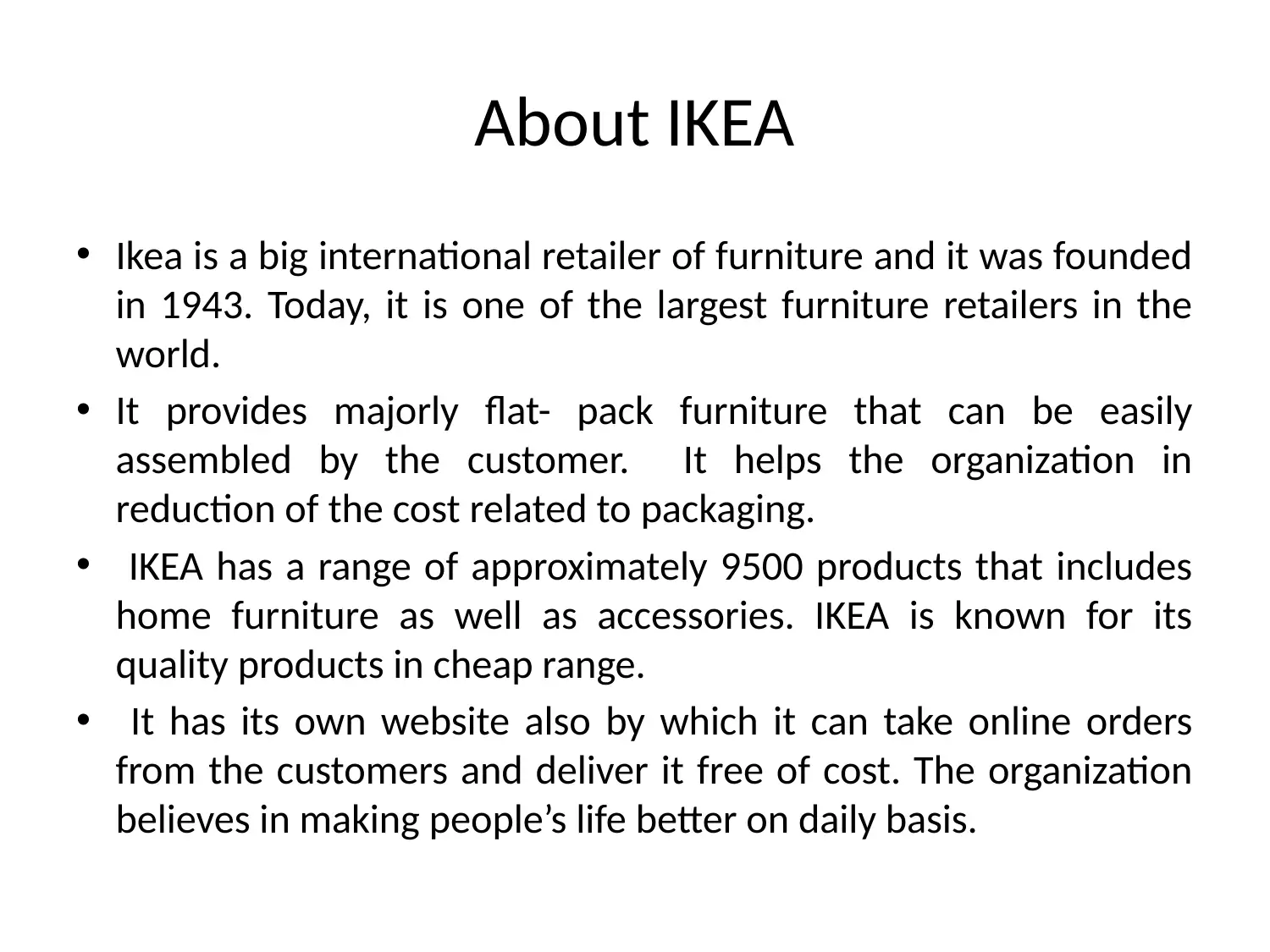
About IKEA
Ikea is a big international retailer of furniture and it was founded
in 1943. Today, it is one of the largest furniture retailers in the
world.
It provides majorly flat- pack furniture that can be easily
assembled by the customer. It helps the organization in
reduction of the cost related to packaging.
IKEA has a range of approximately 9500 products that includes
home furniture as well as accessories. IKEA is known for its
quality products in cheap range.
It has its own website also by which it can take online orders
from the customers and deliver it free of cost. The organization
believes in making people’s life better on daily basis.
Document Page
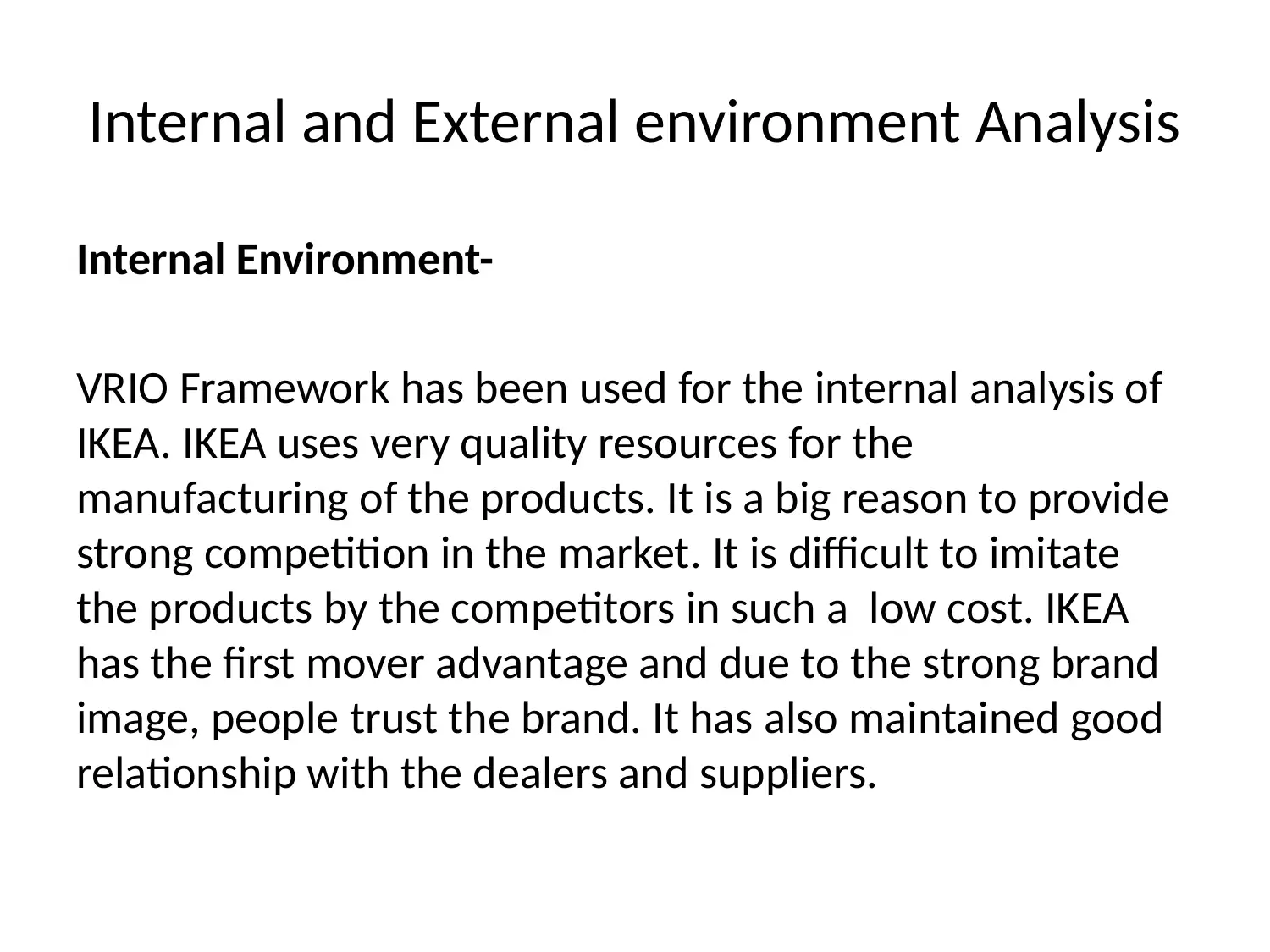
Internal and External environment Analysis
Internal Environment-
VRIO Framework has been used for the internal analysis of
IKEA. IKEA uses very quality resources for the
manufacturing of the products. It is a big reason to provide
strong competition in the market. It is difficult to imitate
the products by the competitors in such a low cost. IKEA
has the first mover advantage and due to the strong brand
image, people trust the brand. It has also maintained good
relationship with the dealers and suppliers.
Document Page
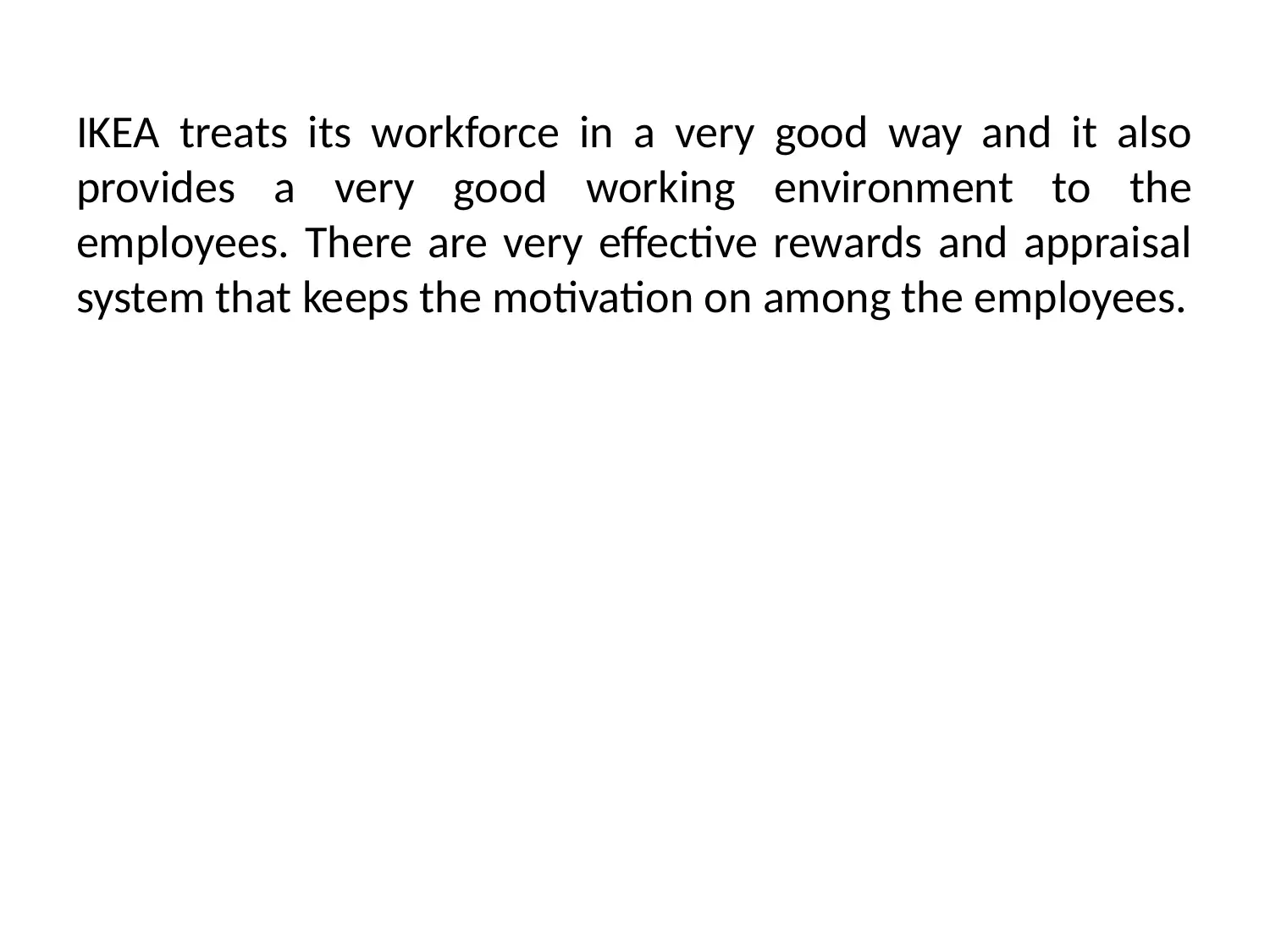
IKEA treats its workforce in a very good way and it also
provides a very good working environment to the
employees. There are very effective rewards and appraisal
system that keeps the motivation on among the employees.
tabler-icon-diamond-filled.svg

Paraphrase This Document

Need a fresh take? Get an instant paraphrase of this document with our AI Paraphraser
Document Page
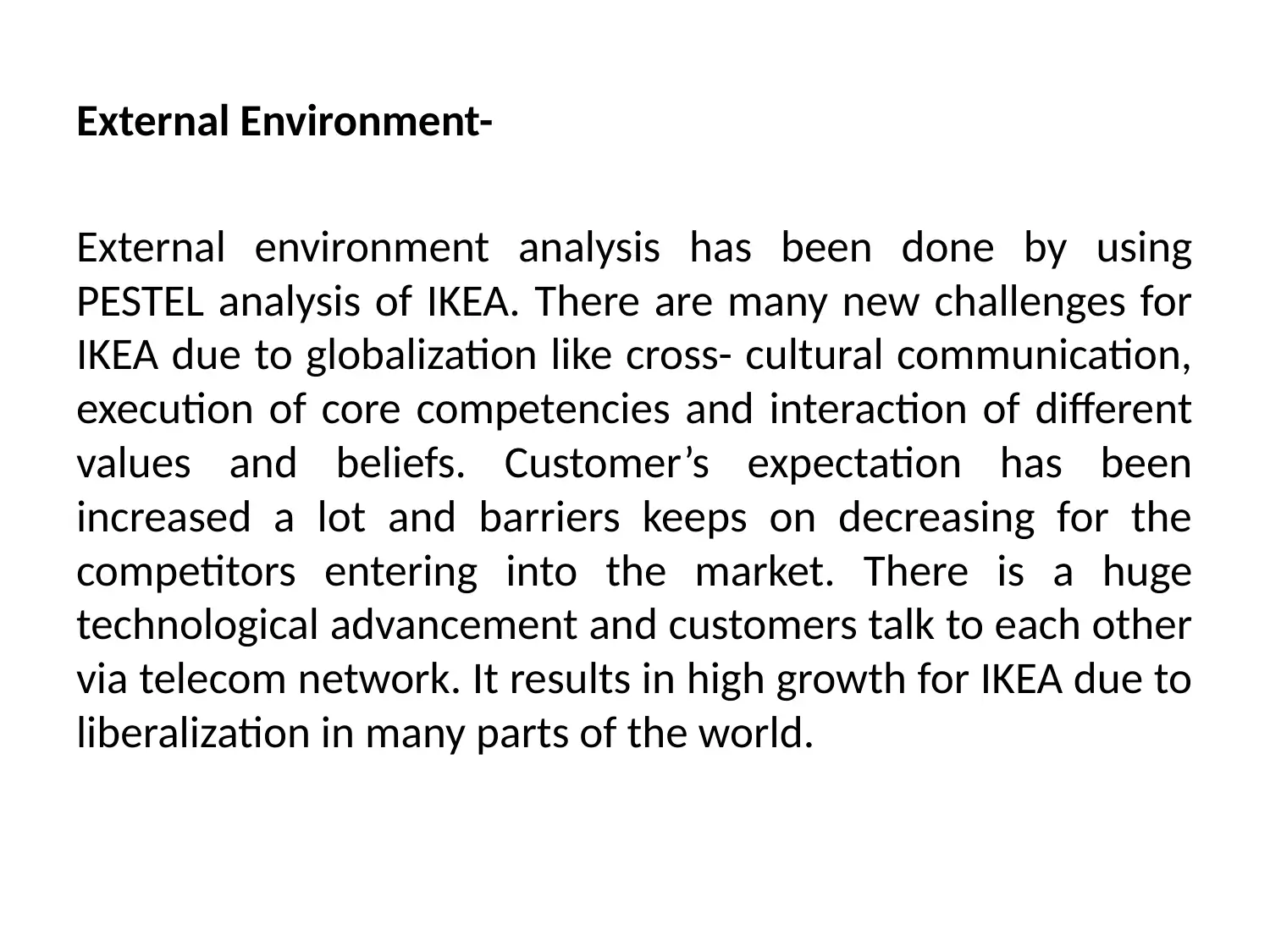
External Environment-
External environment analysis has been done by using
PESTEL analysis of IKEA. There are many new challenges for
IKEA due to globalization like cross- cultural communication,
execution of core competencies and interaction of different
values and beliefs. Customer’s expectation has been
increased a lot and barriers keeps on decreasing for the
competitors entering into the market. There is a huge
technological advancement and customers talk to each other
via telecom network. It results in high growth for IKEA due to
liberalization in many parts of the world.
Document Page
Competitive advantages
Cost Effectiveness is the major competitive advantage of
IKEA (Dragičević, 2018).
IKEA is a global furniture leader and it is known for
providing low price furniture that is a result of
economies of scale as well as technological integration of
various business process.
It never compromise in the quality of the products and
provide best quality products to the customers.
Document Page
SWOT analysis
Strengths-
IKEA has a very clear vision and it adds value to the
customers without focus on the market conditions. It
helps in creating a well-defined strategy that assist the
organization in facing the difficult competition.
IKEA is very clear about the concept of products that can
be easily assembled by the customers that leads in cost
reduction that passed on customers only.
tabler-icon-diamond-filled.svg

Paraphrase This Document

Need a fresh take? Get an instant paraphrase of this document with our AI Paraphraser
Document Page
Weaknesses-
IKEA has its operations in many countries all around the
world, so in such huge business it is very difficult to
maintain standards across locations (Alänge, Clancy and
Marmgren, 2016).
IKEA believes in cost leadership but in the present
context, cost of raw material is increase in that impacts
the profitability of the business. In such situation, it
becomes difficult to maintain the quality of the products
as well.
Document Page
Opportunities-
IKEA has a “green” business model and it actually helps in
attracting the customers who are very concerned about the
environment. There is a rise in ethical purchasing behavior
and customers like to buy only those products which are
not harmful for the environment.
IKEA is into cost leadership and it helps the organization in
focusing on the cost. It is also very conscious about the
quality of the products so mainly it is a big opportunity to
increase the customer base.
Document Page
Threats-
There are many big competitors who are imitating the
concept of IKEA so it is important for the organization to
adopt innovative methods to stay in the competition.
There is an era of internet and technology so DIY is a key
driver for the strategic success is no longer the only USP
of IKEA and its an advantage of other retailers who can
provide the products in lower cost as they do not have a
physical presence.
tabler-icon-diamond-filled.svg

Paraphrase This Document

Need a fresh take? Get an instant paraphrase of this document with our AI Paraphraser
Document Page
Conclusion
IKEA is growing on a very fast pace and it is a renowned
brand. There are many loyal customer who believes in the
quality and cost of the products. It needs to adopt some
innovative approach to sustain in the competitive
environment.
Document Page
References
Alänge, S., Clancy, G. and Marmgren, M. (2016).
Naturalizing sustainability in product development: A
comparative analysis of IKEA and SCA. Journal of Cleaner
Production, 135, pp.1009-1022.
Dragičević, I. (2018). Integrated marketing communications
on social networks: A case study on IKEA. Marketing, 49(2),
pp.93-104.
chevron_up_icon
1 out of 12
circle_padding
hide_on_mobile
zoom_out_icon
[object Object]