BUSI 1359 - MBA International Business: Globalization Impact in India
VerifiedAdded on 2022/12/02
|72
|21338
|394
Report
AI Summary
This research paper, conducted for an MBA International Business course, investigates the multifaceted impact of globalization on the Indian business landscape. The study focuses on the social, economic, and technological effects, specifically within the retail industry. The report includes an abstract summarizing the methodology, which involves a mixed-method approach using both quantitative and qualitative data collected from employees and managers in the Indian retail sector. The paper delves into the research background, rationale, problem statement, and objectives, followed by an extensive literature review that explores the concept of globalization, its various impacts on the Indian economy, and the challenges faced by Indian businesses. The methodology chapter outlines the research philosophy, design, and data collection methods, including questionnaire design and sampling techniques. Findings and analysis are presented through quantitative (correlation and regression) and qualitative analyses. The research concludes with key findings, recommendations, and limitations, highlighting the significant influence of globalization on Indian businesses, with specific emphasis on the retail sector. The research paper covers various chapters including introduction, literature review, methodology, findings, and conclusion.

0RESEARCH PAPER
NAME: Paatil Vaishnevi Sunjjoy Course ID: BUSI 1359
COURSE: MBA INTERNATIONAL BUSINESS (JANUARY 2018) STUDENT ID: 001017914
TITLE: Impact of Globalization on Indian Business: Socially, Economically and Technically NAME
OF THE TUTOR: Nisreen Esmaael
Coursework Header Sheet
242162-29
NAME: Paatil Vaishnevi Sunjjoy Course ID: BUSI 1359
COURSE: MBA INTERNATIONAL BUSINESS (JANUARY 2018) STUDENT ID: 001017914
TITLE: Impact of Globalization on Indian Business: Socially, Economically and Technically NAME
OF THE TUTOR: Nisreen Esmaael
Coursework Header Sheet
242162-29

Paraphrase This Document
Need a fresh take? Get an instant paraphrase of this document with our AI Paraphraser
1RESEARCH PAPER
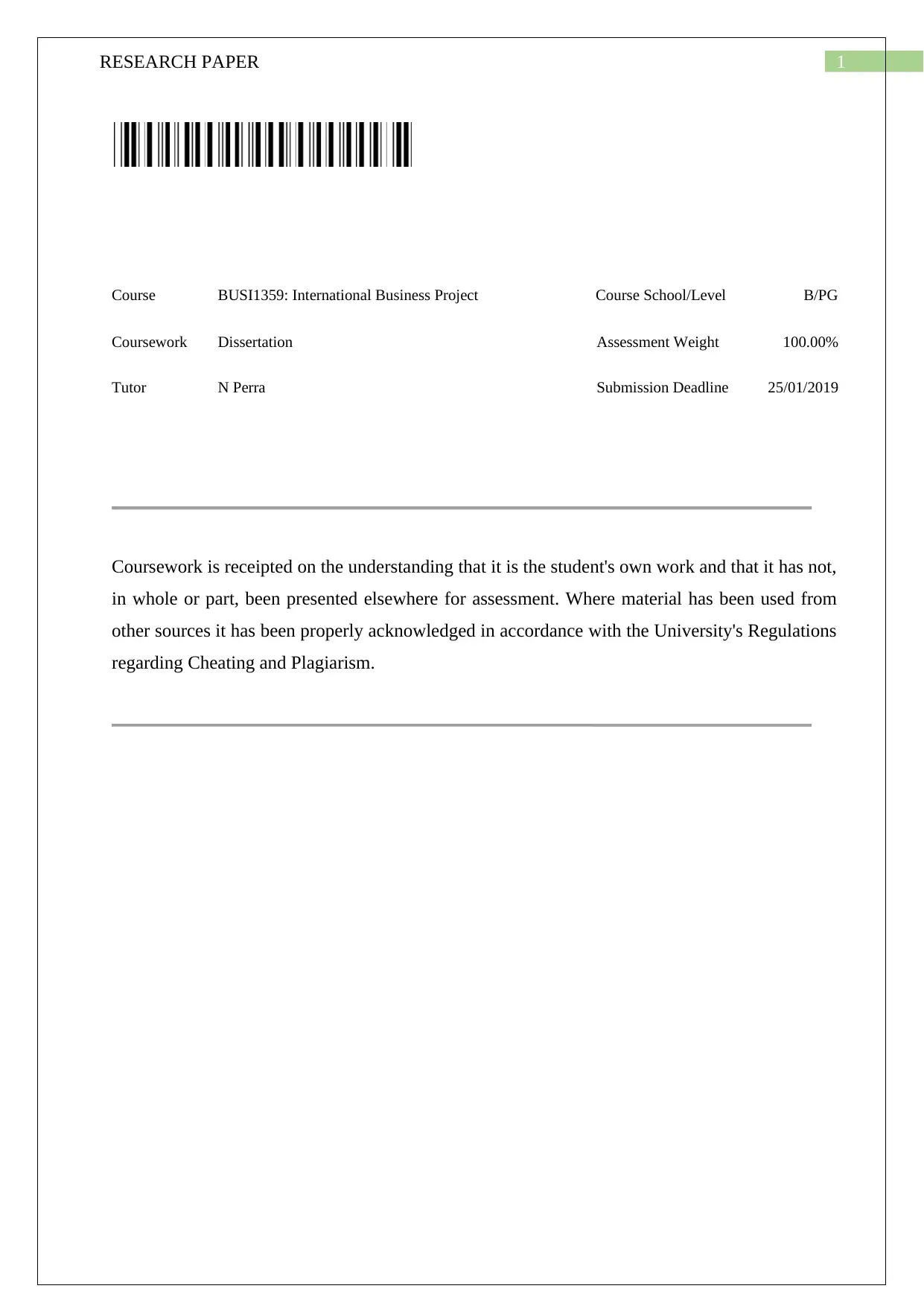
Course BUSI1359: International Business Project Course School/Level B/PG
Coursework Dissertation Assessment Weight 100.00%
Tutor N Perra Submission Deadline 25/01/2019
Coursework is receipted on the understanding that it is the student's own work and that it has not,
in whole or part, been presented elsewhere for assessment. Where material has been used from
other sources it has been properly acknowledged in accordance with the University's Regulations
regarding Cheating and Plagiarism.
Course BUSI1359: International Business Project Course School/Level B/PG
Coursework Dissertation Assessment Weight 100.00%
Tutor N Perra Submission Deadline 25/01/2019
Coursework is receipted on the understanding that it is the student's own work and that it has not,
in whole or part, been presented elsewhere for assessment. Where material has been used from
other sources it has been properly acknowledged in accordance with the University's Regulations
regarding Cheating and Plagiarism.

2RESEARCH PAPER
Grade
Awarded For Office Use Only Final Grade
Moderation required: yes/no Tutor Date
Grade
Awarded For Office Use Only Final Grade
Moderation required: yes/no Tutor Date
⊘ This is a preview!⊘
Do you want full access?
Subscribe today to unlock all pages.

Trusted by 1+ million students worldwide
3RESEARCH PAPER
Impact of globalization on Indian retail industry: socially,
economically and technically
Impact of globalization on Indian retail industry: socially,
economically and technically
Paraphrase This Document
Need a fresh take? Get an instant paraphrase of this document with our AI Paraphraser
4RESEARCH PAPER
Abstract
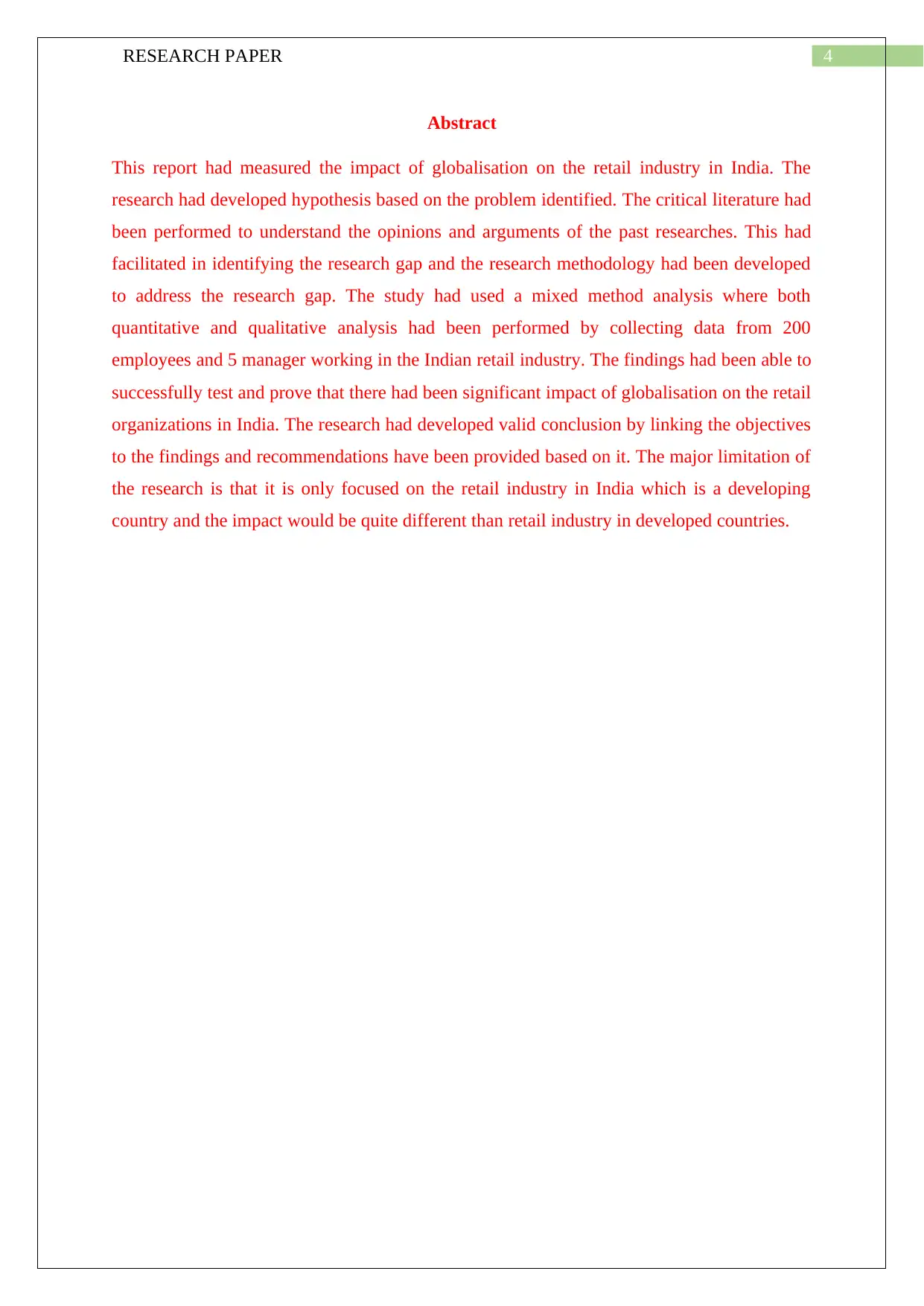
This report had measured the impact of globalisation on the retail industry in India. The
research had developed hypothesis based on the problem identified. The critical literature had
been performed to understand the opinions and arguments of the past researches. This had
facilitated in identifying the research gap and the research methodology had been developed
to address the research gap. The study had used a mixed method analysis where both
quantitative and qualitative analysis had been performed by collecting data from 200
employees and 5 manager working in the Indian retail industry. The findings had been able to
successfully test and prove that there had been significant impact of globalisation on the retail
organizations in India. The research had developed valid conclusion by linking the objectives
to the findings and recommendations have been provided based on it. The major limitation of
the research is that it is only focused on the retail industry in India which is a developing
country and the impact would be quite different than retail industry in developed countries.
Abstract
This report had measured the impact of globalisation on the retail industry in India. The
research had developed hypothesis based on the problem identified. The critical literature had
been performed to understand the opinions and arguments of the past researches. This had
facilitated in identifying the research gap and the research methodology had been developed
to address the research gap. The study had used a mixed method analysis where both
quantitative and qualitative analysis had been performed by collecting data from 200
employees and 5 manager working in the Indian retail industry. The findings had been able to
successfully test and prove that there had been significant impact of globalisation on the retail
organizations in India. The research had developed valid conclusion by linking the objectives
to the findings and recommendations have been provided based on it. The major limitation of
the research is that it is only focused on the retail industry in India which is a developing
country and the impact would be quite different than retail industry in developed countries.
5RESEARCH PAPER
Table of Contents
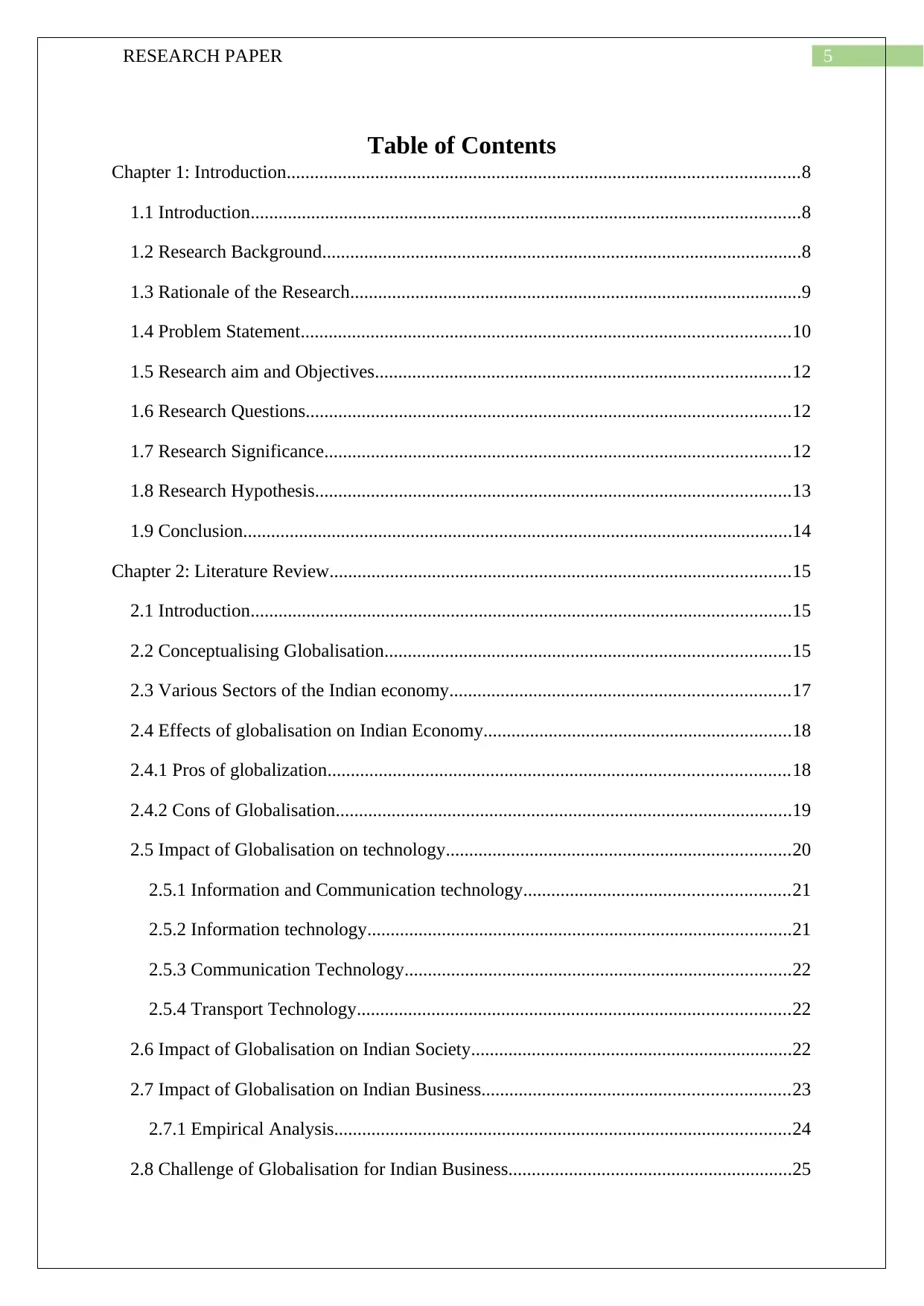
Chapter 1: Introduction..............................................................................................................8
1.1 Introduction......................................................................................................................8
1.2 Research Background.......................................................................................................8
1.3 Rationale of the Research.................................................................................................9
1.4 Problem Statement.........................................................................................................10
1.5 Research aim and Objectives.........................................................................................12
1.6 Research Questions........................................................................................................12
1.7 Research Significance....................................................................................................12
1.8 Research Hypothesis......................................................................................................13
1.9 Conclusion......................................................................................................................14
Chapter 2: Literature Review...................................................................................................15
2.1 Introduction....................................................................................................................15
2.2 Conceptualising Globalisation.......................................................................................15
2.3 Various Sectors of the Indian economy.........................................................................17
2.4 Effects of globalisation on Indian Economy..................................................................18
2.4.1 Pros of globalization...................................................................................................18
2.4.2 Cons of Globalisation..................................................................................................19
2.5 Impact of Globalisation on technology..........................................................................20
2.5.1 Information and Communication technology.........................................................21
2.5.2 Information technology...........................................................................................21
2.5.3 Communication Technology...................................................................................22
2.5.4 Transport Technology.............................................................................................22
2.6 Impact of Globalisation on Indian Society.....................................................................22
2.7 Impact of Globalisation on Indian Business..................................................................23
2.7.1 Empirical Analysis..................................................................................................24
2.8 Challenge of Globalisation for Indian Business.............................................................25
Table of Contents
Chapter 1: Introduction..............................................................................................................8
1.1 Introduction......................................................................................................................8
1.2 Research Background.......................................................................................................8
1.3 Rationale of the Research.................................................................................................9
1.4 Problem Statement.........................................................................................................10
1.5 Research aim and Objectives.........................................................................................12
1.6 Research Questions........................................................................................................12
1.7 Research Significance....................................................................................................12
1.8 Research Hypothesis......................................................................................................13
1.9 Conclusion......................................................................................................................14
Chapter 2: Literature Review...................................................................................................15
2.1 Introduction....................................................................................................................15
2.2 Conceptualising Globalisation.......................................................................................15
2.3 Various Sectors of the Indian economy.........................................................................17
2.4 Effects of globalisation on Indian Economy..................................................................18
2.4.1 Pros of globalization...................................................................................................18
2.4.2 Cons of Globalisation..................................................................................................19
2.5 Impact of Globalisation on technology..........................................................................20
2.5.1 Information and Communication technology.........................................................21
2.5.2 Information technology...........................................................................................21
2.5.3 Communication Technology...................................................................................22
2.5.4 Transport Technology.............................................................................................22
2.6 Impact of Globalisation on Indian Society.....................................................................22
2.7 Impact of Globalisation on Indian Business..................................................................23
2.7.1 Empirical Analysis..................................................................................................24
2.8 Challenge of Globalisation for Indian Business.............................................................25
⊘ This is a preview!⊘
Do you want full access?
Subscribe today to unlock all pages.
Trusted by 1+ million students worldwide
6RESEARCH PAPER
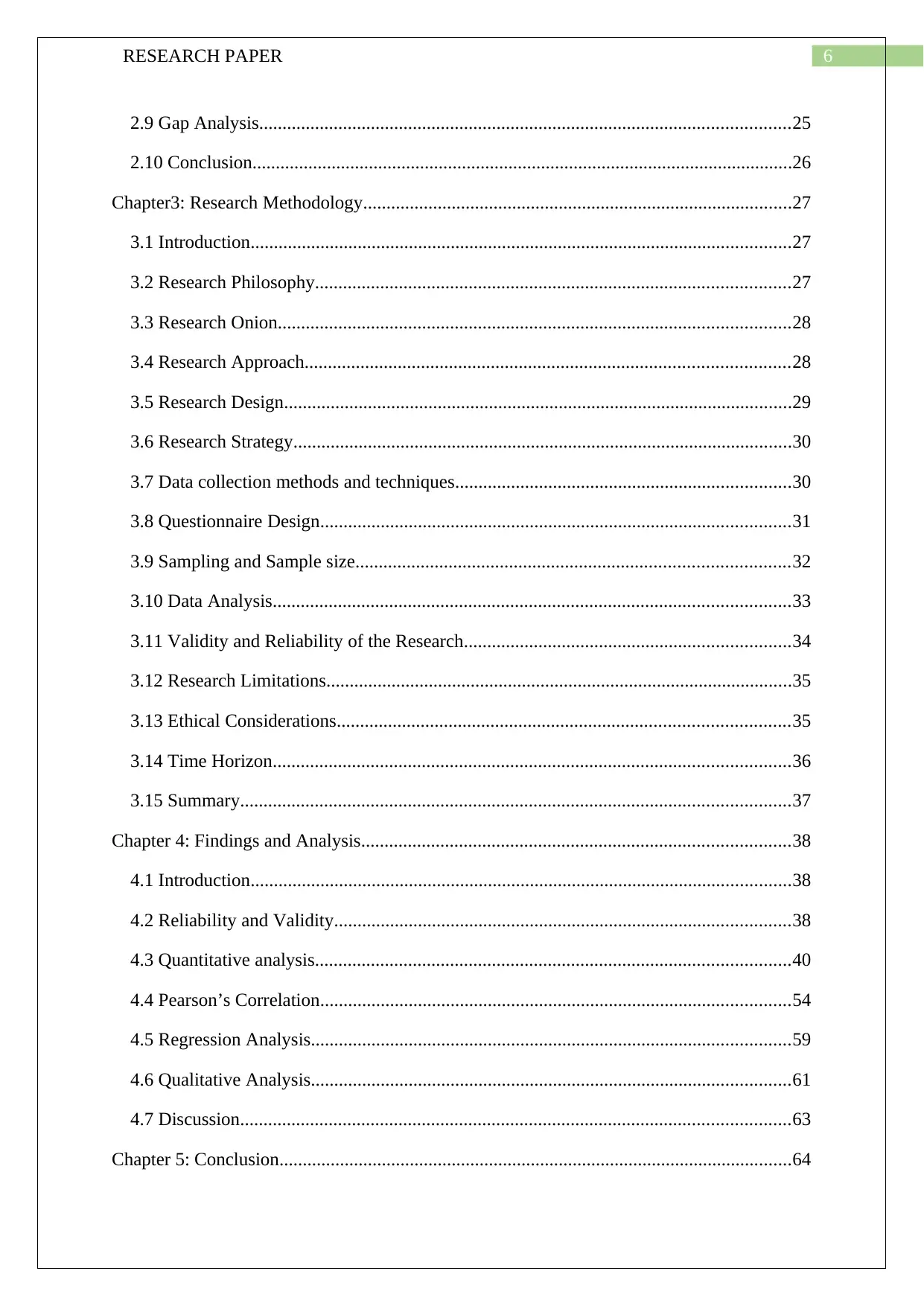
2.9 Gap Analysis..................................................................................................................25
2.10 Conclusion....................................................................................................................26
Chapter3: Research Methodology............................................................................................27
3.1 Introduction....................................................................................................................27
3.2 Research Philosophy......................................................................................................27
3.3 Research Onion..............................................................................................................28
3.4 Research Approach........................................................................................................28
3.5 Research Design.............................................................................................................29
3.6 Research Strategy...........................................................................................................30
3.7 Data collection methods and techniques........................................................................30
3.8 Questionnaire Design.....................................................................................................31
3.9 Sampling and Sample size.............................................................................................32
3.10 Data Analysis...............................................................................................................33
3.11 Validity and Reliability of the Research......................................................................34
3.12 Research Limitations....................................................................................................35
3.13 Ethical Considerations.................................................................................................35
3.14 Time Horizon...............................................................................................................36
3.15 Summary......................................................................................................................37
Chapter 4: Findings and Analysis............................................................................................38
4.1 Introduction....................................................................................................................38
4.2 Reliability and Validity..................................................................................................38
4.3 Quantitative analysis......................................................................................................40
4.4 Pearson’s Correlation.....................................................................................................54
4.5 Regression Analysis.......................................................................................................59
4.6 Qualitative Analysis.......................................................................................................61
4.7 Discussion......................................................................................................................63
Chapter 5: Conclusion..............................................................................................................64
2.9 Gap Analysis..................................................................................................................25
2.10 Conclusion....................................................................................................................26
Chapter3: Research Methodology............................................................................................27
3.1 Introduction....................................................................................................................27
3.2 Research Philosophy......................................................................................................27
3.3 Research Onion..............................................................................................................28
3.4 Research Approach........................................................................................................28
3.5 Research Design.............................................................................................................29
3.6 Research Strategy...........................................................................................................30
3.7 Data collection methods and techniques........................................................................30
3.8 Questionnaire Design.....................................................................................................31
3.9 Sampling and Sample size.............................................................................................32
3.10 Data Analysis...............................................................................................................33
3.11 Validity and Reliability of the Research......................................................................34
3.12 Research Limitations....................................................................................................35
3.13 Ethical Considerations.................................................................................................35
3.14 Time Horizon...............................................................................................................36
3.15 Summary......................................................................................................................37
Chapter 4: Findings and Analysis............................................................................................38
4.1 Introduction....................................................................................................................38
4.2 Reliability and Validity..................................................................................................38
4.3 Quantitative analysis......................................................................................................40
4.4 Pearson’s Correlation.....................................................................................................54
4.5 Regression Analysis.......................................................................................................59
4.6 Qualitative Analysis.......................................................................................................61
4.7 Discussion......................................................................................................................63
Chapter 5: Conclusion..............................................................................................................64
Paraphrase This Document
Need a fresh take? Get an instant paraphrase of this document with our AI Paraphraser

7RESEARCH PAPER
5.1 Key findings and conclusion..........................................................................................64
5.2 Recommendation............................................................................................................64
Reference List..........................................................................................................................65
Appendix..................................................................................................................................70
5.1 Key findings and conclusion..........................................................................................64
5.2 Recommendation............................................................................................................64
Reference List..........................................................................................................................65
Appendix..................................................................................................................................70
8RESEARCH PAPER
Chapter 1: Introduction
1.1 Introduction
The term globalization refers to the concept of integration on an international level. It
proactively encourages the establishment of world trade and develops various modern ways
of communication, which assist in the conduct of business. According to Giddens (2018), the
concept of globalization further strategizes the financial markets to be internationalized. In
short, it is an effective procedure by which the entire globe is combined in order to unify as
an individual society. The following research aims at recognizing the social, economic and
technical impact of globalization ion the business sector of India. According to various data,
it has been observed that globalization had entered the Indian market sector around the 1990s,
and is still one of the major components behind the global success of various Indian business
organizations. The economic impact of globalization can be best interpreted through the
modern, multidimensional agreements that are structured for services, communications etc. in
Indian markets.
1.2 Research Background
The concept of globalization can be best defined as a system that enables various nations to
conduct business in a cooperative manner order to increase the global economy. Practically,
globalization can be considered as the integrated performance of the various societies as well
as the economies across the globe. Implementation of globalization is of paramount
importance in order to develop the current state of the infrastructural structure, means of
transportation and communication. As opined by Gozziet al. (2015), this process requires the
exchanges to be made in the social, economic, technological and political areas across
nations. Historically, use of the term "globalization" was first recorded during the 1980s,
when the implementation of computer technology had effectively done international business
easier and quicker to be conducted (Schmukler and Abraham, 2017). Therefore, it can be said
that the theory of globalization was mainly established while considering international
business as the main component. Globalization efficiently unifies individuals, organizations
as well as governments belonging from different countries altogether, which justifies the
preceding statements.
While discussing the concept of integration, it must be acknowledged that recognizing the
distinct types of integration is of paramount importance. Theoretically, integration is divided
into two different forms - positive and negative integration (Basu, 2016). Positive integration
Chapter 1: Introduction
1.1 Introduction
The term globalization refers to the concept of integration on an international level. It
proactively encourages the establishment of world trade and develops various modern ways
of communication, which assist in the conduct of business. According to Giddens (2018), the
concept of globalization further strategizes the financial markets to be internationalized. In
short, it is an effective procedure by which the entire globe is combined in order to unify as
an individual society. The following research aims at recognizing the social, economic and
technical impact of globalization ion the business sector of India. According to various data,
it has been observed that globalization had entered the Indian market sector around the 1990s,
and is still one of the major components behind the global success of various Indian business
organizations. The economic impact of globalization can be best interpreted through the
modern, multidimensional agreements that are structured for services, communications etc. in
Indian markets.
1.2 Research Background
The concept of globalization can be best defined as a system that enables various nations to
conduct business in a cooperative manner order to increase the global economy. Practically,
globalization can be considered as the integrated performance of the various societies as well
as the economies across the globe. Implementation of globalization is of paramount
importance in order to develop the current state of the infrastructural structure, means of
transportation and communication. As opined by Gozziet al. (2015), this process requires the
exchanges to be made in the social, economic, technological and political areas across
nations. Historically, use of the term "globalization" was first recorded during the 1980s,
when the implementation of computer technology had effectively done international business
easier and quicker to be conducted (Schmukler and Abraham, 2017). Therefore, it can be said
that the theory of globalization was mainly established while considering international
business as the main component. Globalization efficiently unifies individuals, organizations
as well as governments belonging from different countries altogether, which justifies the
preceding statements.
While discussing the concept of integration, it must be acknowledged that recognizing the
distinct types of integration is of paramount importance. Theoretically, integration is divided
into two different forms - positive and negative integration (Basu, 2016). Positive integration
⊘ This is a preview!⊘
Do you want full access?
Subscribe today to unlock all pages.
Trusted by 1+ million students worldwide
9RESEARCH PAPER
is primarily focused upon the standardization of policies and laws of the international
economies. On the contrary, the procedure of negative integration revolves around breaking
down of the various quotas and tariffs, which constitute the trade barriers.
Globalization is classified into four different levels, which constitute the integration of this
broad concept. It has been observed that the business organizations across the globe follow
the code of conduct of either one of the four general levels. The first level is addressed as
multi-domestic, which enables a business organization to spread its units in various nations
across the globe in order to work independently. However, usually, very less communication
takes place among the units in this level. The subsequent level of globalization is
international, which enables an organization to maintain various branches in different
countries while maintaining the main headquarters in a specific country of origin. The third
level of globalization can be addressed as transnational, which enables an organization to
operate by maintaining moderately integrated units of their business operations in different
countries. The companies following the transnational level of globalization primarily focus
on the operational needs on a local dimension.
The fourth level of globalization enables an organization to do business in a truly global
dimension. The companies following this level of globalization strictly consider the whole
world as an individual market base (Glavina, 2015). Therefore, their business strategies are
structured on a global approach. These companies are primarily concerned about
accomplishing global success, which requires them to study every single country as a subject.
Many have argued that the fourth level of globalization is the most appropriate level for every
company to follow in order to implement globalization. However, it must be noted that it is
considered very hard in order to implement this level in an organization, and it requires very
efficient management to achieve it. India is renowned for its vast population base of around
1.32 billion citizens. As opined by Abroet al. (2017), the Indian market is famous for
acquitting the 2nd position in the global two-wheeler automobile market. The social and
technological impact of globalization is reflected through the rapid expansion of software and
telecom services industries in the Indian market. Furthermore, various internationally famous
brands are proactively making investments in the Indian industry.
1.3 Rationale of the Research
The purpose of the rationale of research is to determine the various reasons that lay the
foundation of a specific research study. The following research is conducted in order to
is primarily focused upon the standardization of policies and laws of the international
economies. On the contrary, the procedure of negative integration revolves around breaking
down of the various quotas and tariffs, which constitute the trade barriers.
Globalization is classified into four different levels, which constitute the integration of this
broad concept. It has been observed that the business organizations across the globe follow
the code of conduct of either one of the four general levels. The first level is addressed as
multi-domestic, which enables a business organization to spread its units in various nations
across the globe in order to work independently. However, usually, very less communication
takes place among the units in this level. The subsequent level of globalization is
international, which enables an organization to maintain various branches in different
countries while maintaining the main headquarters in a specific country of origin. The third
level of globalization can be addressed as transnational, which enables an organization to
operate by maintaining moderately integrated units of their business operations in different
countries. The companies following the transnational level of globalization primarily focus
on the operational needs on a local dimension.
The fourth level of globalization enables an organization to do business in a truly global
dimension. The companies following this level of globalization strictly consider the whole
world as an individual market base (Glavina, 2015). Therefore, their business strategies are
structured on a global approach. These companies are primarily concerned about
accomplishing global success, which requires them to study every single country as a subject.
Many have argued that the fourth level of globalization is the most appropriate level for every
company to follow in order to implement globalization. However, it must be noted that it is
considered very hard in order to implement this level in an organization, and it requires very
efficient management to achieve it. India is renowned for its vast population base of around
1.32 billion citizens. As opined by Abroet al. (2017), the Indian market is famous for
acquitting the 2nd position in the global two-wheeler automobile market. The social and
technological impact of globalization is reflected through the rapid expansion of software and
telecom services industries in the Indian market. Furthermore, various internationally famous
brands are proactively making investments in the Indian industry.
1.3 Rationale of the Research
The purpose of the rationale of research is to determine the various reasons that lay the
foundation of a specific research study. The following research is conducted in order to
Paraphrase This Document
Need a fresh take? Get an instant paraphrase of this document with our AI Paraphraser
10RESEARCH PAPER
interpret the various impact globalization has on the social, economic and technical areas of
Indian markets. It has been observed that the various strategies of globalization and
liberalization implemented during the nineties had birthed various measures. These measures
had opened various opportunities for the Indian economy to expand effectively. As a result,
the modern policy regime that had birthed effectively moved forward in order to assist in the
establishment of a more comprehensive and market-aligned economy in favour of Indian
markets. The contribution of globalization in the expansion of the employment sector of
Indian markets is of paramount importance. It has been witnessed that recently the Indian
companies are proactively expanding at an international level and becoming significant
names in the area of globalization (Bartschet al., 2016).
1.4 Problem Statement
What is the issue?
The incident of globalisation has a vital role in case of the overall development of the Indian
business and specifically the free movement of goods and services as the result of
globalisation has rapidly impacted Indian economy and society. It has been argued that these
sorts of movements have brought Indian economy closer along with making this more
strongly integrated. In this globalisation led era, considering from overall perspectives, the
growth of Indian business is mainly attributed to a wide range of aspects in Indian society and
economy, which are significantly affected by globalisation (Banerji, 2017). The economic
growth, stability and social equity aspects, as well as technological developments, are some
of the most critical aspects in this regard. Therefore, this has become a real problem to
identify how exactly the globalisation associates aspects have influenced the economy, social
factors and technological development.
As the fact of globalisation has brought significant opportunities as well as a different range
of resistance to the overall business growth on the country, it is important to note what are the
actual areas of Indian technology, society and finance affected by globalisation and how
precisely this has affected Indian trade and business. Hence, exploration of the importance of
globalisation on Indian business from technological, financial and social perspectives has
been the main issue here, without which, the Indian business organization cannot develop
their overall business operational strategies in India.
interpret the various impact globalization has on the social, economic and technical areas of
Indian markets. It has been observed that the various strategies of globalization and
liberalization implemented during the nineties had birthed various measures. These measures
had opened various opportunities for the Indian economy to expand effectively. As a result,
the modern policy regime that had birthed effectively moved forward in order to assist in the
establishment of a more comprehensive and market-aligned economy in favour of Indian
markets. The contribution of globalization in the expansion of the employment sector of
Indian markets is of paramount importance. It has been witnessed that recently the Indian
companies are proactively expanding at an international level and becoming significant
names in the area of globalization (Bartschet al., 2016).
1.4 Problem Statement
What is the issue?
The incident of globalisation has a vital role in case of the overall development of the Indian
business and specifically the free movement of goods and services as the result of
globalisation has rapidly impacted Indian economy and society. It has been argued that these
sorts of movements have brought Indian economy closer along with making this more
strongly integrated. In this globalisation led era, considering from overall perspectives, the
growth of Indian business is mainly attributed to a wide range of aspects in Indian society and
economy, which are significantly affected by globalisation (Banerji, 2017). The economic
growth, stability and social equity aspects, as well as technological developments, are some
of the most critical aspects in this regard. Therefore, this has become a real problem to
identify how exactly the globalisation associates aspects have influenced the economy, social
factors and technological development.
As the fact of globalisation has brought significant opportunities as well as a different range
of resistance to the overall business growth on the country, it is important to note what are the
actual areas of Indian technology, society and finance affected by globalisation and how
precisely this has affected Indian trade and business. Hence, exploration of the importance of
globalisation on Indian business from technological, financial and social perspectives has
been the main issue here, without which, the Indian business organization cannot develop
their overall business operational strategies in India.
11RESEARCH PAPER
Why is it an issue?
Globalisation has led to rapid change in financial restructuring, and social categorisation in
the country and the overall business perspectives in India have explicitly been based on the
rapid unrestricted flow of goods and service and attaining the advantage of free economy and
FDI. The factors like mode of isolation, economic inefficiency level, backwardness in society
are closely related to the effects of globalisation on business. Therefore, according to Ullah et
al., (2018), gaining a proper concept regarding various social, technological and financial
factors affected by globalisation in India is very important for the business organizations and
industries. Comprehending the impacts of these factors on business would help the
organizations in developing their growth strategies of business operations. Therefore, without
having a proper understanding of the exact impacts of globalisation on Indian business from
the perspectives of social, technological and financial would affect the business growth in
adverse ways. Hence, this is the main issue here.
Why is it an issue now?
The current research study is aimed at gaining an adequate understanding of the impacts of
globalisation on Indian business and associated areas, specifically from the perspectives of
social, technical and financial areas. Therefore, exploring the exact impacts of globalisation
in these three areas and its overall impacts on Indian business has been the main subject of
this study. Hence, this specific area has been the main issue here.
What the research sheds light on?
The research sheds light on some of the most critical aspects of social, technological and
financial areas of Indian business that are hugely affected by globalisation. The research has
helped in detail exploration of all those factors that are being affected by the globalisation
along with finding the exact ways in which these factors are influencing the overall growth
and development of Indian business. Simultaneously, the study has also tried to shed light on
an exploration of the possible adverse impacts of globalisation on Indian business.
Therefore, the research has taken into consideration some of the most important aspects of
Indian business areas that are affected by globalisation.
Why is it an issue?
Globalisation has led to rapid change in financial restructuring, and social categorisation in
the country and the overall business perspectives in India have explicitly been based on the
rapid unrestricted flow of goods and service and attaining the advantage of free economy and
FDI. The factors like mode of isolation, economic inefficiency level, backwardness in society
are closely related to the effects of globalisation on business. Therefore, according to Ullah et
al., (2018), gaining a proper concept regarding various social, technological and financial
factors affected by globalisation in India is very important for the business organizations and
industries. Comprehending the impacts of these factors on business would help the
organizations in developing their growth strategies of business operations. Therefore, without
having a proper understanding of the exact impacts of globalisation on Indian business from
the perspectives of social, technological and financial would affect the business growth in
adverse ways. Hence, this is the main issue here.
Why is it an issue now?
The current research study is aimed at gaining an adequate understanding of the impacts of
globalisation on Indian business and associated areas, specifically from the perspectives of
social, technical and financial areas. Therefore, exploring the exact impacts of globalisation
in these three areas and its overall impacts on Indian business has been the main subject of
this study. Hence, this specific area has been the main issue here.
What the research sheds light on?
The research sheds light on some of the most critical aspects of social, technological and
financial areas of Indian business that are hugely affected by globalisation. The research has
helped in detail exploration of all those factors that are being affected by the globalisation
along with finding the exact ways in which these factors are influencing the overall growth
and development of Indian business. Simultaneously, the study has also tried to shed light on
an exploration of the possible adverse impacts of globalisation on Indian business.
Therefore, the research has taken into consideration some of the most important aspects of
Indian business areas that are affected by globalisation.
⊘ This is a preview!⊘
Do you want full access?
Subscribe today to unlock all pages.
Trusted by 1+ million students worldwide

1 out of 72


Related Documents


Your All-in-One AI-Powered Toolkit for Academic Success.
+13062052269
info@desklib.com
Available 24*7 on WhatsApp / Email
![[object Object]](/_next/static/media/star-bottom.7253800d.svg)
Unlock your academic potential
Copyright © 2020–2026 A2Z Services. All Rights Reserved. Developed and managed by ZUCOL.