The Impact of HR Practices on Customer Satisfaction: Subway Australia
VerifiedAdded on 2022/12/27
|14
|3935
|91
Report
AI Summary
This report delves into the relationship between human resource (HR) practices and customer satisfaction within the fast-food industry, using Subway Australia as a case study. The study explores the impact of various HR practices, such as employee training, relationship building, and commitment to organizational goals, on customer satisfaction and loyalty. It examines how employee interactions, service quality, and the handling of customer issues influence customer perceptions and brand value. The research employs a literature review, a quantitative research approach, and data collection methods including interviews to analyze the connection between HR strategies and customer satisfaction. The findings highlight the significance of employee performance, commitment, and service quality in fostering customer satisfaction and maintaining a positive brand image. The report also offers recommendations for improving HR practices to enhance customer satisfaction and address potential challenges within the fast-food sector, specifically in the context of Subway's operations in Australia.
THE IMPACT OF HUMAN
RESOURCE SERVICES ON
CUSTOMER
SATISFACTION ON FAST
FOOD COMPANY IN
AUSTRALIA A CASE
STUDY OF SUBWAY
RESOURCE SERVICES ON
CUSTOMER
SATISFACTION ON FAST
FOOD COMPANY IN
AUSTRALIA A CASE
STUDY OF SUBWAY

Paraphrase This Document
Need a fresh take? Get an instant paraphrase of this document with our AI Paraphraser
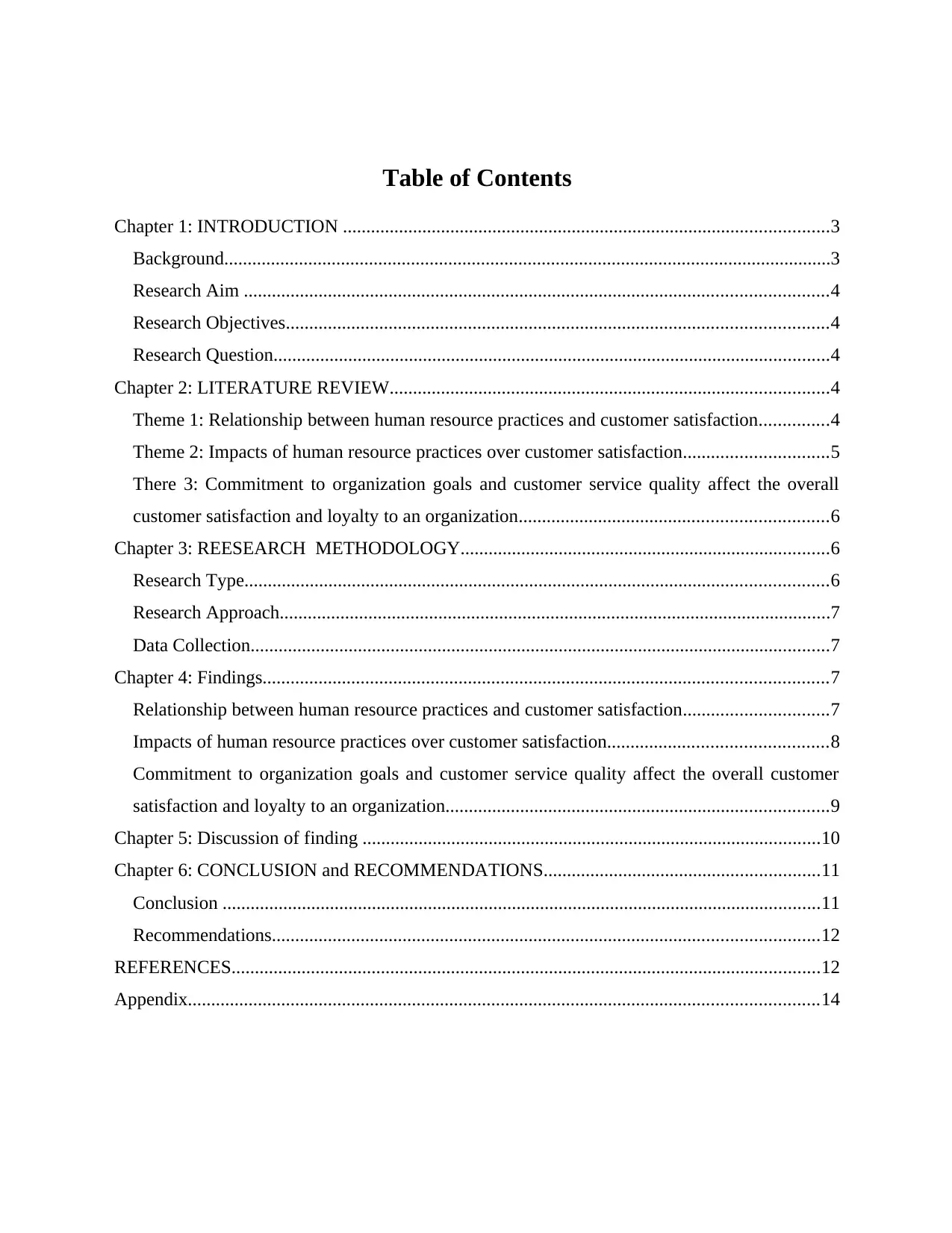
Table of Contents
Chapter 1: INTRODUCTION ........................................................................................................3
Background..................................................................................................................................3
Research Aim .............................................................................................................................4
Research Objectives....................................................................................................................4
Research Question.......................................................................................................................4
Chapter 2: LITERATURE REVIEW..............................................................................................4
Theme 1: Relationship between human resource practices and customer satisfaction...............4
Theme 2: Impacts of human resource practices over customer satisfaction...............................5
There 3: Commitment to organization goals and customer service quality affect the overall
customer satisfaction and loyalty to an organization..................................................................6
Chapter 3: REESEARCH METHODOLOGY...............................................................................6
Research Type.............................................................................................................................6
Research Approach......................................................................................................................7
Data Collection............................................................................................................................7
Chapter 4: Findings.........................................................................................................................7
Relationship between human resource practices and customer satisfaction...............................7
Impacts of human resource practices over customer satisfaction...............................................8
Commitment to organization goals and customer service quality affect the overall customer
satisfaction and loyalty to an organization..................................................................................9
Chapter 5: Discussion of finding ..................................................................................................10
Chapter 6: CONCLUSION and RECOMMENDATIONS...........................................................11
Conclusion ................................................................................................................................11
Recommendations.....................................................................................................................12
REFERENCES..............................................................................................................................12
Appendix.......................................................................................................................................14
Chapter 1: INTRODUCTION ........................................................................................................3
Background..................................................................................................................................3
Research Aim .............................................................................................................................4
Research Objectives....................................................................................................................4
Research Question.......................................................................................................................4
Chapter 2: LITERATURE REVIEW..............................................................................................4
Theme 1: Relationship between human resource practices and customer satisfaction...............4
Theme 2: Impacts of human resource practices over customer satisfaction...............................5
There 3: Commitment to organization goals and customer service quality affect the overall
customer satisfaction and loyalty to an organization..................................................................6
Chapter 3: REESEARCH METHODOLOGY...............................................................................6
Research Type.............................................................................................................................6
Research Approach......................................................................................................................7
Data Collection............................................................................................................................7
Chapter 4: Findings.........................................................................................................................7
Relationship between human resource practices and customer satisfaction...............................7
Impacts of human resource practices over customer satisfaction...............................................8
Commitment to organization goals and customer service quality affect the overall customer
satisfaction and loyalty to an organization..................................................................................9
Chapter 5: Discussion of finding ..................................................................................................10
Chapter 6: CONCLUSION and RECOMMENDATIONS...........................................................11
Conclusion ................................................................................................................................11
Recommendations.....................................................................................................................12
REFERENCES..............................................................................................................................12
Appendix.......................................................................................................................................14
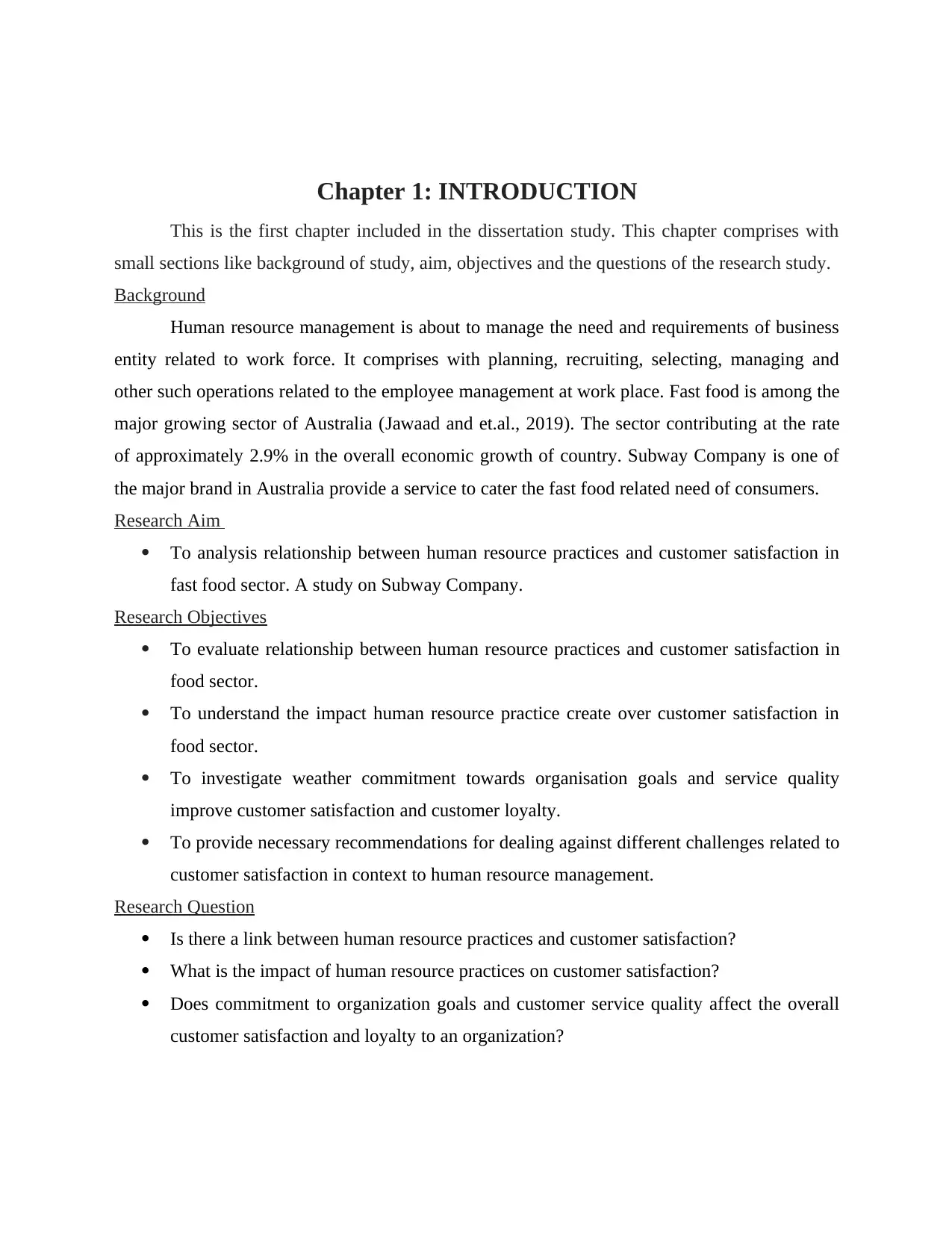
Chapter 1: INTRODUCTION
This is the first chapter included in the dissertation study. This chapter comprises with
small sections like background of study, aim, objectives and the questions of the research study.
Background
Human resource management is about to manage the need and requirements of business
entity related to work force. It comprises with planning, recruiting, selecting, managing and
other such operations related to the employee management at work place. Fast food is among the
major growing sector of Australia (Jawaad and et.al., 2019). The sector contributing at the rate
of approximately 2.9% in the overall economic growth of country. Subway Company is one of
the major brand in Australia provide a service to cater the fast food related need of consumers.
Research Aim
To analysis relationship between human resource practices and customer satisfaction in
fast food sector. A study on Subway Company.
Research Objectives
To evaluate relationship between human resource practices and customer satisfaction in
food sector.
To understand the impact human resource practice create over customer satisfaction in
food sector.
To investigate weather commitment towards organisation goals and service quality
improve customer satisfaction and customer loyalty.
To provide necessary recommendations for dealing against different challenges related to
customer satisfaction in context to human resource management.
Research Question
Is there a link between human resource practices and customer satisfaction?
What is the impact of human resource practices on customer satisfaction?
Does commitment to organization goals and customer service quality affect the overall
customer satisfaction and loyalty to an organization?
This is the first chapter included in the dissertation study. This chapter comprises with
small sections like background of study, aim, objectives and the questions of the research study.
Background
Human resource management is about to manage the need and requirements of business
entity related to work force. It comprises with planning, recruiting, selecting, managing and
other such operations related to the employee management at work place. Fast food is among the
major growing sector of Australia (Jawaad and et.al., 2019). The sector contributing at the rate
of approximately 2.9% in the overall economic growth of country. Subway Company is one of
the major brand in Australia provide a service to cater the fast food related need of consumers.
Research Aim
To analysis relationship between human resource practices and customer satisfaction in
fast food sector. A study on Subway Company.
Research Objectives
To evaluate relationship between human resource practices and customer satisfaction in
food sector.
To understand the impact human resource practice create over customer satisfaction in
food sector.
To investigate weather commitment towards organisation goals and service quality
improve customer satisfaction and customer loyalty.
To provide necessary recommendations for dealing against different challenges related to
customer satisfaction in context to human resource management.
Research Question
Is there a link between human resource practices and customer satisfaction?
What is the impact of human resource practices on customer satisfaction?
Does commitment to organization goals and customer service quality affect the overall
customer satisfaction and loyalty to an organization?
⊘ This is a preview!⊘
Do you want full access?
Subscribe today to unlock all pages.

Trusted by 1+ million students worldwide
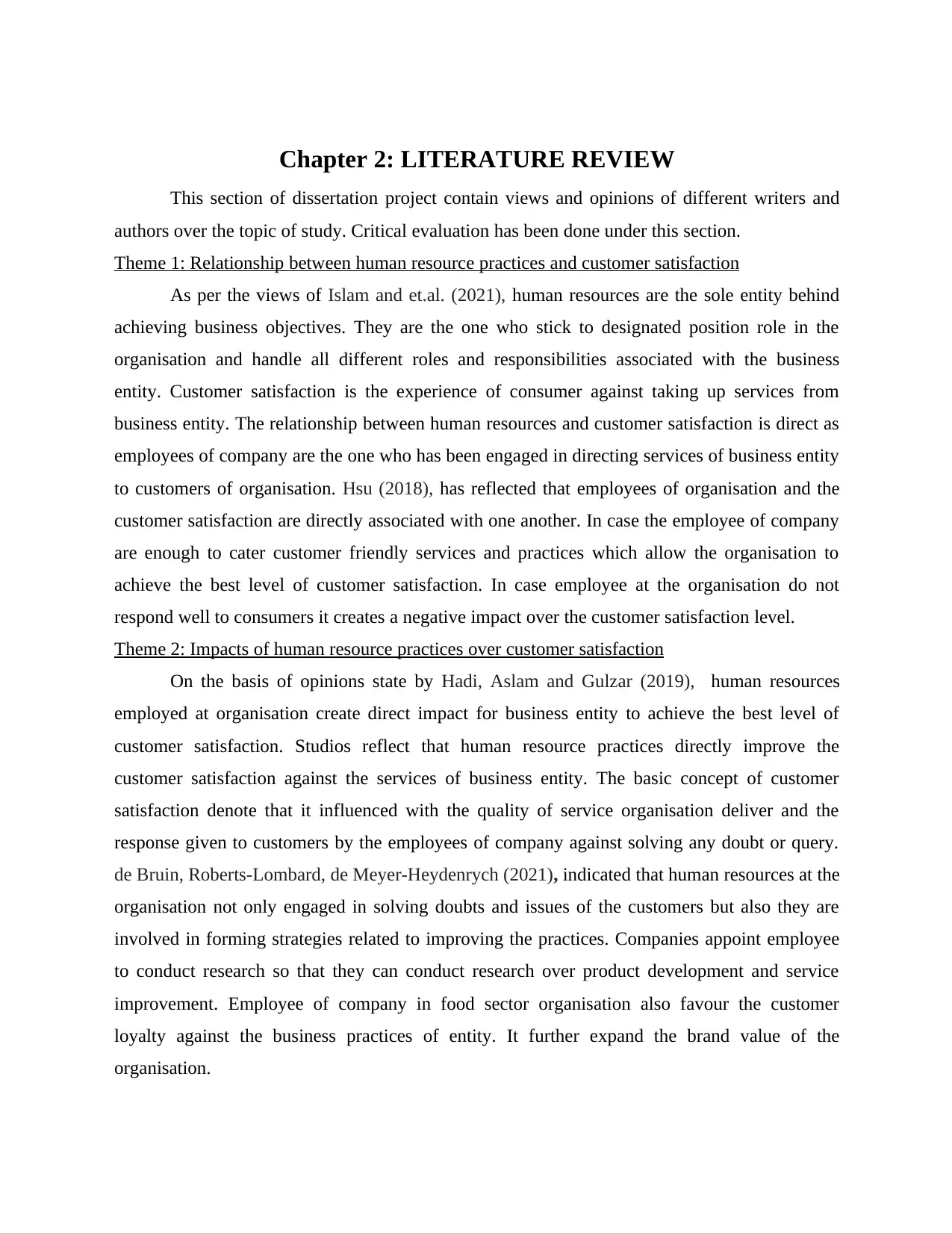
Chapter 2: LITERATURE REVIEW
This section of dissertation project contain views and opinions of different writers and
authors over the topic of study. Critical evaluation has been done under this section.
Theme 1: Relationship between human resource practices and customer satisfaction
As per the views of Islam and et.al. (2021), human resources are the sole entity behind
achieving business objectives. They are the one who stick to designated position role in the
organisation and handle all different roles and responsibilities associated with the business
entity. Customer satisfaction is the experience of consumer against taking up services from
business entity. The relationship between human resources and customer satisfaction is direct as
employees of company are the one who has been engaged in directing services of business entity
to customers of organisation. Hsu (2018), has reflected that employees of organisation and the
customer satisfaction are directly associated with one another. In case the employee of company
are enough to cater customer friendly services and practices which allow the organisation to
achieve the best level of customer satisfaction. In case employee at the organisation do not
respond well to consumers it creates a negative impact over the customer satisfaction level.
Theme 2: Impacts of human resource practices over customer satisfaction
On the basis of opinions state by Hadi, Aslam and Gulzar (2019), human resources
employed at organisation create direct impact for business entity to achieve the best level of
customer satisfaction. Studios reflect that human resource practices directly improve the
customer satisfaction against the services of business entity. The basic concept of customer
satisfaction denote that it influenced with the quality of service organisation deliver and the
response given to customers by the employees of company against solving any doubt or query.
de Bruin, Roberts-Lombard, de Meyer-Heydenrych (2021), indicated that human resources at the
organisation not only engaged in solving doubts and issues of the customers but also they are
involved in forming strategies related to improving the practices. Companies appoint employee
to conduct research so that they can conduct research over product development and service
improvement. Employee of company in food sector organisation also favour the customer
loyalty against the business practices of entity. It further expand the brand value of the
organisation.
This section of dissertation project contain views and opinions of different writers and
authors over the topic of study. Critical evaluation has been done under this section.
Theme 1: Relationship between human resource practices and customer satisfaction
As per the views of Islam and et.al. (2021), human resources are the sole entity behind
achieving business objectives. They are the one who stick to designated position role in the
organisation and handle all different roles and responsibilities associated with the business
entity. Customer satisfaction is the experience of consumer against taking up services from
business entity. The relationship between human resources and customer satisfaction is direct as
employees of company are the one who has been engaged in directing services of business entity
to customers of organisation. Hsu (2018), has reflected that employees of organisation and the
customer satisfaction are directly associated with one another. In case the employee of company
are enough to cater customer friendly services and practices which allow the organisation to
achieve the best level of customer satisfaction. In case employee at the organisation do not
respond well to consumers it creates a negative impact over the customer satisfaction level.
Theme 2: Impacts of human resource practices over customer satisfaction
On the basis of opinions state by Hadi, Aslam and Gulzar (2019), human resources
employed at organisation create direct impact for business entity to achieve the best level of
customer satisfaction. Studios reflect that human resource practices directly improve the
customer satisfaction against the services of business entity. The basic concept of customer
satisfaction denote that it influenced with the quality of service organisation deliver and the
response given to customers by the employees of company against solving any doubt or query.
de Bruin, Roberts-Lombard, de Meyer-Heydenrych (2021), indicated that human resources at the
organisation not only engaged in solving doubts and issues of the customers but also they are
involved in forming strategies related to improving the practices. Companies appoint employee
to conduct research so that they can conduct research over product development and service
improvement. Employee of company in food sector organisation also favour the customer
loyalty against the business practices of entity. It further expand the brand value of the
organisation.
Paraphrase This Document
Need a fresh take? Get an instant paraphrase of this document with our AI Paraphraser
Davras and Caber (2019), has criticized in its study the human resources appointed at
different designated position role in company in context to the fact that many times due to
unethical behaviour of the employee it creates a negative image of brand. Many cases have been
reported where employee did not meet its responsibility properly which fundamentally spoiled
brand value of company. Chiguvi and Guruwo (2017), presented that behind the failure of any
organisation employees are the one who played a huge role. They could not perform their roles
and responsibilities positively which affected badly the reputation of the business entity. It could
completely damage the customer satisfaction level that furthermore, causes into a failure of
business.
There 3: Commitment to organization goals and customer service quality affect the overall
customer satisfaction and loyalty to an organization
In context to business organisational goals are the direction behind operations entertained
by business entity. Castillo (2017), has indicated in its study that the level of service quality
delivered by business entity influence the level of customer satisfaction company could deliver
against the business practices delivered. Customer satisfaction and loyalty both these terms are
interred connected with each other. Consumer can only sustain as a loyal only if it can achieve
the best level of satisfaction against the practices used. Apornak (2017), has mentioned that if
the service quality is healthier than it cherish the relationship between customers and
organisation. In case the quality of service is poorer than it damage the relationship between
business and consumers.
different designated position role in company in context to the fact that many times due to
unethical behaviour of the employee it creates a negative image of brand. Many cases have been
reported where employee did not meet its responsibility properly which fundamentally spoiled
brand value of company. Chiguvi and Guruwo (2017), presented that behind the failure of any
organisation employees are the one who played a huge role. They could not perform their roles
and responsibilities positively which affected badly the reputation of the business entity. It could
completely damage the customer satisfaction level that furthermore, causes into a failure of
business.
There 3: Commitment to organization goals and customer service quality affect the overall
customer satisfaction and loyalty to an organization
In context to business organisational goals are the direction behind operations entertained
by business entity. Castillo (2017), has indicated in its study that the level of service quality
delivered by business entity influence the level of customer satisfaction company could deliver
against the business practices delivered. Customer satisfaction and loyalty both these terms are
interred connected with each other. Consumer can only sustain as a loyal only if it can achieve
the best level of satisfaction against the practices used. Apornak (2017), has mentioned that if
the service quality is healthier than it cherish the relationship between customers and
organisation. In case the quality of service is poorer than it damage the relationship between
business and consumers.
Chapter 3: REESEARCH METHODOLOGY
Research Methodology is the structure of the entire study. This involves different
sections that can be demonstrated in following points.
Research Type
Research is formerly of two types qualitative and quantitative. Qualitative type of study
is about to collect the information in both theoretical and statistical form. This study focuses
more over theory and models related to research topic. Quantitative type of study comprises with
information in statistical form (Lee, 2019). This involves figures and other statistical form of
information to meet the research objectives. This study has used quantitative type of study. The
topic of study motivated to researcher for using this practice.
Research Approach
Research approach is the plan and procedure of delivering the entire study. It comprises
with the proper steps taken to collect the information, analysis the figures and to interpret such
information in such a way that researcher can achieve all its objectives behind the study.
Research approaches are off different types such as deductive, inductive and abductive
(Leppäniemi, Karjaluoto and Saarijärvi, 2017). Deductive approach involve using the existing
theories and models to meet objectives of study. Inductive study involve observation in context
to research objectives. Abductive study is further included explanations and observations about
surprising facts and areas. This study has used inductive study so that objectives of the study
could have been meet.
Data Collection
Data in this study will be collected through primary and secondary technique. Under
primary technique SPSS will use. Literature review will entertain to undertake secondary study.
150 customers were interviewed to collect information for primary study.
Research Methodology is the structure of the entire study. This involves different
sections that can be demonstrated in following points.
Research Type
Research is formerly of two types qualitative and quantitative. Qualitative type of study
is about to collect the information in both theoretical and statistical form. This study focuses
more over theory and models related to research topic. Quantitative type of study comprises with
information in statistical form (Lee, 2019). This involves figures and other statistical form of
information to meet the research objectives. This study has used quantitative type of study. The
topic of study motivated to researcher for using this practice.
Research Approach
Research approach is the plan and procedure of delivering the entire study. It comprises
with the proper steps taken to collect the information, analysis the figures and to interpret such
information in such a way that researcher can achieve all its objectives behind the study.
Research approaches are off different types such as deductive, inductive and abductive
(Leppäniemi, Karjaluoto and Saarijärvi, 2017). Deductive approach involve using the existing
theories and models to meet objectives of study. Inductive study involve observation in context
to research objectives. Abductive study is further included explanations and observations about
surprising facts and areas. This study has used inductive study so that objectives of the study
could have been meet.
Data Collection
Data in this study will be collected through primary and secondary technique. Under
primary technique SPSS will use. Literature review will entertain to undertake secondary study.
150 customers were interviewed to collect information for primary study.
⊘ This is a preview!⊘
Do you want full access?
Subscribe today to unlock all pages.
Trusted by 1+ million students worldwide
Chapter 4: Findings
This chapter will demonstrate about all the key findings gained under this study.
Literature review is used to collect information under this project. This section focused more
over evaluation of all the key information collected in the course of this study.
Relationship between human resource practices and customer satisfaction
As per the views of Michna (2018), human resources and customer satisfaction contain a
direct connection. Management at Subway Company has appointed human resources at different
designated position role in organisation. Positions like customer service executive, relationship
managers at the company are directly involved in interacting with customers. The relationship
between human resources appointed at certain position roles in company are direct with
consumers as it is a part of responsibility they are meeting up. Nobar and Rostamzadeh (2018),
has reflected in its study that employees establish relationship between company and potential
customer. Relationship building is one of the key role that human resources play in organisation.
Subway Company is among the major brand in food sector and brand value of organisation has
been among the major reason behind the success entity could achieve in respective market.
Relationship building is about to establish long term relationship with potential
customers. Octaviannand, Pandjaitan and Kuswanto (2017), in its study indicated that the
concept of relationship building is not only restricted to a certain limit where businesses
company's executive are interacting with potential customers constantly. This is more about
understanding the need of customers, solving all their issues and problem s which they are facing
in against to undertake services of company and many such aspects.
Impacts of human resource practices over customer satisfaction
Based on the views given by Pamela, Umoh and Worlu (2017), in its study over possible
impacts human resource practice create over customer satisfaction level. Subway Company has
appointed employees over different designations such as relationship manager that could allow
the company to cherish its brand value. It could also enhance the growth possibility of
organisation in respective market. Consumer satisfaction is al;so considered as major advantage
of human resource practices entertained. Pattanayak, Koilakuntla and Punyatoya (2017), in its
case study over Subway Company identified that the management structure of organisation
allowed the business entity to overlook its potential customers efficiently. Subway Company
also followed the strict policy for solving issues and challenges customers are facing against
This chapter will demonstrate about all the key findings gained under this study.
Literature review is used to collect information under this project. This section focused more
over evaluation of all the key information collected in the course of this study.
Relationship between human resource practices and customer satisfaction
As per the views of Michna (2018), human resources and customer satisfaction contain a
direct connection. Management at Subway Company has appointed human resources at different
designated position role in organisation. Positions like customer service executive, relationship
managers at the company are directly involved in interacting with customers. The relationship
between human resources appointed at certain position roles in company are direct with
consumers as it is a part of responsibility they are meeting up. Nobar and Rostamzadeh (2018),
has reflected in its study that employees establish relationship between company and potential
customer. Relationship building is one of the key role that human resources play in organisation.
Subway Company is among the major brand in food sector and brand value of organisation has
been among the major reason behind the success entity could achieve in respective market.
Relationship building is about to establish long term relationship with potential
customers. Octaviannand, Pandjaitan and Kuswanto (2017), in its study indicated that the
concept of relationship building is not only restricted to a certain limit where businesses
company's executive are interacting with potential customers constantly. This is more about
understanding the need of customers, solving all their issues and problem s which they are facing
in against to undertake services of company and many such aspects.
Impacts of human resource practices over customer satisfaction
Based on the views given by Pamela, Umoh and Worlu (2017), in its study over possible
impacts human resource practice create over customer satisfaction level. Subway Company has
appointed employees over different designations such as relationship manager that could allow
the company to cherish its brand value. It could also enhance the growth possibility of
organisation in respective market. Consumer satisfaction is al;so considered as major advantage
of human resource practices entertained. Pattanayak, Koilakuntla and Punyatoya (2017), in its
case study over Subway Company identified that the management structure of organisation
allowed the business entity to overlook its potential customers efficiently. Subway Company
also followed the strict policy for solving issues and challenges customers are facing against
Paraphrase This Document
Need a fresh take? Get an instant paraphrase of this document with our AI Paraphraser
utilising services of company. Management also mentioned a section over company's website
where customer get to fetch their complaints and grievances. This practice could allow the
business entity to resolve issues and grievances within a stipulated time. This practice followed b
y Subway Company could enhance the brand value of company. It could also empower high
level of customer satisfaction against business practices used by company.
Opinions of Ramlawati and Kusuma (2018), over human resources and customer
stratification criticised that many times due to poor practice of human resources company face
low level of consumer satisfaction. Many cases have been reported where due to unprofessional
attitude of human resource it did not respond on time which could decrease the level of customer
satisfaction company could achieve. It also harms the relationship between company and
customers. Criticism over human resources and customer satisfaction is also made by Madera
and et.al. (2017), where it indicated that there are plenty of indirect elements and factors also
influence customer satisfaction. Human resources can cater its services in a certain limit apart
from there there are plenty of indirect elements and factors influence customer satisfaction.
Competition and services offer by other companies also influence over consumer satisfaction
from business practice. Professional has also projected that many times' customer itself in under
a confusing state which do not allow such human resources to get a clear indication in respect to
need and demand of customers.
Commitment to organization goals and customer service quality affect the overall customer
satisfaction and loyalty to an organization
As illustrated by Slack, Singh and Sharma (2020), commitment of human resources in
company create a direct impact over level of customer satisfaction human resources need to
achieve against the responsivity allotted to such individuals. Customer satisfaction and loyalty
are the two integrated elements and factors which directly affect the overall progress of
company. It becomes necessary that customer get the best quality of services from organisation
which require human resources in organisation to approach efficiently all consumers. If the
human resources are committed enough towards goals and objectives of business organisation
that will further motivate them to stay dedicated towards their job responsibilities. Views and
opinion given by Khatoon, Zhengliang and Hussain (2020), indicate that commitment towards
organisational goals and objectives favour business entity to achieve the best quality of services.
The key reason behind is if the human resources are committed enough they will try to
where customer get to fetch their complaints and grievances. This practice could allow the
business entity to resolve issues and grievances within a stipulated time. This practice followed b
y Subway Company could enhance the brand value of company. It could also empower high
level of customer satisfaction against business practices used by company.
Opinions of Ramlawati and Kusuma (2018), over human resources and customer
stratification criticised that many times due to poor practice of human resources company face
low level of consumer satisfaction. Many cases have been reported where due to unprofessional
attitude of human resource it did not respond on time which could decrease the level of customer
satisfaction company could achieve. It also harms the relationship between company and
customers. Criticism over human resources and customer satisfaction is also made by Madera
and et.al. (2017), where it indicated that there are plenty of indirect elements and factors also
influence customer satisfaction. Human resources can cater its services in a certain limit apart
from there there are plenty of indirect elements and factors influence customer satisfaction.
Competition and services offer by other companies also influence over consumer satisfaction
from business practice. Professional has also projected that many times' customer itself in under
a confusing state which do not allow such human resources to get a clear indication in respect to
need and demand of customers.
Commitment to organization goals and customer service quality affect the overall customer
satisfaction and loyalty to an organization
As illustrated by Slack, Singh and Sharma (2020), commitment of human resources in
company create a direct impact over level of customer satisfaction human resources need to
achieve against the responsivity allotted to such individuals. Customer satisfaction and loyalty
are the two integrated elements and factors which directly affect the overall progress of
company. It becomes necessary that customer get the best quality of services from organisation
which require human resources in organisation to approach efficiently all consumers. If the
human resources are committed enough towards goals and objectives of business organisation
that will further motivate them to stay dedicated towards their job responsibilities. Views and
opinion given by Khatoon, Zhengliang and Hussain (2020), indicate that commitment towards
organisational goals and objectives favour business entity to achieve the best quality of services.
The key reason behind is if the human resources are committed enough they will try to

continuous develop their potential and capability which eventually favour such professionals to
meet all functional responsibilities effectively.
Merugu, Mohan and Krishna (2020), has criticized this concept on the ground that it is
not convenient to judge the efforts human resource put over work place on the ground of
customer satisfaction towards company. Many other factors also influence level of customer
satisfaction company achieve apart from the practices human resources delegate. Expectation of
customers, market competition, prices and so many other elements that are not interrelated
human resources also influence level of customer satisfaction company entertained.
meet all functional responsibilities effectively.
Merugu, Mohan and Krishna (2020), has criticized this concept on the ground that it is
not convenient to judge the efforts human resource put over work place on the ground of
customer satisfaction towards company. Many other factors also influence level of customer
satisfaction company achieve apart from the practices human resources delegate. Expectation of
customers, market competition, prices and so many other elements that are not interrelated
human resources also influence level of customer satisfaction company entertained.
⊘ This is a preview!⊘
Do you want full access?
Subscribe today to unlock all pages.
Trusted by 1+ million students worldwide
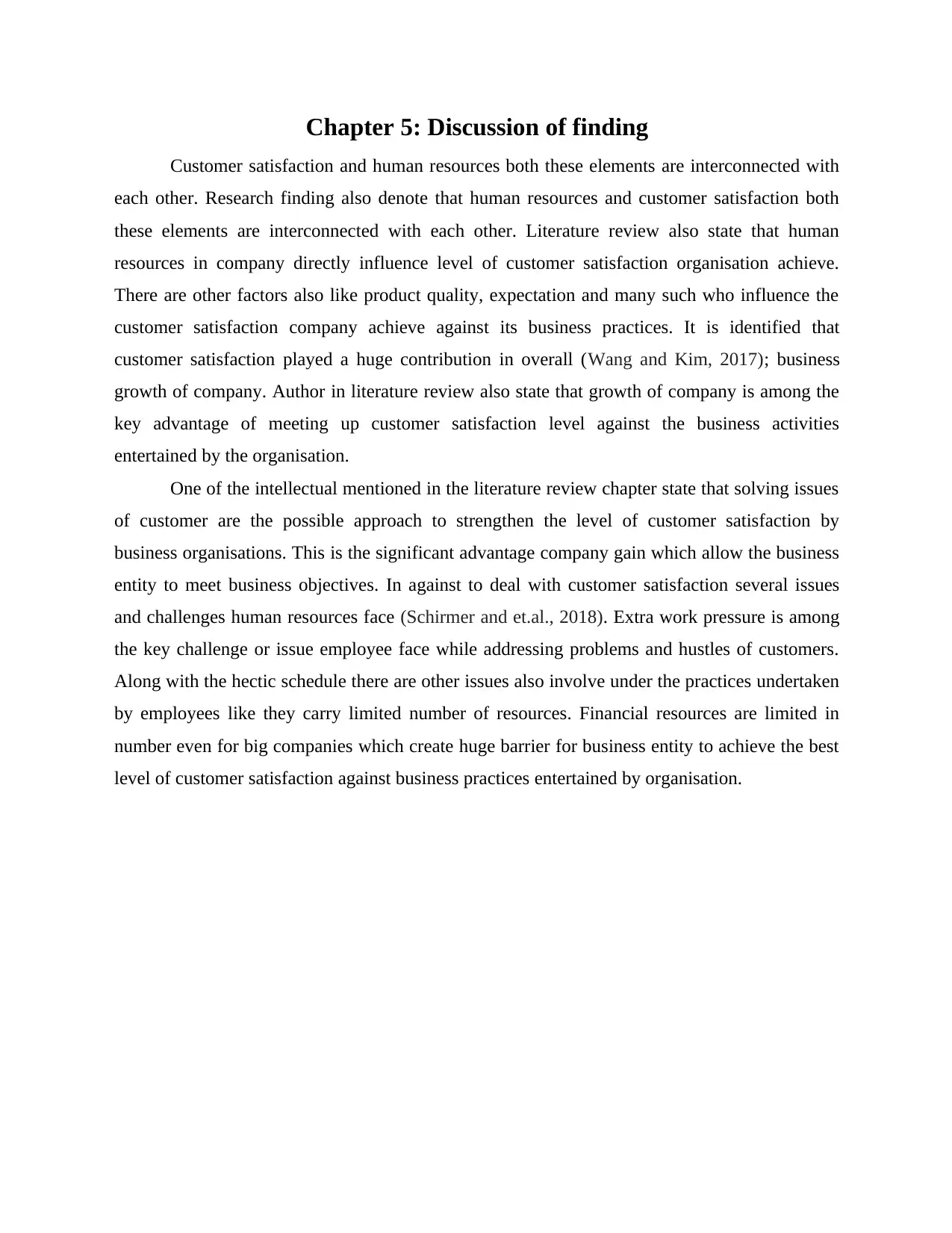
Chapter 5: Discussion of finding
Customer satisfaction and human resources both these elements are interconnected with
each other. Research finding also denote that human resources and customer satisfaction both
these elements are interconnected with each other. Literature review also state that human
resources in company directly influence level of customer satisfaction organisation achieve.
There are other factors also like product quality, expectation and many such who influence the
customer satisfaction company achieve against its business practices. It is identified that
customer satisfaction played a huge contribution in overall (Wang and Kim, 2017); business
growth of company. Author in literature review also state that growth of company is among the
key advantage of meeting up customer satisfaction level against the business activities
entertained by the organisation.
One of the intellectual mentioned in the literature review chapter state that solving issues
of customer are the possible approach to strengthen the level of customer satisfaction by
business organisations. This is the significant advantage company gain which allow the business
entity to meet business objectives. In against to deal with customer satisfaction several issues
and challenges human resources face (Schirmer and et.al., 2018). Extra work pressure is among
the key challenge or issue employee face while addressing problems and hustles of customers.
Along with the hectic schedule there are other issues also involve under the practices undertaken
by employees like they carry limited number of resources. Financial resources are limited in
number even for big companies which create huge barrier for business entity to achieve the best
level of customer satisfaction against business practices entertained by organisation.
Customer satisfaction and human resources both these elements are interconnected with
each other. Research finding also denote that human resources and customer satisfaction both
these elements are interconnected with each other. Literature review also state that human
resources in company directly influence level of customer satisfaction organisation achieve.
There are other factors also like product quality, expectation and many such who influence the
customer satisfaction company achieve against its business practices. It is identified that
customer satisfaction played a huge contribution in overall (Wang and Kim, 2017); business
growth of company. Author in literature review also state that growth of company is among the
key advantage of meeting up customer satisfaction level against the business activities
entertained by the organisation.
One of the intellectual mentioned in the literature review chapter state that solving issues
of customer are the possible approach to strengthen the level of customer satisfaction by
business organisations. This is the significant advantage company gain which allow the business
entity to meet business objectives. In against to deal with customer satisfaction several issues
and challenges human resources face (Schirmer and et.al., 2018). Extra work pressure is among
the key challenge or issue employee face while addressing problems and hustles of customers.
Along with the hectic schedule there are other issues also involve under the practices undertaken
by employees like they carry limited number of resources. Financial resources are limited in
number even for big companies which create huge barrier for business entity to achieve the best
level of customer satisfaction against business practices entertained by organisation.
Paraphrase This Document
Need a fresh take? Get an instant paraphrase of this document with our AI Paraphraser
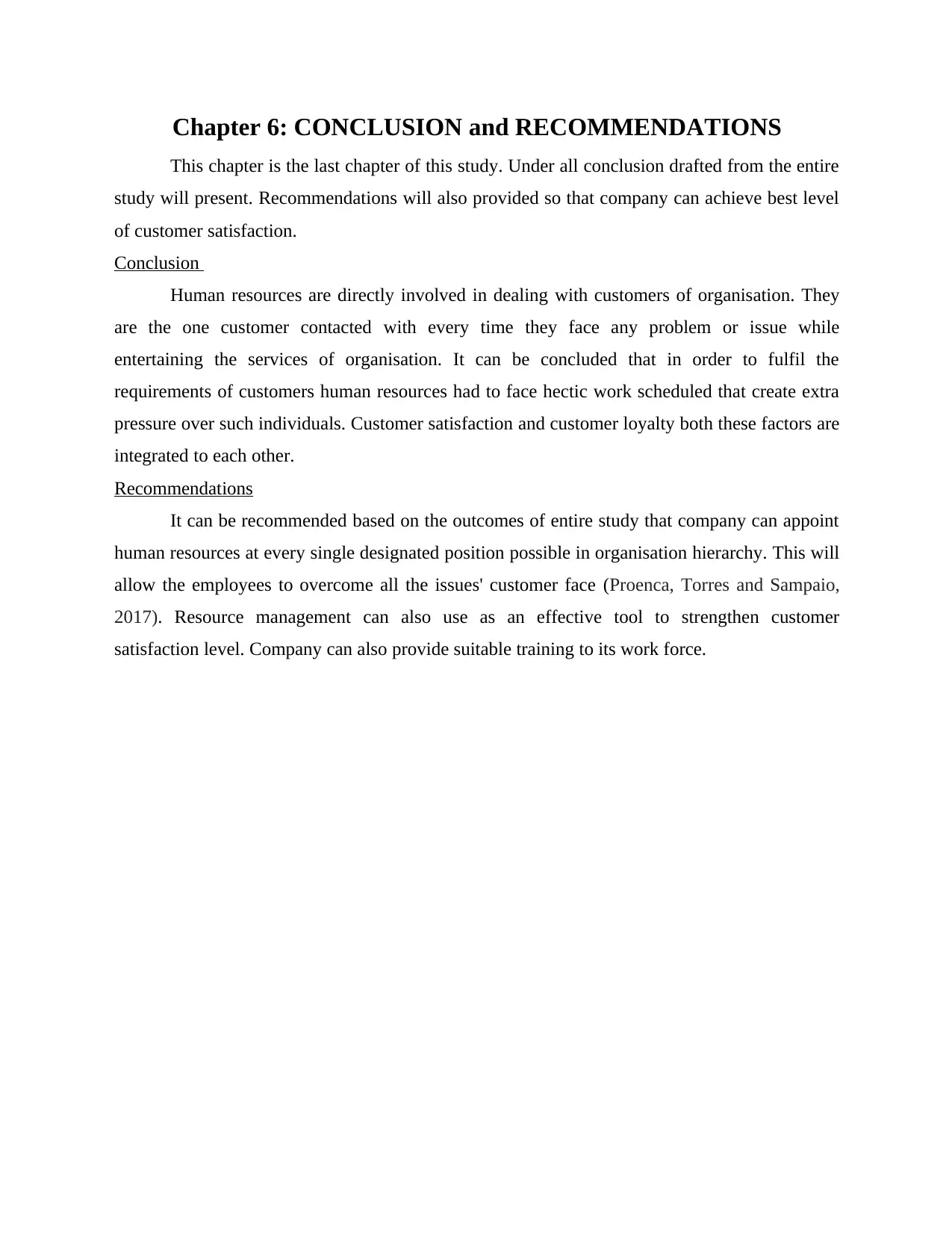
Chapter 6: CONCLUSION and RECOMMENDATIONS
This chapter is the last chapter of this study. Under all conclusion drafted from the entire
study will present. Recommendations will also provided so that company can achieve best level
of customer satisfaction.
Conclusion
Human resources are directly involved in dealing with customers of organisation. They
are the one customer contacted with every time they face any problem or issue while
entertaining the services of organisation. It can be concluded that in order to fulfil the
requirements of customers human resources had to face hectic work scheduled that create extra
pressure over such individuals. Customer satisfaction and customer loyalty both these factors are
integrated to each other.
Recommendations
It can be recommended based on the outcomes of entire study that company can appoint
human resources at every single designated position possible in organisation hierarchy. This will
allow the employees to overcome all the issues' customer face (Proenca, Torres and Sampaio,
2017). Resource management can also use as an effective tool to strengthen customer
satisfaction level. Company can also provide suitable training to its work force.
This chapter is the last chapter of this study. Under all conclusion drafted from the entire
study will present. Recommendations will also provided so that company can achieve best level
of customer satisfaction.
Conclusion
Human resources are directly involved in dealing with customers of organisation. They
are the one customer contacted with every time they face any problem or issue while
entertaining the services of organisation. It can be concluded that in order to fulfil the
requirements of customers human resources had to face hectic work scheduled that create extra
pressure over such individuals. Customer satisfaction and customer loyalty both these factors are
integrated to each other.
Recommendations
It can be recommended based on the outcomes of entire study that company can appoint
human resources at every single designated position possible in organisation hierarchy. This will
allow the employees to overcome all the issues' customer face (Proenca, Torres and Sampaio,
2017). Resource management can also use as an effective tool to strengthen customer
satisfaction level. Company can also provide suitable training to its work force.
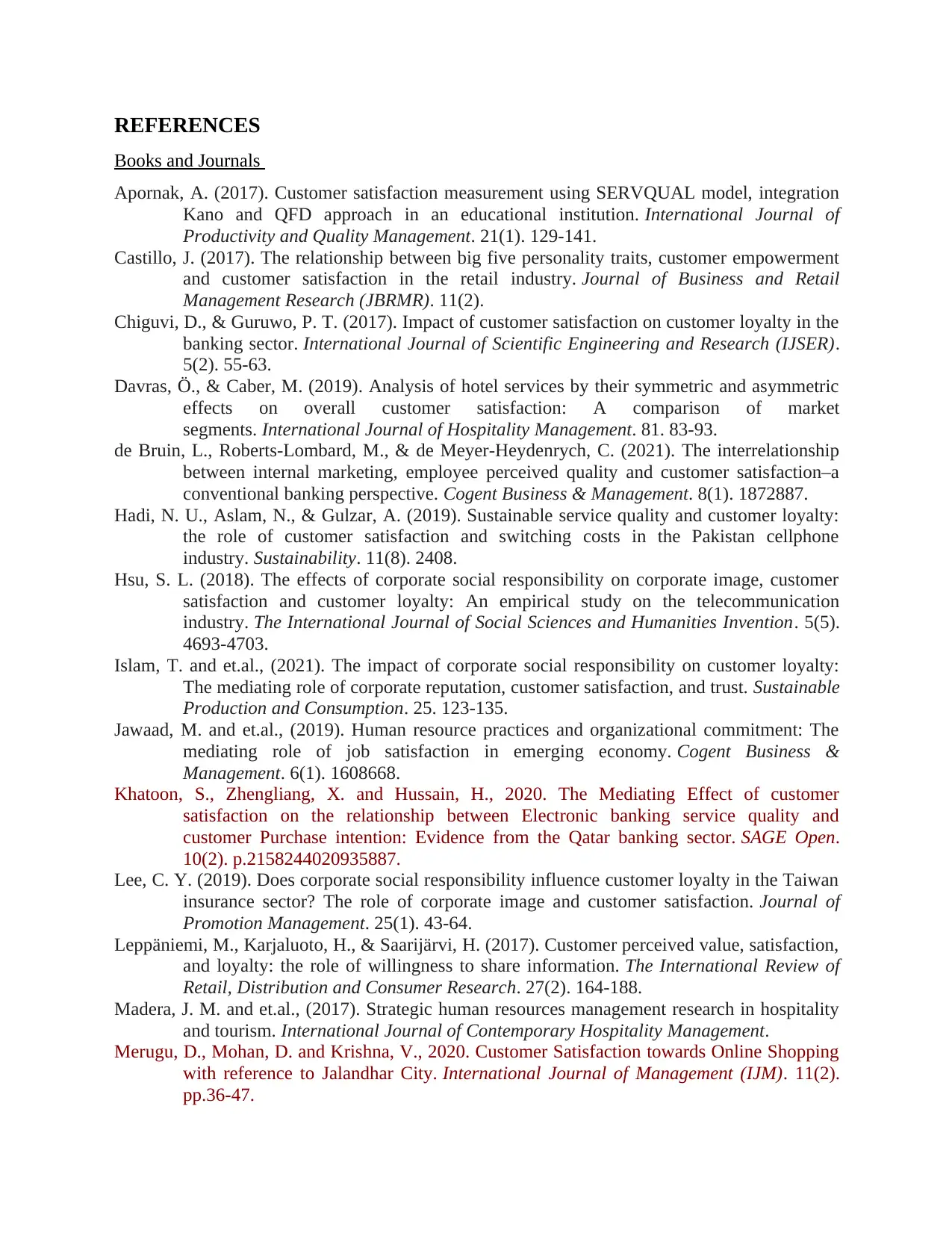
REFERENCES
Books and Journals
Apornak, A. (2017). Customer satisfaction measurement using SERVQUAL model, integration
Kano and QFD approach in an educational institution. International Journal of
Productivity and Quality Management. 21(1). 129-141.
Castillo, J. (2017). The relationship between big five personality traits, customer empowerment
and customer satisfaction in the retail industry. Journal of Business and Retail
Management Research (JBRMR). 11(2).
Chiguvi, D., & Guruwo, P. T. (2017). Impact of customer satisfaction on customer loyalty in the
banking sector. International Journal of Scientific Engineering and Research (IJSER).
5(2). 55-63.
Davras, Ö., & Caber, M. (2019). Analysis of hotel services by their symmetric and asymmetric
effects on overall customer satisfaction: A comparison of market
segments. International Journal of Hospitality Management. 81. 83-93.
de Bruin, L., Roberts-Lombard, M., & de Meyer-Heydenrych, C. (2021). The interrelationship
between internal marketing, employee perceived quality and customer satisfaction–a
conventional banking perspective. Cogent Business & Management. 8(1). 1872887.
Hadi, N. U., Aslam, N., & Gulzar, A. (2019). Sustainable service quality and customer loyalty:
the role of customer satisfaction and switching costs in the Pakistan cellphone
industry. Sustainability. 11(8). 2408.
Hsu, S. L. (2018). The effects of corporate social responsibility on corporate image, customer
satisfaction and customer loyalty: An empirical study on the telecommunication
industry. The International Journal of Social Sciences and Humanities Invention. 5(5).
4693-4703.
Islam, T. and et.al., (2021). The impact of corporate social responsibility on customer loyalty:
The mediating role of corporate reputation, customer satisfaction, and trust. Sustainable
Production and Consumption. 25. 123-135.
Jawaad, M. and et.al., (2019). Human resource practices and organizational commitment: The
mediating role of job satisfaction in emerging economy. Cogent Business &
Management. 6(1). 1608668.
Khatoon, S., Zhengliang, X. and Hussain, H., 2020. The Mediating Effect of customer
satisfaction on the relationship between Electronic banking service quality and
customer Purchase intention: Evidence from the Qatar banking sector. SAGE Open.
10(2). p.2158244020935887.
Lee, C. Y. (2019). Does corporate social responsibility influence customer loyalty in the Taiwan
insurance sector? The role of corporate image and customer satisfaction. Journal of
Promotion Management. 25(1). 43-64.
Leppäniemi, M., Karjaluoto, H., & Saarijärvi, H. (2017). Customer perceived value, satisfaction,
and loyalty: the role of willingness to share information. The International Review of
Retail, Distribution and Consumer Research. 27(2). 164-188.
Madera, J. M. and et.al., (2017). Strategic human resources management research in hospitality
and tourism. International Journal of Contemporary Hospitality Management.
Merugu, D., Mohan, D. and Krishna, V., 2020. Customer Satisfaction towards Online Shopping
with reference to Jalandhar City. International Journal of Management (IJM). 11(2).
pp.36-47.
Books and Journals
Apornak, A. (2017). Customer satisfaction measurement using SERVQUAL model, integration
Kano and QFD approach in an educational institution. International Journal of
Productivity and Quality Management. 21(1). 129-141.
Castillo, J. (2017). The relationship between big five personality traits, customer empowerment
and customer satisfaction in the retail industry. Journal of Business and Retail
Management Research (JBRMR). 11(2).
Chiguvi, D., & Guruwo, P. T. (2017). Impact of customer satisfaction on customer loyalty in the
banking sector. International Journal of Scientific Engineering and Research (IJSER).
5(2). 55-63.
Davras, Ö., & Caber, M. (2019). Analysis of hotel services by their symmetric and asymmetric
effects on overall customer satisfaction: A comparison of market
segments. International Journal of Hospitality Management. 81. 83-93.
de Bruin, L., Roberts-Lombard, M., & de Meyer-Heydenrych, C. (2021). The interrelationship
between internal marketing, employee perceived quality and customer satisfaction–a
conventional banking perspective. Cogent Business & Management. 8(1). 1872887.
Hadi, N. U., Aslam, N., & Gulzar, A. (2019). Sustainable service quality and customer loyalty:
the role of customer satisfaction and switching costs in the Pakistan cellphone
industry. Sustainability. 11(8). 2408.
Hsu, S. L. (2018). The effects of corporate social responsibility on corporate image, customer
satisfaction and customer loyalty: An empirical study on the telecommunication
industry. The International Journal of Social Sciences and Humanities Invention. 5(5).
4693-4703.
Islam, T. and et.al., (2021). The impact of corporate social responsibility on customer loyalty:
The mediating role of corporate reputation, customer satisfaction, and trust. Sustainable
Production and Consumption. 25. 123-135.
Jawaad, M. and et.al., (2019). Human resource practices and organizational commitment: The
mediating role of job satisfaction in emerging economy. Cogent Business &
Management. 6(1). 1608668.
Khatoon, S., Zhengliang, X. and Hussain, H., 2020. The Mediating Effect of customer
satisfaction on the relationship between Electronic banking service quality and
customer Purchase intention: Evidence from the Qatar banking sector. SAGE Open.
10(2). p.2158244020935887.
Lee, C. Y. (2019). Does corporate social responsibility influence customer loyalty in the Taiwan
insurance sector? The role of corporate image and customer satisfaction. Journal of
Promotion Management. 25(1). 43-64.
Leppäniemi, M., Karjaluoto, H., & Saarijärvi, H. (2017). Customer perceived value, satisfaction,
and loyalty: the role of willingness to share information. The International Review of
Retail, Distribution and Consumer Research. 27(2). 164-188.
Madera, J. M. and et.al., (2017). Strategic human resources management research in hospitality
and tourism. International Journal of Contemporary Hospitality Management.
Merugu, D., Mohan, D. and Krishna, V., 2020. Customer Satisfaction towards Online Shopping
with reference to Jalandhar City. International Journal of Management (IJM). 11(2).
pp.36-47.
⊘ This is a preview!⊘
Do you want full access?
Subscribe today to unlock all pages.
Trusted by 1+ million students worldwide

1 out of 14


Related Documents


Your All-in-One AI-Powered Toolkit for Academic Success.
+13062052269
info@desklib.com
Available 24*7 on WhatsApp / Email
![[object Object]](/_next/static/media/star-bottom.7253800d.svg)
Unlock your academic potential
Copyright © 2020–2026 A2Z Services. All Rights Reserved. Developed and managed by ZUCOL.