A Study on the Impact of Motivation for Tesco Employee Performance
VerifiedAdded on 2022/08/15
|10
|2532
|13
Report
AI Summary
This research project investigates the impact of motivation on the performance of Tesco employees and its subsequent effects on company productivity. The study begins by establishing the importance of employee motivation as a key driver of firm performance and its direct correlation with customer satisfaction and employee retention. It provides a contextual assessment of Tesco, highlighting its growth and global presence, before delving into relevant literature, including Maslow's hierarchy of needs and the impact of intrinsic and extrinsic rewards. The methodology employs a mixed-methods approach, combining qualitative and quantitative research designs, with primary data collected via surveys from 100 Tesco employees across the UK and secondary data from literature reviews. The research addresses specific research questions regarding the relationship between motivation and performance, effective motivation strategies, and methods to improve employee performance within Tesco. The report outlines the research design, data collection methods, ethical considerations, and a detailed timeline for the project. The study aims to provide insights for Tesco management to develop and implement effective employee motivation policies.

Running head: RESEARCH PROJECT
'A study on the impact of motivation for the performance of Tesco employees and how this affects
company productivity'.
'A study on the impact of motivation for the performance of Tesco employees and how this affects
company productivity'.

Paraphrase This Document
Need a fresh take? Get an instant paraphrase of this document with our AI Paraphraser
RESEARCH PROJECT 2
Table of Contents
Clear description/statement of the topic............................................................................................3
Rationale..............................................................................................................................................3
Background......................................................................................................................................3
Contextual Assessment....................................................................................................................3
Value of this study...............................................................................................................................4
Selected literature relevant to the subject..........................................................................................4
Methodology and key milestones........................................................................................................7
References............................................................................................................................................9
Table of Contents
Clear description/statement of the topic............................................................................................3
Rationale..............................................................................................................................................3
Background......................................................................................................................................3
Contextual Assessment....................................................................................................................3
Value of this study...............................................................................................................................4
Selected literature relevant to the subject..........................................................................................4
Methodology and key milestones........................................................................................................7
References............................................................................................................................................9
RESEARCH PROJECT 3
Clear description/statement of the topic
Employee motivation is a leading driver for firm performance. It further evaluated that a firm
that is competent to motivate its workforces and maintain it would be competent for
leveraging their zeal and driving to make sure the employees’ performance. This research
study is intended to address the impact of motivation for the performance of Tesco employees
and how this affects company productivity'.
Rationale
Background
A healthy workforce liaison leads to increasing the extent of satisfaction between the
workforces and improves the productivity of workforces. An unhappy workforce facilitates
bad customer services. After offering this bad service, the current consumers would be
unhappy and then any business could face complexity for retaining these current consumers
and lost these consumers and goodwill. Hence, it has a close association between employee
motivation and employee performance (Shaikh and Nawar, 2018).
In current times, employee turnover is becoming severe concerns for any service-oriented
firm. These employee retention concerns have a direct association with the efficiency and
productivity of workforces. Along with this, an efficient and effective employee motivation
tool is becoming a challenging task for any HRM. Along with this, there is effectively
changes in needs, expectation, and satisfaction level of employees. This is key reason where
management of HRM could face complexity to motivate the current workforces and retaining
them in the longer term (Ul-Hameed, et. al., 2019).
Contextual Assessment
Tesco was established in the year 1919 by Jack Cohen and market stallholder selling
groceries in the nation of London. It was developed with the merger of T.E. Stockwell from
whom he bought tea for selling on stall. The first store was opened in the year of 1929. Since
Clear description/statement of the topic
Employee motivation is a leading driver for firm performance. It further evaluated that a firm
that is competent to motivate its workforces and maintain it would be competent for
leveraging their zeal and driving to make sure the employees’ performance. This research
study is intended to address the impact of motivation for the performance of Tesco employees
and how this affects company productivity'.
Rationale
Background
A healthy workforce liaison leads to increasing the extent of satisfaction between the
workforces and improves the productivity of workforces. An unhappy workforce facilitates
bad customer services. After offering this bad service, the current consumers would be
unhappy and then any business could face complexity for retaining these current consumers
and lost these consumers and goodwill. Hence, it has a close association between employee
motivation and employee performance (Shaikh and Nawar, 2018).
In current times, employee turnover is becoming severe concerns for any service-oriented
firm. These employee retention concerns have a direct association with the efficiency and
productivity of workforces. Along with this, an efficient and effective employee motivation
tool is becoming a challenging task for any HRM. Along with this, there is effectively
changes in needs, expectation, and satisfaction level of employees. This is key reason where
management of HRM could face complexity to motivate the current workforces and retaining
them in the longer term (Ul-Hameed, et. al., 2019).
Contextual Assessment
Tesco was established in the year 1919 by Jack Cohen and market stallholder selling
groceries in the nation of London. It was developed with the merger of T.E. Stockwell from
whom he bought tea for selling on stall. The first store was opened in the year of 1929. Since
⊘ This is a preview!⊘
Do you want full access?
Subscribe today to unlock all pages.

Trusted by 1+ million students worldwide
RESEARCH PROJECT 4
then, Tesco has enlarged across the global level. It has currently over 2200 stores such as
Tesco express and hypermarket outlets in order to achieve the different needs of consumers.
As a conglomerate, Tesco has provided alternative products and services like online
shopping, banking, as well as, insurance. The net profits of Tesco are around £3.4 billion and
it is becoming leading British retailers and one of the leading retail outlets of the world on
different continents. The growth of Tesco has resulted in global employees of over 468,000
staff.
Value of this study
This research is based on academic purpose and for this reason, the investigation faces some
limitations. Although this is an academic intention for data gathering purposes, an
investigator should implement the Tesco Plc workforces and management interview tools that
are relied on primary information. An investigator could perform all the practices
independently after this research (Hansen and Levin, 2016). The management of Tesco Plc
could be competent in order to realize the role of employee’s motivation concerns and ways
to overcome the existing employee motivation challenge. Throughout this research report, the
management of Tesco Plc could be competent to develop and execute an efficient and
effective motivation policy of employees (Bexheti and Bexheti, 2016).
Selected literature relevant to the subject
As per the view of Ali and Syah (2019), motivation is inner feeling and desire that can
initiates with people either unintentionally and intentionally in order to complete the job
effectively since it is pleasurable and not obligatory for what would be projected in arrival.
For the firm, employee motivation is one of the significant policies in order to enhance
effective work management among firms and workforces.
On the other hand, Naidoo and Gasparatos (2018) evaluated that work efficiency of
workforces demonstrates the evidence that an individual is satisfied with their work would
then, Tesco has enlarged across the global level. It has currently over 2200 stores such as
Tesco express and hypermarket outlets in order to achieve the different needs of consumers.
As a conglomerate, Tesco has provided alternative products and services like online
shopping, banking, as well as, insurance. The net profits of Tesco are around £3.4 billion and
it is becoming leading British retailers and one of the leading retail outlets of the world on
different continents. The growth of Tesco has resulted in global employees of over 468,000
staff.
Value of this study
This research is based on academic purpose and for this reason, the investigation faces some
limitations. Although this is an academic intention for data gathering purposes, an
investigator should implement the Tesco Plc workforces and management interview tools that
are relied on primary information. An investigator could perform all the practices
independently after this research (Hansen and Levin, 2016). The management of Tesco Plc
could be competent in order to realize the role of employee’s motivation concerns and ways
to overcome the existing employee motivation challenge. Throughout this research report, the
management of Tesco Plc could be competent to develop and execute an efficient and
effective motivation policy of employees (Bexheti and Bexheti, 2016).
Selected literature relevant to the subject
As per the view of Ali and Syah (2019), motivation is inner feeling and desire that can
initiates with people either unintentionally and intentionally in order to complete the job
effectively since it is pleasurable and not obligatory for what would be projected in arrival.
For the firm, employee motivation is one of the significant policies in order to enhance
effective work management among firms and workforces.
On the other hand, Naidoo and Gasparatos (2018) evaluated that work efficiency of
workforces demonstrates the evidence that an individual is satisfied with their work would
Paraphrase This Document
Need a fresh take? Get an instant paraphrase of this document with our AI Paraphraser
RESEARCH PROJECT 5
have higher work performance and thus higher job discharge as compared to those who are
not satisfied with their performance. It is evaluated that employees are more possible turnover
when they are not happy and less motivated for displaying sound performance. The
performance of happy and satisfied employees is higher hence the firm can easily attain its
desired goals and objectives by higher participation among employees.
In the view of Ameen et al. (2019), engagement affects the motivation and could be reflected
in the extent where workforces commit and how complex they work as well as, how long
they remain. In addition, an individual can join firm for different causes and motivated
through intrinsic and extrinsic rewards. Intrinsic rewards could be reflected in activities
believed to be significant. For instance, workforces who want to support the people by
offering better customer services and senior managers who increase the sense of attainment
from overseeing the larger firm.
In opposition to this, Kuranchie-Mensah and Amponsah-Tawiah (2016) determined that
intrinsic results such as feelings of attainment, autonomy, responsibility, as well as, the
pleasure of performing interesting performance. In addition to this, extrinsically motivated
behavior are actions that are performed with the objective to have material and social rewards
with results like benefits, vacation time, job security, as well as, public recognition. It is the
accountability of the manager to endorse the workforces with the goal for workforces in order
to contribute to the firm. Managers could effectively motivate the workforces by providing
rewards that are significant for them.
Abraham Maslow hierarchy of Needs
In the year 1943, Abraham Maslow's hierarchy of needs theory states that an individual is
making efforts to search for higher requirements when lower needs are attained. Maslow
evaluates to categorized any individual requirements and satisfaction along with, considering
have higher work performance and thus higher job discharge as compared to those who are
not satisfied with their performance. It is evaluated that employees are more possible turnover
when they are not happy and less motivated for displaying sound performance. The
performance of happy and satisfied employees is higher hence the firm can easily attain its
desired goals and objectives by higher participation among employees.
In the view of Ameen et al. (2019), engagement affects the motivation and could be reflected
in the extent where workforces commit and how complex they work as well as, how long
they remain. In addition, an individual can join firm for different causes and motivated
through intrinsic and extrinsic rewards. Intrinsic rewards could be reflected in activities
believed to be significant. For instance, workforces who want to support the people by
offering better customer services and senior managers who increase the sense of attainment
from overseeing the larger firm.
In opposition to this, Kuranchie-Mensah and Amponsah-Tawiah (2016) determined that
intrinsic results such as feelings of attainment, autonomy, responsibility, as well as, the
pleasure of performing interesting performance. In addition to this, extrinsically motivated
behavior are actions that are performed with the objective to have material and social rewards
with results like benefits, vacation time, job security, as well as, public recognition. It is the
accountability of the manager to endorse the workforces with the goal for workforces in order
to contribute to the firm. Managers could effectively motivate the workforces by providing
rewards that are significant for them.
Abraham Maslow hierarchy of Needs
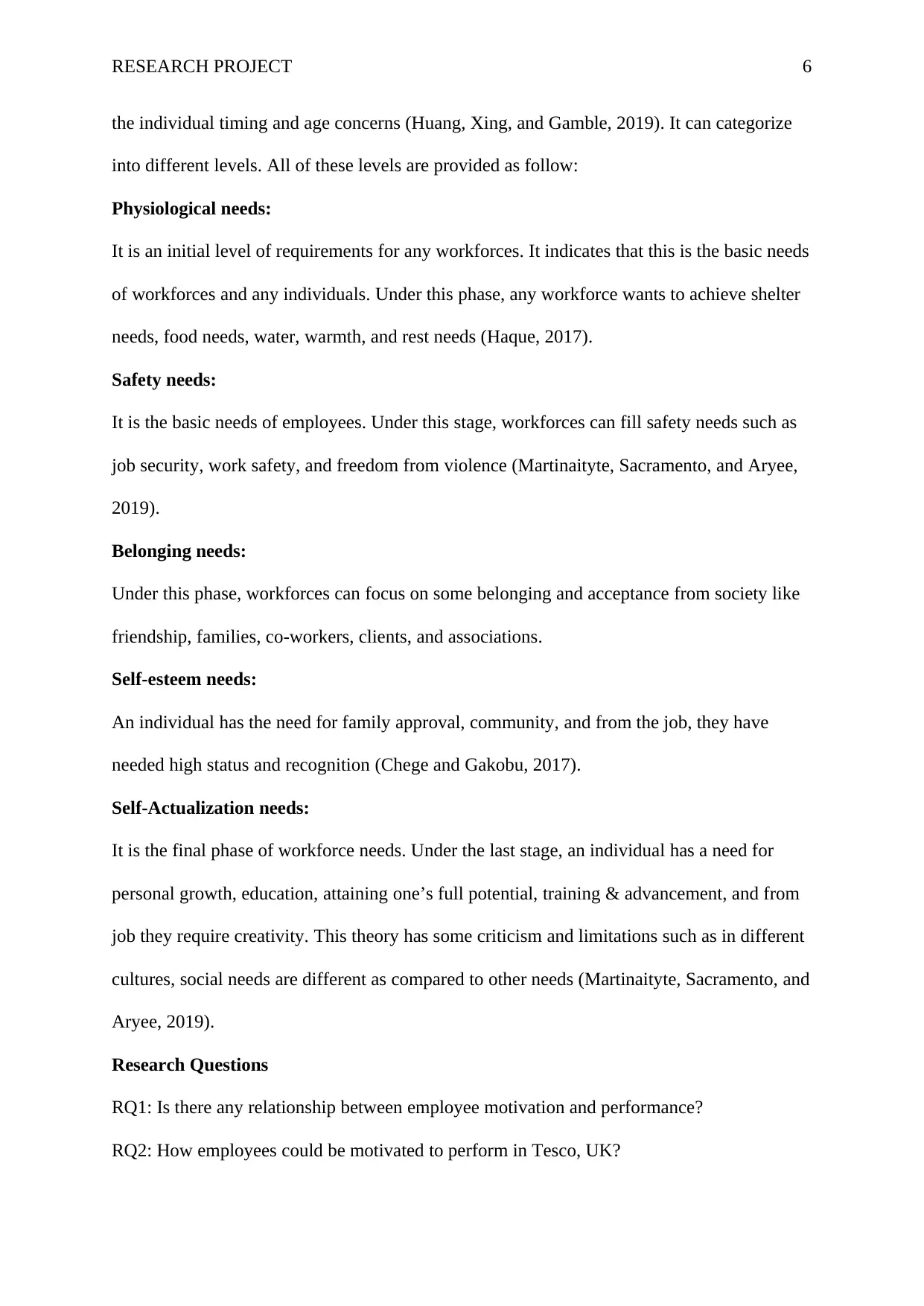
In the year 1943, Abraham Maslow's hierarchy of needs theory states that an individual is
making efforts to search for higher requirements when lower needs are attained. Maslow
evaluates to categorized any individual requirements and satisfaction along with, considering
RESEARCH PROJECT 6
the individual timing and age concerns (Huang, Xing, and Gamble, 2019). It can categorize
into different levels. All of these levels are provided as follow:
Physiological needs:
It is an initial level of requirements for any workforces. It indicates that this is the basic needs
of workforces and any individuals. Under this phase, any workforce wants to achieve shelter
needs, food needs, water, warmth, and rest needs (Haque, 2017).
Safety needs:
It is the basic needs of employees. Under this stage, workforces can fill safety needs such as
job security, work safety, and freedom from violence (Martinaityte, Sacramento, and Aryee,
2019).
Belonging needs:
Under this phase, workforces can focus on some belonging and acceptance from society like
friendship, families, co-workers, clients, and associations.
Self-esteem needs:
An individual has the need for family approval, community, and from the job, they have
needed high status and recognition (Chege and Gakobu, 2017).
Self-Actualization needs:
It is the final phase of workforce needs. Under the last stage, an individual has a need for
personal growth, education, attaining one’s full potential, training & advancement, and from
job they require creativity. This theory has some criticism and limitations such as in different
cultures, social needs are different as compared to other needs (Martinaityte, Sacramento, and
Aryee, 2019).
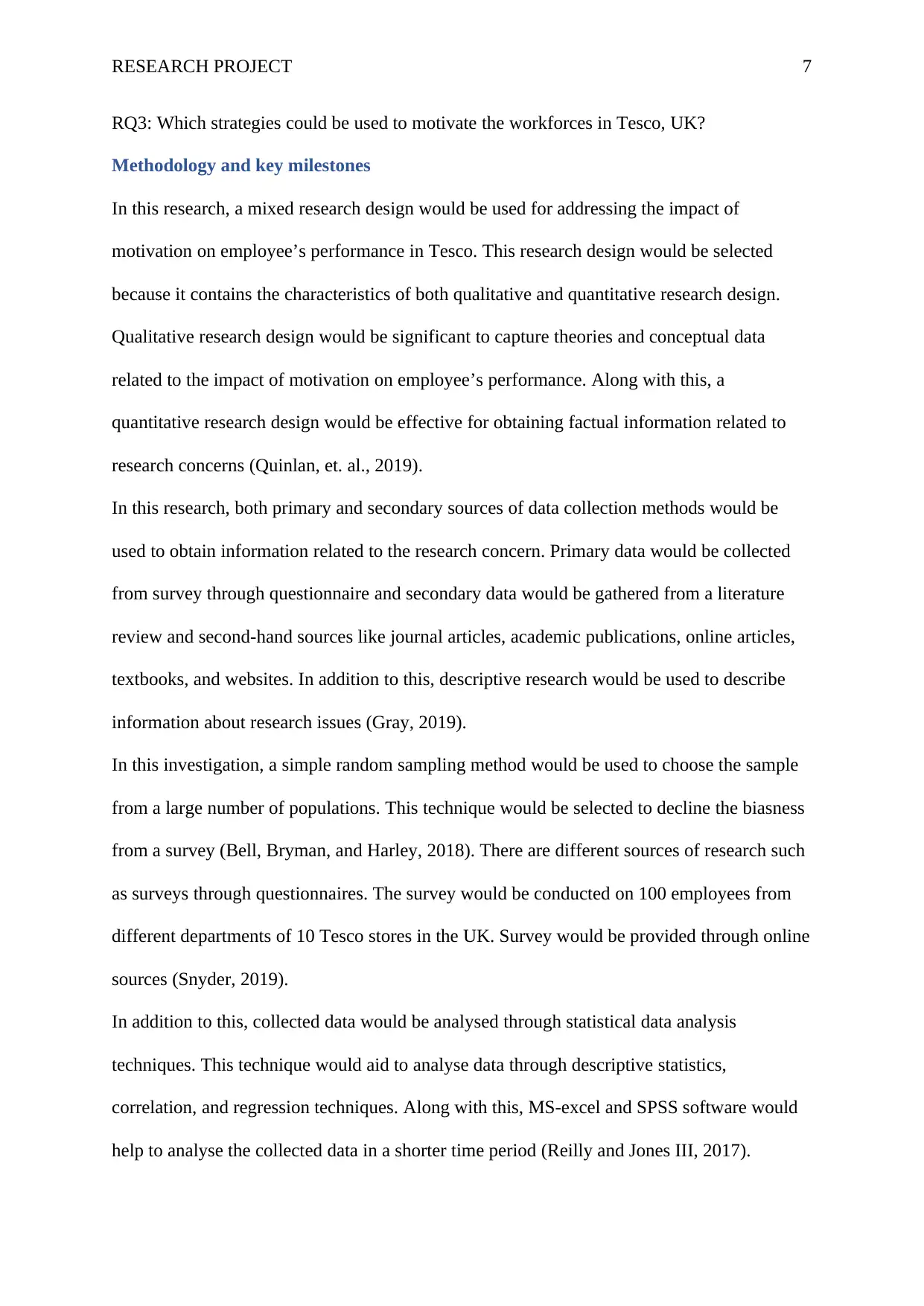
Research Questions
RQ1: Is there any relationship between employee motivation and performance?
RQ2: How employees could be motivated to perform in Tesco, UK?
the individual timing and age concerns (Huang, Xing, and Gamble, 2019). It can categorize
into different levels. All of these levels are provided as follow:
Physiological needs:
It is an initial level of requirements for any workforces. It indicates that this is the basic needs
of workforces and any individuals. Under this phase, any workforce wants to achieve shelter
needs, food needs, water, warmth, and rest needs (Haque, 2017).
Safety needs:
It is the basic needs of employees. Under this stage, workforces can fill safety needs such as
job security, work safety, and freedom from violence (Martinaityte, Sacramento, and Aryee,
2019).
Belonging needs:
Under this phase, workforces can focus on some belonging and acceptance from society like
friendship, families, co-workers, clients, and associations.
Self-esteem needs:
An individual has the need for family approval, community, and from the job, they have
needed high status and recognition (Chege and Gakobu, 2017).
Self-Actualization needs:
It is the final phase of workforce needs. Under the last stage, an individual has a need for
personal growth, education, attaining one’s full potential, training & advancement, and from
job they require creativity. This theory has some criticism and limitations such as in different
cultures, social needs are different as compared to other needs (Martinaityte, Sacramento, and
Aryee, 2019).
Research Questions
RQ1: Is there any relationship between employee motivation and performance?
RQ2: How employees could be motivated to perform in Tesco, UK?
⊘ This is a preview!⊘
Do you want full access?
Subscribe today to unlock all pages.
Trusted by 1+ million students worldwide
RESEARCH PROJECT 7
RQ3: Which strategies could be used to motivate the workforces in Tesco, UK?
Methodology and key milestones
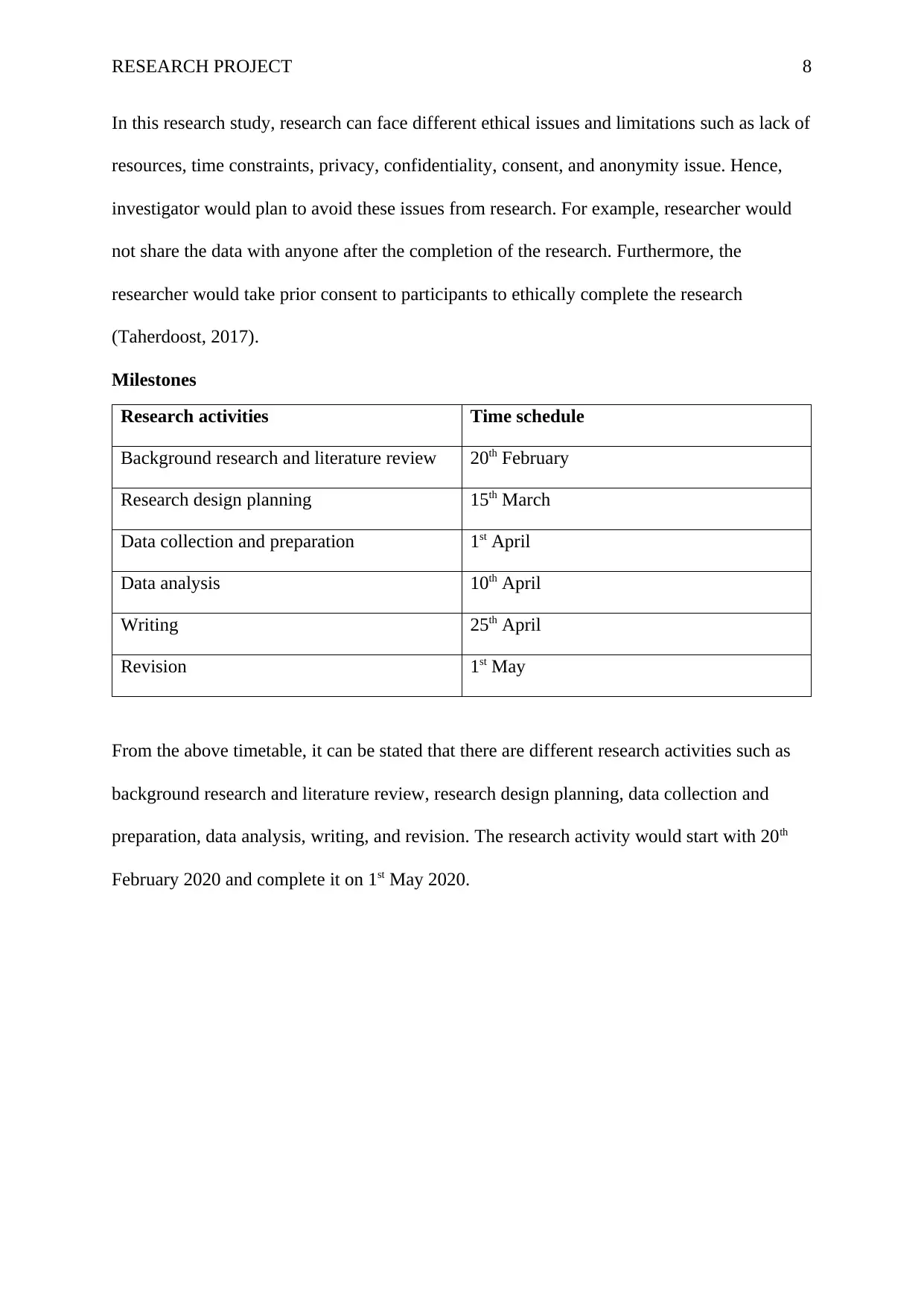
In this research, a mixed research design would be used for addressing the impact of
motivation on employee’s performance in Tesco. This research design would be selected
because it contains the characteristics of both qualitative and quantitative research design.
Qualitative research design would be significant to capture theories and conceptual data
related to the impact of motivation on employee’s performance. Along with this, a
quantitative research design would be effective for obtaining factual information related to
research concerns (Quinlan, et. al., 2019).
In this research, both primary and secondary sources of data collection methods would be
used to obtain information related to the research concern. Primary data would be collected
from survey through questionnaire and secondary data would be gathered from a literature
review and second-hand sources like journal articles, academic publications, online articles,
textbooks, and websites. In addition to this, descriptive research would be used to describe
information about research issues (Gray, 2019).
In this investigation, a simple random sampling method would be used to choose the sample
from a large number of populations. This technique would be selected to decline the biasness
from a survey (Bell, Bryman, and Harley, 2018). There are different sources of research such
as surveys through questionnaires. The survey would be conducted on 100 employees from
different departments of 10 Tesco stores in the UK. Survey would be provided through online
sources (Snyder, 2019).
In addition to this, collected data would be analysed through statistical data analysis
techniques. This technique would aid to analyse data through descriptive statistics,
correlation, and regression techniques. Along with this, MS-excel and SPSS software would
help to analyse the collected data in a shorter time period (Reilly and Jones III, 2017).
RQ3: Which strategies could be used to motivate the workforces in Tesco, UK?
Methodology and key milestones
In this research, a mixed research design would be used for addressing the impact of
motivation on employee’s performance in Tesco. This research design would be selected
because it contains the characteristics of both qualitative and quantitative research design.
Qualitative research design would be significant to capture theories and conceptual data
related to the impact of motivation on employee’s performance. Along with this, a
quantitative research design would be effective for obtaining factual information related to
research concerns (Quinlan, et. al., 2019).
In this research, both primary and secondary sources of data collection methods would be
used to obtain information related to the research concern. Primary data would be collected
from survey through questionnaire and secondary data would be gathered from a literature
review and second-hand sources like journal articles, academic publications, online articles,
textbooks, and websites. In addition to this, descriptive research would be used to describe
information about research issues (Gray, 2019).
In this investigation, a simple random sampling method would be used to choose the sample
from a large number of populations. This technique would be selected to decline the biasness
from a survey (Bell, Bryman, and Harley, 2018). There are different sources of research such
as surveys through questionnaires. The survey would be conducted on 100 employees from
different departments of 10 Tesco stores in the UK. Survey would be provided through online
sources (Snyder, 2019).
In addition to this, collected data would be analysed through statistical data analysis
techniques. This technique would aid to analyse data through descriptive statistics,
correlation, and regression techniques. Along with this, MS-excel and SPSS software would
help to analyse the collected data in a shorter time period (Reilly and Jones III, 2017).
Paraphrase This Document
Need a fresh take? Get an instant paraphrase of this document with our AI Paraphraser
RESEARCH PROJECT 8
In this research study, research can face different ethical issues and limitations such as lack of
resources, time constraints, privacy, confidentiality, consent, and anonymity issue. Hence,
investigator would plan to avoid these issues from research. For example, researcher would
not share the data with anyone after the completion of the research. Furthermore, the
researcher would take prior consent to participants to ethically complete the research
(Taherdoost, 2017).
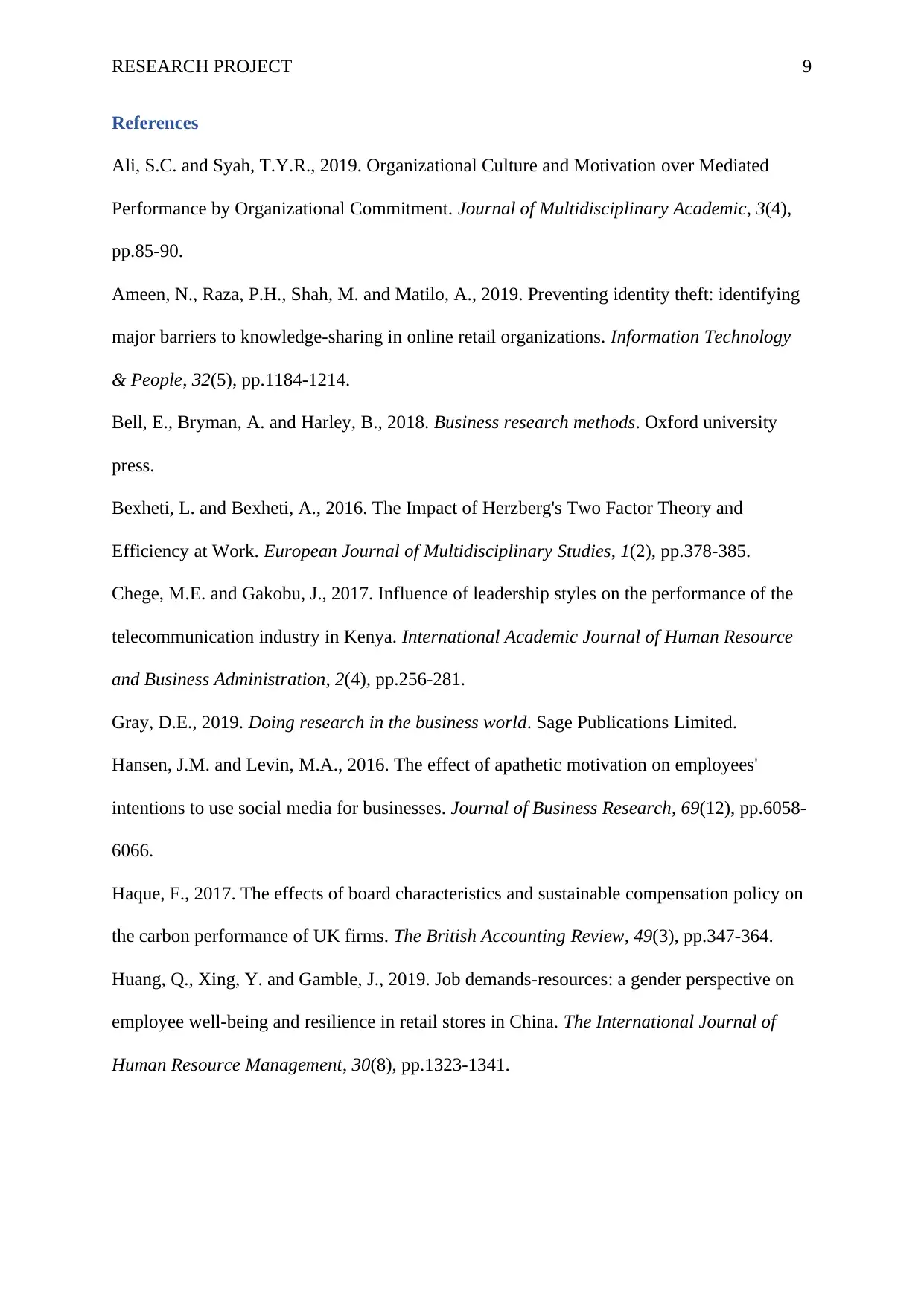
Milestones
Research activities Time schedule
Background research and literature review 20th February
Research design planning 15th March
Data collection and preparation 1st April
Data analysis 10th April
Writing 25th April
Revision 1st May
From the above timetable, it can be stated that there are different research activities such as
background research and literature review, research design planning, data collection and
preparation, data analysis, writing, and revision. The research activity would start with 20th
February 2020 and complete it on 1st May 2020.
In this research study, research can face different ethical issues and limitations such as lack of
resources, time constraints, privacy, confidentiality, consent, and anonymity issue. Hence,
investigator would plan to avoid these issues from research. For example, researcher would
not share the data with anyone after the completion of the research. Furthermore, the
researcher would take prior consent to participants to ethically complete the research
(Taherdoost, 2017).
Milestones
Research activities Time schedule
Background research and literature review 20th February
Research design planning 15th March
Data collection and preparation 1st April
Data analysis 10th April
Writing 25th April
Revision 1st May
From the above timetable, it can be stated that there are different research activities such as
background research and literature review, research design planning, data collection and
preparation, data analysis, writing, and revision. The research activity would start with 20th
February 2020 and complete it on 1st May 2020.
RESEARCH PROJECT 9
References
Ali, S.C. and Syah, T.Y.R., 2019. Organizational Culture and Motivation over Mediated
Performance by Organizational Commitment. Journal of Multidisciplinary Academic, 3(4),
pp.85-90.
Ameen, N., Raza, P.H., Shah, M. and Matilo, A., 2019. Preventing identity theft: identifying
major barriers to knowledge-sharing in online retail organizations. Information Technology
& People, 32(5), pp.1184-1214.
Bell, E., Bryman, A. and Harley, B., 2018. Business research methods. Oxford university
press.
Bexheti, L. and Bexheti, A., 2016. The Impact of Herzberg's Two Factor Theory and
Efficiency at Work. European Journal of Multidisciplinary Studies, 1(2), pp.378-385.
Chege, M.E. and Gakobu, J., 2017. Influence of leadership styles on the performance of the
telecommunication industry in Kenya. International Academic Journal of Human Resource
and Business Administration, 2(4), pp.256-281.
Gray, D.E., 2019. Doing research in the business world. Sage Publications Limited.
Hansen, J.M. and Levin, M.A., 2016. The effect of apathetic motivation on employees'
intentions to use social media for businesses. Journal of Business Research, 69(12), pp.6058-
6066.
Haque, F., 2017. The effects of board characteristics and sustainable compensation policy on
the carbon performance of UK firms. The British Accounting Review, 49(3), pp.347-364.
Huang, Q., Xing, Y. and Gamble, J., 2019. Job demands-resources: a gender perspective on
employee well-being and resilience in retail stores in China. The International Journal of
Human Resource Management, 30(8), pp.1323-1341.
References
Ali, S.C. and Syah, T.Y.R., 2019. Organizational Culture and Motivation over Mediated
Performance by Organizational Commitment. Journal of Multidisciplinary Academic, 3(4),
pp.85-90.
Ameen, N., Raza, P.H., Shah, M. and Matilo, A., 2019. Preventing identity theft: identifying
major barriers to knowledge-sharing in online retail organizations. Information Technology
& People, 32(5), pp.1184-1214.
Bell, E., Bryman, A. and Harley, B., 2018. Business research methods. Oxford university
press.
Bexheti, L. and Bexheti, A., 2016. The Impact of Herzberg's Two Factor Theory and
Efficiency at Work. European Journal of Multidisciplinary Studies, 1(2), pp.378-385.
Chege, M.E. and Gakobu, J., 2017. Influence of leadership styles on the performance of the
telecommunication industry in Kenya. International Academic Journal of Human Resource
and Business Administration, 2(4), pp.256-281.
Gray, D.E., 2019. Doing research in the business world. Sage Publications Limited.
Hansen, J.M. and Levin, M.A., 2016. The effect of apathetic motivation on employees'
intentions to use social media for businesses. Journal of Business Research, 69(12), pp.6058-
6066.
Haque, F., 2017. The effects of board characteristics and sustainable compensation policy on
the carbon performance of UK firms. The British Accounting Review, 49(3), pp.347-364.
Huang, Q., Xing, Y. and Gamble, J., 2019. Job demands-resources: a gender perspective on
employee well-being and resilience in retail stores in China. The International Journal of
Human Resource Management, 30(8), pp.1323-1341.
⊘ This is a preview!⊘
Do you want full access?
Subscribe today to unlock all pages.
Trusted by 1+ million students worldwide
RESEARCH PROJECT 10
Kuranchie-Mensah, E.B. and Amponsah-Tawiah, K., 2016. Employee motivation and work
performance: A comparative study of mining companies in Ghana. Journal of Industrial
Engineering and Management (JIEM), 9(2), pp.255-309.
Martinaityte, I., Sacramento, C. and Aryee, S., 2019. Delighting the customer: Creativity-
oriented high-performance work systems, frontline employee creative performance, and
customer satisfaction. Journal of Management, 45(2), pp.728-751.
Naidoo, M. and Gasparatos, A., 2018. Corporate Environmental Sustainability in the retail
sector: Drivers, strategies and performance measurement. Journal of Cleaner
Production, 203, pp.125-142.
Quinlan, C., Babin, B., Carr, J. and Griffin, M., 2019. Business research methods. South-
Western Cengage.
Reilly, T.M. and Jones III, R., 2017. Mixed methodology in family business research: Past
accomplishments and perspectives for the future. Journal of Family Business Strategy, 8(3),
pp.185-195.
Shaikh, M.S., and Nawar, Y.S., 2018. The impact of employee perception and engagement on
firm performance: leadership perspective. The Business & Management Review, 10(1),
pp.138-158.
Snyder, H., 2019. Literature review as a research methodology: An overview and
guidelines. Journal of Business Research, 104, pp.333-339.
Taherdoost, H., 2017. Measurement and Scaling Techniques in Research Methodology;
Survey/Questionnaire Development. International Journal of Academic Research in
Management., 6(1), pp.1-5.
Ul-Hameed, W., Mohammad, H., Shahar, H., Aljumah, A. and Azizan, S., 2019. The effect
of integration between audit and leadership on supply chain performance: Evidence from UK
based supply chain companies. Uncertain Supply Chain Management, 7(2), pp.311-328.
Kuranchie-Mensah, E.B. and Amponsah-Tawiah, K., 2016. Employee motivation and work
performance: A comparative study of mining companies in Ghana. Journal of Industrial
Engineering and Management (JIEM), 9(2), pp.255-309.
Martinaityte, I., Sacramento, C. and Aryee, S., 2019. Delighting the customer: Creativity-
oriented high-performance work systems, frontline employee creative performance, and
customer satisfaction. Journal of Management, 45(2), pp.728-751.
Naidoo, M. and Gasparatos, A., 2018. Corporate Environmental Sustainability in the retail
sector: Drivers, strategies and performance measurement. Journal of Cleaner
Production, 203, pp.125-142.
Quinlan, C., Babin, B., Carr, J. and Griffin, M., 2019. Business research methods. South-
Western Cengage.
Reilly, T.M. and Jones III, R., 2017. Mixed methodology in family business research: Past
accomplishments and perspectives for the future. Journal of Family Business Strategy, 8(3),
pp.185-195.
Shaikh, M.S., and Nawar, Y.S., 2018. The impact of employee perception and engagement on
firm performance: leadership perspective. The Business & Management Review, 10(1),
pp.138-158.
Snyder, H., 2019. Literature review as a research methodology: An overview and
guidelines. Journal of Business Research, 104, pp.333-339.
Taherdoost, H., 2017. Measurement and Scaling Techniques in Research Methodology;
Survey/Questionnaire Development. International Journal of Academic Research in
Management., 6(1), pp.1-5.
Ul-Hameed, W., Mohammad, H., Shahar, H., Aljumah, A. and Azizan, S., 2019. The effect
of integration between audit and leadership on supply chain performance: Evidence from UK
based supply chain companies. Uncertain Supply Chain Management, 7(2), pp.311-328.

1 out of 10


Related Documents


Your All-in-One AI-Powered Toolkit for Academic Success.
+13062052269
info@desklib.com
Available 24*7 on WhatsApp / Email
![[object Object]](/_next/static/media/star-bottom.7253800d.svg)
Unlock your academic potential
Copyright © 2020–2026 A2Z Services. All Rights Reserved. Developed and managed by ZUCOL.