Research Project: Analyzing Rural Tourism for Economic Growth in India
VerifiedAdded on 2023/01/19
|7
|1399
|70
Project
AI Summary
This research project focuses on improving rural tourism in India. It begins by defining rural tourism and establishing its business context, highlighting India's rich culture and heritage. The project addresses key research questions about the meaning of rural tourism, its advantages, and government schemes. The methodology includes qualitative and quantitative approaches, utilizing questionnaires for data collection. Ethical considerations such as informed consent and confidentiality are addressed. A Gantt chart is included for project planning, and professional development goals are outlined. The project concludes with a list of references, demonstrating a comprehensive approach to understanding and improving rural tourism in India.

Research Project
Paraphrase This Document
Need a fresh take? Get an instant paraphrase of this document with our AI Paraphraser

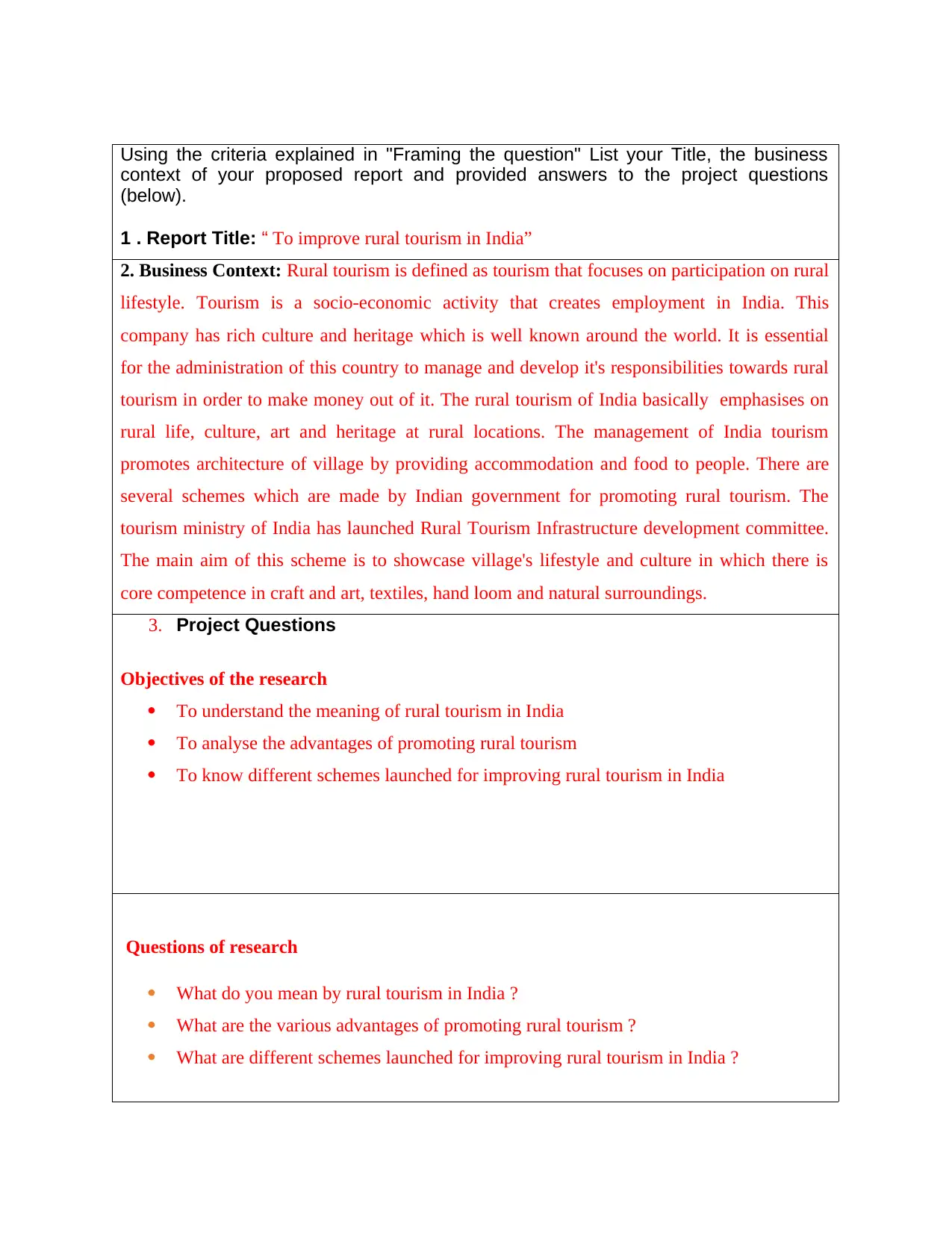
Using the criteria explained in "Framing the question" List your Title, the business
context of your proposed report and provided answers to the project questions
(below).
1 . Report Title: “ To improve rural tourism in India”
2. Business Context: Rural tourism is defined as tourism that focuses on participation on rural
lifestyle. Tourism is a socio-economic activity that creates employment in India. This
company has rich culture and heritage which is well known around the world. It is essential
for the administration of this country to manage and develop it's responsibilities towards rural
tourism in order to make money out of it. The rural tourism of India basically emphasises on
rural life, culture, art and heritage at rural locations. The management of India tourism
promotes architecture of village by providing accommodation and food to people. There are
several schemes which are made by Indian government for promoting rural tourism. The
tourism ministry of India has launched Rural Tourism Infrastructure development committee.
The main aim of this scheme is to showcase village's lifestyle and culture in which there is
core competence in craft and art, textiles, hand loom and natural surroundings.
3. Project Questions
Objectives of the research
To understand the meaning of rural tourism in India
To analyse the advantages of promoting rural tourism
To know different schemes launched for improving rural tourism in India
Questions of research
What do you mean by rural tourism in India ?
What are the various advantages of promoting rural tourism ?
What are different schemes launched for improving rural tourism in India ?
context of your proposed report and provided answers to the project questions
(below).
1 . Report Title: “ To improve rural tourism in India”
2. Business Context: Rural tourism is defined as tourism that focuses on participation on rural
lifestyle. Tourism is a socio-economic activity that creates employment in India. This
company has rich culture and heritage which is well known around the world. It is essential
for the administration of this country to manage and develop it's responsibilities towards rural
tourism in order to make money out of it. The rural tourism of India basically emphasises on
rural life, culture, art and heritage at rural locations. The management of India tourism
promotes architecture of village by providing accommodation and food to people. There are
several schemes which are made by Indian government for promoting rural tourism. The
tourism ministry of India has launched Rural Tourism Infrastructure development committee.
The main aim of this scheme is to showcase village's lifestyle and culture in which there is
core competence in craft and art, textiles, hand loom and natural surroundings.
3. Project Questions
Objectives of the research
To understand the meaning of rural tourism in India
To analyse the advantages of promoting rural tourism
To know different schemes launched for improving rural tourism in India
Questions of research
What do you mean by rural tourism in India ?
What are the various advantages of promoting rural tourism ?
What are different schemes launched for improving rural tourism in India ?

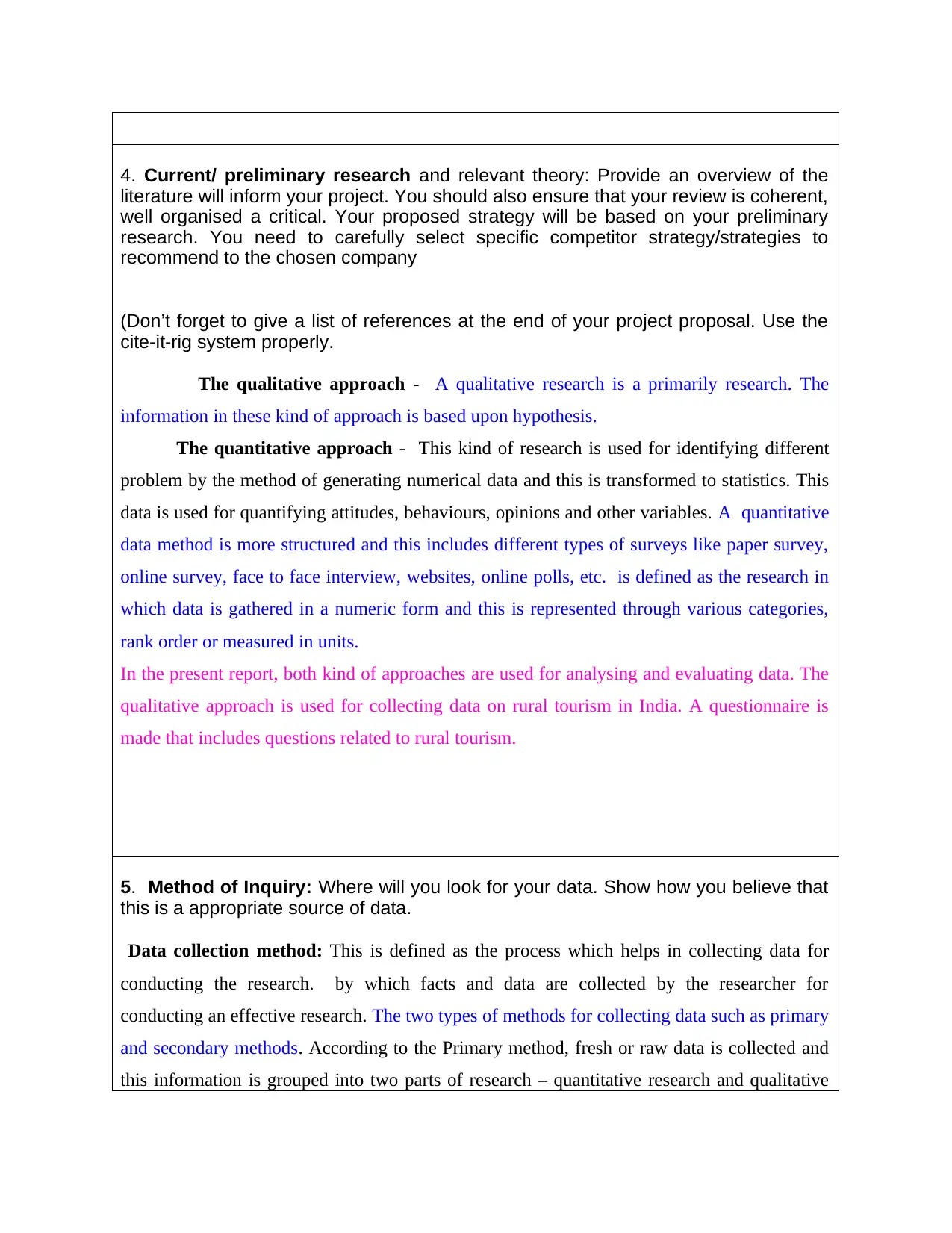
4. Current/ preliminary research and relevant theory: Provide an overview of the
literature will inform your project. You should also ensure that your review is coherent,
well organised a critical. Your proposed strategy will be based on your preliminary
research. You need to carefully select specific competitor strategy/strategies to
recommend to the chosen company
(Don’t forget to give a list of references at the end of your project proposal. Use the
cite-it-rig system properly.
The qualitative approach - A qualitative research is a primarily research. The
information in these kind of approach is based upon hypothesis.
The quantitative approach - This kind of research is used for identifying different
problem by the method of generating numerical data and this is transformed to statistics. This
data is used for quantifying attitudes, behaviours, opinions and other variables. A quantitative
data method is more structured and this includes different types of surveys like paper survey,
online survey, face to face interview, websites, online polls, etc. is defined as the research in
which data is gathered in a numeric form and this is represented through various categories,
rank order or measured in units.
In the present report, both kind of approaches are used for analysing and evaluating data. The
qualitative approach is used for collecting data on rural tourism in India. A questionnaire is
made that includes questions related to rural tourism.
5. Method of Inquiry: Where will you look for your data. Show how you believe that
this is a appropriate source of data.
Data collection method: This is defined as the process which helps in collecting data for
conducting the research. by which facts and data are collected by the researcher for
conducting an effective research. The two types of methods for collecting data such as primary
and secondary methods. According to the Primary method, fresh or raw data is collected and
this information is grouped into two parts of research – quantitative research and qualitative
literature will inform your project. You should also ensure that your review is coherent,
well organised a critical. Your proposed strategy will be based on your preliminary
research. You need to carefully select specific competitor strategy/strategies to
recommend to the chosen company
(Don’t forget to give a list of references at the end of your project proposal. Use the
cite-it-rig system properly.
The qualitative approach - A qualitative research is a primarily research. The
information in these kind of approach is based upon hypothesis.
The quantitative approach - This kind of research is used for identifying different
problem by the method of generating numerical data and this is transformed to statistics. This
data is used for quantifying attitudes, behaviours, opinions and other variables. A quantitative
data method is more structured and this includes different types of surveys like paper survey,
online survey, face to face interview, websites, online polls, etc. is defined as the research in
which data is gathered in a numeric form and this is represented through various categories,
rank order or measured in units.
In the present report, both kind of approaches are used for analysing and evaluating data. The
qualitative approach is used for collecting data on rural tourism in India. A questionnaire is
made that includes questions related to rural tourism.
5. Method of Inquiry: Where will you look for your data. Show how you believe that
this is a appropriate source of data.
Data collection method: This is defined as the process which helps in collecting data for
conducting the research. by which facts and data are collected by the researcher for
conducting an effective research. The two types of methods for collecting data such as primary
and secondary methods. According to the Primary method, fresh or raw data is collected and
this information is grouped into two parts of research – quantitative research and qualitative
⊘ This is a preview!⊘
Do you want full access?
Subscribe today to unlock all pages.

Trusted by 1+ million students worldwide

research. The different ways by which Primary data can be gathered are interviews,
questionnaires, face to face interactions, etc. This helps in analysing relevant and proper data
or information. On the other hand, Secondary data is known as using already searched data
which is available through different sources such as research books, news papers,
magazines, advertisement media. Collection of data has a very important role in conducting an
effective research as it is important for the researcher to collect authentic and relevant data that
is used for making recommendations and conclusions for the research.
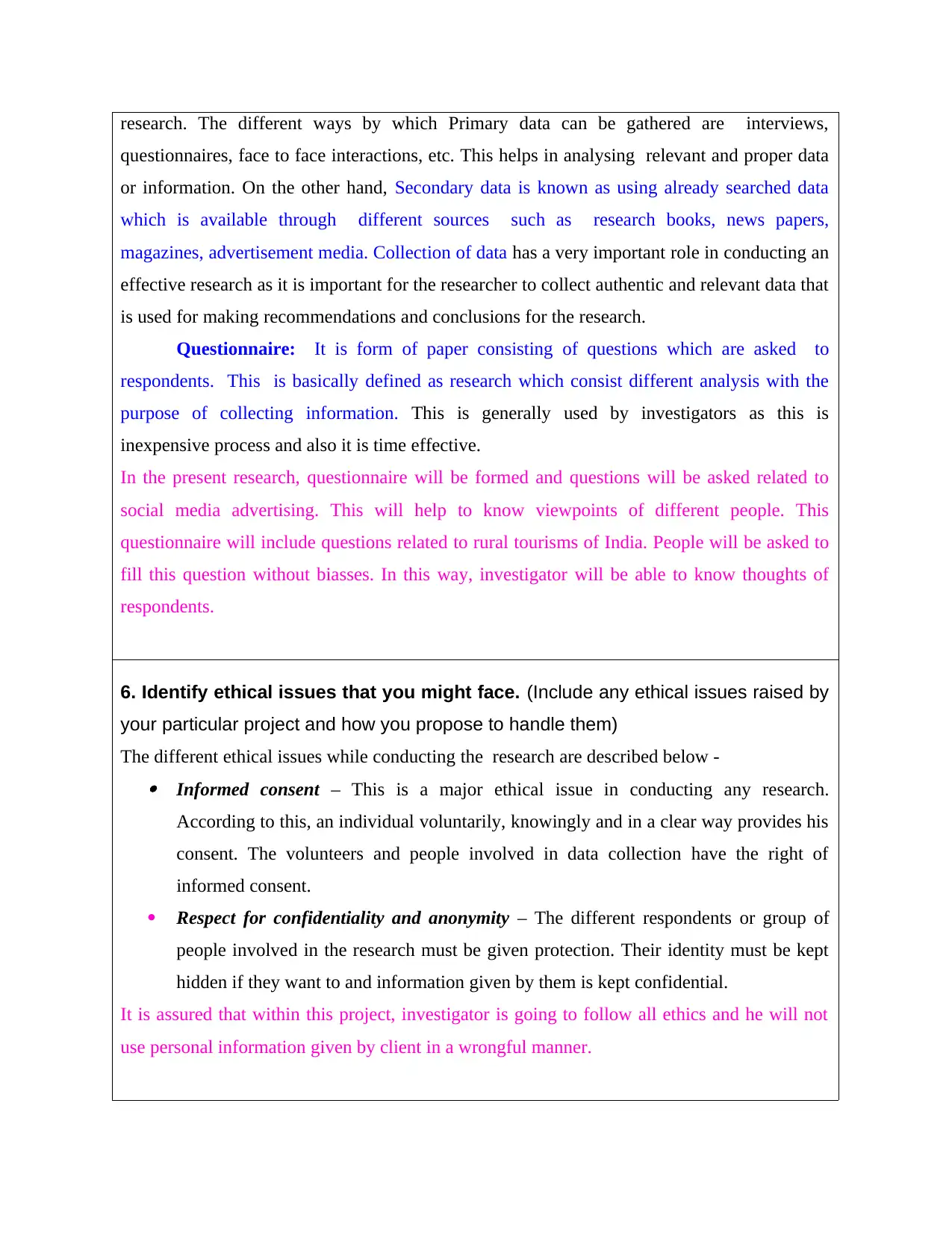
Questionnaire: It is form of paper consisting of questions which are asked to
respondents. This is basically defined as research which consist different analysis with the
purpose of collecting information. This is generally used by investigators as this is
inexpensive process and also it is time effective.
In the present research, questionnaire will be formed and questions will be asked related to
social media advertising. This will help to know viewpoints of different people. This
questionnaire will include questions related to rural tourisms of India. People will be asked to
fill this question without biasses. In this way, investigator will be able to know thoughts of
respondents.
6. Identify ethical issues that you might face. (Include any ethical issues raised by
your particular project and how you propose to handle them)
The different ethical issues while conducting the research are described below - Informed consent – This is a major ethical issue in conducting any research.
According to this, an individual voluntarily, knowingly and in a clear way provides his
consent. The volunteers and people involved in data collection have the right of
informed consent.
Respect for confidentiality and anonymity – The different respondents or group of
people involved in the research must be given protection. Their identity must be kept
hidden if they want to and information given by them is kept confidential.
It is assured that within this project, investigator is going to follow all ethics and he will not
use personal information given by client in a wrongful manner.
questionnaires, face to face interactions, etc. This helps in analysing relevant and proper data
or information. On the other hand, Secondary data is known as using already searched data
which is available through different sources such as research books, news papers,
magazines, advertisement media. Collection of data has a very important role in conducting an
effective research as it is important for the researcher to collect authentic and relevant data that
is used for making recommendations and conclusions for the research.
Questionnaire: It is form of paper consisting of questions which are asked to
respondents. This is basically defined as research which consist different analysis with the
purpose of collecting information. This is generally used by investigators as this is
inexpensive process and also it is time effective.
In the present research, questionnaire will be formed and questions will be asked related to
social media advertising. This will help to know viewpoints of different people. This
questionnaire will include questions related to rural tourisms of India. People will be asked to
fill this question without biasses. In this way, investigator will be able to know thoughts of
respondents.
6. Identify ethical issues that you might face. (Include any ethical issues raised by
your particular project and how you propose to handle them)
The different ethical issues while conducting the research are described below - Informed consent – This is a major ethical issue in conducting any research.
According to this, an individual voluntarily, knowingly and in a clear way provides his
consent. The volunteers and people involved in data collection have the right of
informed consent.
Respect for confidentiality and anonymity – The different respondents or group of
people involved in the research must be given protection. Their identity must be kept
hidden if they want to and information given by them is kept confidential.
It is assured that within this project, investigator is going to follow all ethics and he will not
use personal information given by client in a wrongful manner.
Paraphrase This Document
Need a fresh take? Get an instant paraphrase of this document with our AI Paraphraser

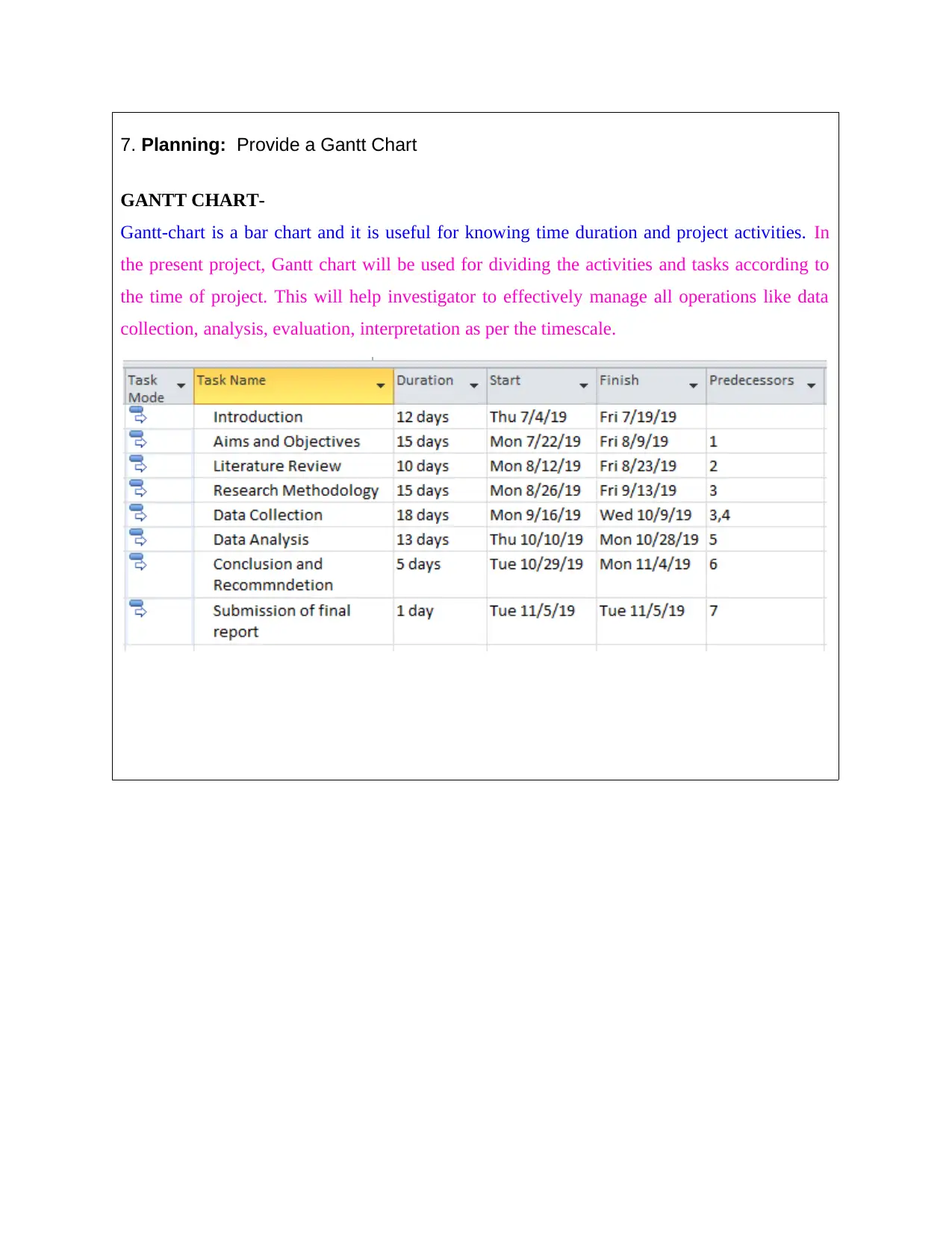
7. Planning: Provide a Gantt Chart
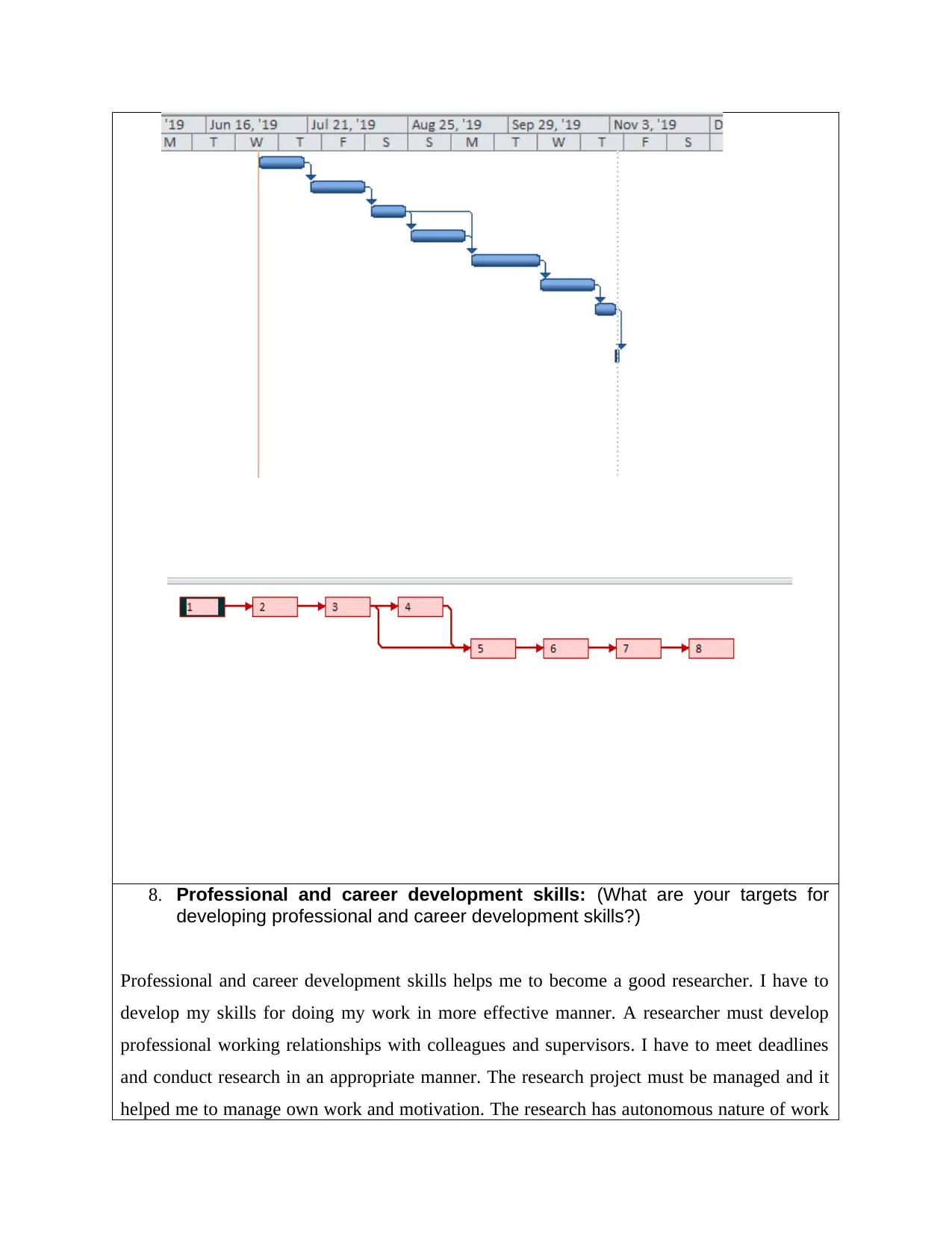
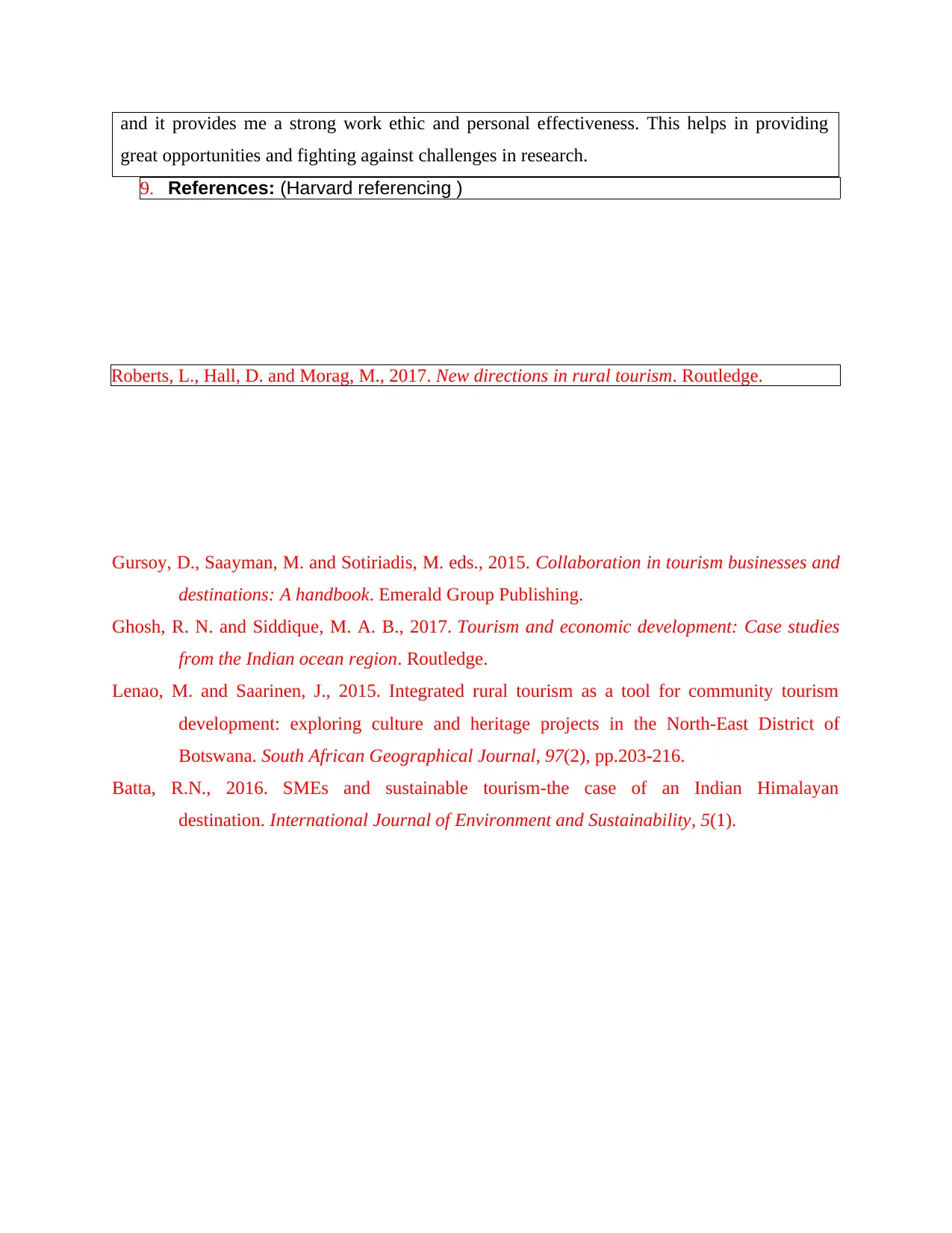
GANTT CHART-
Gantt-chart is a bar chart and it is useful for knowing time duration and project activities. In
the present project, Gantt chart will be used for dividing the activities and tasks according to
the time of project. This will help investigator to effectively manage all operations like data
collection, analysis, evaluation, interpretation as per the timescale.
GANTT CHART-
Gantt-chart is a bar chart and it is useful for knowing time duration and project activities. In
the present project, Gantt chart will be used for dividing the activities and tasks according to
the time of project. This will help investigator to effectively manage all operations like data
collection, analysis, evaluation, interpretation as per the timescale.

8. Professional and career development skills: (What are your targets for
developing professional and career development skills?)
Professional and career development skills helps me to become a good researcher. I have to
develop my skills for doing my work in more effective manner. A researcher must develop
professional working relationships with colleagues and supervisors. I have to meet deadlines
and conduct research in an appropriate manner. The research project must be managed and it
helped me to manage own work and motivation. The research has autonomous nature of work
developing professional and career development skills?)
Professional and career development skills helps me to become a good researcher. I have to
develop my skills for doing my work in more effective manner. A researcher must develop
professional working relationships with colleagues and supervisors. I have to meet deadlines
and conduct research in an appropriate manner. The research project must be managed and it
helped me to manage own work and motivation. The research has autonomous nature of work
⊘ This is a preview!⊘
Do you want full access?
Subscribe today to unlock all pages.

Trusted by 1+ million students worldwide

and it provides me a strong work ethic and personal effectiveness. This helps in providing
great opportunities and fighting against challenges in research.
9. References: (Harvard referencing )
Roberts, L., Hall, D. and Morag, M., 2017. New directions in rural tourism. Routledge.
Gursoy, D., Saayman, M. and Sotiriadis, M. eds., 2015. Collaboration in tourism businesses and
destinations: A handbook. Emerald Group Publishing.
Ghosh, R. N. and Siddique, M. A. B., 2017. Tourism and economic development: Case studies
from the Indian ocean region. Routledge.
Lenao, M. and Saarinen, J., 2015. Integrated rural tourism as a tool for community tourism
development: exploring culture and heritage projects in the North-East District of
Botswana. South African Geographical Journal, 97(2), pp.203-216.
Batta, R.N., 2016. SMEs and sustainable tourism-the case of an Indian Himalayan
destination. International Journal of Environment and Sustainability, 5(1).
great opportunities and fighting against challenges in research.
9. References: (Harvard referencing )
Roberts, L., Hall, D. and Morag, M., 2017. New directions in rural tourism. Routledge.
Gursoy, D., Saayman, M. and Sotiriadis, M. eds., 2015. Collaboration in tourism businesses and
destinations: A handbook. Emerald Group Publishing.
Ghosh, R. N. and Siddique, M. A. B., 2017. Tourism and economic development: Case studies
from the Indian ocean region. Routledge.
Lenao, M. and Saarinen, J., 2015. Integrated rural tourism as a tool for community tourism
development: exploring culture and heritage projects in the North-East District of
Botswana. South African Geographical Journal, 97(2), pp.203-216.
Batta, R.N., 2016. SMEs and sustainable tourism-the case of an Indian Himalayan
destination. International Journal of Environment and Sustainability, 5(1).
1 out of 7
Related Documents
Your All-in-One AI-Powered Toolkit for Academic Success.
+13062052269
info@desklib.com
Available 24*7 on WhatsApp / Email
Unlock your academic potential
Copyright © 2020–2025 A2Z Services. All Rights Reserved. Developed and managed by ZUCOL.