Infective Endocarditis: Pathogenesis, Diagnosis and Management
VerifiedAdded on 2021/02/21
|1
|1018
|83
Report
AI Summary
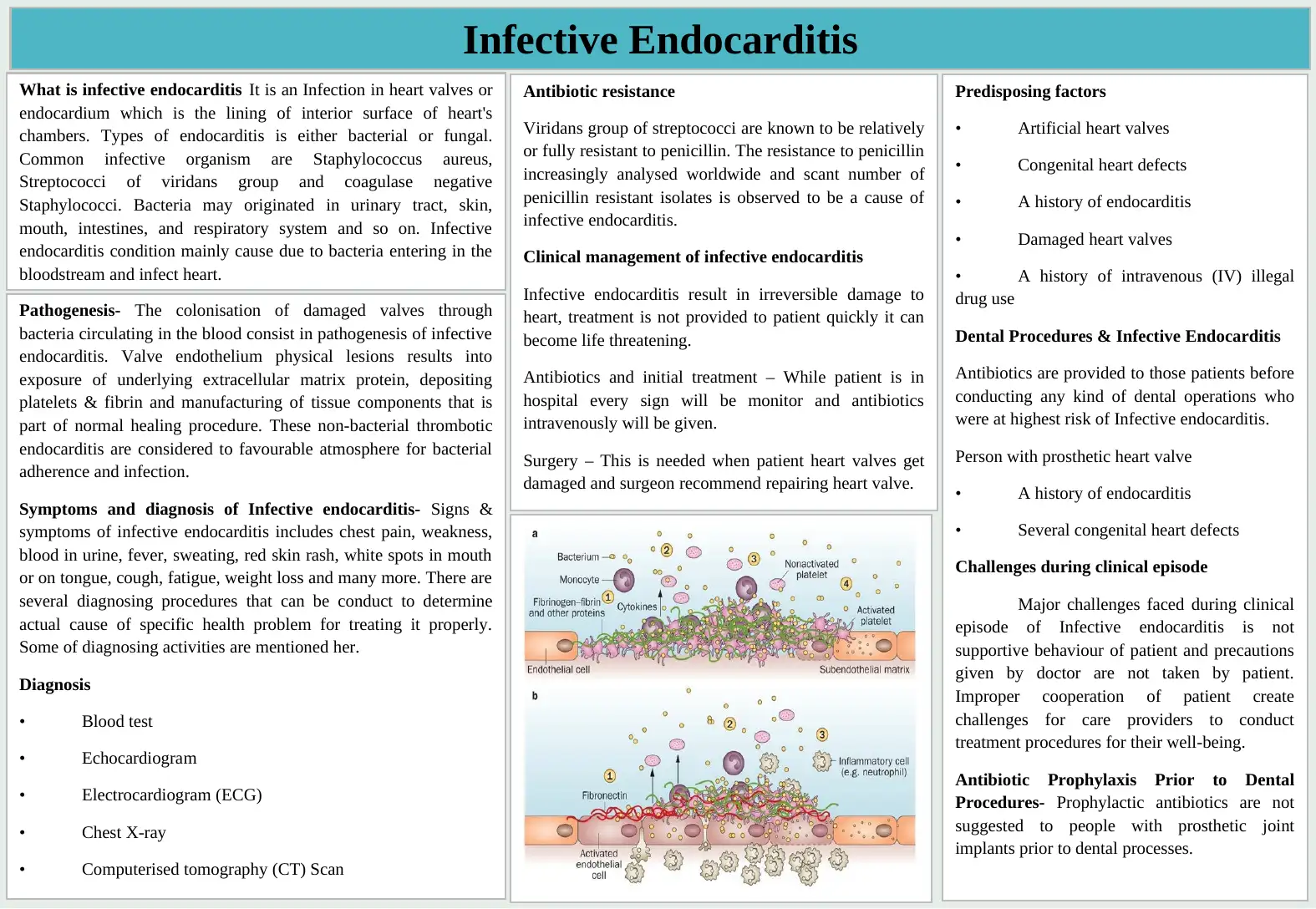
This report provides a detailed overview of infective endocarditis, a serious infection of the heart valves or the inner lining of the heart chambers (endocardium). The pathogenesis of the disease, including the role of bacterial colonization of damaged valves, is explained. The report outlines the various symptoms associated with infective endocarditis, such as chest pain, fever, and fatigue, and describes the diagnostic procedures, including blood tests, echocardiograms, and imaging scans, used to identify the condition. It also covers predisposing factors like artificial heart valves and congenital heart defects, as well as the challenges encountered during clinical episodes and the importance of antibiotic prophylaxis. Furthermore, the report discusses antibiotic resistance, clinical management strategies, including antibiotic treatments and surgery, and the challenges posed by patient non-cooperation. Overall, the report provides a comprehensive understanding of the causes, diagnosis, and treatment of infective endocarditis.


Your All-in-One AI-Powered Toolkit for Academic Success.
+13062052269
info@desklib.com
Available 24*7 on WhatsApp / Email
![[object Object]](/_next/static/media/star-bottom.7253800d.svg)
Copyright © 2020–2026 A2Z Services. All Rights Reserved. Developed and managed by ZUCOL.