Improving Fibre Fashion's Business Intelligence with Data Analysis
VerifiedAdded on 2022/08/31
|19
|4355
|17
Report
AI Summary
This report analyzes the information systems of Fibre Fashion, a company that currently relies on Excel spreadsheets for data management. It explores the limitations of the current system and proposes improvements through the implementation of business intelligence (BI) and business analytics. The report discusses the benefits of BI, including data warehousing, data mining, and data orchestration, and how these tools can enhance decision-making and customer insights. It examines the components of a business information system and provides a detailed comparison between business intelligence and business analytics. The report also highlights how BI tools can be used to improve various aspects of Fibre Fashion's business, such as sales, marketing, and customer relationship management, leading to better strategic decisions and improved business outcomes. The analysis focuses on the potential of these technologies to streamline operations, improve data-driven insights, and support future growth.

Running head: - FOUNDATIONS OF INFORMATION SYSTEMS
FOUNDATIONS OF INFORMATION SYSTEMS
Name of the Student
Name of the University
Author Note
FOUNDATIONS OF INFORMATION SYSTEMS
Name of the Student
Name of the University
Author Note

Paraphrase This Document
Need a fresh take? Get an instant paraphrase of this document with our AI Paraphraser
1FOUNDATIONS OF INFORMATION SYSTEMS
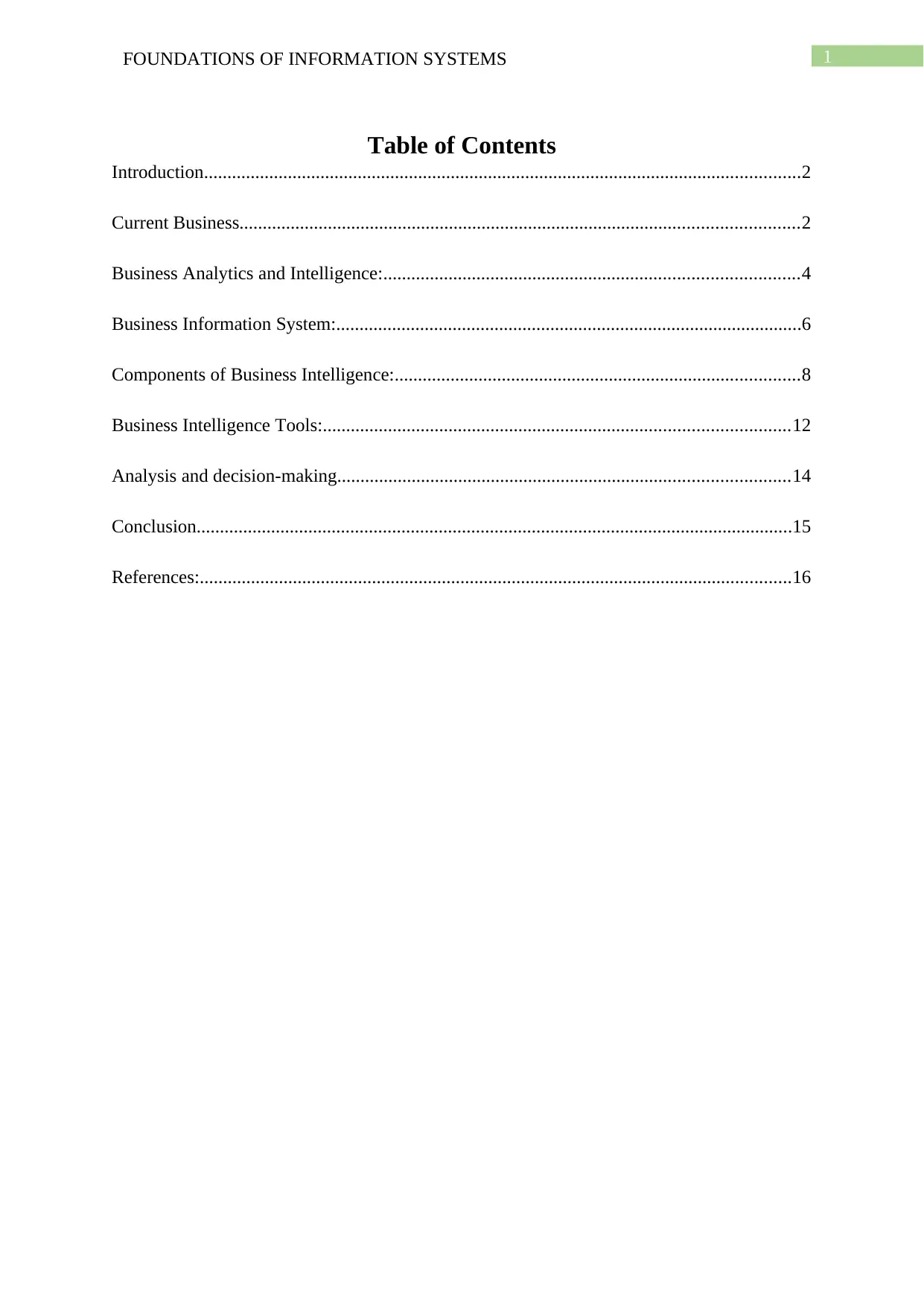
Table of Contents
Introduction................................................................................................................................2
Current Business........................................................................................................................2
Business Analytics and Intelligence:.........................................................................................4
Business Information System:....................................................................................................6
Components of Business Intelligence:.......................................................................................8
Business Intelligence Tools:....................................................................................................12
Analysis and decision-making.................................................................................................14
Conclusion................................................................................................................................15
References:...............................................................................................................................16
Table of Contents
Introduction................................................................................................................................2
Current Business........................................................................................................................2
Business Analytics and Intelligence:.........................................................................................4
Business Information System:....................................................................................................6
Components of Business Intelligence:.......................................................................................8
Business Intelligence Tools:....................................................................................................12
Analysis and decision-making.................................................................................................14
Conclusion................................................................................................................................15
References:...............................................................................................................................16
2FOUNDATIONS OF INFORMATION SYSTEMS
Introduction
Technology has developed rapidly in past few years. The flow of data generation has
increased exponentially. The companies and organizations keeps the data they generate on
daily basis for their business. Information systems plays a major role in this data
management. It can be categorised into three categories mainly, named business intelligence
systems, management information system and enterprise system (Bajdor & Grabara, 2014).
In this paper, the improvement of the existing information system of Fibre Fashion Company
is discussed and evaluated. The company has the product that stress their current business
data as information system. It also discusses the uses and benefits of Business Intelligence
systems, Analytics and decision-making tools over the current business process of the
company. It is also explained how these parameters can help in helping the company to move
in a better direction in future. Data Warehouses, data marts and data mining are the most
widely used and effective tools of business intelligence (Wieder & Ossimitz, 2015). It helps
in finding the trends in data then manages the information on appropriate level of decision-
making. The paper also discusses the fields and areas of the Fibre fashion’s business where
the decision-making is required and how it can help the system to grow their customers, sales
and future trends of the products. The data is processed in this system so that it can provide a
meaningful information. Lastly, the report is concluded with the possible analytical aspects of
the fashion Fibre Company along with the fields where the decision-making can make
impact.
Current Business
The current business of the Fibre Fashion follows a product that is used to store the
customer details of the company. The product ultimately saves the records as flat files (Excel
Spreadsheets) (Coronel & Morris, 2016). The details stored for the customers are customer
Introduction
Technology has developed rapidly in past few years. The flow of data generation has
increased exponentially. The companies and organizations keeps the data they generate on
daily basis for their business. Information systems plays a major role in this data
management. It can be categorised into three categories mainly, named business intelligence
systems, management information system and enterprise system (Bajdor & Grabara, 2014).
In this paper, the improvement of the existing information system of Fibre Fashion Company
is discussed and evaluated. The company has the product that stress their current business
data as information system. It also discusses the uses and benefits of Business Intelligence
systems, Analytics and decision-making tools over the current business process of the
company. It is also explained how these parameters can help in helping the company to move
in a better direction in future. Data Warehouses, data marts and data mining are the most
widely used and effective tools of business intelligence (Wieder & Ossimitz, 2015). It helps
in finding the trends in data then manages the information on appropriate level of decision-
making. The paper also discusses the fields and areas of the Fibre fashion’s business where
the decision-making is required and how it can help the system to grow their customers, sales
and future trends of the products. The data is processed in this system so that it can provide a
meaningful information. Lastly, the report is concluded with the possible analytical aspects of
the fashion Fibre Company along with the fields where the decision-making can make
impact.
Current Business
The current business of the Fibre Fashion follows a product that is used to store the
customer details of the company. The product ultimately saves the records as flat files (Excel
Spreadsheets) (Coronel & Morris, 2016). The details stored for the customers are customer
⊘ This is a preview!⊘
Do you want full access?
Subscribe today to unlock all pages.

Trusted by 1+ million students worldwide
3FOUNDATIONS OF INFORMATION SYSTEMS
code, trading name of the customer, contact number, state, postcode, agent, tag and category
of the customer. The form used for entering customer details also records emails, ACNno,
ABNno, Department no, suburb, company name etc. The other half section of the form stress
the buyer name, agent, tax number, credit limit, discount, trading terms, shipping terms,
region and head office of the customer. Each transaction made by the customer is also stored
using the customer reference, date, contact-details, and notes of the transaction along with the
status of the transaction. On other hand, the orders placed for the products records style of the
product, Garment, label, category, tag and controls for the product. This order record is also
created using a form that stores inputs for the style number, description, label, job number,
pattern, weight and other parameters of the product (Boland, Thrall & Duszak, 2015). The set
of the product is also defined as instructions or manufacturing sets. The cost of the good is
defined based on the sizes and color of the fashion products.
All of the storing process and forms finally stores the data in the excel spreadsheets.
In the spreadsheet the analysis of the stores who have purchased products from the company.
The data analysis helps the company to observer the season’s average sales and number of
customers of the company, who are the owners of the store along with the number of new
customers gained for the company. The stores are also stored and sorted according to the
suburb location of the store. Lastly, the analysis represents the business marketing aspects of
the company, including existing stock areas, new areas where promotional material has been
send and the areas where the company has approached earlier for their marketing. It shows
that the company has to use a product, which does not have analysis and decision making
properties. The software alone cannot help in decision making for the company. Here comes
the idea of the business intelligence which can be achieved by establishing the certain
remodelling of the business process and structuring the database into the models that supports
code, trading name of the customer, contact number, state, postcode, agent, tag and category
of the customer. The form used for entering customer details also records emails, ACNno,
ABNno, Department no, suburb, company name etc. The other half section of the form stress
the buyer name, agent, tax number, credit limit, discount, trading terms, shipping terms,
region and head office of the customer. Each transaction made by the customer is also stored
using the customer reference, date, contact-details, and notes of the transaction along with the
status of the transaction. On other hand, the orders placed for the products records style of the
product, Garment, label, category, tag and controls for the product. This order record is also
created using a form that stores inputs for the style number, description, label, job number,
pattern, weight and other parameters of the product (Boland, Thrall & Duszak, 2015). The set
of the product is also defined as instructions or manufacturing sets. The cost of the good is
defined based on the sizes and color of the fashion products.
All of the storing process and forms finally stores the data in the excel spreadsheets.
In the spreadsheet the analysis of the stores who have purchased products from the company.
The data analysis helps the company to observer the season’s average sales and number of
customers of the company, who are the owners of the store along with the number of new
customers gained for the company. The stores are also stored and sorted according to the
suburb location of the store. Lastly, the analysis represents the business marketing aspects of
the company, including existing stock areas, new areas where promotional material has been
send and the areas where the company has approached earlier for their marketing. It shows
that the company has to use a product, which does not have analysis and decision making
properties. The software alone cannot help in decision making for the company. Here comes
the idea of the business intelligence which can be achieved by establishing the certain
remodelling of the business process and structuring the database into the models that supports
Paraphrase This Document
Need a fresh take? Get an instant paraphrase of this document with our AI Paraphraser
4FOUNDATIONS OF INFORMATION SYSTEMS
business intelligence and decision making using BI tools (Sauter, 2014). The use of business
intelligence and its tools are mentioned in the later sections of the report.
Business Analytics and Intelligence:
Business intelligence and Analytics primarily refer to the solutions of data
management that are specifically implemented into the companies as well as the enterprises
for the collection of historical as well as present day data while making proper utilization of
statistics and relative software applications (Larson & Chang, 2016). This is done for the
specific analysis of raw information as well as to deliver insights carrying the primary
objective of taking better decisions for the future business procedures of a company. Both of
the terms combined significantly provision with the relative insights into the operations of
business as well as for the future decisions that need to be taken carefully to have a positive
result and not a negative one for the Fibre fashion company.
However, it can be stated that business intelligence and on the other hand business
analytics have a significant difference among two of them that have a different approach
towards the modern day of business and the relative applications of the business world using
databases and online interaction with the customers.
Some of the primary difference that can be stated between the two of them have been
mentioned below with the help of the following points (Laursen & Thorlund, 2016). How can
both improve the current system of the company are also discussed.
i) Business intelligence carries out the analysis using existing data of the past as well as
present market and contrast the same to the business procedures of the respective
business organization for a better understanding of the customer needs and the relative
demands that will greatly help to have a potential growth within the business. On the
business intelligence and decision making using BI tools (Sauter, 2014). The use of business
intelligence and its tools are mentioned in the later sections of the report.
Business Analytics and Intelligence:
Business intelligence and Analytics primarily refer to the solutions of data
management that are specifically implemented into the companies as well as the enterprises
for the collection of historical as well as present day data while making proper utilization of
statistics and relative software applications (Larson & Chang, 2016). This is done for the
specific analysis of raw information as well as to deliver insights carrying the primary
objective of taking better decisions for the future business procedures of a company. Both of
the terms combined significantly provision with the relative insights into the operations of
business as well as for the future decisions that need to be taken carefully to have a positive
result and not a negative one for the Fibre fashion company.
However, it can be stated that business intelligence and on the other hand business
analytics have a significant difference among two of them that have a different approach
towards the modern day of business and the relative applications of the business world using
databases and online interaction with the customers.
Some of the primary difference that can be stated between the two of them have been
mentioned below with the help of the following points (Laursen & Thorlund, 2016). How can
both improve the current system of the company are also discussed.
i) Business intelligence carries out the analysis using existing data of the past as well as
present market and contrast the same to the business procedures of the respective
business organization for a better understanding of the customer needs and the relative
demands that will greatly help to have a potential growth within the business. On the
5FOUNDATIONS OF INFORMATION SYSTEMS
other hand, business analytics makes use of the past data for driving the present day
business and meeting the present demands of the company.
ii) Business intelligence is greatly utilized by the business organizations to carry out the
current operations within the business organizations (Alpar & Schulz, 2016). On the
other hand, business analytics is properly utilized to have a better understanding of the
business operations and to boost the same for having a significant increase within the
productivity of the enterprise. It uses the decision support systems for the sales
department of the company.
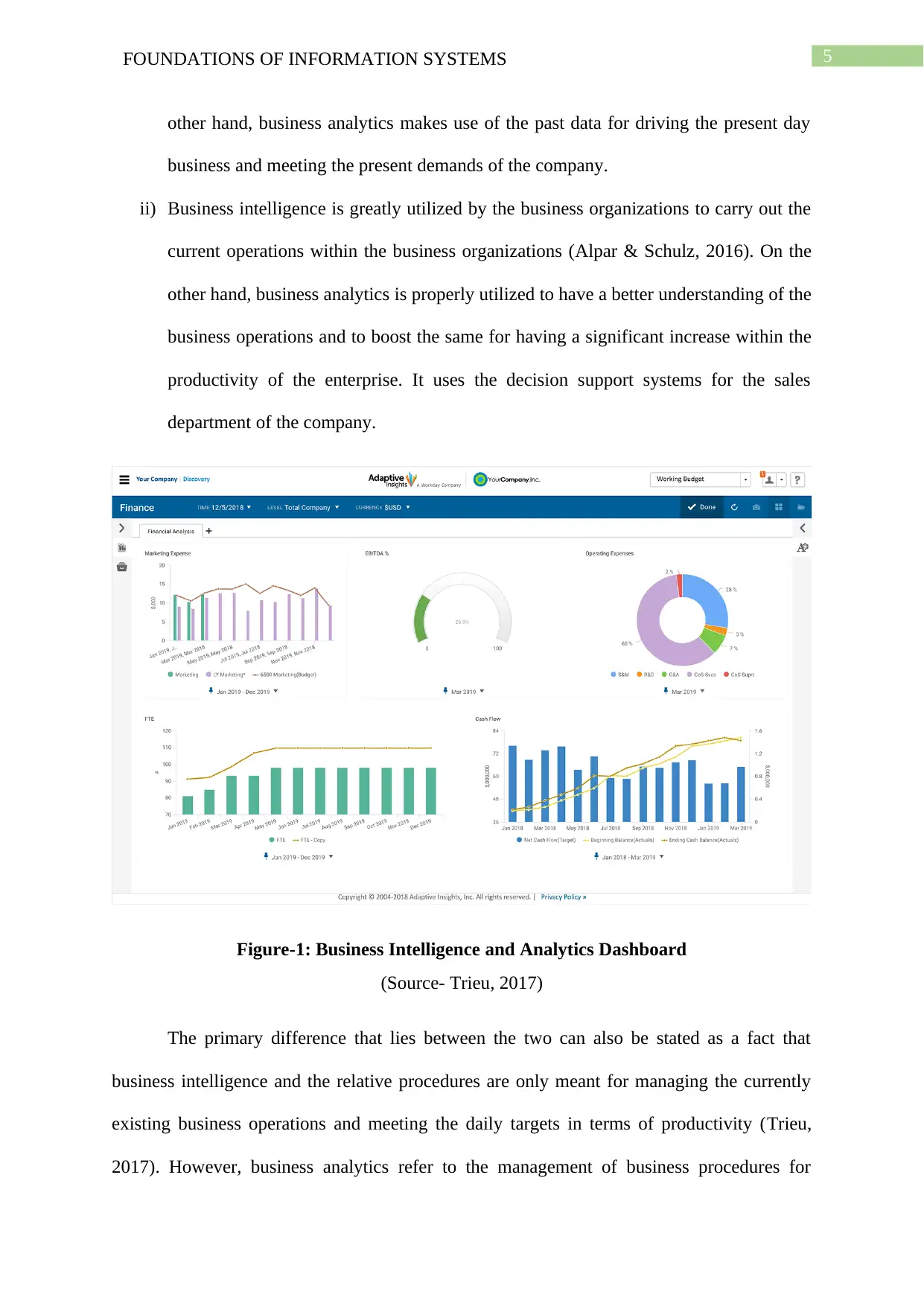
Figure-1: Business Intelligence and Analytics Dashboard
(Source- Trieu, 2017)
The primary difference that lies between the two can also be stated as a fact that
business intelligence and the relative procedures are only meant for managing the currently
existing business operations and meeting the daily targets in terms of productivity (Trieu,
2017). However, business analytics refer to the management of business procedures for
other hand, business analytics makes use of the past data for driving the present day
business and meeting the present demands of the company.
ii) Business intelligence is greatly utilized by the business organizations to carry out the
current operations within the business organizations (Alpar & Schulz, 2016). On the
other hand, business analytics is properly utilized to have a better understanding of the
business operations and to boost the same for having a significant increase within the
productivity of the enterprise. It uses the decision support systems for the sales
department of the company.
Figure-1: Business Intelligence and Analytics Dashboard
(Source- Trieu, 2017)
The primary difference that lies between the two can also be stated as a fact that
business intelligence and the relative procedures are only meant for managing the currently
existing business operations and meeting the daily targets in terms of productivity (Trieu,
2017). However, business analytics refer to the management of business procedures for
⊘ This is a preview!⊘
Do you want full access?
Subscribe today to unlock all pages.
Trusted by 1+ million students worldwide
6FOUNDATIONS OF INFORMATION SYSTEMS
meeting the future needs of the company and to have a firm hold within the global market for
a better productivity in the future scenarios of the sales and marketing within the business
world.
Some of the BI tools are the likes of SAP Business Objects and TIBCO can also be
used for analyis. While some of the tools used by Business, analytics are Word Processing,
MS Visio and MS Office Tools. These tools can help in better visualization of the business
process along with the decision-making abilities for the Fibre Fashion Company.
Business Information System:
The business information systems refer to a collective set of inter-related entities and
processes that make use of information and technology as well as the relative infrastructure
within a business enterprise for the primary generation and dissemination of the information
that is required (Fink, Yogev & Even, 2017). Such business information systems have been
designed to provision as a supporting hand towards the procedure of decisions making by the
associated people in the procedure of attainment of the business objectives that have been
initially set.
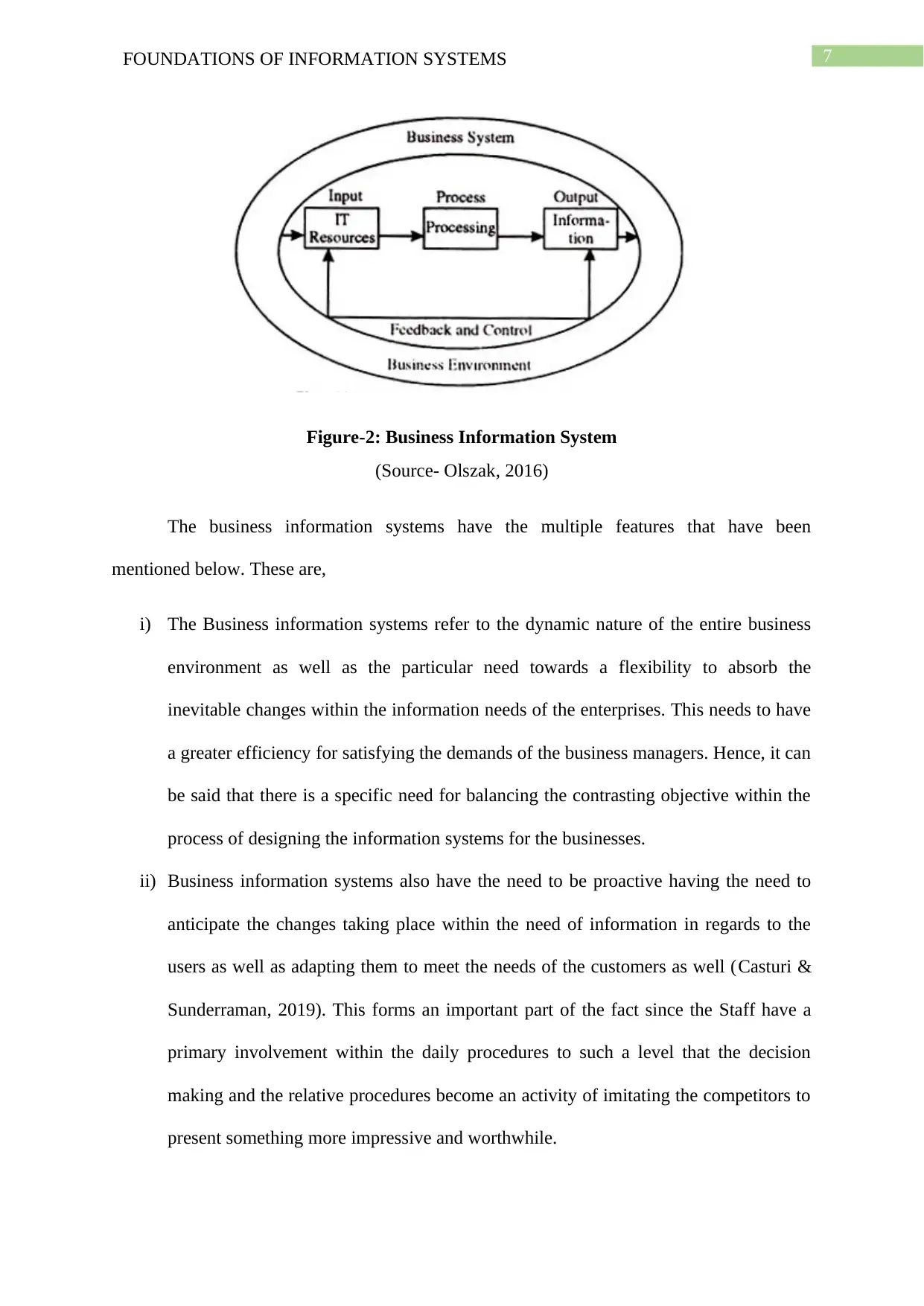
The business information systems can gather the excel and new data along with other
resources belonging to the IT infrastructure in the form of an input from the surrounding
environment. In addition to this, the gathering from processes are also important to satisfy the
analysis part of the system by the differently existing entities that shared a direct association
with the business organization (Olszak, 2016). The entities must be identified from the
software, which is used by the Fashion Fibre Company currently.
meeting the future needs of the company and to have a firm hold within the global market for
a better productivity in the future scenarios of the sales and marketing within the business
world.
Some of the BI tools are the likes of SAP Business Objects and TIBCO can also be
used for analyis. While some of the tools used by Business, analytics are Word Processing,
MS Visio and MS Office Tools. These tools can help in better visualization of the business
process along with the decision-making abilities for the Fibre Fashion Company.
Business Information System:
The business information systems refer to a collective set of inter-related entities and
processes that make use of information and technology as well as the relative infrastructure
within a business enterprise for the primary generation and dissemination of the information
that is required (Fink, Yogev & Even, 2017). Such business information systems have been
designed to provision as a supporting hand towards the procedure of decisions making by the
associated people in the procedure of attainment of the business objectives that have been
initially set.
The business information systems can gather the excel and new data along with other
resources belonging to the IT infrastructure in the form of an input from the surrounding
environment. In addition to this, the gathering from processes are also important to satisfy the
analysis part of the system by the differently existing entities that shared a direct association
with the business organization (Olszak, 2016). The entities must be identified from the
software, which is used by the Fashion Fibre Company currently.
Paraphrase This Document
Need a fresh take? Get an instant paraphrase of this document with our AI Paraphraser
7FOUNDATIONS OF INFORMATION SYSTEMS
Figure-2: Business Information System
(Source- Olszak, 2016)
The business information systems have the multiple features that have been
mentioned below. These are,
i) The Business information systems refer to the dynamic nature of the entire business
environment as well as the particular need towards a flexibility to absorb the
inevitable changes within the information needs of the enterprises. This needs to have
a greater efficiency for satisfying the demands of the business managers. Hence, it can
be said that there is a specific need for balancing the contrasting objective within the
process of designing the information systems for the businesses.
ii) Business information systems also have the need to be proactive having the need to
anticipate the changes taking place within the need of information in regards to the
users as well as adapting them to meet the needs of the customers as well (Casturi &
Sunderraman, 2019). This forms an important part of the fact since the Staff have a
primary involvement within the daily procedures to such a level that the decision
making and the relative procedures become an activity of imitating the competitors to
present something more impressive and worthwhile.
Figure-2: Business Information System
(Source- Olszak, 2016)
The business information systems have the multiple features that have been
mentioned below. These are,
i) The Business information systems refer to the dynamic nature of the entire business
environment as well as the particular need towards a flexibility to absorb the
inevitable changes within the information needs of the enterprises. This needs to have
a greater efficiency for satisfying the demands of the business managers. Hence, it can
be said that there is a specific need for balancing the contrasting objective within the
process of designing the information systems for the businesses.
ii) Business information systems also have the need to be proactive having the need to
anticipate the changes taking place within the need of information in regards to the
users as well as adapting them to meet the needs of the customers as well (Casturi &
Sunderraman, 2019). This forms an important part of the fact since the Staff have a
primary involvement within the daily procedures to such a level that the decision
making and the relative procedures become an activity of imitating the competitors to
present something more impressive and worthwhile.
8FOUNDATIONS OF INFORMATION SYSTEMS
iii) The primary objective of a business information system is to provide with information
needs required for the procedures of decision making within the business.
iv) Lastly, the business information systems have been particularly designed considering
the financial availability as well as the human resources belonging to the business
organization.
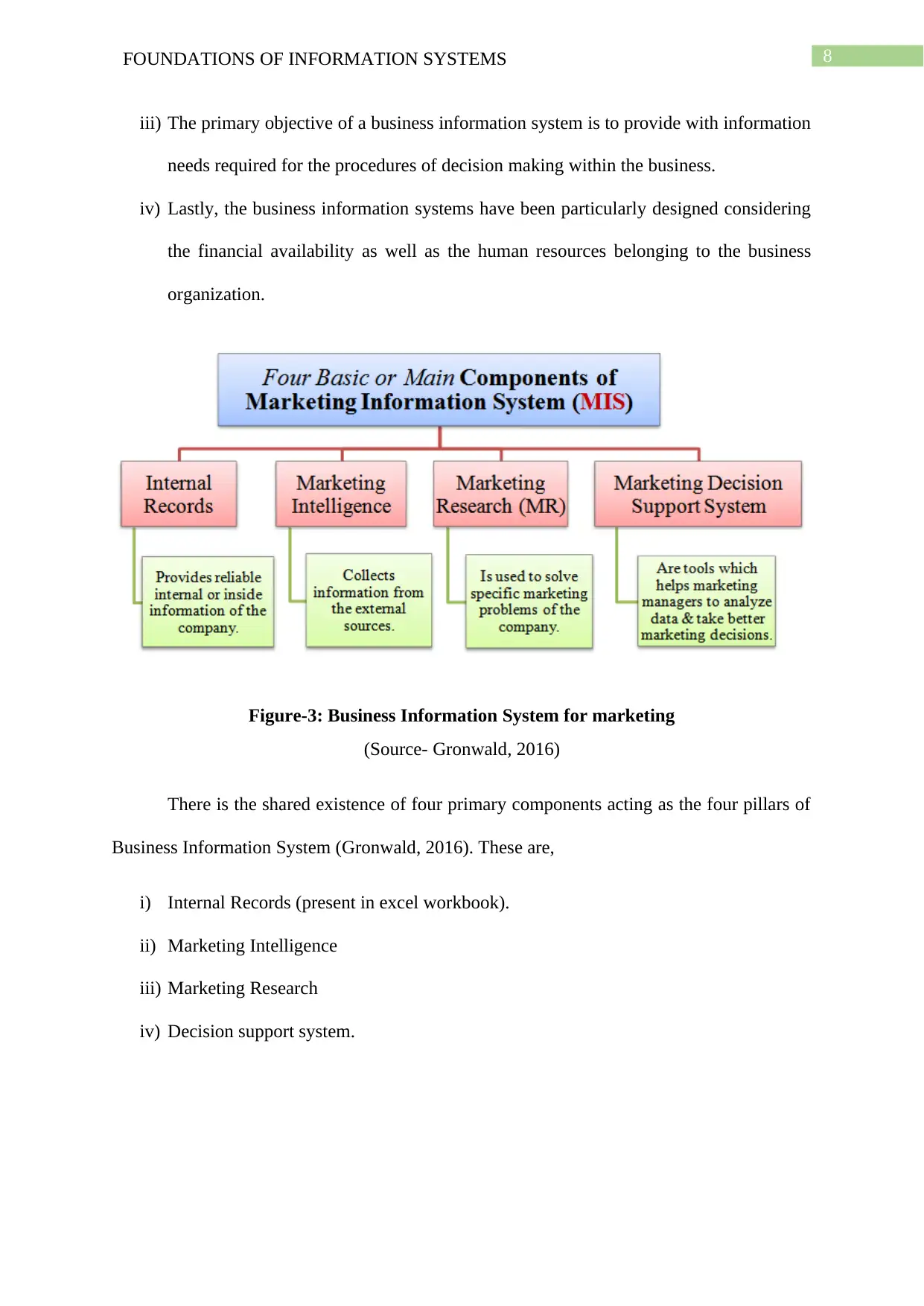
Figure-3: Business Information System for marketing
(Source- Gronwald, 2016)
There is the shared existence of four primary components acting as the four pillars of
Business Information System (Gronwald, 2016). These are,
i) Internal Records (present in excel workbook).
ii) Marketing Intelligence
iii) Marketing Research
iv) Decision support system.
iii) The primary objective of a business information system is to provide with information
needs required for the procedures of decision making within the business.
iv) Lastly, the business information systems have been particularly designed considering
the financial availability as well as the human resources belonging to the business
organization.
Figure-3: Business Information System for marketing
(Source- Gronwald, 2016)
There is the shared existence of four primary components acting as the four pillars of
Business Information System (Gronwald, 2016). These are,
i) Internal Records (present in excel workbook).
ii) Marketing Intelligence
iii) Marketing Research
iv) Decision support system.
⊘ This is a preview!⊘
Do you want full access?
Subscribe today to unlock all pages.
Trusted by 1+ million students worldwide
9FOUNDATIONS OF INFORMATION SYSTEMS
Components of Business Intelligence:
The lying components of Business intelligence that forms a primary part of the
procedure. These are,
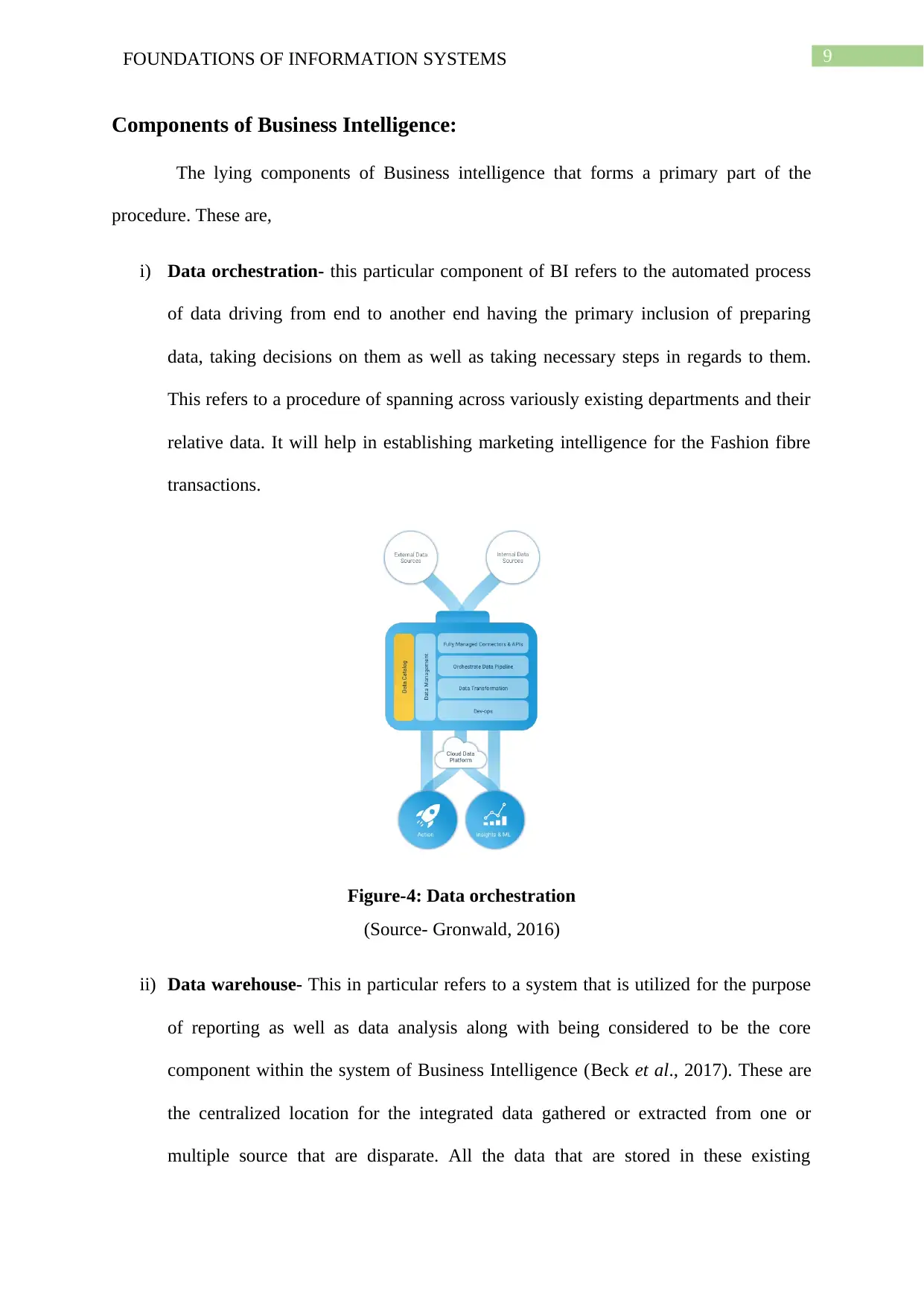
i) Data orchestration- this particular component of BI refers to the automated process
of data driving from end to another end having the primary inclusion of preparing
data, taking decisions on them as well as taking necessary steps in regards to them.
This refers to a procedure of spanning across variously existing departments and their
relative data. It will help in establishing marketing intelligence for the Fashion fibre
transactions.
Figure-4: Data orchestration
(Source- Gronwald, 2016)
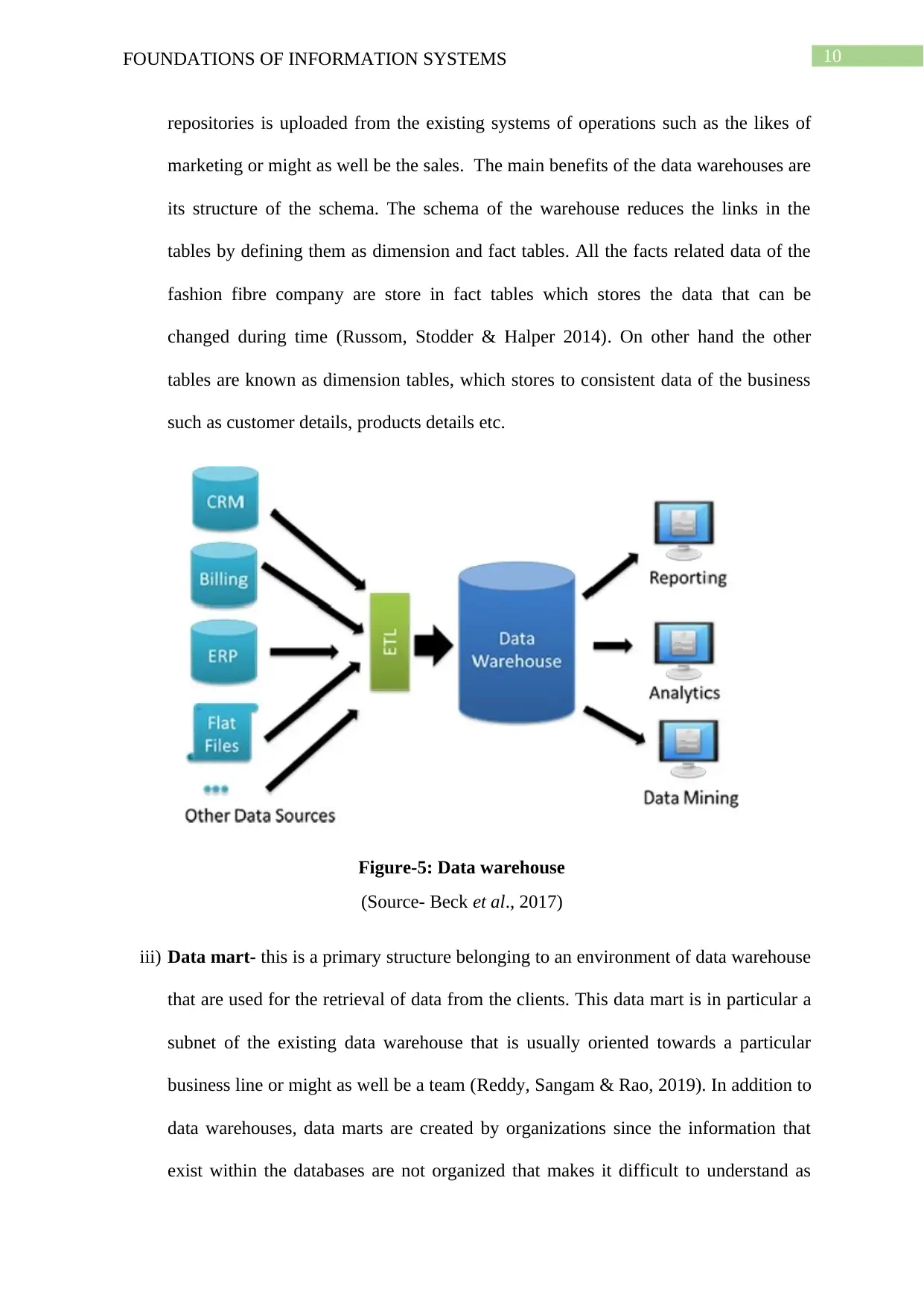
ii) Data warehouse- This in particular refers to a system that is utilized for the purpose
of reporting as well as data analysis along with being considered to be the core
component within the system of Business Intelligence (Beck et al., 2017). These are
the centralized location for the integrated data gathered or extracted from one or
multiple source that are disparate. All the data that are stored in these existing
Components of Business Intelligence:
The lying components of Business intelligence that forms a primary part of the
procedure. These are,
i) Data orchestration- this particular component of BI refers to the automated process
of data driving from end to another end having the primary inclusion of preparing
data, taking decisions on them as well as taking necessary steps in regards to them.
This refers to a procedure of spanning across variously existing departments and their
relative data. It will help in establishing marketing intelligence for the Fashion fibre
transactions.
Figure-4: Data orchestration
(Source- Gronwald, 2016)
ii) Data warehouse- This in particular refers to a system that is utilized for the purpose
of reporting as well as data analysis along with being considered to be the core
component within the system of Business Intelligence (Beck et al., 2017). These are
the centralized location for the integrated data gathered or extracted from one or
multiple source that are disparate. All the data that are stored in these existing
Paraphrase This Document
Need a fresh take? Get an instant paraphrase of this document with our AI Paraphraser
10FOUNDATIONS OF INFORMATION SYSTEMS
repositories is uploaded from the existing systems of operations such as the likes of
marketing or might as well be the sales. The main benefits of the data warehouses are
its structure of the schema. The schema of the warehouse reduces the links in the
tables by defining them as dimension and fact tables. All the facts related data of the
fashion fibre company are store in fact tables which stores the data that can be
changed during time (Russom, Stodder & Halper 2014). On other hand the other
tables are known as dimension tables, which stores to consistent data of the business
such as customer details, products details etc.
Figure-5: Data warehouse
(Source- Beck et al., 2017)
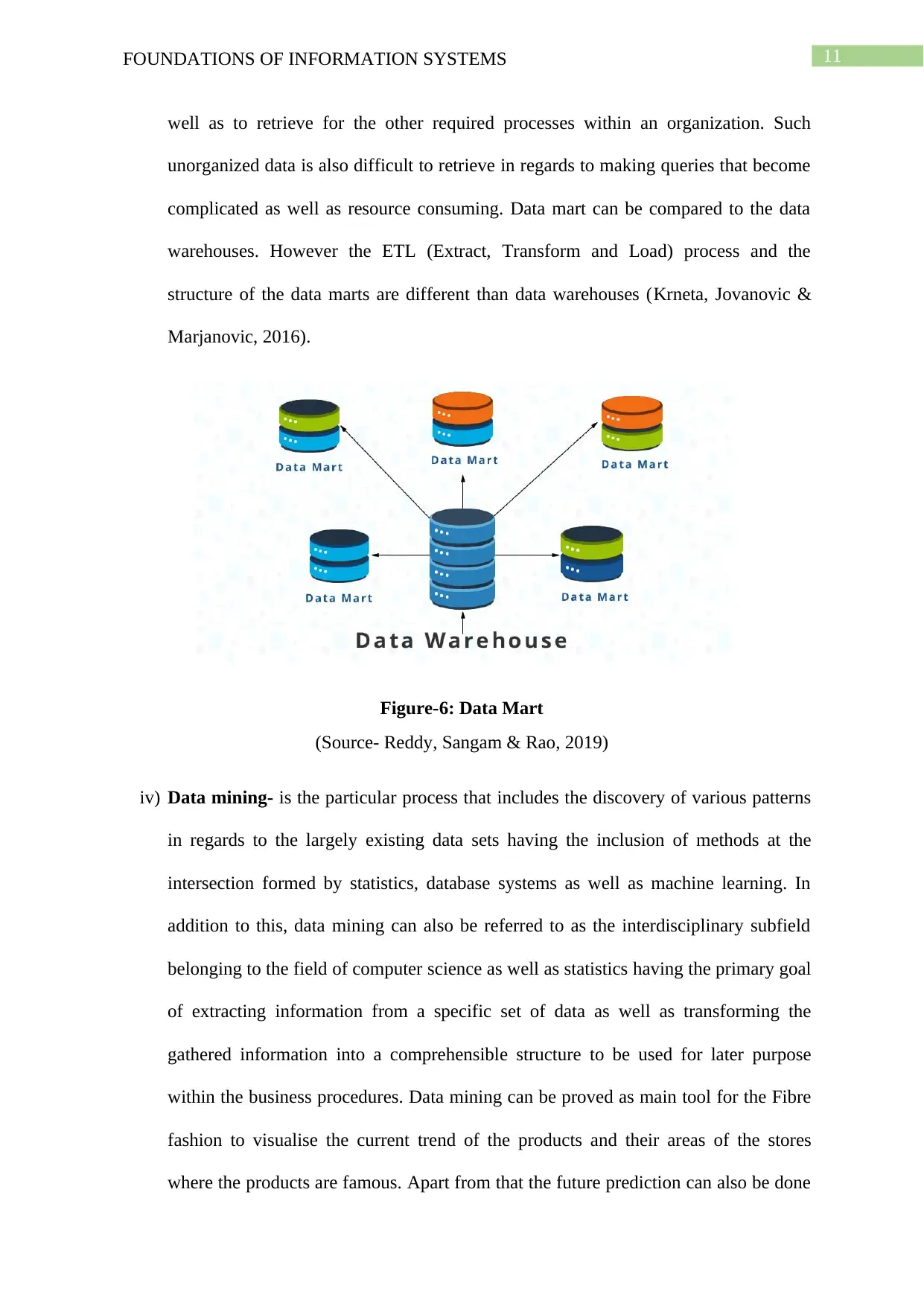
iii) Data mart- this is a primary structure belonging to an environment of data warehouse
that are used for the retrieval of data from the clients. This data mart is in particular a
subnet of the existing data warehouse that is usually oriented towards a particular
business line or might as well be a team (Reddy, Sangam & Rao, 2019). In addition to
data warehouses, data marts are created by organizations since the information that
exist within the databases are not organized that makes it difficult to understand as
repositories is uploaded from the existing systems of operations such as the likes of
marketing or might as well be the sales. The main benefits of the data warehouses are
its structure of the schema. The schema of the warehouse reduces the links in the
tables by defining them as dimension and fact tables. All the facts related data of the
fashion fibre company are store in fact tables which stores the data that can be
changed during time (Russom, Stodder & Halper 2014). On other hand the other
tables are known as dimension tables, which stores to consistent data of the business
such as customer details, products details etc.
Figure-5: Data warehouse
(Source- Beck et al., 2017)
iii) Data mart- this is a primary structure belonging to an environment of data warehouse
that are used for the retrieval of data from the clients. This data mart is in particular a
subnet of the existing data warehouse that is usually oriented towards a particular
business line or might as well be a team (Reddy, Sangam & Rao, 2019). In addition to
data warehouses, data marts are created by organizations since the information that
exist within the databases are not organized that makes it difficult to understand as
11FOUNDATIONS OF INFORMATION SYSTEMS
well as to retrieve for the other required processes within an organization. Such
unorganized data is also difficult to retrieve in regards to making queries that become
complicated as well as resource consuming. Data mart can be compared to the data
warehouses. However the ETL (Extract, Transform and Load) process and the
structure of the data marts are different than data warehouses (Krneta, Jovanovic &
Marjanovic, 2016).
Figure-6: Data Mart
(Source- Reddy, Sangam & Rao, 2019)
iv) Data mining- is the particular process that includes the discovery of various patterns
in regards to the largely existing data sets having the inclusion of methods at the
intersection formed by statistics, database systems as well as machine learning. In
addition to this, data mining can also be referred to as the interdisciplinary subfield
belonging to the field of computer science as well as statistics having the primary goal
of extracting information from a specific set of data as well as transforming the
gathered information into a comprehensible structure to be used for later purpose
within the business procedures. Data mining can be proved as main tool for the Fibre
fashion to visualise the current trend of the products and their areas of the stores
where the products are famous. Apart from that the future prediction can also be done
well as to retrieve for the other required processes within an organization. Such
unorganized data is also difficult to retrieve in regards to making queries that become
complicated as well as resource consuming. Data mart can be compared to the data
warehouses. However the ETL (Extract, Transform and Load) process and the
structure of the data marts are different than data warehouses (Krneta, Jovanovic &
Marjanovic, 2016).
Figure-6: Data Mart
(Source- Reddy, Sangam & Rao, 2019)
iv) Data mining- is the particular process that includes the discovery of various patterns
in regards to the largely existing data sets having the inclusion of methods at the
intersection formed by statistics, database systems as well as machine learning. In
addition to this, data mining can also be referred to as the interdisciplinary subfield
belonging to the field of computer science as well as statistics having the primary goal
of extracting information from a specific set of data as well as transforming the
gathered information into a comprehensible structure to be used for later purpose
within the business procedures. Data mining can be proved as main tool for the Fibre
fashion to visualise the current trend of the products and their areas of the stores
where the products are famous. Apart from that the future prediction can also be done
⊘ This is a preview!⊘
Do you want full access?
Subscribe today to unlock all pages.
Trusted by 1+ million students worldwide

1 out of 19


Related Documents


Your All-in-One AI-Powered Toolkit for Academic Success.
+13062052269
info@desklib.com
Available 24*7 on WhatsApp / Email
![[object Object]](/_next/static/media/star-bottom.7253800d.svg)
Unlock your academic potential
Copyright © 2020–2026 A2Z Services. All Rights Reserved. Developed and managed by ZUCOL.