Information Technology Role in Retail Business: Waitrose Report
VerifiedAdded on 2023/01/10
|13
|3037
|49
Report
AI Summary
This report conducts a comprehensive study on the role of Information Technology (IT) in the retail sector, with a specific focus on the British supermarket brand, Waitrose. The report explores how IT fosters innovations, improves operations, and enhances functions for business success. It covers the importance of IT in retail, ethical and social issues arising from IT implementation, and the differences between intranet and internet usage. The report further details the stages of the System Development Life Cycle (SDLC) and analyzes the impact of IT on retail operations. The analysis highlights the advantages of IT, such as improved customer experience and efficient operations, while also addressing potential challenges related to data management and ethical concerns. The study emphasizes the need for retailers to adopt IT to remain competitive and meet evolving market demands. The report also provides insights into how Waitrose utilizes IT to expand its business and maintain a strong market presence. This report is designed to give students an understanding of how IT is transforming the retail industry.

Individual Report

Paraphrase This Document
Need a fresh take? Get an instant paraphrase of this document with our AI Paraphraser
Abstract
Information technology is one of the most advanced technologies that fosters innovations in
business. It helps in improving operations, faster processing and enhance functions for running
organisation successfully. This report conducts study on retail operations, with role of IT in
widening their business, at global level.
Information technology is one of the most advanced technologies that fosters innovations in
business. It helps in improving operations, faster processing and enhance functions for running
organisation successfully. This report conducts study on retail operations, with role of IT in
widening their business, at global level.
Table of Contents
Abstract............................................................................................................................................2
Introduction......................................................................................................................................1
Literature Review.............................................................................................................................1
Role of IT in success of retail business.......................................................................................1
Ethical and social issues which pertain to running businesses....................................................2
Different types of intranet and internet used in retail business...................................................4
Stages of system development life cycle.....................................................................................5
Analysis and Discussion..................................................................................................................6
Conclusion.......................................................................................................................................7
References........................................................................................................................................8
Abstract............................................................................................................................................2
Introduction......................................................................................................................................1
Literature Review.............................................................................................................................1
Role of IT in success of retail business.......................................................................................1
Ethical and social issues which pertain to running businesses....................................................2
Different types of intranet and internet used in retail business...................................................4
Stages of system development life cycle.....................................................................................5
Analysis and Discussion..................................................................................................................6
Conclusion.......................................................................................................................................7
References........................................................................................................................................8
⊘ This is a preview!⊘
Do you want full access?
Subscribe today to unlock all pages.

Trusted by 1+ million students worldwide

Paraphrase This Document
Need a fresh take? Get an instant paraphrase of this document with our AI Paraphraser
Introduction
Technology in today’s business environment, plays an important in taking an organisation
up to next level. It not only revolutionised the way of operating various function, but also
transform the same into digitalisation (Cho and Ahn, 2019). A study is therefore, conducted to
analyse role of informational technology behind success or failure of business, within retail
sector. Waitrose, a British brand of supermarkets, that retail its wide range of groceries in more
than 52 nations, is chosen to prepare this report. A review in this sense, is done on importance of
IT, including ethical and social issues that pertain to run business. A discussion is also made on
various types of internet and intranet, to key difference on both aspects in business. Furthermore,
life cycle development stages are highlighted, with critical review on entire report.
Literature Review
Role of IT in success of retail business
As per views of Vivek Puri (2018), it has been identified that today, business in retail
sector are under tremendous squeezing, with significant growth as well as margin pressures. The
reason behind this is digital disruptors, globalisation and intense competition. These factors
contribute to decline traditional way of retailing products (Role of IT modernisation in the
success of retail business in the digital era, 2018). With shifting of business towards digital
commerce, people are less likely to shopping at malls and shops. Therefore, firms who are
technologically laggards, are losing their sales adversely. This would force retailers to modernise
their operations with new IT system (Shah and et. al., 2019). Through this process, they can
reduce frustration of shoppers’ waiting time, as well as help in getting detailed information about
availability and price of products more easily. This would help in optimising their business
operations, offering differentiated end to end experience to end customers, at faster speeds. This
would help in driving growth and consumer retention for longer period of time.
In context with Waitrose, it has more than 338 shops across UK, with trading of groceries
and food products in various nations. Having a large expansion of business at global level, has
made this firm to achieve eighth largest position in retailing market of groceries. It is considered
as one of those retailers, who continuously engage in adopting and upgrading its business with
digital technologies (Khrais and Azizi, 2020). In 1983, it has become first supermarket firm who
sells organic food products and also opened first cashless shop in UK. For enhancing more
1
Technology in today’s business environment, plays an important in taking an organisation
up to next level. It not only revolutionised the way of operating various function, but also
transform the same into digitalisation (Cho and Ahn, 2019). A study is therefore, conducted to
analyse role of informational technology behind success or failure of business, within retail
sector. Waitrose, a British brand of supermarkets, that retail its wide range of groceries in more
than 52 nations, is chosen to prepare this report. A review in this sense, is done on importance of
IT, including ethical and social issues that pertain to run business. A discussion is also made on
various types of internet and intranet, to key difference on both aspects in business. Furthermore,
life cycle development stages are highlighted, with critical review on entire report.
Literature Review
Role of IT in success of retail business
As per views of Vivek Puri (2018), it has been identified that today, business in retail
sector are under tremendous squeezing, with significant growth as well as margin pressures. The
reason behind this is digital disruptors, globalisation and intense competition. These factors
contribute to decline traditional way of retailing products (Role of IT modernisation in the
success of retail business in the digital era, 2018). With shifting of business towards digital
commerce, people are less likely to shopping at malls and shops. Therefore, firms who are
technologically laggards, are losing their sales adversely. This would force retailers to modernise
their operations with new IT system (Shah and et. al., 2019). Through this process, they can
reduce frustration of shoppers’ waiting time, as well as help in getting detailed information about
availability and price of products more easily. This would help in optimising their business
operations, offering differentiated end to end experience to end customers, at faster speeds. This
would help in driving growth and consumer retention for longer period of time.
In context with Waitrose, it has more than 338 shops across UK, with trading of groceries
and food products in various nations. Having a large expansion of business at global level, has
made this firm to achieve eighth largest position in retailing market of groceries. It is considered
as one of those retailers, who continuously engage in adopting and upgrading its business with
digital technologies (Khrais and Azizi, 2020). In 1983, it has become first supermarket firm who
sells organic food products and also opened first cashless shop in UK. For enhancing more
1
capabilities, improve brand presence and optimise costs, this firm including other retailers, are
required for becoming more virtual, brick-and-mortar and digitalised operations. Market
knowledge, control of organisational information and more, refers to a key to obtain competitive
advantage within retail sector. But with expansion of business, market have become more
complex. In this sense, simple process of retailing is need to deploy advanced information
systems, for coping with all transactions involved (Qosasi and et. al., 2019). A number of reasons
that shows importance of adopting latest technology within business, includes management of
complex retail operations. It also involves increasing ability of business, for responding towards
evolving marketplace via enhanced speed. By integrating Information technology in business,
also boost up process and delivery cost, that enables retailers like Waitrose, to meet every
demand of customers on time.
Ethical and social issues which pertain to running businesses
According to Johnson and Iyamu (2019), Information systems and technology have made
many retailers successful today, with attainment of highest level of customer satisfaction.
However, improper use of information technology might arise problems related to ethics and
social issues. Providing cashless and different modes of payment options, lead issues like
cybercrime activities, where criminals might extract access to personal account details of
customers and company too (Latilla and et. al., 2020). This would lead to financial loss to
customers and arise problems to gain their further loyalty. Similarly, integrating organization
information systems in business like posting inappropriate content on social media platform,
using a company account might lead to lawsuits or loss of business. MIS security helps in
protecting organisation information system resources from criminal or unauthorized access. But
security vulnerabilities which are weaknesses in a computer system, can be exploited by cyber-
criminals to compromise or gain unauthorized access. People can also be exploited who are as
part of information system components via social engineering techniques like computer virus,
malware and more.
2
required for becoming more virtual, brick-and-mortar and digitalised operations. Market
knowledge, control of organisational information and more, refers to a key to obtain competitive
advantage within retail sector. But with expansion of business, market have become more
complex. In this sense, simple process of retailing is need to deploy advanced information
systems, for coping with all transactions involved (Qosasi and et. al., 2019). A number of reasons
that shows importance of adopting latest technology within business, includes management of
complex retail operations. It also involves increasing ability of business, for responding towards
evolving marketplace via enhanced speed. By integrating Information technology in business,
also boost up process and delivery cost, that enables retailers like Waitrose, to meet every
demand of customers on time.
Ethical and social issues which pertain to running businesses
According to Johnson and Iyamu (2019), Information systems and technology have made
many retailers successful today, with attainment of highest level of customer satisfaction.
However, improper use of information technology might arise problems related to ethics and
social issues. Providing cashless and different modes of payment options, lead issues like
cybercrime activities, where criminals might extract access to personal account details of
customers and company too (Latilla and et. al., 2020). This would lead to financial loss to
customers and arise problems to gain their further loyalty. Similarly, integrating organization
information systems in business like posting inappropriate content on social media platform,
using a company account might lead to lawsuits or loss of business. MIS security helps in
protecting organisation information system resources from criminal or unauthorized access. But
security vulnerabilities which are weaknesses in a computer system, can be exploited by cyber-
criminals to compromise or gain unauthorized access. People can also be exploited who are as
part of information system components via social engineering techniques like computer virus,
malware and more.
2
⊘ This is a preview!⊘
Do you want full access?
Subscribe today to unlock all pages.
Trusted by 1+ million students worldwide
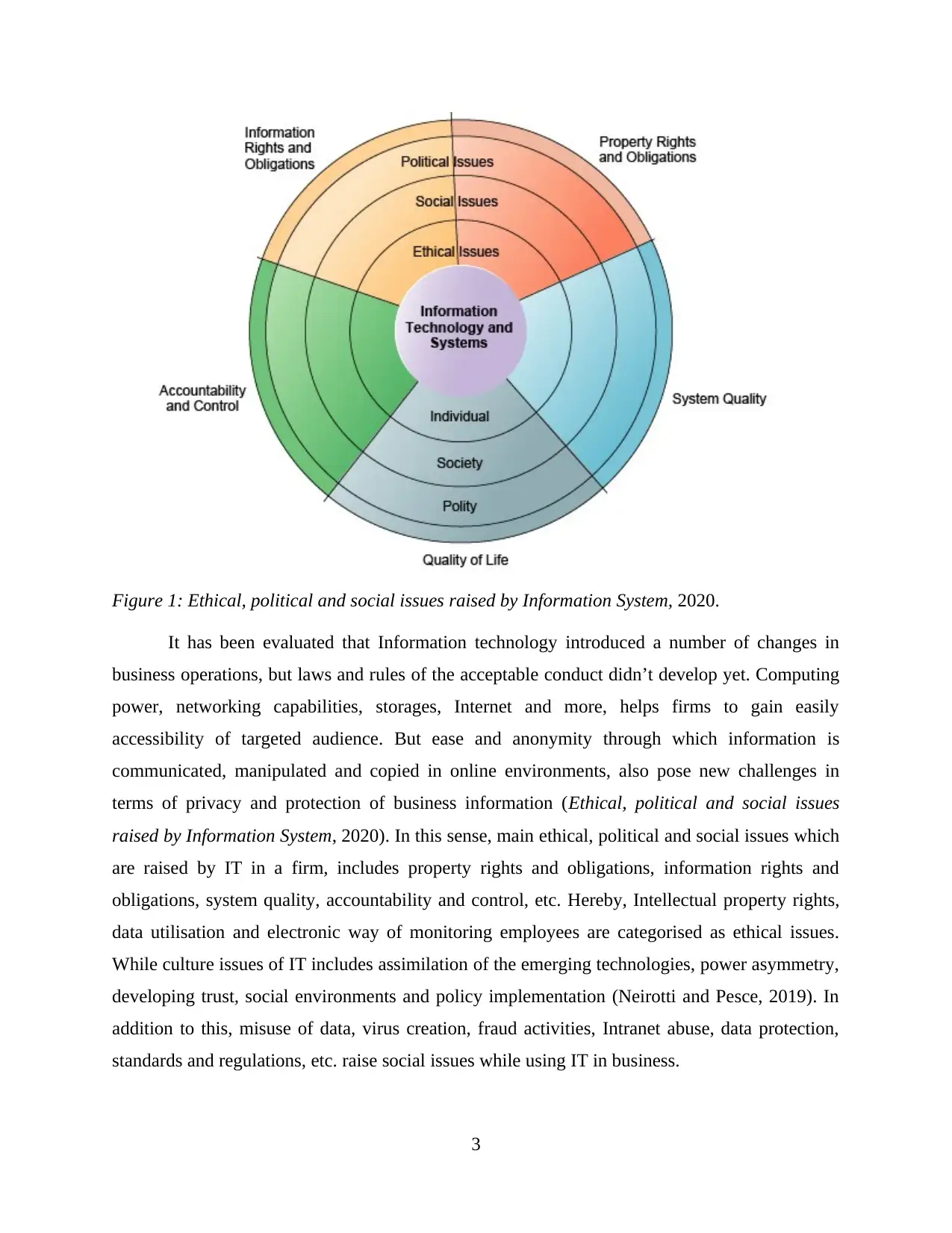
Figure 1: Ethical, political and social issues raised by Information System, 2020.
It has been evaluated that Information technology introduced a number of changes in
business operations, but laws and rules of the acceptable conduct didn’t develop yet. Computing
power, networking capabilities, storages, Internet and more, helps firms to gain easily
accessibility of targeted audience. But ease and anonymity through which information is
communicated, manipulated and copied in online environments, also pose new challenges in
terms of privacy and protection of business information (Ethical, political and social issues
raised by Information System, 2020). In this sense, main ethical, political and social issues which
are raised by IT in a firm, includes property rights and obligations, information rights and
obligations, system quality, accountability and control, etc. Hereby, Intellectual property rights,
data utilisation and electronic way of monitoring employees are categorised as ethical issues.
While culture issues of IT includes assimilation of the emerging technologies, power asymmetry,
developing trust, social environments and policy implementation (Neirotti and Pesce, 2019). In
addition to this, misuse of data, virus creation, fraud activities, Intranet abuse, data protection,
standards and regulations, etc. raise social issues while using IT in business.
3
It has been evaluated that Information technology introduced a number of changes in
business operations, but laws and rules of the acceptable conduct didn’t develop yet. Computing
power, networking capabilities, storages, Internet and more, helps firms to gain easily
accessibility of targeted audience. But ease and anonymity through which information is
communicated, manipulated and copied in online environments, also pose new challenges in
terms of privacy and protection of business information (Ethical, political and social issues
raised by Information System, 2020). In this sense, main ethical, political and social issues which
are raised by IT in a firm, includes property rights and obligations, information rights and
obligations, system quality, accountability and control, etc. Hereby, Intellectual property rights,
data utilisation and electronic way of monitoring employees are categorised as ethical issues.
While culture issues of IT includes assimilation of the emerging technologies, power asymmetry,
developing trust, social environments and policy implementation (Neirotti and Pesce, 2019). In
addition to this, misuse of data, virus creation, fraud activities, Intranet abuse, data protection,
standards and regulations, etc. raise social issues while using IT in business.
3
Paraphrase This Document
Need a fresh take? Get an instant paraphrase of this document with our AI Paraphraser
In context with retail sector, where maximum portion of operational work are mostly
done by technologies like Cloud computing, MIS and more, so, it highly raises ethical and social
issues for them. Therefore, management of Waitrose are required to concern on such challenges
that pose threats on its business. This would help in developing effective strategies to cope from
same, so that optimum utilisation of technologies can be gained.
Different types of intranet and internet used in retail business
Internet refers to a wide computer network and global system, which uses TCP/IP protocol
suite for linking various types of electronic devices, with each other at worldwide level. It also
defines as collection of different interconnected computer device, therefore, also known as
network of networks. While intranet on contrast, refers to private network that gives ability to a
company for organising information, share details and manage documents more safely, as well as
protect from unauthorised access also. It generally, runs in a server/client environment in local
area network. In this regard, key difference among both terms can be evaluated on the basis of
their working applications. Internet is available to all and works by interconnecting various
network of computers. While intranet uses network protocol and gives accessibility to particular
users only, so that business information can be shared safely. Internet is a public network
therefore, can be used by all, whereas intranet is a private one which gives more safe and secure
network. In context with organisations like Waitrose that deal in retail sector, it has been
analysed that internet has become mainstream for their business, to offer public access for
supporting communication, commerce and collaboration throughout the world (Ruiz-Molina,
Fayos-Gardo and Moliner-Velazquez, 2019). For supporting intranets within business, especially
when it is expanded at global level, internet technology is mostly used. Thus, it has been
evaluated that without internet support, usage of intranet might be limited for organisation.
The mostly used internet applications in today’s retail sector includes e-commerce, global
internet access and more (Cho and Ahn, 2019). These tools make it easy for firms to do business
without making much investment on physical presence, anywhere in the world. E-commerce
facilities help Waitrose and other retailers to sell products at global level, including features of
online payment. Digital services also help in delivering goods to end customers more easily, with
support of local distributors (Qosasi and et. al., 2019). In retail sector, three types of intranet are
mostly used that are collaboration platform; distributed intranet; and internal website. These
4
done by technologies like Cloud computing, MIS and more, so, it highly raises ethical and social
issues for them. Therefore, management of Waitrose are required to concern on such challenges
that pose threats on its business. This would help in developing effective strategies to cope from
same, so that optimum utilisation of technologies can be gained.
Different types of intranet and internet used in retail business
Internet refers to a wide computer network and global system, which uses TCP/IP protocol
suite for linking various types of electronic devices, with each other at worldwide level. It also
defines as collection of different interconnected computer device, therefore, also known as
network of networks. While intranet on contrast, refers to private network that gives ability to a
company for organising information, share details and manage documents more safely, as well as
protect from unauthorised access also. It generally, runs in a server/client environment in local
area network. In this regard, key difference among both terms can be evaluated on the basis of
their working applications. Internet is available to all and works by interconnecting various
network of computers. While intranet uses network protocol and gives accessibility to particular
users only, so that business information can be shared safely. Internet is a public network
therefore, can be used by all, whereas intranet is a private one which gives more safe and secure
network. In context with organisations like Waitrose that deal in retail sector, it has been
analysed that internet has become mainstream for their business, to offer public access for
supporting communication, commerce and collaboration throughout the world (Ruiz-Molina,
Fayos-Gardo and Moliner-Velazquez, 2019). For supporting intranets within business, especially
when it is expanded at global level, internet technology is mostly used. Thus, it has been
evaluated that without internet support, usage of intranet might be limited for organisation.
The mostly used internet applications in today’s retail sector includes e-commerce, global
internet access and more (Cho and Ahn, 2019). These tools make it easy for firms to do business
without making much investment on physical presence, anywhere in the world. E-commerce
facilities help Waitrose and other retailers to sell products at global level, including features of
online payment. Digital services also help in delivering goods to end customers more easily, with
support of local distributors (Qosasi and et. al., 2019). In retail sector, three types of intranet are
mostly used that are collaboration platform; distributed intranet; and internal website. These
4
three applications aid retailers to share business information easily, within different departments,
local and global branches easily, for handling operations more efficiently.
Stages of system development life cycle
System development life cycle (SDLC) refers a process of creating hardware or software
system for meeting expectations of customers (Ruiz-Molina, Fayos-Gardo and Moliner-
Velazquez, 2019). It is a broad term and set of interdependent or interacting components that
forms an integrated whole system. For creating a system, following main stages are integrated –
System planning – It is the first stage of SDLC that creates a successful system, by
defining problems, resources and objectives. It helps in studying ability of different
alternative system after meeting with suppliers, clients, employees and consultants. After
analysing way to make product better than competitors, a new and improve system can be
developed.
System analysis – For determining and documenting the end-users’ requirement
including expectations and way to perform, system analysis refers to next stage, that
helps in conducting feasibility study (Arslan, Bagchi and Kirs, 2019). It is important for
maintaining strong communication level with associated stakeholders, by identifying
feasibility of any proposed project in terms of social, technological and social manner.
System design – This design phase comes after adequately determining the customer’s
requirements, where it defines elements of a system, various components, level of
security level, architecture, interfaces, modules and data types, which will go through the
system (Neirotti and Pesce, 2019).
Implementation and deployment – At this stage, system is ready for deploy and install
within customer’s premises, to provide them online shopping options without need to
come at stores. It contains configuration as well as fine-tuning for software or hardware
to meet desired functions.
System testing and integration – This stage is highly important for checking feasibility
of system, to ensure higher satisfaction of customers. Testing is done by introducing
system to different inputs, for obtaining and analysing outputs including way it functions.
System maintenance – To make sure that system would not become obsolete, it is
essential to maintain it properly (Latilla and et. al., 2020). It helps in continuously
5
local and global branches easily, for handling operations more efficiently.
Stages of system development life cycle
System development life cycle (SDLC) refers a process of creating hardware or software
system for meeting expectations of customers (Ruiz-Molina, Fayos-Gardo and Moliner-
Velazquez, 2019). It is a broad term and set of interdependent or interacting components that
forms an integrated whole system. For creating a system, following main stages are integrated –
System planning – It is the first stage of SDLC that creates a successful system, by
defining problems, resources and objectives. It helps in studying ability of different
alternative system after meeting with suppliers, clients, employees and consultants. After
analysing way to make product better than competitors, a new and improve system can be
developed.
System analysis – For determining and documenting the end-users’ requirement
including expectations and way to perform, system analysis refers to next stage, that
helps in conducting feasibility study (Arslan, Bagchi and Kirs, 2019). It is important for
maintaining strong communication level with associated stakeholders, by identifying
feasibility of any proposed project in terms of social, technological and social manner.
System design – This design phase comes after adequately determining the customer’s
requirements, where it defines elements of a system, various components, level of
security level, architecture, interfaces, modules and data types, which will go through the
system (Neirotti and Pesce, 2019).
Implementation and deployment – At this stage, system is ready for deploy and install
within customer’s premises, to provide them online shopping options without need to
come at stores. It contains configuration as well as fine-tuning for software or hardware
to meet desired functions.
System testing and integration – This stage is highly important for checking feasibility
of system, to ensure higher satisfaction of customers. Testing is done by introducing
system to different inputs, for obtaining and analysing outputs including way it functions.
System maintenance – To make sure that system would not become obsolete, it is
essential to maintain it properly (Latilla and et. al., 2020). It helps in continuously
5
⊘ This is a preview!⊘
Do you want full access?
Subscribe today to unlock all pages.
Trusted by 1+ million students worldwide
evaluating the performance of system and requirement for replacement any part, upgrade
system and meet ethical or right standards.
Thus, these mentioned stages of SDLC help in implementing IT system in retail operations,
successfully, with maintenance of excellent communication level.
Analysis and Discussion
It has been analysed that with modernisation of business, it becomes essential for companies
in every sector to integrate information technology. This would help in computing the power
doubled, with advancement in data storage techniques (Johnson and Iyamu, 2019). In retail
sector which is also known as customer-centric industry, are highly required to implement
technologies like cloud computing, social media presence, e-commerce and more. It is essential
to make interaction with customers, bring awareness among them about new offers, discounts
and delivering products on time. After declining way of traditionally operating of business, it
becomes highly essential for companies, especially retailers to integrate digitalisation (Qosasi
and et. al., 2019). This proves beneficial in enhancing customer shopping experience, by
boosting productivity and capabilities of stores to deliver fast services to them. But this would
arise a number of key challenges in terms of IT management as well. It includes customer data,
where due to customer-centric industry, many retailers are struggling with information overload
as it is required to collect mass amounts of data as well as convert the same into useful
information.
In context with Waitrose, as it operates business at international level, therefore, using ICT,
internet and intranet applications aid in dealing with complex environment more easily (Shah
and et. al., 2019). But global data synchronisation, maintaining transparency and more are
various aspects that arise problems, because of radio frequency identification or e-product
coding, it has been analysed that entire supply chain may become more intelligent. But retailers
need to enable real-time data integration to watch the inventory levels, for handling whole IT
management (Khrais and Azizi, 2020). Though all these processes are necessary for pertaining to
running business, with integration of information technology, so that ethical and social issues can
be resolved.
6
system and meet ethical or right standards.
Thus, these mentioned stages of SDLC help in implementing IT system in retail operations,
successfully, with maintenance of excellent communication level.
Analysis and Discussion
It has been analysed that with modernisation of business, it becomes essential for companies
in every sector to integrate information technology. This would help in computing the power
doubled, with advancement in data storage techniques (Johnson and Iyamu, 2019). In retail
sector which is also known as customer-centric industry, are highly required to implement
technologies like cloud computing, social media presence, e-commerce and more. It is essential
to make interaction with customers, bring awareness among them about new offers, discounts
and delivering products on time. After declining way of traditionally operating of business, it
becomes highly essential for companies, especially retailers to integrate digitalisation (Qosasi
and et. al., 2019). This proves beneficial in enhancing customer shopping experience, by
boosting productivity and capabilities of stores to deliver fast services to them. But this would
arise a number of key challenges in terms of IT management as well. It includes customer data,
where due to customer-centric industry, many retailers are struggling with information overload
as it is required to collect mass amounts of data as well as convert the same into useful
information.
In context with Waitrose, as it operates business at international level, therefore, using ICT,
internet and intranet applications aid in dealing with complex environment more easily (Shah
and et. al., 2019). But global data synchronisation, maintaining transparency and more are
various aspects that arise problems, because of radio frequency identification or e-product
coding, it has been analysed that entire supply chain may become more intelligent. But retailers
need to enable real-time data integration to watch the inventory levels, for handling whole IT
management (Khrais and Azizi, 2020). Though all these processes are necessary for pertaining to
running business, with integration of information technology, so that ethical and social issues can
be resolved.
6
Paraphrase This Document
Need a fresh take? Get an instant paraphrase of this document with our AI Paraphraser
Conclusion
From all over the report, discussion and analysis, it has been concluded that implementation
of informational technology in business, aid retailers to expand customer base more easily. It
reduces investment on physical presence of stores, by offering online-shopping options to
customers, where they can get detailed information about each and every product in appropriate
way, before purchasing to satisfy their need.
7
From all over the report, discussion and analysis, it has been concluded that implementation
of informational technology in business, aid retailers to expand customer base more easily. It
reduces investment on physical presence of stores, by offering online-shopping options to
customers, where they can get detailed information about each and every product in appropriate
way, before purchasing to satisfy their need.
7
References
Books and Journals
Cho, J. S. and Ahn, K., 2019. The local business analysis service for service-oriented
government: Seoul Metropolitan Government Case. Journal of Business and Retail
Management Research. 13(4).
Qosasi, A. and et. al., 2019. Building SMEs' competitive advantage and the organizational agility
of apparel retailers in Indonesia: The role of ICT as an initial trigger. Gadjah Mada
International Journal of Business. 21(1). p.69.
Ruiz-Molina, M. E., Fayos-Gardo, T. and Moliner-Velazquez, B., 2019. Can the Retailer’s ICT
Enhance the Impact of Service Recovery Efforts on Customer Satisfaction?. Journal of
Relationship Marketing, pp.1-26.
Arslan, F., Bagchi, K. K. and Kirs, P., 2019. Factors implicated with firm-level ICT use in
developing economies. Journal of Global Information Technology Management, 22(3),
pp.179-207.
Neirotti, P. and Pesce, D., 2019. ICT-based innovation and its competitive outcome: the role of
information intensity. European Journal of Innovation Management.
Latilla, V. M. and et. al., 2020. Organisational change and business model innovation: an
exploratory study OF an energy utility. International Journal of Innovation
Management, 24(04), p.2050036.
Johnson, O. and Iyamu, T., 2019. Framework for the adoption of e‐commerce: A case of South
African retail grocery sector. The Electronic Journal of Information Systems in
Developing Countries, 85(5), p.e12095.
Qosasi, A. and et. al., 2019. The impact of information and communication technology capability
on the competitive advantage of small businesses. International Journal of
Technology, 10, pp.167-177.
Khrais, L. T. and Azizi, T. A., 2020. Analyzing Consumer Attitude Toward Mobile Payment
Technology and Its Role in Booming the E-Commerce Business. Journal of Talent
Development and Excellence. 12(3s). pp.1069-1076.
Shah, M. and et. al., 2019. An investigation into agile learning processes and knowledge sharing
practices to prevent identity theft in the online retail organisations. Journal of Knowledge
Management.
Online
Role of IT modernisation in the success of retail business in the digital era. 2018. [Online]
Available Through:< https://www.forbesindia.com/blog/technology/role-of-it-
modernisation-in-the-success-of-retail-business-in-the-digital-era/#:~:text=It
%20empowers%20them%20to%20visualise,enhance%20the%20overall%20customer
%20experience.>.
Ethical, political and social issues raised by Information System, 2020. [Online] Available
Through:< https://moonwelfarefoundation.blogspot.com/2019/02/what-ethical-social-
and-political.html >.
8
Books and Journals
Cho, J. S. and Ahn, K., 2019. The local business analysis service for service-oriented
government: Seoul Metropolitan Government Case. Journal of Business and Retail
Management Research. 13(4).
Qosasi, A. and et. al., 2019. Building SMEs' competitive advantage and the organizational agility
of apparel retailers in Indonesia: The role of ICT as an initial trigger. Gadjah Mada
International Journal of Business. 21(1). p.69.
Ruiz-Molina, M. E., Fayos-Gardo, T. and Moliner-Velazquez, B., 2019. Can the Retailer’s ICT
Enhance the Impact of Service Recovery Efforts on Customer Satisfaction?. Journal of
Relationship Marketing, pp.1-26.
Arslan, F., Bagchi, K. K. and Kirs, P., 2019. Factors implicated with firm-level ICT use in
developing economies. Journal of Global Information Technology Management, 22(3),
pp.179-207.
Neirotti, P. and Pesce, D., 2019. ICT-based innovation and its competitive outcome: the role of
information intensity. European Journal of Innovation Management.
Latilla, V. M. and et. al., 2020. Organisational change and business model innovation: an
exploratory study OF an energy utility. International Journal of Innovation
Management, 24(04), p.2050036.
Johnson, O. and Iyamu, T., 2019. Framework for the adoption of e‐commerce: A case of South
African retail grocery sector. The Electronic Journal of Information Systems in
Developing Countries, 85(5), p.e12095.
Qosasi, A. and et. al., 2019. The impact of information and communication technology capability
on the competitive advantage of small businesses. International Journal of
Technology, 10, pp.167-177.
Khrais, L. T. and Azizi, T. A., 2020. Analyzing Consumer Attitude Toward Mobile Payment
Technology and Its Role in Booming the E-Commerce Business. Journal of Talent
Development and Excellence. 12(3s). pp.1069-1076.
Shah, M. and et. al., 2019. An investigation into agile learning processes and knowledge sharing
practices to prevent identity theft in the online retail organisations. Journal of Knowledge
Management.
Online
Role of IT modernisation in the success of retail business in the digital era. 2018. [Online]
Available Through:< https://www.forbesindia.com/blog/technology/role-of-it-
modernisation-in-the-success-of-retail-business-in-the-digital-era/#:~:text=It
%20empowers%20them%20to%20visualise,enhance%20the%20overall%20customer
%20experience.>.
Ethical, political and social issues raised by Information System, 2020. [Online] Available
Through:< https://moonwelfarefoundation.blogspot.com/2019/02/what-ethical-social-
and-political.html >.
8
⊘ This is a preview!⊘
Do you want full access?
Subscribe today to unlock all pages.
Trusted by 1+ million students worldwide

1 out of 13


Related Documents


Your All-in-One AI-Powered Toolkit for Academic Success.
+13062052269
info@desklib.com
Available 24*7 on WhatsApp / Email
![[object Object]](/_next/static/media/star-bottom.7253800d.svg)
Unlock your academic potential
Copyright © 2020–2026 A2Z Services. All Rights Reserved. Developed and managed by ZUCOL.