Analyzing Innovation, Management Styles, and Business Performance
VerifiedAdded on 2021/02/21
|21
|4752
|132
Report
AI Summary
This report delves into the crucial relationship between innovation, management styles, and business performance. It examines various types of innovation, including incremental, radical, and disruptive approaches, and analyzes how companies like Google and Samsung have experienced both successes and failures in their innovation endeavors. The report also explores internal and external factors influencing organizational change, emphasizing the importance of management styles, financial structures, and technological advancements. Furthermore, it investigates different management styles such as autocratic, paternalistic, democratic, and laissez-faire, highlighting their roles in fostering an innovative culture within an organization. The conclusion underscores the significance of a well-defined innovation strategy, market insights, and consumer understanding for achieving competitive advantage.
ANALYSE THE
RELATIONSHIP BETWEEN
JOB SATISFACTION,
COMMITMENT,
MOTIVATION,
EMPOWERMENT AND
BUSINESS PERFORMANCE
RELATIONSHIP BETWEEN
JOB SATISFACTION,
COMMITMENT,
MOTIVATION,
EMPOWERMENT AND
BUSINESS PERFORMANCE

Paraphrase This Document
Need a fresh take? Get an instant paraphrase of this document with our AI Paraphraser
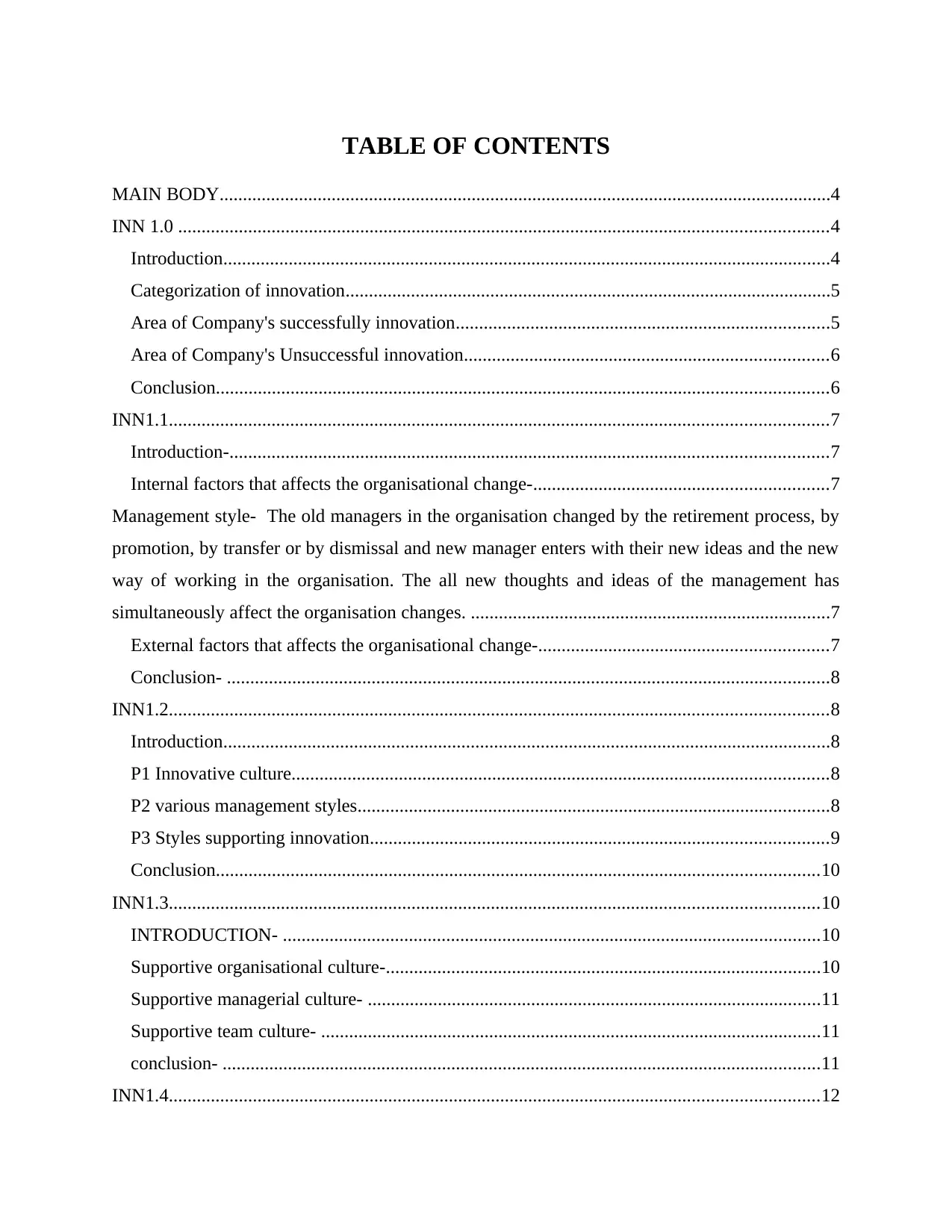
TABLE OF CONTENTS
MAIN BODY...................................................................................................................................4
INN 1.0 ...........................................................................................................................................4
Introduction..................................................................................................................................4
Categorization of innovation........................................................................................................5
Area of Company's successfully innovation................................................................................5
Area of Company's Unsuccessful innovation..............................................................................6
Conclusion...................................................................................................................................6
INN1.1.............................................................................................................................................7
Introduction-................................................................................................................................7
Internal factors that affects the organisational change-...............................................................7
Management style- The old managers in the organisation changed by the retirement process, by
promotion, by transfer or by dismissal and new manager enters with their new ideas and the new
way of working in the organisation. The all new thoughts and ideas of the management has
simultaneously affect the organisation changes. .............................................................................7
External factors that affects the organisational change-..............................................................7
Conclusion- .................................................................................................................................8
INN1.2.............................................................................................................................................8
Introduction..................................................................................................................................8
P1 Innovative culture...................................................................................................................8
P2 various management styles.....................................................................................................8
P3 Styles supporting innovation..................................................................................................9
Conclusion.................................................................................................................................10
INN1.3...........................................................................................................................................10
INTRODUCTION- ...................................................................................................................10
Supportive organisational culture-.............................................................................................10
Supportive managerial culture- .................................................................................................11
Supportive team culture- ...........................................................................................................11
conclusion- ................................................................................................................................11
INN1.4...........................................................................................................................................12
MAIN BODY...................................................................................................................................4
INN 1.0 ...........................................................................................................................................4
Introduction..................................................................................................................................4
Categorization of innovation........................................................................................................5
Area of Company's successfully innovation................................................................................5
Area of Company's Unsuccessful innovation..............................................................................6
Conclusion...................................................................................................................................6
INN1.1.............................................................................................................................................7
Introduction-................................................................................................................................7
Internal factors that affects the organisational change-...............................................................7
Management style- The old managers in the organisation changed by the retirement process, by
promotion, by transfer or by dismissal and new manager enters with their new ideas and the new
way of working in the organisation. The all new thoughts and ideas of the management has
simultaneously affect the organisation changes. .............................................................................7
External factors that affects the organisational change-..............................................................7
Conclusion- .................................................................................................................................8
INN1.2.............................................................................................................................................8
Introduction..................................................................................................................................8
P1 Innovative culture...................................................................................................................8
P2 various management styles.....................................................................................................8
P3 Styles supporting innovation..................................................................................................9
Conclusion.................................................................................................................................10
INN1.3...........................................................................................................................................10
INTRODUCTION- ...................................................................................................................10
Supportive organisational culture-.............................................................................................10
Supportive managerial culture- .................................................................................................11
Supportive team culture- ...........................................................................................................11
conclusion- ................................................................................................................................11
INN1.4...........................................................................................................................................12
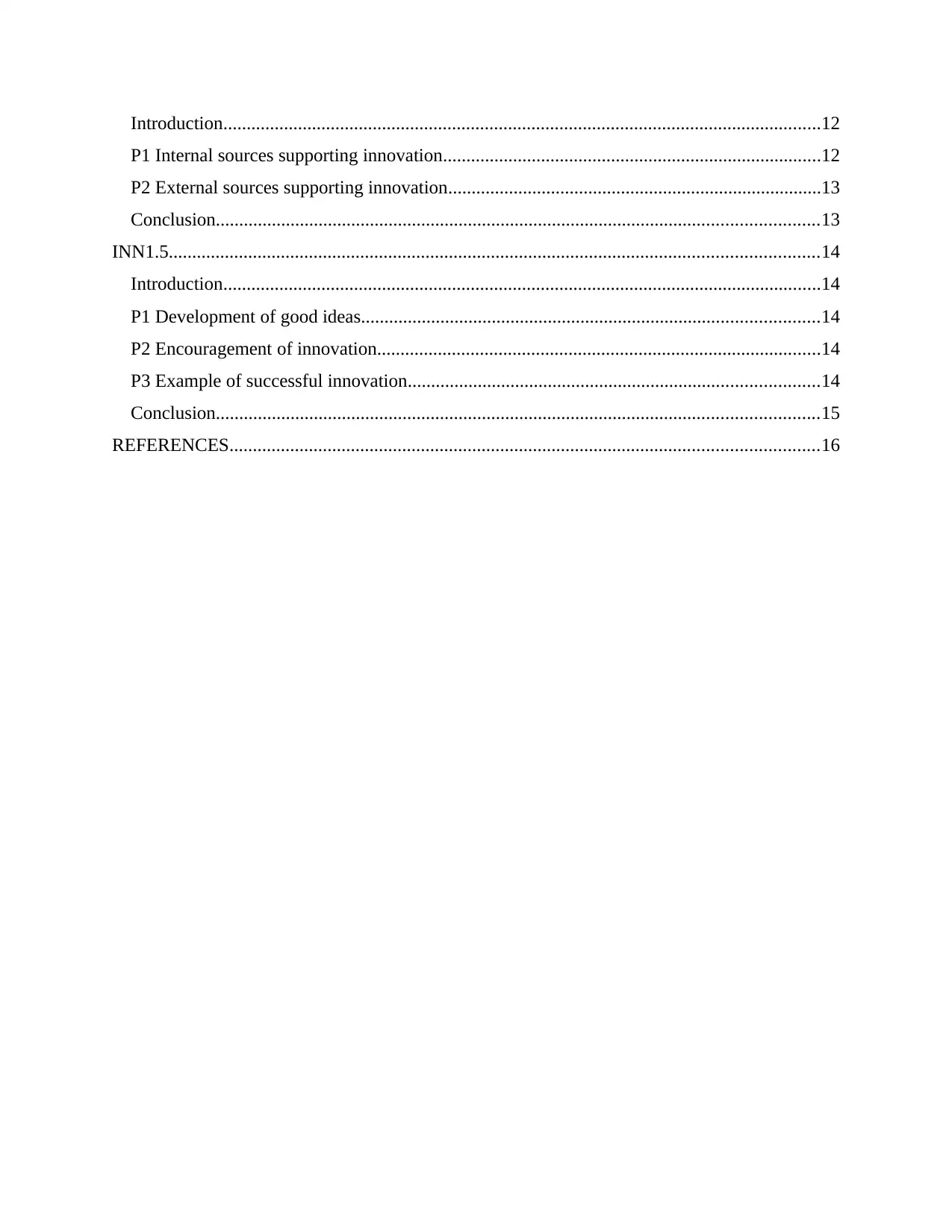
Introduction................................................................................................................................12
P1 Internal sources supporting innovation.................................................................................12
P2 External sources supporting innovation................................................................................13
Conclusion.................................................................................................................................13
INN1.5...........................................................................................................................................14
Introduction................................................................................................................................14
P1 Development of good ideas..................................................................................................14
P2 Encouragement of innovation...............................................................................................14
P3 Example of successful innovation........................................................................................14
Conclusion.................................................................................................................................15
REFERENCES..............................................................................................................................16
P1 Internal sources supporting innovation.................................................................................12
P2 External sources supporting innovation................................................................................13
Conclusion.................................................................................................................................13
INN1.5...........................................................................................................................................14
Introduction................................................................................................................................14
P1 Development of good ideas..................................................................................................14
P2 Encouragement of innovation...............................................................................................14
P3 Example of successful innovation........................................................................................14
Conclusion.................................................................................................................................15
REFERENCES..............................................................................................................................16
⊘ This is a preview!⊘
Do you want full access?
Subscribe today to unlock all pages.

Trusted by 1+ million students worldwide
MAIN BODY
INN 1.0
Introduction
Meaning of innovation
Innovation is basically the procedure of of transforming the ideas or an invention into
unique goods or products which can generate value and for which the consumers are willing to
pay. There are numerous range of innovations like innovation in product encompasses the
development and the subsequent production of different goods as well as services which are
either an improvement over the previous product or is entirely different product (Raineri, 2017).
Service innovation is primarily the new as well as the improved means of designing and
developing the services. Process innovation include a wide range of spectrum where the
modifications are being made within the methodology or procedure through which a product is
produced or service is delivered. On the above of all this, market innovation constitutes the
improvement in the marketing mix utilized within the target market as well as the improvisation
in the means through which they are being served.
Competitive advantage
Competitive advantage is the state which ultimately allows the organisations or even a
country to develop the products of nearly same value at much lower price as well as in desirable
manner. The organizations who strives willingly for attaining the competitive advantage
encounters an increase in the revenue. As through this strategy, companies produces the goods
which are superior in comparison to their competitors, it helps them in increasing their sales
volume as more and more customers would like to buy the quality products at low price which
eventually will lead to increment in their profitability ratio as well as will help them in capturing
greater market share besides making them a leading leader of market.
Link between them
Innovation is the basically the prominent way of achieving the competitive advantage for
organizations. Innovation involves looking out for the new opportunities which are entirely
different from that of competitors like creating a unique and new customer niche. This is directly
linked to attaining the competitive advantage where these new opportunities will entice the new
customers and will make the organization's position in the market more stronger which will
eventually help them in competing efficiently. Besides this, the modifications within the product
INN 1.0
Introduction
Meaning of innovation
Innovation is basically the procedure of of transforming the ideas or an invention into
unique goods or products which can generate value and for which the consumers are willing to
pay. There are numerous range of innovations like innovation in product encompasses the
development and the subsequent production of different goods as well as services which are
either an improvement over the previous product or is entirely different product (Raineri, 2017).
Service innovation is primarily the new as well as the improved means of designing and
developing the services. Process innovation include a wide range of spectrum where the
modifications are being made within the methodology or procedure through which a product is
produced or service is delivered. On the above of all this, market innovation constitutes the
improvement in the marketing mix utilized within the target market as well as the improvisation
in the means through which they are being served.
Competitive advantage
Competitive advantage is the state which ultimately allows the organisations or even a
country to develop the products of nearly same value at much lower price as well as in desirable
manner. The organizations who strives willingly for attaining the competitive advantage
encounters an increase in the revenue. As through this strategy, companies produces the goods
which are superior in comparison to their competitors, it helps them in increasing their sales
volume as more and more customers would like to buy the quality products at low price which
eventually will lead to increment in their profitability ratio as well as will help them in capturing
greater market share besides making them a leading leader of market.
Link between them
Innovation is the basically the prominent way of achieving the competitive advantage for
organizations. Innovation involves looking out for the new opportunities which are entirely
different from that of competitors like creating a unique and new customer niche. This is directly
linked to attaining the competitive advantage where these new opportunities will entice the new
customers and will make the organization's position in the market more stronger which will
eventually help them in competing efficiently. Besides this, the modifications within the product
Paraphrase This Document
Need a fresh take? Get an instant paraphrase of this document with our AI Paraphraser
or its development is usually done by gaining the consumer insight thus by producing the new
product or bringing changes in the already established one will help the company to expand its
business across the wide geographies and will help the organizations to achieve competitive
advantage by differentiating their products.
Categorization of innovation
There are different types of innovation namely
Incremental innovation
under this, the organizations generally uses existing technology through which they
enhance the value to consumers within the already established markets. For example
incorporating the new features within the existing goods or products as well as removing useless
features which eventually increases the user;'s experience.
Radical innovation
This innovation is highly prominent one where the new industries are being created and
the existing ones diminishes and usually involves the development of revolutionary technologies.
Radical innovation solves the issue s either in entirely new means or respond to the issues which
the organizations remain unaware of.
Disruptive innovation
It includes products as well as services which provides simple yet effective solution to
many issues. They often comes from the new organizations as the competitors over priced the
simpler solutions through their continuous increment.
Area of Company's successfully innovation
Google has innovated in the most imperative way which has eventually helped them in
attaining competitive advantage. It has made its technological infrastructure more advanced
where its recent innovation includes wearable computing glass in 2018 (Martin and et.al., 2016).
This gadget was an extension over android phones as well as tablets and thus had multi utility
feature. This new innovation within its technology increased its sale to 20% within 2 months and
helped them in their expansion. Having a reasonable price, this gadget soon became a buzz
among the consumers and attracted even the middle group individuals. This created a new niche
for Google and thus helped them in beating their competitors like Apple which ultimately helped
in attaining the competitive advantage.
product or bringing changes in the already established one will help the company to expand its
business across the wide geographies and will help the organizations to achieve competitive
advantage by differentiating their products.
Categorization of innovation
There are different types of innovation namely
Incremental innovation
under this, the organizations generally uses existing technology through which they
enhance the value to consumers within the already established markets. For example
incorporating the new features within the existing goods or products as well as removing useless
features which eventually increases the user;'s experience.
Radical innovation
This innovation is highly prominent one where the new industries are being created and
the existing ones diminishes and usually involves the development of revolutionary technologies.
Radical innovation solves the issue s either in entirely new means or respond to the issues which
the organizations remain unaware of.
Disruptive innovation
It includes products as well as services which provides simple yet effective solution to
many issues. They often comes from the new organizations as the competitors over priced the
simpler solutions through their continuous increment.
Area of Company's successfully innovation
Google has innovated in the most imperative way which has eventually helped them in
attaining competitive advantage. It has made its technological infrastructure more advanced
where its recent innovation includes wearable computing glass in 2018 (Martin and et.al., 2016).
This gadget was an extension over android phones as well as tablets and thus had multi utility
feature. This new innovation within its technology increased its sale to 20% within 2 months and
helped them in their expansion. Having a reasonable price, this gadget soon became a buzz
among the consumers and attracted even the middle group individuals. This created a new niche
for Google and thus helped them in beating their competitors like Apple which ultimately helped
in attaining the competitive advantage.
Area of Company's Unsuccessful innovation
The Samsung's new innovation of folding phone Known by the name Fold has been a
surprising failure due to the various issues faced within it. In 2017, The Fold after entering the
market has been a disaster for consumer due to its extreme heating capacity as well as low
quality I terms of battery and internal storage as compared to its high price (Han and et.al.,
2016). After its launch, Samsung encountered a great decline in its new product and it was
unable to attract the customers who wanted new technological advancements in their android
phones. This eventually reduced their market share to about 10% and thus hindered their position
within the market and in comparison to their competitors.
Conclusion
It can be summarized that innovation is the key for attaining the competitive advantage
for any organization whether big or small. Although innovation leads to capturing greater market
share, but it depends on how productive the innovation is. Not all the new products are beneficial
for organization, some proves the a great disaster thus having an effective strategy for bringing
change in product or producing new product will lead to great competitive advantage. One of the
most effective way for making the innovative product successful is having the in depth
knowledge of market as well as the consumer's needs. While launching a new product, company
should take the survey from their as well as competitor's consumers as what they want in a
product and will they accept this new product.
The Samsung's new innovation of folding phone Known by the name Fold has been a
surprising failure due to the various issues faced within it. In 2017, The Fold after entering the
market has been a disaster for consumer due to its extreme heating capacity as well as low
quality I terms of battery and internal storage as compared to its high price (Han and et.al.,
2016). After its launch, Samsung encountered a great decline in its new product and it was
unable to attract the customers who wanted new technological advancements in their android
phones. This eventually reduced their market share to about 10% and thus hindered their position
within the market and in comparison to their competitors.
Conclusion
It can be summarized that innovation is the key for attaining the competitive advantage
for any organization whether big or small. Although innovation leads to capturing greater market
share, but it depends on how productive the innovation is. Not all the new products are beneficial
for organization, some proves the a great disaster thus having an effective strategy for bringing
change in product or producing new product will lead to great competitive advantage. One of the
most effective way for making the innovative product successful is having the in depth
knowledge of market as well as the consumer's needs. While launching a new product, company
should take the survey from their as well as competitor's consumers as what they want in a
product and will they accept this new product.
⊘ This is a preview!⊘
Do you want full access?
Subscribe today to unlock all pages.
Trusted by 1+ million students worldwide
INN1.1
Introduction-
Change is a essential part of any organisation. Changes in the organisation means alteration and
modification in the organisational structures that will directly affects the overall work
environment of the organisation (Muqadas, Rehman and Aslam, 2017). This report will also
includes the internal and external factors that will affect the organisational changes. Internal
factors such as management style, culture, budget, structure, objective of the company and
external factors are economic, social, political, legal, environmental and maintaining
competitive advantages these all will affect the organisational changes directly or indirectly.
Internal factors that affects the organisational change-
Management style- The old managers in the organisation changed by the retirement process, by
promotion, by transfer or by dismissal and new manager enters with their new ideas and the
new way of working in the organisation. The all new thoughts and ideas of the management
has simultaneously affect the organisation changes.
Financial\Budget- financial structures and budget dependent on the financial transactions and
financial systems of the organisation. For example if the interest rate in change that will affect
the business financial structures (Bin, 2015).
Innovation- innovation is very important for any organisation to standing in front of the
competitors in the market. Approaching new technologies, new marketing plans, employee
welfare and training is the best way to update with technological advancements.
Nature of the work force- the nature of the work force has changes according to the different
generations. The new generation of employees is focused on their career and they have better
educational and they are very emphasis towards the organisational goals. They have a ability to
create better organisational structures.
External factors that affects the organisational change-
political and legal changes- political and legal changes essentially affects the organisational
changes because organisation follows many legal activities and methods in their operations. any
changes in this factors will directly affects the operations of the organisation.
Social changes- According to the level of education, feeling of autonomy, impacts of new
information sources and by urbanization people's way of working and their needs changes day by
day. These social changes will directly affects the people's trends and their behaviour in the
Introduction-
Change is a essential part of any organisation. Changes in the organisation means alteration and
modification in the organisational structures that will directly affects the overall work
environment of the organisation (Muqadas, Rehman and Aslam, 2017). This report will also
includes the internal and external factors that will affect the organisational changes. Internal
factors such as management style, culture, budget, structure, objective of the company and
external factors are economic, social, political, legal, environmental and maintaining
competitive advantages these all will affect the organisational changes directly or indirectly.
Internal factors that affects the organisational change-
Management style- The old managers in the organisation changed by the retirement process, by
promotion, by transfer or by dismissal and new manager enters with their new ideas and the
new way of working in the organisation. The all new thoughts and ideas of the management
has simultaneously affect the organisation changes.
Financial\Budget- financial structures and budget dependent on the financial transactions and
financial systems of the organisation. For example if the interest rate in change that will affect
the business financial structures (Bin, 2015).
Innovation- innovation is very important for any organisation to standing in front of the
competitors in the market. Approaching new technologies, new marketing plans, employee
welfare and training is the best way to update with technological advancements.
Nature of the work force- the nature of the work force has changes according to the different
generations. The new generation of employees is focused on their career and they have better
educational and they are very emphasis towards the organisational goals. They have a ability to
create better organisational structures.
External factors that affects the organisational change-
political and legal changes- political and legal changes essentially affects the organisational
changes because organisation follows many legal activities and methods in their operations. any
changes in this factors will directly affects the operations of the organisation.
Social changes- According to the level of education, feeling of autonomy, impacts of new
information sources and by urbanization people's way of working and their needs changes day by
day. These social changes will directly affects the people's trends and their behaviour in the
Paraphrase This Document
Need a fresh take? Get an instant paraphrase of this document with our AI Paraphraser
organisation. So company have to make adjustments according to the customers needs and their
satisfaction.
Technology- when a organisation adopts a new technology it will improve the work structures of
the organisation and attracts the new customers.
Conclusion-
From the above study it is concluded that organisational are very necessary for the
organisation's growth. For adopting the competitive advantages, new technological advancement,
developing market plans organisational changes plays a vital role.
INN1.2
Introduction
Management style are primarily te principles which highlights methods as well as the
techniques which the managers apply in dealing with complex situations along with expressing
leadership in organization. This question generally addresses that what management styles can
be used in order to bring innovative culture within organization. Besides this, it also outlines the
different strategies used buy the leaders to support innovation. The main intention here is know
the different management styles which ultimately helps the leaders of organization in making
decisions and leading their team. Apart from this, how the decision taken by them helps in
achieving the goals of companies.
P1 Innovative culture
Innovative culture is predominantly the working environment which the leaders cultivate
to nurture the unorthodox thoughts along with its application (Ölçer and Florescu, 2015).
Innovative cultures are applied by the companies who believe to compete in marketplace through
adapting the rapid change and managing status quo.
P2 various management styles
Autocratic style
An autocratic leader is the one who exercises the individual control on its subordinates
and takes all the decision on its own (Schuckert and et.al.,2018). This type of leader least
involves their group members in any kind of decisions and does no seek their opinion. This style
is crucial in organizations which requires error-free results.
Paternalistic style
satisfaction.
Technology- when a organisation adopts a new technology it will improve the work structures of
the organisation and attracts the new customers.
Conclusion-
From the above study it is concluded that organisational are very necessary for the
organisation's growth. For adopting the competitive advantages, new technological advancement,
developing market plans organisational changes plays a vital role.
INN1.2
Introduction
Management style are primarily te principles which highlights methods as well as the
techniques which the managers apply in dealing with complex situations along with expressing
leadership in organization. This question generally addresses that what management styles can
be used in order to bring innovative culture within organization. Besides this, it also outlines the
different strategies used buy the leaders to support innovation. The main intention here is know
the different management styles which ultimately helps the leaders of organization in making
decisions and leading their team. Apart from this, how the decision taken by them helps in
achieving the goals of companies.
P1 Innovative culture
Innovative culture is predominantly the working environment which the leaders cultivate
to nurture the unorthodox thoughts along with its application (Ölçer and Florescu, 2015).
Innovative cultures are applied by the companies who believe to compete in marketplace through
adapting the rapid change and managing status quo.
P2 various management styles
Autocratic style
An autocratic leader is the one who exercises the individual control on its subordinates
and takes all the decision on its own (Schuckert and et.al.,2018). This type of leader least
involves their group members in any kind of decisions and does no seek their opinion. This style
is crucial in organizations which requires error-free results.
Paternalistic style
In this, the leaders represents a dominant figure who takes all the decision and serve as
patriarch but unlike autocratic style, thus leader treats their employees as the family members
and considers their opinion while taking any decision (Choi and et.al., 2016). The main benefit
of this style for organization is that it emphasizes on welfare of employees and thus increases
their motivation level which eventually increases their productivity level.
Democratic style
Under this, the members of unified group are generally encouraged to present their views
and participate in complex as well as simple decision making. Employees are presented with a
chance to to exchange their ides and opinions. The major advantage of this is that through the
active participation, leaders and organization as a whole receives a bulk of creative solution to a
problem which help them in making innovative decisions.
Laissez-faire style
It is a management style wherein leaders allow their group members to take their own
decision and be responsible for their outcome. Leaders remain hands-off and provides complete
freedom to their subordinates to accomplish their goals. Through this, the employees work with
greater morale and thus leads to their commitment for more innovation and productivity.
McGregor
This style encompasses two theory X and Y where theory X represents autocratic
leadership and hence makes their own decision without considering subordinate view while
theory Y represents participative leadership whereby leaders encourage subordinates to exchange
their views.
P3 Styles supporting innovation
The autocratic style helps in creating the sense of innovation in organization by making
the employees to work error free. For example while incorporating innovative technology in
company, this style let the employees to do the work with concentration without making single
mistake. Paternalistic style helps the employees to give their innovative ideas for solution by
encouraging them Like the company is prone to less sale of new product thus, this style will
allow the team members to present their ideas for boosting up the sale which will lead to creative
ideas. Democratic leadership assures the employees that their views will be considered while
decision making which motivates the employees to gain insight of the problem and give
innovative ideas (Kontoghiorghes, 2016). Employees are encourages to give their creative views.
patriarch but unlike autocratic style, thus leader treats their employees as the family members
and considers their opinion while taking any decision (Choi and et.al., 2016). The main benefit
of this style for organization is that it emphasizes on welfare of employees and thus increases
their motivation level which eventually increases their productivity level.
Democratic style
Under this, the members of unified group are generally encouraged to present their views
and participate in complex as well as simple decision making. Employees are presented with a
chance to to exchange their ides and opinions. The major advantage of this is that through the
active participation, leaders and organization as a whole receives a bulk of creative solution to a
problem which help them in making innovative decisions.
Laissez-faire style
It is a management style wherein leaders allow their group members to take their own
decision and be responsible for their outcome. Leaders remain hands-off and provides complete
freedom to their subordinates to accomplish their goals. Through this, the employees work with
greater morale and thus leads to their commitment for more innovation and productivity.
McGregor
This style encompasses two theory X and Y where theory X represents autocratic
leadership and hence makes their own decision without considering subordinate view while
theory Y represents participative leadership whereby leaders encourage subordinates to exchange
their views.
P3 Styles supporting innovation
The autocratic style helps in creating the sense of innovation in organization by making
the employees to work error free. For example while incorporating innovative technology in
company, this style let the employees to do the work with concentration without making single
mistake. Paternalistic style helps the employees to give their innovative ideas for solution by
encouraging them Like the company is prone to less sale of new product thus, this style will
allow the team members to present their ideas for boosting up the sale which will lead to creative
ideas. Democratic leadership assures the employees that their views will be considered while
decision making which motivates the employees to gain insight of the problem and give
innovative ideas (Kontoghiorghes, 2016). Employees are encourages to give their creative views.
⊘ This is a preview!⊘
Do you want full access?
Subscribe today to unlock all pages.
Trusted by 1+ million students worldwide
In Laissez-faire, employees apply their own knowledge and ideas for achieving their goals and
business problems as in this leaders give them the complete freedom to take their decisions. This
enables the employees to research the problem from every perspective and use their innovative
ideas. Like companies following democratic style will motivate the employees to present their
views about the declining sale of new product (Sinha, Priyadarshi and Kumar, 2016). They can
be enticed to participate by giving rewards whose ideas company finds more innovative. On the
other hand, leaders showing Laissez-faire, will allow the employees to have a market and
consumer research on their own to know the rationale behind declining sales.
Conclusion
It can be summarized that for creating a sense of innovation within organization, the
leaders of companies adopts different management style and they do not fix on just one style as
different styles has different benefits. Thus, while creating the innovative culture leaders adopt
numerous style whichever suits the scenario (Yahaya and Ebrahim, 2016). Besides these styles,
there are different aspects which the organization can adopt to supports the culture of innovation
like collaboration and team work. This team work approach will help the organizations to build
consensus, enhance the motivation level and training the members for experimenting on new
ideas. Creating a collaborative spirit will ultimately fill the workplace with experimentation, and
thus will foster the innovative culture.
INN1.3
introduction-
For a great innovation in an organisation there are many cultures. Their support in the
organisation are crucial. In this report we will discussing on the three cultures that are essential
for the organisation's growth (Islam, Khan and Bukhari, 2016). First is, supportive organisational
culture, second is supportive managerial culture and third is supportive team culture.
Supportive organisational culture-
Supportive organizational culture means supportive and healthy environment for
employees. It will also presents the psychological and social conditions that generates the
employees protections, safety, health and well-being. Supportive organisational culture also
involve the enhancing the employee's growth and their development in the organisation
environment. It will help the employees by developing their relationship with the organisation
and the organisation's work. Supportive organisational culture in the organisation will improve
business problems as in this leaders give them the complete freedom to take their decisions. This
enables the employees to research the problem from every perspective and use their innovative
ideas. Like companies following democratic style will motivate the employees to present their
views about the declining sale of new product (Sinha, Priyadarshi and Kumar, 2016). They can
be enticed to participate by giving rewards whose ideas company finds more innovative. On the
other hand, leaders showing Laissez-faire, will allow the employees to have a market and
consumer research on their own to know the rationale behind declining sales.
Conclusion
It can be summarized that for creating a sense of innovation within organization, the
leaders of companies adopts different management style and they do not fix on just one style as
different styles has different benefits. Thus, while creating the innovative culture leaders adopt
numerous style whichever suits the scenario (Yahaya and Ebrahim, 2016). Besides these styles,
there are different aspects which the organization can adopt to supports the culture of innovation
like collaboration and team work. This team work approach will help the organizations to build
consensus, enhance the motivation level and training the members for experimenting on new
ideas. Creating a collaborative spirit will ultimately fill the workplace with experimentation, and
thus will foster the innovative culture.
INN1.3
introduction-
For a great innovation in an organisation there are many cultures. Their support in the
organisation are crucial. In this report we will discussing on the three cultures that are essential
for the organisation's growth (Islam, Khan and Bukhari, 2016). First is, supportive organisational
culture, second is supportive managerial culture and third is supportive team culture.
Supportive organisational culture-
Supportive organizational culture means supportive and healthy environment for
employees. It will also presents the psychological and social conditions that generates the
employees protections, safety, health and well-being. Supportive organisational culture also
involve the enhancing the employee's growth and their development in the organisation
environment. It will help the employees by developing their relationship with the organisation
and the organisation's work. Supportive organisational culture in the organisation will improve
Paraphrase This Document
Need a fresh take? Get an instant paraphrase of this document with our AI Paraphraser
the employees work performances, employees are becomes more engaged in the work and
responsible for their duties that will directly enhance the product quality in the organisation,
increase service delivery and generate the best organisational performance (Chan, Nadler and
Hargis, 2015). A supportive organisational culture is also defined as open, transparent and
flexible organisational structures for the organisation's employees. It will also reflects the
organisation's trust and commitment to its employees. Supportive organisational culture also
includes the healthy workplaces, employee's job satisfaction, open minded leaders, transparent
work policies and rules, collaborative environment.
Supportive managerial culture-
supportive managerial culture means developed managerial system for the employees.
Supportive managerial culture creates a happy team and generates a good team behaviour. It will
encourage the employees, organizations or teams towards completing the goals and objectives of
the organization. A supportive managerial culture creates employees interest in the
organisational initiatives and the people with whom they operate. Accountable managing
activities will give an opportunity to the employees to develop and succeed in the organization.
Supportive team culture-
Supportive team culture means supportive team members in which team members share
their great knowledge, collaborate, communicate regarding the organisational activities. A
supportive team culture is that where the team members support one another in any operational
activities and any decision-making. By helping with each other they are capable to do any
complicated things. Supportive team culture will create an autonomous environment in the
organisation.
conclusion-
From the above study it is concluded that the supportive cultures are very important in
any organization. There are three cultures in the organization, First is supportive organisational
culture, it is very important for maintaining healthy and supportive environment for the
employees. Second is supportive managerial culture, this will important for maintain
management activities for employees and third is, supportive team culture, that are essential for
productive team work.
responsible for their duties that will directly enhance the product quality in the organisation,
increase service delivery and generate the best organisational performance (Chan, Nadler and
Hargis, 2015). A supportive organisational culture is also defined as open, transparent and
flexible organisational structures for the organisation's employees. It will also reflects the
organisation's trust and commitment to its employees. Supportive organisational culture also
includes the healthy workplaces, employee's job satisfaction, open minded leaders, transparent
work policies and rules, collaborative environment.
Supportive managerial culture-
supportive managerial culture means developed managerial system for the employees.
Supportive managerial culture creates a happy team and generates a good team behaviour. It will
encourage the employees, organizations or teams towards completing the goals and objectives of
the organization. A supportive managerial culture creates employees interest in the
organisational initiatives and the people with whom they operate. Accountable managing
activities will give an opportunity to the employees to develop and succeed in the organization.
Supportive team culture-
Supportive team culture means supportive team members in which team members share
their great knowledge, collaborate, communicate regarding the organisational activities. A
supportive team culture is that where the team members support one another in any operational
activities and any decision-making. By helping with each other they are capable to do any
complicated things. Supportive team culture will create an autonomous environment in the
organisation.
conclusion-
From the above study it is concluded that the supportive cultures are very important in
any organization. There are three cultures in the organization, First is supportive organisational
culture, it is very important for maintaining healthy and supportive environment for the
employees. Second is supportive managerial culture, this will important for maintain
management activities for employees and third is, supportive team culture, that are essential for
productive team work.
INN1.4
Introduction
Innovation sources are fundamentally the factors which drives the organization towards
effective innovation which will help them in achieving long and short term objectives (Onsardi,
Asmawi and Abdullah, 2017). There are internal as well as external sources which helps the
organization to incorporate innovation in each and every aspect of their business. Its main
intention is to understand these sources to know how companies effectively uses these to attain
competitive advantage. Besides this, analysing these sources to examine their effect on the
innovation in organization is the major intention.
P1 Internal sources supporting innovation
Market research
Market research gathering the information and analysing it either about market of a
product. While making the changes in established product or launching the new service, market
research plays an important role as the fluctuating market trends & needs and demands of
consumers helps the organization to know whether innovation will be successful or not.
Workshops
Through workshops, organization inculcate a wide range of creative skills within its
people who are mainly responsible for dealing with customers and for producing new products.
The innovation workshops helps the employees as well as top management to learn the structure
for creating innovative skills and thus managing the process of innovation which eventually
helps in creating experience for consumers.
Senior management and directors
The senior management through their commitment as well as support forms an important
part of innovation. They are usually involved in providing resources and support to welcome the
ideas for innovation. They assess the risks associated with creativity and hence leverage the
overall business and develops a clear vision along with strategy for innovation.
Internal stakeholders
The most important stakeholders employees and managers contribute to innovation in a
great way. The commitment of the employees towards leading effective innovation drives the
Introduction
Innovation sources are fundamentally the factors which drives the organization towards
effective innovation which will help them in achieving long and short term objectives (Onsardi,
Asmawi and Abdullah, 2017). There are internal as well as external sources which helps the
organization to incorporate innovation in each and every aspect of their business. Its main
intention is to understand these sources to know how companies effectively uses these to attain
competitive advantage. Besides this, analysing these sources to examine their effect on the
innovation in organization is the major intention.
P1 Internal sources supporting innovation
Market research
Market research gathering the information and analysing it either about market of a
product. While making the changes in established product or launching the new service, market
research plays an important role as the fluctuating market trends & needs and demands of
consumers helps the organization to know whether innovation will be successful or not.
Workshops
Through workshops, organization inculcate a wide range of creative skills within its
people who are mainly responsible for dealing with customers and for producing new products.
The innovation workshops helps the employees as well as top management to learn the structure
for creating innovative skills and thus managing the process of innovation which eventually
helps in creating experience for consumers.
Senior management and directors
The senior management through their commitment as well as support forms an important
part of innovation. They are usually involved in providing resources and support to welcome the
ideas for innovation. They assess the risks associated with creativity and hence leverage the
overall business and develops a clear vision along with strategy for innovation.
Internal stakeholders
The most important stakeholders employees and managers contribute to innovation in a
great way. The commitment of the employees towards leading effective innovation drives the
⊘ This is a preview!⊘
Do you want full access?
Subscribe today to unlock all pages.
Trusted by 1+ million students worldwide

1 out of 21


Related Documents


Your All-in-One AI-Powered Toolkit for Academic Success.
+13062052269
info@desklib.com
Available 24*7 on WhatsApp / Email
![[object Object]](/_next/static/media/star-bottom.7253800d.svg)
Unlock your academic potential
Copyright © 2020–2026 A2Z Services. All Rights Reserved. Developed and managed by ZUCOL.