Routine Insomnia Screening in Primary Care Clinic Project

Verified

Added on  2022/08/10

|27
|2847
|31
Project
AI Summary
This project, undertaken by a Doctor of Nursing Practice (DNP) student at Briar Cliff University, focuses on implementing routine insomnia screening within the Family Health Care and Wellness Center (SFHWC), a primary care clinic. The project aims to reduce missed diagnoses of insomnia by utilizing the Insomnia Severity Index (ISI) questionnaire for all adult patients. The project's background highlights the significance of healthy sleep and the prevalence of insomnia, discussing its adverse health effects and associated healthcare costs. The project follows the Rosswurm and Larrabee model for evidence-based practice implementation and utilizes Ferlie and Shortell's framework for change. The project includes a literature review of relevant studies and guidelines for insomnia evaluation, including the use of the ISI tool. The project design involves screening eligible adults, with data collection at SFHWC and a budget that covers the cost of printing, stationary and refreshments. The project's objectives include educating staff, successfully implementing the ISI, and decreasing missed diagnoses. Data analysis will use descriptive statistics, with results presented in charts and graphs. The project anticipates ethical approval from the IRB and addresses potential barriers to implementation.

Document Page
Implementing Routine Insomnia
Screening in a Primary Care
Clinic
tabler-icon-diamond-filled.svg

Paraphrase This Document

Need a fresh take? Get an instant paraphrase of this document with our AI Paraphraser
Document Page
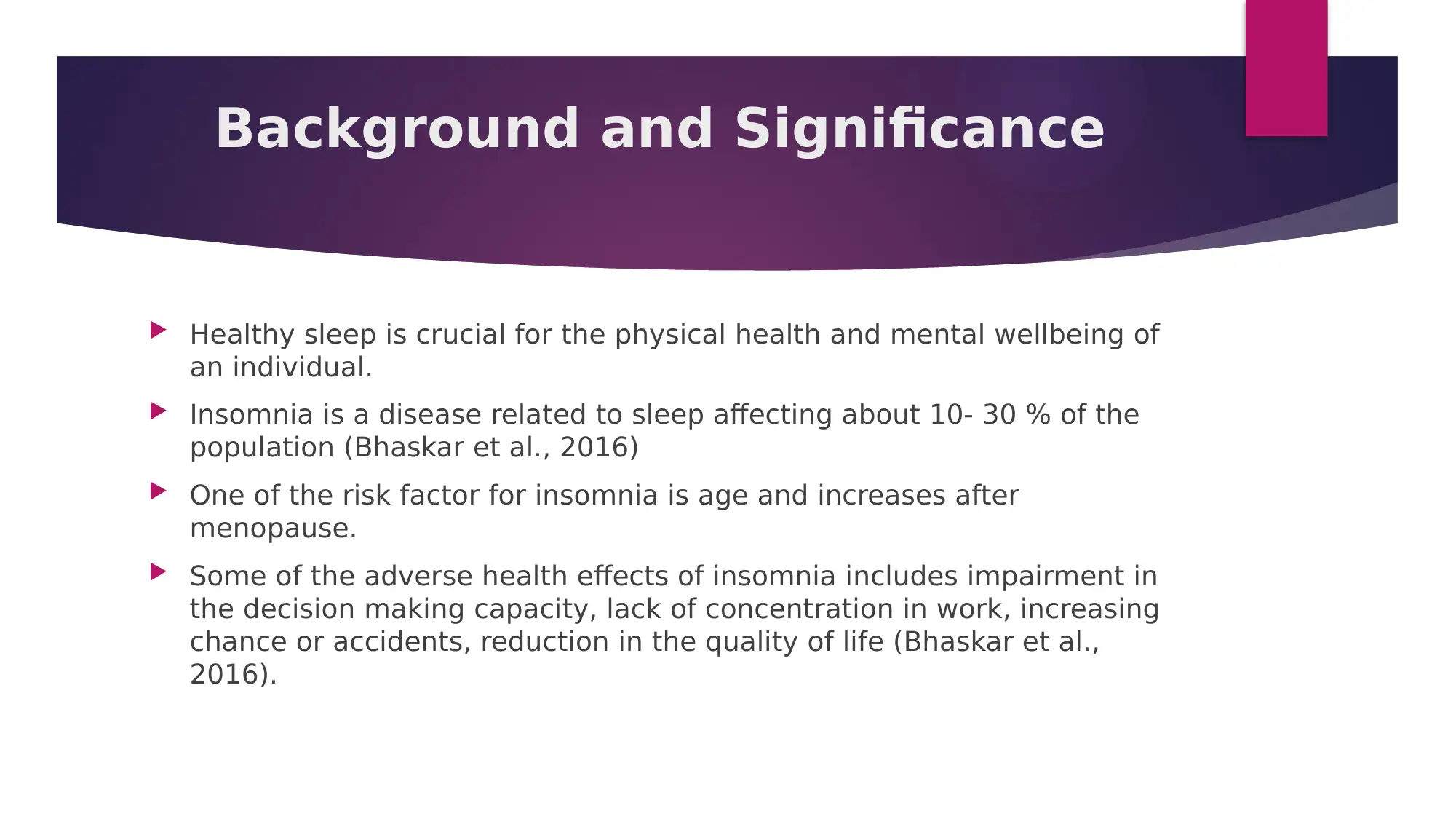
Background and Significance
Healthy sleep is crucial for the physical health and mental wellbeing of
an individual.
Insomnia is a disease related to sleep affecting about 10- 30 % of the
population (Bhaskar et al., 2016)
One of the risk factor for insomnia is age and increases after
menopause.
Some of the adverse health effects of insomnia includes impairment in
the decision making capacity, lack of concentration in work, increasing
chance or accidents, reduction in the quality of life (Bhaskar et al.,
2016).
Document Page
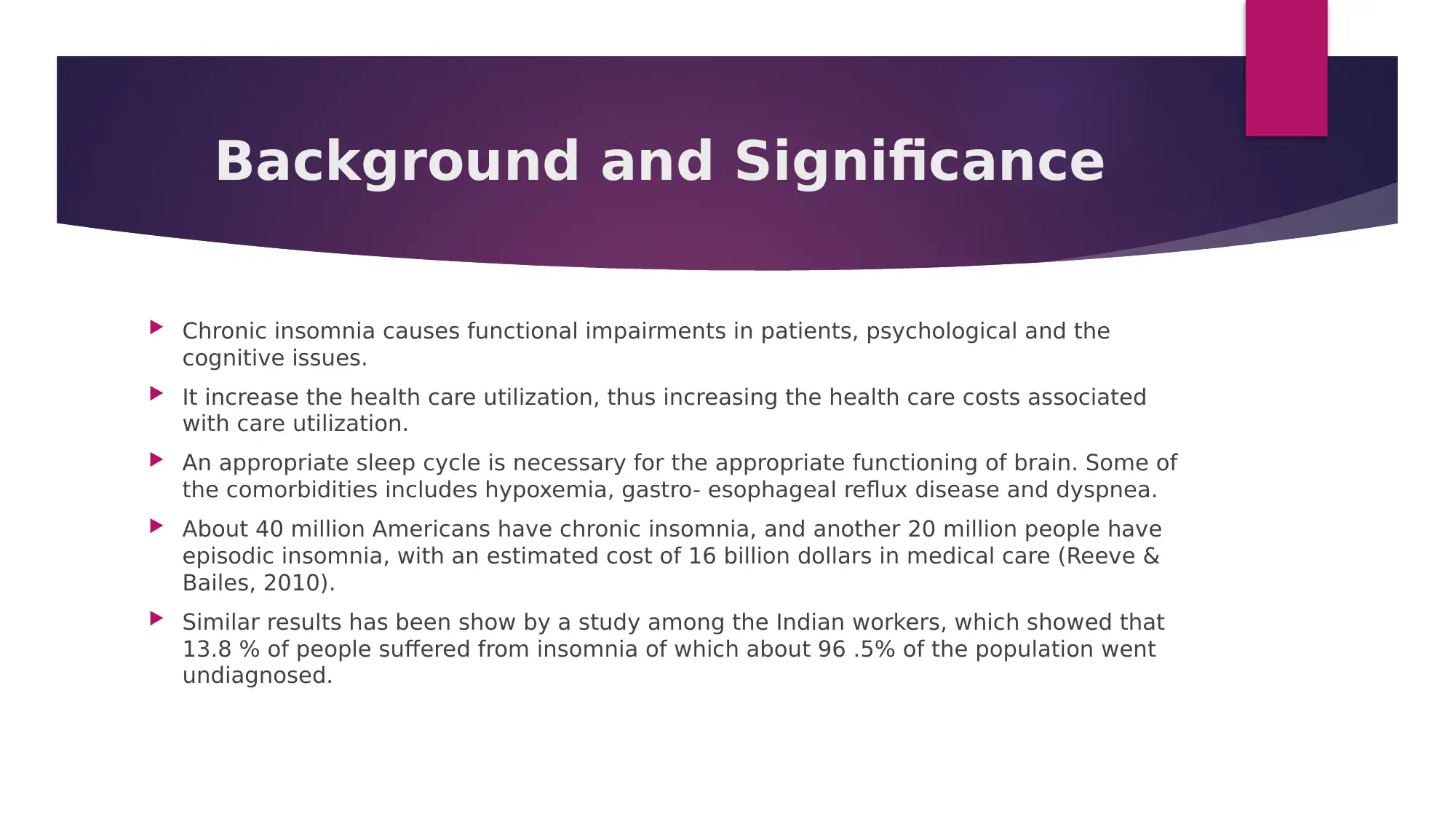
Background and Significance
Chronic insomnia causes functional impairments in patients, psychological and the
cognitive issues.
It increase the health care utilization, thus increasing the health care costs associated
with care utilization.
An appropriate sleep cycle is necessary for the appropriate functioning of brain. Some of
the comorbidities includes hypoxemia, gastro- esophageal reflux disease and dyspnea.
About 40 million Americans have chronic insomnia, and another 20 million people have
episodic insomnia, with an estimated cost of 16 billion dollars in medical care (Reeve &
Bailes, 2010).
Similar results has been show by a study among the Indian workers, which showed that
13.8 % of people suffered from insomnia of which about 96 .5% of the population went
undiagnosed.
Document Page
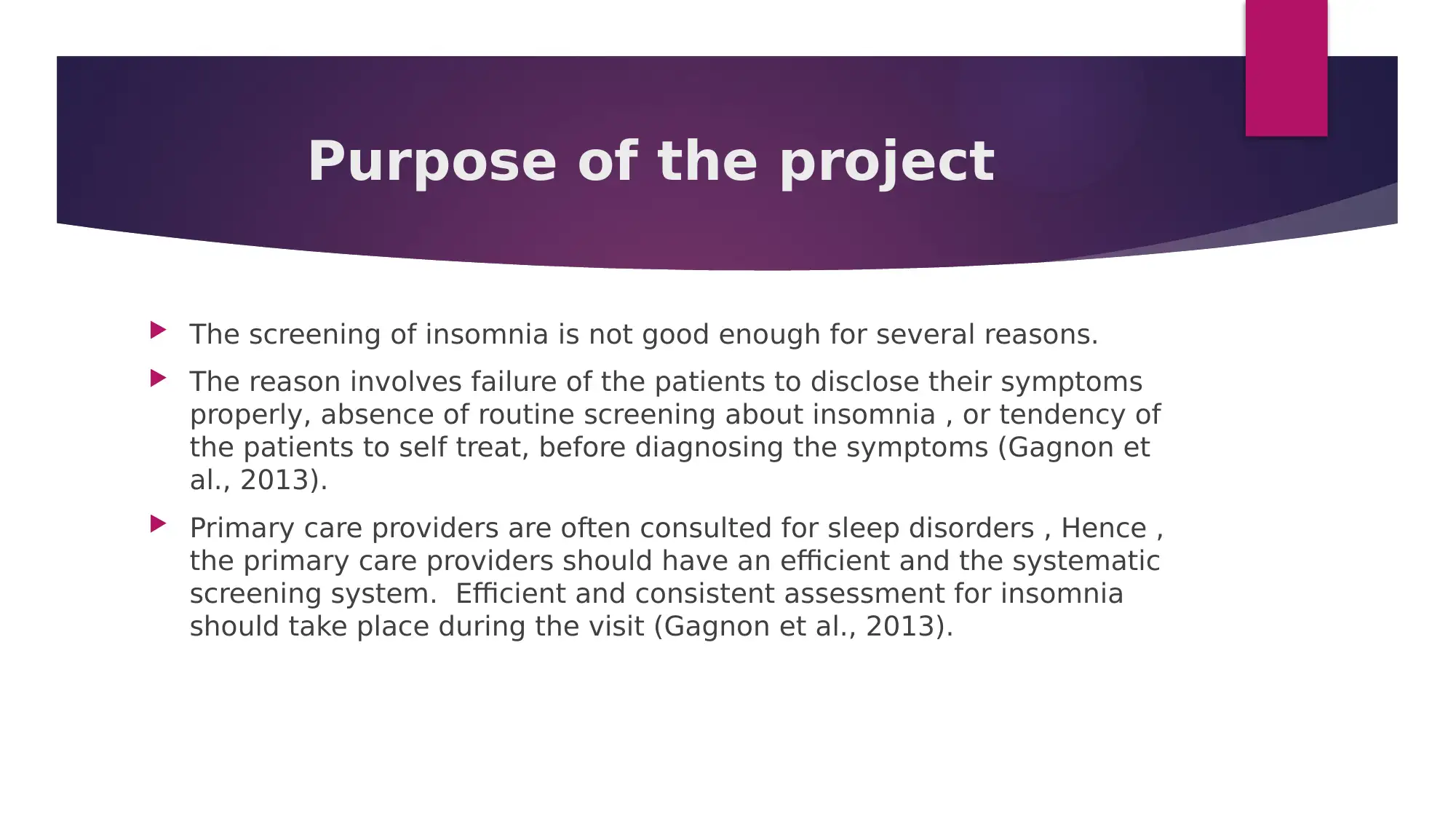
Purpose of the project
The screening of insomnia is not good enough for several reasons.
The reason involves failure of the patients to disclose their symptoms
properly, absence of routine screening about insomnia , or tendency of
the patients to self treat, before diagnosing the symptoms (Gagnon et
al., 2013).
Primary care providers are often consulted for sleep disorders , Hence ,
the primary care providers should have an efficient and the systematic
screening system. Efficient and consistent assessment for insomnia
should take place during the visit (Gagnon et al., 2013).
tabler-icon-diamond-filled.svg

Paraphrase This Document

Need a fresh take? Get an instant paraphrase of this document with our AI Paraphraser
Document Page
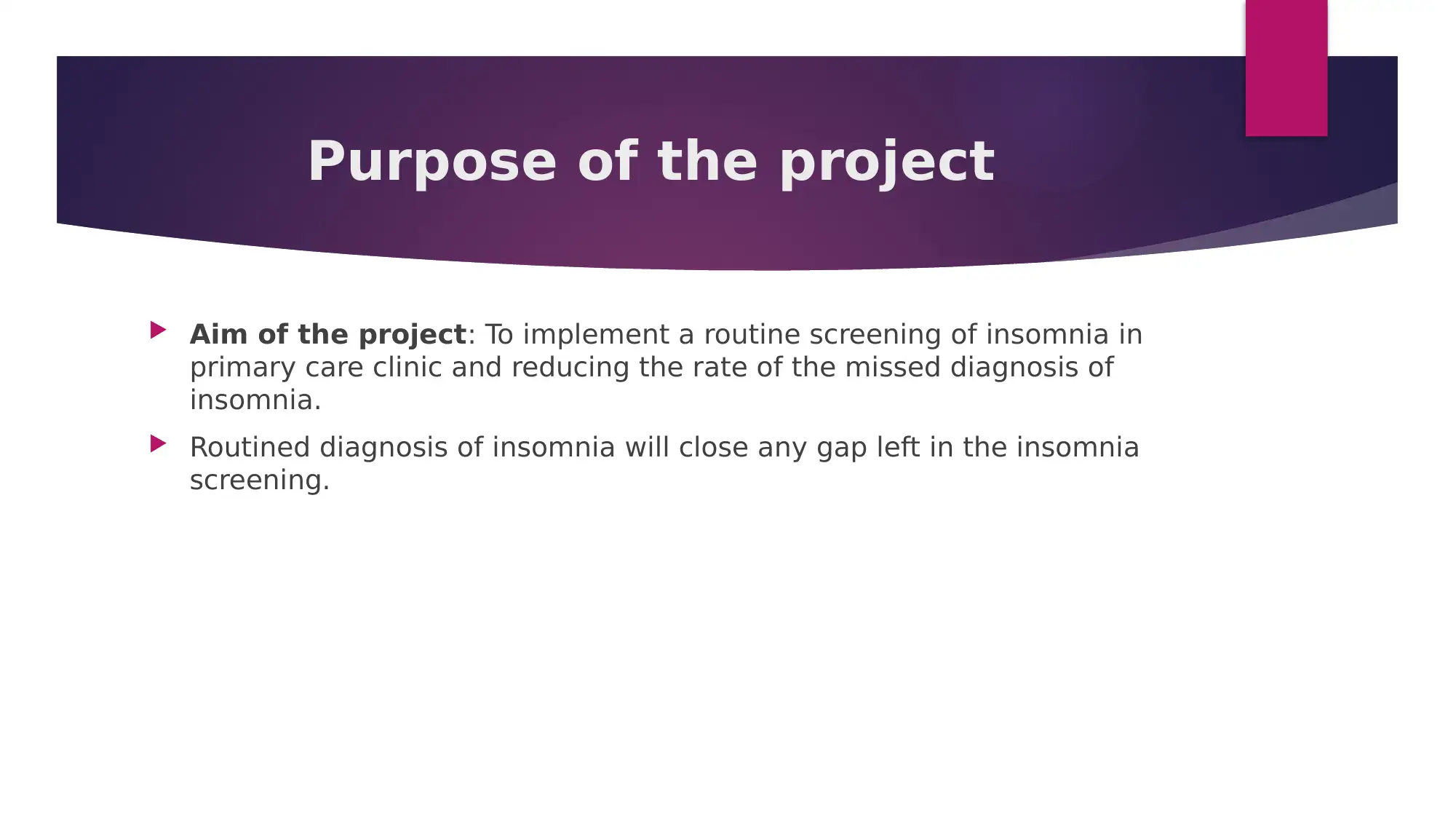
Purpose of the project
Aim of the project: To implement a routine screening of insomnia in
primary care clinic and reducing the rate of the missed diagnosis of
insomnia.
Routined diagnosis of insomnia will close any gap left in the insomnia
screening.
Document Page
Purpose of the project
Family Health Care and Wellness Center (SFHWC) is a primary health
care clinic and a project site, where routine assessment of insomnia is
not conducted.
A proposal was provided by the Doctor of Nursing (DNP) student for this
projects , which was received in a positive manner and permission to
carry on with the project is granted.
A routine screening of insomnia was completed by using the Insomnia
Severity Index (ISI) questionnaire.
Document Page
PICOT question
The PICOT question guiding this project is: Among adult patients in a
primary care clinic (P), will routine insomnia screening (I) compared to no
routine screening(C) improve insomnia diagnosis and intervention (O) over
4weeks (T)?
tabler-icon-diamond-filled.svg

Paraphrase This Document

Need a fresh take? Get an instant paraphrase of this document with our AI Paraphraser
Document Page
Objectives of the project
Providing education to the staffs on the necessity of insomnia
screening.
Successful implementation of the ISI questionnaire for the project.
The staffs will be educated about the tools, results, significance and
appropriate actions .
Decrease missed assessment of insomnia and improve patient care
outcomes
Document Page
Framework
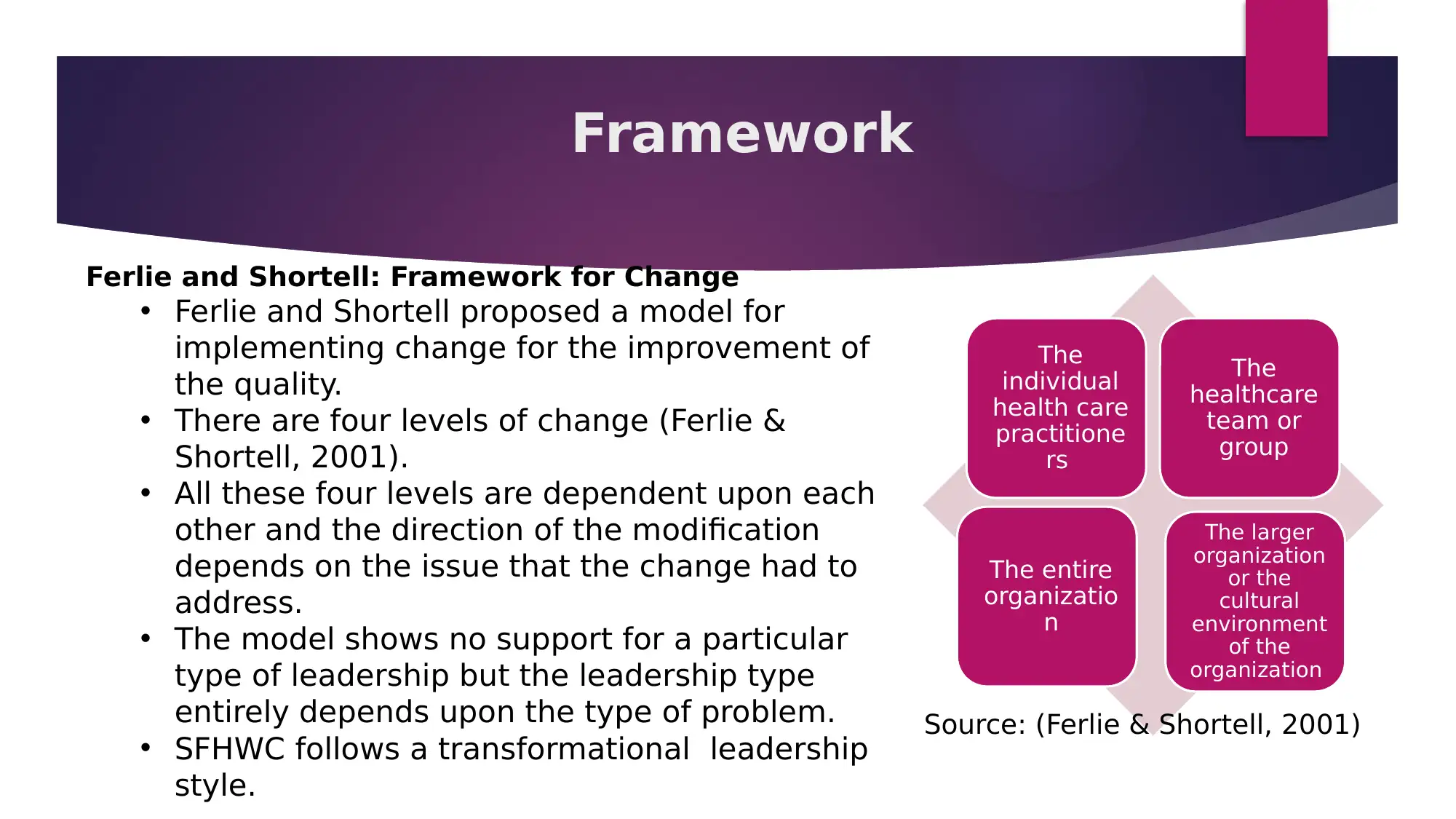
The
individual
health care
practitione
rs
The
healthcare
team or
group
The entire
organizatio
n
The larger
organization
or the
cultural
environment
of the
organization
Ferlie and Shortell: Framework for Change
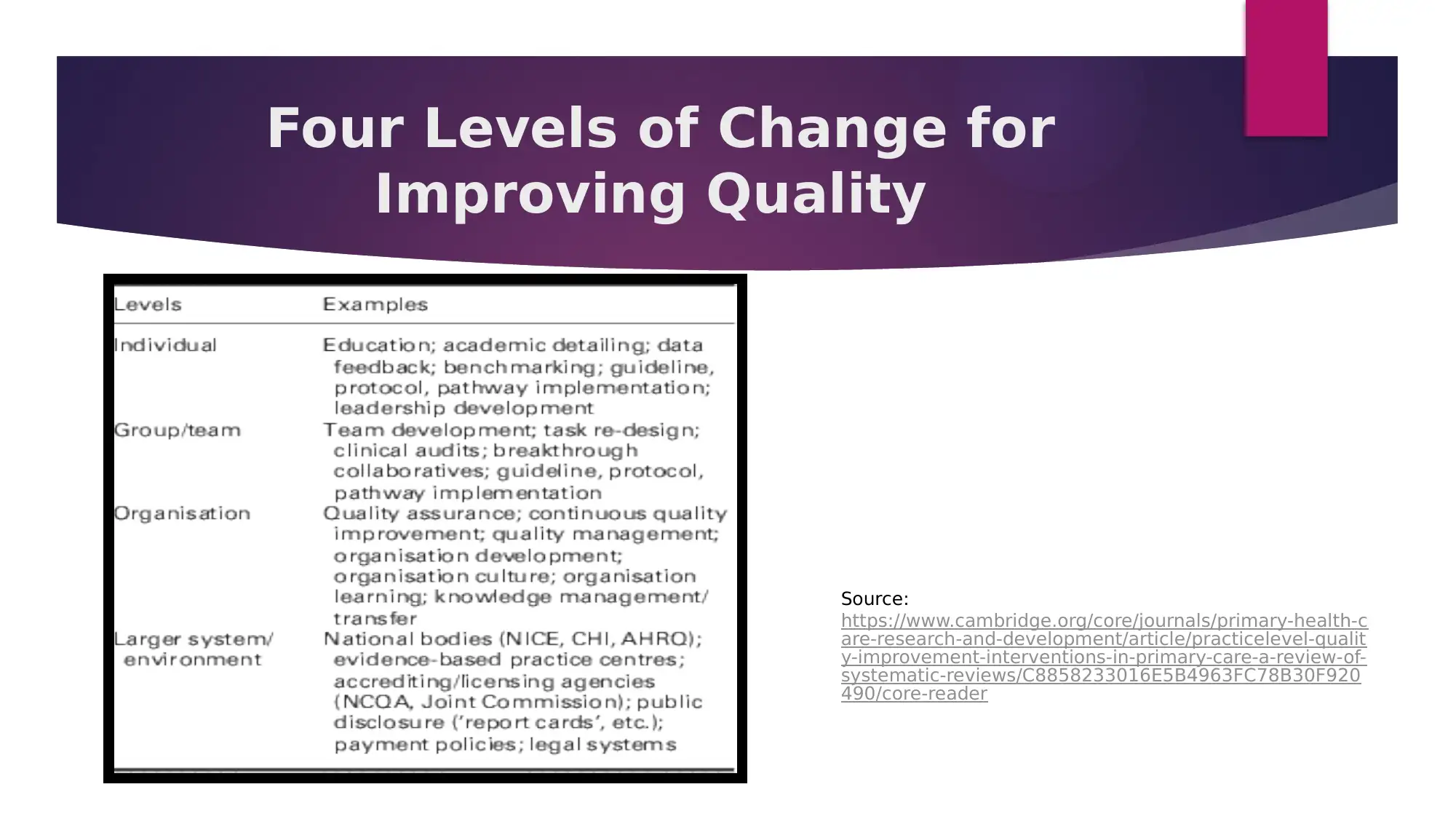
Ferlie and Shortell proposed a model for
implementing change for the improvement of
the quality.
There are four levels of change (Ferlie &
Shortell, 2001).
All these four levels are dependent upon each
other and the direction of the modification
depends on the issue that the change had to
address.
The model shows no support for a particular
type of leadership but the leadership type
entirely depends upon the type of problem.
SFHWC follows a transformational leadership
style.
Source: (Ferlie & Shortell, 2001)
Document Page
Four Levels of Change for
Improving Quality
Source:
https://www.cambridge.org/core/journals/primary-health-c
are-research-and-development/article/practicelevel-qualit
y-improvement-interventions-in-primary-care-a-review-of-
systematic-reviews/C8858233016E5B4963FC78B30F920
490/core-reader
tabler-icon-diamond-filled.svg

Paraphrase This Document

Need a fresh take? Get an instant paraphrase of this document with our AI Paraphraser
Document Page
Evidence-based practice implementation model
Rosswurm and Larrabee’s model
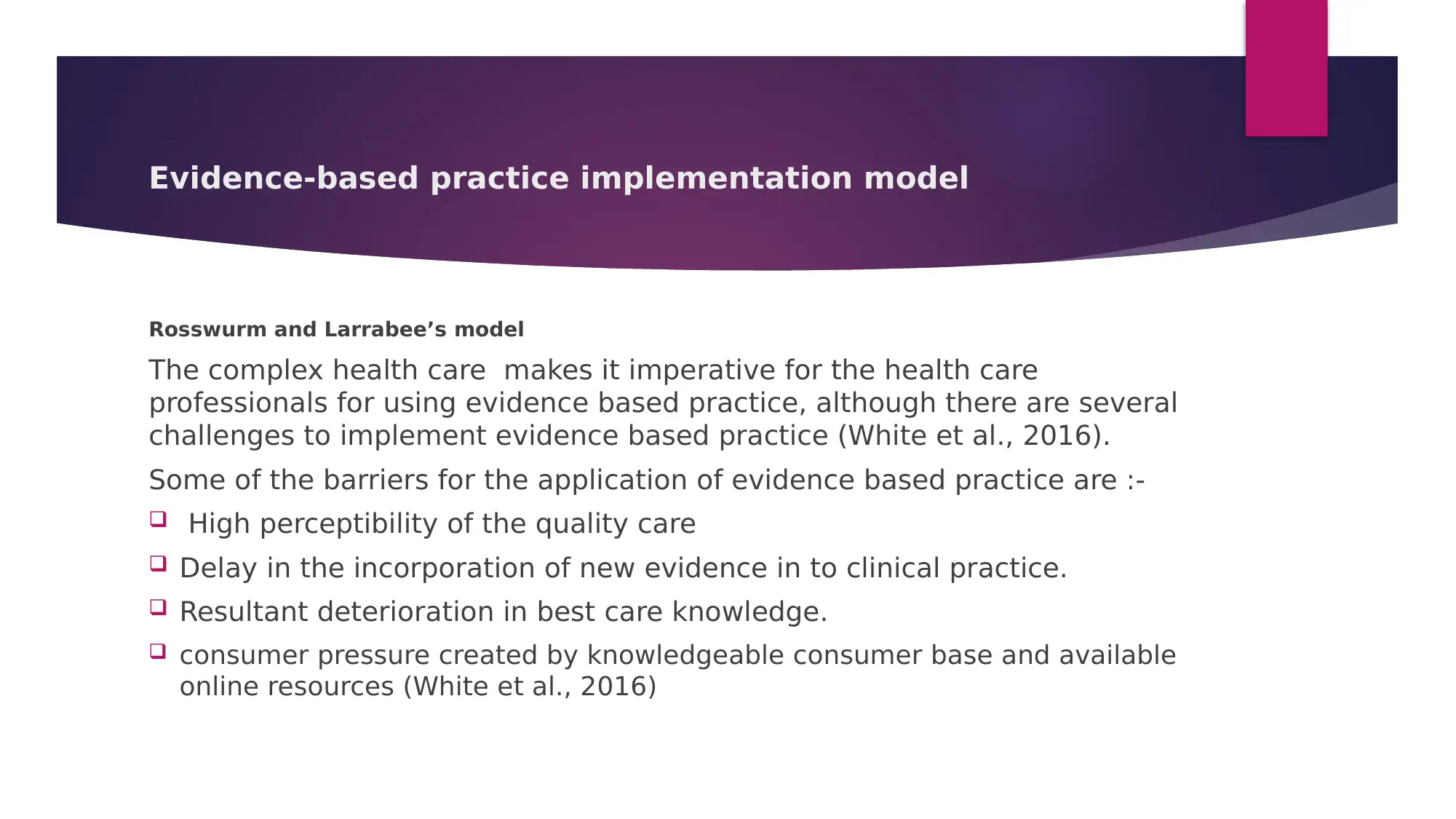
The complex health care makes it imperative for the health care
professionals for using evidence based practice, although there are several
challenges to implement evidence based practice (White et al., 2016).
Some of the barriers for the application of evidence based practice are :-
High perceptibility of the quality care
Delay in the incorporation of new evidence in to clinical practice.
Resultant deterioration in best care knowledge.
consumer pressure created by knowledgeable consumer base and available
online resources (White et al., 2016)
Document Page
Rosswurm and Larrabee’s model
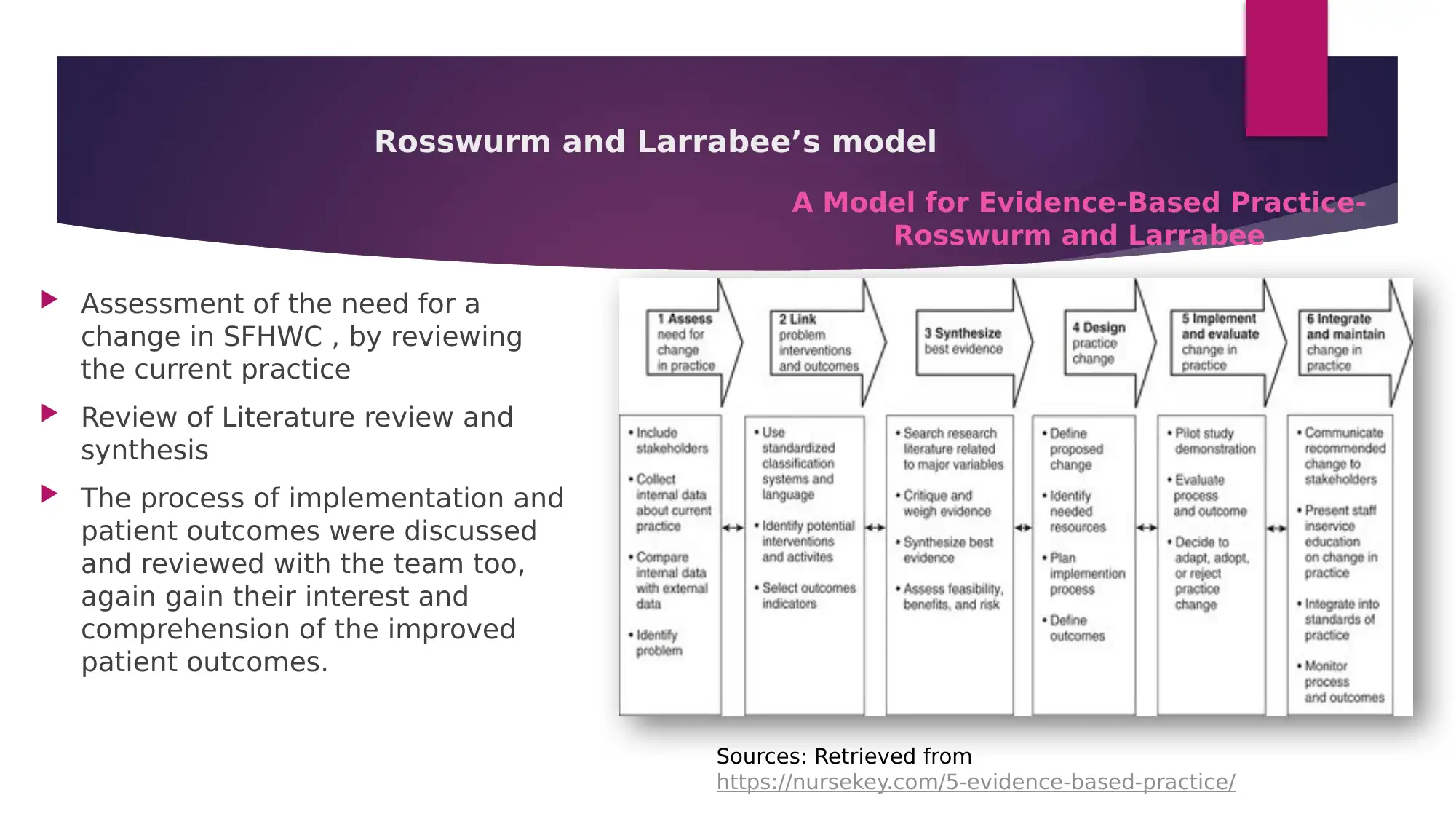
Assessment of the need for a
change in SFHWC , by reviewing
the current practice
Review of Literature review and
synthesis
The process of implementation and
patient outcomes were discussed
and reviewed with the team too,
again gain their interest and
comprehension of the improved
patient outcomes.
A Model for Evidence-Based Practice-
Rosswurm and Larrabee
Sources: Retrieved from
https://nursekey.com/5-evidence-based-practice/
chevron_up_icon
1 out of 27
circle_padding
hide_on_mobile
zoom_out_icon
[object Object]