Integrated Pharmacology and Therapeutics Assignment: Vaccine Study

Verified

Added on  2022/11/26

|4
|648
|132
Homework Assignment
AI Summary
This assignment analyzes the results of a Danish nationwide cohort study on the efficacy of influenza vaccination in patients with heart failure. The study, which followed over 134,000 patients, investigated the relationship between vaccination frequency, timing, and cardiovascular outcomes. The analysis uses the PICO framework to assess the study's implications for a 45-year-old patient named Hilda, who has heart failure. The assignment explores the benefits of annual influenza vaccination in preventing infection and reducing the risk of heart failure symptoms, acute coronary events, and myocarditis. It concludes that vaccination between September and October is optimal, highlighting the importance of cumulative vaccinations. The assignment emphasizes the clinical implications of the study, supporting the benefits of influenza vaccination for patients with heart failure, and provides relevant references.
Document Page
Running head: INTEGRATED PHARMACOLOGY AND THERAPEUTICS 1
Integrated Pharmacology and Therapeutics
Author Name
Institutional Affiliation
Author note
tabler-icon-diamond-filled.svg

Paraphrase This Document

Need a fresh take? Get an instant paraphrase of this document with our AI Paraphraser
Document Page
INTEGRATED PHARMACOLOGY AND THERAPEUTICS 2
Integrated Pharmacology and Therapeutics
Question 1
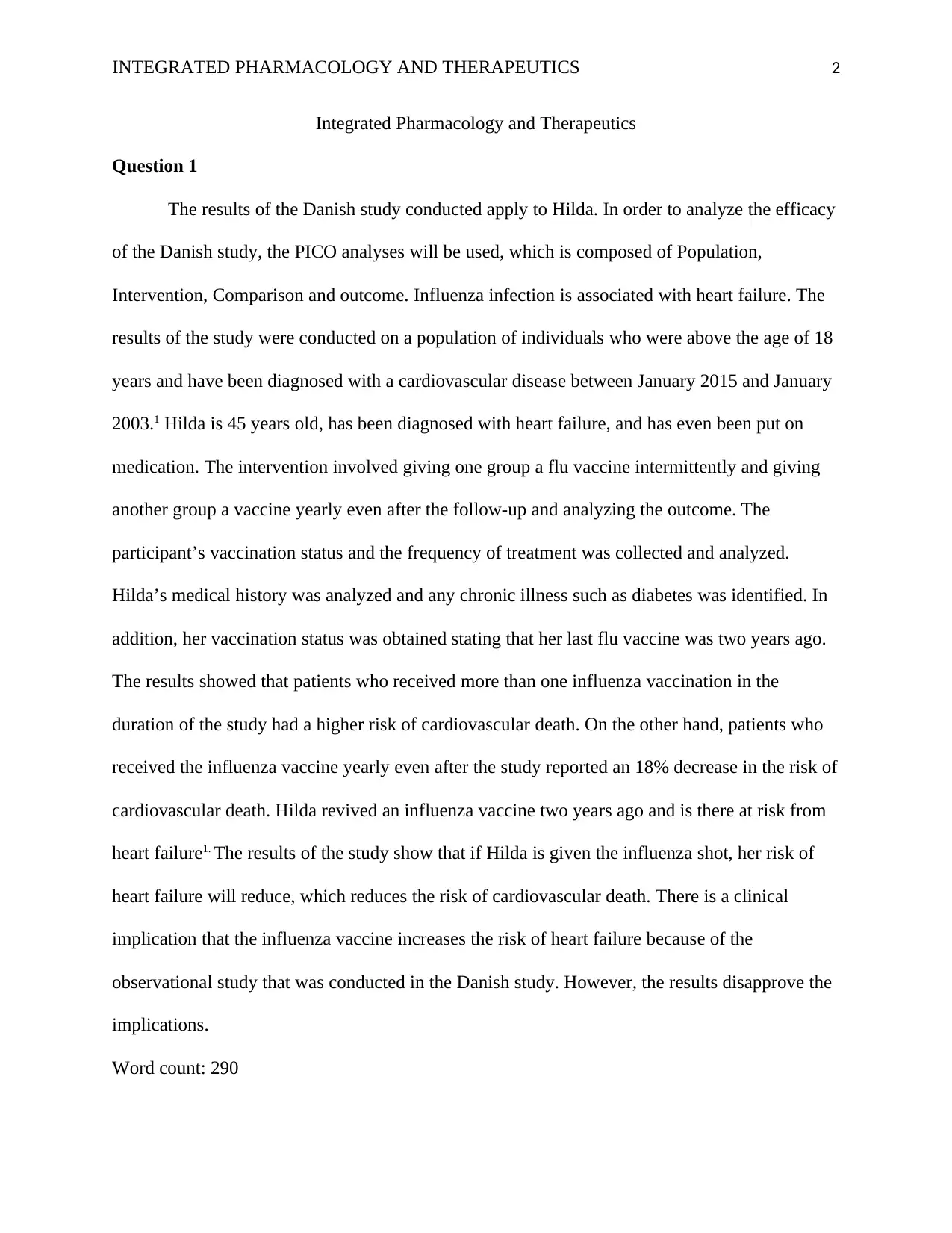
The results of the Danish study conducted apply to Hilda. In order to analyze the efficacy
of the Danish study, the PICO analyses will be used, which is composed of Population,
Intervention, Comparison and outcome. Influenza infection is associated with heart failure. The
results of the study were conducted on a population of individuals who were above the age of 18
years and have been diagnosed with a cardiovascular disease between January 2015 and January
2003.1 Hilda is 45 years old, has been diagnosed with heart failure, and has even been put on
medication. The intervention involved giving one group a flu vaccine intermittently and giving
another group a vaccine yearly even after the follow-up and analyzing the outcome. The
participant’s vaccination status and the frequency of treatment was collected and analyzed.
Hilda’s medical history was analyzed and any chronic illness such as diabetes was identified. In
addition, her vaccination status was obtained stating that her last flu vaccine was two years ago.
The results showed that patients who received more than one influenza vaccination in the
duration of the study had a higher risk of cardiovascular death. On the other hand, patients who
received the influenza vaccine yearly even after the study reported an 18% decrease in the risk of
cardiovascular death. Hilda revived an influenza vaccine two years ago and is there at risk from
heart failure1. The results of the study show that if Hilda is given the influenza shot, her risk of
heart failure will reduce, which reduces the risk of cardiovascular death. There is a clinical
implication that the influenza vaccine increases the risk of heart failure because of the
observational study that was conducted in the Danish study. However, the results disapprove the
implications.
Word count: 290
Document Page
INTEGRATED PHARMACOLOGY AND THERAPEUTICS 3
Question 2
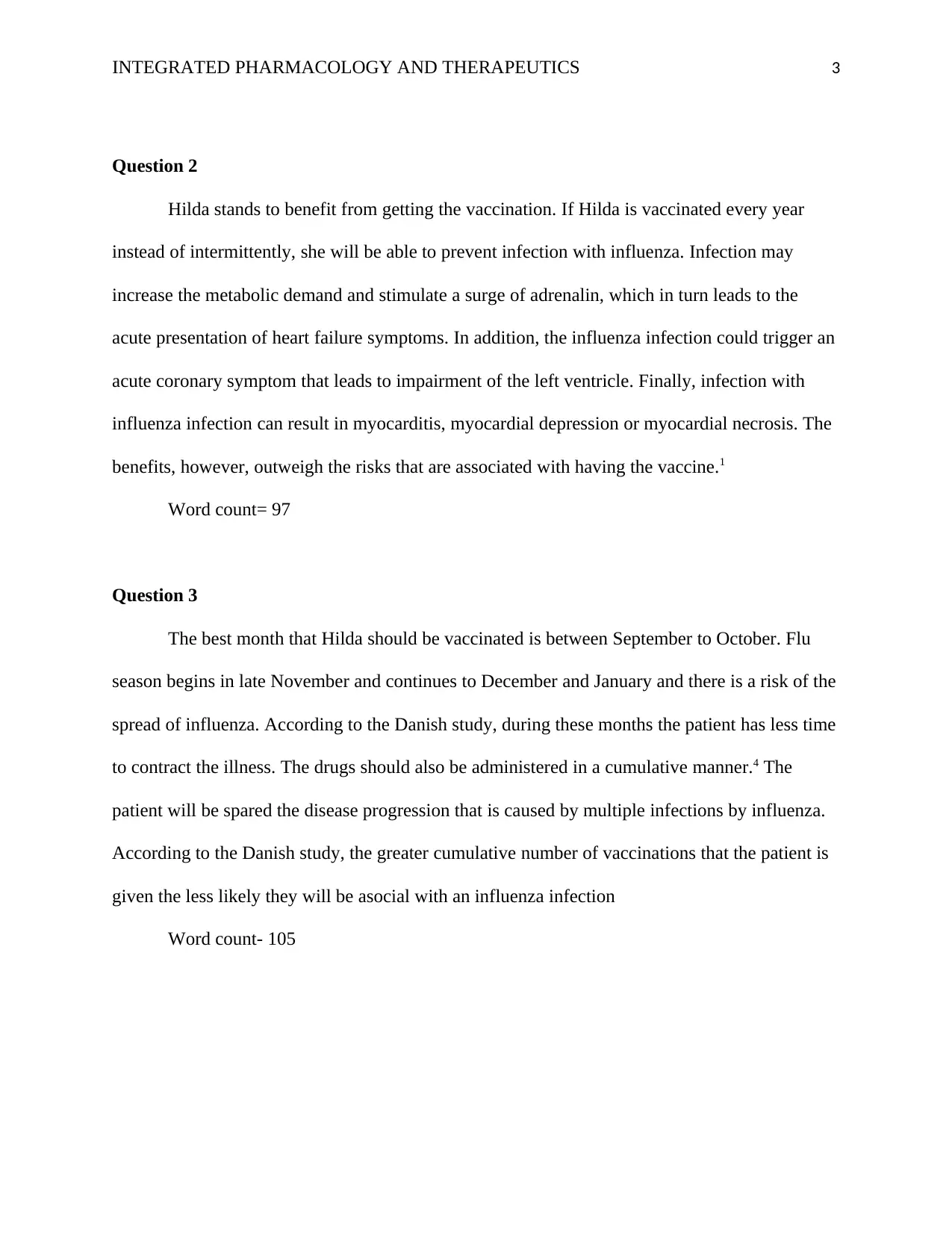
Hilda stands to benefit from getting the vaccination. If Hilda is vaccinated every year
instead of intermittently, she will be able to prevent infection with influenza. Infection may
increase the metabolic demand and stimulate a surge of adrenalin, which in turn leads to the
acute presentation of heart failure symptoms. In addition, the influenza infection could trigger an
acute coronary symptom that leads to impairment of the left ventricle. Finally, infection with
influenza infection can result in myocarditis, myocardial depression or myocardial necrosis. The
benefits, however, outweigh the risks that are associated with having the vaccine.1
Word count= 97
Question 3
The best month that Hilda should be vaccinated is between September to October. Flu
season begins in late November and continues to December and January and there is a risk of the
spread of influenza. According to the Danish study, during these months the patient has less time
to contract the illness. The drugs should also be administered in a cumulative manner.4 The
patient will be spared the disease progression that is caused by multiple infections by influenza.
According to the Danish study, the greater cumulative number of vaccinations that the patient is
given the less likely they will be asocial with an influenza infection
Word count- 105
Document Page
INTEGRATED PHARMACOLOGY AND THERAPEUTICS 4
References
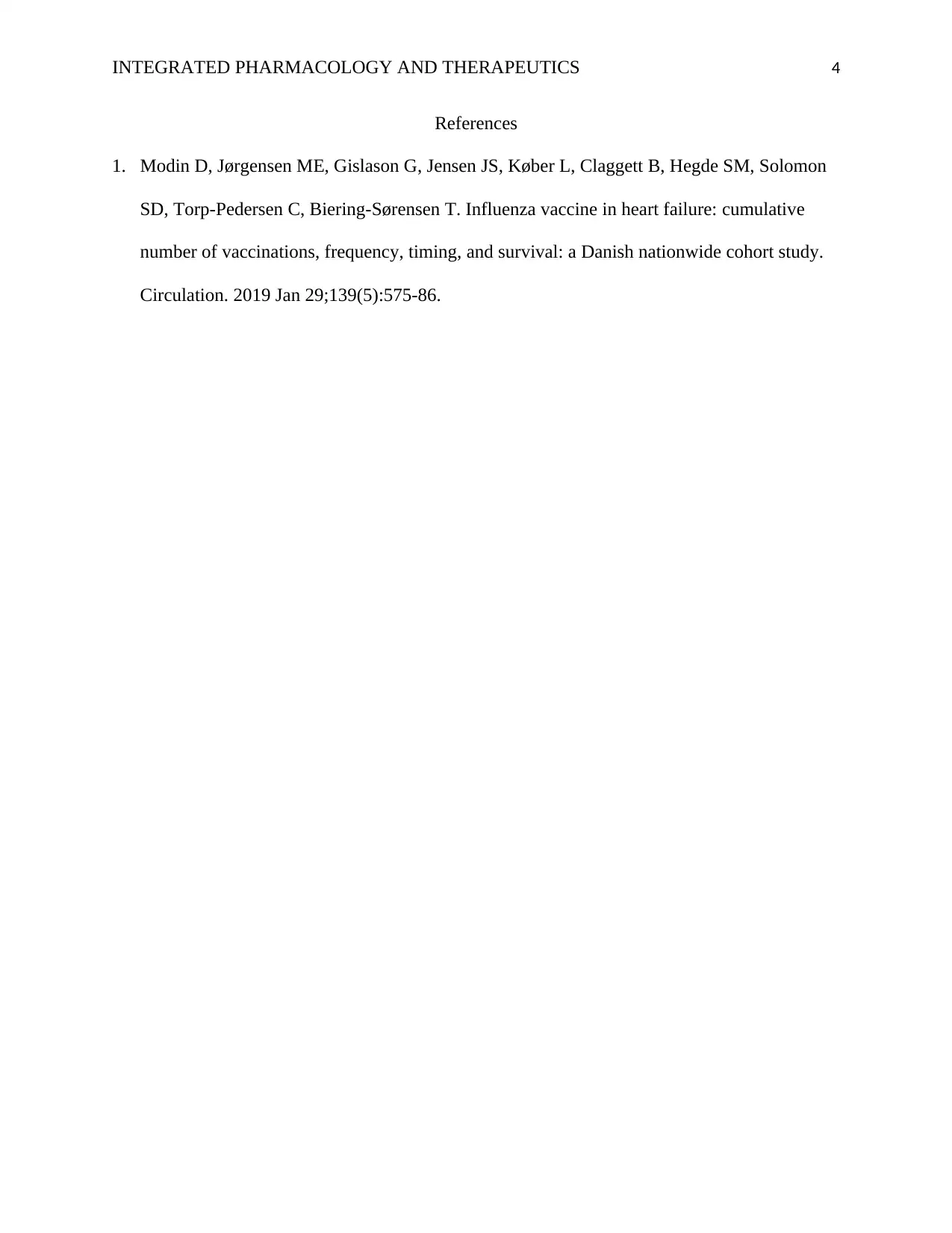
1. Modin D, Jørgensen ME, Gislason G, Jensen JS, Køber L, Claggett B, Hegde SM, Solomon
SD, Torp-Pedersen C, Biering-Sørensen T. Influenza vaccine in heart failure: cumulative
number of vaccinations, frequency, timing, and survival: a Danish nationwide cohort study.
Circulation. 2019 Jan 29;139(5):575-86.
chevron_up_icon
1 out of 4
circle_padding
hide_on_mobile
zoom_out_icon
[object Object]