Communication Strategies Report: Internal and External Plan Analysis

Verified

Added on  2020/03/04

|13
|2042
|34
Report
AI Summary
This report provides a comprehensive analysis of communication strategies, focusing on both internal and external communication plans. It begins with an introduction emphasizing the importance of effective communication within organizations, particularly highlighting the impact of leadership communication styles on employee emotions and performance. The report then delves into the development of an internal communication strategy, including PEST and SWOT analyses, stakeholder identification, and the consideration of legal, ethical, and financial implications. It explores various communication channels and the use of digital media, concluding with a strategy for evaluating the plan's effectiveness. The second part of the report focuses on external communication, following a similar structure with PEST and SWOT analyses, stakeholder identification, and the consideration of legal, ethical, and financial aspects. It addresses the communication needs of external stakeholders, potential barriers, and the strategic utilization of digital media. The report concludes by summarizing the key components of developing effective internal and external communication strategies, emphasizing the importance of adapting to the evolving communication landscape and leveraging digital media for enhanced efficiency. The report also includes a detailed list of references.
Document Page
Running head: COMMUNICATION STRATEGIES
Communication strategies
Name of student
Name of University
Author note
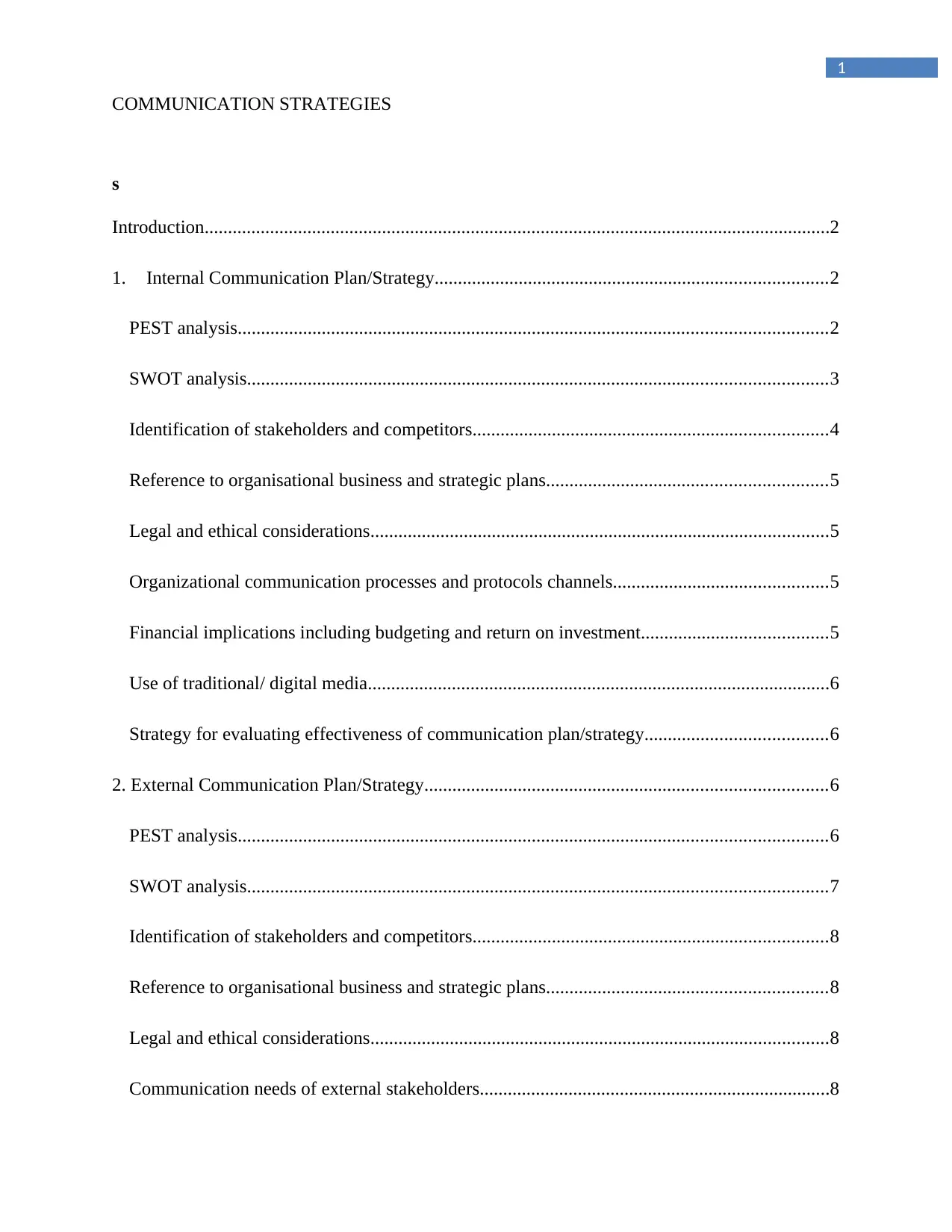
Table of Content
tabler-icon-diamond-filled.svg

Paraphrase This Document

Need a fresh take? Get an instant paraphrase of this document with our AI Paraphraser
Document Page
1
COMMUNICATION STRATEGIES
s
Introduction......................................................................................................................................2
1. Internal Communication Plan/Strategy....................................................................................2
PEST analysis..............................................................................................................................2
SWOT analysis............................................................................................................................3
Identification of stakeholders and competitors............................................................................4
Reference to organisational business and strategic plans............................................................5
Legal and ethical considerations..................................................................................................5
Organizational communication processes and protocols channels..............................................5
Financial implications including budgeting and return on investment........................................5
Use of traditional/ digital media...................................................................................................6
Strategy for evaluating effectiveness of communication plan/strategy.......................................6
2. External Communication Plan/Strategy......................................................................................6
PEST analysis..............................................................................................................................6
SWOT analysis............................................................................................................................7
Identification of stakeholders and competitors............................................................................8
Reference to organisational business and strategic plans............................................................8
Legal and ethical considerations..................................................................................................8
Communication needs of external stakeholders...........................................................................8
Document Page
2
COMMUNICATION STRATEGIES
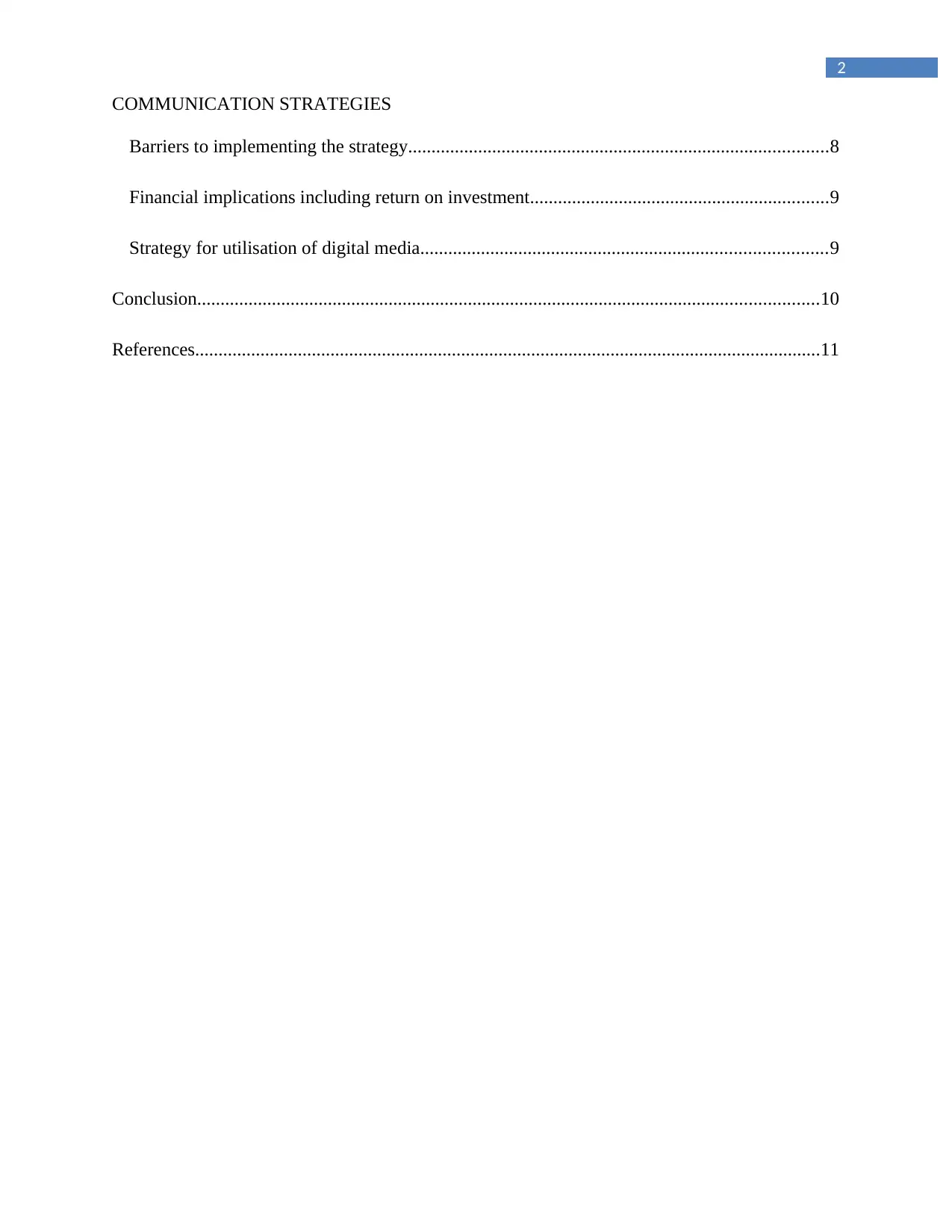
Barriers to implementing the strategy..........................................................................................8
Financial implications including return on investment................................................................9
Strategy for utilisation of digital media.......................................................................................9
Conclusion.....................................................................................................................................10
References......................................................................................................................................11
Document Page
3
COMMUNICATION STRATEGIES
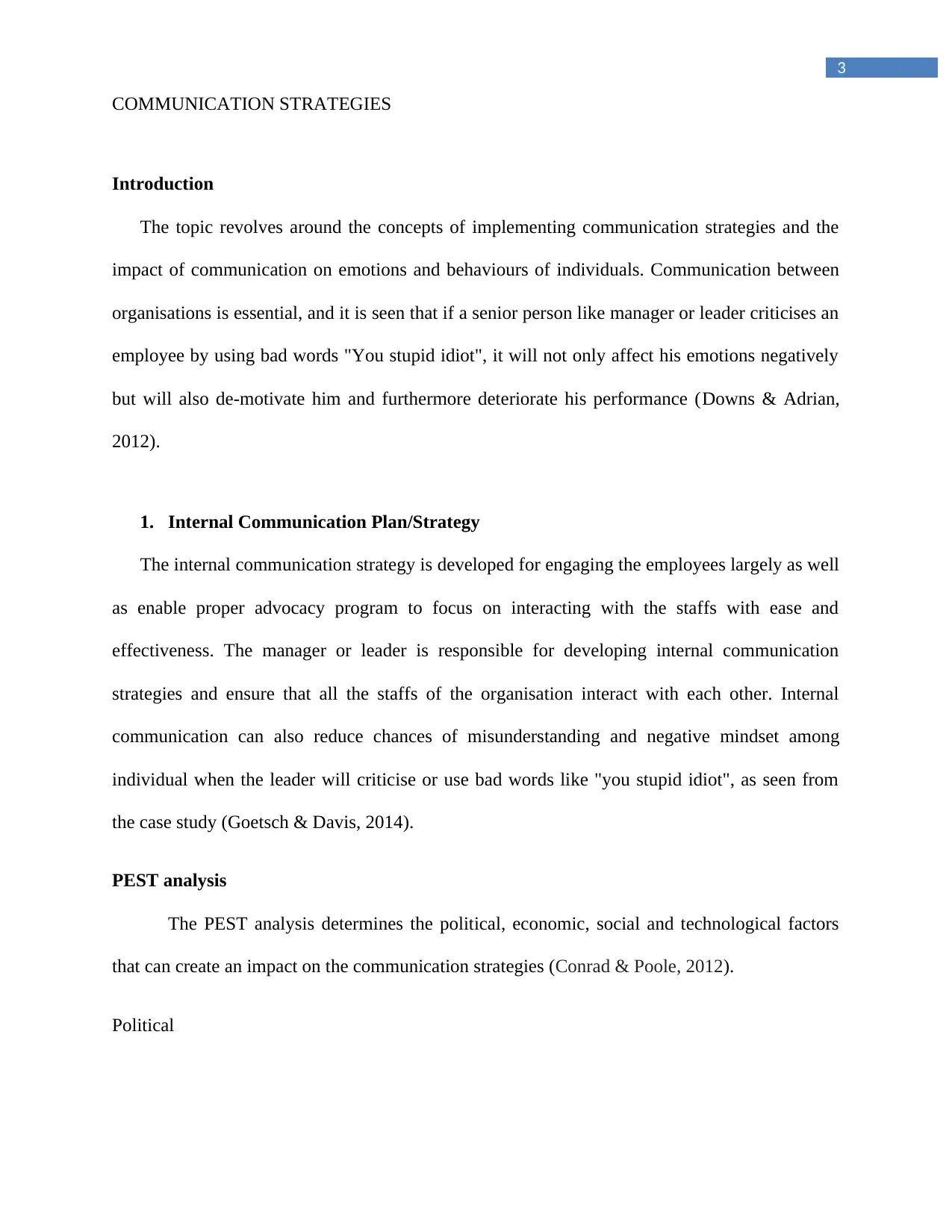
Introduction
The topic revolves around the concepts of implementing communication strategies and the
impact of communication on emotions and behaviours of individuals. Communication between
organisations is essential, and it is seen that if a senior person like manager or leader criticises an
employee by using bad words "You stupid idiot", it will not only affect his emotions negatively
but will also de-motivate him and furthermore deteriorate his performance (Downs & Adrian,
2012).
1. Internal Communication Plan/Strategy
The internal communication strategy is developed for engaging the employees largely as well
as enable proper advocacy program to focus on interacting with the staffs with ease and
effectiveness. The manager or leader is responsible for developing internal communication
strategies and ensure that all the staffs of the organisation interact with each other. Internal
communication can also reduce chances of misunderstanding and negative mindset among
individual when the leader will criticise or use bad words like "you stupid idiot", as seen from
the case study (Goetsch & Davis, 2014).
PEST analysis
The PEST analysis determines the political, economic, social and technological factors
that can create an impact on the communication strategies (Conrad & Poole, 2012).
Political
tabler-icon-diamond-filled.svg

Paraphrase This Document

Need a fresh take? Get an instant paraphrase of this document with our AI Paraphraser
Document Page
4
COMMUNICATION STRATEGIES
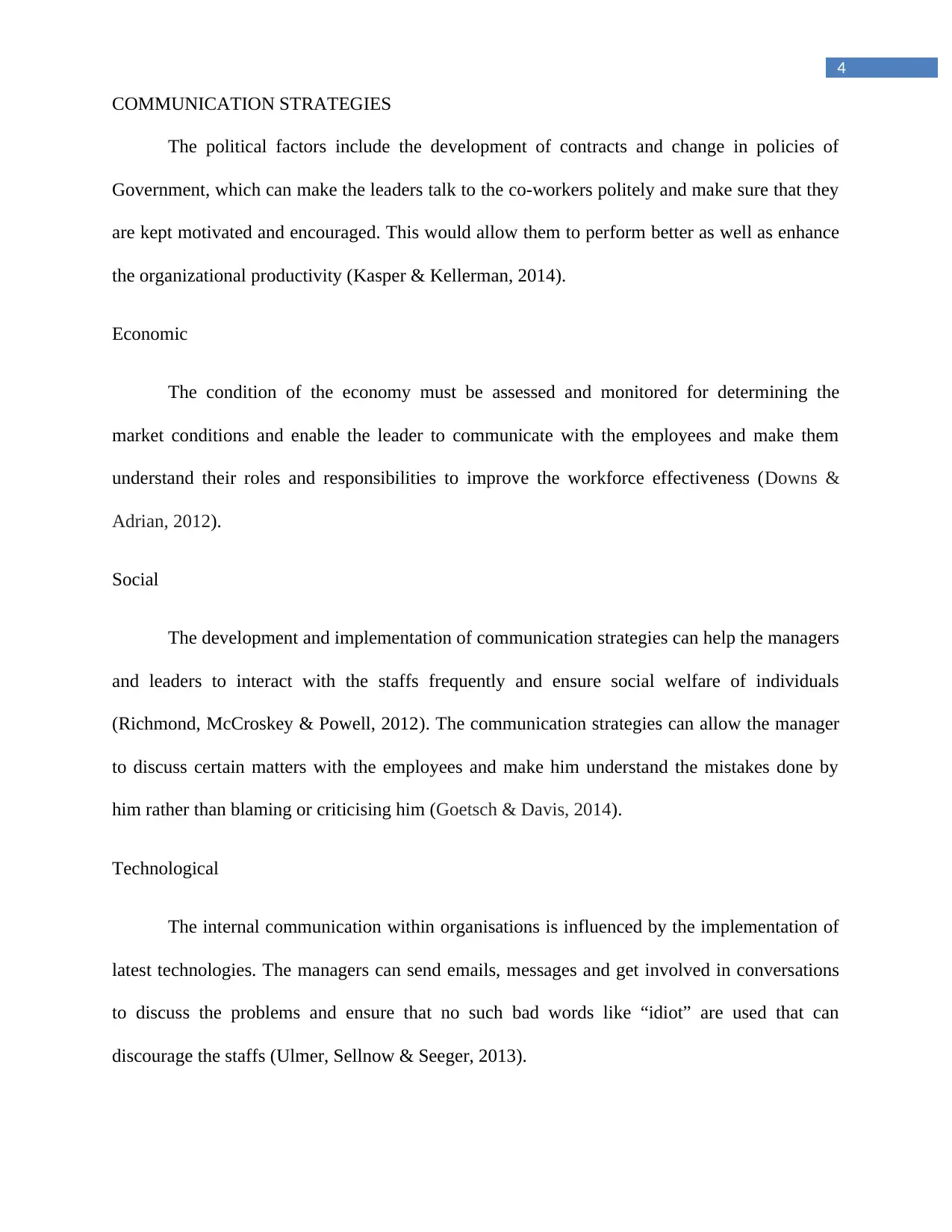
The political factors include the development of contracts and change in policies of
Government, which can make the leaders talk to the co-workers politely and make sure that they
are kept motivated and encouraged. This would allow them to perform better as well as enhance
the organizational productivity (Kasper & Kellerman, 2014).
Economic
The condition of the economy must be assessed and monitored for determining the
market conditions and enable the leader to communicate with the employees and make them
understand their roles and responsibilities to improve the workforce effectiveness (Downs &
Adrian, 2012).
Social
The development and implementation of communication strategies can help the managers
and leaders to interact with the staffs frequently and ensure social welfare of individuals
(Richmond, McCroskey & Powell, 2012). The communication strategies can allow the manager
to discuss certain matters with the employees and make him understand the mistakes done by
him rather than blaming or criticising him (Goetsch & Davis, 2014).
Technological
The internal communication within organisations is influenced by the implementation of
latest technologies. The managers can send emails, messages and get involved in conversations
to discuss the problems and ensure that no such bad words like “idiot” are used that can
discourage the staffs (Ulmer, Sellnow & Seeger, 2013).
Document Page
5
COMMUNICATION STRATEGIES
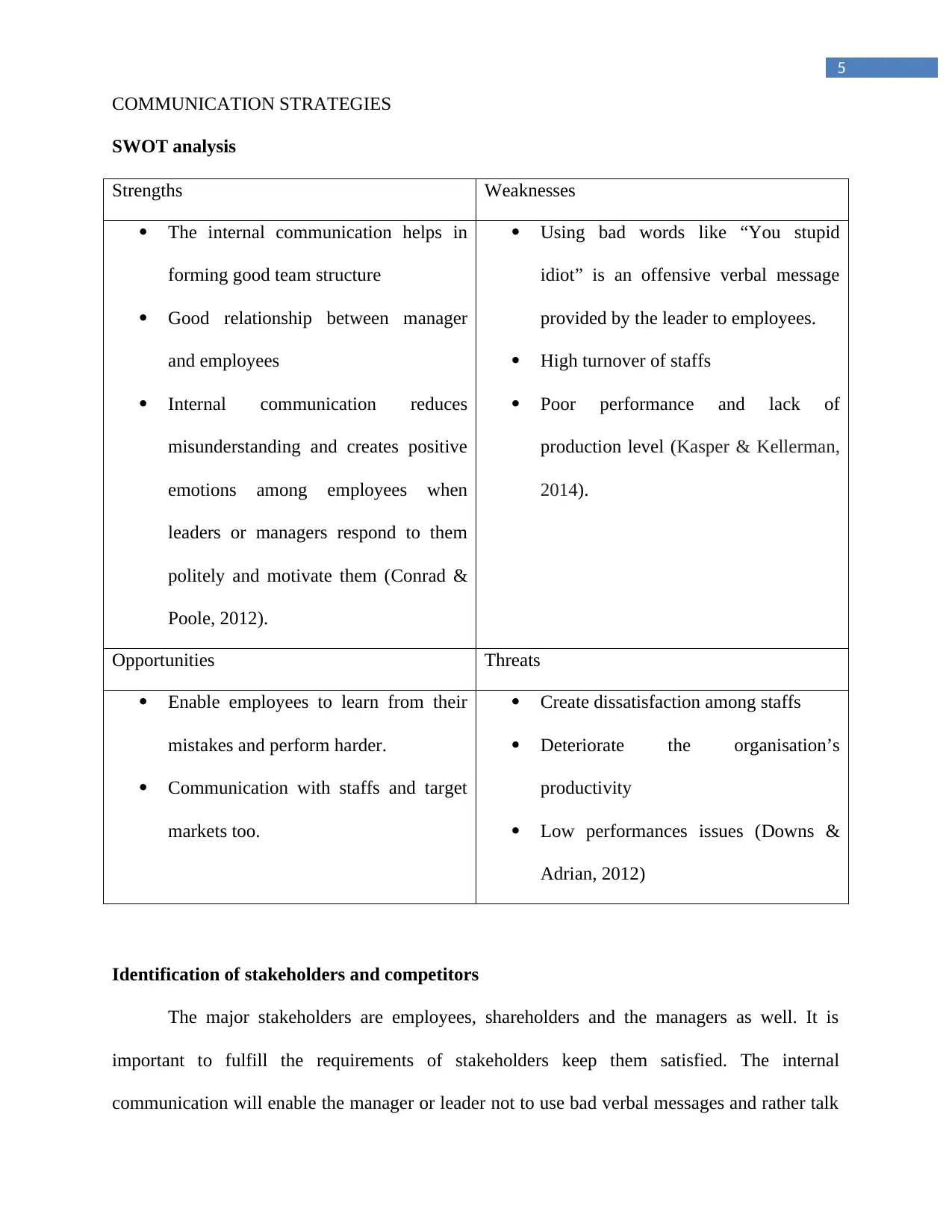
SWOT analysis
Strengths Weaknesses
The internal communication helps in
forming good team structure
Good relationship between manager
and employees
Internal communication reduces
misunderstanding and creates positive
emotions among employees when
leaders or managers respond to them
politely and motivate them (Conrad &
Poole, 2012).
Using bad words like “You stupid
idiot” is an offensive verbal message
provided by the leader to employees.
High turnover of staffs
Poor performance and lack of
production level (Kasper & Kellerman,
2014).
Opportunities Threats
Enable employees to learn from their
mistakes and perform harder.
Communication with staffs and target
markets too.
Create dissatisfaction among staffs
Deteriorate the organisation’s
productivity
Low performances issues (Downs &
Adrian, 2012)
Identification of stakeholders and competitors
The major stakeholders are employees, shareholders and the managers as well. It is
important to fulfill the requirements of stakeholders keep them satisfied. The internal
communication will enable the manager or leader not to use bad verbal messages and rather talk
Document Page
6
COMMUNICATION STRATEGIES
with them politely and make them understand their mistakes and how those can be rectified
(Goetsch & Davis, 2014).
Reference to organisational business and strategic plans
The employees through internal communication must properly understand the business
goals and strategic plan. This would make them perform their roles properly and not commit any
mistakes, which might make them listen to bad words by the manager that could affect their
emotions negatively (Kasper & Kellerman, 2014).
Legal and ethical considerations
Legal and ethical considerations can create a good culture and working atmosphere and
allow employees to perform properly. This would make the leader praise their performance
rather than de-motivating them through use of bad words (Ulmer, Sellnow & Seeger, 2013).
Organizational communication processes and protocols channels
There is a necessity to present clear communication and prevent the communication
barriers as well. The email conversations, chat messages, etc. are proper channels for enabling
communicating rather than criticising the employees for his mistakes in front of the other
employees. There could be language and cultural barriers, which might enable an individual not
to understand what the others are saying and create issues (Conrad & Poole, 2012).
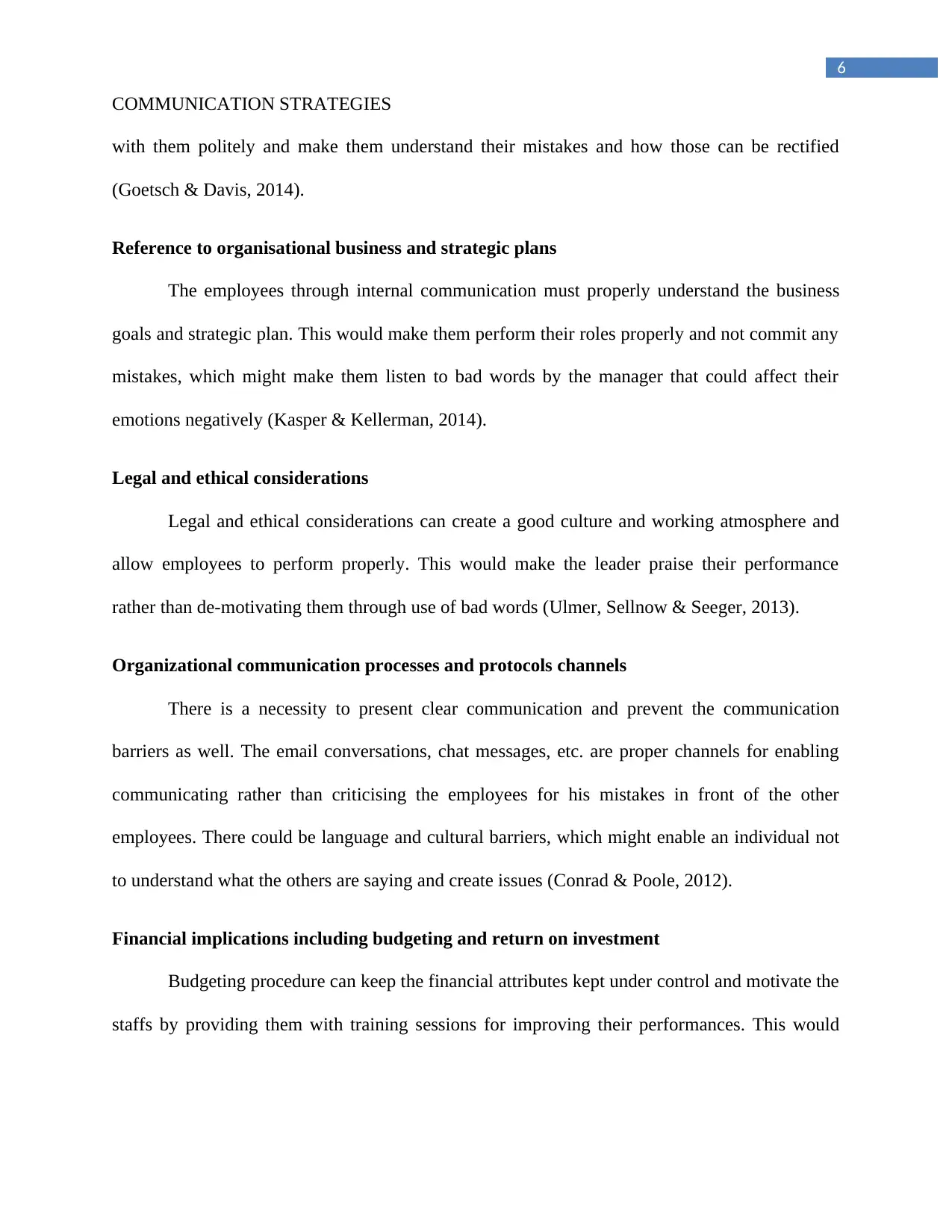
Financial implications including budgeting and return on investment
Budgeting procedure can keep the financial attributes kept under control and motivate the
staffs by providing them with training sessions for improving their performances. This would
tabler-icon-diamond-filled.svg

Paraphrase This Document

Need a fresh take? Get an instant paraphrase of this document with our AI Paraphraser
Document Page
7
COMMUNICATION STRATEGIES
create a positive impact on their emotions and bring enhanced productivity through good rates of
return as well (Downs & Adrian, 2012).
Use of traditional/ digital media
Electronic media channels including emails, chat messages, video conferences can be
effective for managing internal communication (Richmond, McCroskey & Powell, 2012).
Strategy for evaluating effectiveness of communication plan/strategy
Internal communication strategy reduces the chances of misunderstanding among
individual and creates better scopes for influencing the behaviours of workers easily rather than
blaming them for their mistakes by using some bad words (Goetsch & Davis, 2014).
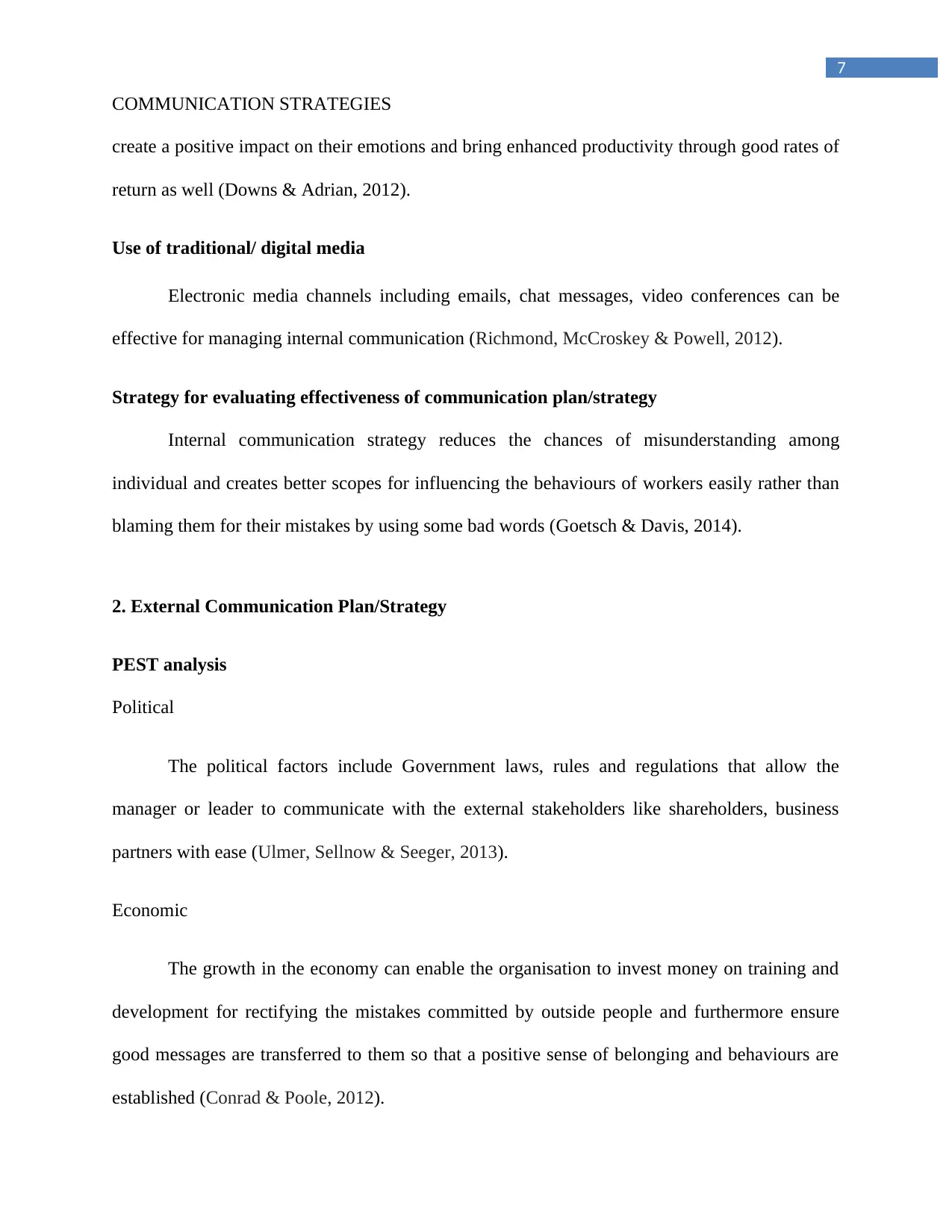
2. External Communication Plan/Strategy
PEST analysis
Political
The political factors include Government laws, rules and regulations that allow the
manager or leader to communicate with the external stakeholders like shareholders, business
partners with ease (Ulmer, Sellnow & Seeger, 2013).
Economic
The growth in the economy can enable the organisation to invest money on training and
development for rectifying the mistakes committed by outside people and furthermore ensure
good messages are transferred to them so that a positive sense of belonging and behaviours are
established (Conrad & Poole, 2012).
Document Page
8
COMMUNICATION STRATEGIES
Social
Managing external communications is useful for assessing the target markets and find out
ways to fulfill their needs and requirements rather than criticising them (Kasper & Kellerman,
2014).
Technological
The advancement of technology has given rise of various digital communication media,
which can improve the efficiency of external communications too.
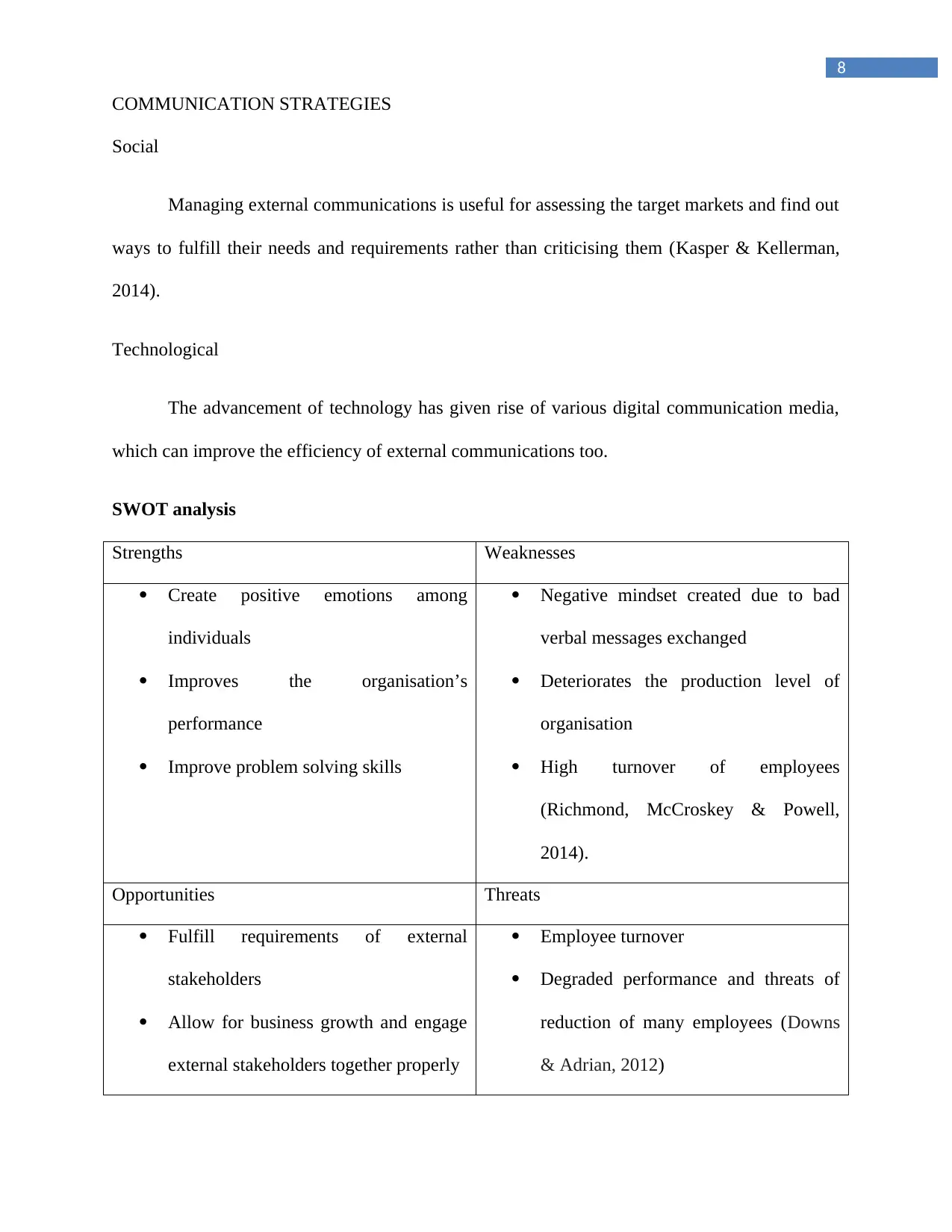
SWOT analysis
Strengths Weaknesses
Create positive emotions among
individuals
Improves the organisation’s
performance
Improve problem solving skills
Negative mindset created due to bad
verbal messages exchanged
Deteriorates the production level of
organisation
High turnover of employees
(Richmond, McCroskey & Powell,
2014).
Opportunities Threats
Fulfill requirements of external
stakeholders
Allow for business growth and engage
external stakeholders together properly
Employee turnover
Degraded performance and threats of
reduction of many employees (Downs
& Adrian, 2012)
Document Page
9
COMMUNICATION STRATEGIES
Identification of stakeholders and competitors
The external stakeholders are customers, shareholders or investors, suppliers, business
partners and creditors and if they listen to any such bad words then they may feel discouraged,
and there can be further lack of investments, low quality supplies delivered, etc. (Ulmer, Sellnow
& Seeger, 2013).
Reference to organisational business and strategic plans
Digital or electronic media could be used for compiling with the strategic plans and
manage proper external communication as well (Goetsch & Davis, 2014).
Legal and ethical considerations
The legal and ethical considerations are done for managing changes and improvements in
the external communication process and furthermore ensure that every external individual with
whom communication is done is treated properly with respect and dignity (Conrad & Poole,
2012).
Communication needs of external stakeholders
Proper communication channels are established for fulfilling the needs of external
communication and make sure that they understand them (Kasper & Kellerman, 2014), do their
roles and responsibilities with ease and no mistakes.
Barriers to implementing the strategy
Communication barriers, technology and cultural barriers can hinder the successful
completion of external communication process too (Downs & Adrian, 2012).
tabler-icon-diamond-filled.svg

Paraphrase This Document

Need a fresh take? Get an instant paraphrase of this document with our AI Paraphraser
Document Page
10
COMMUNICATION STRATEGIES
Financial implications including return on investment
The budget must be maintained for keeping costs under control, manage proper use of
digital media for enhancing the efficiency of the external communication process, and
furthermore gain good rate of return based on the investments made (Richmond, McCroskey &
Powell, 2012).
Strategy for utilisation of digital media
Accessing the media
The manager must use the digital media to guide the team members in the right direction
(Goetsch & Davis, 2014).
Contributing to and updating the media
The up gradation of data is essential for improving the communication process
effectiveness and manages good interaction with the stakeholders too (Ulmer, Sellnow & Seeger,
2013).
Monitoring the media
Skilful individuals are assigned to use the digital or electronic media and ensure proper
communication between individuals. This would also make sure that any bad verbal messages do
not get exchanged between the managers and employees within the workplace (Kasper &
Kellerman, 2014).
Evaluating the media
Document Page
11
COMMUNICATION STRATEGIES
The digital or electronic media has been chosen as effective for enhancing the efficiency
of external communication strategy (Richmond, McCroskey & Powell, 2012).
Conclusion
The topic included the various components required for developing a proper internal
communication plan or strategy. The PEST analysis, SWOT analysis along with the stakeholders
and strategic plans had been illustrated here as well. Information about channels of
communication and financial implications such as budgeting and return on investments along
with the utilisation and efficiency of digital media for enhancing the efficiency of
communication strategy had been included here as well.
chevron_up_icon
1 out of 13
circle_padding
hide_on_mobile
zoom_out_icon
[object Object]