Analysis of Business Environment: Influencing Factors and Impact
VerifiedAdded on 2023/01/18
|9
|2647
|37
Report
AI Summary
This report offers a comprehensive analysis of the business environment, examining both internal and external factors that influence business operations. It delves into the components of the internal environment, including organizational culture, human resources, and value systems, as well as the external environment, encompassing political, economic, social, legal, and competitive factors. The report uses examples like Juicero and Uber to illustrate the impact of these factors. Furthermore, it explores the role of government intervention in market economies, discussing different economic systems and the rationale behind government actions such as addressing monopolies, strategic infrastructure planning, and promoting equality. The report concludes by emphasizing the importance of balancing internal and external considerations for organizational success and adaptation, highlighting the need for structural and operational changes in response to environmental shifts.
I. INTRODUCTION
Today's businesses, particularly those with an entrepreneurial mindset, encounter
complexity in their business environments. It is the confluence of forces, situational
circumstances, and players that make up the Business Environment, which can be
classified by various criteria and is the foundation for business formation and
development (Sardak S.E., Movchanenko I.V. 2018).
Since the corporate environment is very dynamic and information is both unclear and
unpredictable, old ways to developing competitive strategies and managing the
global economic space must be re-examined in light of this new knowledge. Because
of this, it is critical to identify the business environment.
There are many elements that affect or influence a company's operational position,
including both internal and external ones. Business environment refers to internal
and external elements that affect how a firm operates, such as staff, customers,
supply, demand, management, and business laws.
Similarly, it is suggested that the nature and characteristics of the business
environment can have a significant impact on the overall business operations of a
specific industry and, as a result, performance (Abimbola & Agboola, 2011; Sohal &
Perry, 2006; Wong et al. 2014; Yu & Ramanathan, 2012).
The purpose of this report is to gain an in-depth understanding of the chosen firm
and the functions it performs in relation to the broader business environment.
The many sorts of organisations, their sizes and scopes, and the ways in which they
want to operate them have been the focus of the report. This has aided in the
investigation of the numerous possibilities and connections among the various
groups, as well as the effects of the external environment.
Most economic justifications for government intervention are to repair market failures
(distortions), redistribute money, or achieve non-economic goals. It's easier to
embrace noneconomic objectives as a distinct type of objective than to look at them
in terms of one of the first two, which can often be interpreted in terms of the third.
Economists can typically describe the appropriate intervention in each of these
areas. These desirable policies, though not achievable in practise, give benchmarks
for actual policies.
1
Today's businesses, particularly those with an entrepreneurial mindset, encounter
complexity in their business environments. It is the confluence of forces, situational
circumstances, and players that make up the Business Environment, which can be
classified by various criteria and is the foundation for business formation and
development (Sardak S.E., Movchanenko I.V. 2018).
Since the corporate environment is very dynamic and information is both unclear and
unpredictable, old ways to developing competitive strategies and managing the
global economic space must be re-examined in light of this new knowledge. Because
of this, it is critical to identify the business environment.
There are many elements that affect or influence a company's operational position,
including both internal and external ones. Business environment refers to internal
and external elements that affect how a firm operates, such as staff, customers,
supply, demand, management, and business laws.
Similarly, it is suggested that the nature and characteristics of the business
environment can have a significant impact on the overall business operations of a
specific industry and, as a result, performance (Abimbola & Agboola, 2011; Sohal &
Perry, 2006; Wong et al. 2014; Yu & Ramanathan, 2012).
The purpose of this report is to gain an in-depth understanding of the chosen firm
and the functions it performs in relation to the broader business environment.
The many sorts of organisations, their sizes and scopes, and the ways in which they
want to operate them have been the focus of the report. This has aided in the
investigation of the numerous possibilities and connections among the various
groups, as well as the effects of the external environment.
Most economic justifications for government intervention are to repair market failures
(distortions), redistribute money, or achieve non-economic goals. It's easier to
embrace noneconomic objectives as a distinct type of objective than to look at them
in terms of one of the first two, which can often be interpreted in terms of the third.
Economists can typically describe the appropriate intervention in each of these
areas. These desirable policies, though not achievable in practise, give benchmarks
for actual policies.
1

Paraphrase This Document
Need a fresh take? Get an instant paraphrase of this document with our AI Paraphraser
II. Internal Environment Influencing Factors
As a whole, the "value chain" is made up of the components below. Using a
relationship between firm resources and competitive position, value-chain analysis
examines how these components contribute to profitability (Porter 1985).
The internal environment encompasses all the operator-originating factors that
impact and govern it. The internal assessment should address all concerns
regarding the resource, provide a solution to all resource management problems,
and serve as the foundation for developing the marketing plan. (Mathis et al., 2004,
Pynes, 2004).
Capabilities in terms of both physical and technological resources:
There are several factors that contribute to a company's competitiveness, and
physical resources are one of them. Technical expertise is implied by an
organization's technological skills.
Organizational Culture:
An organization's culture can be referred to as its "corporate culture," which
describes the shared values, beliefs, and behaviours of the company's employees as
well as the organization's top leadership.
Human resource:
In order for an organisation to succeed or fail, it must rely heavily on its people
resources, which are the most significant asset of the organisation
Value System:
The value system is made up of all the elements that make up regulatory
frameworks, including the organization’s culture, climate, work procedures,
management practises, and conventions. It is expected that all staff will work within
this framework.
Structure of the Organization:
The organisational structure specifies how activities are directed within the
organisation in order to accomplish the main objective. These activities include task
delegation, coordination, the make-up of the board of directors, level of
professionalism, and oversight. In a matrix structure, for example, it can be
functional, divisional, bureaucratic, or any other type of organisation structure.
2
As a whole, the "value chain" is made up of the components below. Using a
relationship between firm resources and competitive position, value-chain analysis
examines how these components contribute to profitability (Porter 1985).
The internal environment encompasses all the operator-originating factors that
impact and govern it. The internal assessment should address all concerns
regarding the resource, provide a solution to all resource management problems,
and serve as the foundation for developing the marketing plan. (Mathis et al., 2004,
Pynes, 2004).
Capabilities in terms of both physical and technological resources:
There are several factors that contribute to a company's competitiveness, and
physical resources are one of them. Technical expertise is implied by an
organization's technological skills.
Organizational Culture:
An organization's culture can be referred to as its "corporate culture," which
describes the shared values, beliefs, and behaviours of the company's employees as
well as the organization's top leadership.
Human resource:
In order for an organisation to succeed or fail, it must rely heavily on its people
resources, which are the most significant asset of the organisation
Value System:
The value system is made up of all the elements that make up regulatory
frameworks, including the organization’s culture, climate, work procedures,
management practises, and conventions. It is expected that all staff will work within
this framework.
Structure of the Organization:
The organisational structure specifies how activities are directed within the
organisation in order to accomplish the main objective. These activities include task
delegation, coordination, the make-up of the board of directors, level of
professionalism, and oversight. In a matrix structure, for example, it can be
functional, divisional, bureaucratic, or any other type of organisation structure.
2
III. External Environment Influencing Factors
The idea of the external business environment is an effort to comprehend the
external forces that influence the organisational limits of business. It consists of all
external factors that are present and that could potentially have an impact on the
organisation. They are important to the operation of organisations and must be
closely monitored (Shaikh, 2010).
Factors of Politics
Politicians come to power with new policies and rewrite the books on old ones, which
has an impact on businesses and corporations. Due to political inconsistencies,
businesses must pay attention to legislation and impending measures to plan for
changes.
Economy
Our daily lives and the success of the organisation are greatly influenced by
economic considerations. Unemployment is more likely to rise with a downturn in the
economy. In order to maintain a steady flow of money, companies must put in extra
effort to keep their employees and make necessary adjustments.
Social environment
As long as people share a common environment, their social standing and individual
preferences will have an impact on their purchasing decisions. Companies consider
many social considerations when designing a product/service since diverse social
issues, events, and movements influence their decision.
Laws
Legal variables include country laws that have an impact on a company's business
and the behaviour of its customers. Viability of the market, profit margins, and
product transportation are some of its most important focuses
Factors of Competition
If companies keep tabs on the market and their competitors, they can increase their
share of the market and their profits. It would help people identify obstacles and
discover solutions to deal with loss.
Demographics
In order to ensure that their target market is meeting their goals, many organisations
do a demographic analysis. It enables them to better serve their customers by
gaining a deeper understanding of their target market. The demographics could have
an effect on the businesses processes and decisions.
3
The idea of the external business environment is an effort to comprehend the
external forces that influence the organisational limits of business. It consists of all
external factors that are present and that could potentially have an impact on the
organisation. They are important to the operation of organisations and must be
closely monitored (Shaikh, 2010).
Factors of Politics
Politicians come to power with new policies and rewrite the books on old ones, which
has an impact on businesses and corporations. Due to political inconsistencies,
businesses must pay attention to legislation and impending measures to plan for
changes.
Economy
Our daily lives and the success of the organisation are greatly influenced by
economic considerations. Unemployment is more likely to rise with a downturn in the
economy. In order to maintain a steady flow of money, companies must put in extra
effort to keep their employees and make necessary adjustments.
Social environment
As long as people share a common environment, their social standing and individual
preferences will have an impact on their purchasing decisions. Companies consider
many social considerations when designing a product/service since diverse social
issues, events, and movements influence their decision.
Laws
Legal variables include country laws that have an impact on a company's business
and the behaviour of its customers. Viability of the market, profit margins, and
product transportation are some of its most important focuses
Factors of Competition
If companies keep tabs on the market and their competitors, they can increase their
share of the market and their profits. It would help people identify obstacles and
discover solutions to deal with loss.
Demographics
In order to ensure that their target market is meeting their goals, many organisations
do a demographic analysis. It enables them to better serve their customers by
gaining a deeper understanding of their target market. The demographics could have
an effect on the businesses processes and decisions.
3
⊘ This is a preview!⊘
Do you want full access?
Subscribe today to unlock all pages.

Trusted by 1+ million students worldwide
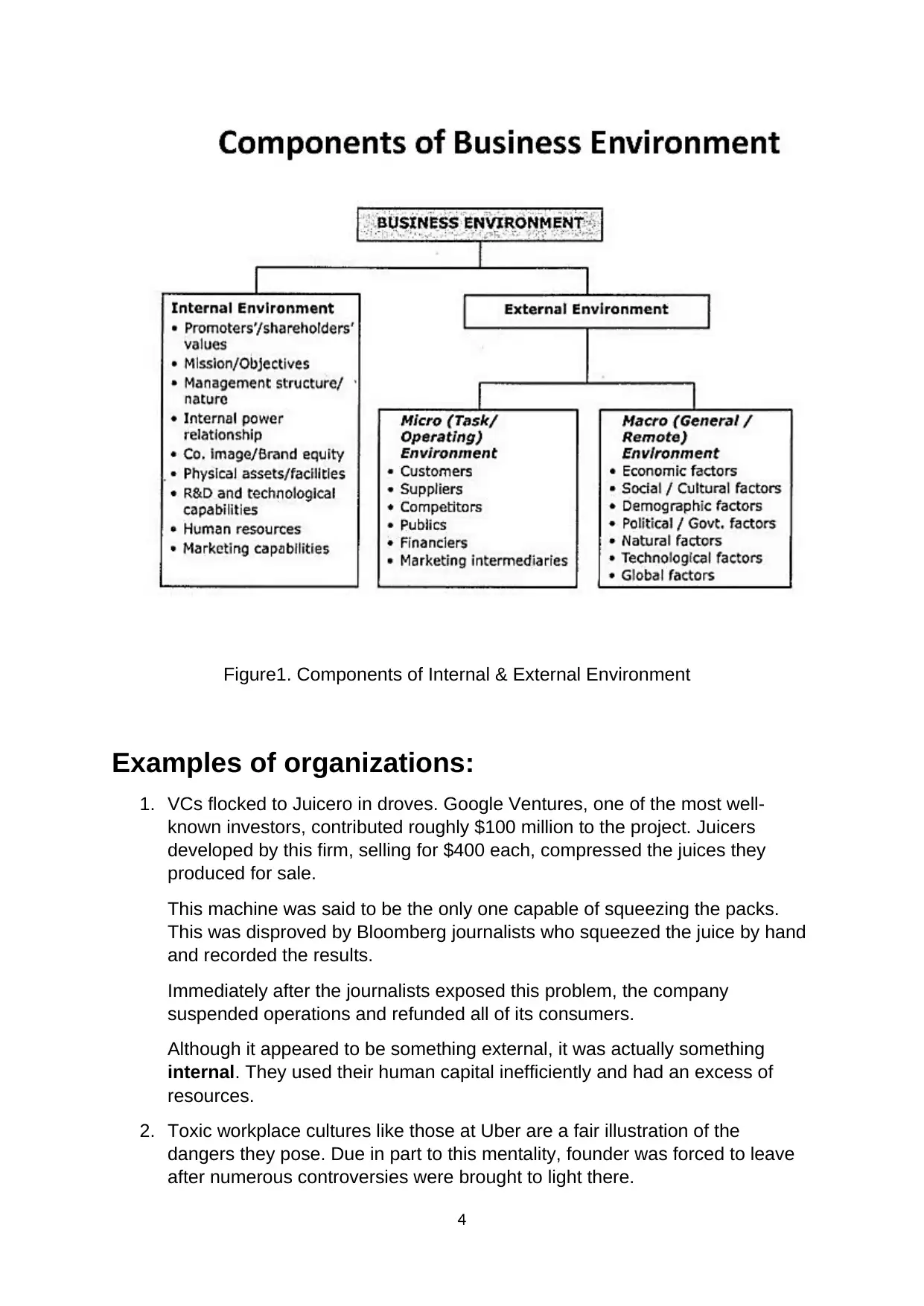
Figure1. Components of Internal & External Environment
Examples of organizations:
1. VCs flocked to Juicero in droves. Google Ventures, one of the most well-
known investors, contributed roughly $100 million to the project. Juicers
developed by this firm, selling for $400 each, compressed the juices they
produced for sale.
This machine was said to be the only one capable of squeezing the packs.
This was disproved by Bloomberg journalists who squeezed the juice by hand
and recorded the results.
Immediately after the journalists exposed this problem, the company
suspended operations and refunded all of its consumers.
Although it appeared to be something external, it was actually something
internal. They used their human capital inefficiently and had an excess of
resources.
2. Toxic workplace cultures like those at Uber are a fair illustration of the
dangers they pose. Due in part to this mentality, founder was forced to leave
after numerous controversies were brought to light there.
4
Examples of organizations:
1. VCs flocked to Juicero in droves. Google Ventures, one of the most well-
known investors, contributed roughly $100 million to the project. Juicers
developed by this firm, selling for $400 each, compressed the juices they
produced for sale.
This machine was said to be the only one capable of squeezing the packs.
This was disproved by Bloomberg journalists who squeezed the juice by hand
and recorded the results.
Immediately after the journalists exposed this problem, the company
suspended operations and refunded all of its consumers.
Although it appeared to be something external, it was actually something
internal. They used their human capital inefficiently and had an excess of
resources.
2. Toxic workplace cultures like those at Uber are a fair illustration of the
dangers they pose. Due in part to this mentality, founder was forced to leave
after numerous controversies were brought to light there.
4
Paraphrase This Document
Need a fresh take? Get an instant paraphrase of this document with our AI Paraphraser
Even if the internal factors are in sync, an external environmental issue might
throw organizations off course in a heartbeat.
1. Thousands of businesses, including AlPari UK, went bankrupt or lost
hundreds of millions of dollars when the Swiss Franc was devalued against
the Euro in 2015.
2. In addition to demographics and psychographics, external factors have an
impact on customers. In the past few years, the Me-Too movement has
become a worldwide sensation.
Organizations that ignore these developments in client perceptions risk a
public relations disaster on their hands.
5
throw organizations off course in a heartbeat.
1. Thousands of businesses, including AlPari UK, went bankrupt or lost
hundreds of millions of dollars when the Swiss Franc was devalued against
the Euro in 2015.
2. In addition to demographics and psychographics, external factors have an
impact on customers. In the past few years, the Me-Too movement has
become a worldwide sensation.
Organizations that ignore these developments in client perceptions risk a
public relations disaster on their hands.
5
IV. Interactions in the market by the
government: A Domestic Analysis
Framework
Governments try to fix problems with markets by stepping in. The government could
also try to improve the way resources are shared (greater equality).
It's a primary external driver for environmental protection and can take the shape of
tax benefits, subsidies, and R&D financing for environmental activities (Caillaud
1988; Chen et al. 2011; Poynter 1982)
In a certain way, the government can get involved in a market economy until it's no
longer a market economy. There are still parts of capitalism as long as private
people can own property and make money from using it.
There are three kinds of economies:
There are three main types of economic systems: free market, mixed, and
command. Who owns and controls property and the factors of production is what
makes the difference.
In a free-market economy, private people or groups decide what happens. In a
command economy, the government is in charge of the economy. There are parts of
both in mixed economies. Most of the world's economies are mixed, but some are
strong.
North Korea, which is run by communists, is a good example of a command
economy. The North Korean government owns and makes decisions about all
property, production, and how resources are used. The old Soviet Union was also
run by a central government. We don't call these market economies.
Coercive taxation and a monopolistic government are inconceivable in a really free
market economy. There aren't many historical instances of a free-market economy
without a central government. Hong Kong in the 1950s and the United States in the
19th century are the closest known analogues in contemporary history (excluding the
Civil War period).
According to historical norms, it is clear that even the most free-market economies
have some degree of government intervention. Minarchists, or proponents of a real
market economy, contend that there should only be three branches of government:
the judiciary, the police, and the armed forces.
6
government: A Domestic Analysis
Framework
Governments try to fix problems with markets by stepping in. The government could
also try to improve the way resources are shared (greater equality).
It's a primary external driver for environmental protection and can take the shape of
tax benefits, subsidies, and R&D financing for environmental activities (Caillaud
1988; Chen et al. 2011; Poynter 1982)
In a certain way, the government can get involved in a market economy until it's no
longer a market economy. There are still parts of capitalism as long as private
people can own property and make money from using it.
There are three kinds of economies:
There are three main types of economic systems: free market, mixed, and
command. Who owns and controls property and the factors of production is what
makes the difference.
In a free-market economy, private people or groups decide what happens. In a
command economy, the government is in charge of the economy. There are parts of
both in mixed economies. Most of the world's economies are mixed, but some are
strong.
North Korea, which is run by communists, is a good example of a command
economy. The North Korean government owns and makes decisions about all
property, production, and how resources are used. The old Soviet Union was also
run by a central government. We don't call these market economies.
Coercive taxation and a monopolistic government are inconceivable in a really free
market economy. There aren't many historical instances of a free-market economy
without a central government. Hong Kong in the 1950s and the United States in the
19th century are the closest known analogues in contemporary history (excluding the
Civil War period).
According to historical norms, it is clear that even the most free-market economies
have some degree of government intervention. Minarchists, or proponents of a real
market economy, contend that there should only be three branches of government:
the judiciary, the police, and the armed forces.
6
⊘ This is a preview!⊘
Do you want full access?
Subscribe today to unlock all pages.
Trusted by 1+ million students worldwide
Few Reasons for Government intervention
Unbridled dominance:
Having monopoly power in a free market means that companies can charge high
prices for consumers and lower wages for workers. A deadweight loss of welfare
benefits and a rise in inequality are two side effects of this. Increased economic well-
being can be achieved by limiting mergers and monopolistic power through
government action.
Strategic infrastructure planning:
Underinvestment in quasi-public commodities like roads and railways is another free
market restriction. As a result, traffic jams may occur. For the future, governments
can prepare for transportation trends and invest in the roads and railroads that will
be necessary.
Equality:
In a free market, there are likely to be a lot of poor people and big differences in
wealth. This is not because of a meritocracy, but unfair advantages of circumstances
could be to blame (inherited wealth, superior education). Governments can step in to
give people a basic safety net, such as unemployment benefits and a minimum
income for sick and disabled people. This makes the economy as a whole better and
helps people get out of the worst kinds of poverty. Extreme inequality can also lead
to social unrest, but this government action can stop that.
Goods for the public:
In a free market, firms don't usually make things that people can use for free
because there isn't a financial reason for them to do so. Governments can take care
of national defence, law and order, and the costs can be paid for by taxing everyone.
Taking care of the environment is also a public good. There are more and more
places where a government is needed to deal with problems like forest fires, rising
sea levels, and increased demand for water.
There has been a concerted effort by both consumers and businesses in the UK to
assist alleviate the effects of the financial crisis on the economy and to safeguard
future economic growth. Large-scale capital infrastructure projects (such as Crossrail
and broadband cables) and investments in research and education are examples of
government intervention. Longer-term challenges like energy and climate change
have prompted government action, such as giving subsidies for the generation of
renewable energy.
7
Unbridled dominance:
Having monopoly power in a free market means that companies can charge high
prices for consumers and lower wages for workers. A deadweight loss of welfare
benefits and a rise in inequality are two side effects of this. Increased economic well-
being can be achieved by limiting mergers and monopolistic power through
government action.
Strategic infrastructure planning:
Underinvestment in quasi-public commodities like roads and railways is another free
market restriction. As a result, traffic jams may occur. For the future, governments
can prepare for transportation trends and invest in the roads and railroads that will
be necessary.
Equality:
In a free market, there are likely to be a lot of poor people and big differences in
wealth. This is not because of a meritocracy, but unfair advantages of circumstances
could be to blame (inherited wealth, superior education). Governments can step in to
give people a basic safety net, such as unemployment benefits and a minimum
income for sick and disabled people. This makes the economy as a whole better and
helps people get out of the worst kinds of poverty. Extreme inequality can also lead
to social unrest, but this government action can stop that.
Goods for the public:
In a free market, firms don't usually make things that people can use for free
because there isn't a financial reason for them to do so. Governments can take care
of national defence, law and order, and the costs can be paid for by taxing everyone.
Taking care of the environment is also a public good. There are more and more
places where a government is needed to deal with problems like forest fires, rising
sea levels, and increased demand for water.
There has been a concerted effort by both consumers and businesses in the UK to
assist alleviate the effects of the financial crisis on the economy and to safeguard
future economic growth. Large-scale capital infrastructure projects (such as Crossrail
and broadband cables) and investments in research and education are examples of
government intervention. Longer-term challenges like energy and climate change
have prompted government action, such as giving subsidies for the generation of
renewable energy.
7
Paraphrase This Document
Need a fresh take? Get an instant paraphrase of this document with our AI Paraphraser
Conclusion
As an open system, the organisation is capable of self-adaptation, with structural and
operational changes resulting from alterations in its external environment. Even if the
external environment plays a significant influence in the organization's structure,
managers must also pay attention to the internal environment, which is growing
increasingly crucial.
Taking into account both external and internal aspects, there are often conflicting
requirements where the exterior considerations collide with those of the interior ones.
Because of this, it's critical to strike a reasonable balance when developing such
facilities between a comfortable working atmosphere and regulatory compliance.
When the structure is broken down into "process areas," "support areas," and
"people areas," it becomes possible to meet these seemingly conflicting needs
through the use of various forms of energy and construction systems.
Many governments have tightened environmental restrictions and standards in the
wake of climate-change-related catastrophic disasters, emphasising the growing
importance of sustainability. Stricter environmental rules and standards are now
another trade barrier in a global marketplace where previous trade barriers are
crumbling due to decades of globalisation and free trade tendencies. It's becoming
more and more important for the government to aid exporting companies in their
battle against environmental trade obstacles, as they often lack the resources to do
so.
8
As an open system, the organisation is capable of self-adaptation, with structural and
operational changes resulting from alterations in its external environment. Even if the
external environment plays a significant influence in the organization's structure,
managers must also pay attention to the internal environment, which is growing
increasingly crucial.
Taking into account both external and internal aspects, there are often conflicting
requirements where the exterior considerations collide with those of the interior ones.
Because of this, it's critical to strike a reasonable balance when developing such
facilities between a comfortable working atmosphere and regulatory compliance.
When the structure is broken down into "process areas," "support areas," and
"people areas," it becomes possible to meet these seemingly conflicting needs
through the use of various forms of energy and construction systems.
Many governments have tightened environmental restrictions and standards in the
wake of climate-change-related catastrophic disasters, emphasising the growing
importance of sustainability. Stricter environmental rules and standards are now
another trade barrier in a global marketplace where previous trade barriers are
crumbling due to decades of globalisation and free trade tendencies. It's becoming
more and more important for the government to aid exporting companies in their
battle against environmental trade obstacles, as they often lack the resources to do
so.
8
References:
Porter, Michael (1985). Competitive advantage creating and sustaining superior
performance, New York: Simon & Schuster Adult Publishing Group.
(PDF) The Organization's Internal Environment and Its Importance in the
Organization's Development. [online] researchgate.net. Available at:
https://www.researchgate.net/publication/318732316_The_Organization's_Internal_
Environment_and_Its_Importance_in_the_Organization's_Development
Shaikh, S (2010) Business Environment for Universities and Autonomous colleges of
Odisha Pearson Edneation inc.
Indeed, I. (2021). 9 External Environment Factors That Affect Business |
Indeed.com. [online] indeed.com. Available at: https://www.indeed.com/career-
advice/career-development/external-environment-factors.
Sardak S.E., Movchanenko I.V. (2018). BUSINESS ENVIRONMENT OF
ENTERPRISE, 1st International Scientific and Practical Conference, Batumi,
Georgia, Volume II, December 13-14, 2018
(99+) The Effect of the Government Intervention in Economy on Corruption | Yunus
Joshi - Academia.edu. [online]. Available at:
https://www.academia.edu/25594269/The_Effect_of_the_Government_Intervention_i
n_Economy_on_Corruption..
Adeoye Abayomi Olaewaju, (2012). Strategic Decision Making: A Review of
Literature, International Business Management 6(4): 552-557, 2012.
Government in markets. [online] assets.publishing.service.gov.uk. Available at:
https://assets.publishing.service.gov.uk/government/uploads/system/uploads/
attachment_data/file/284451/OFT1113.pdf
Caillaud, B. 1988. “Government Intervention in Production and Incentives Theory:
A Review of Recent Contributions.
(PDF) Examining the effects of government intervention on the firm’s environmental
and technological innovation capabilities and export performance. [online]
researchgate.net. Available at:
https://www.researchgate.net/publication/323072975_Examining_the_effects_of_gov
ernment_intervention_on_the_firm's_environmental_and_technological_innovation_c
apabilities_and_export_performance
9
Porter, Michael (1985). Competitive advantage creating and sustaining superior
performance, New York: Simon & Schuster Adult Publishing Group.
(PDF) The Organization's Internal Environment and Its Importance in the
Organization's Development. [online] researchgate.net. Available at:
https://www.researchgate.net/publication/318732316_The_Organization's_Internal_
Environment_and_Its_Importance_in_the_Organization's_Development
Shaikh, S (2010) Business Environment for Universities and Autonomous colleges of
Odisha Pearson Edneation inc.
Indeed, I. (2021). 9 External Environment Factors That Affect Business |
Indeed.com. [online] indeed.com. Available at: https://www.indeed.com/career-
advice/career-development/external-environment-factors.
Sardak S.E., Movchanenko I.V. (2018). BUSINESS ENVIRONMENT OF
ENTERPRISE, 1st International Scientific and Practical Conference, Batumi,
Georgia, Volume II, December 13-14, 2018
(99+) The Effect of the Government Intervention in Economy on Corruption | Yunus
Joshi - Academia.edu. [online]. Available at:
https://www.academia.edu/25594269/The_Effect_of_the_Government_Intervention_i
n_Economy_on_Corruption..
Adeoye Abayomi Olaewaju, (2012). Strategic Decision Making: A Review of
Literature, International Business Management 6(4): 552-557, 2012.
Government in markets. [online] assets.publishing.service.gov.uk. Available at:
https://assets.publishing.service.gov.uk/government/uploads/system/uploads/
attachment_data/file/284451/OFT1113.pdf
Caillaud, B. 1988. “Government Intervention in Production and Incentives Theory:
A Review of Recent Contributions.
(PDF) Examining the effects of government intervention on the firm’s environmental
and technological innovation capabilities and export performance. [online]
researchgate.net. Available at:
https://www.researchgate.net/publication/323072975_Examining_the_effects_of_gov
ernment_intervention_on_the_firm's_environmental_and_technological_innovation_c
apabilities_and_export_performance
9
⊘ This is a preview!⊘
Do you want full access?
Subscribe today to unlock all pages.
Trusted by 1+ million students worldwide

1 out of 9


Related Documents


Your All-in-One AI-Powered Toolkit for Academic Success.
+13062052269
info@desklib.com
Available 24*7 on WhatsApp / Email
![[object Object]](/_next/static/media/star-bottom.7253800d.svg)
Unlock your academic potential
Copyright © 2020–2026 A2Z Services. All Rights Reserved. Developed and managed by ZUCOL.