Case Study Analysis: International Business Transactions and the Law
VerifiedAdded on 2023/01/05
|9
|2941
|86
Case Study
AI Summary
This assignment presents two case studies focusing on international business transactions and their legal implications. The first case examines a dispute over the import of wooden statues, analyzing issues of offer and acceptance, counteroffers, import duties, and liability for damaged goods under contract law principles. The second case study explores a breach of contract involving the import of genetically modified bread fruit plants, examining the application of contract law, Australian Consumer Law (specifically Section 18 regarding deceptive conduct), and the enforcement of an arbitration clause. The analysis delves into the legal principles governing international trade, contracts, and consumer protection, providing insights into the resolution of disputes and the allocation of responsibilities in cross-border transactions.

International Business
Transactions and the
Law
Transactions and the
Law

Paraphrase This Document
Need a fresh take? Get an instant paraphrase of this document with our AI Paraphraser
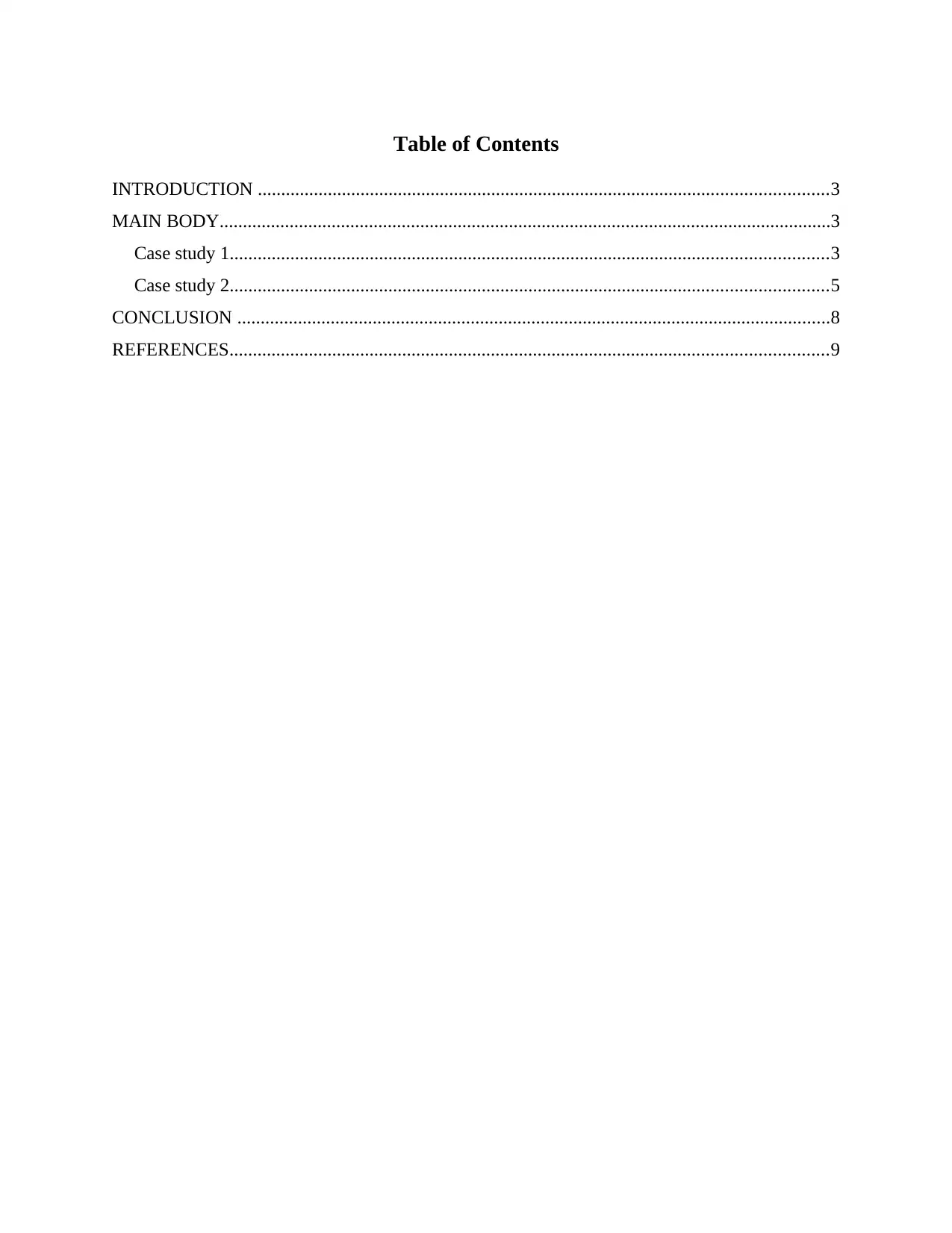
Table of Contents
INTRODUCTION ..........................................................................................................................3
MAIN BODY...................................................................................................................................3
Case study 1................................................................................................................................3
Case study 2................................................................................................................................5
CONCLUSION ...............................................................................................................................8
REFERENCES................................................................................................................................9
INTRODUCTION ..........................................................................................................................3
MAIN BODY...................................................................................................................................3
Case study 1................................................................................................................................3
Case study 2................................................................................................................................5
CONCLUSION ...............................................................................................................................8
REFERENCES................................................................................................................................9

INTRODUCTION
An international business transaction refers to a deal between two parties who are at least
from two different countries. These transactions can include subject matters like licence, lease,
sales and investment. The parties involved in international business transaction may include
large or small multinational corporations, individuals or even the countries. The import and
exports in Australia are governed by the free trade agreements between the multiple countries
which removes barriers like trade and investment (Sánchez-Lasaballett, 2017). In Australia, no
import licence is required to import any material thing. The following essay is regarding two
case studies to which first relates to the import of wooden statues where transaction took place
between two individuals from different countries. Second case study relates to the import of
bread fruit plant through a contract of sale.
MAIN BODY
Case study 1
Facts of the case- James owns and operate a business in Sydney of furniture where he
now decides to 'go upmarket' by introducing antiques and collectables for sale. He has recently
started import of statues from overseas. James and Owenton have been exchanging emails to
purchase elephant statues. Owenton offered James to sell 100 elephants statues of $1000 each,
Free on Board (FOB) where buyer is responsible. As per the advice taken by Susan, James
responded to mail by replying to sell the statues at $1000 at Delivered Duty Paid (DDP) terms
and not FOB. Further he also agreed to pay 40% of amount before the shipment and remaining
60% after receiving the consignment. Owenton didn't responded and after three weeks the
consignment was arrived at Sydney's Port Botany shipping terminal and James was called to
clear the import duty of $1500 and the statues will not be available for another week as they have
to be assessed for insect. The ACBPS officer also advised James that several statues are damaged
during the voyage.
Issues- The case study has following issues- first is whether the offer and acceptance is in
the nature of contract ? Second is whether the counter offer by James has relevance as to give
rise to a business transaction ? Third is whether silence of Owenton amounts to acceptance and
whether James will be liable to pay import duty ? Fourth is whether James is liable for the losses
occurred due to damage of statues during the voyage ?
An international business transaction refers to a deal between two parties who are at least
from two different countries. These transactions can include subject matters like licence, lease,
sales and investment. The parties involved in international business transaction may include
large or small multinational corporations, individuals or even the countries. The import and
exports in Australia are governed by the free trade agreements between the multiple countries
which removes barriers like trade and investment (Sánchez-Lasaballett, 2017). In Australia, no
import licence is required to import any material thing. The following essay is regarding two
case studies to which first relates to the import of wooden statues where transaction took place
between two individuals from different countries. Second case study relates to the import of
bread fruit plant through a contract of sale.
MAIN BODY
Case study 1
Facts of the case- James owns and operate a business in Sydney of furniture where he
now decides to 'go upmarket' by introducing antiques and collectables for sale. He has recently
started import of statues from overseas. James and Owenton have been exchanging emails to
purchase elephant statues. Owenton offered James to sell 100 elephants statues of $1000 each,
Free on Board (FOB) where buyer is responsible. As per the advice taken by Susan, James
responded to mail by replying to sell the statues at $1000 at Delivered Duty Paid (DDP) terms
and not FOB. Further he also agreed to pay 40% of amount before the shipment and remaining
60% after receiving the consignment. Owenton didn't responded and after three weeks the
consignment was arrived at Sydney's Port Botany shipping terminal and James was called to
clear the import duty of $1500 and the statues will not be available for another week as they have
to be assessed for insect. The ACBPS officer also advised James that several statues are damaged
during the voyage.
Issues- The case study has following issues- first is whether the offer and acceptance is in
the nature of contract ? Second is whether the counter offer by James has relevance as to give
rise to a business transaction ? Third is whether silence of Owenton amounts to acceptance and
whether James will be liable to pay import duty ? Fourth is whether James is liable for the losses
occurred due to damage of statues during the voyage ?
⊘ This is a preview!⊘
Do you want full access?
Subscribe today to unlock all pages.

Trusted by 1+ million students worldwide

Rules- In the given case scenario, the rules which shall apply are the law of contract
which shall be regulated by the terms of offer and acceptance in trade.
Analysis- For first issue, the application of rule is that for forming a legally binding
contract, there are four essentials which include an offer by one party and the other party must
accept the offer in order to constitute an agreement (Desta, 2019). Next is the consideration
which must be paid between both the parties and a mutual intention must be there in order to
create a legally enforceable contract.
In the given case study, the parties did not enter into a contract. The offer were made
through emails which is a valid medium to communicate an offer. Owenton offered James to sell
his 100 elephant statues at $1000 each on FOB terms. But James responded and made a counter
offer to sell the statues to him at $1000 dollars each but at DDP terms. Counter offer does not
amount to acceptance so there was no contract. In case of Crown v. Clarke, the court held that in
order make the acceptance valid, it must be communicated in response to an offer only. The
court also held that performance of act which is specified in offer as constituting an acceptance
may be presumed to be performed in responding to the offer but this presumption may be
rebutted.
For second issue, for making a valid contract- offer, acceptance, consideration and
mutual consent are essential requirements. Counter offer in place of acceptance does not make
the offer accepted rather it is a new offer. In the given case study, in stead of accepting the offer,
James counter offered Owenton to sell its 100 elephant statues at $1000 each at DDP terms. This
is a counter offer and not acceptance. In case of Hyde v. Wrench, the Court held that counter
offer is a rejection of original offer and is a new offer. Once an offer is rejected, it cannot be
revived by any subsequent acceptance (Goh, Lee and Tham, 2018).
For third issue, when there is no contract between James and Owenton, James shall not
be liable to pay the import duty on the consignment which has been arrived at the Sydney Port.
Firstly, the offer by Owenton was not accepted by James which stated to pay the import duty as
the transaction was on FOB terms. Rather James made a counter offer and did not accepted the
original offer so there is no acceptance. The silence of Owenton did not amount to acceptance as
the silence of Owenton to accept the counter offer of James will not amount to acceptance as the
counter offer did not gave the impression that silence will act as acceptance. In case of National
Union Fire Insurance co. v. Ehrlich, the court held that silence does not amount to acceptance, it
which shall be regulated by the terms of offer and acceptance in trade.
Analysis- For first issue, the application of rule is that for forming a legally binding
contract, there are four essentials which include an offer by one party and the other party must
accept the offer in order to constitute an agreement (Desta, 2019). Next is the consideration
which must be paid between both the parties and a mutual intention must be there in order to
create a legally enforceable contract.
In the given case study, the parties did not enter into a contract. The offer were made
through emails which is a valid medium to communicate an offer. Owenton offered James to sell
his 100 elephant statues at $1000 each on FOB terms. But James responded and made a counter
offer to sell the statues to him at $1000 dollars each but at DDP terms. Counter offer does not
amount to acceptance so there was no contract. In case of Crown v. Clarke, the court held that in
order make the acceptance valid, it must be communicated in response to an offer only. The
court also held that performance of act which is specified in offer as constituting an acceptance
may be presumed to be performed in responding to the offer but this presumption may be
rebutted.
For second issue, for making a valid contract- offer, acceptance, consideration and
mutual consent are essential requirements. Counter offer in place of acceptance does not make
the offer accepted rather it is a new offer. In the given case study, in stead of accepting the offer,
James counter offered Owenton to sell its 100 elephant statues at $1000 each at DDP terms. This
is a counter offer and not acceptance. In case of Hyde v. Wrench, the Court held that counter
offer is a rejection of original offer and is a new offer. Once an offer is rejected, it cannot be
revived by any subsequent acceptance (Goh, Lee and Tham, 2018).
For third issue, when there is no contract between James and Owenton, James shall not
be liable to pay the import duty on the consignment which has been arrived at the Sydney Port.
Firstly, the offer by Owenton was not accepted by James which stated to pay the import duty as
the transaction was on FOB terms. Rather James made a counter offer and did not accepted the
original offer so there is no acceptance. The silence of Owenton did not amount to acceptance as
the silence of Owenton to accept the counter offer of James will not amount to acceptance as the
counter offer did not gave the impression that silence will act as acceptance. In case of National
Union Fire Insurance co. v. Ehrlich, the court held that silence does not amount to acceptance, it
Paraphrase This Document
Need a fresh take? Get an instant paraphrase of this document with our AI Paraphraser

will constitute acceptance when offeror receives the impression from offeree that silence will
constitute an acceptance. In this case study, when there was no contract from both the sides,
James must not pay the import duty rather it is an act of Owenton to which he shall be liable to
bear the losses.
For fourth issue, as there was no valid contract which shall have a legal binding effect, so
the loss caused to the consignment which was damaged during voyage shall not be borne by
James. From his side, no acceptance was communicated rather he counter offered to bring the
transaction on DDP terms which makes seller liable to pay the import duty. Owenton also did not
accepted the counter offer rather he remained silent on this. Silence did not gave the impression
of acceptance so James shall not be liable to bear the losses (Goldberger, 2016). Due to
Owenton's fault on not making adequate packaging of the consignment, the losses shall be borne
by Owenton due to his negligent act and the damage was caused. Owenton's negligent act of not
packing the consignment with due diligence amounted to loss which shall not be borne by James.
Conclusion- From the above case study, it is concluded that James shall not be held
liable for any claims rather he can claim the damages from Owenton regarding the import duty
for which James has been asked to pay by the Australian Customs and Border Protection Service
(ACBPS) officer. Furthermore, the damages caused to the consignment shall be borne by
Owenton due to his negligent act of not packing the statues adequately. Owenton cannot make
any claim to James as he has not communicated his acceptance to James which resulted in not
forming a valid contract. So where no contract is formed, no party is held liable to bear the loss
(Pereira, 2019). Owenton was negligent in communicating his acceptance first and secondly he
did not packed the statues well so the loss to statues shall be borne by Owenton.
Case study 2
Facts of the case- Bligh Imports PLC, an English importer who imports goods from
around the world. A contract was signed between Fletchers exports (Aust) Pty Ltd and Bligh for
purchasing 50,000 bread fruit plants. This contract took place because Fletchers were known for
growing organic plants with no artificial growth chemicals. When the order was received, it was
found that they were genetically modified and became virtually unsellable in England in Bligh's
opinion. Fletcher refused his wrongdoing due to which Bligh issued court proceedings in Federal
Court of Australia under breach of S. 18 of Australian Consumer law and also breach of contract.
Damages were seeked by Bligh equal to cost of bread fruit plant. There was a clause in contract
constitute an acceptance. In this case study, when there was no contract from both the sides,
James must not pay the import duty rather it is an act of Owenton to which he shall be liable to
bear the losses.
For fourth issue, as there was no valid contract which shall have a legal binding effect, so
the loss caused to the consignment which was damaged during voyage shall not be borne by
James. From his side, no acceptance was communicated rather he counter offered to bring the
transaction on DDP terms which makes seller liable to pay the import duty. Owenton also did not
accepted the counter offer rather he remained silent on this. Silence did not gave the impression
of acceptance so James shall not be liable to bear the losses (Goldberger, 2016). Due to
Owenton's fault on not making adequate packaging of the consignment, the losses shall be borne
by Owenton due to his negligent act and the damage was caused. Owenton's negligent act of not
packing the consignment with due diligence amounted to loss which shall not be borne by James.
Conclusion- From the above case study, it is concluded that James shall not be held
liable for any claims rather he can claim the damages from Owenton regarding the import duty
for which James has been asked to pay by the Australian Customs and Border Protection Service
(ACBPS) officer. Furthermore, the damages caused to the consignment shall be borne by
Owenton due to his negligent act of not packing the statues adequately. Owenton cannot make
any claim to James as he has not communicated his acceptance to James which resulted in not
forming a valid contract. So where no contract is formed, no party is held liable to bear the loss
(Pereira, 2019). Owenton was negligent in communicating his acceptance first and secondly he
did not packed the statues well so the loss to statues shall be borne by Owenton.
Case study 2
Facts of the case- Bligh Imports PLC, an English importer who imports goods from
around the world. A contract was signed between Fletchers exports (Aust) Pty Ltd and Bligh for
purchasing 50,000 bread fruit plants. This contract took place because Fletchers were known for
growing organic plants with no artificial growth chemicals. When the order was received, it was
found that they were genetically modified and became virtually unsellable in England in Bligh's
opinion. Fletcher refused his wrongdoing due to which Bligh issued court proceedings in Federal
Court of Australia under breach of S. 18 of Australian Consumer law and also breach of contract.
Damages were seeked by Bligh equal to cost of bread fruit plant. There was a clause in contract

that in case of any dispute, the matter shall be referred to arbitration with 3 arbitrators qualified
in the field of agriculture.
Issues- First issue is whether there was a breach of contract by Fletcher in selling the
genetically modified plant and whether Bligh can claim damages from Fletchers ? Second is
whether there was breach of S. 18 of Australian Consumer law. And third is whether Bligh can
initiate court proceedings against Fletcher despite of arbitration clause in the contract ?
Rules- The following case study shall be regulated by the law of contract and the
consumer law of Australia. Further, reference of arbitration law shall be given in order to get fair
hearing.
Analysis- For first issue, To create a valid contract for making it legally binding, the
following essentials must be fulfilled which includes offer, acceptance, consideration and mutual
intention (Downes and Walker, 2019). Further a written contract which is signed by the parties
have more authenticity than the oral one.
In the given case scenario, both the parties, Bligh Importers and Fletchers Exports have
signed the contract for the purchase of 50,000 organically grown bread fruit plant. As fletchers
Export delivered the genetically modified plant, this amounts of breach of contract. Further due
to revulsion in England for the food which are genetically modified, it shall be unsellable which
shall result in loss to Bligh. In case of Investments Pty Ltd v. Promptair Pty Ltd, the court that if
there is breach of contract, the claimant can claim the damages and if the breach is established,
the defaulter is bound to provide adequate remedy to the claimant.
For issue two, section 18 of the Australian Consumer Law prohibits the person from
engaging in trade or commerce which involves deceptive or misleading conduct (Moorhouse,
2017). Under the given case study, Fletchers have deceived Bligh in selling the genetically
modified plant in place of organically grown bread fruit plant. This conduct was deceptive in
nature and resulted in loss to Bligh. In case of Astrazeneca Pty Ltd v. GlaxoSmithKline
Asustralia Pty Ltd, the court held that evidence of actual deception and any steps taken thereof in
consequence of that is important to deal in question of deceptive conduct. In this case study,
Bligh was subject to deceptive conduct by Fletchers which resulted in loss to him. For this, Bligh
initiated proceedings against Fletchers which shows he has taken steps in consequence of the
deceptive conduct. So there is breach of S 18 of Australian Consumer Law.
in the field of agriculture.
Issues- First issue is whether there was a breach of contract by Fletcher in selling the
genetically modified plant and whether Bligh can claim damages from Fletchers ? Second is
whether there was breach of S. 18 of Australian Consumer law. And third is whether Bligh can
initiate court proceedings against Fletcher despite of arbitration clause in the contract ?
Rules- The following case study shall be regulated by the law of contract and the
consumer law of Australia. Further, reference of arbitration law shall be given in order to get fair
hearing.
Analysis- For first issue, To create a valid contract for making it legally binding, the
following essentials must be fulfilled which includes offer, acceptance, consideration and mutual
intention (Downes and Walker, 2019). Further a written contract which is signed by the parties
have more authenticity than the oral one.
In the given case scenario, both the parties, Bligh Importers and Fletchers Exports have
signed the contract for the purchase of 50,000 organically grown bread fruit plant. As fletchers
Export delivered the genetically modified plant, this amounts of breach of contract. Further due
to revulsion in England for the food which are genetically modified, it shall be unsellable which
shall result in loss to Bligh. In case of Investments Pty Ltd v. Promptair Pty Ltd, the court that if
there is breach of contract, the claimant can claim the damages and if the breach is established,
the defaulter is bound to provide adequate remedy to the claimant.
For issue two, section 18 of the Australian Consumer Law prohibits the person from
engaging in trade or commerce which involves deceptive or misleading conduct (Moorhouse,
2017). Under the given case study, Fletchers have deceived Bligh in selling the genetically
modified plant in place of organically grown bread fruit plant. This conduct was deceptive in
nature and resulted in loss to Bligh. In case of Astrazeneca Pty Ltd v. GlaxoSmithKline
Asustralia Pty Ltd, the court held that evidence of actual deception and any steps taken thereof in
consequence of that is important to deal in question of deceptive conduct. In this case study,
Bligh was subject to deceptive conduct by Fletchers which resulted in loss to him. For this, Bligh
initiated proceedings against Fletchers which shows he has taken steps in consequence of the
deceptive conduct. So there is breach of S 18 of Australian Consumer Law.
⊘ This is a preview!⊘
Do you want full access?
Subscribe today to unlock all pages.
Trusted by 1+ million students worldwide

For issue three, if the contract of sale clearly states the arbitration clause for referring the
dispute, the parties are bound to refer the dispute to the arbitration only. In this case study, the
contract between the parties clearly states the arbitration clause for which the place of arbitration
is Sydney, Australia and the number of arbitrators are three who shall be qualified in the field of
agriculture. Bligh has breached the term of contract by initiating the proceedings in the Federal
Court of Australia. According to section 8(1) of the Commercial Arbitration act, 2010, the court
where action is brought for any matter which is subject to the arbitration agreement, must refer
the case to arbitration (Pearson, 2018). Here also the Federal court of Australia is bound to refer
this case to arbitration. In case of Rinehart v. Hancock Prospecting Pty Ltd, the court held that
while interpreting the arbitration clause, principle of contractual interpretation shall be applied to
create a deterrent effect of parties and highlights the importance of drafting and following the
clear arbitration clause.
Conclusion- From the following case scenario, it shall be held that Fletchers is liable for
the breach of contract by selling the genetically modified bread fruit plant to Bligh despite of
contract being made to sell the organically grown bread fruit plant. This has caused loss to Bligh
due to genetically modified plants being made virtually unsellable in England. So Fletchers is
liable to compensate Bligh either by way of damages or by the specific performance of contract.
In addition to this, S 18 of Australian Consumer law is also breached by Fletchers by performing
the contract by deceptive conduct. He deceived Bligh by selling genetically modified bread fruit
plant.
At last, it is also held that Bligh is liable for breaching the terms of contract by referring
the case to Federal Court of Australia. There was a specific clause of referring the matter to
arbitration in case of any dispute, to which Bligh breached it. So Bligh shall also be liable for the
breach of contract. Under section 8 (1) of Commercial Arbitration Act. The court is bound to
refer the matter which has arbitration agreement to the arbitration if it is brought before it (Royle,
2019). So both the parties have breached the terms of contract and shall be held liable.
dispute, the parties are bound to refer the dispute to the arbitration only. In this case study, the
contract between the parties clearly states the arbitration clause for which the place of arbitration
is Sydney, Australia and the number of arbitrators are three who shall be qualified in the field of
agriculture. Bligh has breached the term of contract by initiating the proceedings in the Federal
Court of Australia. According to section 8(1) of the Commercial Arbitration act, 2010, the court
where action is brought for any matter which is subject to the arbitration agreement, must refer
the case to arbitration (Pearson, 2018). Here also the Federal court of Australia is bound to refer
this case to arbitration. In case of Rinehart v. Hancock Prospecting Pty Ltd, the court held that
while interpreting the arbitration clause, principle of contractual interpretation shall be applied to
create a deterrent effect of parties and highlights the importance of drafting and following the
clear arbitration clause.
Conclusion- From the following case scenario, it shall be held that Fletchers is liable for
the breach of contract by selling the genetically modified bread fruit plant to Bligh despite of
contract being made to sell the organically grown bread fruit plant. This has caused loss to Bligh
due to genetically modified plants being made virtually unsellable in England. So Fletchers is
liable to compensate Bligh either by way of damages or by the specific performance of contract.
In addition to this, S 18 of Australian Consumer law is also breached by Fletchers by performing
the contract by deceptive conduct. He deceived Bligh by selling genetically modified bread fruit
plant.
At last, it is also held that Bligh is liable for breaching the terms of contract by referring
the case to Federal Court of Australia. There was a specific clause of referring the matter to
arbitration in case of any dispute, to which Bligh breached it. So Bligh shall also be liable for the
breach of contract. Under section 8 (1) of Commercial Arbitration Act. The court is bound to
refer the matter which has arbitration agreement to the arbitration if it is brought before it (Royle,
2019). So both the parties have breached the terms of contract and shall be held liable.
Paraphrase This Document
Need a fresh take? Get an instant paraphrase of this document with our AI Paraphraser

CONCLUSION
It is concluded from the above essay that both the case studies revolve around the
international business transactions which took place between the two individuals and the two
companies. The transaction was in the form of import and export which gave rise to dispute
between the parties in case of breach of contract. For the effective business transaction and to
claim any damages for the loss suffered, a contract is essential in order to bring the dispute in the
court or arbitration proceedings (Zlatev, 2020). Under case study 1, there was no contract
between the parties due to acceptance not being communicated properly, so it does not give rise
to any claim. On the other side, in case study 2, there was a valid written contract between the
parties which was breached by one of the party which gave rise to contractual obligation and the
dispute is to be referred to arbitration as per the arbitration clause in the contract. So at last it is
summarised that in order to have effective international business transactions a written contract
must be there in order to ensure that loss shall not be suffered by any party.
It is concluded from the above essay that both the case studies revolve around the
international business transactions which took place between the two individuals and the two
companies. The transaction was in the form of import and export which gave rise to dispute
between the parties in case of breach of contract. For the effective business transaction and to
claim any damages for the loss suffered, a contract is essential in order to bring the dispute in the
court or arbitration proceedings (Zlatev, 2020). Under case study 1, there was no contract
between the parties due to acceptance not being communicated properly, so it does not give rise
to any claim. On the other side, in case study 2, there was a valid written contract between the
parties which was breached by one of the party which gave rise to contractual obligation and the
dispute is to be referred to arbitration as per the arbitration clause in the contract. So at last it is
summarised that in order to have effective international business transactions a written contract
must be there in order to ensure that loss shall not be suffered by any party.

REFERENCES
Books and Journals
case study 1
Desta, G.E., 2019. Enforceability of electronic contracts in light of the Ethiopian General
Contract Law: appraising the issues. Information & Communications Technology
Law. 28(1). pp.46-64.
Goh, Y., Lee, P.W. and Tham, C.H., 2018. Contract law. SAL Ann. Rev., p.312.
Goldberger, J., 2016. An overview of developments in key areas of Australian contract
law. Commercial Law Quarterly: The Journal of the Commercial Law Association of
Australia. 30(1). p.17.
Pereira, J.C., 2019, April. The genesis of the revolution in Contract Law: Smart Legal Contracts.
In Proceedings of the 12th International Conference on Theory and Practice of
Electronic Governance (pp. 374-377).
Sánchez-Lasaballett, E., 2017.. Commonalities between the ‘Australian Law of Contract’and the
general law of contract of the ‘Brazilian Civil Code’: a rule-based study towards a
global law of contract (Doctoral dissertation, University of Newcastle).
Case study 2
Downes, K. and Walker, M., 2019. Back to basics: Pleading breach of contract. Proctor,
The. 39(8). p.46.
Moorhouse, P., 2017. Employment: Enforcing post-employment restraints after an employer's
breach of contract. LSJ: Law Society of NSW Journal. (34). p.82.
Pearson, G., 2018. Enforcement and Effectiveness of Consumer Law in Australia.
In Enforcement and Effectiveness of Consumer Law (pp. 75-97). Springer, Cham.
Royle, R., 2019. Recent landmark decisions under the Australian Consumer Law. Precedent
(Sydney, NSW). (153). p.42.
Zlatev, Z., 2020. Quantification of damages for non-pecuniary losses deriving from breach of
contract. Legal Studies, pp.1-17.
Books and Journals
case study 1
Desta, G.E., 2019. Enforceability of electronic contracts in light of the Ethiopian General
Contract Law: appraising the issues. Information & Communications Technology
Law. 28(1). pp.46-64.
Goh, Y., Lee, P.W. and Tham, C.H., 2018. Contract law. SAL Ann. Rev., p.312.
Goldberger, J., 2016. An overview of developments in key areas of Australian contract
law. Commercial Law Quarterly: The Journal of the Commercial Law Association of
Australia. 30(1). p.17.
Pereira, J.C., 2019, April. The genesis of the revolution in Contract Law: Smart Legal Contracts.
In Proceedings of the 12th International Conference on Theory and Practice of
Electronic Governance (pp. 374-377).
Sánchez-Lasaballett, E., 2017.. Commonalities between the ‘Australian Law of Contract’and the
general law of contract of the ‘Brazilian Civil Code’: a rule-based study towards a
global law of contract (Doctoral dissertation, University of Newcastle).
Case study 2
Downes, K. and Walker, M., 2019. Back to basics: Pleading breach of contract. Proctor,
The. 39(8). p.46.
Moorhouse, P., 2017. Employment: Enforcing post-employment restraints after an employer's
breach of contract. LSJ: Law Society of NSW Journal. (34). p.82.
Pearson, G., 2018. Enforcement and Effectiveness of Consumer Law in Australia.
In Enforcement and Effectiveness of Consumer Law (pp. 75-97). Springer, Cham.
Royle, R., 2019. Recent landmark decisions under the Australian Consumer Law. Precedent
(Sydney, NSW). (153). p.42.
Zlatev, Z., 2020. Quantification of damages for non-pecuniary losses deriving from breach of
contract. Legal Studies, pp.1-17.
⊘ This is a preview!⊘
Do you want full access?
Subscribe today to unlock all pages.
Trusted by 1+ million students worldwide

1 out of 9


Related Documents


![Analysis of Contract and Tort Law in Business Context - [Module Name]](/_next/image/?url=https%3A%2F%2Fdesklib.com%2Fmedia%2Fimages%2Fb4a2ce2d00e84688b846acd1edfd5492.jpg&w=256&q=75)

Your All-in-One AI-Powered Toolkit for Academic Success.
+13062052269
info@desklib.com
Available 24*7 on WhatsApp / Email
![[object Object]](/_next/static/media/star-bottom.7253800d.svg)
Unlock your academic potential
Copyright © 2020–2026 A2Z Services. All Rights Reserved. Developed and managed by ZUCOL.