Interpretive Analysis: Hill Like White Elephants by Ernest Hemingway
VerifiedAdded on 2022/11/15
|5
|783
|245
Report
AI Summary
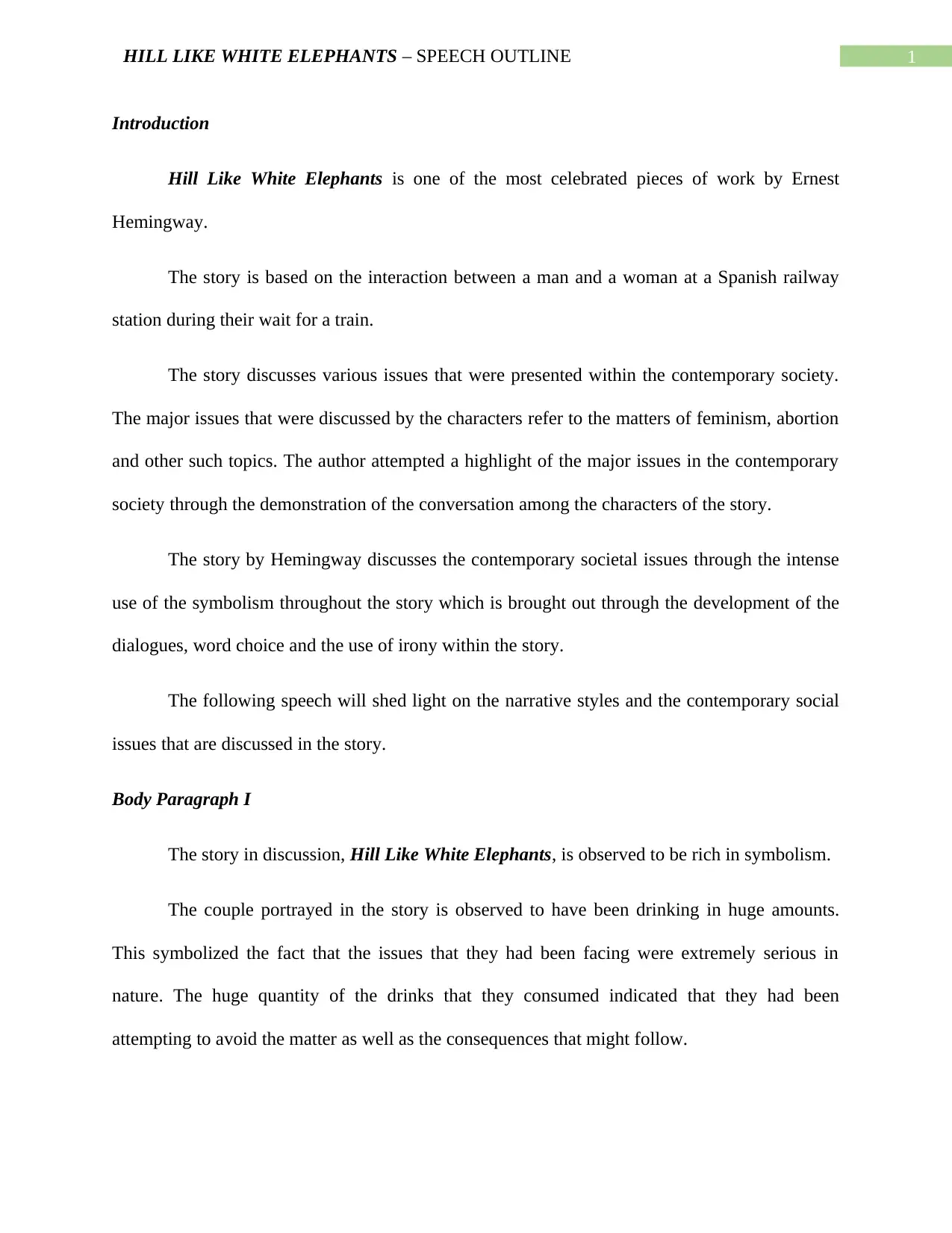
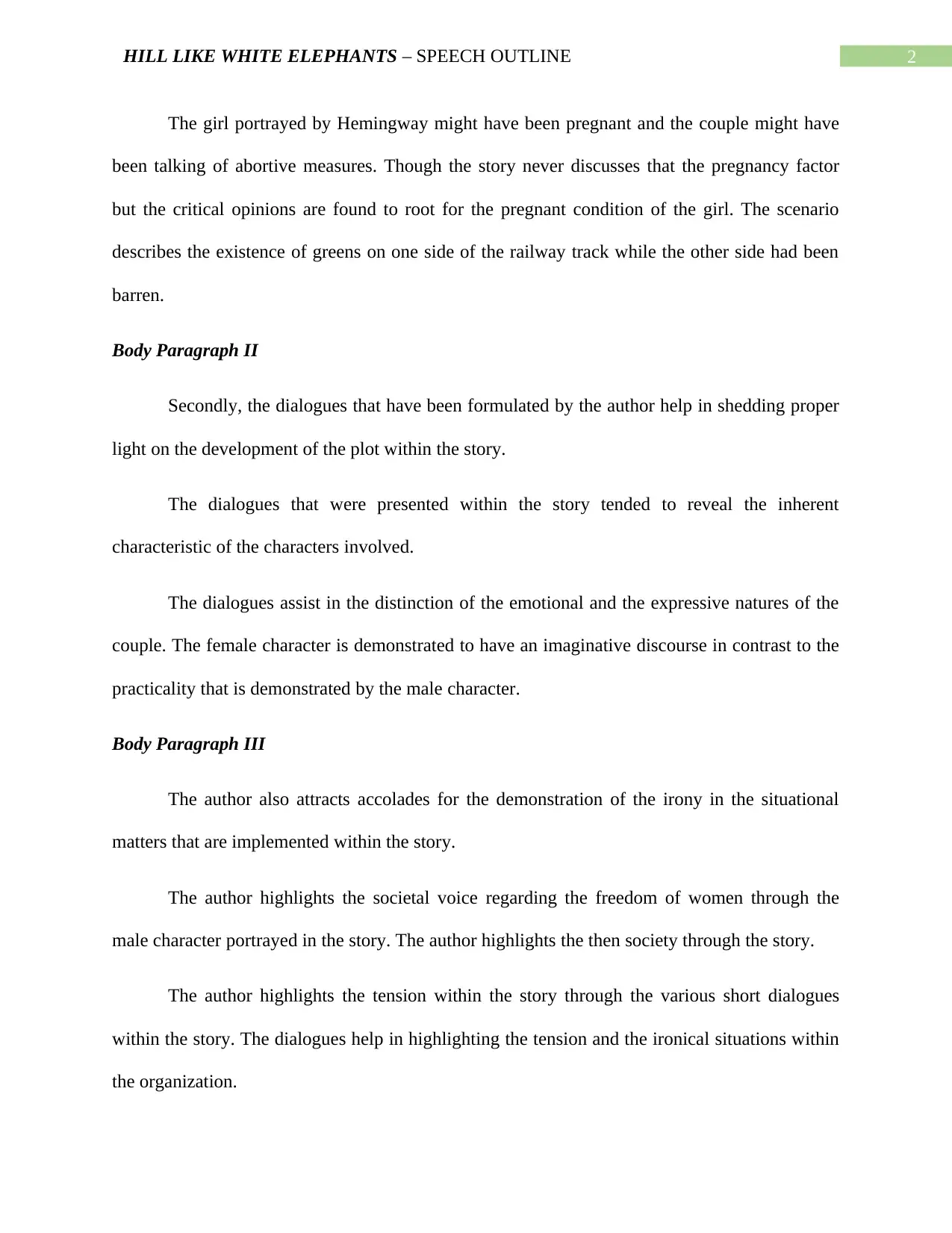
This report provides an interpretive analysis of Ernest Hemingway's short story, 'Hills Like White Elephants.' The analysis examines the narrative styles and contemporary social issues presented within the story, focusing on the interaction between a man and a woman at a Spanish railway station. The report delves into the rich symbolism employed by Hemingway, such as the heavy drinking and the contrasting landscapes, to represent the seriousness of their situation and the choices they face, potentially regarding abortion. The analysis also highlights the significance of the dialogues in revealing the characters' emotional states and contrasting perspectives, as well as the situational irony that underscores the societal views on women's freedom. The report concludes that the effective use of symbolism, dialogue, and irony makes the story a literary masterpiece, which reflects societal reforms and development.



1 out of 5


Related Documents


Your All-in-One AI-Powered Toolkit for Academic Success.
+13062052269
info@desklib.com
Available 24*7 on WhatsApp / Email
![[object Object]](/_next/static/media/star-bottom.7253800d.svg)
Copyright © 2020–2026 A2Z Services. All Rights Reserved. Developed and managed by ZUCOL.