Government Intervention: Production, Income, and Equilibrium
VerifiedAdded on 2020/02/03
|8
|1493
|39
Report
AI Summary
This report delves into the necessity of government intervention in economic policies, focusing on the production and consumption of goods and services and the distribution of income. It explores how government intervention addresses market failures, income inequality, and the provision of public and merit goods. The report analyzes the concept of economic equilibrium, examining aggregate demand and supply curves and their interactions. It discusses how government policies, such as taxation and regulations, influence market dynamics and aims to create a stable economic environment. The report concludes by summarizing the role of government intervention in fostering a competitive market and improving the overall standard of living, with references to relevant economic concepts and models.
Economics
Paraphrase This Document
Need a fresh take? Get an instant paraphrase of this document with our AI Paraphraser

Table of Contents
INTRODUCTION......................................................................................................................3
Explaining the reasons due to which government intervention is required in the production
of goods and services as well as distribution of income........................................................3
Evaluating stable economic equilibrium position..................................................................4
CONCUSION............................................................................................................................6
REFERENCES...........................................................................................................................7
Figure 1: Aggregate demand curve............................................................................................5
Figure 2: Aggregate supply curve in short and long run............................................................5
Figure 3: Equilibrium position in aggregate demand and supply..............................................6
INTRODUCTION......................................................................................................................3
Explaining the reasons due to which government intervention is required in the production
of goods and services as well as distribution of income........................................................3
Evaluating stable economic equilibrium position..................................................................4
CONCUSION............................................................................................................................6
REFERENCES...........................................................................................................................7
Figure 1: Aggregate demand curve............................................................................................5
Figure 2: Aggregate supply curve in short and long run............................................................5
Figure 3: Equilibrium position in aggregate demand and supply..............................................6

INTRODUCTION
Field of economics is highly concerned with the production and consumptions of
goods and services. Demand and supply are the major elements of economics which have
high level of impact on the market situation or condition. Market structure and behavior
closely influences the decision making aspect of customers or consumption level. In this
regard, the present report will analyze the causes due to which it is necessary for government
to intervene in the economy. Further, it will also develop understanding regarding the concept
of equilibrium in a clear and precise way.
Explaining the reasons due to which government intervention is required in the production of
goods and services as well as distribution of income
In the present times, there are mainly three reasons due to which government
intervenes in the economic policies and rules (Analyzing and Evaluating
Government Intervention in Markets, 2015). Improvement of market failure, equal
distribution of income and wealth as well as performance of economy is of the main reasons
due to which government makes interference in the policy framework.
Income inequality: In market, individuals earn income when they sell or offer factors
of production to others on lease. Wages, rents, interest on capital etc. are the main factors of
production which require for the production and distribution of goods or services. Income
level is highly varied in the market because there are several people who are with moderate
and no earnings at all. Hence, due to this aspect, people are unable to buy products or service
(Tietenberg & Lewis, 2016). In 2014, disposable income of UK people increased from 0.315
to 0.318. Hence, there are several people in UK whose income level is less than average
value includes unemployed, disabled, elderly person and individuals with lower
qualifications. All these aspects have high level of impact on the growth and prosperity of
nation or country.
By considering such aspect government interferes in the labor market through the
means of alternation in the disposable income. In this, by introducing tax and benefit system
government impose higher taxation on more income group people and less on others. Hence,
taxation is the tool which helps in reducing the gap that takes place between rich and poor
people (Anderson & et.al., 2016). Thus, government has framed and introduced different tax
rate according to income level. For instance: Basic tax rate is 20% for basic earners, whereas
Field of economics is highly concerned with the production and consumptions of
goods and services. Demand and supply are the major elements of economics which have
high level of impact on the market situation or condition. Market structure and behavior
closely influences the decision making aspect of customers or consumption level. In this
regard, the present report will analyze the causes due to which it is necessary for government
to intervene in the economy. Further, it will also develop understanding regarding the concept
of equilibrium in a clear and precise way.
Explaining the reasons due to which government intervention is required in the production of
goods and services as well as distribution of income
In the present times, there are mainly three reasons due to which government
intervenes in the economic policies and rules (Analyzing and Evaluating
Government Intervention in Markets, 2015). Improvement of market failure, equal
distribution of income and wealth as well as performance of economy is of the main reasons
due to which government makes interference in the policy framework.
Income inequality: In market, individuals earn income when they sell or offer factors
of production to others on lease. Wages, rents, interest on capital etc. are the main factors of
production which require for the production and distribution of goods or services. Income
level is highly varied in the market because there are several people who are with moderate
and no earnings at all. Hence, due to this aspect, people are unable to buy products or service
(Tietenberg & Lewis, 2016). In 2014, disposable income of UK people increased from 0.315
to 0.318. Hence, there are several people in UK whose income level is less than average
value includes unemployed, disabled, elderly person and individuals with lower
qualifications. All these aspects have high level of impact on the growth and prosperity of
nation or country.
By considering such aspect government interferes in the labor market through the
means of alternation in the disposable income. In this, by introducing tax and benefit system
government impose higher taxation on more income group people and less on others. Hence,
taxation is the tool which helps in reducing the gap that takes place between rich and poor
people (Anderson & et.al., 2016). Thus, government has framed and introduced different tax
rate according to income level. For instance: Basic tax rate is 20% for basic earners, whereas
⊘ This is a preview!⊘
Do you want full access?
Subscribe today to unlock all pages.

Trusted by 1+ million students worldwide

high income people are obliged to pay 40%. Further, individuals whose taxable income is
£150000 has liability to pay 45% taxation. Along with this, in the case of aggressive tax high
level of burden is suffered by individual.
Public goods: Production and consumption level is highly influenced when market fails to
offer pure and high quality goods to the customers. In this situation, government can improve
the situation by offering fund to the companies or entrepreneur at low cost.
Merit and demerit goods: Government makes interference in the production and over
consumption of goods which are associated with negative externalities. Hence, by organizing
the information campaign and declaring the minimum age government can reduce the
consumption eve to the large extent. Along with this, government authority also makes effort
to provide information to large number of customers about products with positive
externalities (Sheu, 2016). In this way, by providing information to customers government
can ensure effectual production and consumption of better goods or services.
Competitive market: In order to provide customers with high quality goods and
services government places emphasis on encouraging new players to enter in the market. This
in turn restricts other firms to create monopoly in the market. Moreover, when company
charges high price for the goods and services then low and moderate income group people are
unable to buy (Floetotto, Kirker & Stroebel, 2016). In this way, by developing healthy
competition government can raise the living standard of people by offering more varieties at
affordable prices.
Evaluating stable economic equilibrium position
Static equilibrium position can be defined in a well manner through the means or
concept of macro-static. According to this aspect equilibrium position can be assessed where
income level is equal to total consumption and investment expenses (Aggregate demand and
supply, 2016). Equation of equilibrium position can be assessed in the following way:
Y = C + I
Y = Total income
C = Total consumption expenses
I = Total investment expenses
£150000 has liability to pay 45% taxation. Along with this, in the case of aggressive tax high
level of burden is suffered by individual.
Public goods: Production and consumption level is highly influenced when market fails to
offer pure and high quality goods to the customers. In this situation, government can improve
the situation by offering fund to the companies or entrepreneur at low cost.
Merit and demerit goods: Government makes interference in the production and over
consumption of goods which are associated with negative externalities. Hence, by organizing
the information campaign and declaring the minimum age government can reduce the
consumption eve to the large extent. Along with this, government authority also makes effort
to provide information to large number of customers about products with positive
externalities (Sheu, 2016). In this way, by providing information to customers government
can ensure effectual production and consumption of better goods or services.
Competitive market: In order to provide customers with high quality goods and
services government places emphasis on encouraging new players to enter in the market. This
in turn restricts other firms to create monopoly in the market. Moreover, when company
charges high price for the goods and services then low and moderate income group people are
unable to buy (Floetotto, Kirker & Stroebel, 2016). In this way, by developing healthy
competition government can raise the living standard of people by offering more varieties at
affordable prices.
Evaluating stable economic equilibrium position
Static equilibrium position can be defined in a well manner through the means or
concept of macro-static. According to this aspect equilibrium position can be assessed where
income level is equal to total consumption and investment expenses (Aggregate demand and
supply, 2016). Equation of equilibrium position can be assessed in the following way:
Y = C + I
Y = Total income
C = Total consumption expenses
I = Total investment expenses
Paraphrase This Document
Need a fresh take? Get an instant paraphrase of this document with our AI Paraphraser

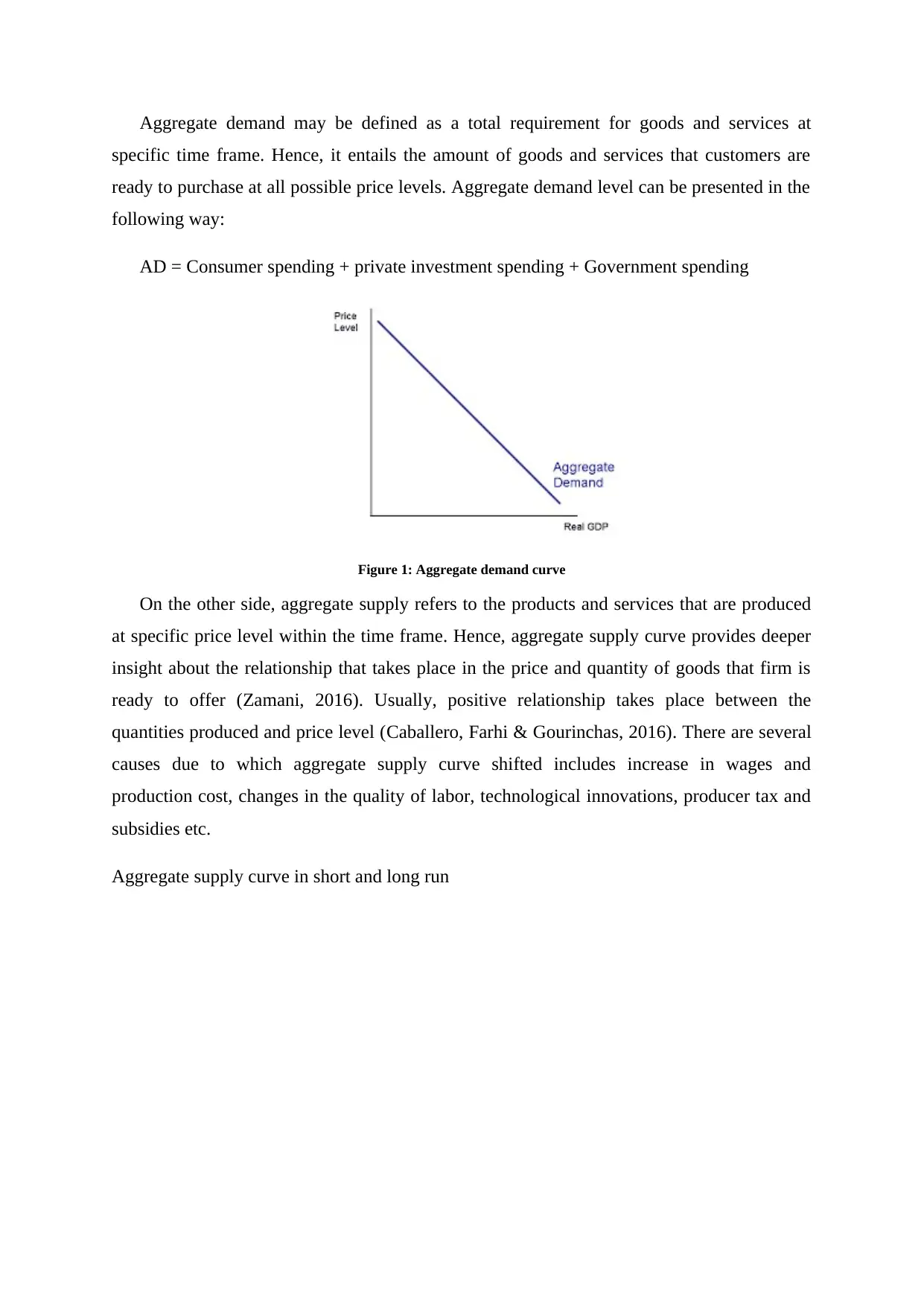
Aggregate demand may be defined as a total requirement for goods and services at
specific time frame. Hence, it entails the amount of goods and services that customers are
ready to purchase at all possible price levels. Aggregate demand level can be presented in the
following way:
AD = Consumer spending + private investment spending + Government spending
Figure 1: Aggregate demand curve
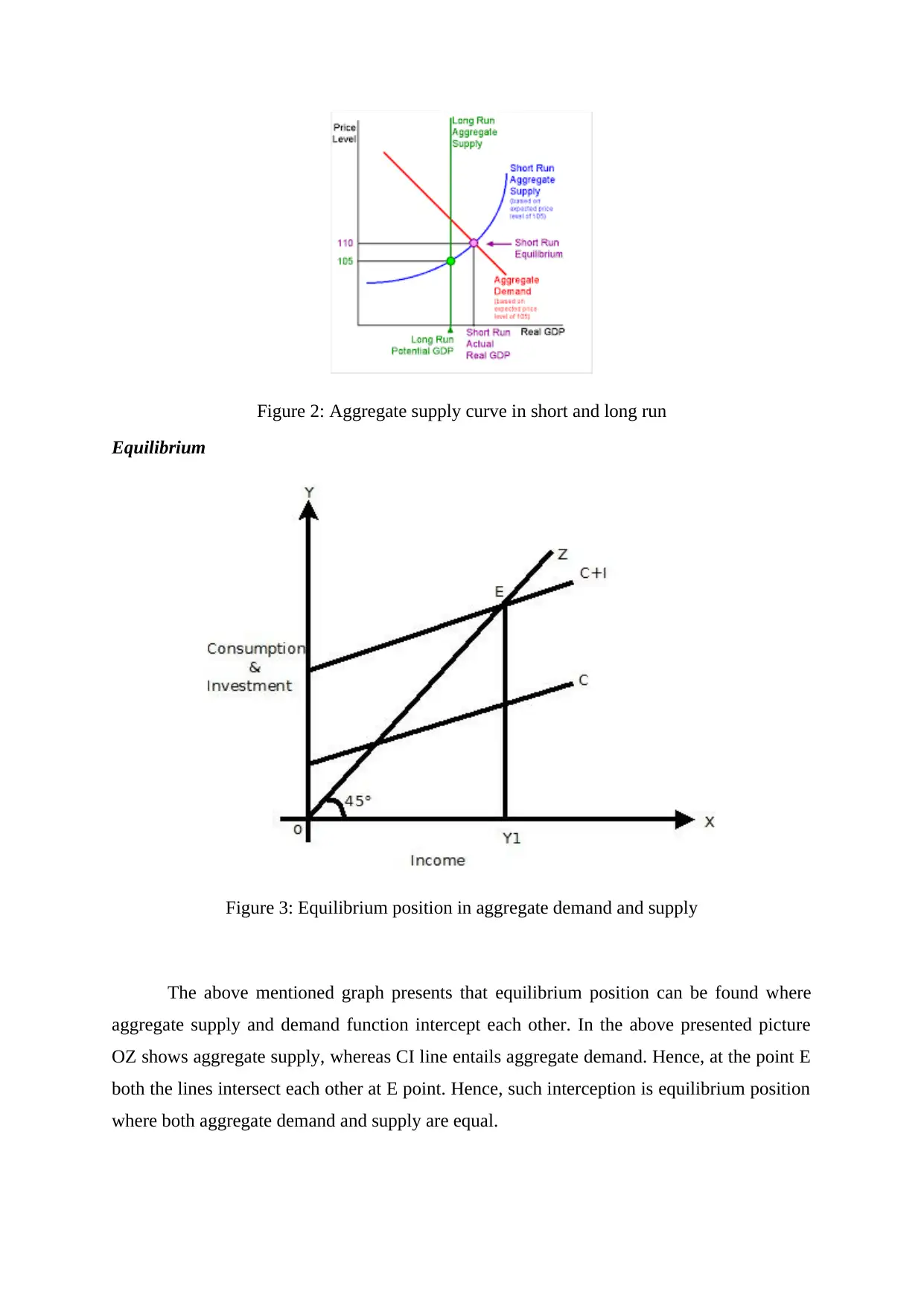
On the other side, aggregate supply refers to the products and services that are produced
at specific price level within the time frame. Hence, aggregate supply curve provides deeper
insight about the relationship that takes place in the price and quantity of goods that firm is
ready to offer (Zamani, 2016). Usually, positive relationship takes place between the
quantities produced and price level (Caballero, Farhi & Gourinchas, 2016). There are several
causes due to which aggregate supply curve shifted includes increase in wages and
production cost, changes in the quality of labor, technological innovations, producer tax and
subsidies etc.
Aggregate supply curve in short and long run
specific time frame. Hence, it entails the amount of goods and services that customers are
ready to purchase at all possible price levels. Aggregate demand level can be presented in the
following way:
AD = Consumer spending + private investment spending + Government spending
Figure 1: Aggregate demand curve
On the other side, aggregate supply refers to the products and services that are produced
at specific price level within the time frame. Hence, aggregate supply curve provides deeper
insight about the relationship that takes place in the price and quantity of goods that firm is
ready to offer (Zamani, 2016). Usually, positive relationship takes place between the
quantities produced and price level (Caballero, Farhi & Gourinchas, 2016). There are several
causes due to which aggregate supply curve shifted includes increase in wages and
production cost, changes in the quality of labor, technological innovations, producer tax and
subsidies etc.
Aggregate supply curve in short and long run

Figure 2: Aggregate supply curve in short and long run
Equilibrium
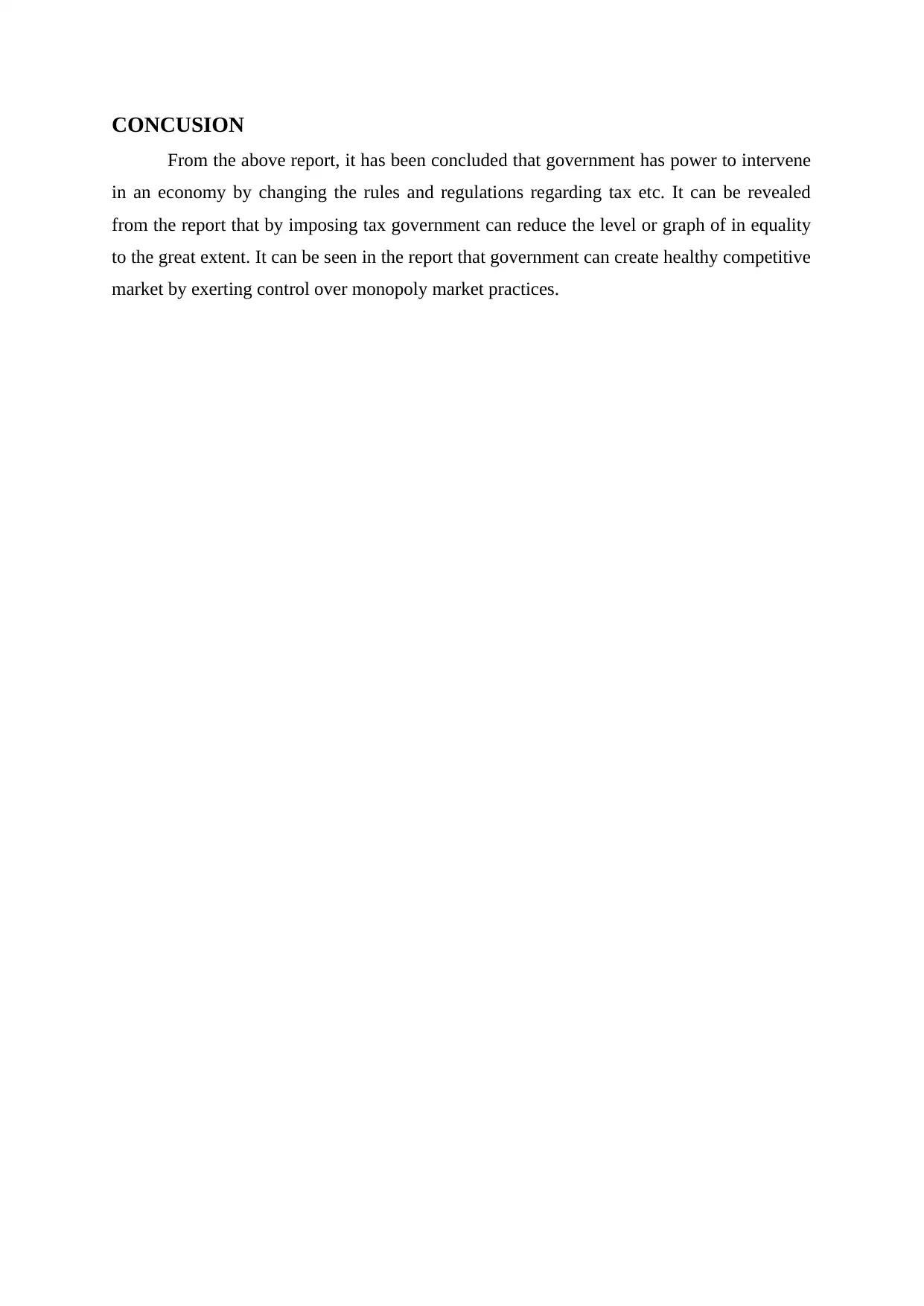
Figure 3: Equilibrium position in aggregate demand and supply
The above mentioned graph presents that equilibrium position can be found where
aggregate supply and demand function intercept each other. In the above presented picture
OZ shows aggregate supply, whereas CI line entails aggregate demand. Hence, at the point E
both the lines intersect each other at E point. Hence, such interception is equilibrium position
where both aggregate demand and supply are equal.
Equilibrium
Figure 3: Equilibrium position in aggregate demand and supply
The above mentioned graph presents that equilibrium position can be found where
aggregate supply and demand function intercept each other. In the above presented picture
OZ shows aggregate supply, whereas CI line entails aggregate demand. Hence, at the point E
both the lines intersect each other at E point. Hence, such interception is equilibrium position
where both aggregate demand and supply are equal.
⊘ This is a preview!⊘
Do you want full access?
Subscribe today to unlock all pages.

Trusted by 1+ million students worldwide

CONCUSION
From the above report, it has been concluded that government has power to intervene
in an economy by changing the rules and regulations regarding tax etc. It can be revealed
from the report that by imposing tax government can reduce the level or graph of in equality
to the great extent. It can be seen in the report that government can create healthy competitive
market by exerting control over monopoly market practices.
From the above report, it has been concluded that government has power to intervene
in an economy by changing the rules and regulations regarding tax etc. It can be revealed
from the report that by imposing tax government can reduce the level or graph of in equality
to the great extent. It can be seen in the report that government can create healthy competitive
market by exerting control over monopoly market practices.
Paraphrase This Document
Need a fresh take? Get an instant paraphrase of this document with our AI Paraphraser

REFERENCES
Books and Journals
Anderson, D. R. & et.al., (2016). Statistics for business & economics. Nelson Education.
Caballero, R. J., Farhi, E., & Gourinchas, P. O. (2016). Safe asset scarcity and aggregate
demand. The American Economic Review.106(5). 513-518.
Floetotto, M., Kirker, M., & Stroebel, J. (2016). Government intervention in the housing
market: Who wins, who loses?. Journal of Monetary Economics. 80. 106-123.
Sheu, J. B. (2016). Supplier hoarding, government intervention, and timing for post-disaster
crop supply chain recovery. Transportation Research Part E: Logistics and
Transportation Review. 90. 134-160.
Tietenberg, T. H., & Lewis, L. (2016). Environmental and natural resource economics.
Routledge.
Zamani, N. (2016). How the crude oil market affects the natural gas market? Demand and
supply shocks. International Journal of Energy Economics and Policy. 6(2).
Online
Aggregate demand and supply. 2016. Online. Available through: <
https://www.khanacademy.org/economics-finance-domain/macroeconomics/aggregate-
supply-demand-topic/aggregate-supply-demand-tut/v/short-run-aggregate-supply>.
[Accessed on 22th January 2017].
Analyzing and Evaluating Government Intervention in Markets. 2015. Online.
Available through: < http://www.tutor2u.net/economics/reference/government-intervention-
in-markets>. [Accessed on 22th January 2017].
Books and Journals
Anderson, D. R. & et.al., (2016). Statistics for business & economics. Nelson Education.
Caballero, R. J., Farhi, E., & Gourinchas, P. O. (2016). Safe asset scarcity and aggregate
demand. The American Economic Review.106(5). 513-518.
Floetotto, M., Kirker, M., & Stroebel, J. (2016). Government intervention in the housing
market: Who wins, who loses?. Journal of Monetary Economics. 80. 106-123.
Sheu, J. B. (2016). Supplier hoarding, government intervention, and timing for post-disaster
crop supply chain recovery. Transportation Research Part E: Logistics and
Transportation Review. 90. 134-160.
Tietenberg, T. H., & Lewis, L. (2016). Environmental and natural resource economics.
Routledge.
Zamani, N. (2016). How the crude oil market affects the natural gas market? Demand and
supply shocks. International Journal of Energy Economics and Policy. 6(2).
Online
Aggregate demand and supply. 2016. Online. Available through: <
https://www.khanacademy.org/economics-finance-domain/macroeconomics/aggregate-
supply-demand-topic/aggregate-supply-demand-tut/v/short-run-aggregate-supply>.
[Accessed on 22th January 2017].
Analyzing and Evaluating Government Intervention in Markets. 2015. Online.
Available through: < http://www.tutor2u.net/economics/reference/government-intervention-
in-markets>. [Accessed on 22th January 2017].
1 out of 8
Related Documents
Your All-in-One AI-Powered Toolkit for Academic Success.
+13062052269
info@desklib.com
Available 24*7 on WhatsApp / Email
Unlock your academic potential
Copyright © 2020–2025 A2Z Services. All Rights Reserved. Developed and managed by ZUCOL.