Arden University FIN4001: Financial Analysis Assignment
VerifiedAdded on 2023/06/03
|15
|3209
|236
Homework Assignment
AI Summary
This assignment solution provides a comprehensive financial analysis, addressing key concepts in corporate governance, financial ratios, and capital budgeting. The analysis begins with an exploration of corporate accountability and good governance principles, including transparency, fairness, responsibility, and accountability, with examples from companies like Cadbury, Coca-Cola Amatil, and Wesfarmers Group. The solution then delves into financial ratios, comparing profitability and liquidity between two companies, using charts to illustrate the analysis. The assignment further examines sources of finance, including bank loans, angel investors, and venture capital, and contrasts different budgeting methods such as zero-based and incremental budgeting. Finally, the solution covers capital budgeting techniques, including calculating net present value (NPV) and payback periods for investment projects, providing a detailed assessment of each project's financial viability.

Running head: FINANCIAL ANALYSIS
Financial Analysis
Name of the Student:
Name of the University:
Author’s Note:
Financial Analysis
Name of the Student:
Name of the University:
Author’s Note:

Paraphrase This Document
Need a fresh take? Get an instant paraphrase of this document with our AI Paraphraser

1
FINANCIAL ANALYSIS
Table of Contents
Question 1........................................................................................................................................2
Part a............................................................................................................................................2
Part b............................................................................................................................................4
Question 2........................................................................................................................................5
Question 3........................................................................................................................................7
Part a............................................................................................................................................7
Part b............................................................................................................................................8
Question 4......................................................................................................................................10
Part a..........................................................................................................................................10
Part b..........................................................................................................................................11
Reference.......................................................................................................................................12
FINANCIAL ANALYSIS
Table of Contents
Question 1........................................................................................................................................2
Part a............................................................................................................................................2
Part b............................................................................................................................................4
Question 2........................................................................................................................................5
Question 3........................................................................................................................................7
Part a............................................................................................................................................7
Part b............................................................................................................................................8
Question 4......................................................................................................................................10
Part a..........................................................................................................................................10
Part b..........................................................................................................................................11
Reference.......................................................................................................................................12
2
FINANCIAL ANALYSIS
Question 1
Part a
In general, the corporate accountability is considered with responsibilities and the obligations
which provides an explanation and reasons for the conduct and actions of the company. In short
sound corporate principles needs to be depicted in form of the understandable and balanced
assessment of the financial position of the company along with the prospects. The board is
further responsible for assessment of the relevant activities which relates to business risks and
internal control systems. A good corporate reporting assumes that board is depicted to maintain
and establish transparent and arrangements along with assigning appropriate relationship with
the auditor of the company. The board needs to also communicate with the stakeholders for fair
and balanced assessment of the purpose which are necessary from the business perspective
(Tricker and Tricker 2015).
In the corporate report published by Cadbury in he UK in 1991 has been able to outline
that the company has followed a good CG system through which business activities controlled
and directed in an appropriate manner. A good CG practice needs to be identified as per the key
factors underpinning the integrity and efficiency of a particular company. In case of depiction of
poor CG practice, the company’s potential may be greatly reduced which can lead to significant
nature of difficulty. Some of the other examples from the company’s potential can lead to
difficulties in financial activities which may have long term impact and damage the reputation of
the organization. A company applying the core principles needs to consider the CG, fairness,
responsibility, transparency and accountability which will lead to attract more number of
investors and support the financial growth (Barkemeyer et al. 2015).
FINANCIAL ANALYSIS
Question 1
Part a
In general, the corporate accountability is considered with responsibilities and the obligations
which provides an explanation and reasons for the conduct and actions of the company. In short
sound corporate principles needs to be depicted in form of the understandable and balanced
assessment of the financial position of the company along with the prospects. The board is
further responsible for assessment of the relevant activities which relates to business risks and
internal control systems. A good corporate reporting assumes that board is depicted to maintain
and establish transparent and arrangements along with assigning appropriate relationship with
the auditor of the company. The board needs to also communicate with the stakeholders for fair
and balanced assessment of the purpose which are necessary from the business perspective
(Tricker and Tricker 2015).
In the corporate report published by Cadbury in he UK in 1991 has been able to outline
that the company has followed a good CG system through which business activities controlled
and directed in an appropriate manner. A good CG practice needs to be identified as per the key
factors underpinning the integrity and efficiency of a particular company. In case of depiction of
poor CG practice, the company’s potential may be greatly reduced which can lead to significant
nature of difficulty. Some of the other examples from the company’s potential can lead to
difficulties in financial activities which may have long term impact and damage the reputation of
the organization. A company applying the core principles needs to consider the CG, fairness,
responsibility, transparency and accountability which will lead to attract more number of
investors and support the financial growth (Barkemeyer et al. 2015).
⊘ This is a preview!⊘
Do you want full access?
Subscribe today to unlock all pages.

Trusted by 1+ million students worldwide
3
FINANCIAL ANALYSIS
It needs to be therefore seen that, companies applying the core principles as CG, fairness,
responsibility, transparency and accountability are seen with organizations such as Coca Cola
Amatil, Shell and British Petroleum. These organizations are seen with articulating the strategy
to reinforce the company’s agency model. Moreover, these organizations have also considered
the development of the robust planning framework, driven by relevant data and scope-of-work
(Beekes, Brown and Zhang 2015). Some of the other reasons for these companies to follow a
good CG strategy has been further depicted in terms of the different types of the other actions
taken by the companies needs to be depicted as per the continuous effort to scout the agency
industry for top talent (Flower 2015). These organizations have not only identify the right agency
partner but also maintain the best talent pertaining to the agencies in the business which will led
to attract more number of investors and support for the financial growth (Joseph et al. 2016).
These agencies are also seen with the relevant actions required delivering the competitive edge
needed to deliver the goals. Some of the other organizations such as Wesfarmers Group has been
also able to excel in terms of core principles like engaging workers in a more enthusiastic and
productive manner and taking responsibility for attracting fresh talent in the company. There is
also seen to be relevant for rewarding the trainees in having a positive impact and appreciation.
The companies need to be vulnerable for management to be anonymously figuring out the junior
employees and getting to know about the ways the management engages their employees. In this
manner the team members are also depicted to be avoid any instance of conflicts rather than
providing actual opinion (Ni and Van Wart 2015).
FINANCIAL ANALYSIS
It needs to be therefore seen that, companies applying the core principles as CG, fairness,
responsibility, transparency and accountability are seen with organizations such as Coca Cola
Amatil, Shell and British Petroleum. These organizations are seen with articulating the strategy
to reinforce the company’s agency model. Moreover, these organizations have also considered
the development of the robust planning framework, driven by relevant data and scope-of-work
(Beekes, Brown and Zhang 2015). Some of the other reasons for these companies to follow a
good CG strategy has been further depicted in terms of the different types of the other actions
taken by the companies needs to be depicted as per the continuous effort to scout the agency
industry for top talent (Flower 2015). These organizations have not only identify the right agency
partner but also maintain the best talent pertaining to the agencies in the business which will led
to attract more number of investors and support for the financial growth (Joseph et al. 2016).
These agencies are also seen with the relevant actions required delivering the competitive edge
needed to deliver the goals. Some of the other organizations such as Wesfarmers Group has been
also able to excel in terms of core principles like engaging workers in a more enthusiastic and
productive manner and taking responsibility for attracting fresh talent in the company. There is
also seen to be relevant for rewarding the trainees in having a positive impact and appreciation.
The companies need to be vulnerable for management to be anonymously figuring out the junior
employees and getting to know about the ways the management engages their employees. In this
manner the team members are also depicted to be avoid any instance of conflicts rather than
providing actual opinion (Ni and Van Wart 2015).
Paraphrase This Document
Need a fresh take? Get an instant paraphrase of this document with our AI Paraphraser
4
FINANCIAL ANALYSIS
Part b
The principle of the good governance considers that the stakeholders should be informed
on the various activities of the company along with the plans which it intend to execute in the
future. Transparency factor is referred with the openness and readiness for providing clear
information to the stakeholders and other shareholders. For instance, transparency is associated
to the openness and readiness for disclosure of financial performance to be accurate and true in
nature. Moreover, the disclosure of information in the matters related to the performance of the
organization needs to timely and accurately ensure the inventors has access to the information on
the clear, factual, financial, social and environmental position of the organization. The
companies need to confirm responsibilities and roles of the board and management for providing
the shareholders relevant level of accountability. The transparency factor ensures that there is full
confidence among the stakeholders for making the appropriate decision making and management
process associated to the company (Leipziger 2017).
A strong CG ensures that the investors are able to maintain sufficient confidence for
supporting further growth in the financial performance. The organizations involved in the
implementation of sound corporate success and economic growth. The fairness concept is
referred with the equal treatment of the stakeholders. For instance, all the shareholders needs to
obtain equal consideration for any shareholding in their belonging. In different countries the
fairness aspect of the corporate reporting is protected by the relevant laws. However, it needs to
be also seen that the companies also desire to opt for the appropriate shareholder agreement
which is directly associated with including extensive and effective minority protection.
Moreover, the shareholders should be done in a fairness based on the treatment of the
stakeholders by considering the opinions of the employees, communities and public officials. It
FINANCIAL ANALYSIS
Part b
The principle of the good governance considers that the stakeholders should be informed
on the various activities of the company along with the plans which it intend to execute in the
future. Transparency factor is referred with the openness and readiness for providing clear
information to the stakeholders and other shareholders. For instance, transparency is associated
to the openness and readiness for disclosure of financial performance to be accurate and true in
nature. Moreover, the disclosure of information in the matters related to the performance of the
organization needs to timely and accurately ensure the inventors has access to the information on
the clear, factual, financial, social and environmental position of the organization. The
companies need to confirm responsibilities and roles of the board and management for providing
the shareholders relevant level of accountability. The transparency factor ensures that there is full
confidence among the stakeholders for making the appropriate decision making and management
process associated to the company (Leipziger 2017).
A strong CG ensures that the investors are able to maintain sufficient confidence for
supporting further growth in the financial performance. The organizations involved in the
implementation of sound corporate success and economic growth. The fairness concept is
referred with the equal treatment of the stakeholders. For instance, all the shareholders needs to
obtain equal consideration for any shareholding in their belonging. In different countries the
fairness aspect of the corporate reporting is protected by the relevant laws. However, it needs to
be also seen that the companies also desire to opt for the appropriate shareholder agreement
which is directly associated with including extensive and effective minority protection.
Moreover, the shareholders should be done in a fairness based on the treatment of the
stakeholders by considering the opinions of the employees, communities and public officials. It
5
FINANCIAL ANALYSIS
needs to be seen that more fairer is the entity for the stakeholders, the more likely it will survive
the pressure of the interested parties (Ioannou and Serafeim 2017).
The board of directors are also depicted to provide the relevant opportunity which is seen
to be depicted as per the different types of the concepts associated to act on behalf of the
company. The companies need to therefore accept the various types of the propositions for
ensuring that the directors are responsible for monitoring the performance of the company.
Moreover, accountability needs to be considered as per the hand in hand with the responsibility
factor. In addition to this, the board of directors are also seen to be responsibility of
accountability pertaining to the way company carries out the responsibilities (De Villiers, Rouse
and Kerr 2016).
Question 2
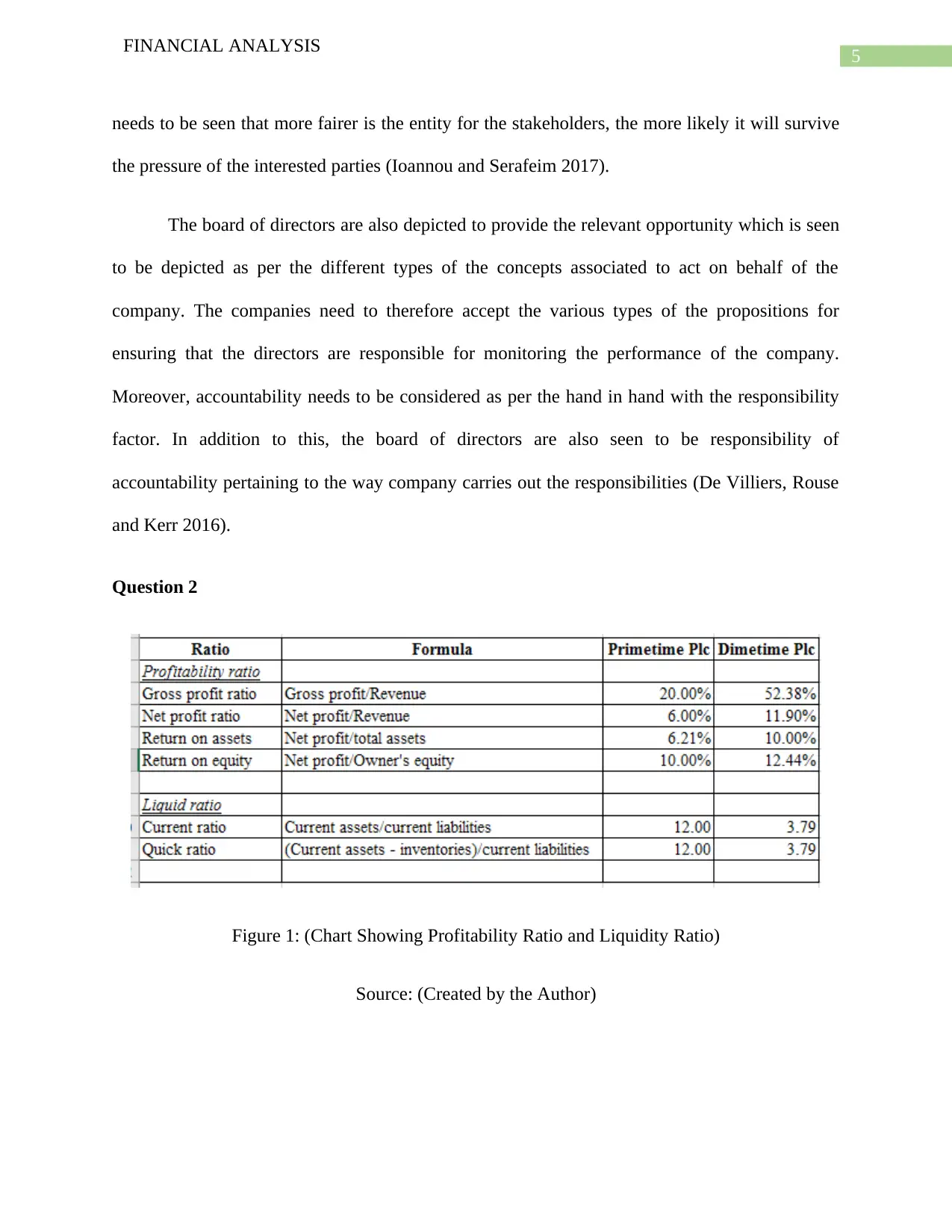
Figure 1: (Chart Showing Profitability Ratio and Liquidity Ratio)
Source: (Created by the Author)
FINANCIAL ANALYSIS
needs to be seen that more fairer is the entity for the stakeholders, the more likely it will survive
the pressure of the interested parties (Ioannou and Serafeim 2017).
The board of directors are also depicted to provide the relevant opportunity which is seen
to be depicted as per the different types of the concepts associated to act on behalf of the
company. The companies need to therefore accept the various types of the propositions for
ensuring that the directors are responsible for monitoring the performance of the company.
Moreover, accountability needs to be considered as per the hand in hand with the responsibility
factor. In addition to this, the board of directors are also seen to be responsibility of
accountability pertaining to the way company carries out the responsibilities (De Villiers, Rouse
and Kerr 2016).
Question 2
Figure 1: (Chart Showing Profitability Ratio and Liquidity Ratio)
Source: (Created by the Author)
⊘ This is a preview!⊘
Do you want full access?
Subscribe today to unlock all pages.
Trusted by 1+ million students worldwide
6
FINANCIAL ANALYSIS
Operating
profit ratio
Net profit
ratio
Return on
assets
Return on
equity
0.00%
10.00%
20.00%
30.00%
40.00%
50.00%
60.00%
Profitability ratio
Primetime Plc
Dimetime Plc
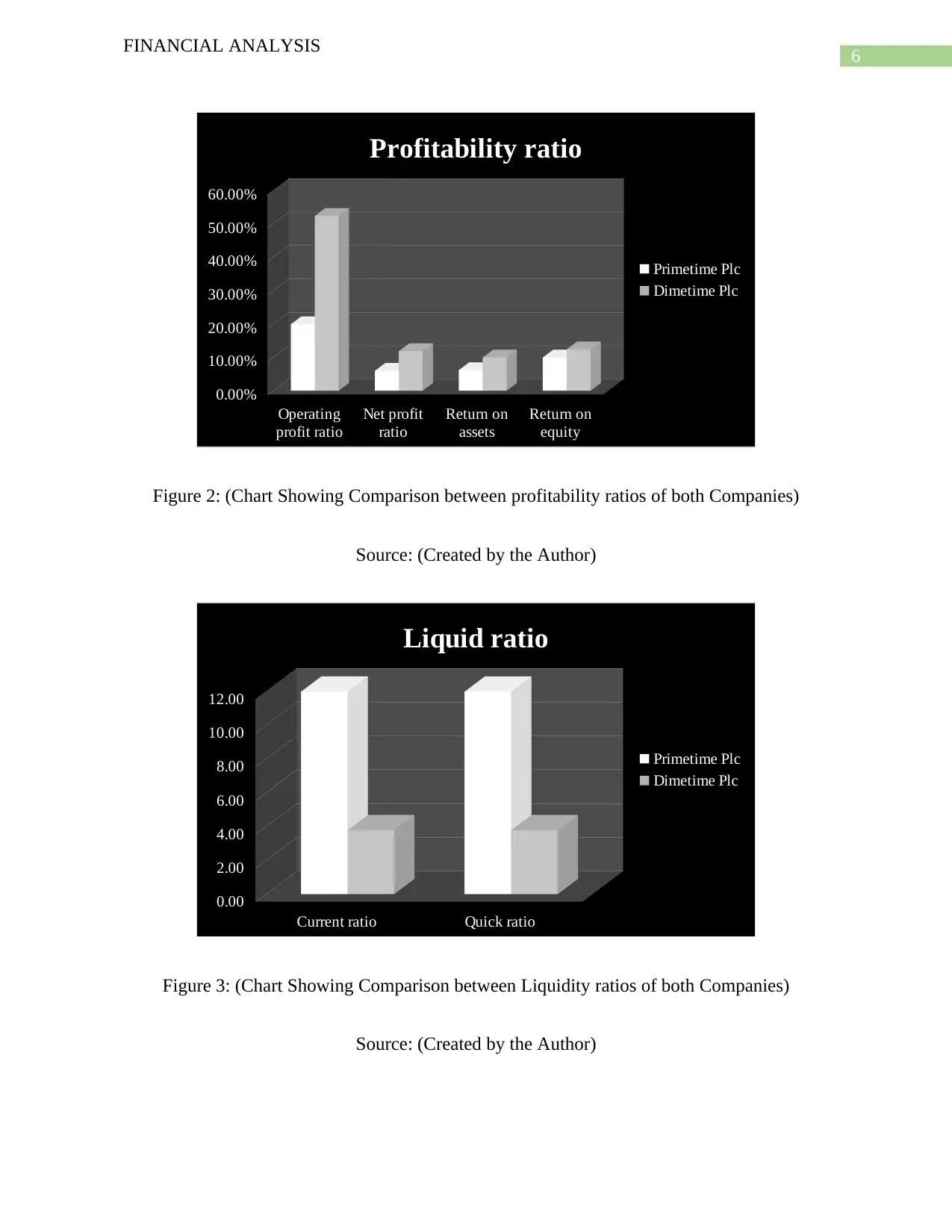
Figure 2: (Chart Showing Comparison between profitability ratios of both Companies)
Source: (Created by the Author)
Current ratio Quick ratio
0.00
2.00
4.00
6.00
8.00
10.00
12.00
Liquid ratio
Primetime Plc
Dimetime Plc
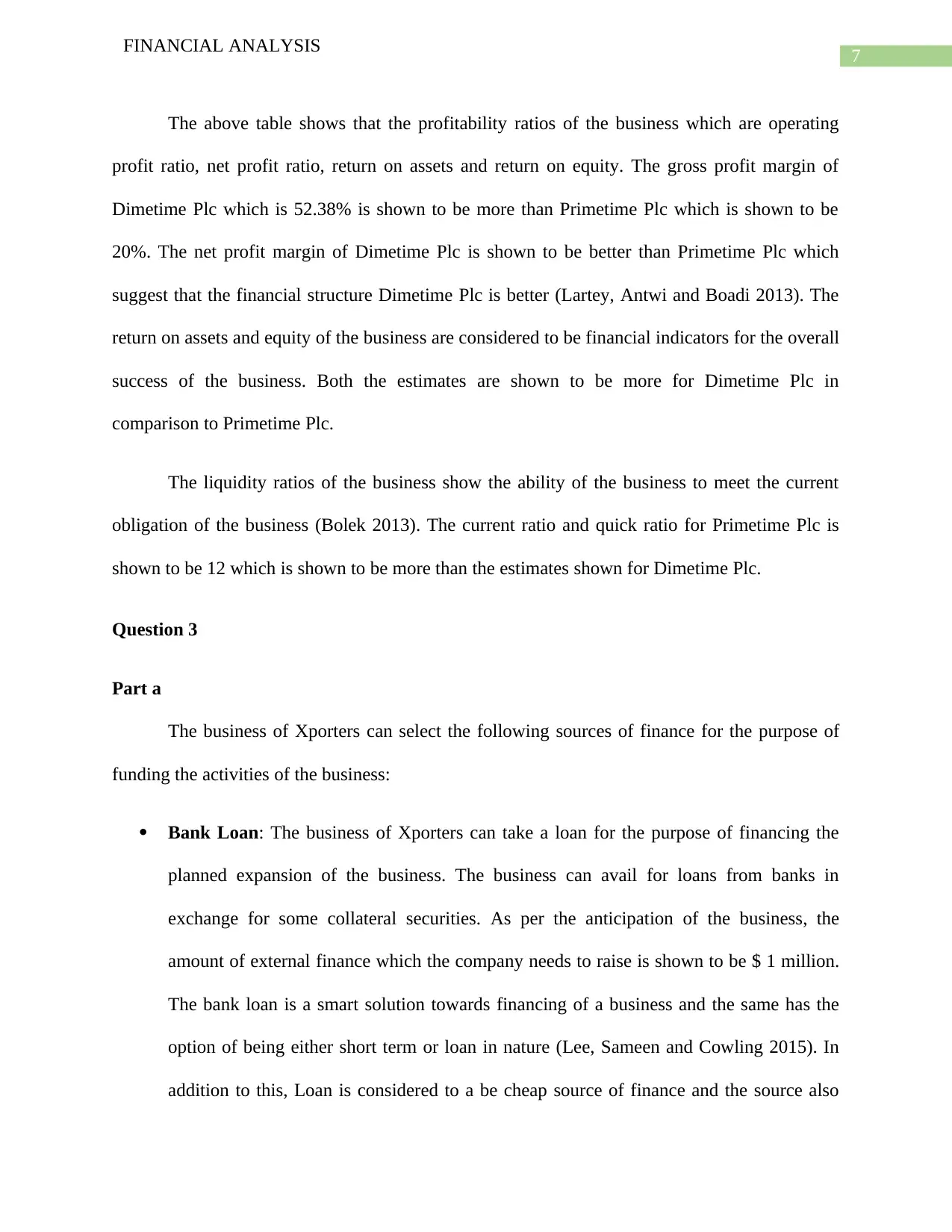
Figure 3: (Chart Showing Comparison between Liquidity ratios of both Companies)
Source: (Created by the Author)
FINANCIAL ANALYSIS
Operating
profit ratio
Net profit
ratio
Return on
assets
Return on
equity
0.00%
10.00%
20.00%
30.00%
40.00%
50.00%
60.00%
Profitability ratio
Primetime Plc
Dimetime Plc
Figure 2: (Chart Showing Comparison between profitability ratios of both Companies)
Source: (Created by the Author)
Current ratio Quick ratio
0.00
2.00
4.00
6.00
8.00
10.00
12.00
Liquid ratio
Primetime Plc
Dimetime Plc
Figure 3: (Chart Showing Comparison between Liquidity ratios of both Companies)
Source: (Created by the Author)
Paraphrase This Document
Need a fresh take? Get an instant paraphrase of this document with our AI Paraphraser
7
FINANCIAL ANALYSIS
The above table shows that the profitability ratios of the business which are operating
profit ratio, net profit ratio, return on assets and return on equity. The gross profit margin of
Dimetime Plc which is 52.38% is shown to be more than Primetime Plc which is shown to be
20%. The net profit margin of Dimetime Plc is shown to be better than Primetime Plc which
suggest that the financial structure Dimetime Plc is better (Lartey, Antwi and Boadi 2013). The
return on assets and equity of the business are considered to be financial indicators for the overall
success of the business. Both the estimates are shown to be more for Dimetime Plc in
comparison to Primetime Plc.
The liquidity ratios of the business show the ability of the business to meet the current
obligation of the business (Bolek 2013). The current ratio and quick ratio for Primetime Plc is
shown to be 12 which is shown to be more than the estimates shown for Dimetime Plc.
Question 3
Part a
The business of Xporters can select the following sources of finance for the purpose of
funding the activities of the business:
Bank Loan: The business of Xporters can take a loan for the purpose of financing the
planned expansion of the business. The business can avail for loans from banks in
exchange for some collateral securities. As per the anticipation of the business, the
amount of external finance which the company needs to raise is shown to be $ 1 million.
The bank loan is a smart solution towards financing of a business and the same has the
option of being either short term or loan in nature (Lee, Sameen and Cowling 2015). In
addition to this, Loan is considered to a be cheap source of finance and the source also
FINANCIAL ANALYSIS
The above table shows that the profitability ratios of the business which are operating
profit ratio, net profit ratio, return on assets and return on equity. The gross profit margin of
Dimetime Plc which is 52.38% is shown to be more than Primetime Plc which is shown to be
20%. The net profit margin of Dimetime Plc is shown to be better than Primetime Plc which
suggest that the financial structure Dimetime Plc is better (Lartey, Antwi and Boadi 2013). The
return on assets and equity of the business are considered to be financial indicators for the overall
success of the business. Both the estimates are shown to be more for Dimetime Plc in
comparison to Primetime Plc.
The liquidity ratios of the business show the ability of the business to meet the current
obligation of the business (Bolek 2013). The current ratio and quick ratio for Primetime Plc is
shown to be 12 which is shown to be more than the estimates shown for Dimetime Plc.
Question 3
Part a
The business of Xporters can select the following sources of finance for the purpose of
funding the activities of the business:
Bank Loan: The business of Xporters can take a loan for the purpose of financing the
planned expansion of the business. The business can avail for loans from banks in
exchange for some collateral securities. As per the anticipation of the business, the
amount of external finance which the company needs to raise is shown to be $ 1 million.
The bank loan is a smart solution towards financing of a business and the same has the
option of being either short term or loan in nature (Lee, Sameen and Cowling 2015). In
addition to this, Loan is considered to a be cheap source of finance and the source also
8
FINANCIAL ANALYSIS
has tax benefits as the business can get deductions for interest payments which are made
towards the loan.
Friends: The members of Xporters can also raise funds from friends which can also be
considered as loans (Khan 2015). The management can accumulate loans from the
friends and other relatives even though they do not play an active role in day to day
management of the business.
Angel Investors: This reflects a high-profile investor who can invest significant amount
of funds in the business in return for a stake holding in the business. The Angel investors
basically wants a partnership claim in the business (Ding, Sun and Au 2014). These types
of practices are often followed by businesses for the purpose of meeting the financing
requirement of the business.
Venture Capital: This is one of the popular sources of financing and is quite similar to
Angel Investors option. In this option, a group of individuals provides finances for the
business and manages the assets of the company (Maula and Murray 2017). Venture
Capitalists of the business invests in companies which has a strong financial record or
background.
Part b
Point of Distinction Zero Based Budgeting Incremental Based Budgeting
1. Base for
Budgeting
This type of budgeting is done by
considering the base to be zero and
the budget is prepared without
considering the budgets which is
prepared for previous year (Ekanem
In this type of Budget, the
changes are made to the
budgets which was prepared in
previous and the same is used
FINANCIAL ANALYSIS
has tax benefits as the business can get deductions for interest payments which are made
towards the loan.
Friends: The members of Xporters can also raise funds from friends which can also be
considered as loans (Khan 2015). The management can accumulate loans from the
friends and other relatives even though they do not play an active role in day to day
management of the business.
Angel Investors: This reflects a high-profile investor who can invest significant amount
of funds in the business in return for a stake holding in the business. The Angel investors
basically wants a partnership claim in the business (Ding, Sun and Au 2014). These types
of practices are often followed by businesses for the purpose of meeting the financing
requirement of the business.
Venture Capital: This is one of the popular sources of financing and is quite similar to
Angel Investors option. In this option, a group of individuals provides finances for the
business and manages the assets of the company (Maula and Murray 2017). Venture
Capitalists of the business invests in companies which has a strong financial record or
background.
Part b
Point of Distinction Zero Based Budgeting Incremental Based Budgeting
1. Base for
Budgeting
This type of budgeting is done by
considering the base to be zero and
the budget is prepared without
considering the budgets which is
prepared for previous year (Ekanem
In this type of Budget, the
changes are made to the
budgets which was prepared in
previous and the same is used
⊘ This is a preview!⊘
Do you want full access?
Subscribe today to unlock all pages.
Trusted by 1+ million students worldwide
9
FINANCIAL ANALYSIS
2014). for the current year.
2. Allocation of
Resources
In this type of Budgeting, the
maximum resources are allocated to
those sources which can generate
more revenue or profits for the
business.
This sort of budget doe not
give any priority to vital areas
of the business and the budget
mainly makes changes to
previous budget by
incorporating the inflation
factor in the same.
3. Wasteful
Expenses
This budget is prepared by the
business for the purpose of
ensuring that the wastage of the
business is at minimum
This type of budget
incorporates wastage as a part
of the budgeting process (Citi
2013).
4. Innovation This type of budget allows the
business to bring about innovative
practices in the organization.
This type of budget does not
allow innovation and promotes
a conservative mindset.
FINANCIAL ANALYSIS
2014). for the current year.
2. Allocation of
Resources
In this type of Budgeting, the
maximum resources are allocated to
those sources which can generate
more revenue or profits for the
business.
This sort of budget doe not
give any priority to vital areas
of the business and the budget
mainly makes changes to
previous budget by
incorporating the inflation
factor in the same.
3. Wasteful
Expenses
This budget is prepared by the
business for the purpose of
ensuring that the wastage of the
business is at minimum
This type of budget
incorporates wastage as a part
of the budgeting process (Citi
2013).
4. Innovation This type of budget allows the
business to bring about innovative
practices in the organization.
This type of budget does not
allow innovation and promotes
a conservative mindset.
Paraphrase This Document
Need a fresh take? Get an instant paraphrase of this document with our AI Paraphraser
10
FINANCIAL ANALYSIS
Question 4
Part a
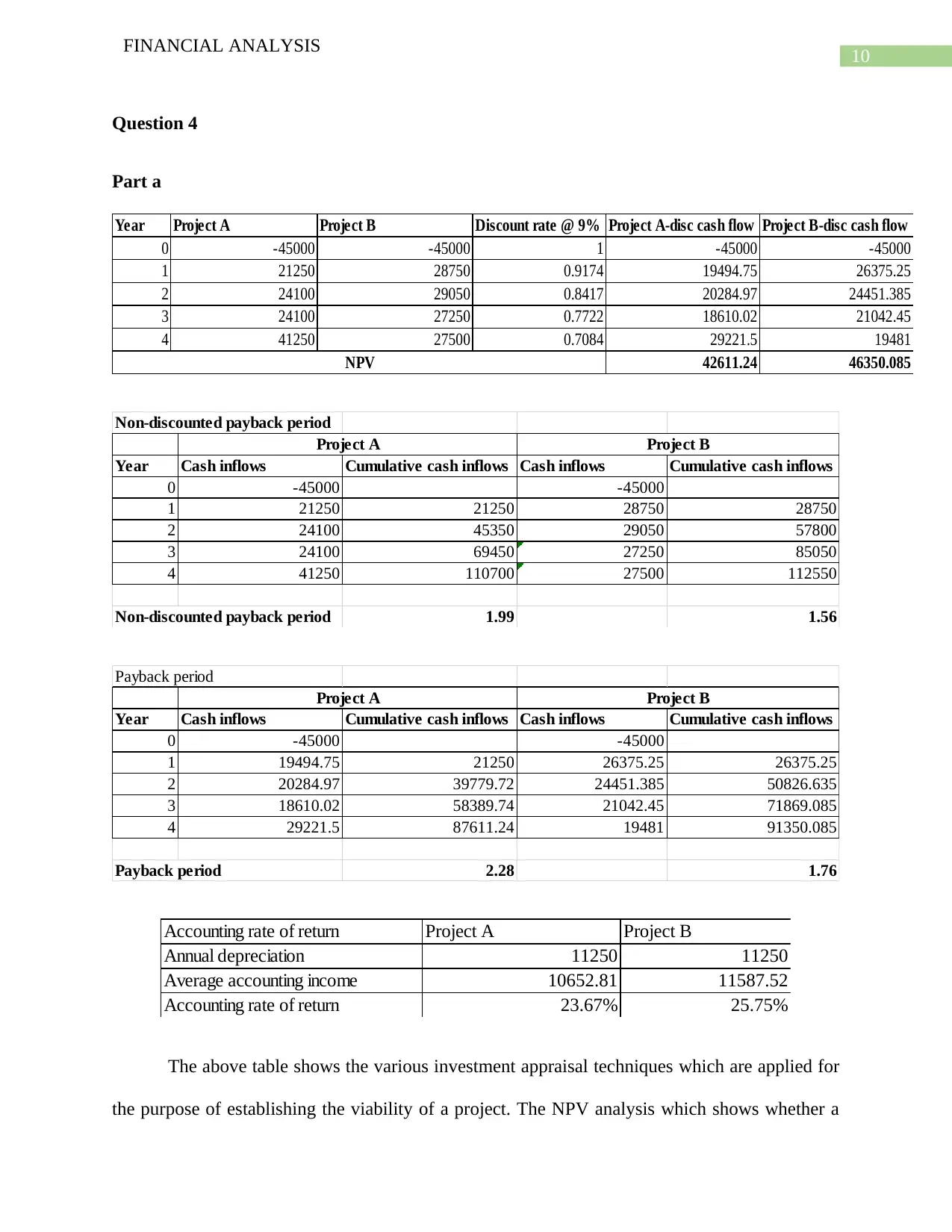
Year Project A Project B Discount rate @ 9% Project A-disc cash flow Project B-disc cash flow
0 -45000 -45000 1 -45000 -45000
1 21250 28750 0.9174 19494.75 26375.25
2 24100 29050 0.8417 20284.97 24451.385
3 24100 27250 0.7722 18610.02 21042.45
4 41250 27500 0.7084 29221.5 19481
42611.24 46350.085NPV
Non-discounted payback period
Year Cash inflows Cumulative cash inflows Cash inflows Cumulative cash inflows
0 -45000 -45000
1 21250 21250 28750 28750
2 24100 45350 29050 57800
3 24100 69450 27250 85050
4 41250 110700 27500 112550
Non-discounted payback period 1.99 1.56
Project A Project B
Payback period
Year Cash inflows Cumulative cash inflows Cash inflows Cumulative cash inflows
0 -45000 -45000
1 19494.75 21250 26375.25 26375.25
2 20284.97 39779.72 24451.385 50826.635
3 18610.02 58389.74 21042.45 71869.085
4 29221.5 87611.24 19481 91350.085
Payback period 2.28 1.76
Project A Project B
Accounting rate of return Project A Project B
Annual depreciation 11250 11250
Average accounting income 10652.81 11587.52
Accounting rate of return 23.67% 25.75%
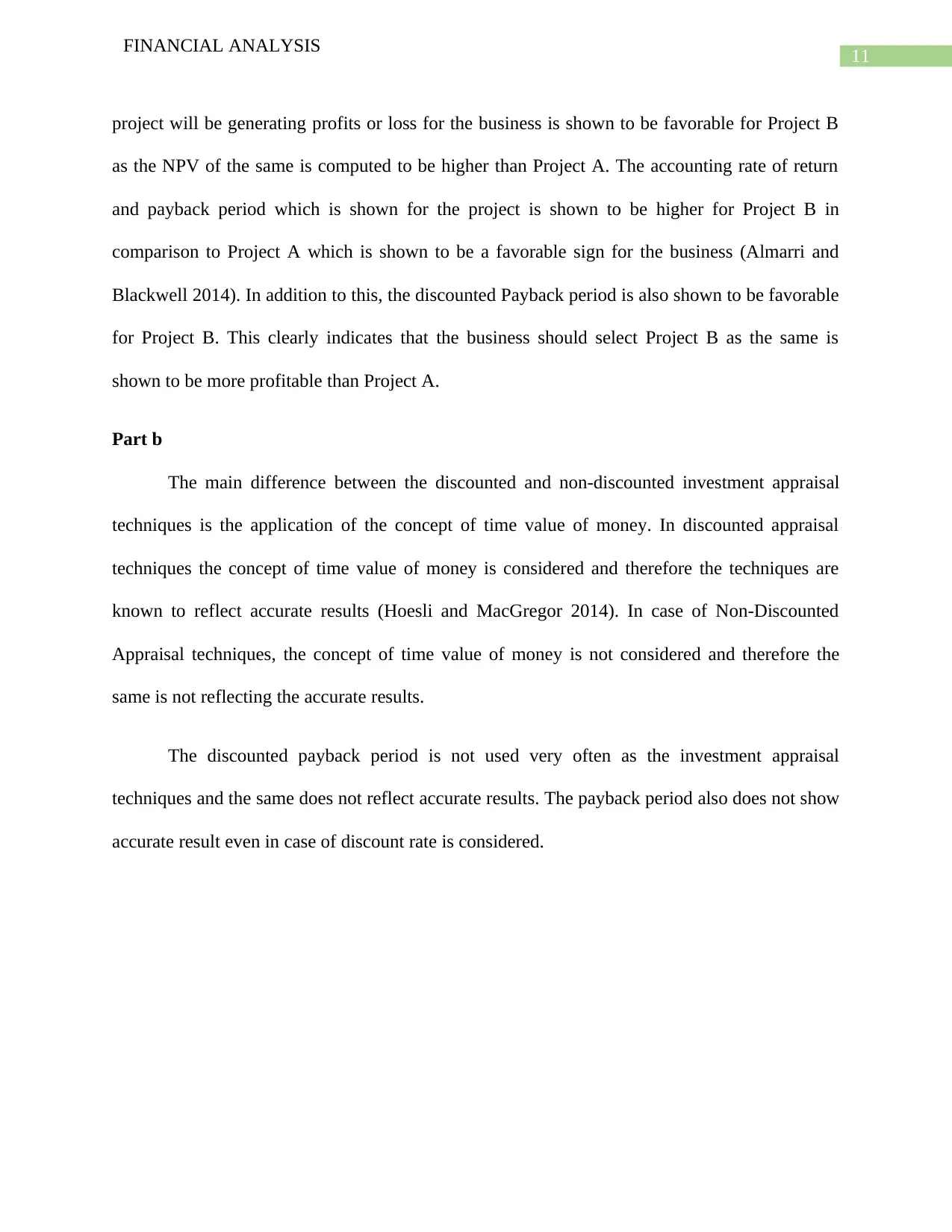
The above table shows the various investment appraisal techniques which are applied for
the purpose of establishing the viability of a project. The NPV analysis which shows whether a
FINANCIAL ANALYSIS
Question 4
Part a
Year Project A Project B Discount rate @ 9% Project A-disc cash flow Project B-disc cash flow
0 -45000 -45000 1 -45000 -45000
1 21250 28750 0.9174 19494.75 26375.25
2 24100 29050 0.8417 20284.97 24451.385
3 24100 27250 0.7722 18610.02 21042.45
4 41250 27500 0.7084 29221.5 19481
42611.24 46350.085NPV
Non-discounted payback period
Year Cash inflows Cumulative cash inflows Cash inflows Cumulative cash inflows
0 -45000 -45000
1 21250 21250 28750 28750
2 24100 45350 29050 57800
3 24100 69450 27250 85050
4 41250 110700 27500 112550
Non-discounted payback period 1.99 1.56
Project A Project B
Payback period
Year Cash inflows Cumulative cash inflows Cash inflows Cumulative cash inflows
0 -45000 -45000
1 19494.75 21250 26375.25 26375.25
2 20284.97 39779.72 24451.385 50826.635
3 18610.02 58389.74 21042.45 71869.085
4 29221.5 87611.24 19481 91350.085
Payback period 2.28 1.76
Project A Project B
Accounting rate of return Project A Project B
Annual depreciation 11250 11250
Average accounting income 10652.81 11587.52
Accounting rate of return 23.67% 25.75%
The above table shows the various investment appraisal techniques which are applied for
the purpose of establishing the viability of a project. The NPV analysis which shows whether a
11
FINANCIAL ANALYSIS
project will be generating profits or loss for the business is shown to be favorable for Project B
as the NPV of the same is computed to be higher than Project A. The accounting rate of return
and payback period which is shown for the project is shown to be higher for Project B in
comparison to Project A which is shown to be a favorable sign for the business (Almarri and
Blackwell 2014). In addition to this, the discounted Payback period is also shown to be favorable
for Project B. This clearly indicates that the business should select Project B as the same is
shown to be more profitable than Project A.
Part b
The main difference between the discounted and non-discounted investment appraisal
techniques is the application of the concept of time value of money. In discounted appraisal
techniques the concept of time value of money is considered and therefore the techniques are
known to reflect accurate results (Hoesli and MacGregor 2014). In case of Non-Discounted
Appraisal techniques, the concept of time value of money is not considered and therefore the
same is not reflecting the accurate results.
The discounted payback period is not used very often as the investment appraisal
techniques and the same does not reflect accurate results. The payback period also does not show
accurate result even in case of discount rate is considered.
FINANCIAL ANALYSIS
project will be generating profits or loss for the business is shown to be favorable for Project B
as the NPV of the same is computed to be higher than Project A. The accounting rate of return
and payback period which is shown for the project is shown to be higher for Project B in
comparison to Project A which is shown to be a favorable sign for the business (Almarri and
Blackwell 2014). In addition to this, the discounted Payback period is also shown to be favorable
for Project B. This clearly indicates that the business should select Project B as the same is
shown to be more profitable than Project A.
Part b
The main difference between the discounted and non-discounted investment appraisal
techniques is the application of the concept of time value of money. In discounted appraisal
techniques the concept of time value of money is considered and therefore the techniques are
known to reflect accurate results (Hoesli and MacGregor 2014). In case of Non-Discounted
Appraisal techniques, the concept of time value of money is not considered and therefore the
same is not reflecting the accurate results.
The discounted payback period is not used very often as the investment appraisal
techniques and the same does not reflect accurate results. The payback period also does not show
accurate result even in case of discount rate is considered.
⊘ This is a preview!⊘
Do you want full access?
Subscribe today to unlock all pages.
Trusted by 1+ million students worldwide

1 out of 15


Related Documents


Your All-in-One AI-Powered Toolkit for Academic Success.
+13062052269
info@desklib.com
Available 24*7 on WhatsApp / Email
![[object Object]](/_next/static/media/star-bottom.7253800d.svg)
Unlock your academic potential
Copyright © 2020–2026 A2Z Services. All Rights Reserved. Developed and managed by ZUCOL.