Ethical Relativism: Examining Its Strengths and Weaknesses Critically
VerifiedAdded on 2023/03/23
|4
|738
|74
Essay
AI Summary
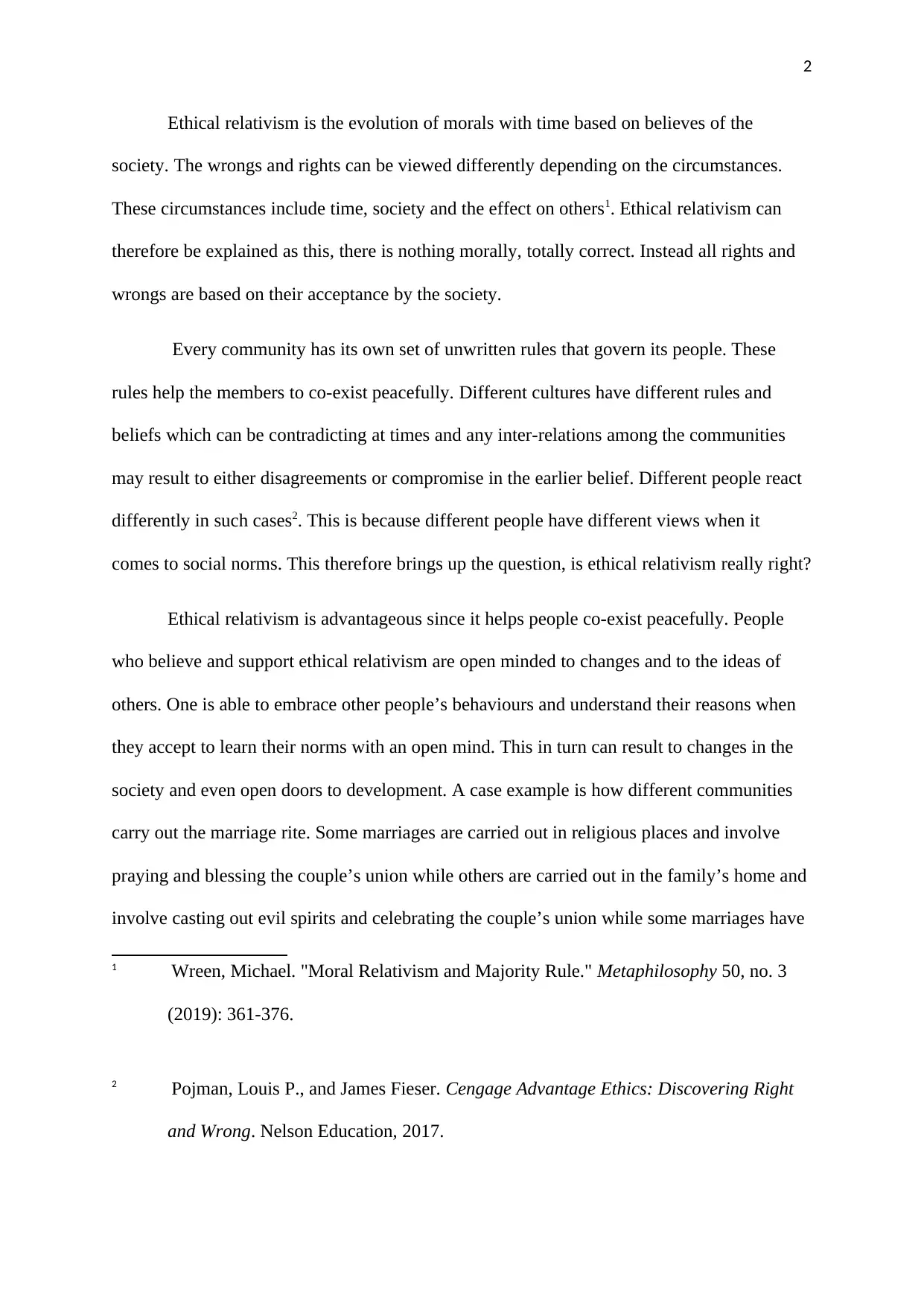
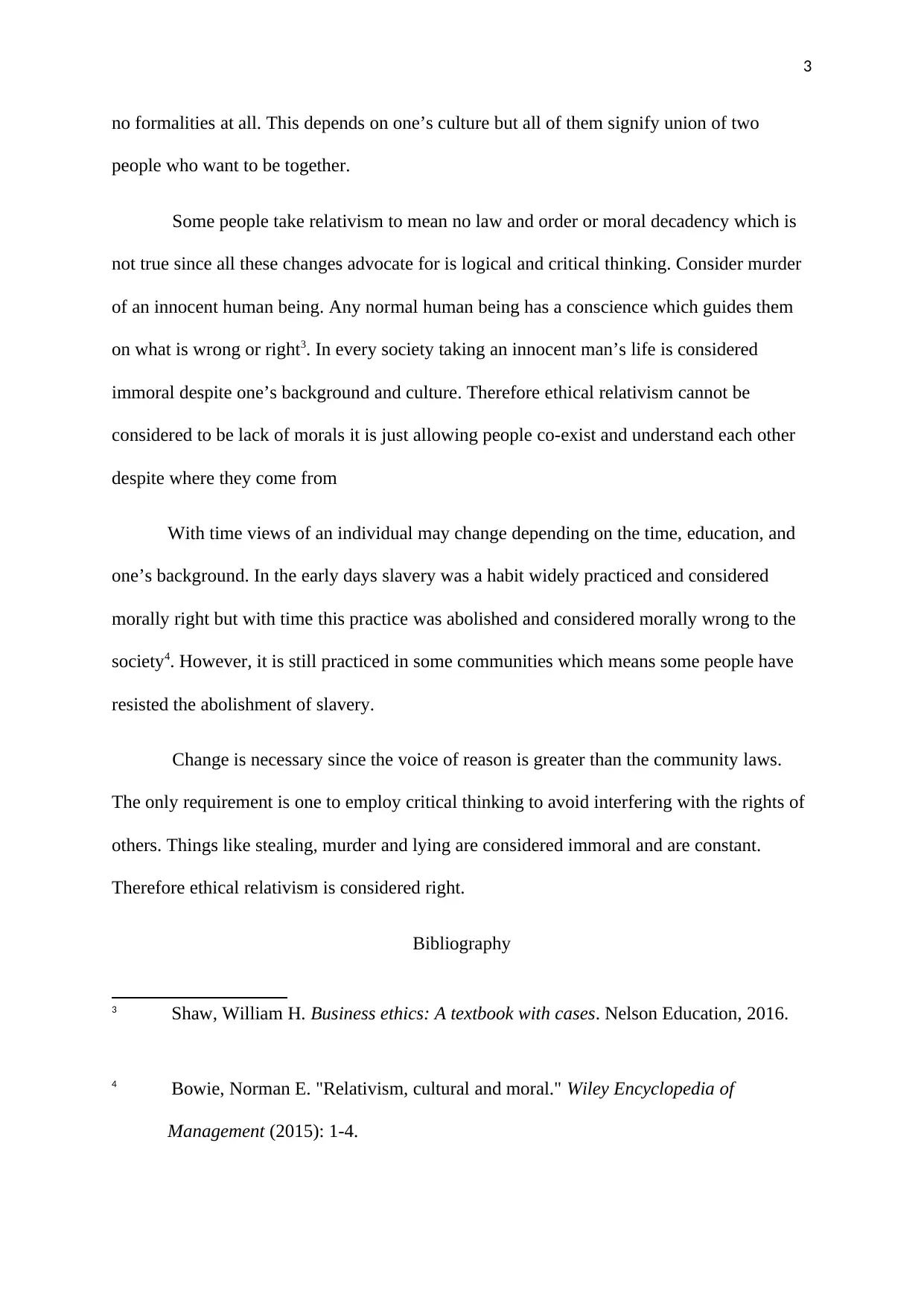
This essay examines the concept of ethical relativism, which posits that moral truths are relative to a particular society or individual. The essay explores the idea that right and wrong are not absolute but are instead determined by cultural norms and societal beliefs, emphasizing how different communities have varying sets of rules that govern their members. It discusses the advantages of ethical relativism, such as promoting peaceful coexistence and open-mindedness, while also addressing criticisms and potential drawbacks, including the challenge of defining universal moral standards. The essay uses examples such as differing marriage rites and slavery to illustrate the complexities of ethical relativism and argues that despite its challenges, it is a valid concept because it allows people to coexist and understand each other. The essay concludes that ethical relativism is correct, as it allows for critical thinking and consideration of individual rights, while also acknowledging the evolution of moral views over time.



1 out of 4


Related Documents


Your All-in-One AI-Powered Toolkit for Academic Success.
+13062052269
info@desklib.com
Available 24*7 on WhatsApp / Email
![[object Object]](/_next/static/media/star-bottom.7253800d.svg)
Copyright © 2020–2026 A2Z Services. All Rights Reserved. Developed and managed by ZUCOL.