BUACC5931: ISO 9000 Adoption & Impact on China's Service Firms
VerifiedAdded on 2023/06/07
|30
|4922
|192
Report
AI Summary
This report investigates the adoption of ISO 9000 standards and its correlation with firm performance within China's service industry, utilizing data from the National Bureau of Statistics of China. It explores the impact of ISO 9000 certification on key performance indicators such as revenue, operational profit, return on sales (ROS), and return on assets (ROA). The analysis involves descriptive and inferential statistical methods, including t-tests and ANOVA, to test hypotheses related to the benefits of ISO 9000 adoption. The literature review provides context from previous studies, highlighting the importance of quality management systems and the potential for improved operational and financial outcomes. The findings suggest that ISO 9000 certification can positively influence firm performance, particularly in revenue and profit, while the impact on ROS and ROA may be less pronounced.

ISO 9000 Certification Achieve on Chinese
Firms
Firms

Paraphrase This Document
Need a fresh take? Get an instant paraphrase of this document with our AI Paraphraser
01. Executive Summary
Objective
The inspiration for this article was to develop a functional role in the ISO 9000, creating a study
of the benefits of analyzing the speculative effects. ISO 9000-presents an action plan for the
specific parts and components of industrail norms and regulations. The data in the present study
has been obtain from the statistical bureau of China. Since the previous works found in other
countries was undeniable that the firms do not understand the homogeneous characteristics of
ISO 9000, this research aims to develop a model with statistical consistency. The constructive
effects of ISO compliance were analysed in the present study for the Chinese firms.
Results
The results may be of interest to the development of the community and a responsible
professional which could be used as a guide for the success of the company in the manufacturing
sector. The results could be suitable for a qualified and demanding community where the main
features of ISO 9000 choices were crucial for administrators; some parts of critical examination
applications were presented and could be used later. Recognition of ISO as a powerful tool was
important, and the article presents the effect that the choice of ISO certification increases the
operational and profit factor, and implications of ownership of the application installations of
ISO. The scholar found significant impact of ISO adoption for profit, revenue, return on sales,
and return on assests of the companies. The scholar utilised independent t-test and ANOVA to
establish the alternate hypotheses, which assumed significant difference in output due to ISO
norms. Considerable amount of outcome was verified for employee numbers and education level
for the two categories of firms in the database.
Recommendation
The results show a profitable effect that confirms the successful development of the company.
Study of Standardization 9000 certification of the international certification body, examined by
the Chinese companies, whether the ISO organization was an important element of development.
The outcomes indicated advantages for ISO firms in all aspects, which affirmed that firms should
become ISO complaint for superior bussiness results. Employee position of the ISO firms
Objective
The inspiration for this article was to develop a functional role in the ISO 9000, creating a study
of the benefits of analyzing the speculative effects. ISO 9000-presents an action plan for the
specific parts and components of industrail norms and regulations. The data in the present study
has been obtain from the statistical bureau of China. Since the previous works found in other
countries was undeniable that the firms do not understand the homogeneous characteristics of
ISO 9000, this research aims to develop a model with statistical consistency. The constructive
effects of ISO compliance were analysed in the present study for the Chinese firms.
Results
The results may be of interest to the development of the community and a responsible
professional which could be used as a guide for the success of the company in the manufacturing
sector. The results could be suitable for a qualified and demanding community where the main
features of ISO 9000 choices were crucial for administrators; some parts of critical examination
applications were presented and could be used later. Recognition of ISO as a powerful tool was
important, and the article presents the effect that the choice of ISO certification increases the
operational and profit factor, and implications of ownership of the application installations of
ISO. The scholar found significant impact of ISO adoption for profit, revenue, return on sales,
and return on assests of the companies. The scholar utilised independent t-test and ANOVA to
establish the alternate hypotheses, which assumed significant difference in output due to ISO
norms. Considerable amount of outcome was verified for employee numbers and education level
for the two categories of firms in the database.
Recommendation
The results show a profitable effect that confirms the successful development of the company.
Study of Standardization 9000 certification of the international certification body, examined by
the Chinese companies, whether the ISO organization was an important element of development.
The outcomes indicated advantages for ISO firms in all aspects, which affirmed that firms should
become ISO complaint for superior bussiness results. Employee position of the ISO firms
indicated that for adoption of the ISO compliances small non ISO firms should increase their
skilled staff strength.
Table of Contents
01.Executive Summary..................................2
02.Introduction..............................................4
03.Literature Review......................................5
04.Methodology...........................................11
05.Data Analysis..........................................12
5.1 Descriptive Analysis.............................12
5.2 Inferential Analysis...............................20
06.Discussion...............................................22
07.Limitation and Future scope....................23
08.References..............................................24
09.Appendix.................................................27
skilled staff strength.
Table of Contents
01.Executive Summary..................................2
02.Introduction..............................................4
03.Literature Review......................................5
04.Methodology...........................................11
05.Data Analysis..........................................12
5.1 Descriptive Analysis.............................12
5.2 Inferential Analysis...............................20
06.Discussion...............................................22
07.Limitation and Future scope....................23
08.References..............................................24
09.Appendix.................................................27
⊘ This is a preview!⊘
Do you want full access?
Subscribe today to unlock all pages.

Trusted by 1+ million students worldwide
02. Introduction
A number of companies were not capable of ISO adaptation because they depend on the
institutional environment. Thus, being involved in structural remorms, and organizational
rationality with technological processes was the new law. These requirements have been
numerous over the last ten years, especially as the economic importance of the quality system
could be achieved by adopting. The system to measure the quality of the companies' existence
and the very competitive position in the installation of these systems of complete identification
was capacity. The regulatory requirements of the International Organization (Terziovski, &
Guerrero, 2014) have undergone a screening of the quality management system requirements of
the resolution, currently around 900 000 ISO standard 9000-control companies (in 2007 (Cycle
17)) were certified worldwide (Christmann, & Taylor, 2006). Thus, an object-oriented
institutional quality certification of ISO 9000 quality processes of institutional economic
literature was to gain legitimacy and effectiveness as the most important thing. However, a
limited number of studies with Chine firms have been done for ISO 9000 certification.
Interestingly, even at these levels, many companies have yet not received ISO 9000
certifications. However, the implications and output of the companies that adapt ISO 9000 were
not equally comparable in all areas. Given that customer service was inconvenient for the
management of product quality, which could improve the quality of monitoring services. the
original development policies were more favorable to manufacturers. As a result, the logic of
long experience in manufacturing companies will benefit from the experience of quality control.
A number of companies were not capable of ISO adaptation because they depend on the
institutional environment. Thus, being involved in structural remorms, and organizational
rationality with technological processes was the new law. These requirements have been
numerous over the last ten years, especially as the economic importance of the quality system
could be achieved by adopting. The system to measure the quality of the companies' existence
and the very competitive position in the installation of these systems of complete identification
was capacity. The regulatory requirements of the International Organization (Terziovski, &
Guerrero, 2014) have undergone a screening of the quality management system requirements of
the resolution, currently around 900 000 ISO standard 9000-control companies (in 2007 (Cycle
17)) were certified worldwide (Christmann, & Taylor, 2006). Thus, an object-oriented
institutional quality certification of ISO 9000 quality processes of institutional economic
literature was to gain legitimacy and effectiveness as the most important thing. However, a
limited number of studies with Chine firms have been done for ISO 9000 certification.
Interestingly, even at these levels, many companies have yet not received ISO 9000
certifications. However, the implications and output of the companies that adapt ISO 9000 were
not equally comparable in all areas. Given that customer service was inconvenient for the
management of product quality, which could improve the quality of monitoring services. the
original development policies were more favorable to manufacturers. As a result, the logic of
long experience in manufacturing companies will benefit from the experience of quality control.
Paraphrase This Document
Need a fresh take? Get an instant paraphrase of this document with our AI Paraphraser
03. Literature Review
However, the earlier study of ISO 9000 identity was based mainly on the manufacturing industry
and was based on a relatively small number of companies. The innovation in the paper has been
the comparitive analysis with all the aspects of the firms from different manufcaturing sectors
(Hikichi, Salgado, & Beijo, 2017). The scholar has experimented with an original Chinese
database that allowed to test ISO 9000 certification status and differentiation of the results was
apparent in categorical grade of ISO.
Quality, customer satisfaction, and competitive position were essential elements. Unfortunately,
time management was rare, limited resources and the quality of knowledge was a barrier to
maitain the quality of in a small company. As a result, supposition of small businesses reaching
world-class quality often gets hit by practicality. By contrast, large companies and certified firms
could invest in a proper way. Perrini, Russo, Tencati, & Vurro (2011) argued that large
companies will continue to improve their value compared to small firms due to level of compact
design.
The affordable cost provides competitive advantage over contenders, according to Fonseca
(2015) quality control was based on the traditional economic model (ECL). There was a balance
between the cost of prevention and assessment and the internal and external costs of failure.
From a point of view, the optimal ECL has a marginal cost, the marginal faulty cost was equal to
the value. In the said work the survey trends were reflected, which indicated that ISO compalint
firms increased gradually within the time period of 1993 to 2013 (Figure 1).
However, the earlier study of ISO 9000 identity was based mainly on the manufacturing industry
and was based on a relatively small number of companies. The innovation in the paper has been
the comparitive analysis with all the aspects of the firms from different manufcaturing sectors
(Hikichi, Salgado, & Beijo, 2017). The scholar has experimented with an original Chinese
database that allowed to test ISO 9000 certification status and differentiation of the results was
apparent in categorical grade of ISO.
Quality, customer satisfaction, and competitive position were essential elements. Unfortunately,
time management was rare, limited resources and the quality of knowledge was a barrier to
maitain the quality of in a small company. As a result, supposition of small businesses reaching
world-class quality often gets hit by practicality. By contrast, large companies and certified firms
could invest in a proper way. Perrini, Russo, Tencati, & Vurro (2011) argued that large
companies will continue to improve their value compared to small firms due to level of compact
design.
The affordable cost provides competitive advantage over contenders, according to Fonseca
(2015) quality control was based on the traditional economic model (ECL). There was a balance
between the cost of prevention and assessment and the internal and external costs of failure.
From a point of view, the optimal ECL has a marginal cost, the marginal faulty cost was equal to
the value. In the said work the survey trends were reflected, which indicated that ISO compalint
firms increased gradually within the time period of 1993 to 2013 (Figure 1).
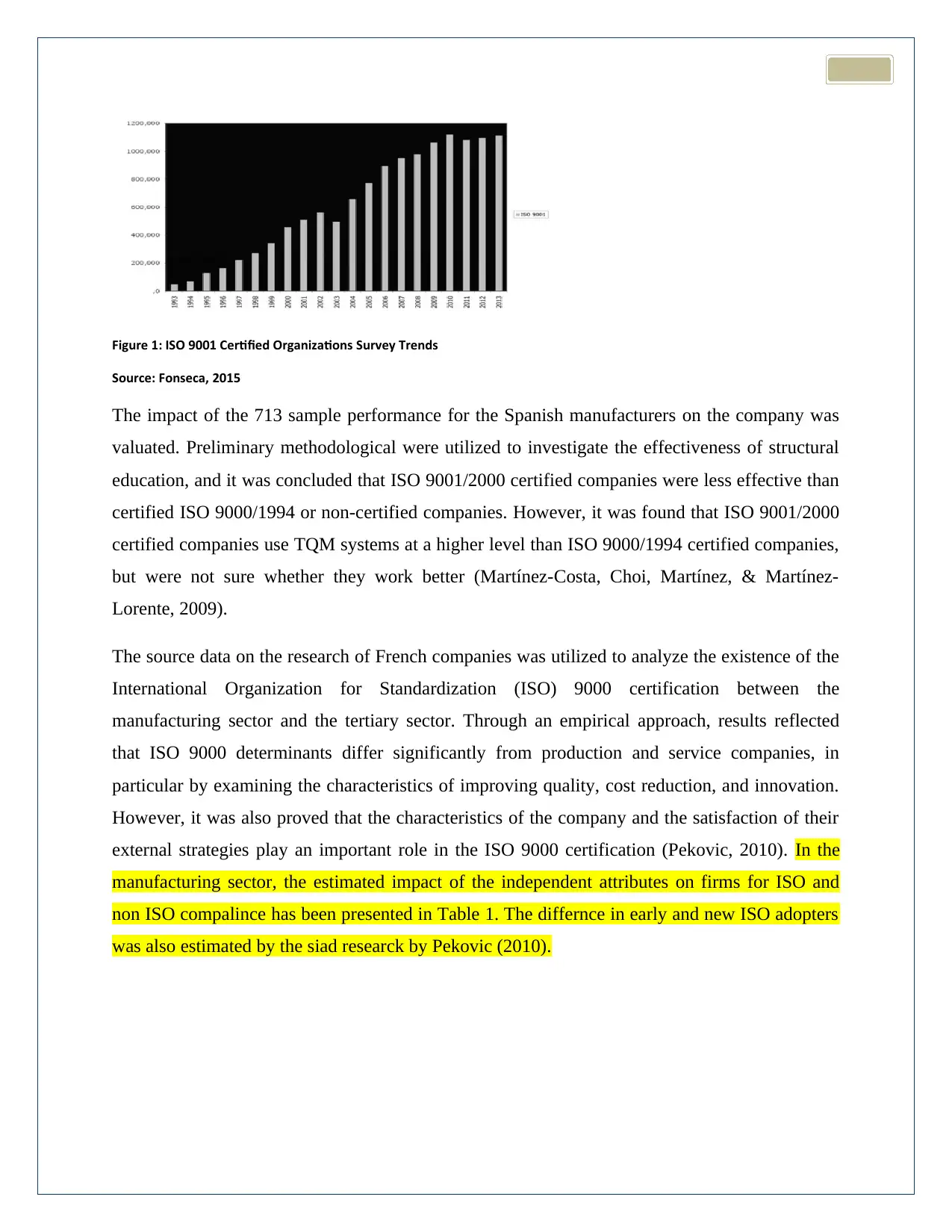
Figure 1: ISO 9001 Certified Organizations Survey Trends
Source: Fonseca, 2015
The impact of the 713 sample performance for the Spanish manufacturers on the company was
valuated. Preliminary methodological were utilized to investigate the effectiveness of structural
education, and it was concluded that ISO 9001/2000 certified companies were less effective than
certified ISO 9000/1994 or non-certified companies. However, it was found that ISO 9001/2000
certified companies use TQM systems at a higher level than ISO 9000/1994 certified companies,
but were not sure whether they work better (Martínez-Costa, Choi, Martínez, & Martínez-
Lorente, 2009).
The source data on the research of French companies was utilized to analyze the existence of the
International Organization for Standardization (ISO) 9000 certification between the
manufacturing sector and the tertiary sector. Through an empirical approach, results reflected
that ISO 9000 determinants differ significantly from production and service companies, in
particular by examining the characteristics of improving quality, cost reduction, and innovation.
However, it was also proved that the characteristics of the company and the satisfaction of their
external strategies play an important role in the ISO 9000 certification (Pekovic, 2010). In the
manufacturing sector, the estimated impact of the independent attributes on firms for ISO and
non ISO compalince has been presented in Table 1. The differnce in early and new ISO adopters
was also estimated by the siad researck by Pekovic (2010).
Source: Fonseca, 2015
The impact of the 713 sample performance for the Spanish manufacturers on the company was
valuated. Preliminary methodological were utilized to investigate the effectiveness of structural
education, and it was concluded that ISO 9001/2000 certified companies were less effective than
certified ISO 9000/1994 or non-certified companies. However, it was found that ISO 9001/2000
certified companies use TQM systems at a higher level than ISO 9000/1994 certified companies,
but were not sure whether they work better (Martínez-Costa, Choi, Martínez, & Martínez-
Lorente, 2009).
The source data on the research of French companies was utilized to analyze the existence of the
International Organization for Standardization (ISO) 9000 certification between the
manufacturing sector and the tertiary sector. Through an empirical approach, results reflected
that ISO 9000 determinants differ significantly from production and service companies, in
particular by examining the characteristics of improving quality, cost reduction, and innovation.
However, it was also proved that the characteristics of the company and the satisfaction of their
external strategies play an important role in the ISO 9000 certification (Pekovic, 2010). In the
manufacturing sector, the estimated impact of the independent attributes on firms for ISO and
non ISO compalince has been presented in Table 1. The differnce in early and new ISO adopters
was also estimated by the siad researck by Pekovic (2010).
⊘ This is a preview!⊘
Do you want full access?
Subscribe today to unlock all pages.
Trusted by 1+ million students worldwide
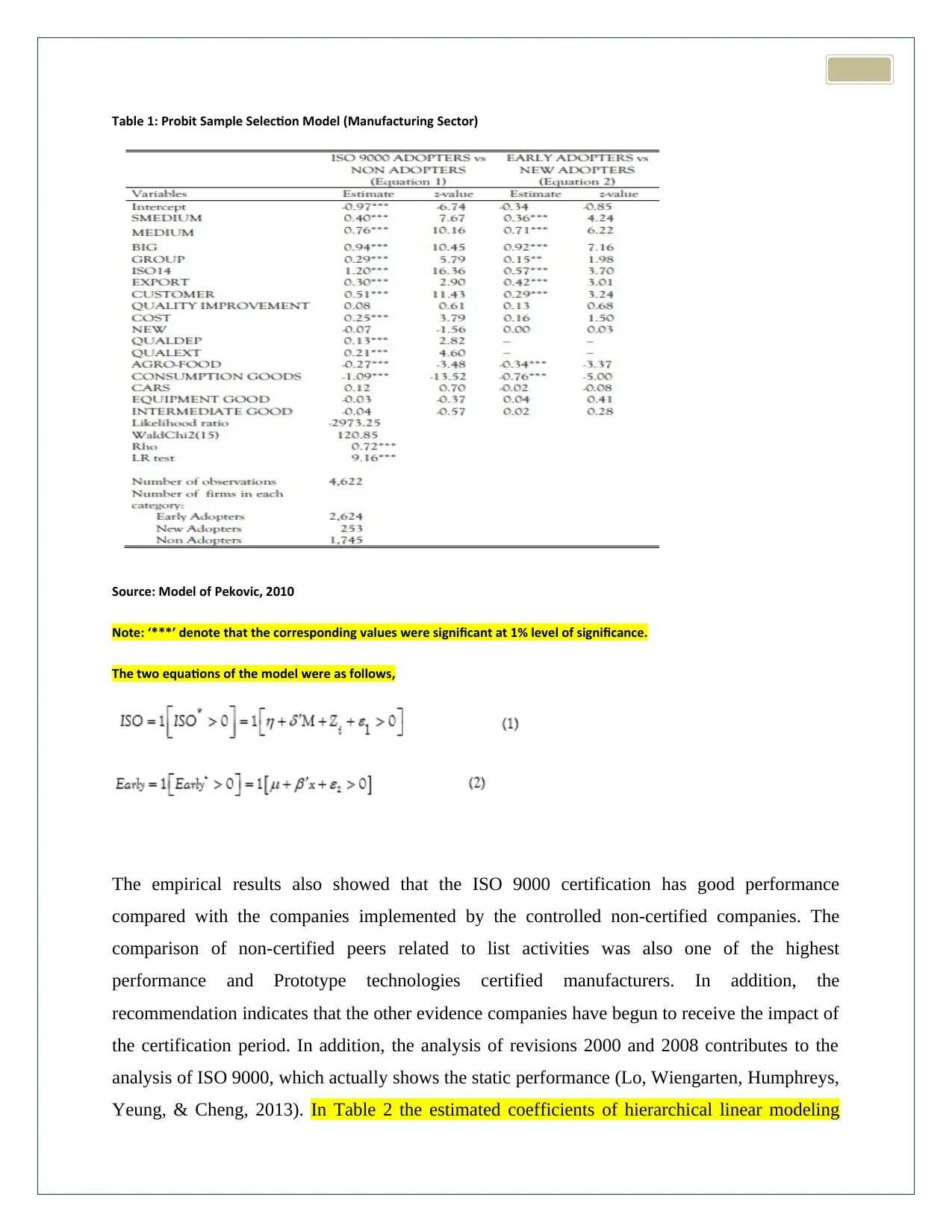
Table 1: Probit Sample Selection Model (Manufacturing Sector)
Source: Model of Pekovic, 2010
Note: ‘***’ denote that the corresponding values were significant at 1% level of significance.
The two equations of the model were as follows,
The empirical results also showed that the ISO 9000 certification has good performance
compared with the companies implemented by the controlled non-certified companies. The
comparison of non-certified peers related to list activities was also one of the highest
performance and Prototype technologies certified manufacturers. In addition, the
recommendation indicates that the other evidence companies have begun to receive the impact of
the certification period. In addition, the analysis of revisions 2000 and 2008 contributes to the
analysis of ISO 9000, which actually shows the static performance (Lo, Wiengarten, Humphreys,
Yeung, & Cheng, 2013). In Table 2 the estimated coefficients of hierarchical linear modeling
Source: Model of Pekovic, 2010
Note: ‘***’ denote that the corresponding values were significant at 1% level of significance.
The two equations of the model were as follows,
The empirical results also showed that the ISO 9000 certification has good performance
compared with the companies implemented by the controlled non-certified companies. The
comparison of non-certified peers related to list activities was also one of the highest
performance and Prototype technologies certified manufacturers. In addition, the
recommendation indicates that the other evidence companies have begun to receive the impact of
the certification period. In addition, the analysis of revisions 2000 and 2008 contributes to the
analysis of ISO 9000, which actually shows the static performance (Lo, Wiengarten, Humphreys,
Yeung, & Cheng, 2013). In Table 2 the estimated coefficients of hierarchical linear modeling
Paraphrase This Document
Need a fresh take? Get an instant paraphrase of this document with our AI Paraphraser
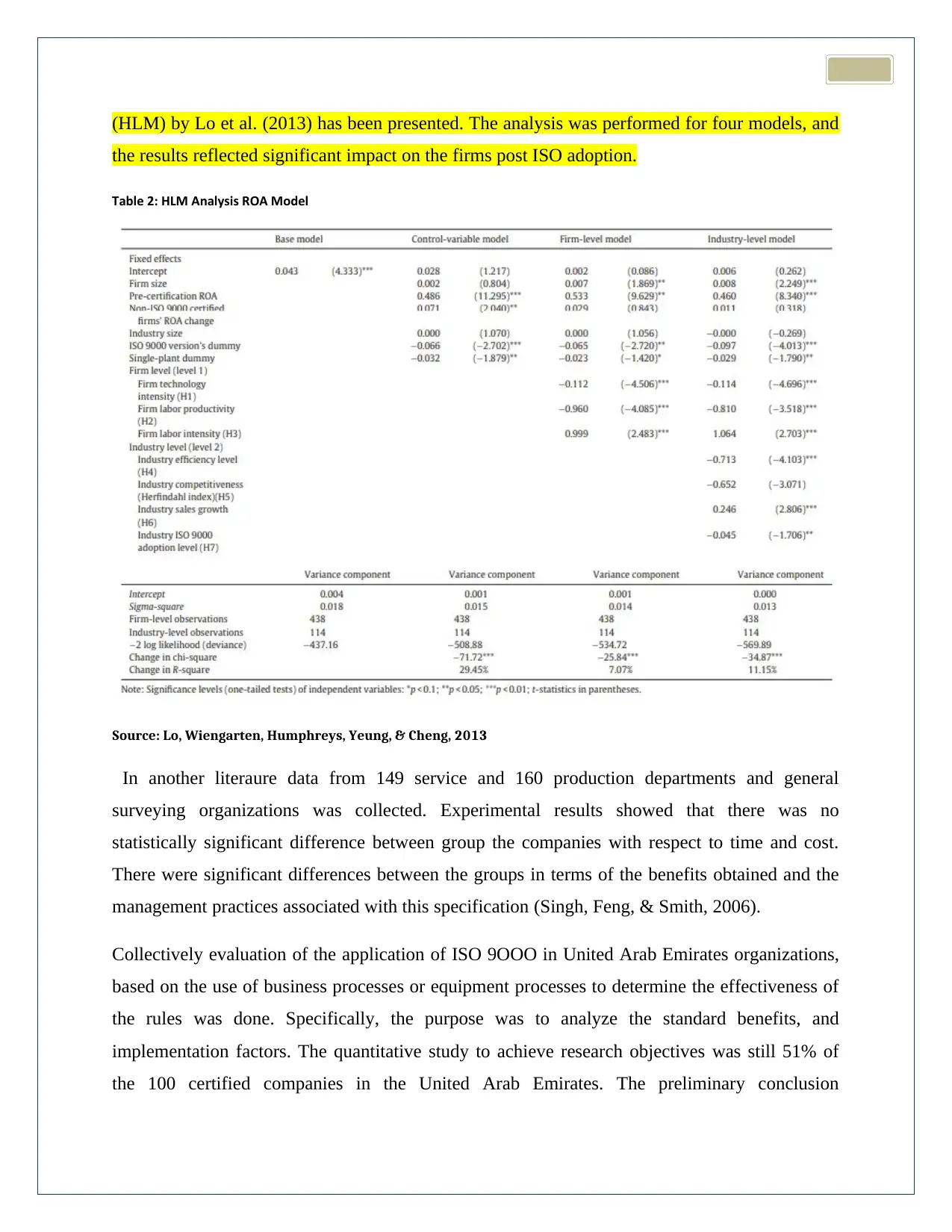
(HLM) by Lo et al. (2013) has been presented. The analysis was performed for four models, and
the results reflected significant impact on the firms post ISO adoption.
Table 2: HLM Analysis ROA Model
Source: Lo, Wiengarten, Humphreys, Yeung, & Cheng, 2013
In another literaure data from 149 service and 160 production departments and general
surveying organizations was collected. Experimental results showed that there was no
statistically significant difference between group the companies with respect to time and cost.
There were significant differences between the groups in terms of the benefits obtained and the
management practices associated with this specification (Singh, Feng, & Smith, 2006).
Collectively evaluation of the application of ISO 9OOO in United Arab Emirates organizations,
based on the use of business processes or equipment processes to determine the effectiveness of
the rules was done. Specifically, the purpose was to analyze the standard benefits, and
implementation factors. The quantitative study to achieve research objectives was still 51% of
the 100 certified companies in the United Arab Emirates. The preliminary conclusion
the results reflected significant impact on the firms post ISO adoption.
Table 2: HLM Analysis ROA Model
Source: Lo, Wiengarten, Humphreys, Yeung, & Cheng, 2013
In another literaure data from 149 service and 160 production departments and general
surveying organizations was collected. Experimental results showed that there was no
statistically significant difference between group the companies with respect to time and cost.
There were significant differences between the groups in terms of the benefits obtained and the
management practices associated with this specification (Singh, Feng, & Smith, 2006).
Collectively evaluation of the application of ISO 9OOO in United Arab Emirates organizations,
based on the use of business processes or equipment processes to determine the effectiveness of
the rules was done. Specifically, the purpose was to analyze the standard benefits, and
implementation factors. The quantitative study to achieve research objectives was still 51% of
the 100 certified companies in the United Arab Emirates. The preliminary conclusion
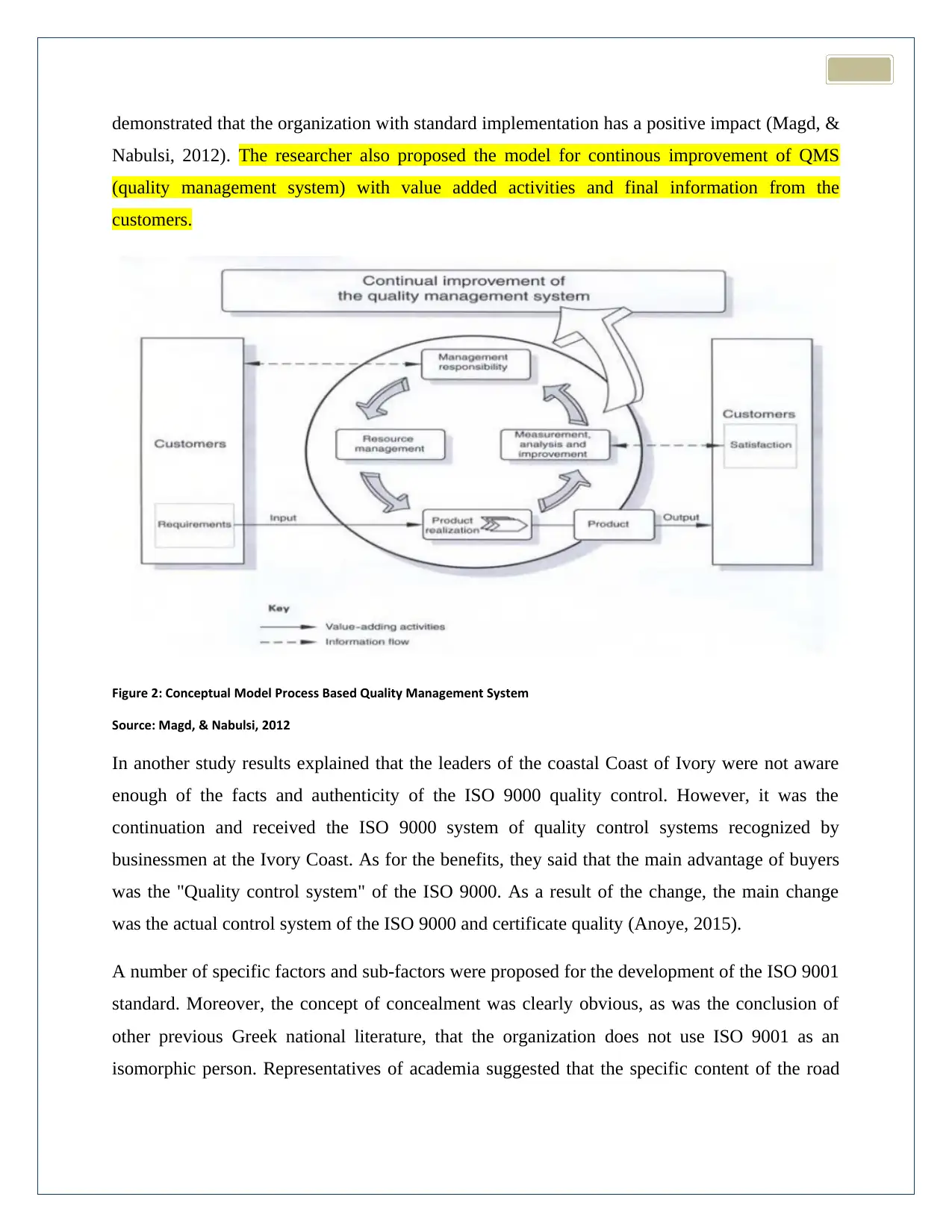
demonstrated that the organization with standard implementation has a positive impact (Magd, &
Nabulsi, 2012). The researcher also proposed the model for continous improvement of QMS
(quality management system) with value added activities and final information from the
customers.
Figure 2: Conceptual Model Process Based Quality Management System
Source: Magd, & Nabulsi, 2012
In another study results explained that the leaders of the coastal Coast of Ivory were not aware
enough of the facts and authenticity of the ISO 9000 quality control. However, it was the
continuation and received the ISO 9000 system of quality control systems recognized by
businessmen at the Ivory Coast. As for the benefits, they said that the main advantage of buyers
was the "Quality control system" of the ISO 9000. As a result of the change, the main change
was the actual control system of the ISO 9000 and certificate quality (Anoye, 2015).
A number of specific factors and sub-factors were proposed for the development of the ISO 9001
standard. Moreover, the concept of concealment was clearly obvious, as was the conclusion of
other previous Greek national literature, that the organization does not use ISO 9001 as an
isomorphic person. Representatives of academia suggested that the specific content of the road
Nabulsi, 2012). The researcher also proposed the model for continous improvement of QMS
(quality management system) with value added activities and final information from the
customers.
Figure 2: Conceptual Model Process Based Quality Management System
Source: Magd, & Nabulsi, 2012
In another study results explained that the leaders of the coastal Coast of Ivory were not aware
enough of the facts and authenticity of the ISO 9000 quality control. However, it was the
continuation and received the ISO 9000 system of quality control systems recognized by
businessmen at the Ivory Coast. As for the benefits, they said that the main advantage of buyers
was the "Quality control system" of the ISO 9000. As a result of the change, the main change
was the actual control system of the ISO 9000 and certificate quality (Anoye, 2015).
A number of specific factors and sub-factors were proposed for the development of the ISO 9001
standard. Moreover, the concept of concealment was clearly obvious, as was the conclusion of
other previous Greek national literature, that the organization does not use ISO 9001 as an
isomorphic person. Representatives of academia suggested that the specific content of the road
⊘ This is a preview!⊘
Do you want full access?
Subscribe today to unlock all pages.
Trusted by 1+ million students worldwide
should be categorized as appropriate for our future work (Siougle, Dimelis, & Economidou,
2018).
The analytical research of select Chinese certification company ISO monitors the level of
compliance based on customer preferences, customer and checking the flow of customers. What
was find that it affects effective self-regulatory system based on the level of certification, and
research-based business, with suppliers to obtain the certificate of quality (Chou, 2009).
Literaute results showed that companies will benefit more from businesses with low efficiency,
high competition, and. The research offered a useful test for 9000-review, depending on the
reference to the citations. including costs and specific resources, the operation was important for
administrators who could benefit from their results before the implementation of 9000 processes
(Dahlgaard, Khanji, & Kristensen, 2008).
Another researcher compared ISO 9001 and 14001 ISO development. The results showed that
the number of ISO 14001 certificate more regularly on the African continent. The number of
certificates of higher 9000 ISO to 14001 ISO, but inequality withdrew the level. This work
offered an interpreter by the director in the Council of Ministers, aimed at entrepreneurs,
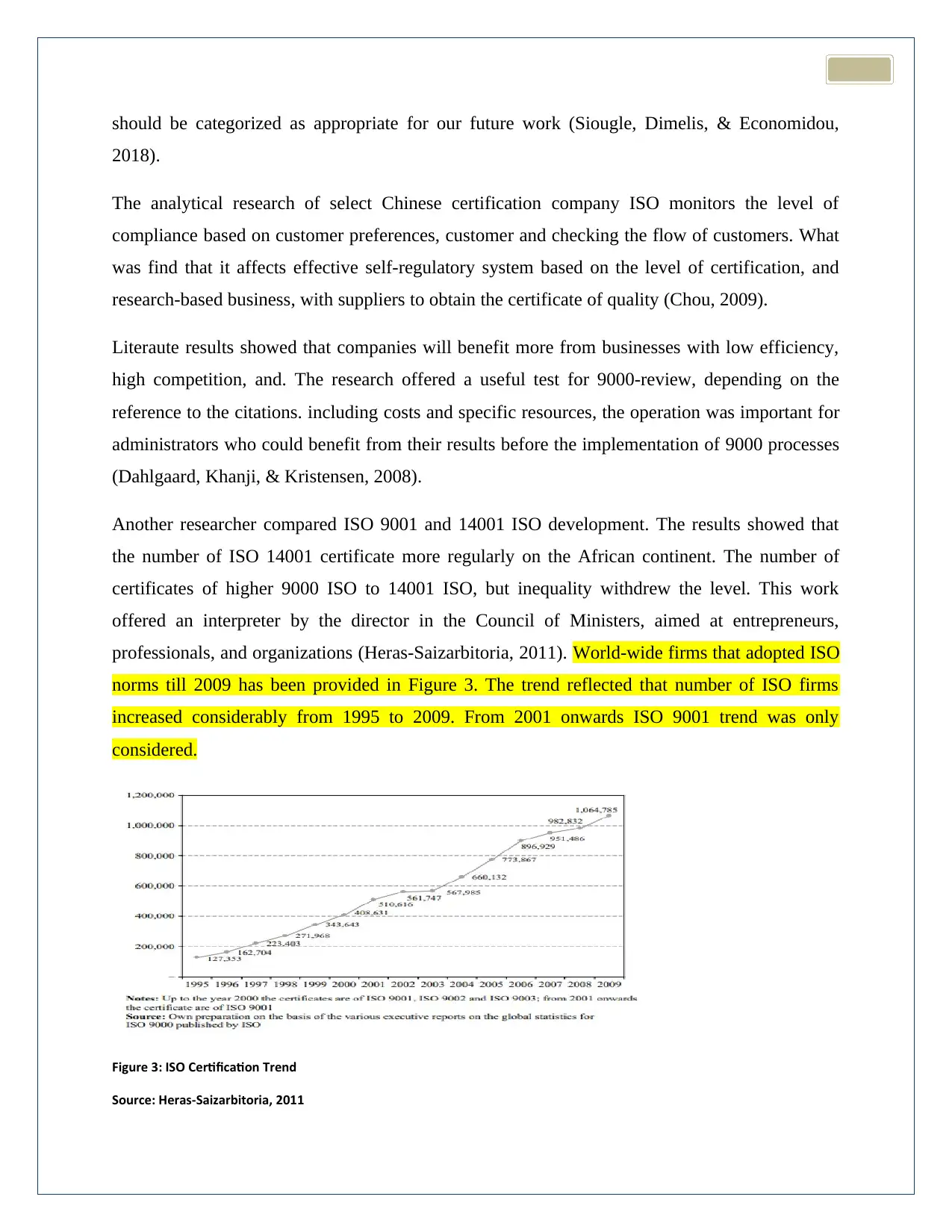
professionals, and organizations (Heras‐Saizarbitoria, 2011). World-wide firms that adopted ISO
norms till 2009 has been provided in Figure 3. The trend reflected that number of ISO firms
increased considerably from 1995 to 2009. From 2001 onwards ISO 9001 trend was only
considered.
Figure 3: ISO Certification Trend
Source: Heras‐Saizarbitoria, 2011
2018).
The analytical research of select Chinese certification company ISO monitors the level of
compliance based on customer preferences, customer and checking the flow of customers. What
was find that it affects effective self-regulatory system based on the level of certification, and
research-based business, with suppliers to obtain the certificate of quality (Chou, 2009).
Literaute results showed that companies will benefit more from businesses with low efficiency,
high competition, and. The research offered a useful test for 9000-review, depending on the
reference to the citations. including costs and specific resources, the operation was important for
administrators who could benefit from their results before the implementation of 9000 processes
(Dahlgaard, Khanji, & Kristensen, 2008).
Another researcher compared ISO 9001 and 14001 ISO development. The results showed that
the number of ISO 14001 certificate more regularly on the African continent. The number of
certificates of higher 9000 ISO to 14001 ISO, but inequality withdrew the level. This work
offered an interpreter by the director in the Council of Ministers, aimed at entrepreneurs,
professionals, and organizations (Heras‐Saizarbitoria, 2011). World-wide firms that adopted ISO
norms till 2009 has been provided in Figure 3. The trend reflected that number of ISO firms
increased considerably from 1995 to 2009. From 2001 onwards ISO 9001 trend was only
considered.
Figure 3: ISO Certification Trend
Source: Heras‐Saizarbitoria, 2011
Paraphrase This Document
Need a fresh take? Get an instant paraphrase of this document with our AI Paraphraser
04. Methodology
4.1 Data Collection
In addition to the ISO 9000 conjecture, the Chinese national data statistics bureau was motivated
by the concentration of non ISO complaint sectors. Information on 5717 Chinese firms was
collected from the statistical bureau. The sampling was done based on the secondary data, and no
primary information was collected. Among the firms, 5257 were non ISO complaint and rest 460
firms were found to follow the ISO 9000 compliance rules.
4.2 Design
Extensive exploratory analysis was performed on the database of the firms. Descriptive measures
were analysed for proper scrutiny of the ISO effects on firms. Comparative inferential analyses
were conducted with the help of independent t-test, ANOVA (single factor), Pearson’s
correlation, and Chi-Square test of independence.
4.3 Variables
Four continuous variables were contextual with the present study. Difference in firms’ output
was investigated for the effect of binary control variable, ISO certification. In the last stages on
inferential investigation employee status (number, educational fields) was tested for
independence based on ISO certification status.
4.4 Hypotheses
The hypotheses of this exploration implicitly tried to check the structural similarities of the
firms, which were measured in this article to present the competitive picture. The scholar
emphasized for the adoption of the ISO 9000 standard for working within the business
competitive environment. The assumed hypotheses have been presented in the following tabular
form. This document has been written in four layers to outlay the effects of ISO 9000 affiliation.
In addition, it was important to bridge the literatures related to ISO complaint organizational
4.1 Data Collection
In addition to the ISO 9000 conjecture, the Chinese national data statistics bureau was motivated
by the concentration of non ISO complaint sectors. Information on 5717 Chinese firms was
collected from the statistical bureau. The sampling was done based on the secondary data, and no
primary information was collected. Among the firms, 5257 were non ISO complaint and rest 460
firms were found to follow the ISO 9000 compliance rules.
4.2 Design
Extensive exploratory analysis was performed on the database of the firms. Descriptive measures
were analysed for proper scrutiny of the ISO effects on firms. Comparative inferential analyses
were conducted with the help of independent t-test, ANOVA (single factor), Pearson’s
correlation, and Chi-Square test of independence.
4.3 Variables
Four continuous variables were contextual with the present study. Difference in firms’ output
was investigated for the effect of binary control variable, ISO certification. In the last stages on
inferential investigation employee status (number, educational fields) was tested for
independence based on ISO certification status.
4.4 Hypotheses
The hypotheses of this exploration implicitly tried to check the structural similarities of the
firms, which were measured in this article to present the competitive picture. The scholar
emphasized for the adoption of the ISO 9000 standard for working within the business
competitive environment. The assumed hypotheses have been presented in the following tabular
form. This document has been written in four layers to outlay the effects of ISO 9000 affiliation.
In addition, it was important to bridge the literatures related to ISO complaint organizational
structure. The ISO 9000 directory of the developed countries mainly attracts researches from the
developing nations, but the statements provided here reflected the need to investigate disputes
and they could occur in a collection of different categorical information. Therefore, the
difference in the state of adoptive and yet to be implemented, has been focused on (Cao and
Prakash, 2011).
Table 3: Null Hypotheses of the Present Literature
Hypothesis Statement
H01 Sales (Revenue) of the company is independent of ISO
certification
H02 Profit of the company is independent of ISO certification
H03 Return on sales is independent of ISO certification
H04 Return on assets is independent of ISO certification
05. Data Analysis
5.1 Exploration of Data and Descriptive Analysis
Information was collected during financial survey by the National Agency and has been
published in the database for the present research. Hence, the database was considered credible
for the study. A descriptive detail of each variable was explored and has been summarized in
Table 3 and Table 4. A supporting ethics depends on the company's turnover and the reliance on
commercial research. The comparative monitoring has shown that the average employee number
of high-level training for the ISO was higher than the non-ISO 9000 firms. The other important
areas were sales, profit, corporate investment, and foreign direct investment.
developing nations, but the statements provided here reflected the need to investigate disputes
and they could occur in a collection of different categorical information. Therefore, the
difference in the state of adoptive and yet to be implemented, has been focused on (Cao and
Prakash, 2011).
Table 3: Null Hypotheses of the Present Literature
Hypothesis Statement
H01 Sales (Revenue) of the company is independent of ISO
certification
H02 Profit of the company is independent of ISO certification
H03 Return on sales is independent of ISO certification
H04 Return on assets is independent of ISO certification
05. Data Analysis
5.1 Exploration of Data and Descriptive Analysis
Information was collected during financial survey by the National Agency and has been
published in the database for the present research. Hence, the database was considered credible
for the study. A descriptive detail of each variable was explored and has been summarized in
Table 3 and Table 4. A supporting ethics depends on the company's turnover and the reliance on
commercial research. The comparative monitoring has shown that the average employee number
of high-level training for the ISO was higher than the non-ISO 9000 firms. The other important
areas were sales, profit, corporate investment, and foreign direct investment.
⊘ This is a preview!⊘
Do you want full access?
Subscribe today to unlock all pages.
Trusted by 1+ million students worldwide

1 out of 30


Related Documents


Your All-in-One AI-Powered Toolkit for Academic Success.
+13062052269
info@desklib.com
Available 24*7 on WhatsApp / Email
![[object Object]](/_next/static/media/star-bottom.7253800d.svg)
Unlock your academic potential
Copyright © 2020–2026 A2Z Services. All Rights Reserved. Developed and managed by ZUCOL.