ISYS225 Systems Analysis and Design Assignment 2: CRM System Design
VerifiedAdded on  2022/11/25
|12
|1411
|311
Report
AI Summary
This report presents a comprehensive solution for ISYS225 Systems Analysis and Design Assignment 2, focusing on the application of systems analysis and design principles to a CRM system. The assignment begins with a reflective journal of approximately 900-1000 words, demonstrating an understanding of the fundamental concepts learned throughout the semester. It then delves into the design models for the CRM system, including a use case diagram illustrating system usage, an activity diagram depicting student and admin processes, a class diagram outlining the system's classes, and a system sequence diagram detailing message exchanges. The report also includes references to support the analysis and design choices, highlighting the practical application of object-oriented design principles and UML modeling. The CRM system is designed to address organizational challenges in managing student and volunteer rosters, aiming to improve efficiency and streamline processes. The provided diagrams visually represent the system's functionality, ensuring clarity and aiding in the development and understanding of the CRM system's design.

Running head: ISYS225 SYSTEMS ANALYSIS AND DESIGN
ISYS225 SYSTEMS ANALYSIS AND DESIGN
Name of student
Name of university
Author’s note:
ISYS225 SYSTEMS ANALYSIS AND DESIGN
Name of student
Name of university
Author’s note:
Paraphrase This Document
Need a fresh take? Get an instant paraphrase of this document with our AI Paraphraser

1
ISYS225 SYSTEMS ANALYSIS AND DESIGN
Table of Contents
Reflective journal...........................................................................................................2
Use case diagram............................................................................................................5
Activity diagram.............................................................................................................6
Class diagram.................................................................................................................8
System sequence diagram..............................................................................................9
References....................................................................................................................10
ISYS225 SYSTEMS ANALYSIS AND DESIGN
Table of Contents
Reflective journal...........................................................................................................2
Use case diagram............................................................................................................5
Activity diagram.............................................................................................................6
Class diagram.................................................................................................................8
System sequence diagram..............................................................................................9
References....................................................................................................................10

2
ISYS225 SYSTEMS ANALYSIS AND DESIGN
Reflective journal
It could be considered that the main goals of the system analysis and design has been
the improvement of the organisational systems. Frequently this kind of procedure includes
the development or even acquisition of the application software and then training the
employees for using the software efficiently (Azar and Vaidyanathan 2015). The application
software, commonly referred as the system is mainly designed for supporting any particular
process or function of the organisation like the inventory management, market analysis or the
payroll. The main goal of the application is turning the data into effective information. For
instance, the software that is created for any inventory division at the bookstore might
preserve the track of accurate amount of the books in inventory division at any bookstore
might preserve the track of the number of the books included in the stock of newest best
seller. The software that is primarily designed for payroll department might help in keeping
the track of altering pay rates of the employees (Dennis, Wixom and Roth 2018). It could be
considered that the range of the off-the-shelf application software could be easily procured.
Moreover, the off-the-shelf software might not fit all the requirements of any specific
organisation and therefore, it is required for the organisation to develop their own product
(Pedrycz 2016). It could be considered that the aspect of the system analysis and design is
active and exciting sector where the analysts constantly learn the new techniques as well as
the approaches for developing the systems increasingly efficiently and effectively. Moreover,
presently there are a central set of required skills for understanding that no matter the tactic or
the methodology utilised, the software is effectively developed and it works as intended. All
the projects of information systems travels through the four stages of the design, planning,
analysis as well as the implementation, the projects needs analysts to collect the
requirements, efficiently model the requirements of the business plus creating the blueprints
for process by which the development of the system would be done and all the projects needs
ISYS225 SYSTEMS ANALYSIS AND DESIGN
Reflective journal
It could be considered that the main goals of the system analysis and design has been
the improvement of the organisational systems. Frequently this kind of procedure includes
the development or even acquisition of the application software and then training the
employees for using the software efficiently (Azar and Vaidyanathan 2015). The application
software, commonly referred as the system is mainly designed for supporting any particular
process or function of the organisation like the inventory management, market analysis or the
payroll. The main goal of the application is turning the data into effective information. For
instance, the software that is created for any inventory division at the bookstore might
preserve the track of accurate amount of the books in inventory division at any bookstore
might preserve the track of the number of the books included in the stock of newest best
seller. The software that is primarily designed for payroll department might help in keeping
the track of altering pay rates of the employees (Dennis, Wixom and Roth 2018). It could be
considered that the range of the off-the-shelf application software could be easily procured.
Moreover, the off-the-shelf software might not fit all the requirements of any specific
organisation and therefore, it is required for the organisation to develop their own product
(Pedrycz 2016). It could be considered that the aspect of the system analysis and design is
active and exciting sector where the analysts constantly learn the new techniques as well as
the approaches for developing the systems increasingly efficiently and effectively. Moreover,
presently there are a central set of required skills for understanding that no matter the tactic or
the methodology utilised, the software is effectively developed and it works as intended. All
the projects of information systems travels through the four stages of the design, planning,
analysis as well as the implementation, the projects needs analysts to collect the
requirements, efficiently model the requirements of the business plus creating the blueprints
for process by which the development of the system would be done and all the projects needs
⊘ This is a preview!⊘
Do you want full access?
Subscribe today to unlock all pages.

Trusted by 1+ million students worldwide

3
ISYS225 SYSTEMS ANALYSIS AND DESIGN
the proper understanding of the behaviour of the organisation concepts such as the team
building and the change management (Balanis 2016).
It could be analysed that the major goal of system analysis and design is the
improvement of organisation systems. Information system analysis and design has been
growing as the presently the most popular method that is used by the companies for creating
and then maintain the information systems that performs the fundamental business
functionalities like processing the orders, maintaining the track of the customer names plus
the addresses as well as paying the employees (Gupta 2017). The most common method of
system analysis and design is the object oriented designing. The procedure of the object
oriented design is mainly the extension of the procedure of the object oriented analysis except
one crucial aspect, the consideration and the implementation of the constraints. The object
oriented analysis and design has been considered as the technical method that is used for the
analysis and design used in any system or application using the proper application of the
concepts and hypothesis of object oriented approach that includes the visual modelling
(Gonen 2015). This particular approach is mainly applied all through development life cycle
of the application or system with the intention of fostering the improved product value and
also reassuring the participation of the stakeholder and the communication.
In present times, the software and the computer application system are significantly
complicated concepts as there are significantly few material limitations and lot of the possible
arbitrary reconstructions (Giurgiutiu and Lyshevski 2016). It could be analysed that the
software does not enjoy any kind of restrictions and there is required minimal room for the
complexity for growing large. This is the aspect where the object oriented analysis and design
is introduced. It utilises the abstraction as the tool for encapsulating the complexity and with
introduction of the increased abstractions, the greater is reduction of the complexity. These
particular acts of the encapsulation and the abstractions permits for the specific issues to be
ISYS225 SYSTEMS ANALYSIS AND DESIGN
the proper understanding of the behaviour of the organisation concepts such as the team
building and the change management (Balanis 2016).
It could be analysed that the major goal of system analysis and design is the
improvement of organisation systems. Information system analysis and design has been
growing as the presently the most popular method that is used by the companies for creating
and then maintain the information systems that performs the fundamental business
functionalities like processing the orders, maintaining the track of the customer names plus
the addresses as well as paying the employees (Gupta 2017). The most common method of
system analysis and design is the object oriented designing. The procedure of the object
oriented design is mainly the extension of the procedure of the object oriented analysis except
one crucial aspect, the consideration and the implementation of the constraints. The object
oriented analysis and design has been considered as the technical method that is used for the
analysis and design used in any system or application using the proper application of the
concepts and hypothesis of object oriented approach that includes the visual modelling
(Gonen 2015). This particular approach is mainly applied all through development life cycle
of the application or system with the intention of fostering the improved product value and
also reassuring the participation of the stakeholder and the communication.
In present times, the software and the computer application system are significantly
complicated concepts as there are significantly few material limitations and lot of the possible
arbitrary reconstructions (Giurgiutiu and Lyshevski 2016). It could be analysed that the
software does not enjoy any kind of restrictions and there is required minimal room for the
complexity for growing large. This is the aspect where the object oriented analysis and design
is introduced. It utilises the abstraction as the tool for encapsulating the complexity and with
introduction of the increased abstractions, the greater is reduction of the complexity. These
particular acts of the encapsulation and the abstractions permits for the specific issues to be
Paraphrase This Document
Need a fresh take? Get an instant paraphrase of this document with our AI Paraphraser

4
ISYS225 SYSTEMS ANALYSIS AND DESIGN
efficiently highlighted and then subsequently suppressed. The object oriented analysis and the
design is most appropriate iteratively as there is none clear process included but each of the
aspect where the object analysis and design is applied is refined as it has been reused. This
happens due to the fact that the major portions of designs are entirely based on entire
prospects of system and on entities instead of the individual functions and the codes (Lessard,
Recht and Packard 2016). It helps in enforcing efficient modular approach of the object
oriented analysis and design whose primary goal is the segregation of the problem or system
into efficient smaller units, referred as objects that could efficiently stand on their own and
could be easily changed deprived of affecting the adjacent sector too much. It makes the
process significantly easy to add the functionality and the behaviour and permit the system in
gracefully accept the changes.
From this perspective, it could be analysed that concepts of the system analysis and
design could be applied to the CRM implemented in the considered organisation. The
organisation provides the services to older people and the students for making their lives
significantly better. The main issue that is presently residing in the organisation is regarding
the preparation of the roster for student and the volunteers. With the implementation of the
CRM system in this organisation, this particular issue could be easily mitigated. With the
help of system analysis and design in this CRM development project, various aspects of the
requirements could be effectively divided which would help in understanding the
requirements more easily. The UML modelling is used in this project that includes the
activity diagram, use case diagram, system sequence diagram and the class diagram. All these
diagrams helps in better modelling the functions of the CRM system in the organisation. The
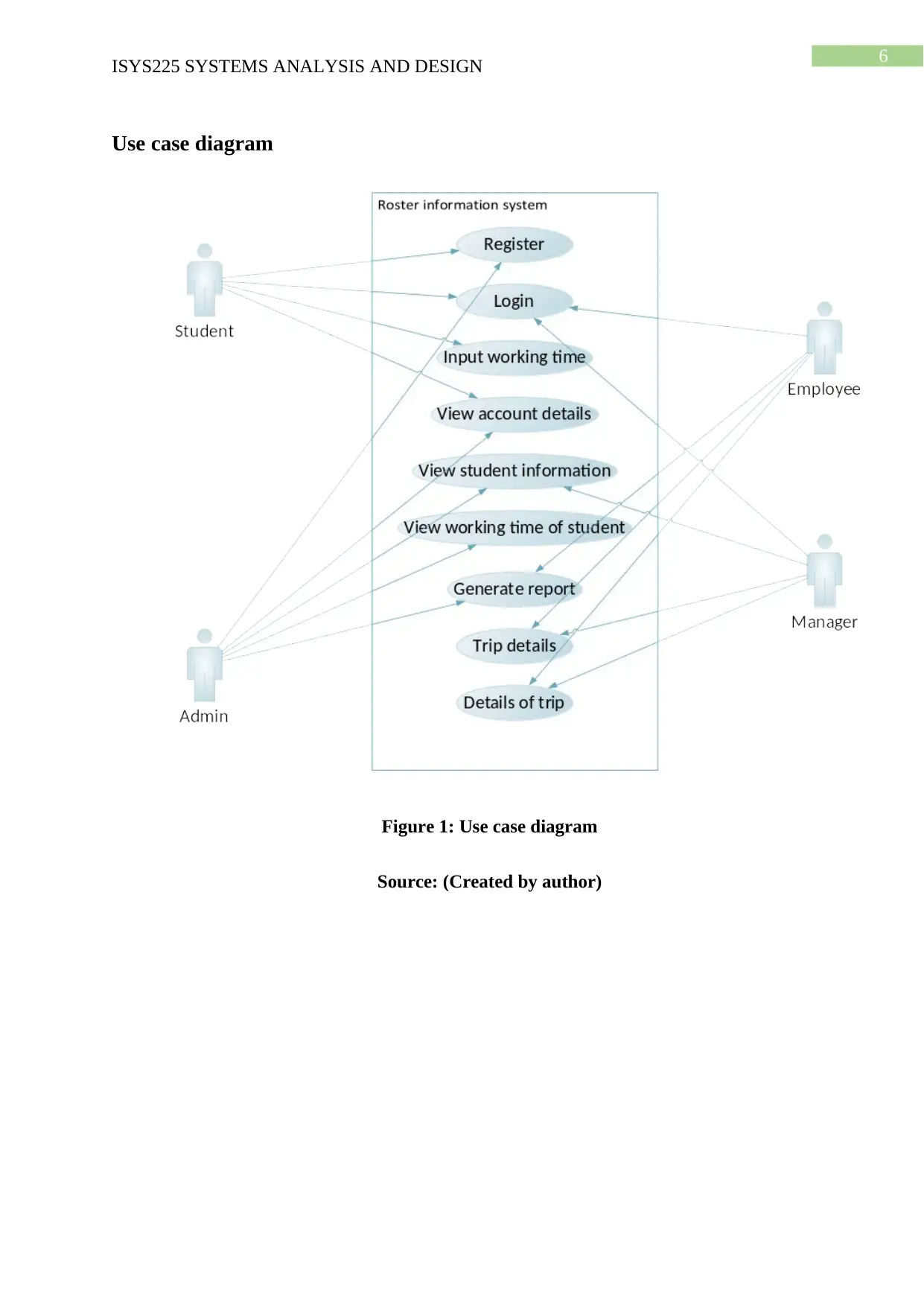
use case diagrams helps in understanding who would be using the system and how they
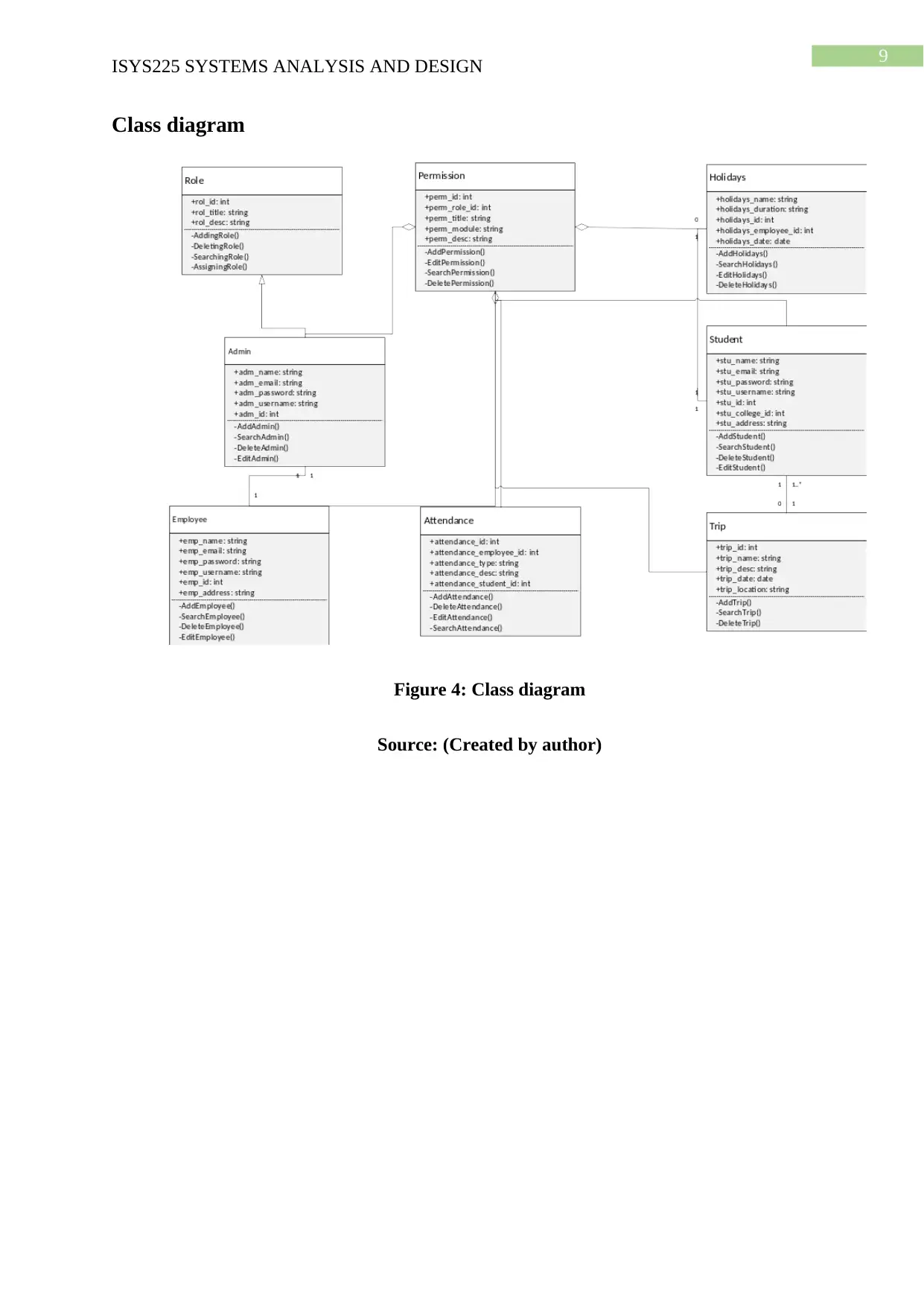
would be using it. The class diagram helps in identifying the main classes of the system being
developed.
ISYS225 SYSTEMS ANALYSIS AND DESIGN
efficiently highlighted and then subsequently suppressed. The object oriented analysis and the
design is most appropriate iteratively as there is none clear process included but each of the
aspect where the object analysis and design is applied is refined as it has been reused. This
happens due to the fact that the major portions of designs are entirely based on entire
prospects of system and on entities instead of the individual functions and the codes (Lessard,
Recht and Packard 2016). It helps in enforcing efficient modular approach of the object
oriented analysis and design whose primary goal is the segregation of the problem or system
into efficient smaller units, referred as objects that could efficiently stand on their own and
could be easily changed deprived of affecting the adjacent sector too much. It makes the
process significantly easy to add the functionality and the behaviour and permit the system in
gracefully accept the changes.
From this perspective, it could be analysed that concepts of the system analysis and
design could be applied to the CRM implemented in the considered organisation. The
organisation provides the services to older people and the students for making their lives
significantly better. The main issue that is presently residing in the organisation is regarding
the preparation of the roster for student and the volunteers. With the implementation of the
CRM system in this organisation, this particular issue could be easily mitigated. With the
help of system analysis and design in this CRM development project, various aspects of the
requirements could be effectively divided which would help in understanding the
requirements more easily. The UML modelling is used in this project that includes the
activity diagram, use case diagram, system sequence diagram and the class diagram. All these
diagrams helps in better modelling the functions of the CRM system in the organisation. The
use case diagrams helps in understanding who would be using the system and how they
would be using it. The class diagram helps in identifying the main classes of the system being
developed.

5
ISYS225 SYSTEMS ANALYSIS AND DESIGN
⊘ This is a preview!⊘
Do you want full access?
Subscribe today to unlock all pages.

Trusted by 1+ million students worldwide

6
ISYS225 SYSTEMS ANALYSIS AND DESIGN
Use case diagram
Figure 1: Use case diagram
Source: (Created by author)
ISYS225 SYSTEMS ANALYSIS AND DESIGN
Use case diagram
Figure 1: Use case diagram
Source: (Created by author)
Paraphrase This Document
Need a fresh take? Get an instant paraphrase of this document with our AI Paraphraser

7
ISYS225 SYSTEMS ANALYSIS AND DESIGN
Activity diagram
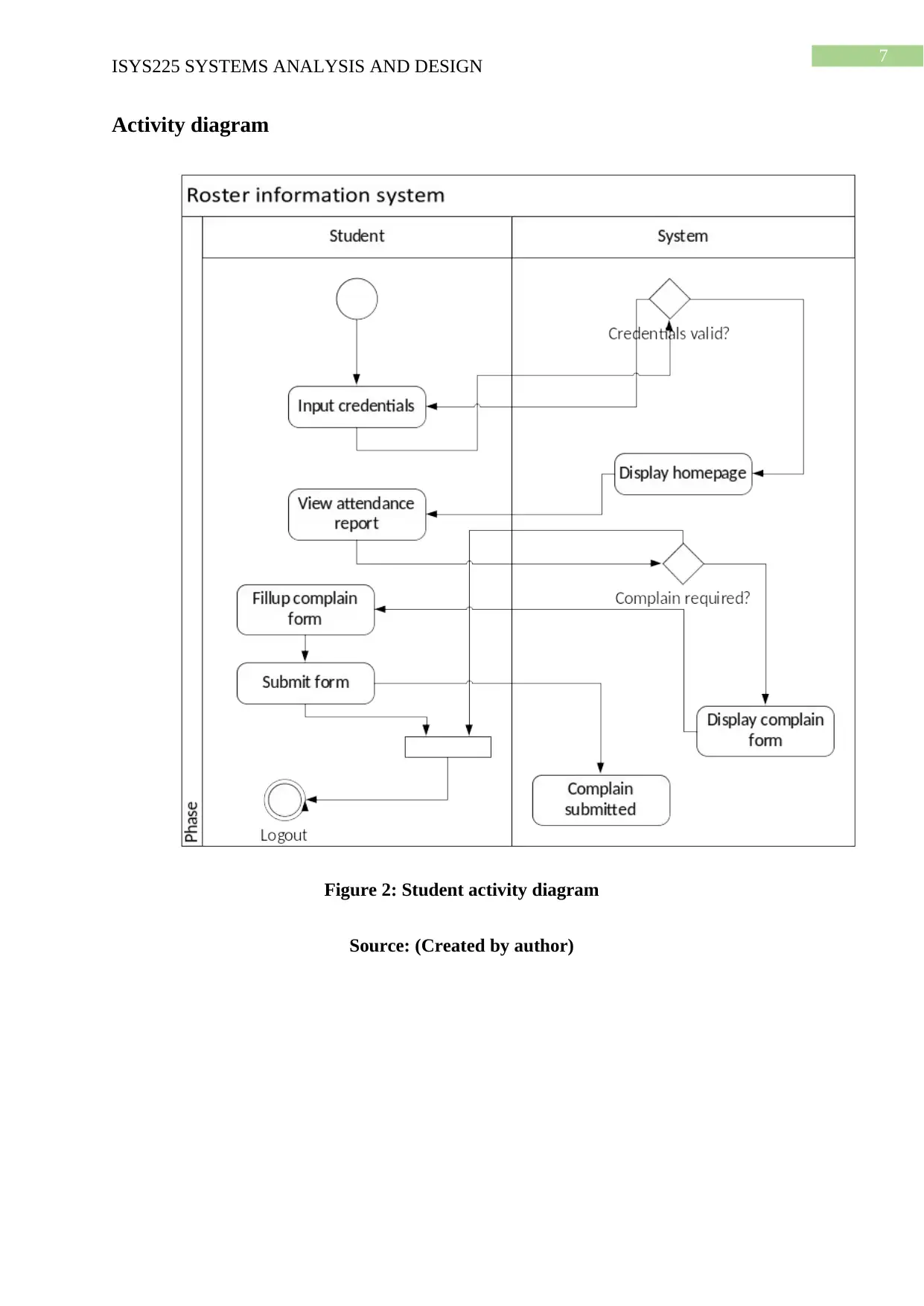
Figure 2: Student activity diagram
Source: (Created by author)
ISYS225 SYSTEMS ANALYSIS AND DESIGN
Activity diagram
Figure 2: Student activity diagram
Source: (Created by author)

8
ISYS225 SYSTEMS ANALYSIS AND DESIGN
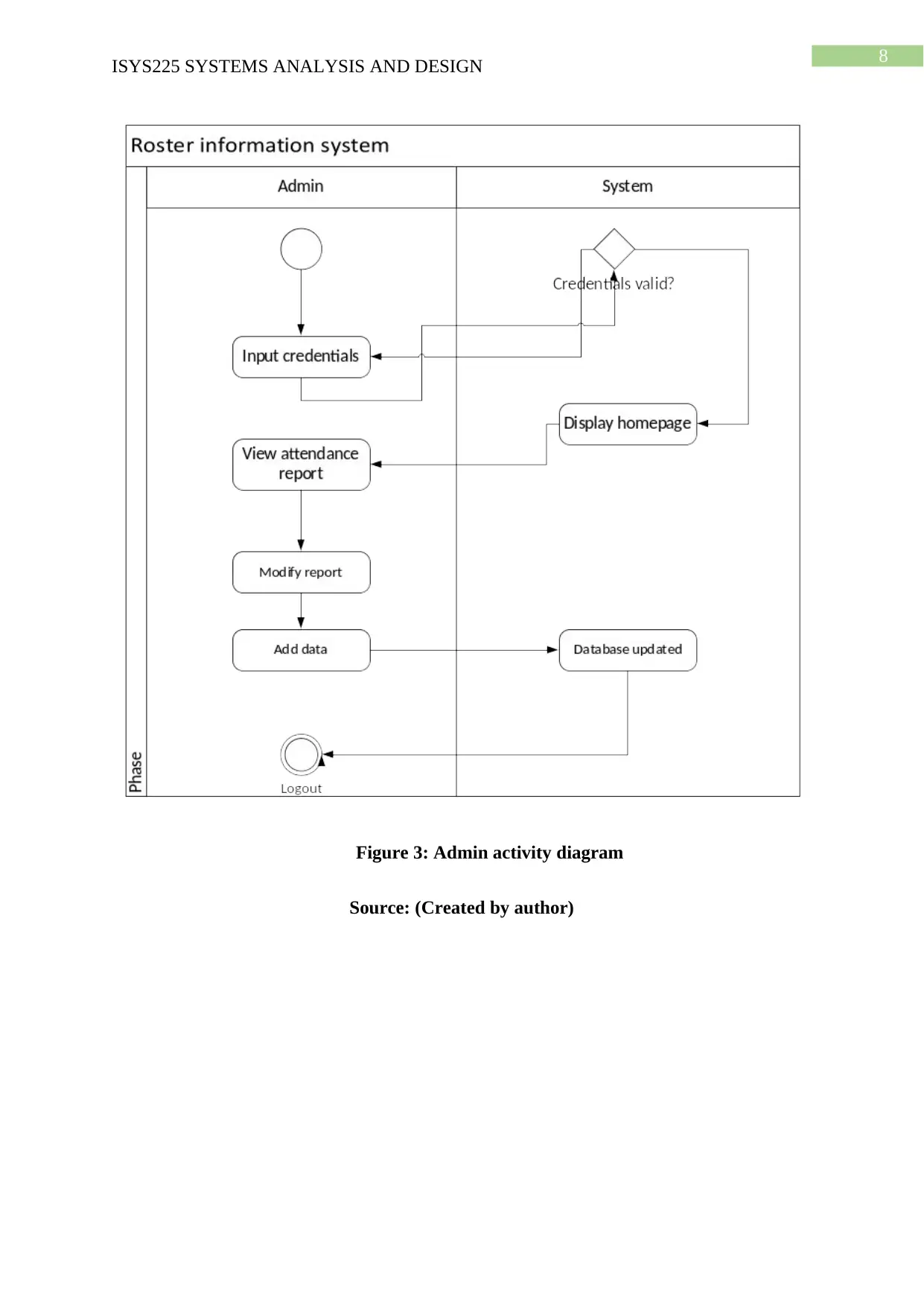
Figure 3: Admin activity diagram
Source: (Created by author)
ISYS225 SYSTEMS ANALYSIS AND DESIGN
Figure 3: Admin activity diagram
Source: (Created by author)
⊘ This is a preview!⊘
Do you want full access?
Subscribe today to unlock all pages.

Trusted by 1+ million students worldwide

9
ISYS225 SYSTEMS ANALYSIS AND DESIGN
Class diagram
Figure 4: Class diagram
Source: (Created by author)
ISYS225 SYSTEMS ANALYSIS AND DESIGN
Class diagram
Figure 4: Class diagram
Source: (Created by author)
Paraphrase This Document
Need a fresh take? Get an instant paraphrase of this document with our AI Paraphraser

10
ISYS225 SYSTEMS ANALYSIS AND DESIGN
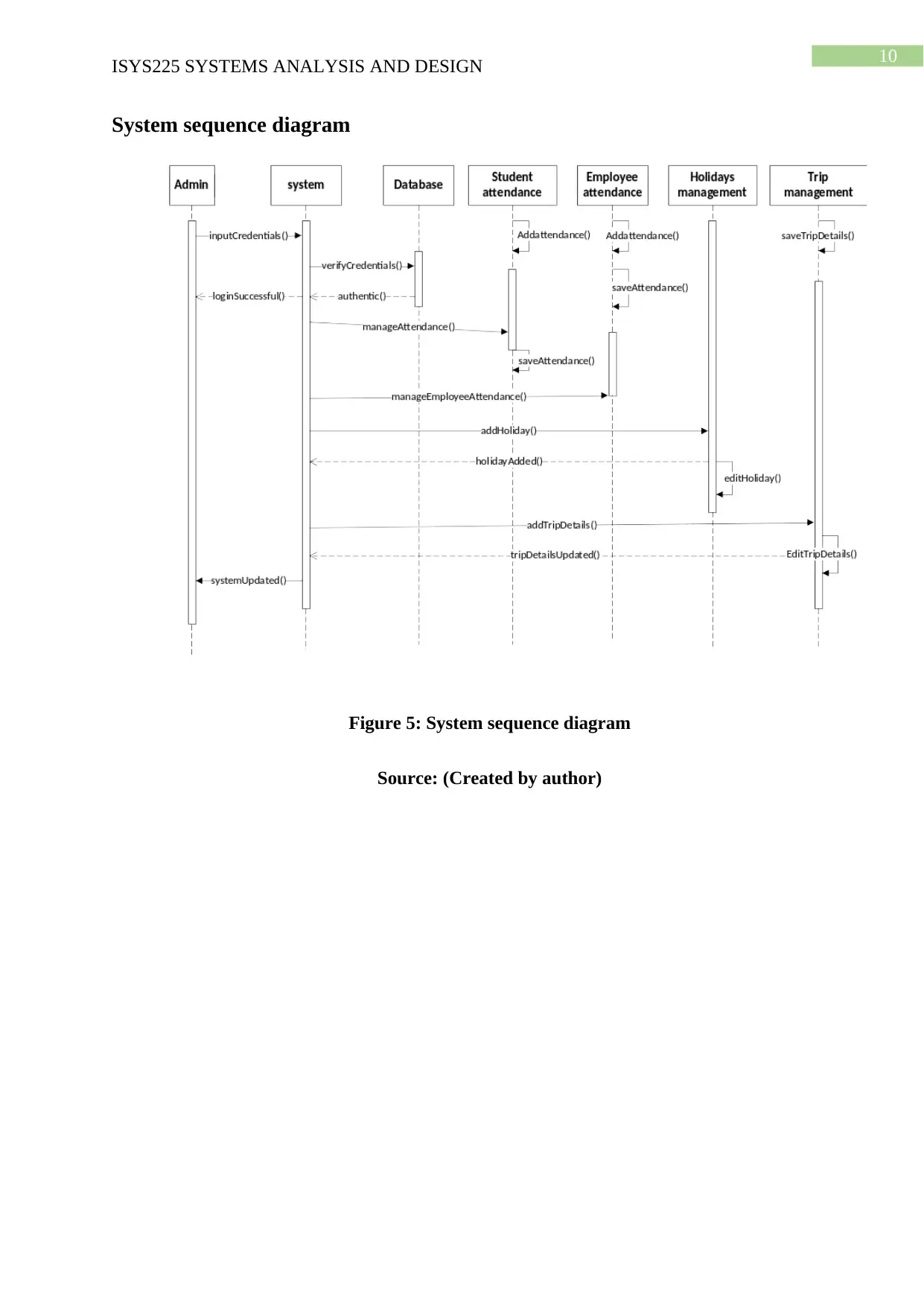
System sequence diagram
Figure 5: System sequence diagram
Source: (Created by author)
ISYS225 SYSTEMS ANALYSIS AND DESIGN
System sequence diagram
Figure 5: System sequence diagram
Source: (Created by author)

11
ISYS225 SYSTEMS ANALYSIS AND DESIGN
References
Azar, A.T. and Vaidyanathan, S. eds., 2015. Chaos modeling and control systems
design (Vol. 581). Germany: Springer.
Balanis, C.A., 2016. Antenna theory: analysis and design. John wiley & sons.
Dennis, A., Wixom, B.H. and Roth, R.M., 2018. Systems analysis and design. John wiley &
sons.
Giurgiutiu, V. and Lyshevski, S.E., 2016. Micromechatronics: modeling, analysis, and
design with MATLAB. CRC Press.
Gonen, T., 2015. Electrical power transmission system engineering: analysis and design.
CRC press.
Gupta, A.K., 2017. Response spectrum method in seismic analysis and design of structures.
Routledge.
Lessard, L., Recht, B. and Packard, A., 2016. Analysis and design of optimization algorithms
via integral quadratic constraints. SIAM Journal on Optimization, 26(1), pp.57-95.
Pedrycz, W., 2016. Granular computing: analysis and design of intelligent systems. CRC
press.
ISYS225 SYSTEMS ANALYSIS AND DESIGN
References
Azar, A.T. and Vaidyanathan, S. eds., 2015. Chaos modeling and control systems
design (Vol. 581). Germany: Springer.
Balanis, C.A., 2016. Antenna theory: analysis and design. John wiley & sons.
Dennis, A., Wixom, B.H. and Roth, R.M., 2018. Systems analysis and design. John wiley &
sons.
Giurgiutiu, V. and Lyshevski, S.E., 2016. Micromechatronics: modeling, analysis, and
design with MATLAB. CRC Press.
Gonen, T., 2015. Electrical power transmission system engineering: analysis and design.
CRC press.
Gupta, A.K., 2017. Response spectrum method in seismic analysis and design of structures.
Routledge.
Lessard, L., Recht, B. and Packard, A., 2016. Analysis and design of optimization algorithms
via integral quadratic constraints. SIAM Journal on Optimization, 26(1), pp.57-95.
Pedrycz, W., 2016. Granular computing: analysis and design of intelligent systems. CRC
press.
⊘ This is a preview!⊘
Do you want full access?
Subscribe today to unlock all pages.

Trusted by 1+ million students worldwide
1 out of 12
Related Documents
Your All-in-One AI-Powered Toolkit for Academic Success.
 +13062052269
info@desklib.com
Available 24*7 on WhatsApp / Email
Unlock your academic potential
Copyright © 2020–2026 A2Z Services. All Rights Reserved. Developed and managed by ZUCOL.