Individual Report: Professional IT Culture Case Study Analysis
VerifiedAdded on  2023/04/21
|11
|1713
|234
Report
AI Summary
This report presents an analysis of a case study focusing on professional IT culture, specifically examining the ethical dilemmas arising from the launch of defective products. The report explores the roles and responsibilities of stakeholders such as Mr. McBright, Mrs. McDonald, and the company's employees, highlighting the ethical conflicts faced when deciding whether to release a product with known bugs. It delves into the application of the ACS Code of Ethics, evaluating how stakeholders adhered to principles like public interest, honesty, and professionalism. The report also analyzes the case using ethical philosophy theories. Furthermore, the assignment incorporates a career plan developed using SFIA 6, detailing required IT skills and their relevance to various roles within the IT field, providing a comprehensive understanding of professional IT culture and career development within the industry.
Running head: PROFESSIONAL IT CULTURE
PROFESSIONAL IT CULTURE
Name of Student
Name of University
Author’s Note
PROFESSIONAL IT CULTURE
Name of Student
Name of University
Author’s Note
Paraphrase This Document
Need a fresh take? Get an instant paraphrase of this document with our AI Paraphraser

1PROFESSIONAL IT CULTURE
Executive summary
The case study that has been provided in this task consists of a case where the launch of devices
such as mobiles and devices including a software that is defective in nature. In this particular
case study, a specific organization called NewAge Pty Ltd produces an operating system for a
company named XYZ Pty Ltd which manufactures tablets. The assignment discusses regarding
the issues faced by the organization and customers due to the defective products, it also discusses
regarding the dilemma faced by the organization during launch of the products.
Executive summary
The case study that has been provided in this task consists of a case where the launch of devices
such as mobiles and devices including a software that is defective in nature. In this particular
case study, a specific organization called NewAge Pty Ltd produces an operating system for a
company named XYZ Pty Ltd which manufactures tablets. The assignment discusses regarding
the issues faced by the organization and customers due to the defective products, it also discusses
regarding the dilemma faced by the organization during launch of the products.

2PROFESSIONAL IT CULTURE
Table of Contents
Introduction..........................................................................................................................3
Sub task 1.........................................................................................................................3
Sub task 2.........................................................................................................................6
Conclusion...........................................................................................................................8
References............................................................................................................................9
Table of Contents
Introduction..........................................................................................................................3
Sub task 1.........................................................................................................................3
Sub task 2.........................................................................................................................6
Conclusion...........................................................................................................................8
References............................................................................................................................9
⊘ This is a preview!⊘
Do you want full access?
Subscribe today to unlock all pages.

Trusted by 1+ million students worldwide

3PROFESSIONAL IT CULTURE
Introduction
Professional IT culture can be defined as a basic workplace culture that should be
maintained by every organization, not maintaining the culture might result in various problems
among the employees. As a result, it many cause issues for customers. In the case study provided
below, the organization named NewAge Pty Ltd has been manufacturing an operating system for
a new set of tablets that is supposed to be launched by the XYZ Company (Helmreich & Merritt,
2017). After the operating system has been produced, a bug has been found and the fact was
reported to Mrs. McDonald by Mr. McBright. The fact was hidden from the company and
defected products were launched in the market, hence this created a problem for the customers.
This assignment discusses regarding the ethical dilemma faced by the employees and the
steps that should have been undergone in order to maintain the quality of the products.
Discussion
Sub task 1
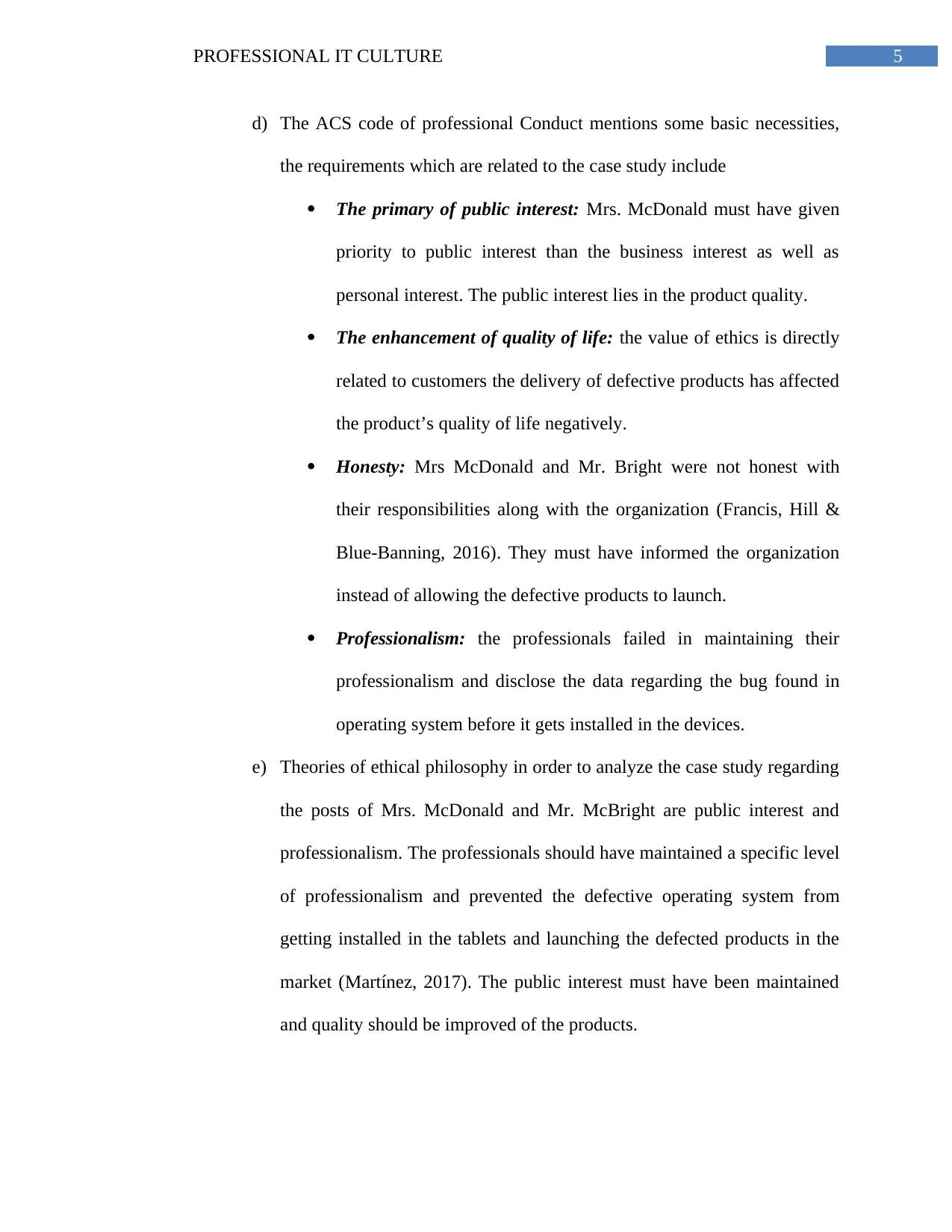
a) The lists of stakeholders that are involved in the case study include Mr.
McBright, Mrs. McDonals, employees of the company NewAge Pty Ltd,
testers and customers. Mr. McBright had succeeded in utilizing the ethical
value by informing Mrs. McDonald about the bug that has been found
(Teleuyev, Isaev & Eroshenkova, 2015). The testing team was successful
in applying the approach of ethical decision- making. Mrs. McDonald did
not succeed in applying decision- making approach because she allowed
the company to launch the defective products.
Introduction
Professional IT culture can be defined as a basic workplace culture that should be
maintained by every organization, not maintaining the culture might result in various problems
among the employees. As a result, it many cause issues for customers. In the case study provided
below, the organization named NewAge Pty Ltd has been manufacturing an operating system for
a new set of tablets that is supposed to be launched by the XYZ Company (Helmreich & Merritt,
2017). After the operating system has been produced, a bug has been found and the fact was
reported to Mrs. McDonald by Mr. McBright. The fact was hidden from the company and
defected products were launched in the market, hence this created a problem for the customers.
This assignment discusses regarding the ethical dilemma faced by the employees and the
steps that should have been undergone in order to maintain the quality of the products.
Discussion
Sub task 1
a) The lists of stakeholders that are involved in the case study include Mr.
McBright, Mrs. McDonals, employees of the company NewAge Pty Ltd,
testers and customers. Mr. McBright had succeeded in utilizing the ethical
value by informing Mrs. McDonald about the bug that has been found
(Teleuyev, Isaev & Eroshenkova, 2015). The testing team was successful
in applying the approach of ethical decision- making. Mrs. McDonald did
not succeed in applying decision- making approach because she allowed
the company to launch the defective products.
Paraphrase This Document
Need a fresh take? Get an instant paraphrase of this document with our AI Paraphraser

4PROFESSIONAL IT CULTURE
b) The ethical dilemma that is faced by the stakeholders present in the case
study is that if the company should avoid the bug and launch the defective
tablets and meet the deadline of the project or to remove the bug and
produce a high quality product (MartÃnez, 2017). Choosing any option
would be tough because the launch of defected products satisfied the
project needs but degraded the quality, and if the quality was to be met,
the deadline of the project would have been missed. It could not be
realized that the quality of product is the most important factor for the
customers.
c) The fact regarding the bug in operating system was hidden and this had
affected the stakeholders to a great extent. The consequences are as
follows
ï‚· Principals: principals work like decision makers; they make
payment for a specific system and ensure that it is used in the
company (Paquette, 2016). Principals were affected because they
were supposed to handle the worst situation faced by the
organization.
ï‚· Partners: they are a certain group of professionals that work for
good production of a particular company. Group has numerous
members belonging to support staff, legal experts, operation team
and many more (Battersb & Verdi, 2015). In case the error has
been detected, they must have informed in order to prevent the
organization to launch the defective products.
b) The ethical dilemma that is faced by the stakeholders present in the case
study is that if the company should avoid the bug and launch the defective
tablets and meet the deadline of the project or to remove the bug and
produce a high quality product (MartÃnez, 2017). Choosing any option
would be tough because the launch of defected products satisfied the
project needs but degraded the quality, and if the quality was to be met,
the deadline of the project would have been missed. It could not be
realized that the quality of product is the most important factor for the
customers.
c) The fact regarding the bug in operating system was hidden and this had
affected the stakeholders to a great extent. The consequences are as
follows
ï‚· Principals: principals work like decision makers; they make
payment for a specific system and ensure that it is used in the
company (Paquette, 2016). Principals were affected because they
were supposed to handle the worst situation faced by the
organization.
ï‚· Partners: they are a certain group of professionals that work for
good production of a particular company. Group has numerous
members belonging to support staff, legal experts, operation team
and many more (Battersb & Verdi, 2015). In case the error has
been detected, they must have informed in order to prevent the
organization to launch the defective products.

5PROFESSIONAL IT CULTURE
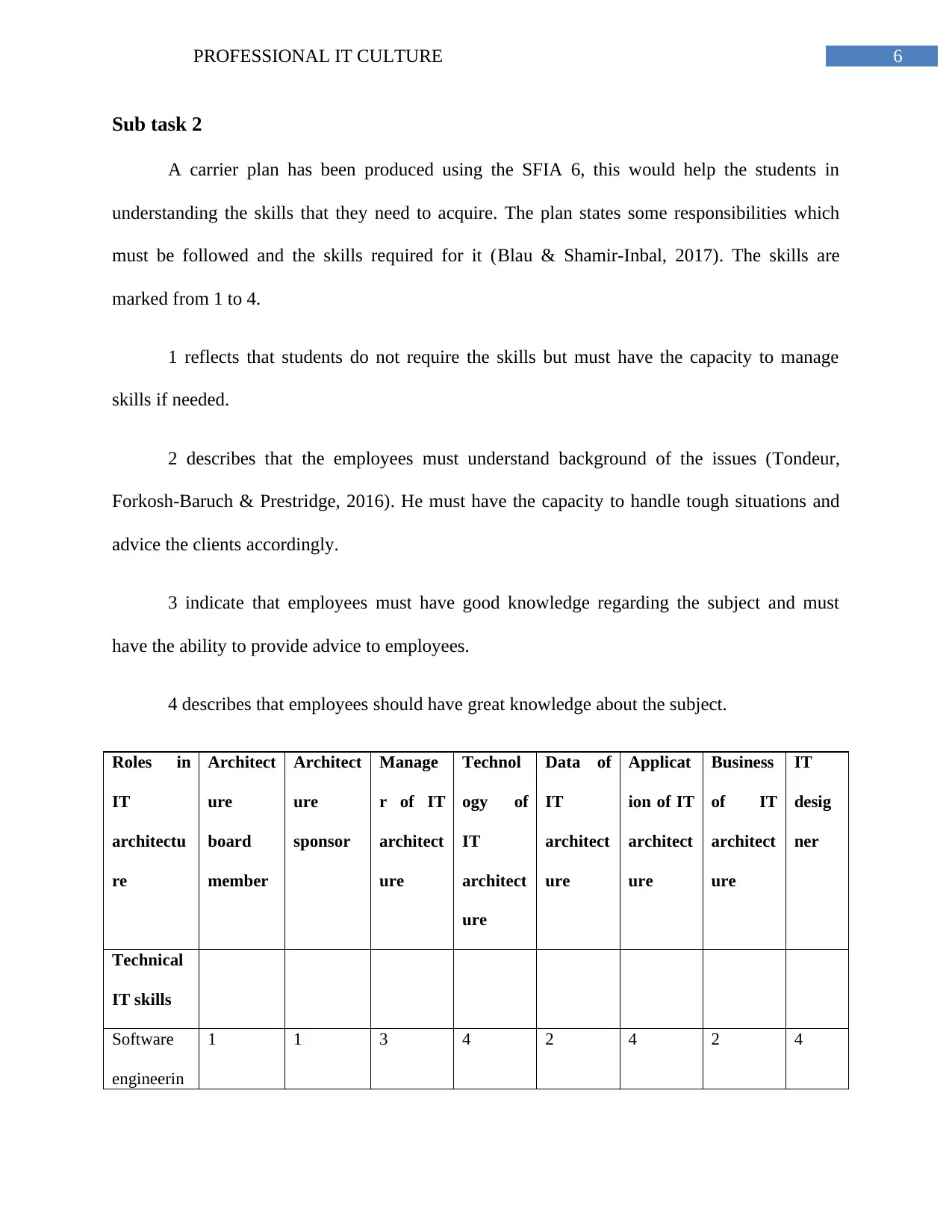
d) The ACS code of professional Conduct mentions some basic necessities,
the requirements which are related to the case study include
ï‚· The primary of public interest: Mrs. McDonald must have given
priority to public interest than the business interest as well as
personal interest. The public interest lies in the product quality.
ï‚· The enhancement of quality of life: the value of ethics is directly
related to customers the delivery of defective products has affected
the product’s quality of life negatively.
ï‚· Honesty: Mrs McDonald and Mr. Bright were not honest with
their responsibilities along with the organization (Francis, Hill &
Blue-Banning, 2016). They must have informed the organization
instead of allowing the defective products to launch.
ï‚· Professionalism: the professionals failed in maintaining their
professionalism and disclose the data regarding the bug found in
operating system before it gets installed in the devices.
e) Theories of ethical philosophy in order to analyze the case study regarding
the posts of Mrs. McDonald and Mr. McBright are public interest and
professionalism. The professionals should have maintained a specific level
of professionalism and prevented the defective operating system from
getting installed in the tablets and launching the defected products in the
market (MartÃnez, 2017). The public interest must have been maintained
and quality should be improved of the products.
d) The ACS code of professional Conduct mentions some basic necessities,
the requirements which are related to the case study include
ï‚· The primary of public interest: Mrs. McDonald must have given
priority to public interest than the business interest as well as
personal interest. The public interest lies in the product quality.
ï‚· The enhancement of quality of life: the value of ethics is directly
related to customers the delivery of defective products has affected
the product’s quality of life negatively.
ï‚· Honesty: Mrs McDonald and Mr. Bright were not honest with
their responsibilities along with the organization (Francis, Hill &
Blue-Banning, 2016). They must have informed the organization
instead of allowing the defective products to launch.
ï‚· Professionalism: the professionals failed in maintaining their
professionalism and disclose the data regarding the bug found in
operating system before it gets installed in the devices.
e) Theories of ethical philosophy in order to analyze the case study regarding
the posts of Mrs. McDonald and Mr. McBright are public interest and
professionalism. The professionals should have maintained a specific level
of professionalism and prevented the defective operating system from
getting installed in the tablets and launching the defected products in the
market (MartÃnez, 2017). The public interest must have been maintained
and quality should be improved of the products.
⊘ This is a preview!⊘
Do you want full access?
Subscribe today to unlock all pages.

Trusted by 1+ million students worldwide

6PROFESSIONAL IT CULTURE
Sub task 2
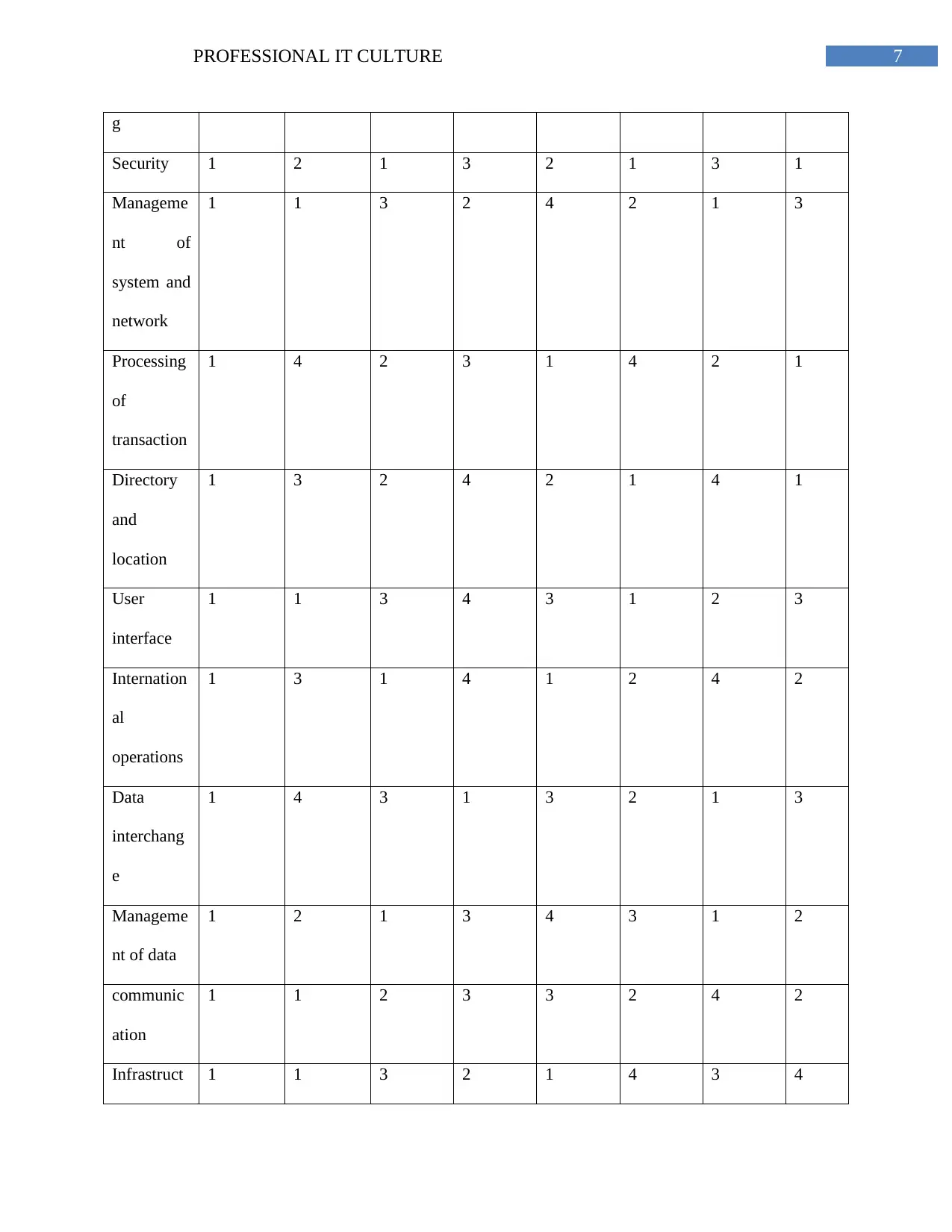
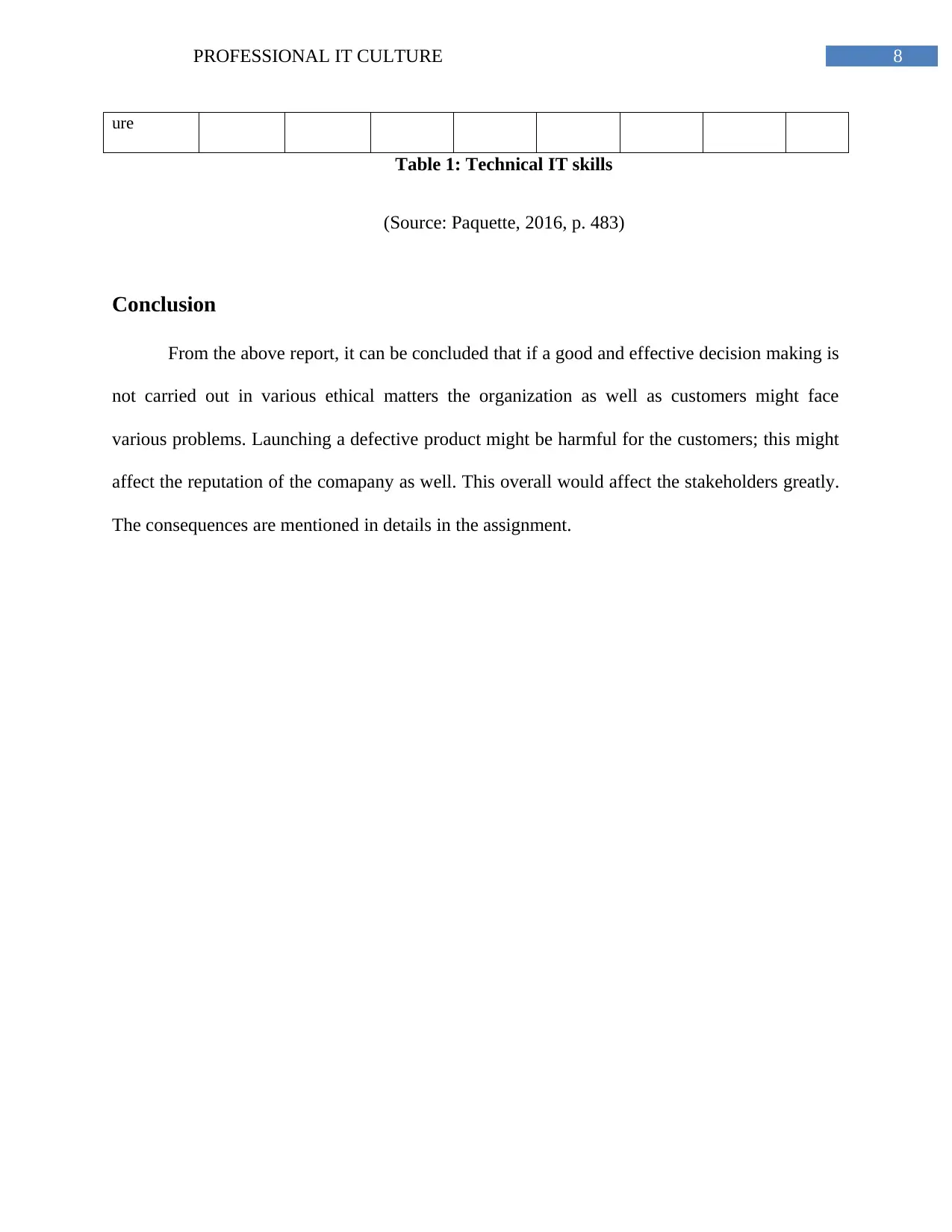
A carrier plan has been produced using the SFIA 6, this would help the students in
understanding the skills that they need to acquire. The plan states some responsibilities which
must be followed and the skills required for it (Blau & Shamir-Inbal, 2017). The skills are
marked from 1 to 4.
1 reflects that students do not require the skills but must have the capacity to manage
skills if needed.
2 describes that the employees must understand background of the issues (Tondeur,
Forkosh-Baruch & Prestridge, 2016). He must have the capacity to handle tough situations and
advice the clients accordingly.
3 indicate that employees must have good knowledge regarding the subject and must
have the ability to provide advice to employees.
4 describes that employees should have great knowledge about the subject.
Roles in
IT
architectu
re
Architect
ure
board
member
Architect
ure
sponsor
Manage
r of IT
architect
ure
Technol
ogy of
IT
architect
ure
Data of
IT
architect
ure
Applicat
ion of IT
architect
ure
Business
of IT
architect
ure
IT
desig
ner
Technical
IT skills
Software
engineerin
1 1 3 4 2 4 2 4
Sub task 2
A carrier plan has been produced using the SFIA 6, this would help the students in
understanding the skills that they need to acquire. The plan states some responsibilities which
must be followed and the skills required for it (Blau & Shamir-Inbal, 2017). The skills are
marked from 1 to 4.
1 reflects that students do not require the skills but must have the capacity to manage
skills if needed.
2 describes that the employees must understand background of the issues (Tondeur,
Forkosh-Baruch & Prestridge, 2016). He must have the capacity to handle tough situations and
advice the clients accordingly.
3 indicate that employees must have good knowledge regarding the subject and must
have the ability to provide advice to employees.
4 describes that employees should have great knowledge about the subject.
Roles in
IT
architectu
re
Architect
ure
board
member
Architect
ure
sponsor
Manage
r of IT
architect
ure
Technol
ogy of
IT
architect
ure
Data of
IT
architect
ure
Applicat
ion of IT
architect
ure
Business
of IT
architect
ure
IT
desig
ner
Technical
IT skills
Software
engineerin
1 1 3 4 2 4 2 4
Paraphrase This Document
Need a fresh take? Get an instant paraphrase of this document with our AI Paraphraser

7PROFESSIONAL IT CULTURE
g
Security 1 2 1 3 2 1 3 1
Manageme
nt of
system and
network
1 1 3 2 4 2 1 3
Processing
of
transaction
1 4 2 3 1 4 2 1
Directory
and
location
1 3 2 4 2 1 4 1
User
interface
1 1 3 4 3 1 2 3
Internation
al
operations
1 3 1 4 1 2 4 2
Data
interchang
e
1 4 3 1 3 2 1 3
Manageme
nt of data
1 2 1 3 4 3 1 2
communic
ation
1 1 2 3 3 2 4 2
Infrastruct 1 1 3 2 1 4 3 4
g
Security 1 2 1 3 2 1 3 1
Manageme
nt of
system and
network
1 1 3 2 4 2 1 3
Processing
of
transaction
1 4 2 3 1 4 2 1
Directory
and
location
1 3 2 4 2 1 4 1
User
interface
1 1 3 4 3 1 2 3
Internation
al
operations
1 3 1 4 1 2 4 2
Data
interchang
e
1 4 3 1 3 2 1 3
Manageme
nt of data
1 2 1 3 4 3 1 2
communic
ation
1 1 2 3 3 2 4 2
Infrastruct 1 1 3 2 1 4 3 4

8PROFESSIONAL IT CULTURE
ure
Table 1: Technical IT skills
(Source: Paquette, 2016, p. 483)
Conclusion
From the above report, it can be concluded that if a good and effective decision making is
not carried out in various ethical matters the organization as well as customers might face
various problems. Launching a defective product might be harmful for the customers; this might
affect the reputation of the comapany as well. This overall would affect the stakeholders greatly.
The consequences are mentioned in details in the assignment.
ure
Table 1: Technical IT skills
(Source: Paquette, 2016, p. 483)
Conclusion
From the above report, it can be concluded that if a good and effective decision making is
not carried out in various ethical matters the organization as well as customers might face
various problems. Launching a defective product might be harmful for the customers; this might
affect the reputation of the comapany as well. This overall would affect the stakeholders greatly.
The consequences are mentioned in details in the assignment.
⊘ This is a preview!⊘
Do you want full access?
Subscribe today to unlock all pages.

Trusted by 1+ million students worldwide

9PROFESSIONAL IT CULTURE
References
Battersby, S. L., & Verdi, B. (2015). The culture of professional learning communities and
connections to improve teacher efficacy and support student learning. Arts Education
Policy Review, 116(1), 22-29.
Blau, I., & Shamir-Inbal, T. (2017). Digital competences and long-term ICT integration in school
culture: The perspective of elementary school leaders. Education and Information
Technologies, 22(3), 769-787.
Francis, G. L., Hill, C., Blue-Banning, M., Turnbull, A. P., & Haines, S. J. (2016). Culture in
inclusive schools: Parental perspectives on trusting family-professional
partnerships. Education and Training in Autism and Developmental Disabilities, 51(3),
281.
Helmreich, R. L., & Merritt, A. C. (2017). Culture at work in aviation and medicine: National,
organizational and professional influences. Routledge.
MartÃnez, G. J. A. (2017). Learning to Teach as Acculturation: A Case Study of Constructing a
Professional Teaching Culture of Learner-Centered Pedagogy. Michigan State
University.
Paquette, J. (Ed.). (2016). Cultural policy, work and identity: The creation, renewal and
negotiation of professional subjectivities. Routledge.
Teleuyev, G., Isaev, I. F., Eroshenkova, E. I., Krolevetskaya, E. N., Peresypkin, A. P., &
Shumakova, I. A. (2015). Formation and Development of a Teacher Professional
References
Battersby, S. L., & Verdi, B. (2015). The culture of professional learning communities and
connections to improve teacher efficacy and support student learning. Arts Education
Policy Review, 116(1), 22-29.
Blau, I., & Shamir-Inbal, T. (2017). Digital competences and long-term ICT integration in school
culture: The perspective of elementary school leaders. Education and Information
Technologies, 22(3), 769-787.
Francis, G. L., Hill, C., Blue-Banning, M., Turnbull, A. P., & Haines, S. J. (2016). Culture in
inclusive schools: Parental perspectives on trusting family-professional
partnerships. Education and Training in Autism and Developmental Disabilities, 51(3),
281.
Helmreich, R. L., & Merritt, A. C. (2017). Culture at work in aviation and medicine: National,
organizational and professional influences. Routledge.
MartÃnez, G. J. A. (2017). Learning to Teach as Acculturation: A Case Study of Constructing a
Professional Teaching Culture of Learner-Centered Pedagogy. Michigan State
University.
Paquette, J. (Ed.). (2016). Cultural policy, work and identity: The creation, renewal and
negotiation of professional subjectivities. Routledge.
Teleuyev, G., Isaev, I. F., Eroshenkova, E. I., Krolevetskaya, E. N., Peresypkin, A. P., &
Shumakova, I. A. (2015). Formation and Development of a Teacher Professional
Paraphrase This Document
Need a fresh take? Get an instant paraphrase of this document with our AI Paraphraser

10PROFESSIONAL IT CULTURE
Pedagogical Culture at a High School in Russia: Historical and Educational Context
(1755-1917). The Social Sciences, 10(6), 1486-1489.
Tondeur, J., Forkosh-Baruch, A., Prestridge, S., Albion, P., & Edirisinghe, S. (2016).
Responding to challenges in teacher professional development for ICT integration in
education. Educational Technology and Society, 19(3), 110-120.
Pedagogical Culture at a High School in Russia: Historical and Educational Context
(1755-1917). The Social Sciences, 10(6), 1486-1489.
Tondeur, J., Forkosh-Baruch, A., Prestridge, S., Albion, P., & Edirisinghe, S. (2016).
Responding to challenges in teacher professional development for ICT integration in
education. Educational Technology and Society, 19(3), 110-120.
1 out of 11
Related Documents
Your All-in-One AI-Powered Toolkit for Academic Success.
 +13062052269
info@desklib.com
Available 24*7 on WhatsApp / Email
Unlock your academic potential
Copyright © 2020–2025 A2Z Services. All Rights Reserved. Developed and managed by ZUCOL.