Comprehensive IT Infrastructure Design Solution for iTech
VerifiedAdded on 2020/04/01
|16
|4793
|43
Report
AI Summary
This report presents an IT infrastructure design solution for iTech, addressing various aspects of network architecture and server design. The introduction emphasizes the significance of IT infrastructure in supporting business processes and adapting to new technologies. It highlights the challenges of designing IT solutions, particularly in large organizations, and the importance of specialized knowledge in hardware, networking, and software. The discussion section explores the connection between organizational IT infrastructure and business capabilities, emphasizing the components of IT infrastructure, including hardware, operating systems, software applications, storage, communication networks, internet platforms, and system services. The report then delves into the three-layer hierarchical model (core, distribution, and access) for network design, detailing its benefits, such as high performance and efficient management. The report further explores the current and future requirements of iTech, logical server designs, cloud-based designs, and network simulations. The conclusion summarizes the key findings and recommendations for optimizing iTech's IT infrastructure.
Running Head: IT Infrastructure Design Solution
iTech
IT Infrastructure Design Solution
Table of Contents
Introduction...........................................................................................................................................2
iTech
IT Infrastructure Design Solution
Table of Contents
Introduction...........................................................................................................................................2

Paraphrase This Document
Need a fresh take? Get an instant paraphrase of this document with our AI Paraphraser
IT Infrastructure Design Solution
Discussion..............................................................................................................................................3
Three Layers of Hierarchical Model.......................................................................................................6
Current and the Future requirements of iTech......................................................................................7
Logical Design of the Servers.................................................................................................................9
Cloud Based Design.............................................................................................................................10
Network Simulation.............................................................................................................................10
Conclusion...........................................................................................................................................13
References...........................................................................................................................................14
Table of Figures
Figure 1 Logical Design of Servers.......................................................................................................10
Figure 2 DHCP Server assigns IP addresses to multiple clients............................................................12
Figure 3 DNIS Server............................................................................................................................12
Figure 4 Web Servers...........................................................................................................................12
Discussion..............................................................................................................................................3
Three Layers of Hierarchical Model.......................................................................................................6
Current and the Future requirements of iTech......................................................................................7
Logical Design of the Servers.................................................................................................................9
Cloud Based Design.............................................................................................................................10
Network Simulation.............................................................................................................................10
Conclusion...........................................................................................................................................13
References...........................................................................................................................................14
Table of Figures
Figure 1 Logical Design of Servers.......................................................................................................10
Figure 2 DHCP Server assigns IP addresses to multiple clients............................................................12
Figure 3 DNIS Server............................................................................................................................12
Figure 4 Web Servers...........................................................................................................................12
IT Infrastructure Design Solution
Introduction
The design of an organisation is the top level domain which is essential for every
organisation to work on the designing for the proper infrastructure to work within all the
networks. It is essential to incorporate the specific design application which aims to improve
the performance of an organisation. The main concept of the IT organisation carries the use
of various mechanisms of Information Technology upon which IT facilities are provided
which include the hardware, software and network infrastructure. The primary motive of an
IT is to support and advance the business processes, so they are the main purpose on which
the business processes that make efforts in an organizations success are based. It is essential
for every business organisation to work and easily adapt the new technologies which intends
to work and support to the new technologies like Internet connectivity, wireless functioning,
broadband connections, voice talk facilities, etc. (Ali, 2013). In today’s era, most of the major
problems been faced in an organisation is the increasing size of the design and the complexity
of delivering the real business value in the market field. The Size of the business and the
complexity are the major impact which takes an individual part in the market field. ITIs
formed, planned or improved by the non ITI professionals such as business decision creators,
advisors, managers, Software developers, software engineers, solution architects and other
persons who are being involved in the rises of the conflicts in an organisation without ITI
design guiding principles and mostly with the main purpose of responding to the requests of a
specific business application designing (Bernard et al., 2015). Designing for an organisation
and to follow the proper domain for the large organizations is a challenge task mainly
because it requires skills and proper information for the present organization The people who
are expertise in their fields should have a proper knowledge of al the Processes, the views of
different companies, and the communication between the organisation members and with the
technical expertise in three ITI domains i.e. to be specialised in the hardware, networking and
infrastructure software that infrequently exist in in a specific individual. The design of IT
solutions is accomplished in most engineering fields by using suitable concepts and the ideas
for implementing. In the field of IT organizations the application solutions to the frequent
problems was caught as a business opportunity in the field of IT by numerous companies to
normalizing typical ITI structure forming into chunks based on their commercial mechanisms
(Calder et al., 2013). Some of the companies developed into the operational approaches to IT
Introduction
The design of an organisation is the top level domain which is essential for every
organisation to work on the designing for the proper infrastructure to work within all the
networks. It is essential to incorporate the specific design application which aims to improve
the performance of an organisation. The main concept of the IT organisation carries the use
of various mechanisms of Information Technology upon which IT facilities are provided
which include the hardware, software and network infrastructure. The primary motive of an
IT is to support and advance the business processes, so they are the main purpose on which
the business processes that make efforts in an organizations success are based. It is essential
for every business organisation to work and easily adapt the new technologies which intends
to work and support to the new technologies like Internet connectivity, wireless functioning,
broadband connections, voice talk facilities, etc. (Ali, 2013). In today’s era, most of the major
problems been faced in an organisation is the increasing size of the design and the complexity
of delivering the real business value in the market field. The Size of the business and the
complexity are the major impact which takes an individual part in the market field. ITIs
formed, planned or improved by the non ITI professionals such as business decision creators,
advisors, managers, Software developers, software engineers, solution architects and other
persons who are being involved in the rises of the conflicts in an organisation without ITI
design guiding principles and mostly with the main purpose of responding to the requests of a
specific business application designing (Bernard et al., 2015). Designing for an organisation
and to follow the proper domain for the large organizations is a challenge task mainly
because it requires skills and proper information for the present organization The people who
are expertise in their fields should have a proper knowledge of al the Processes, the views of
different companies, and the communication between the organisation members and with the
technical expertise in three ITI domains i.e. to be specialised in the hardware, networking and
infrastructure software that infrequently exist in in a specific individual. The design of IT
solutions is accomplished in most engineering fields by using suitable concepts and the ideas
for implementing. In the field of IT organizations the application solutions to the frequent
problems was caught as a business opportunity in the field of IT by numerous companies to
normalizing typical ITI structure forming into chunks based on their commercial mechanisms
(Calder et al., 2013). Some of the companies developed into the operational approaches to IT
⊘ This is a preview!⊘
Do you want full access?
Subscribe today to unlock all pages.

Trusted by 1+ million students worldwide
IT Infrastructure Design Solution
patterns based design, by proposing design that is designing of the “blueprints” representing
vendor -specific components.
The designing of a large IT structures is a multifaceted problem because it is dependent on
many forms of an organisation and it has become to evolve and have a rapid growth to cope
up with business changes. The usability of IT organisational patterns can improve the
designing process by allowing various possible solutions to the recurrent problems and by
simplifying communications among IT design and its participants. However, a very well-
known IT infrastructure is pattern that is mostly like blueprints which are designed by the
network architecture engineer (Cope & Paczkowski, 2014). As such, they are not very helpful
in comparing alternatives but provides the glimpse for resolving the problems been faced in
an organisation regarding the IT infrastructure and usually supports to the independent design
decisions.
The designing of an iTech was not appropriately developed or properly designed
infrastructure, so for resolving the solutions to properly implement the network infrastructure
of an organisation various designs, tools and techniques are been applied in this for resolving
the ambiguities.
Discussion
IT Infrastructure
IT infrastructure generally provides the facility and availability of the various tools for
designing and for the proper maintenance of an organisation basis for mainly serving to the
customers, working with merchants, and managing all business processes. It usually defines
the competences of the firm today and in the near future (Cope et al., 2014).
Connection Between The Organisation, IT Infrastructure and Business Capabilities
The services provided by an organisation are to be accomplished by providing the best
facilities to its customers, suppliers, and to the personnel of an organisation are a direct
functioning of its IT infrastructure. Ideally, this infrastructure should not be maintained by
the business organizations and to information systems strategy. New information
technologies provided have a powerful influence on business services and IT strategies, as
patterns based design, by proposing design that is designing of the “blueprints” representing
vendor -specific components.
The designing of a large IT structures is a multifaceted problem because it is dependent on
many forms of an organisation and it has become to evolve and have a rapid growth to cope
up with business changes. The usability of IT organisational patterns can improve the
designing process by allowing various possible solutions to the recurrent problems and by
simplifying communications among IT design and its participants. However, a very well-
known IT infrastructure is pattern that is mostly like blueprints which are designed by the
network architecture engineer (Cope & Paczkowski, 2014). As such, they are not very helpful
in comparing alternatives but provides the glimpse for resolving the problems been faced in
an organisation regarding the IT infrastructure and usually supports to the independent design
decisions.
The designing of an iTech was not appropriately developed or properly designed
infrastructure, so for resolving the solutions to properly implement the network infrastructure
of an organisation various designs, tools and techniques are been applied in this for resolving
the ambiguities.
Discussion
IT Infrastructure
IT infrastructure generally provides the facility and availability of the various tools for
designing and for the proper maintenance of an organisation basis for mainly serving to the
customers, working with merchants, and managing all business processes. It usually defines
the competences of the firm today and in the near future (Cope et al., 2014).
Connection Between The Organisation, IT Infrastructure and Business Capabilities
The services provided by an organisation are to be accomplished by providing the best
facilities to its customers, suppliers, and to the personnel of an organisation are a direct
functioning of its IT infrastructure. Ideally, this infrastructure should not be maintained by
the business organizations and to information systems strategy. New information
technologies provided have a powerful influence on business services and IT strategies, as
Paraphrase This Document
Need a fresh take? Get an instant paraphrase of this document with our AI Paraphraser
IT Infrastructure Design Solution
well as those services which are to be provided to the customers. IT infrastructure is in
performance to the biggest impact on the technology used in an organisation or as service
groups (Doerndorfer, 2014). The service provided from the IT infrastructure is directly
dependent on the services provided by the hardware and software components, such as
computing platforms, telecommunication networks, physical facilities management,
applications used regarding software, management of data, IT management, various standards
used in IT, IT educations, and research in Information Technology and its development. The
service platform views and highlights the main organisational value provided by the IT
infrastructure (Erikson, 2014).
The IT infrastructure components:
The infrastructure is composed of seven major components:
1. Platforms used for Computer hardware- This component is used for designing of
the hardware tools which generally includes the client machines and the server side
machines, it is essential to work on a new techniques, frameworks as well as modern
workstations produced and developed by the top companies like IBM. Blade servers
that have a speciality of the ultrathin servers, projected with single dedicated
application servers, and are fixed with the proper form in space-saving frameworks
(Iyengar, 2015).
2. Platforms used for Operating system- It generally includes the working on the
machine which comprises of various platforms for client side computers, controlled
by Windows operating systems, and the main servers are, controlled by the various
procedures of the UNIX operating system or Linux. Operating systems are generally
used and based on the system software that provides the various resources and
provide the various services and that mainly intends to manage the resources and
activities or the tasks performed on the computer and it majorly act as an interface for
the user.
3. Enterprise and other software applications- Various applications is being used in
the IT infrastructure and the organisational activities are performed using the various
software tools and techniques which includes SAP, Oracle, and PeopleSoft, and
well as those services which are to be provided to the customers. IT infrastructure is in
performance to the biggest impact on the technology used in an organisation or as service
groups (Doerndorfer, 2014). The service provided from the IT infrastructure is directly
dependent on the services provided by the hardware and software components, such as
computing platforms, telecommunication networks, physical facilities management,
applications used regarding software, management of data, IT management, various standards
used in IT, IT educations, and research in Information Technology and its development. The
service platform views and highlights the main organisational value provided by the IT
infrastructure (Erikson, 2014).
The IT infrastructure components:
The infrastructure is composed of seven major components:
1. Platforms used for Computer hardware- This component is used for designing of
the hardware tools which generally includes the client machines and the server side
machines, it is essential to work on a new techniques, frameworks as well as modern
workstations produced and developed by the top companies like IBM. Blade servers
that have a speciality of the ultrathin servers, projected with single dedicated
application servers, and are fixed with the proper form in space-saving frameworks
(Iyengar, 2015).
2. Platforms used for Operating system- It generally includes the working on the
machine which comprises of various platforms for client side computers, controlled
by Windows operating systems, and the main servers are, controlled by the various
procedures of the UNIX operating system or Linux. Operating systems are generally
used and based on the system software that provides the various resources and
provide the various services and that mainly intends to manage the resources and
activities or the tasks performed on the computer and it majorly act as an interface for
the user.
3. Enterprise and other software applications- Various applications is being used in
the IT infrastructure and the organisational activities are performed using the various
software tools and techniques which includes SAP, Oracle, and PeopleSoft, and
IT Infrastructure Design Solution
other middleware software which involves the tasks performed between the client and
the server that are basically used to link and communicate between the business’s
existing application systems.
4. Storage Capacity and Data Management- It is very essential and plays a vital role
in every organisation to have a proper storage for data storage and is generally
controlled by database management software all the tasks performed for storing and
managing of the data of an organisation is been performed by the database
administrator and storage devices include the traditional way of storing the data , such
as disk arrangements and tape archives, and newer network-based storage
technologies also known as storage area networks (SANs). SANs can be termed as a
inter-connectivity between multiple storage devices on dedicated high-speed network
connectivity (Jiang, 2016).
5. Communication Networks and telecommunications platforms-It sets the
communication between the client and the server which generally includes the various
connectivity and the various network platforms like the Windows server operating
systems, Novell, Linux, etc. It nearly covers all the local area networks and many
wide area networks (WANs) using the Transmission control Protocol or Internet
Protocol for the standards for networking connectivity.
6. Internet platforms- It provides the various internet standards and platforms for the
corresponding with the IT networks and must relate to, the organisations general
networking infrastructure and various platforms using hardware and software
components. Internet-related activities and its infrastructure includes various
hardware and software services to maintain commercial Web sites, intranets, and
extranets, including the many Web hosting services and software application
development tools regarding web. A Web hosting service usually intends to maintain
huge servers of web or a sequence of servers and generally for subscribing to a web
certain amount is to be paid with space to maintain their Web sites (Karvonen et al.,
2014).
7. Integrating System Services- Integrating of the system services with the web are
dependent on integrating organisational strategies with the legal and authorized
systems, implementing with the new technology and infrastructure and providing
other middleware software which involves the tasks performed between the client and
the server that are basically used to link and communicate between the business’s
existing application systems.
4. Storage Capacity and Data Management- It is very essential and plays a vital role
in every organisation to have a proper storage for data storage and is generally
controlled by database management software all the tasks performed for storing and
managing of the data of an organisation is been performed by the database
administrator and storage devices include the traditional way of storing the data , such
as disk arrangements and tape archives, and newer network-based storage
technologies also known as storage area networks (SANs). SANs can be termed as a
inter-connectivity between multiple storage devices on dedicated high-speed network
connectivity (Jiang, 2016).
5. Communication Networks and telecommunications platforms-It sets the
communication between the client and the server which generally includes the various
connectivity and the various network platforms like the Windows server operating
systems, Novell, Linux, etc. It nearly covers all the local area networks and many
wide area networks (WANs) using the Transmission control Protocol or Internet
Protocol for the standards for networking connectivity.
6. Internet platforms- It provides the various internet standards and platforms for the
corresponding with the IT networks and must relate to, the organisations general
networking infrastructure and various platforms using hardware and software
components. Internet-related activities and its infrastructure includes various
hardware and software services to maintain commercial Web sites, intranets, and
extranets, including the many Web hosting services and software application
development tools regarding web. A Web hosting service usually intends to maintain
huge servers of web or a sequence of servers and generally for subscribing to a web
certain amount is to be paid with space to maintain their Web sites (Karvonen et al.,
2014).
7. Integrating System Services- Integrating of the system services with the web are
dependent on integrating organisational strategies with the legal and authorized
systems, implementing with the new technology and infrastructure and providing
⊘ This is a preview!⊘
Do you want full access?
Subscribe today to unlock all pages.
Trusted by 1+ million students worldwide
IT Infrastructure Design Solution
expertise in executing the new infrastructure to the organisation along with the
appropriate changes in all the business practices, training, and integrating of the
software. Legal and authorized systems are generally the old transactions been
processed in the systems for creating the mainframe computers that is continued to be
used and to avoid the high cost of switching or redesigning them (Konstantinov et al.,
2015).
Three Layers of Hierarchical Model
The three layer of the Hierarchical model depends totally on the business infrastructure for
designing and inter communication between processes. This model is generally used for the
dividing the networks of an organisation into 3 layers i.e. core, distribution and the access
layer. This model is generally used for simplifying of the tasks of building a proper form of
reliable, scalable, and less expensive hierarchical internetwork. The 3 layer of Hierarchical
network was been first proposed by the Cisco and now today it is been used in all the
business organisations. This model is mainly used for simplifying and developing of the
interconnectivity of the networks. The main aim is to focus on building of a tasks and
constructing of a reliable, scalable, and less expensive hierarchical inter connection of the
networks because, it mainly emphasize on the designing of the well-established of the
network architecture in the IT infrastructure, or on the main layers, of the organisational
networks and its primary values rather than aiming on building of a new packets.: This layer
is considered as the backbone of the IT network and includes the high-end controls and high-
speed chains such as fibre cables (Kwok, 2015). This layer mainly aims to reduce the traffic
of the network at the LAN. In addition to the networks with no packet manipulation is done
by devices placed this layer. This layer is concerned with the speed and accessibility and to
ensure the consistent delivering of the packets. Distribution layer: This layer mainly includes
all the LAN-based routers and 3 level layer switches. This layer certifies to those packets that
are routed accurately between the subnets and virtual LANs of an organisation. It is also
referred as a Workgroup layer. Third Layer is the Access layer: This layer comprises of the
hubs and switches. This layer is also known as the desktop layer because it emphases on
connecting to the client nodes, such as inter-connection between the workstations and to the
networks. It also ensures that the packets are delivered to the end user of the computers. And
seeing and working according to the 3 layer architectural hierarchical model designed for an
organisational IT infrastructure. Application these layers, includes the entire layer which may
expertise in executing the new infrastructure to the organisation along with the
appropriate changes in all the business practices, training, and integrating of the
software. Legal and authorized systems are generally the old transactions been
processed in the systems for creating the mainframe computers that is continued to be
used and to avoid the high cost of switching or redesigning them (Konstantinov et al.,
2015).
Three Layers of Hierarchical Model
The three layer of the Hierarchical model depends totally on the business infrastructure for
designing and inter communication between processes. This model is generally used for the
dividing the networks of an organisation into 3 layers i.e. core, distribution and the access
layer. This model is generally used for simplifying of the tasks of building a proper form of
reliable, scalable, and less expensive hierarchical internetwork. The 3 layer of Hierarchical
network was been first proposed by the Cisco and now today it is been used in all the
business organisations. This model is mainly used for simplifying and developing of the
interconnectivity of the networks. The main aim is to focus on building of a tasks and
constructing of a reliable, scalable, and less expensive hierarchical inter connection of the
networks because, it mainly emphasize on the designing of the well-established of the
network architecture in the IT infrastructure, or on the main layers, of the organisational
networks and its primary values rather than aiming on building of a new packets.: This layer
is considered as the backbone of the IT network and includes the high-end controls and high-
speed chains such as fibre cables (Kwok, 2015). This layer mainly aims to reduce the traffic
of the network at the LAN. In addition to the networks with no packet manipulation is done
by devices placed this layer. This layer is concerned with the speed and accessibility and to
ensure the consistent delivering of the packets. Distribution layer: This layer mainly includes
all the LAN-based routers and 3 level layer switches. This layer certifies to those packets that
are routed accurately between the subnets and virtual LANs of an organisation. It is also
referred as a Workgroup layer. Third Layer is the Access layer: This layer comprises of the
hubs and switches. This layer is also known as the desktop layer because it emphases on
connecting to the client nodes, such as inter-connection between the workstations and to the
networks. It also ensures that the packets are delivered to the end user of the computers. And
seeing and working according to the 3 layer architectural hierarchical model designed for an
organisational IT infrastructure. Application these layers, includes the entire layer which may
Paraphrase This Document
Need a fresh take? Get an instant paraphrase of this document with our AI Paraphraser
IT Infrastructure Design Solution
consist of more than two devices or a single device which basically performs on the
functioning on all the multiple layers (Lan et al., 2014). The benefits of the iTech hierarchical
model include the following:
High Performance Designed: It is essential to perform the tasks which can design on
high performance networks, where there are only limited layers that are vulnerable to
congestion.
Efficiency towards Management and Troubleshooting: It basically allows you to
perform an organisation tasks in an efficiently organized network management and
maintain the separate causes from the network trouble.
Creation of The Policy: It is essential in an Organisation to maintain and work under the
polices implied on an organisational Infrastructure activities. It is the easy way of
applying the filters to the organisations policies, rules and regulations.
Scalability: It provides the scalable resources that can raise the network architecture by
easy way of dividing to the organisational activities and its network into functional areas.
Behavioural Predictions: This basically indicates on making the certain assumptions
when planning or handling all the network infrastructures, this model allows you to
determine what will be happen to the networks when the new pressures are placed on it
(Moss & Marvin 2016).
Current and the Future requirements of iTech
It is essential that the organisational architectures and its IT infrastructure are appropriately
designed to the business needs and organisational processes. It plays a vital role for designing
of the IT Infrastructure in order to design the current and the Future IT solution for the
organisational current, new business plans and for keeping in mind for the future business
requirements. iTech basically defines the current scenario of all the current requirements of
their management, the company already deals and fulfil with the recently arising
requirements of the organisation, without having the adversely effects on impacting with the
existing investments. The organisation gets the expertise knowledge to design the
infrastructure according to the expert knowledge and skills of improvements in technology,
and aligning to the investment desires with all the business strategies being implied, iTech
helps in maximising with the flexibility and scalability in the infrastructure and making it
consist of more than two devices or a single device which basically performs on the
functioning on all the multiple layers (Lan et al., 2014). The benefits of the iTech hierarchical
model include the following:
High Performance Designed: It is essential to perform the tasks which can design on
high performance networks, where there are only limited layers that are vulnerable to
congestion.
Efficiency towards Management and Troubleshooting: It basically allows you to
perform an organisation tasks in an efficiently organized network management and
maintain the separate causes from the network trouble.
Creation of The Policy: It is essential in an Organisation to maintain and work under the
polices implied on an organisational Infrastructure activities. It is the easy way of
applying the filters to the organisations policies, rules and regulations.
Scalability: It provides the scalable resources that can raise the network architecture by
easy way of dividing to the organisational activities and its network into functional areas.
Behavioural Predictions: This basically indicates on making the certain assumptions
when planning or handling all the network infrastructures, this model allows you to
determine what will be happen to the networks when the new pressures are placed on it
(Moss & Marvin 2016).
Current and the Future requirements of iTech
It is essential that the organisational architectures and its IT infrastructure are appropriately
designed to the business needs and organisational processes. It plays a vital role for designing
of the IT Infrastructure in order to design the current and the Future IT solution for the
organisational current, new business plans and for keeping in mind for the future business
requirements. iTech basically defines the current scenario of all the current requirements of
their management, the company already deals and fulfil with the recently arising
requirements of the organisation, without having the adversely effects on impacting with the
existing investments. The organisation gets the expertise knowledge to design the
infrastructure according to the expert knowledge and skills of improvements in technology,
and aligning to the investment desires with all the business strategies being implied, iTech
helps in maximising with the flexibility and scalability in the infrastructure and making it
IT Infrastructure Design Solution
more approachable to the organisational change, and minimising the amount of expending the
minimum investment (Pathan, 2016).
Main Benefits of the IT Infrastructure:
Increasing the organisation efficiency with appropriate IT infrastructure and strategies used
for the execution.
Register for the help to meet the current and future IT requirements
It is essential to gain and meet to the targets and to maintain optimal flexibility in the
company.
It enhances with the ability to familiarize with the future business changes and
organisational behaviour (Sabell & Dede 2013).
Geographical Scope of the Network
The geographical scope can be used for transmitting of the data from one source to another
source. It usually provides the connectivity within the geographical area or within the
buildings. It generally provides the internet connectivity and is connected within the Personal
Area Network. It usually used to establish the connection among the personal
devices that are actually closed to each other. NAN i.e. is Neighbourhood area
Network usually intends to connect with the various buildings or in the area with
the limited geographical area. LAN is those networks which are been established
or generally found in schools, computer labs, homes, etc. (Sari & Cassandra, 2016).
Possibility of Scaling of the iTech Network
The scaling of the network security and its performance depends upon the usability of an
applications and its information is rising rapidly and have a proper growth of the information
in today’s era. The extensive adoption of the networks and the new technologies is increasing
the demand for providing the bandwidth services and it provides the availability of the data
which is being delivered from data centres and worldwide. Additional trends is been arrived
in the field of networking such as the Internet of Things that are further involved within the
internet connections and have the rapid increment in the large amount of data being
warehoused to different platforms , and the huge potential of knowledge and skills is been
initialised from analyses process and usability of Big Data. Requirements of the network
security and the Firewall is increasing the bandwidth services, and speeding up further as the
growing threat in the environment which drives to the security deeper into the core field
of network services. It generally results in, networking security which actually speeds up
more approachable to the organisational change, and minimising the amount of expending the
minimum investment (Pathan, 2016).
Main Benefits of the IT Infrastructure:
Increasing the organisation efficiency with appropriate IT infrastructure and strategies used
for the execution.
Register for the help to meet the current and future IT requirements
It is essential to gain and meet to the targets and to maintain optimal flexibility in the
company.
It enhances with the ability to familiarize with the future business changes and
organisational behaviour (Sabell & Dede 2013).
Geographical Scope of the Network
The geographical scope can be used for transmitting of the data from one source to another
source. It usually provides the connectivity within the geographical area or within the
buildings. It generally provides the internet connectivity and is connected within the Personal
Area Network. It usually used to establish the connection among the personal
devices that are actually closed to each other. NAN i.e. is Neighbourhood area
Network usually intends to connect with the various buildings or in the area with
the limited geographical area. LAN is those networks which are been established
or generally found in schools, computer labs, homes, etc. (Sari & Cassandra, 2016).
Possibility of Scaling of the iTech Network
The scaling of the network security and its performance depends upon the usability of an
applications and its information is rising rapidly and have a proper growth of the information
in today’s era. The extensive adoption of the networks and the new technologies is increasing
the demand for providing the bandwidth services and it provides the availability of the data
which is being delivered from data centres and worldwide. Additional trends is been arrived
in the field of networking such as the Internet of Things that are further involved within the
internet connections and have the rapid increment in the large amount of data being
warehoused to different platforms , and the huge potential of knowledge and skills is been
initialised from analyses process and usability of Big Data. Requirements of the network
security and the Firewall is increasing the bandwidth services, and speeding up further as the
growing threat in the environment which drives to the security deeper into the core field
of network services. It generally results in, networking security which actually speeds up
⊘ This is a preview!⊘
Do you want full access?
Subscribe today to unlock all pages.
Trusted by 1+ million students worldwide
IT Infrastructure Design Solution
quickly crossing the various speed 100G threshold value it is been needed for both the
networks to examine the collective network throughput of 100Gbps or more than that, as well
as it is being able to support the high-speed of 100 Gigabit Ethernet (100GbE) transporting
the physical connection and setting up the links.
It is generally used at the initial level where the manager and the technical meet up with the
client. It the stage where the requirement analysis is been made where the solutions is been
made on according to the recommendations on the given solutions through a given proposal
(Secretariat A. S. E. A. N, 2016).
Server Design Proposal
Every organisation should have the proper design for the IT infrastructure which
keeps the organisation to provide the security and to be aware from the disaster from
the network infrastructure. It is essential to have the peer to peer communication
between the client and the server.
Identification of all the Services and Servers Required
It is essential for every organisation to understand the structure of an organisation, because
generally the information provided for the influencing to use all the services and the
configuration Manager. It generally helps to maintain the organisation server for the long
term basis. The configuration process for managing the typical network infrastructure which
generally includes the Active Directory, Domain Servers, IIS i.e. Internet Information
Services which makes it easy for communicating with the clients and managing the
configuration with the web sites. There are various servers used in the iTech organisation is
the Global Catalog Servers, DNS servers, IIS servers, Certification authority(CA) servers,
Microsoft SQL Servers, Print and File Servers, etc. (Sels et al., 2014).
Logical Design of the Servers
quickly crossing the various speed 100G threshold value it is been needed for both the
networks to examine the collective network throughput of 100Gbps or more than that, as well
as it is being able to support the high-speed of 100 Gigabit Ethernet (100GbE) transporting
the physical connection and setting up the links.
It is generally used at the initial level where the manager and the technical meet up with the
client. It the stage where the requirement analysis is been made where the solutions is been
made on according to the recommendations on the given solutions through a given proposal
(Secretariat A. S. E. A. N, 2016).
Server Design Proposal
Every organisation should have the proper design for the IT infrastructure which
keeps the organisation to provide the security and to be aware from the disaster from
the network infrastructure. It is essential to have the peer to peer communication
between the client and the server.
Identification of all the Services and Servers Required
It is essential for every organisation to understand the structure of an organisation, because
generally the information provided for the influencing to use all the services and the
configuration Manager. It generally helps to maintain the organisation server for the long
term basis. The configuration process for managing the typical network infrastructure which
generally includes the Active Directory, Domain Servers, IIS i.e. Internet Information
Services which makes it easy for communicating with the clients and managing the
configuration with the web sites. There are various servers used in the iTech organisation is
the Global Catalog Servers, DNS servers, IIS servers, Certification authority(CA) servers,
Microsoft SQL Servers, Print and File Servers, etc. (Sels et al., 2014).
Logical Design of the Servers
Paraphrase This Document
Need a fresh take? Get an instant paraphrase of this document with our AI Paraphraser
IT Infrastructure Design Solution
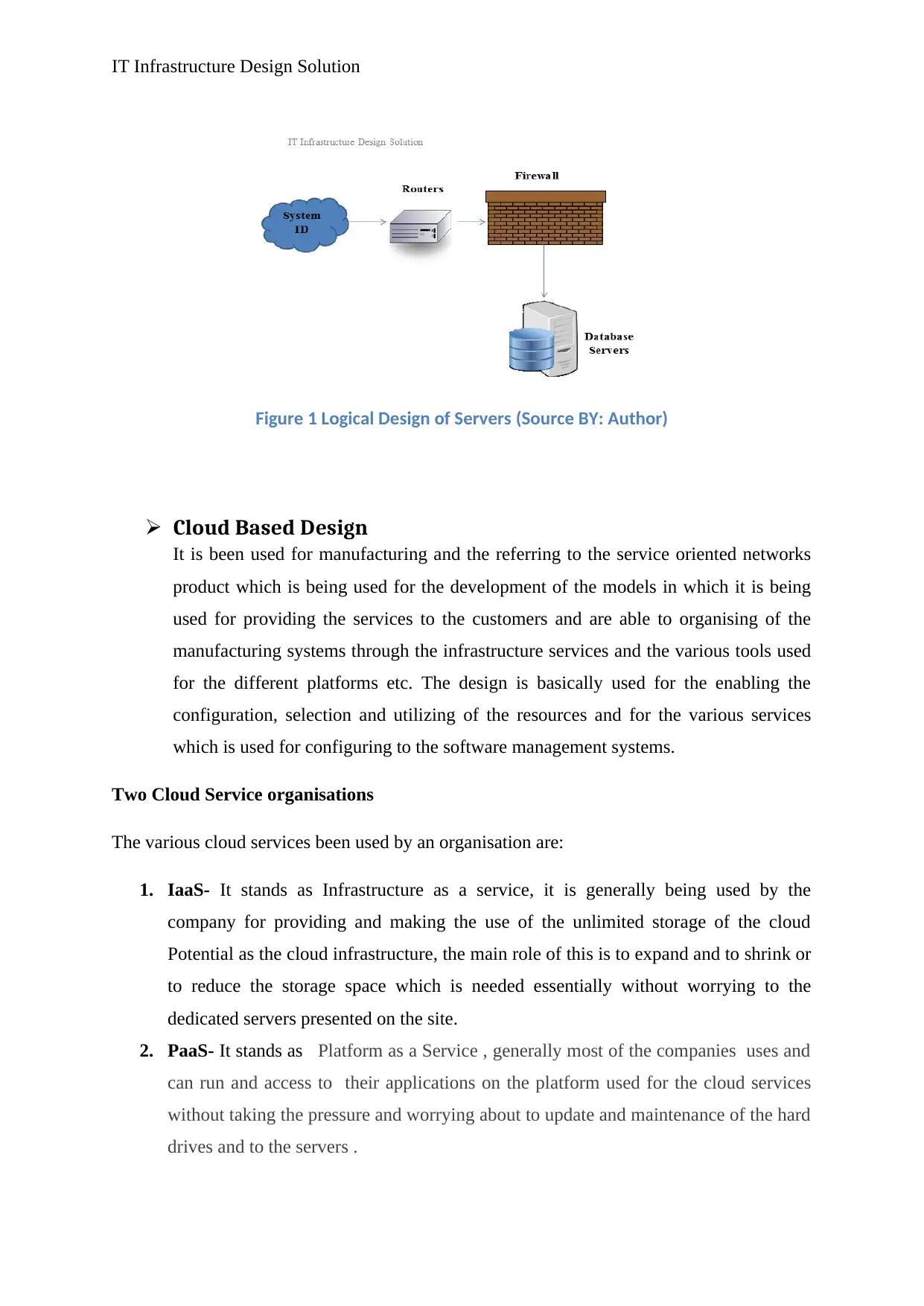
Figure 1 Logical Design of Servers (Source BY: Author)
Cloud Based Design
It is been used for manufacturing and the referring to the service oriented networks
product which is being used for the development of the models in which it is being
used for providing the services to the customers and are able to organising of the
manufacturing systems through the infrastructure services and the various tools used
for the different platforms etc. The design is basically used for the enabling the
configuration, selection and utilizing of the resources and for the various services
which is used for configuring to the software management systems.
Two Cloud Service organisations
The various cloud services been used by an organisation are:
1. IaaS- It stands as Infrastructure as a service, it is generally being used by the
company for providing and making the use of the unlimited storage of the cloud
Potential as the cloud infrastructure, the main role of this is to expand and to shrink or
to reduce the storage space which is needed essentially without worrying to the
dedicated servers presented on the site.
2. PaaS- It stands as Platform as a Service , generally most of the companies uses and
can run and access to their applications on the platform used for the cloud services
without taking the pressure and worrying about to update and maintenance of the hard
drives and to the servers .
Figure 1 Logical Design of Servers (Source BY: Author)
Cloud Based Design
It is been used for manufacturing and the referring to the service oriented networks
product which is being used for the development of the models in which it is being
used for providing the services to the customers and are able to organising of the
manufacturing systems through the infrastructure services and the various tools used
for the different platforms etc. The design is basically used for the enabling the
configuration, selection and utilizing of the resources and for the various services
which is used for configuring to the software management systems.
Two Cloud Service organisations
The various cloud services been used by an organisation are:
1. IaaS- It stands as Infrastructure as a service, it is generally being used by the
company for providing and making the use of the unlimited storage of the cloud
Potential as the cloud infrastructure, the main role of this is to expand and to shrink or
to reduce the storage space which is needed essentially without worrying to the
dedicated servers presented on the site.
2. PaaS- It stands as Platform as a Service , generally most of the companies uses and
can run and access to their applications on the platform used for the cloud services
without taking the pressure and worrying about to update and maintenance of the hard
drives and to the servers .
IT Infrastructure Design Solution
Network Simulation
Simulating of the networks has the appropriate communication of building of the
networks and to the computer network. It is a technique which is used for the
performing the network software platform models and the performance of a network
either by scheming the interaction between the different network to the global
networks entities such as routers, hubs, switches, links etc.
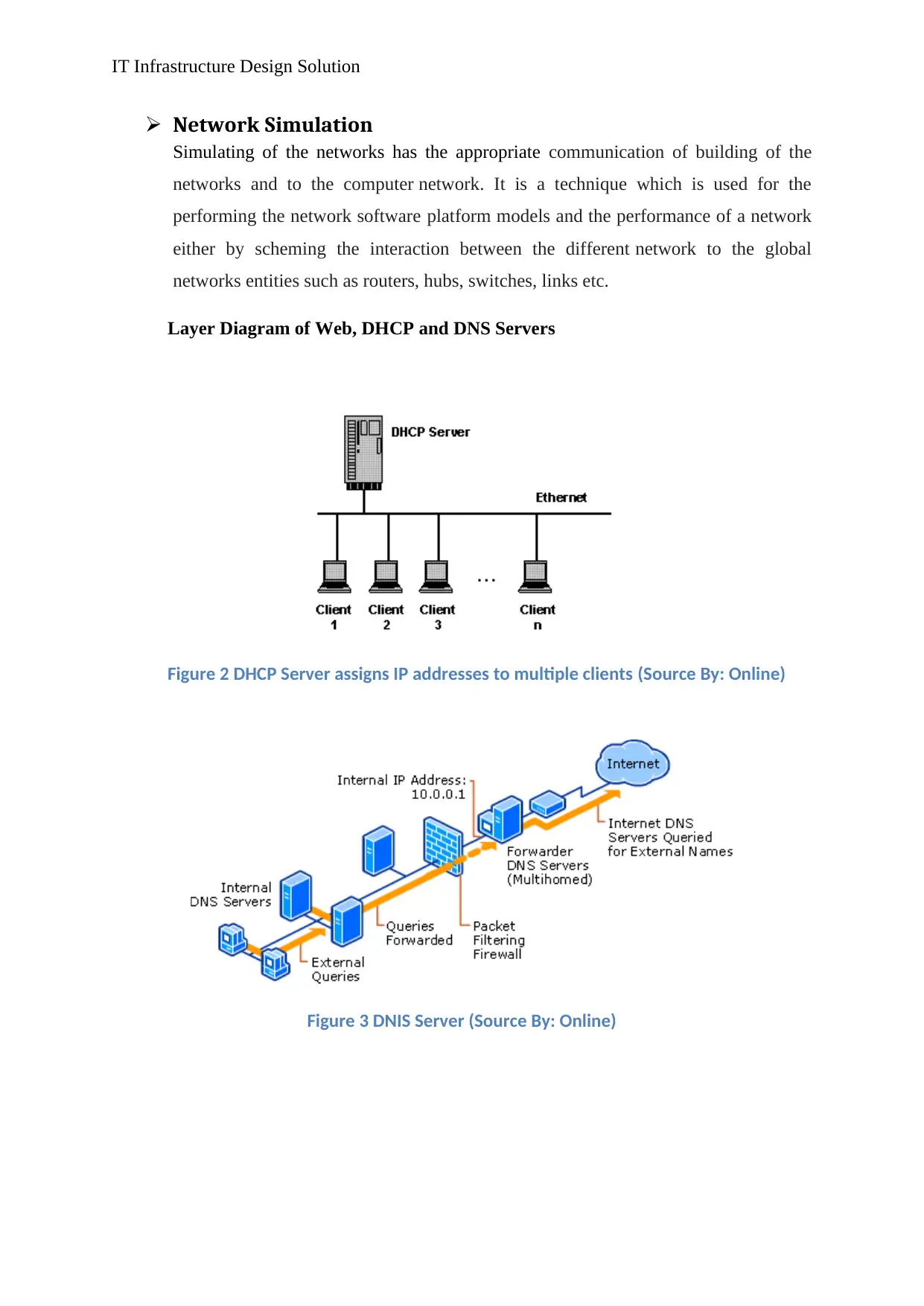
Layer Diagram of Web, DHCP and DNS Servers
Figure 2 DHCP Server assigns IP addresses to multiple clients (Source By: Online)
Figure 3 DNIS Server (Source By: Online)
Network Simulation
Simulating of the networks has the appropriate communication of building of the
networks and to the computer network. It is a technique which is used for the
performing the network software platform models and the performance of a network
either by scheming the interaction between the different network to the global
networks entities such as routers, hubs, switches, links etc.
Layer Diagram of Web, DHCP and DNS Servers
Figure 2 DHCP Server assigns IP addresses to multiple clients (Source By: Online)
Figure 3 DNIS Server (Source By: Online)
⊘ This is a preview!⊘
Do you want full access?
Subscribe today to unlock all pages.
Trusted by 1+ million students worldwide

1 out of 16


Related Documents


Your All-in-One AI-Powered Toolkit for Academic Success.
+13062052269
info@desklib.com
Available 24*7 on WhatsApp / Email
![[object Object]](/_next/static/media/star-bottom.7253800d.svg)
Unlock your academic potential
Copyright © 2020–2026 A2Z Services. All Rights Reserved. Developed and managed by ZUCOL.