Comprehensive Job Analysis: HRM Practices, Methodologies, McDonald's
VerifiedAdded on 2022/08/24
|9
|1772
|75
Report
AI Summary
This report provides a comprehensive job analysis study focusing on the role and importance of job analysis in Human Resource Management (HRM). It defines job analysis as the process of collecting and recording job-related information, including skills, knowledge, responsibilities, and qualifications. The report explores the multidimensional purposes of job analysis, such as recruitment and selection, performance analysis, training and development, compensation management, and job designing. It discusses various methodologies for conducting job analysis, including observation, interview, and functional job analysis, comparing and contrasting their effectiveness. The report also includes a job analysis action plan for a Human Resource Manager at McDonald’s UK, outlining the steps, resources, and time frame required. Finally, it presents a detailed job analysis for the position of Human Resource Manager at McDonald’s UK, including job requirements, duties, and employee specifications.

Running head: JOB ANALYSIS: A STUDY
JOB ANALYSIS: A STUDY
Name of the student
Name of the university
Author Note
JOB ANALYSIS: A STUDY
Name of the student
Name of the university
Author Note
Paraphrase This Document
Need a fresh take? Get an instant paraphrase of this document with our AI Paraphraser

1JOB ANALYSIS: A STUDY
Question 1
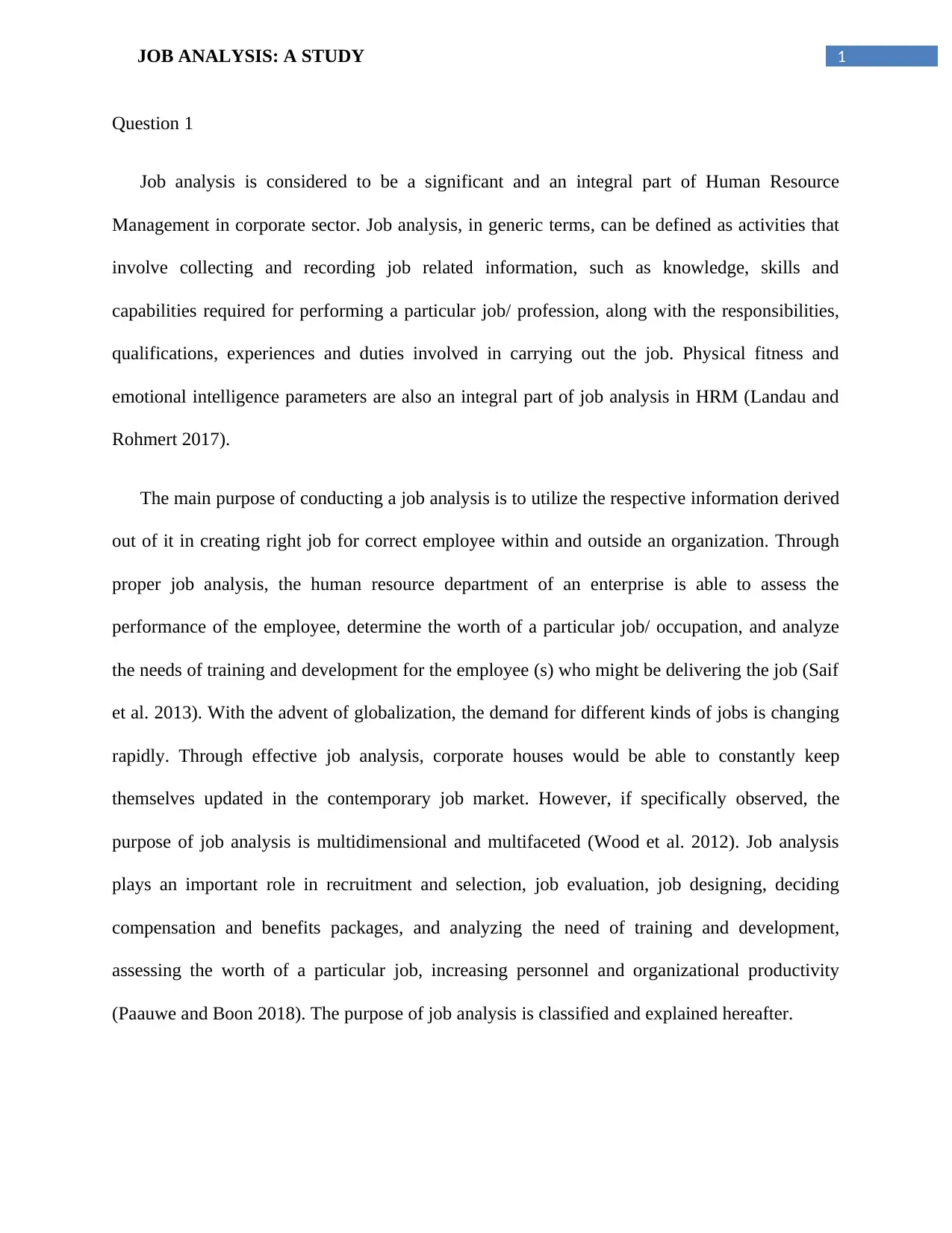
Job analysis is considered to be a significant and an integral part of Human Resource
Management in corporate sector. Job analysis, in generic terms, can be defined as activities that
involve collecting and recording job related information, such as knowledge, skills and
capabilities required for performing a particular job/ profession, along with the responsibilities,
qualifications, experiences and duties involved in carrying out the job. Physical fitness and
emotional intelligence parameters are also an integral part of job analysis in HRM (Landau and
Rohmert 2017).
The main purpose of conducting a job analysis is to utilize the respective information derived
out of it in creating right job for correct employee within and outside an organization. Through
proper job analysis, the human resource department of an enterprise is able to assess the
performance of the employee, determine the worth of a particular job/ occupation, and analyze
the needs of training and development for the employee (s) who might be delivering the job (Saif
et al. 2013). With the advent of globalization, the demand for different kinds of jobs is changing
rapidly. Through effective job analysis, corporate houses would be able to constantly keep
themselves updated in the contemporary job market. However, if specifically observed, the
purpose of job analysis is multidimensional and multifaceted (Wood et al. 2012). Job analysis
plays an important role in recruitment and selection, job evaluation, job designing, deciding
compensation and benefits packages, and analyzing the need of training and development,
assessing the worth of a particular job, increasing personnel and organizational productivity
(Paauwe and Boon 2018). The purpose of job analysis is classified and explained hereafter.
Question 1
Job analysis is considered to be a significant and an integral part of Human Resource
Management in corporate sector. Job analysis, in generic terms, can be defined as activities that
involve collecting and recording job related information, such as knowledge, skills and
capabilities required for performing a particular job/ profession, along with the responsibilities,
qualifications, experiences and duties involved in carrying out the job. Physical fitness and
emotional intelligence parameters are also an integral part of job analysis in HRM (Landau and
Rohmert 2017).
The main purpose of conducting a job analysis is to utilize the respective information derived
out of it in creating right job for correct employee within and outside an organization. Through
proper job analysis, the human resource department of an enterprise is able to assess the
performance of the employee, determine the worth of a particular job/ occupation, and analyze
the needs of training and development for the employee (s) who might be delivering the job (Saif
et al. 2013). With the advent of globalization, the demand for different kinds of jobs is changing
rapidly. Through effective job analysis, corporate houses would be able to constantly keep
themselves updated in the contemporary job market. However, if specifically observed, the
purpose of job analysis is multidimensional and multifaceted (Wood et al. 2012). Job analysis
plays an important role in recruitment and selection, job evaluation, job designing, deciding
compensation and benefits packages, and analyzing the need of training and development,
assessing the worth of a particular job, increasing personnel and organizational productivity
(Paauwe and Boon 2018). The purpose of job analysis is classified and explained hereafter.

2JOB ANALYSIS: A STUDY
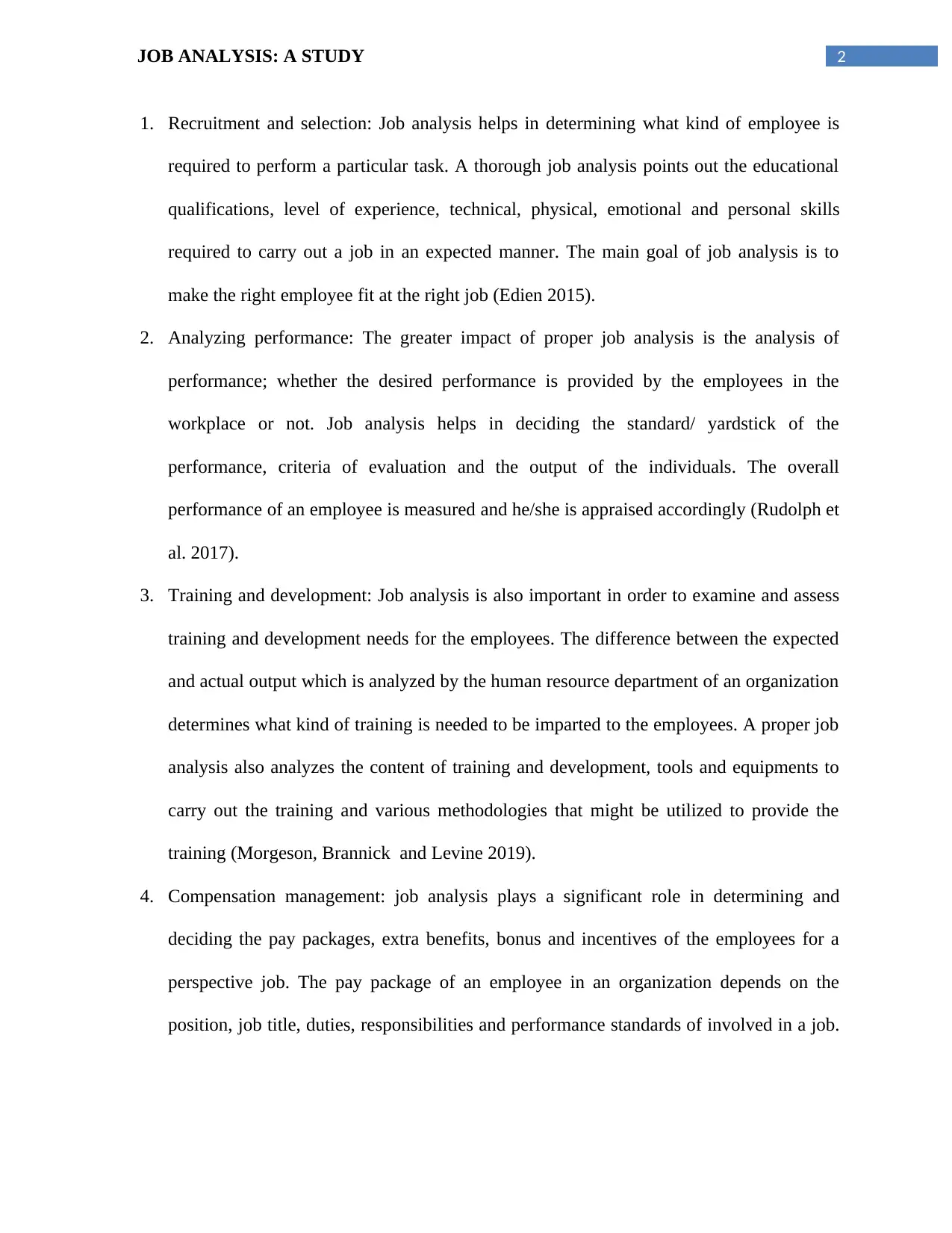
1. Recruitment and selection: Job analysis helps in determining what kind of employee is
required to perform a particular task. A thorough job analysis points out the educational
qualifications, level of experience, technical, physical, emotional and personal skills
required to carry out a job in an expected manner. The main goal of job analysis is to
make the right employee fit at the right job (Edien 2015).
2. Analyzing performance: The greater impact of proper job analysis is the analysis of
performance; whether the desired performance is provided by the employees in the
workplace or not. Job analysis helps in deciding the standard/ yardstick of the
performance, criteria of evaluation and the output of the individuals. The overall
performance of an employee is measured and he/she is appraised accordingly (Rudolph et
al. 2017).
3. Training and development: Job analysis is also important in order to examine and assess
training and development needs for the employees. The difference between the expected
and actual output which is analyzed by the human resource department of an organization
determines what kind of training is needed to be imparted to the employees. A proper job
analysis also analyzes the content of training and development, tools and equipments to
carry out the training and various methodologies that might be utilized to provide the
training (Morgeson, Brannick and Levine 2019).
4. Compensation management: job analysis plays a significant role in determining and
deciding the pay packages, extra benefits, bonus and incentives of the employees for a
perspective job. The pay package of an employee in an organization depends on the
position, job title, duties, responsibilities and performance standards of involved in a job.
1. Recruitment and selection: Job analysis helps in determining what kind of employee is
required to perform a particular task. A thorough job analysis points out the educational
qualifications, level of experience, technical, physical, emotional and personal skills
required to carry out a job in an expected manner. The main goal of job analysis is to
make the right employee fit at the right job (Edien 2015).
2. Analyzing performance: The greater impact of proper job analysis is the analysis of
performance; whether the desired performance is provided by the employees in the
workplace or not. Job analysis helps in deciding the standard/ yardstick of the
performance, criteria of evaluation and the output of the individuals. The overall
performance of an employee is measured and he/she is appraised accordingly (Rudolph et
al. 2017).
3. Training and development: Job analysis is also important in order to examine and assess
training and development needs for the employees. The difference between the expected
and actual output which is analyzed by the human resource department of an organization
determines what kind of training is needed to be imparted to the employees. A proper job
analysis also analyzes the content of training and development, tools and equipments to
carry out the training and various methodologies that might be utilized to provide the
training (Morgeson, Brannick and Levine 2019).
4. Compensation management: job analysis plays a significant role in determining and
deciding the pay packages, extra benefits, bonus and incentives of the employees for a
perspective job. The pay package of an employee in an organization depends on the
position, job title, duties, responsibilities and performance standards of involved in a job.
⊘ This is a preview!⊘
Do you want full access?
Subscribe today to unlock all pages.

Trusted by 1+ million students worldwide

3JOB ANALYSIS: A STUDY
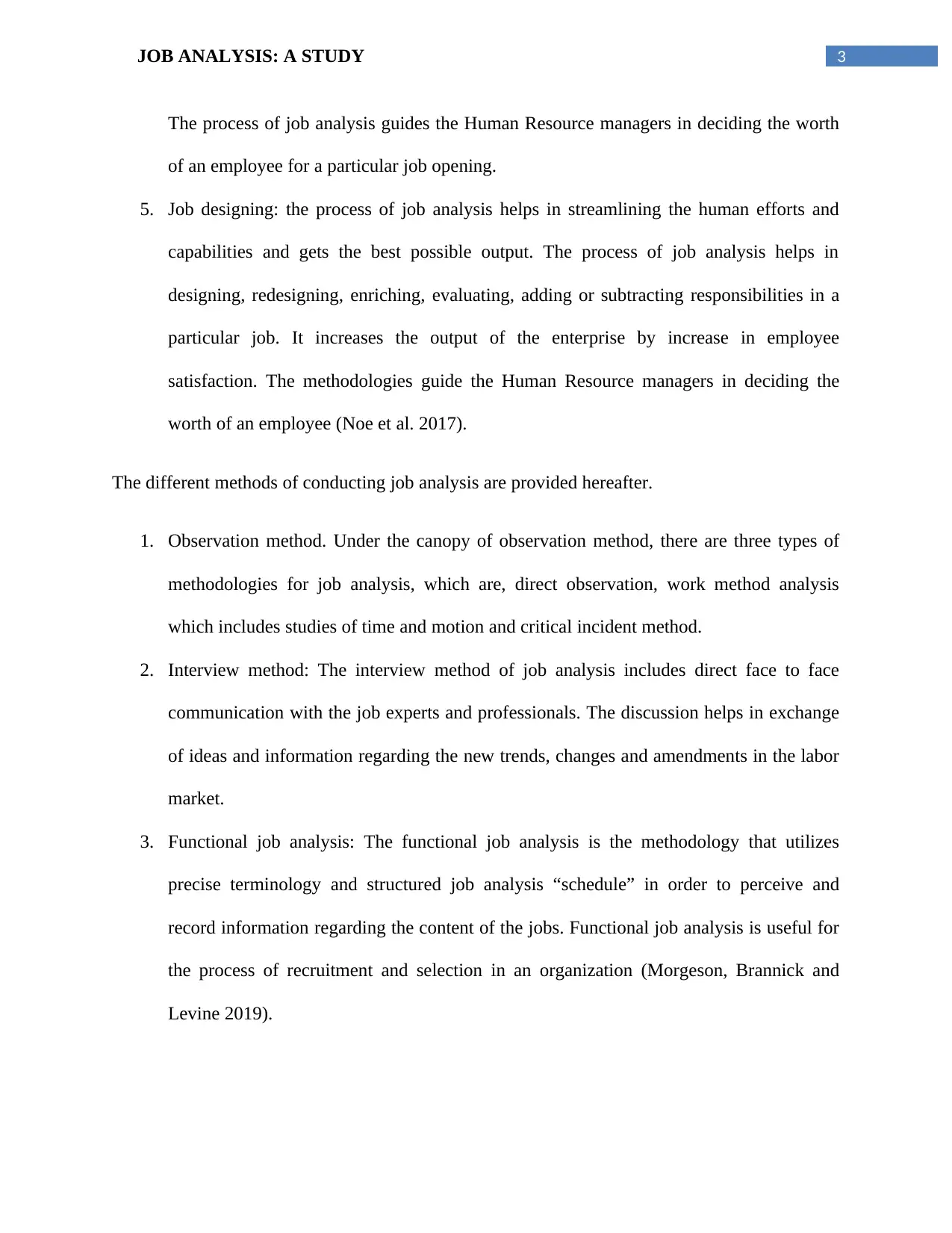
The process of job analysis guides the Human Resource managers in deciding the worth
of an employee for a particular job opening.
5. Job designing: the process of job analysis helps in streamlining the human efforts and
capabilities and gets the best possible output. The process of job analysis helps in
designing, redesigning, enriching, evaluating, adding or subtracting responsibilities in a
particular job. It increases the output of the enterprise by increase in employee
satisfaction. The methodologies guide the Human Resource managers in deciding the
worth of an employee (Noe et al. 2017).
The different methods of conducting job analysis are provided hereafter.
1. Observation method. Under the canopy of observation method, there are three types of
methodologies for job analysis, which are, direct observation, work method analysis
which includes studies of time and motion and critical incident method.
2. Interview method: The interview method of job analysis includes direct face to face
communication with the job experts and professionals. The discussion helps in exchange
of ideas and information regarding the new trends, changes and amendments in the labor
market.
3. Functional job analysis: The functional job analysis is the methodology that utilizes
precise terminology and structured job analysis “schedule” in order to perceive and
record information regarding the content of the jobs. Functional job analysis is useful for
the process of recruitment and selection in an organization (Morgeson, Brannick and
Levine 2019).
The process of job analysis guides the Human Resource managers in deciding the worth
of an employee for a particular job opening.
5. Job designing: the process of job analysis helps in streamlining the human efforts and
capabilities and gets the best possible output. The process of job analysis helps in
designing, redesigning, enriching, evaluating, adding or subtracting responsibilities in a
particular job. It increases the output of the enterprise by increase in employee
satisfaction. The methodologies guide the Human Resource managers in deciding the
worth of an employee (Noe et al. 2017).
The different methods of conducting job analysis are provided hereafter.
1. Observation method. Under the canopy of observation method, there are three types of
methodologies for job analysis, which are, direct observation, work method analysis
which includes studies of time and motion and critical incident method.
2. Interview method: The interview method of job analysis includes direct face to face
communication with the job experts and professionals. The discussion helps in exchange
of ideas and information regarding the new trends, changes and amendments in the labor
market.
3. Functional job analysis: The functional job analysis is the methodology that utilizes
precise terminology and structured job analysis “schedule” in order to perceive and
record information regarding the content of the jobs. Functional job analysis is useful for
the process of recruitment and selection in an organization (Morgeson, Brannick and
Levine 2019).
Paraphrase This Document
Need a fresh take? Get an instant paraphrase of this document with our AI Paraphraser

4JOB ANALYSIS: A STUDY
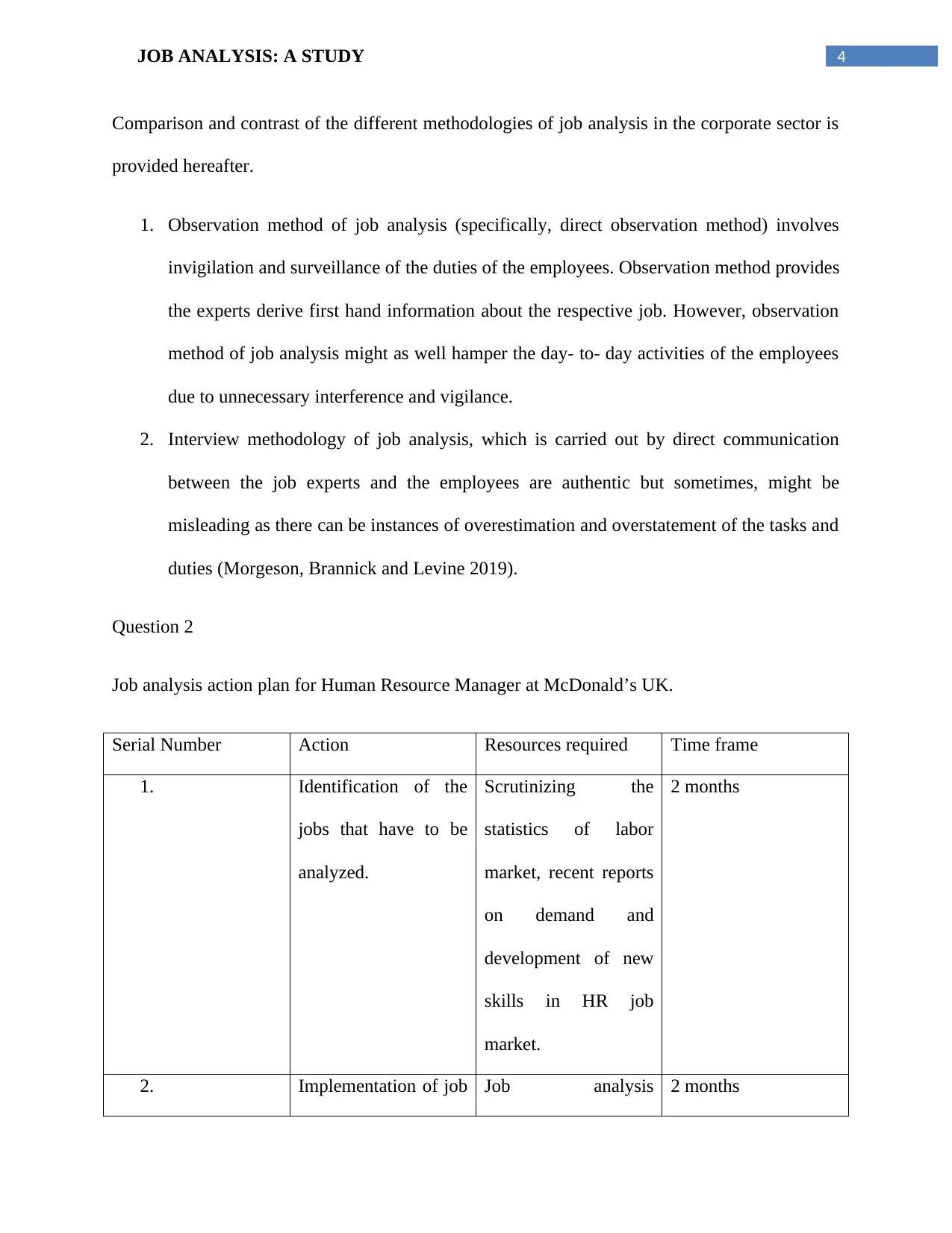
Comparison and contrast of the different methodologies of job analysis in the corporate sector is
provided hereafter.
1. Observation method of job analysis (specifically, direct observation method) involves
invigilation and surveillance of the duties of the employees. Observation method provides
the experts derive first hand information about the respective job. However, observation
method of job analysis might as well hamper the day- to- day activities of the employees
due to unnecessary interference and vigilance.
2. Interview methodology of job analysis, which is carried out by direct communication
between the job experts and the employees are authentic but sometimes, might be
misleading as there can be instances of overestimation and overstatement of the tasks and
duties (Morgeson, Brannick and Levine 2019).
Question 2
Job analysis action plan for Human Resource Manager at McDonald’s UK.
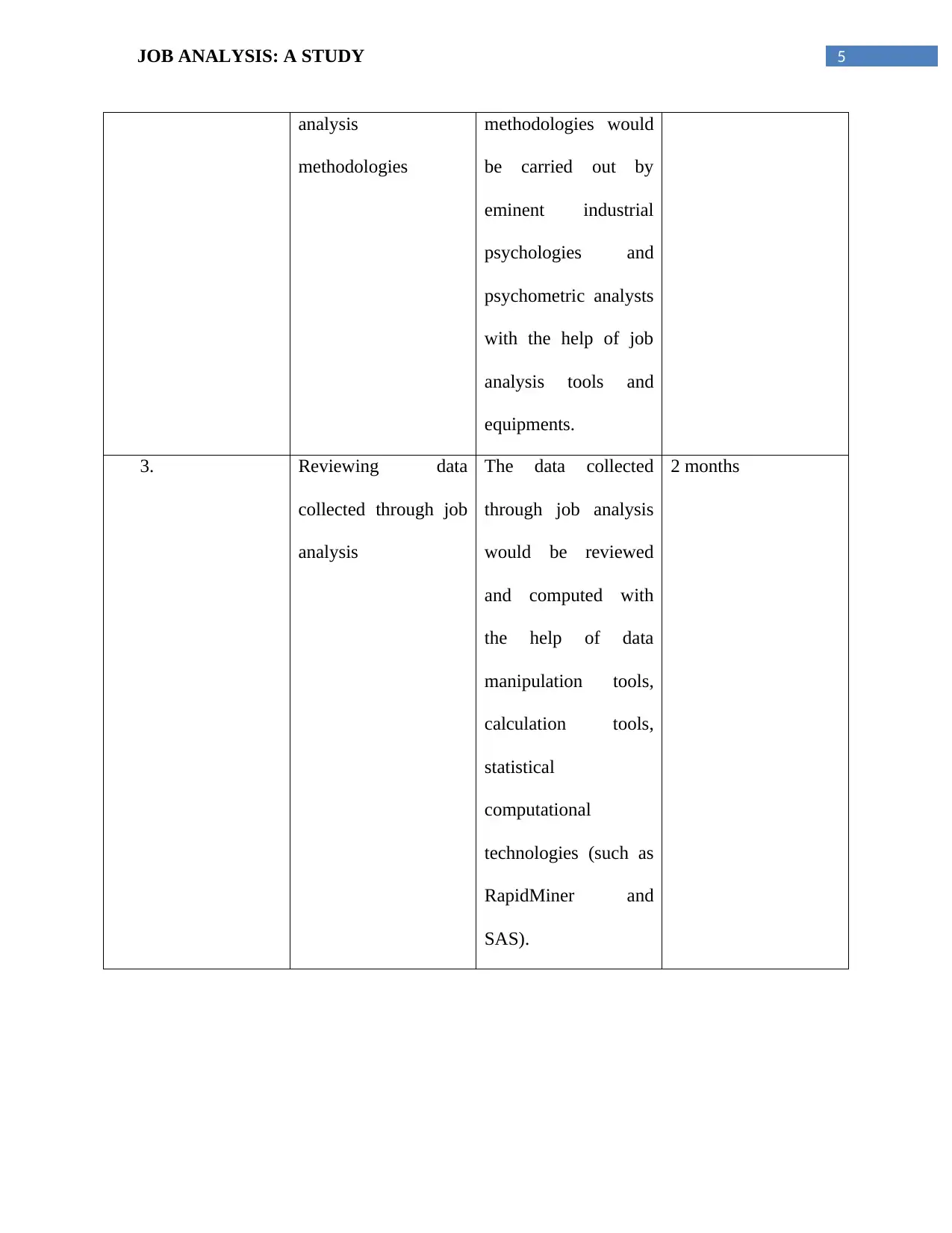
Serial Number Action Resources required Time frame
1. Identification of the
jobs that have to be
analyzed.
Scrutinizing the
statistics of labor
market, recent reports
on demand and
development of new
skills in HR job
market.
2 months
2. Implementation of job Job analysis 2 months
Comparison and contrast of the different methodologies of job analysis in the corporate sector is
provided hereafter.
1. Observation method of job analysis (specifically, direct observation method) involves
invigilation and surveillance of the duties of the employees. Observation method provides
the experts derive first hand information about the respective job. However, observation
method of job analysis might as well hamper the day- to- day activities of the employees
due to unnecessary interference and vigilance.
2. Interview methodology of job analysis, which is carried out by direct communication
between the job experts and the employees are authentic but sometimes, might be
misleading as there can be instances of overestimation and overstatement of the tasks and
duties (Morgeson, Brannick and Levine 2019).
Question 2
Job analysis action plan for Human Resource Manager at McDonald’s UK.
Serial Number Action Resources required Time frame
1. Identification of the
jobs that have to be
analyzed.
Scrutinizing the
statistics of labor
market, recent reports
on demand and
development of new
skills in HR job
market.
2 months
2. Implementation of job Job analysis 2 months

5JOB ANALYSIS: A STUDY
analysis
methodologies
methodologies would
be carried out by
eminent industrial
psychologies and
psychometric analysts
with the help of job
analysis tools and
equipments.
3. Reviewing data
collected through job
analysis
The data collected
through job analysis
would be reviewed
and computed with
the help of data
manipulation tools,
calculation tools,
statistical
computational
technologies (such as
RapidMiner and
SAS).
2 months
analysis
methodologies
methodologies would
be carried out by
eminent industrial
psychologies and
psychometric analysts
with the help of job
analysis tools and
equipments.
3. Reviewing data
collected through job
analysis
The data collected
through job analysis
would be reviewed
and computed with
the help of data
manipulation tools,
calculation tools,
statistical
computational
technologies (such as
RapidMiner and
SAS).
2 months
⊘ This is a preview!⊘
Do you want full access?
Subscribe today to unlock all pages.

Trusted by 1+ million students worldwide

6JOB ANALYSIS: A STUDY
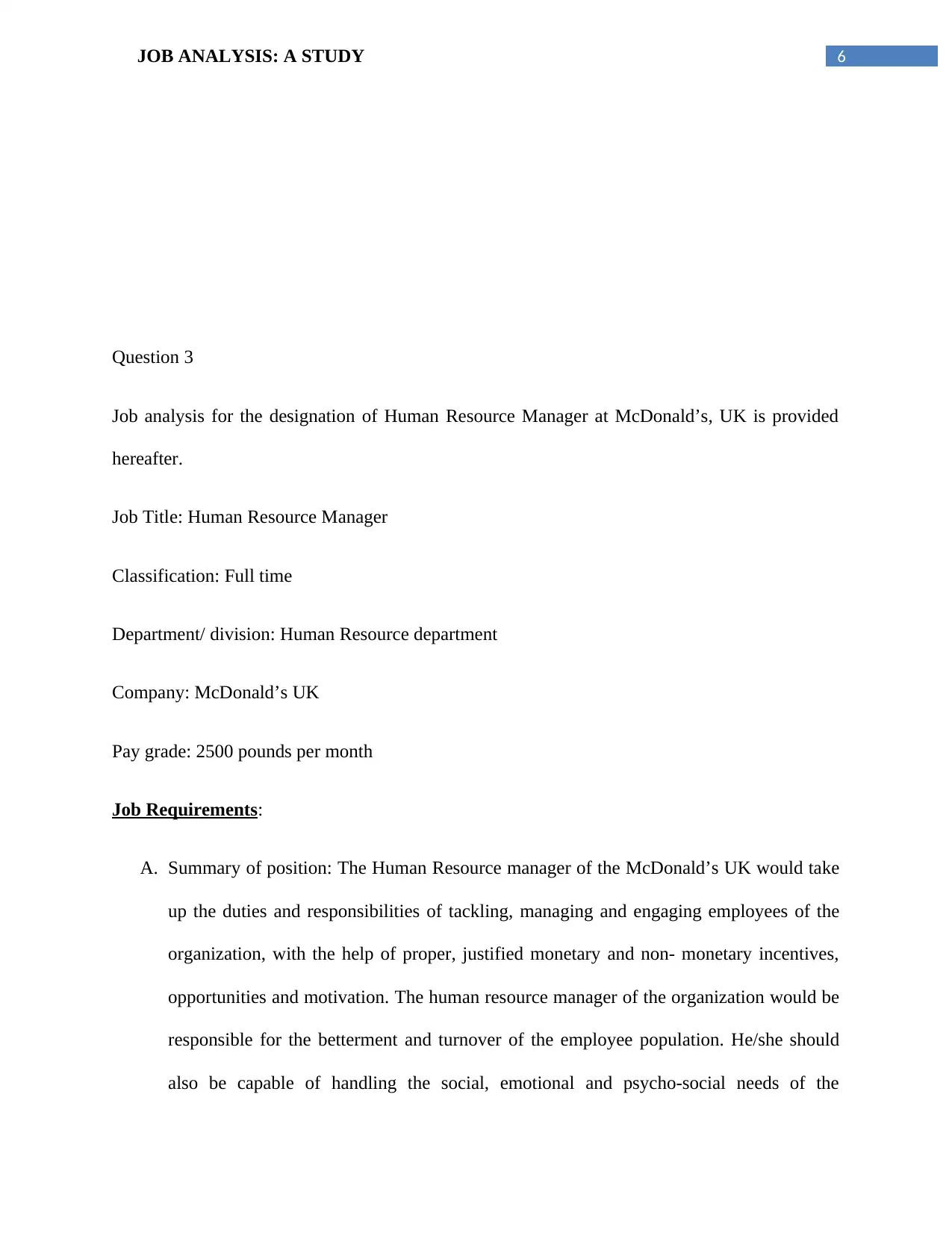
Question 3
Job analysis for the designation of Human Resource Manager at McDonald’s, UK is provided
hereafter.
Job Title: Human Resource Manager
Classification: Full time
Department/ division: Human Resource department
Company: McDonald’s UK
Pay grade: 2500 pounds per month
Job Requirements:
A. Summary of position: The Human Resource manager of the McDonald’s UK would take
up the duties and responsibilities of tackling, managing and engaging employees of the
organization, with the help of proper, justified monetary and non- monetary incentives,
opportunities and motivation. The human resource manager of the organization would be
responsible for the betterment and turnover of the employee population. He/she should
also be capable of handling the social, emotional and psycho-social needs of the
Question 3
Job analysis for the designation of Human Resource Manager at McDonald’s, UK is provided
hereafter.
Job Title: Human Resource Manager
Classification: Full time
Department/ division: Human Resource department
Company: McDonald’s UK
Pay grade: 2500 pounds per month
Job Requirements:
A. Summary of position: The Human Resource manager of the McDonald’s UK would take
up the duties and responsibilities of tackling, managing and engaging employees of the
organization, with the help of proper, justified monetary and non- monetary incentives,
opportunities and motivation. The human resource manager of the organization would be
responsible for the betterment and turnover of the employee population. He/she should
also be capable of handling the social, emotional and psycho-social needs of the
Paraphrase This Document
Need a fresh take? Get an instant paraphrase of this document with our AI Paraphraser

7JOB ANALYSIS: A STUDY
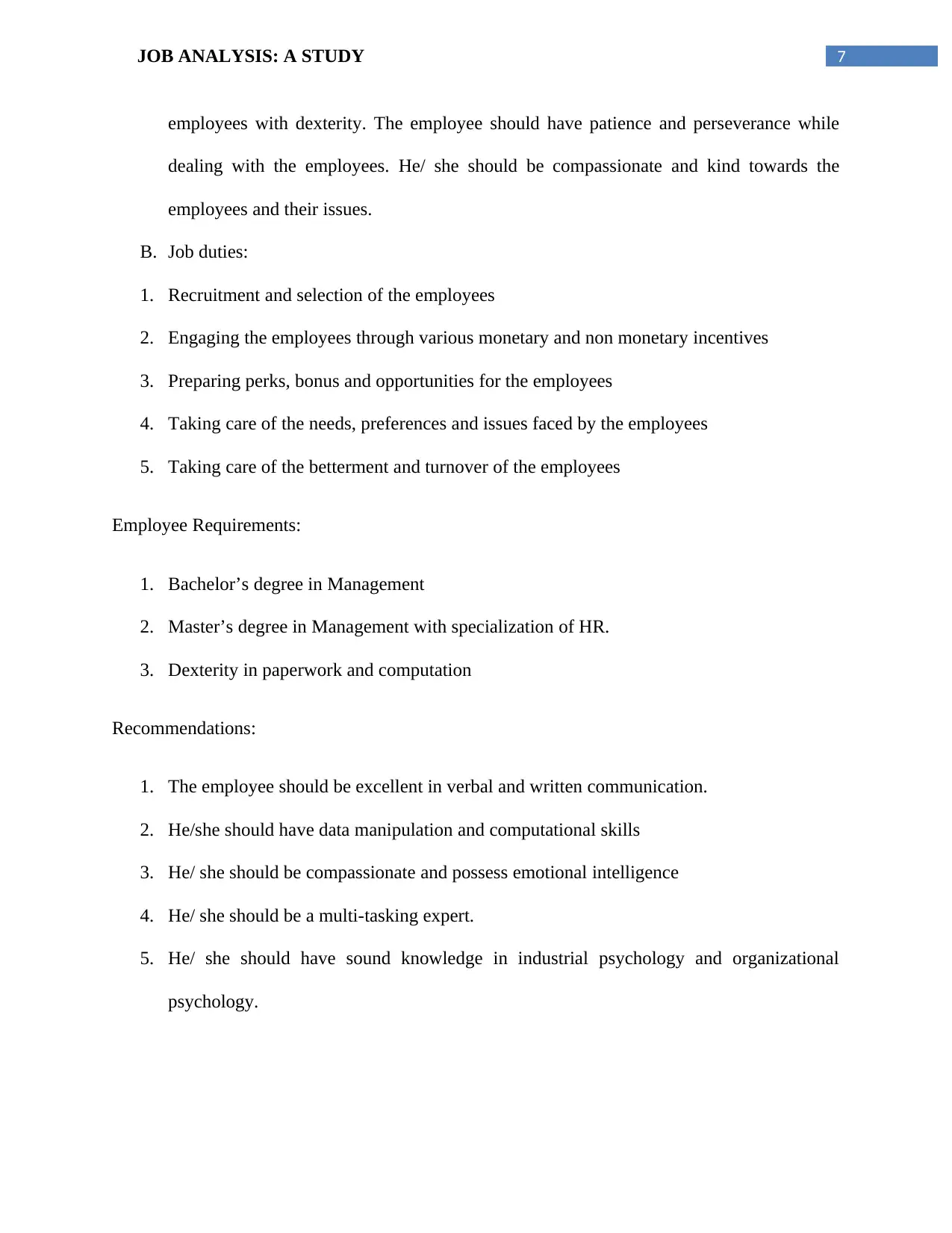
employees with dexterity. The employee should have patience and perseverance while
dealing with the employees. He/ she should be compassionate and kind towards the
employees and their issues.
B. Job duties:
1. Recruitment and selection of the employees
2. Engaging the employees through various monetary and non monetary incentives
3. Preparing perks, bonus and opportunities for the employees
4. Taking care of the needs, preferences and issues faced by the employees
5. Taking care of the betterment and turnover of the employees
Employee Requirements:
1. Bachelor’s degree in Management
2. Master’s degree in Management with specialization of HR.
3. Dexterity in paperwork and computation
Recommendations:
1. The employee should be excellent in verbal and written communication.
2. He/she should have data manipulation and computational skills
3. He/ she should be compassionate and possess emotional intelligence
4. He/ she should be a multi-tasking expert.
5. He/ she should have sound knowledge in industrial psychology and organizational
psychology.
employees with dexterity. The employee should have patience and perseverance while
dealing with the employees. He/ she should be compassionate and kind towards the
employees and their issues.
B. Job duties:
1. Recruitment and selection of the employees
2. Engaging the employees through various monetary and non monetary incentives
3. Preparing perks, bonus and opportunities for the employees
4. Taking care of the needs, preferences and issues faced by the employees
5. Taking care of the betterment and turnover of the employees
Employee Requirements:
1. Bachelor’s degree in Management
2. Master’s degree in Management with specialization of HR.
3. Dexterity in paperwork and computation
Recommendations:
1. The employee should be excellent in verbal and written communication.
2. He/she should have data manipulation and computational skills
3. He/ she should be compassionate and possess emotional intelligence
4. He/ she should be a multi-tasking expert.
5. He/ she should have sound knowledge in industrial psychology and organizational
psychology.

8JOB ANALYSIS: A STUDY
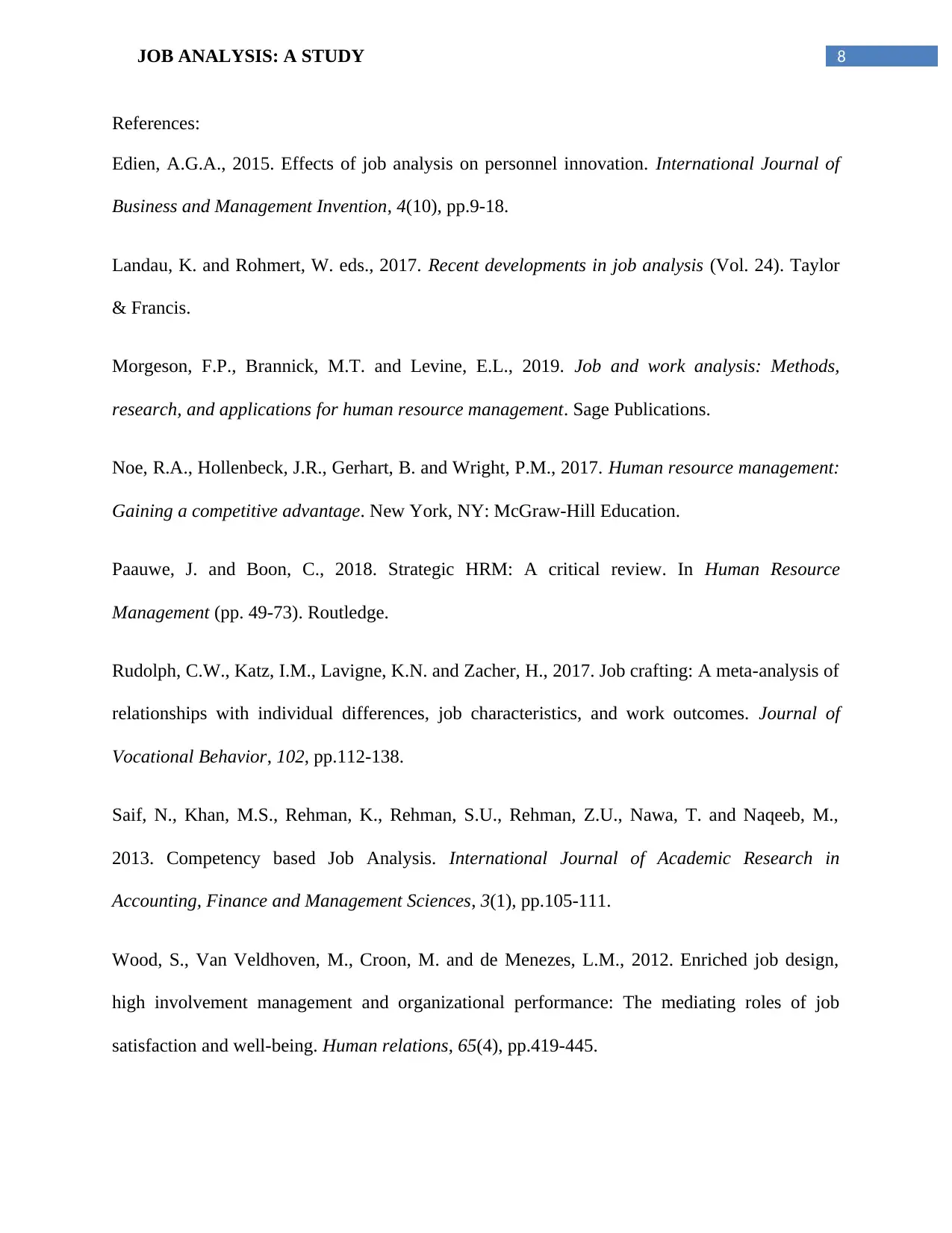
References:
Edien, A.G.A., 2015. Effects of job analysis on personnel innovation. International Journal of
Business and Management Invention, 4(10), pp.9-18.
Landau, K. and Rohmert, W. eds., 2017. Recent developments in job analysis (Vol. 24). Taylor
& Francis.
Morgeson, F.P., Brannick, M.T. and Levine, E.L., 2019. Job and work analysis: Methods,
research, and applications for human resource management. Sage Publications.
Noe, R.A., Hollenbeck, J.R., Gerhart, B. and Wright, P.M., 2017. Human resource management:
Gaining a competitive advantage. New York, NY: McGraw-Hill Education.
Paauwe, J. and Boon, C., 2018. Strategic HRM: A critical review. In Human Resource
Management (pp. 49-73). Routledge.
Rudolph, C.W., Katz, I.M., Lavigne, K.N. and Zacher, H., 2017. Job crafting: A meta-analysis of
relationships with individual differences, job characteristics, and work outcomes. Journal of
Vocational Behavior, 102, pp.112-138.
Saif, N., Khan, M.S., Rehman, K., Rehman, S.U., Rehman, Z.U., Nawa, T. and Naqeeb, M.,
2013. Competency based Job Analysis. International Journal of Academic Research in
Accounting, Finance and Management Sciences, 3(1), pp.105-111.
Wood, S., Van Veldhoven, M., Croon, M. and de Menezes, L.M., 2012. Enriched job design,
high involvement management and organizational performance: The mediating roles of job
satisfaction and well-being. Human relations, 65(4), pp.419-445.
References:
Edien, A.G.A., 2015. Effects of job analysis on personnel innovation. International Journal of
Business and Management Invention, 4(10), pp.9-18.
Landau, K. and Rohmert, W. eds., 2017. Recent developments in job analysis (Vol. 24). Taylor
& Francis.
Morgeson, F.P., Brannick, M.T. and Levine, E.L., 2019. Job and work analysis: Methods,
research, and applications for human resource management. Sage Publications.
Noe, R.A., Hollenbeck, J.R., Gerhart, B. and Wright, P.M., 2017. Human resource management:
Gaining a competitive advantage. New York, NY: McGraw-Hill Education.
Paauwe, J. and Boon, C., 2018. Strategic HRM: A critical review. In Human Resource
Management (pp. 49-73). Routledge.
Rudolph, C.W., Katz, I.M., Lavigne, K.N. and Zacher, H., 2017. Job crafting: A meta-analysis of
relationships with individual differences, job characteristics, and work outcomes. Journal of
Vocational Behavior, 102, pp.112-138.
Saif, N., Khan, M.S., Rehman, K., Rehman, S.U., Rehman, Z.U., Nawa, T. and Naqeeb, M.,
2013. Competency based Job Analysis. International Journal of Academic Research in
Accounting, Finance and Management Sciences, 3(1), pp.105-111.
Wood, S., Van Veldhoven, M., Croon, M. and de Menezes, L.M., 2012. Enriched job design,
high involvement management and organizational performance: The mediating roles of job
satisfaction and well-being. Human relations, 65(4), pp.419-445.
⊘ This is a preview!⊘
Do you want full access?
Subscribe today to unlock all pages.

Trusted by 1+ million students worldwide
1 out of 9
Related Documents
Your All-in-One AI-Powered Toolkit for Academic Success.
+13062052269
info@desklib.com
Available 24*7 on WhatsApp / Email
Unlock your academic potential
Copyright © 2020–2025 A2Z Services. All Rights Reserved. Developed and managed by ZUCOL.