Vodafone's Knowledge Management for Business Innovation Report
VerifiedAdded on 2022/08/18
|19
|3669
|23
Report
AI Summary
This report provides a comprehensive analysis of Vodafone's approach to knowledge management (KM) and its impact on business innovation (BI). The study investigates how Vodafone utilizes social media platforms to enhance organizational learning, manage information, and foster innovation. It explores key elements such as organizational learning, social media development, knowledge management features, and opportunities for subsequent business innovation. The report examines how Vodafone integrates social media into its operations, employee training, and marketing strategies to gain a competitive edge. Furthermore, it discusses the challenges faced and the importance of managing both contextual and external knowledge. The findings highlight the significance of KM in driving innovation and improving performance within Vodafone, emphasizing the role of social media in facilitating communication, collaboration, and knowledge sharing. The report concludes by emphasizing the importance of a transparent KM plan to address challenges and promote continuous innovation within the organization.

Running head: KNOWLEDGE MANAGEMENT FOR BUSINESS INNOVATION
Knowledge management for business innovation
Enter: name of the Student
Enter: name of the University
Author Note
Knowledge management for business innovation
Enter: name of the Student
Enter: name of the University
Author Note

Paraphrase This Document
Need a fresh take? Get an instant paraphrase of this document with our AI Paraphraser
2KNOWLEDGE MANAGEMENT FOR BUSINESS INNOVATION
Table of Contents
Part one: Formally Assessed............................................................................................................3
1. Introduction..................................................................................................................................3
2. Organisational learning approach................................................................................................3
3. Social Media Development..........................................................................................................6
4. Knowledge management features................................................................................................8
5. Opportunities for subsequent business innovation....................................................................11
6. Conclusion.................................................................................................................................13
Part two: Employability Preparation.............................................................................................15
Main ideas..................................................................................................................................15
Research Approach....................................................................................................................15
Findings of the article................................................................................................................16
References......................................................................................................................................17
Table of Contents
Part one: Formally Assessed............................................................................................................3
1. Introduction..................................................................................................................................3
2. Organisational learning approach................................................................................................3
3. Social Media Development..........................................................................................................6
4. Knowledge management features................................................................................................8
5. Opportunities for subsequent business innovation....................................................................11
6. Conclusion.................................................................................................................................13
Part two: Employability Preparation.............................................................................................15
Main ideas..................................................................................................................................15
Research Approach....................................................................................................................15
Findings of the article................................................................................................................16
References......................................................................................................................................17
3KNOWLEDGE MANAGEMENT FOR BUSINESS INNOVATION
Part one: Formally Assessed
1. Introduction
Management of information and knowledge is very much significant in most of the
commercial establishments all around the world as it can provide any business a competitive
edge over the other similar organizations (James et al. 2016). The entire procedure of sharing
and creating of knowledge inside a business environment can be defined as Knowledge
Management (KM). Introduction of new services or processes in a business can be defined as
Business Innovation (BI); it helps business organizations to grow in the competitive market.
This report shall be analysing the use of KM for BI in Vodafone which is one of the
biggest telecommunication organizations of United Kingdom (Vodafone.co.uk. 2020). The prime
vision of this commercial organization is to be a high quality financial service organization. The
vision of this organization is to enhance the quality of life of the consumers by being a
communications leader.
The report shall be having four sections like organizational learning approach, social
media development, knowledge management features and opportunities of business innovation.
Each of these sections will be very much useful to understand and analyse the contribution of
KM in BI.
2. Organisational learning approach
Numerous Social Media Platforms (SMPs) are deployed in the operations as well as the
production floor of this organization such as YouTube and Facebook. Control of information,
engagement of employees, knowledge creation and enhanced productivity are the most
Part one: Formally Assessed
1. Introduction
Management of information and knowledge is very much significant in most of the
commercial establishments all around the world as it can provide any business a competitive
edge over the other similar organizations (James et al. 2016). The entire procedure of sharing
and creating of knowledge inside a business environment can be defined as Knowledge
Management (KM). Introduction of new services or processes in a business can be defined as
Business Innovation (BI); it helps business organizations to grow in the competitive market.
This report shall be analysing the use of KM for BI in Vodafone which is one of the
biggest telecommunication organizations of United Kingdom (Vodafone.co.uk. 2020). The prime
vision of this commercial organization is to be a high quality financial service organization. The
vision of this organization is to enhance the quality of life of the consumers by being a
communications leader.
The report shall be having four sections like organizational learning approach, social
media development, knowledge management features and opportunities of business innovation.
Each of these sections will be very much useful to understand and analyse the contribution of
KM in BI.
2. Organisational learning approach
Numerous Social Media Platforms (SMPs) are deployed in the operations as well as the
production floor of this organization such as YouTube and Facebook. Control of information,
engagement of employees, knowledge creation and enhanced productivity are the most
⊘ This is a preview!⊘
Do you want full access?
Subscribe today to unlock all pages.

Trusted by 1+ million students worldwide
4KNOWLEDGE MANAGEMENT FOR BUSINESS INNOVATION
significant contribution of the use of diverse categories of SMPs in this global organization. This
practise is very much useful in this organization as it continuous learning and creation of new
services.
The entire knowledge creation procedure of this business is supported by social media
strategy adopted by this organization. Creation of both tacit as well as explicit knowledge is
supported from these SMPs in this business (Bolisani and Bratianu 2017). As a result of this
practice, the decision making capability of the employees of this organization enhanced to a
significant extent.
The role of these SMPs is also very much significant for the managers of this commercial
establishment as it helps them to transfer their individual knowledge to the employees of the
production floor. There are numerous business challenges of Vodafone such as the creation of
a new product, in order to address these challenges this organization maintains a change
management plan, and each of these change processes are also supported by these SMPs
(Gülbahar et al. 2017). The discussion forums of these platforms help the strategic planners of
this organization understand the effectiveness of their BU strategies.
Based on the organizational learning theory, it can also be said that the procedure of
knowledge creation is enhanced with the help of social media technologies which are used by the
employees of the business (Jansen 2017).
The empirical analysis conducted by Shukla, Pandey and Dubey (2018), it can be said
that most of the middle aged employees of commercial business organization makes the most of
SMPs to share and create knowledge in a business. The following illustration shows the age of
the participants whose opinions were considered in the survey conducted by above scholars.
significant contribution of the use of diverse categories of SMPs in this global organization. This
practise is very much useful in this organization as it continuous learning and creation of new
services.
The entire knowledge creation procedure of this business is supported by social media
strategy adopted by this organization. Creation of both tacit as well as explicit knowledge is
supported from these SMPs in this business (Bolisani and Bratianu 2017). As a result of this
practice, the decision making capability of the employees of this organization enhanced to a
significant extent.
The role of these SMPs is also very much significant for the managers of this commercial
establishment as it helps them to transfer their individual knowledge to the employees of the
production floor. There are numerous business challenges of Vodafone such as the creation of
a new product, in order to address these challenges this organization maintains a change
management plan, and each of these change processes are also supported by these SMPs
(Gülbahar et al. 2017). The discussion forums of these platforms help the strategic planners of
this organization understand the effectiveness of their BU strategies.
Based on the organizational learning theory, it can also be said that the procedure of
knowledge creation is enhanced with the help of social media technologies which are used by the
employees of the business (Jansen 2017).
The empirical analysis conducted by Shukla, Pandey and Dubey (2018), it can be said
that most of the middle aged employees of commercial business organization makes the most of
SMPs to share and create knowledge in a business. The following illustration shows the age of
the participants whose opinions were considered in the survey conducted by above scholars.
Paraphrase This Document
Need a fresh take? Get an instant paraphrase of this document with our AI Paraphraser
5KNOWLEDGE MANAGEMENT FOR BUSINESS INNOVATION
Figure 1: Demographic questions
(Source: Shukla, Pandey and Dubey 2018)
Figure 2: Contribution of SMPs in organizational learning
(Source: Shukla, Pandey and Dubey 2018)
The above flowchart helps in understand the opinion of the participants who took part in
the survey about the usefulness of using SMPs to enhance the organizational learning procedure.
Thus, it can be said that the use of these SMPs are very much useful not only to enhance the
Figure 1: Demographic questions
(Source: Shukla, Pandey and Dubey 2018)
Figure 2: Contribution of SMPs in organizational learning
(Source: Shukla, Pandey and Dubey 2018)
The above flowchart helps in understand the opinion of the participants who took part in
the survey about the usefulness of using SMPs to enhance the organizational learning procedure.
Thus, it can be said that the use of these SMPs are very much useful not only to enhance the
6KNOWLEDGE MANAGEMENT FOR BUSINESS INNOVATION
quality of standard but also understand the strategies which are adopted by the business rivals of
the same industry.
3. Social Media Development
It is an integral process of Vodafone which helps them to enhance their rankings among
the top 5 telecommunication industry in UK and provide better service to each of the new and
probable users (Kaakinen et al. 2018). There are numerous educational courses which are given
to the employees of this organization by their steering committee using the SMPs they use on
their desks. There are numerous challenges which are faced by the employees of this
organization and they make the most out of these SMPs to reach out to their supervisors or the
middle level management team. New marketing plans are also created and shared with the
business partners of this organization using the SMPs (Schivinski, Christodoulides and
Dabrowski 2016). Vodafone enjoys most of the social networking opportunities as it discovers
new innovative techniques which can satisfy the needs and expectation of the consumers.
There are numerous barriers of KM such as the lack of awareness, lack of an
environment or appropriate business culture. Each of these barriers is addressed in this
organization with the help of the SMPs (Abel, Buff and Burr 2016). Locating the
knowledgeable employees, providing of a virtual context, harnessing collecting wisdom and
building trust are the major contribution of social media development in this telecommunication
organization.
Based on the social network theory, it can be said that interpersonal relationships in a
corporate business environment can be enhanced using numerous SMPs like Facebook (Kane
2017). This theory also suggests that transparency in the business is well supported by SMPs.
quality of standard but also understand the strategies which are adopted by the business rivals of
the same industry.
3. Social Media Development
It is an integral process of Vodafone which helps them to enhance their rankings among
the top 5 telecommunication industry in UK and provide better service to each of the new and
probable users (Kaakinen et al. 2018). There are numerous educational courses which are given
to the employees of this organization by their steering committee using the SMPs they use on
their desks. There are numerous challenges which are faced by the employees of this
organization and they make the most out of these SMPs to reach out to their supervisors or the
middle level management team. New marketing plans are also created and shared with the
business partners of this organization using the SMPs (Schivinski, Christodoulides and
Dabrowski 2016). Vodafone enjoys most of the social networking opportunities as it discovers
new innovative techniques which can satisfy the needs and expectation of the consumers.
There are numerous barriers of KM such as the lack of awareness, lack of an
environment or appropriate business culture. Each of these barriers is addressed in this
organization with the help of the SMPs (Abel, Buff and Burr 2016). Locating the
knowledgeable employees, providing of a virtual context, harnessing collecting wisdom and
building trust are the major contribution of social media development in this telecommunication
organization.
Based on the social network theory, it can be said that interpersonal relationships in a
corporate business environment can be enhanced using numerous SMPs like Facebook (Kane
2017). This theory also suggests that transparency in the business is well supported by SMPs.
⊘ This is a preview!⊘
Do you want full access?
Subscribe today to unlock all pages.
Trusted by 1+ million students worldwide
7KNOWLEDGE MANAGEMENT FOR BUSINESS INNOVATION
This theory also suggests that the corporate messages can be sent from one business unit to
another in a secured manner using these SMPS. At the same time, consumer engagement
procedure of a business is also well supported from the SMPs. Generation of leads in a target
market is the other major contribution of the SMPs for the global MNCs like Vodafone.
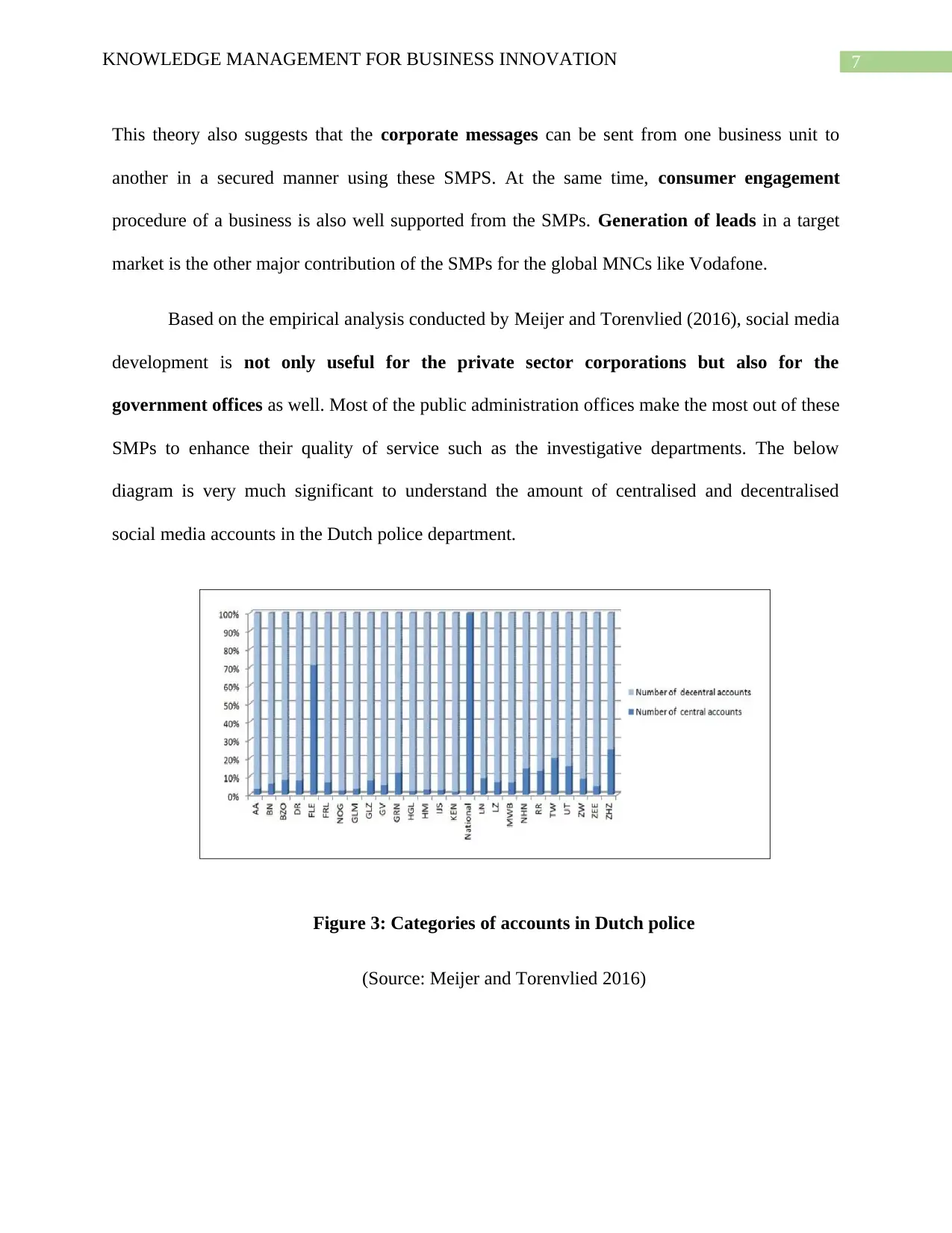
Based on the empirical analysis conducted by Meijer and Torenvlied (2016), social media
development is not only useful for the private sector corporations but also for the
government offices as well. Most of the public administration offices make the most out of these
SMPs to enhance their quality of service such as the investigative departments. The below
diagram is very much significant to understand the amount of centralised and decentralised
social media accounts in the Dutch police department.
Figure 3: Categories of accounts in Dutch police
(Source: Meijer and Torenvlied 2016)
This theory also suggests that the corporate messages can be sent from one business unit to
another in a secured manner using these SMPS. At the same time, consumer engagement
procedure of a business is also well supported from the SMPs. Generation of leads in a target
market is the other major contribution of the SMPs for the global MNCs like Vodafone.
Based on the empirical analysis conducted by Meijer and Torenvlied (2016), social media
development is not only useful for the private sector corporations but also for the
government offices as well. Most of the public administration offices make the most out of these
SMPs to enhance their quality of service such as the investigative departments. The below
diagram is very much significant to understand the amount of centralised and decentralised
social media accounts in the Dutch police department.
Figure 3: Categories of accounts in Dutch police
(Source: Meijer and Torenvlied 2016)
Paraphrase This Document
Need a fresh take? Get an instant paraphrase of this document with our AI Paraphraser
8KNOWLEDGE MANAGEMENT FOR BUSINESS INNOVATION
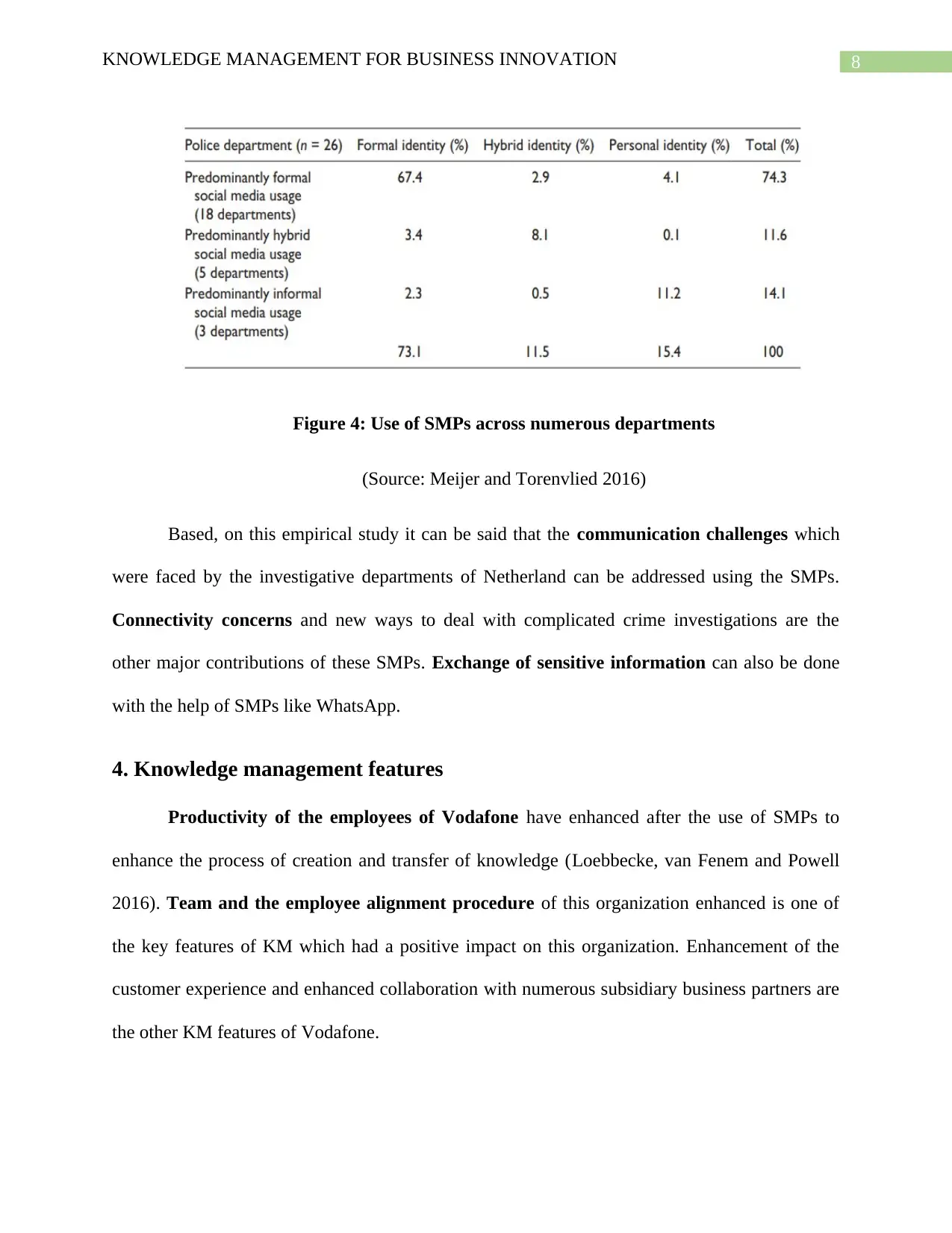
Figure 4: Use of SMPs across numerous departments
(Source: Meijer and Torenvlied 2016)
Based, on this empirical study it can be said that the communication challenges which
were faced by the investigative departments of Netherland can be addressed using the SMPs.
Connectivity concerns and new ways to deal with complicated crime investigations are the
other major contributions of these SMPs. Exchange of sensitive information can also be done
with the help of SMPs like WhatsApp.
4. Knowledge management features
Productivity of the employees of Vodafone have enhanced after the use of SMPs to
enhance the process of creation and transfer of knowledge (Loebbecke, van Fenem and Powell
2016). Team and the employee alignment procedure of this organization enhanced is one of
the key features of KM which had a positive impact on this organization. Enhancement of the
customer experience and enhanced collaboration with numerous subsidiary business partners are
the other KM features of Vodafone.
Figure 4: Use of SMPs across numerous departments
(Source: Meijer and Torenvlied 2016)
Based, on this empirical study it can be said that the communication challenges which
were faced by the investigative departments of Netherland can be addressed using the SMPs.
Connectivity concerns and new ways to deal with complicated crime investigations are the
other major contributions of these SMPs. Exchange of sensitive information can also be done
with the help of SMPs like WhatsApp.
4. Knowledge management features
Productivity of the employees of Vodafone have enhanced after the use of SMPs to
enhance the process of creation and transfer of knowledge (Loebbecke, van Fenem and Powell
2016). Team and the employee alignment procedure of this organization enhanced is one of
the key features of KM which had a positive impact on this organization. Enhancement of the
customer experience and enhanced collaboration with numerous subsidiary business partners are
the other KM features of Vodafone.
9KNOWLEDGE MANAGEMENT FOR BUSINESS INNOVATION
Creation of the dynamic products and development of innovation marketing strategies
were the other major contribution of the successful knowledge and innovation in this
organization (Ibidunni, Ogunnaike and Abiodun 2017). The amalgamation of the SMPs and the
employees of this organization was very much significant for the creation of innovative
strategies which helping this organization to have a competitive edge over the other
telecommunication organizations in UK.
Based on the social media engagement theory, it can be said that the interaction
procedure of a commercial establishment with their consumers can be enhanced using SMPs
such as Twitter (Santoro, Vrontis, Thrassou and Dezi 2018). This theory states that better
marketing research can be conducted with the help of social media engagement. According to
this theory attracting new customers and calculating the Return of Investment of a project
can be done using the SMPs as well.
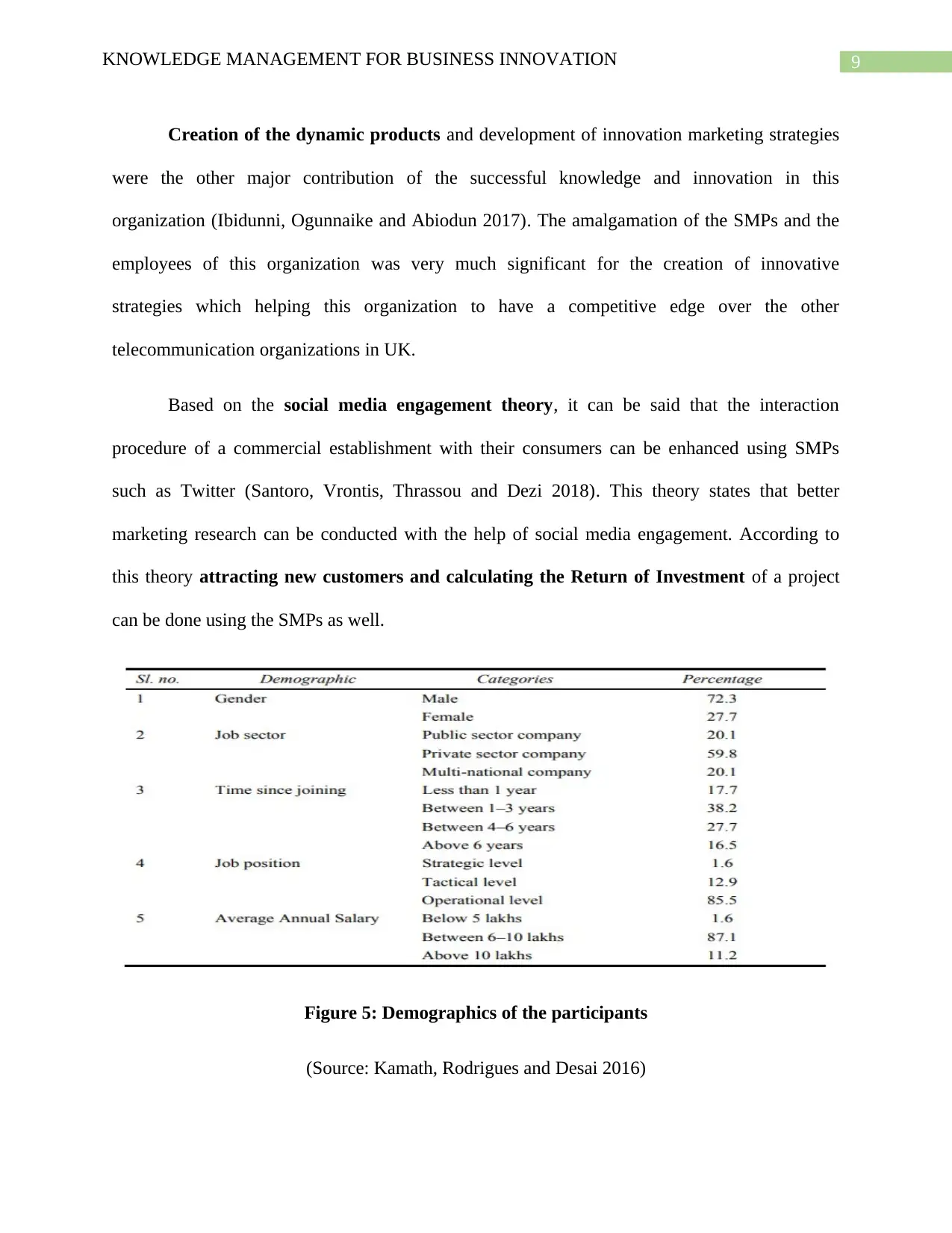
Figure 5: Demographics of the participants
(Source: Kamath, Rodrigues and Desai 2016)
Creation of the dynamic products and development of innovation marketing strategies
were the other major contribution of the successful knowledge and innovation in this
organization (Ibidunni, Ogunnaike and Abiodun 2017). The amalgamation of the SMPs and the
employees of this organization was very much significant for the creation of innovative
strategies which helping this organization to have a competitive edge over the other
telecommunication organizations in UK.
Based on the social media engagement theory, it can be said that the interaction
procedure of a commercial establishment with their consumers can be enhanced using SMPs
such as Twitter (Santoro, Vrontis, Thrassou and Dezi 2018). This theory states that better
marketing research can be conducted with the help of social media engagement. According to
this theory attracting new customers and calculating the Return of Investment of a project
can be done using the SMPs as well.
Figure 5: Demographics of the participants
(Source: Kamath, Rodrigues and Desai 2016)
⊘ This is a preview!⊘
Do you want full access?
Subscribe today to unlock all pages.
Trusted by 1+ million students worldwide
10KNOWLEDGE MANAGEMENT FOR BUSINESS INNOVATION
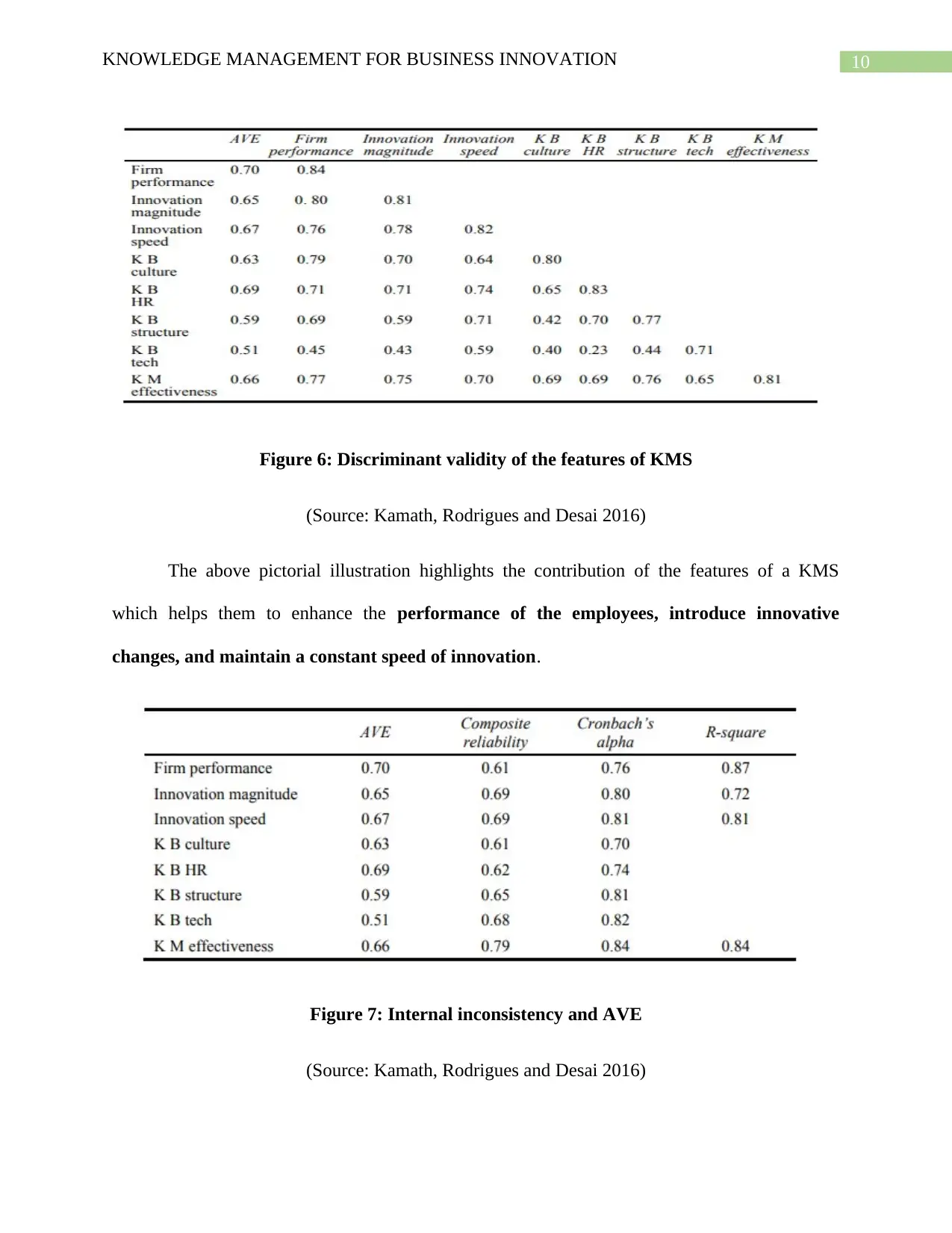
Figure 6: Discriminant validity of the features of KMS
(Source: Kamath, Rodrigues and Desai 2016)
The above pictorial illustration highlights the contribution of the features of a KMS
which helps them to enhance the performance of the employees, introduce innovative
changes, and maintain a constant speed of innovation.
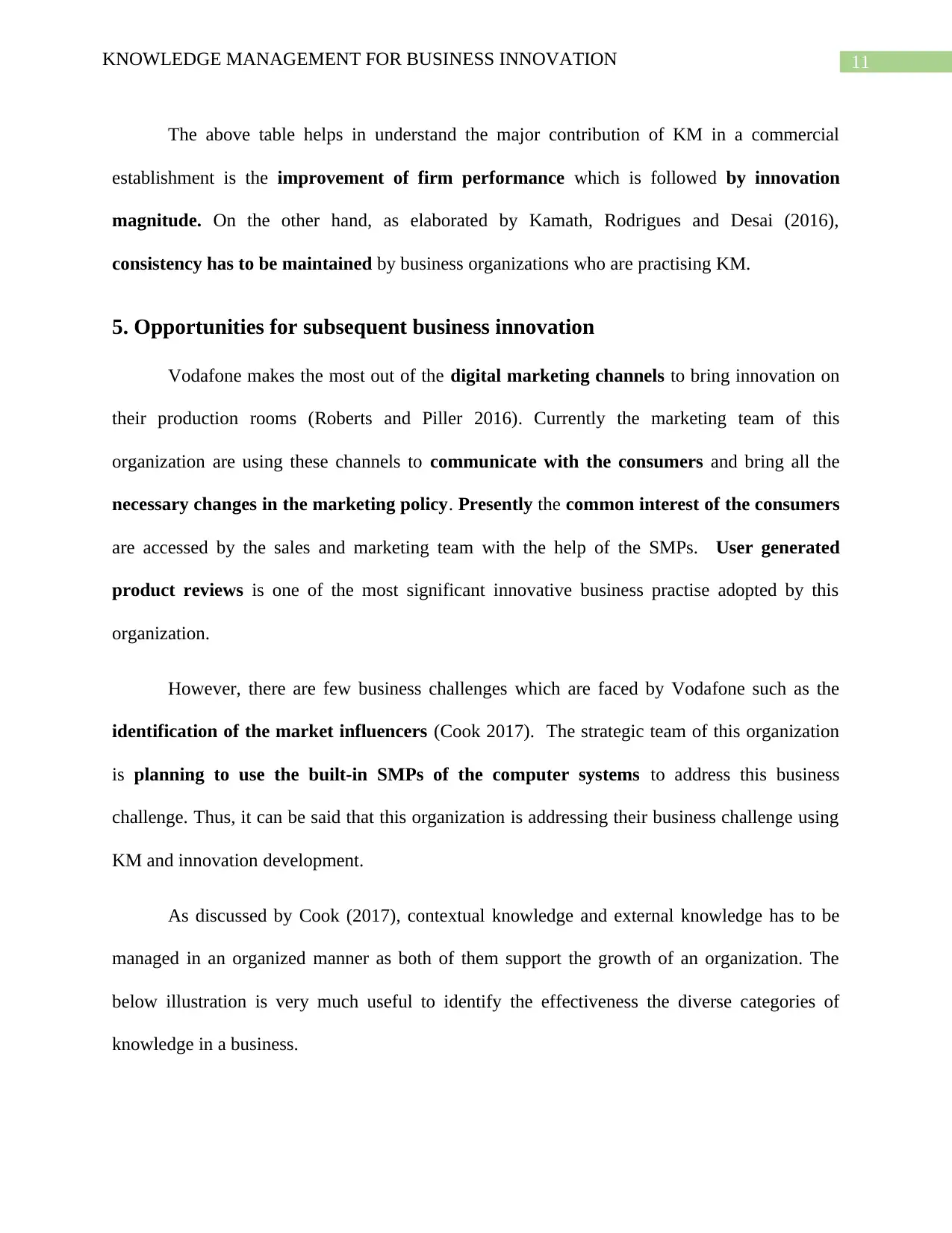
Figure 7: Internal inconsistency and AVE
(Source: Kamath, Rodrigues and Desai 2016)
Figure 6: Discriminant validity of the features of KMS
(Source: Kamath, Rodrigues and Desai 2016)
The above pictorial illustration highlights the contribution of the features of a KMS
which helps them to enhance the performance of the employees, introduce innovative
changes, and maintain a constant speed of innovation.
Figure 7: Internal inconsistency and AVE
(Source: Kamath, Rodrigues and Desai 2016)
Paraphrase This Document
Need a fresh take? Get an instant paraphrase of this document with our AI Paraphraser
11KNOWLEDGE MANAGEMENT FOR BUSINESS INNOVATION
The above table helps in understand the major contribution of KM in a commercial
establishment is the improvement of firm performance which is followed by innovation
magnitude. On the other hand, as elaborated by Kamath, Rodrigues and Desai (2016),
consistency has to be maintained by business organizations who are practising KM.
5. Opportunities for subsequent business innovation
Vodafone makes the most out of the digital marketing channels to bring innovation on
their production rooms (Roberts and Piller 2016). Currently the marketing team of this
organization are using these channels to communicate with the consumers and bring all the
necessary changes in the marketing policy. Presently the common interest of the consumers
are accessed by the sales and marketing team with the help of the SMPs. User generated
product reviews is one of the most significant innovative business practise adopted by this
organization.
However, there are few business challenges which are faced by Vodafone such as the
identification of the market influencers (Cook 2017). The strategic team of this organization
is planning to use the built-in SMPs of the computer systems to address this business
challenge. Thus, it can be said that this organization is addressing their business challenge using
KM and innovation development.
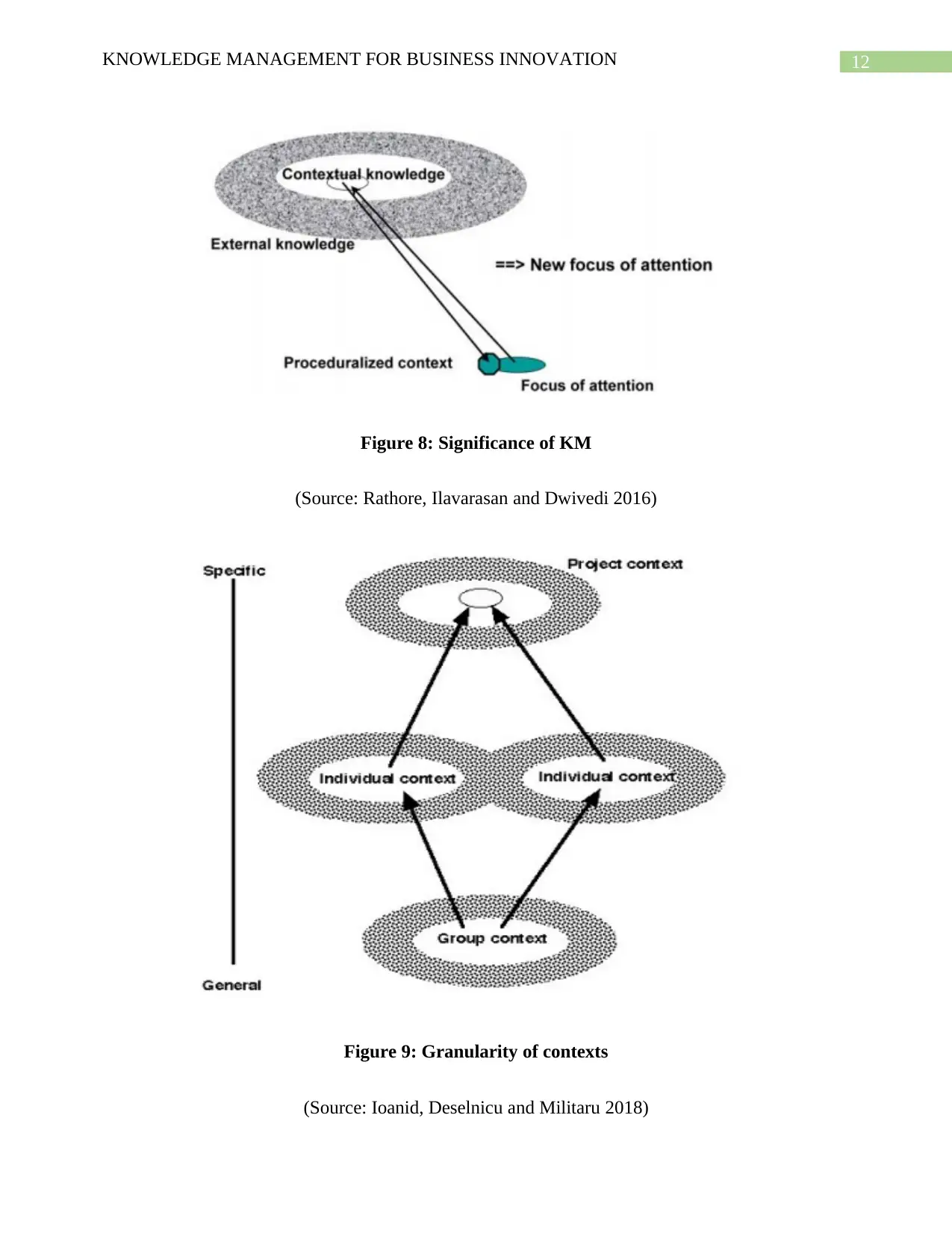
As discussed by Cook (2017), contextual knowledge and external knowledge has to be
managed in an organized manner as both of them support the growth of an organization. The
below illustration is very much useful to identify the effectiveness the diverse categories of
knowledge in a business.
The above table helps in understand the major contribution of KM in a commercial
establishment is the improvement of firm performance which is followed by innovation
magnitude. On the other hand, as elaborated by Kamath, Rodrigues and Desai (2016),
consistency has to be maintained by business organizations who are practising KM.
5. Opportunities for subsequent business innovation
Vodafone makes the most out of the digital marketing channels to bring innovation on
their production rooms (Roberts and Piller 2016). Currently the marketing team of this
organization are using these channels to communicate with the consumers and bring all the
necessary changes in the marketing policy. Presently the common interest of the consumers
are accessed by the sales and marketing team with the help of the SMPs. User generated
product reviews is one of the most significant innovative business practise adopted by this
organization.
However, there are few business challenges which are faced by Vodafone such as the
identification of the market influencers (Cook 2017). The strategic team of this organization
is planning to use the built-in SMPs of the computer systems to address this business
challenge. Thus, it can be said that this organization is addressing their business challenge using
KM and innovation development.
As discussed by Cook (2017), contextual knowledge and external knowledge has to be
managed in an organized manner as both of them support the growth of an organization. The
below illustration is very much useful to identify the effectiveness the diverse categories of
knowledge in a business.
12KNOWLEDGE MANAGEMENT FOR BUSINESS INNOVATION
Figure 8: Significance of KM
(Source: Rathore, Ilavarasan and Dwivedi 2016)
Figure 9: Granularity of contexts
(Source: Ioanid, Deselnicu and Militaru 2018)
Figure 8: Significance of KM
(Source: Rathore, Ilavarasan and Dwivedi 2016)
Figure 9: Granularity of contexts
(Source: Ioanid, Deselnicu and Militaru 2018)
⊘ This is a preview!⊘
Do you want full access?
Subscribe today to unlock all pages.
Trusted by 1+ million students worldwide

1 out of 19


Related Documents


Your All-in-One AI-Powered Toolkit for Academic Success.
+13062052269
info@desklib.com
Available 24*7 on WhatsApp / Email
![[object Object]](/_next/static/media/star-bottom.7253800d.svg)
Unlock your academic potential
Copyright © 2020–2026 A2Z Services. All Rights Reserved. Developed and managed by ZUCOL.