Interior Architecture Report: La Ruche Kindergarten Design Analysis

Verified

Added on  2023/01/19

|9
|911
|52
Report
AI Summary
This report provides a detailed analysis of the interior architecture of La Ruche Kindergarten, located in Perthes-en-Gatinas, France, and designed by Tracks Architects. The kindergarten, inspired by local architecture and translating to 'beehive,' features a linear arrangement of gabled forms clad in honey-colored wood. The report examines the building's design, including the use of wood framing, pitched units, and the integration of a courtyard with a garden and stormwater collection. It also explores the interior spaces, highlighting the classrooms' colorful design, natural lighting, and the use of decorative elements like bug signage. The analysis includes observations on the spatiality of the volumes, the use of natural light, and the design elements that resonate with children, such as colorful chairs and skylights. The report references key design elements and their functionality within the learning environment.
Document Page
Interior Architecture 1
INTERIOR ARCHITECTURE
By Name
Course
Instructor
Institution
Location
Date
tabler-icon-diamond-filled.svg

Paraphrase This Document

Need a fresh take? Get an instant paraphrase of this document with our AI Paraphraser
Document Page
Interior Architecture 2
Introduction
Interior Architecture: La ruche kindergarten
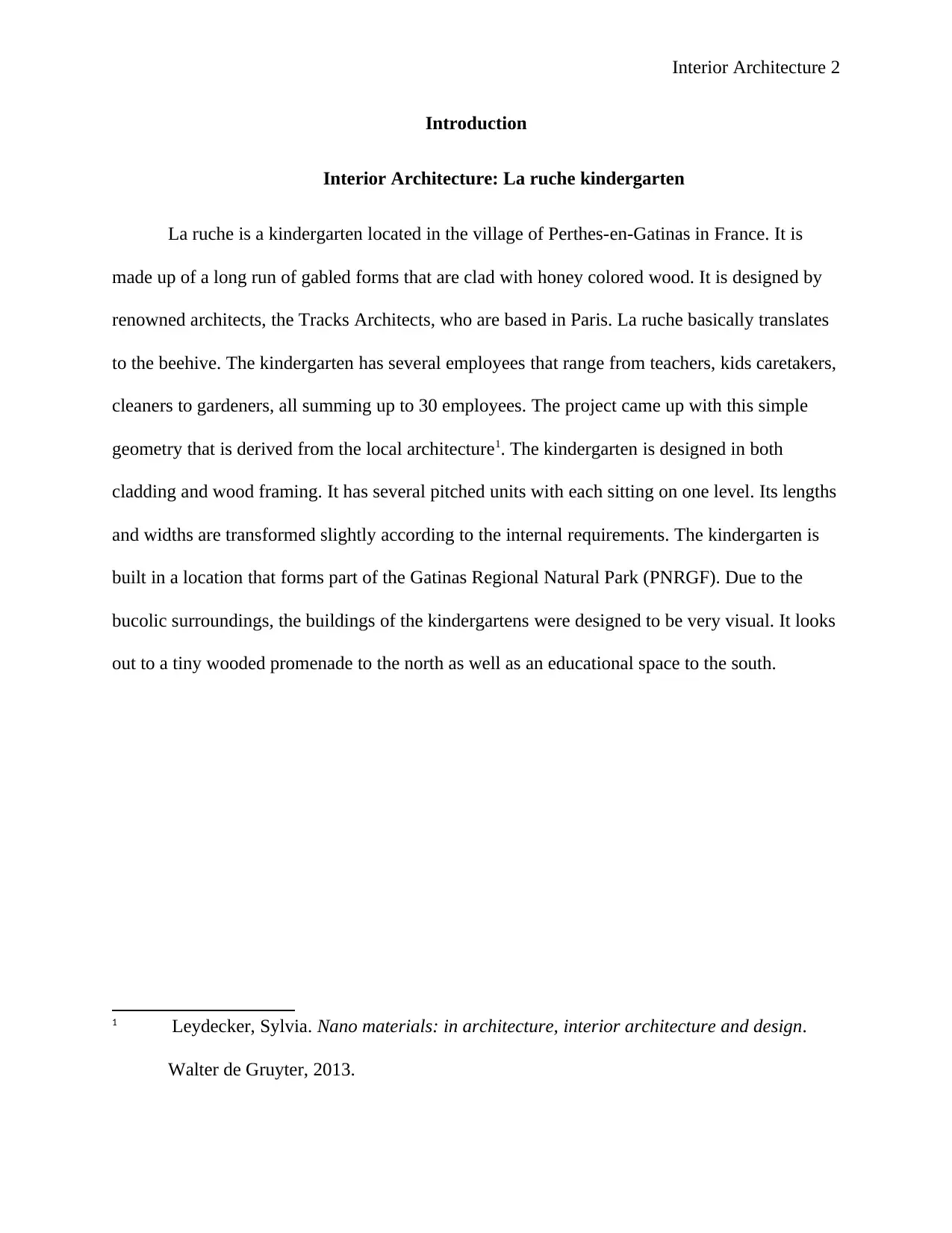
La ruche is a kindergarten located in the village of Perthes-en-Gatinas in France. It is
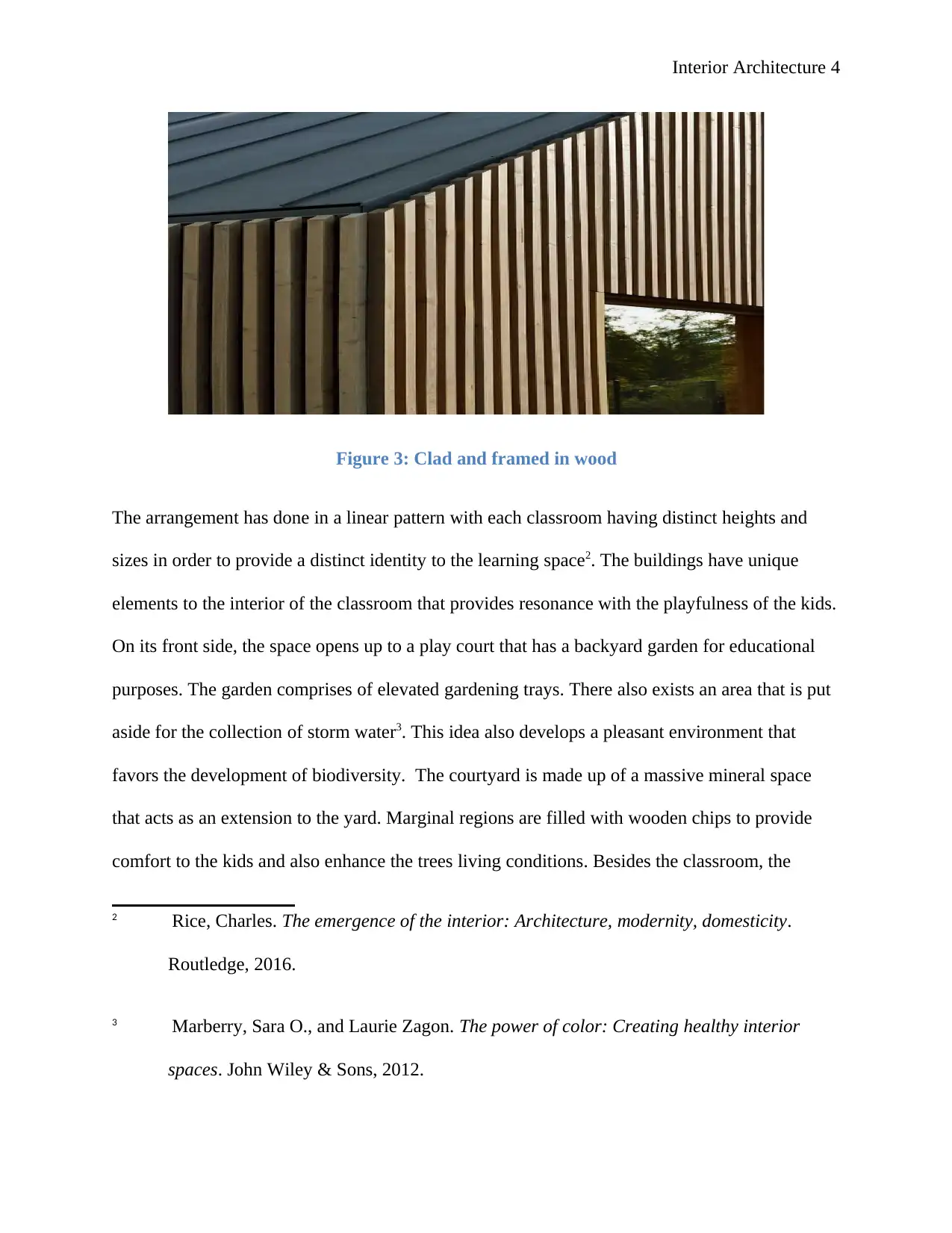
made up of a long run of gabled forms that are clad with honey colored wood. It is designed by
renowned architects, the Tracks Architects, who are based in Paris. La ruche basically translates
to the beehive. The kindergarten has several employees that range from teachers, kids caretakers,
cleaners to gardeners, all summing up to 30 employees. The project came up with this simple
geometry that is derived from the local architecture1. The kindergarten is designed in both
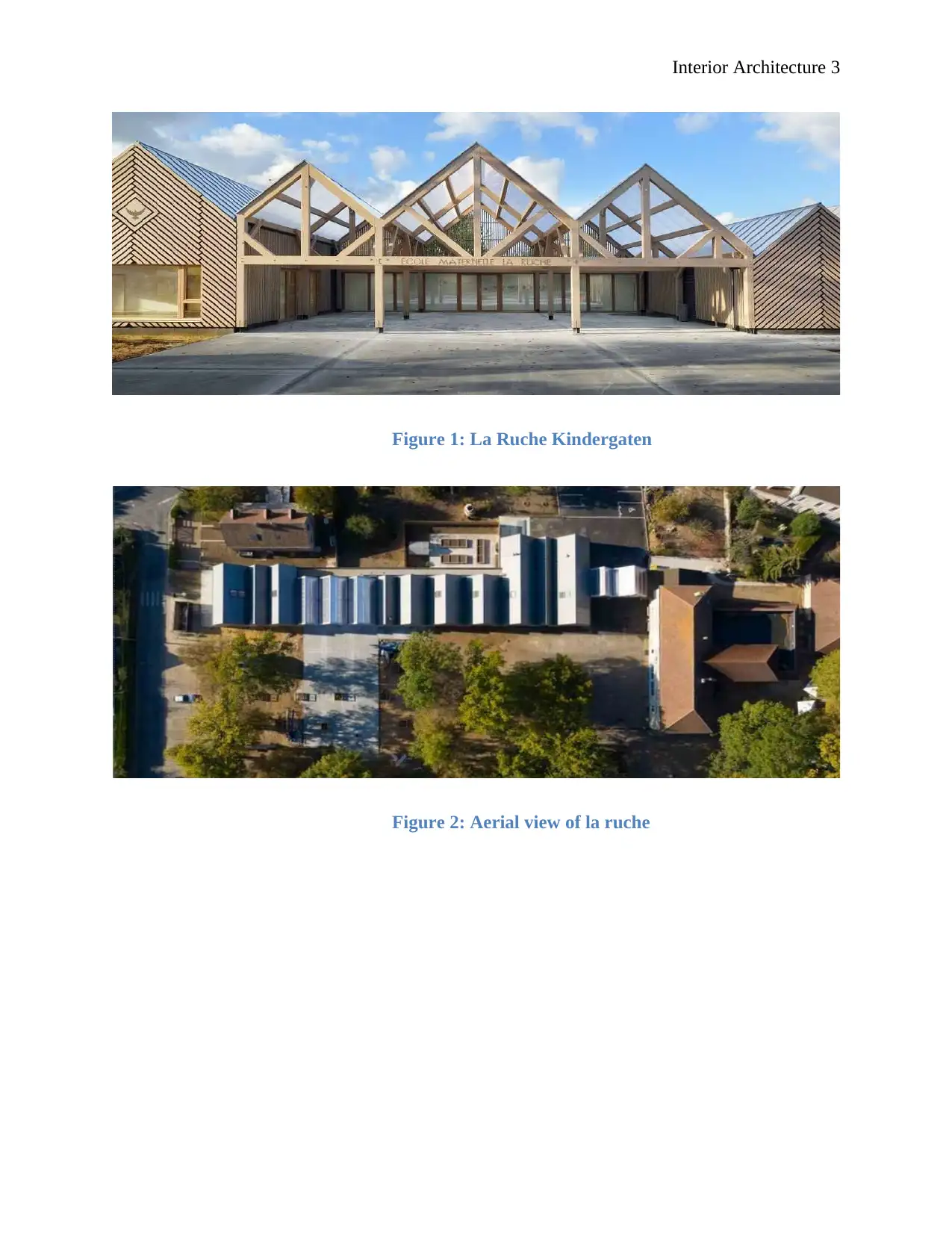
cladding and wood framing. It has several pitched units with each sitting on one level. Its lengths
and widths are transformed slightly according to the internal requirements. The kindergarten is
built in a location that forms part of the Gatinas Regional Natural Park (PNRGF). Due to the
bucolic surroundings, the buildings of the kindergartens were designed to be very visual. It looks
out to a tiny wooded promenade to the north as well as an educational space to the south.
1 Leydecker, Sylvia. Nano materials: in architecture, interior architecture and design.
Walter de Gruyter, 2013.
Document Page
Interior Architecture 3
Figure 1: La Ruche Kindergaten
Figure 2: Aerial view of la ruche
Document Page
Interior Architecture 4
Figure 3: Clad and framed in wood
The arrangement has done in a linear pattern with each classroom having distinct heights and
sizes in order to provide a distinct identity to the learning space2. The buildings have unique
elements to the interior of the classroom that provides resonance with the playfulness of the kids.
On its front side, the space opens up to a play court that has a backyard garden for educational
purposes. The garden comprises of elevated gardening trays. There also exists an area that is put
aside for the collection of storm water3. This idea also develops a pleasant environment that
favors the development of biodiversity. The courtyard is made up of a massive mineral space
that acts as an extension to the yard. Marginal regions are filled with wooden chips to provide
comfort to the kids and also enhance the trees living conditions. Besides the classroom, the
2 Rice, Charles. The emergence of the interior: Architecture, modernity, domesticity.
Routledge, 2016.
3 Marberry, Sara O., and Laurie Zagon. The power of color: Creating healthy interior
spaces. John Wiley & Sons, 2012.
tabler-icon-diamond-filled.svg

Paraphrase This Document

Need a fresh take? Get an instant paraphrase of this document with our AI Paraphraser
Document Page
Interior Architecture 5
facility also has office spaces, a dormitory as well as a walkaway that connects the kindergarten
to a nearby primary school. The set-up of the school was done in the same level and in linearity
in order to create variable heights and widths by program.
Architectural observation and evaluation
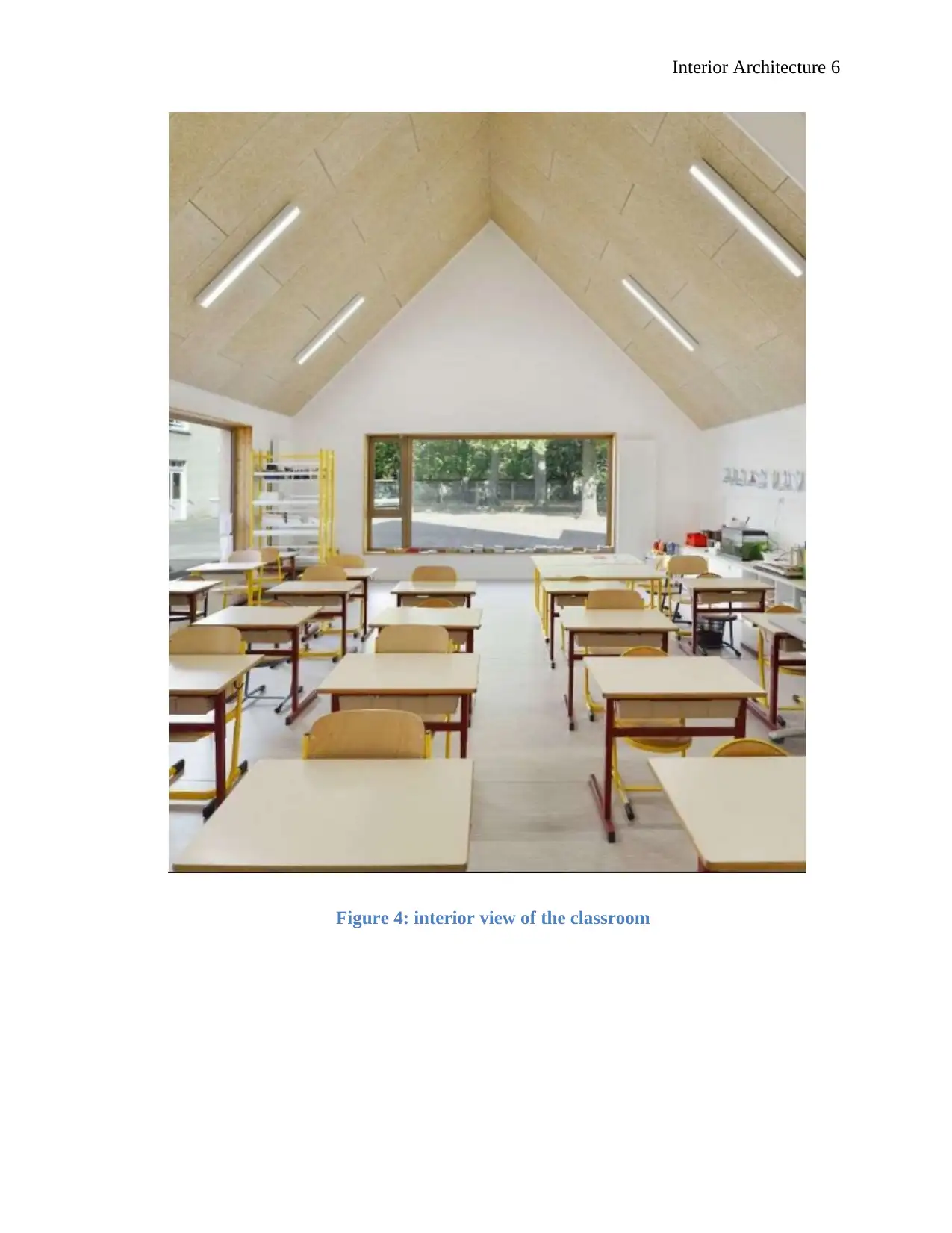
Inside the buildings, the volumes are designed to provide a specific spatiality. They are equally
generous to the teachings of the premises4. The volumes have wide openings on the playground
as well as in the backdrop of the wooded promenade. The major reference for designing its
indoor spaces is the ladder of early childhood. They are cradled in natural light with warm and
bright spaces. The classrooms are well parked with beautiful chairs and lockers made of wood.
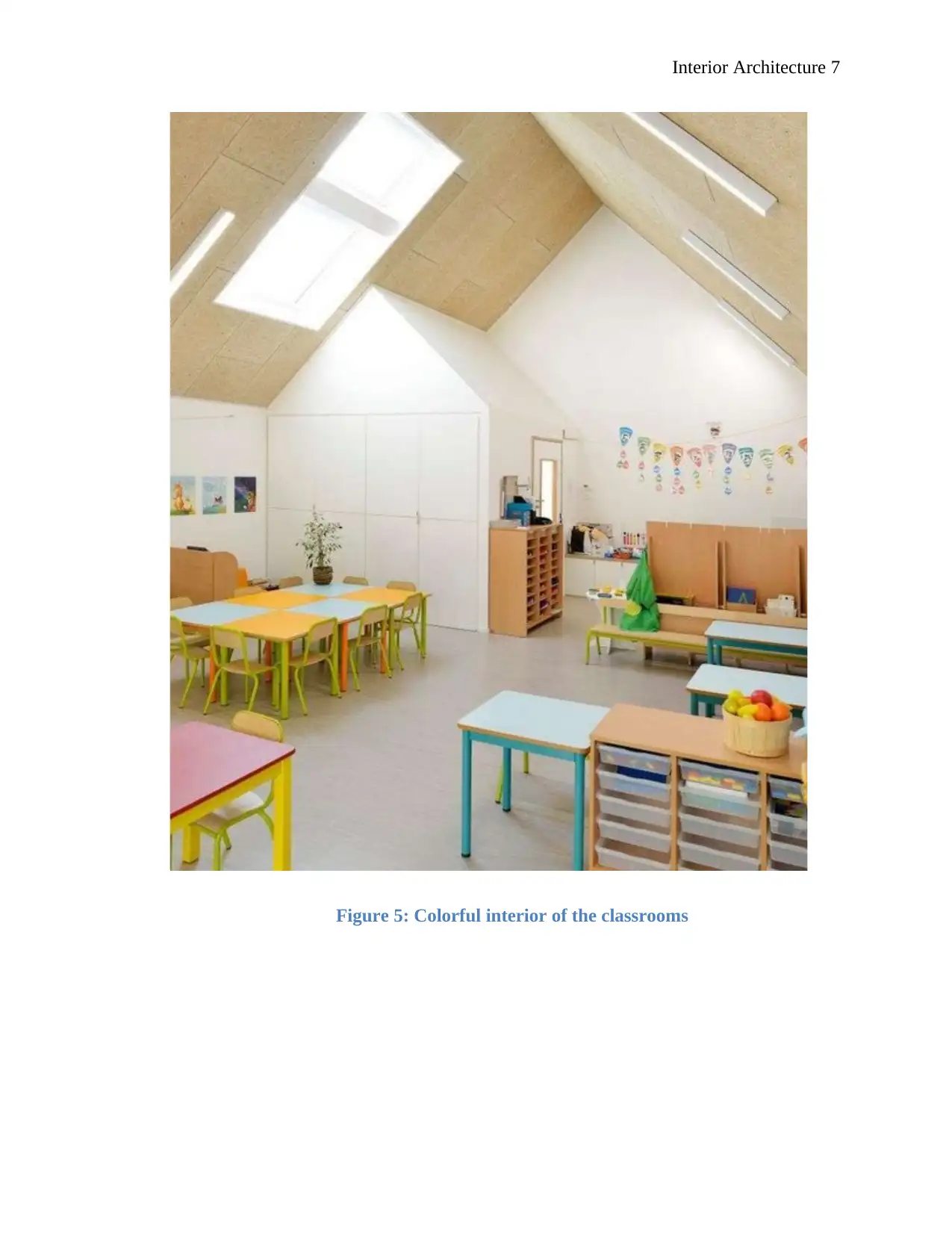
The chairs have their handles and endings painted yellow to sum up the spectacular view. The
buildings interiors are very colorful and are lit up by natural light that swings in from the
skylight.
4 Yildirim, Kemal, M. Lutfi Hidayetoglu, and Aysen Capanoglu. "Effects of interior colors
on mood and preference: comparisons of two living rooms." Perceptual and motor skills
112, no. 2 (2011): 509-524.
Document Page
Interior Architecture 6
Figure 4: interior view of the classroom
Document Page
Interior Architecture 7
Figure 5: Colorful interior of the classrooms
tabler-icon-diamond-filled.svg

Paraphrase This Document

Need a fresh take? Get an instant paraphrase of this document with our AI Paraphraser
Document Page
Interior Architecture 8
Use of decorative tools
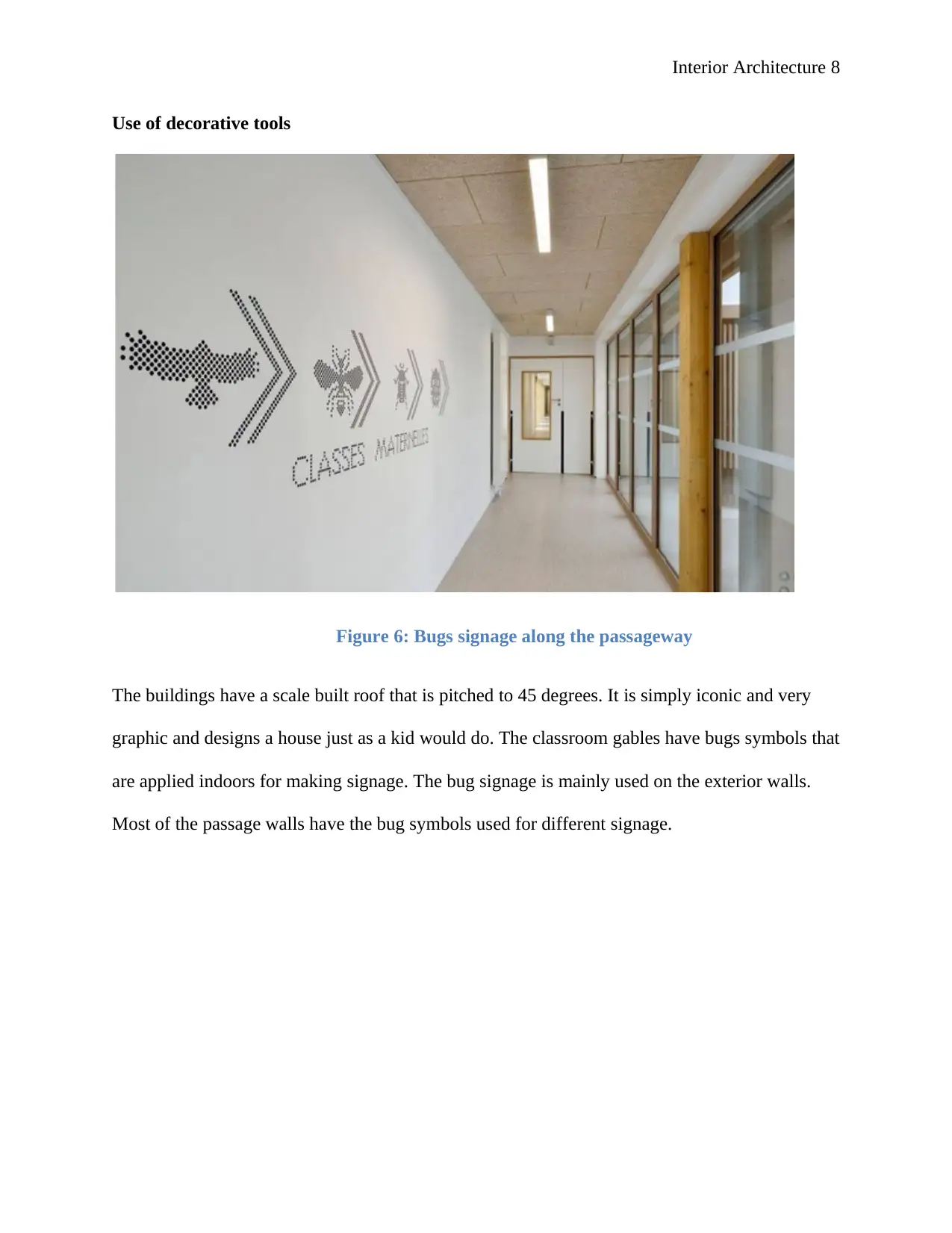
Figure 6: Bugs signage along the passageway
The buildings have a scale built roof that is pitched to 45 degrees. It is simply iconic and very
graphic and designs a house just as a kid would do. The classroom gables have bugs symbols that
are applied indoors for making signage. The bug signage is mainly used on the exterior walls.
Most of the passage walls have the bug symbols used for different signage.
Document Page
Interior Architecture 9
References
Leydecker, Sylvia. Nano materials: in architecture, interior architecture and design. Walter de
Gruyter, 2013.
Rice, Charles. The emergence of the interior: Architecture, modernity, domesticity. Routledge,
2016.
Marberry, Sara O., and Laurie Zagon. The power of color: Creating healthy interior spaces. John
Wiley & Sons, 2012.
Yildirim, Kemal, M. Lutfi Hidayetoglu, and Aysen Capanoglu. "Effects of interior colors on
mood and preference: comparisons of two living rooms." Perceptual and motor skills
112, no. 2 (2011): 509-524.
chevron_up_icon
1 out of 9
circle_padding
hide_on_mobile
zoom_out_icon
[object Object]