Leadership & Management in Service Industries: A Comprehensive Report

Verified

Added on  2023/01/23

|17
|927
|63
Report
AI Summary
This report delves into the multifaceted realm of leadership and management within the service industry, encompassing classical management theories such as Weber's, Taylor's, and Fayol's, and exploring the significance of organizational structure, culture, and leadership styles. It elucidates different organizational structures like unitary, centralized, decentralized, divisional, and matrix, as well as various cultural models, including Handy's and Deal and Kennedy's, and their impact on organizational behavior. The report further investigates the roles of leaders and managers, contrasting their functions and highlighting diverse leadership styles, such as democratic and participative, as exemplified by Wa-Pila Hotels. The conclusion emphasizes the crucial role of leadership and management in achieving business objectives, supported by relevant references.

Document Page
Leadership &
Management, Past,
Present and Future”
tabler-icon-diamond-filled.svg

Paraphrase This Document

Need a fresh take? Get an instant paraphrase of this document with our AI Paraphraser
Document Page
Table of Content
Introduction
Different classical management
Role of leader and different leadership styles
Organizational structure
Culture
Handy's Theory
Deal and Kennedy Model of culture
Role of a leader and manager
Management and leadership styles
Management leadership style
Conclusion
References
Document Page
Introduction
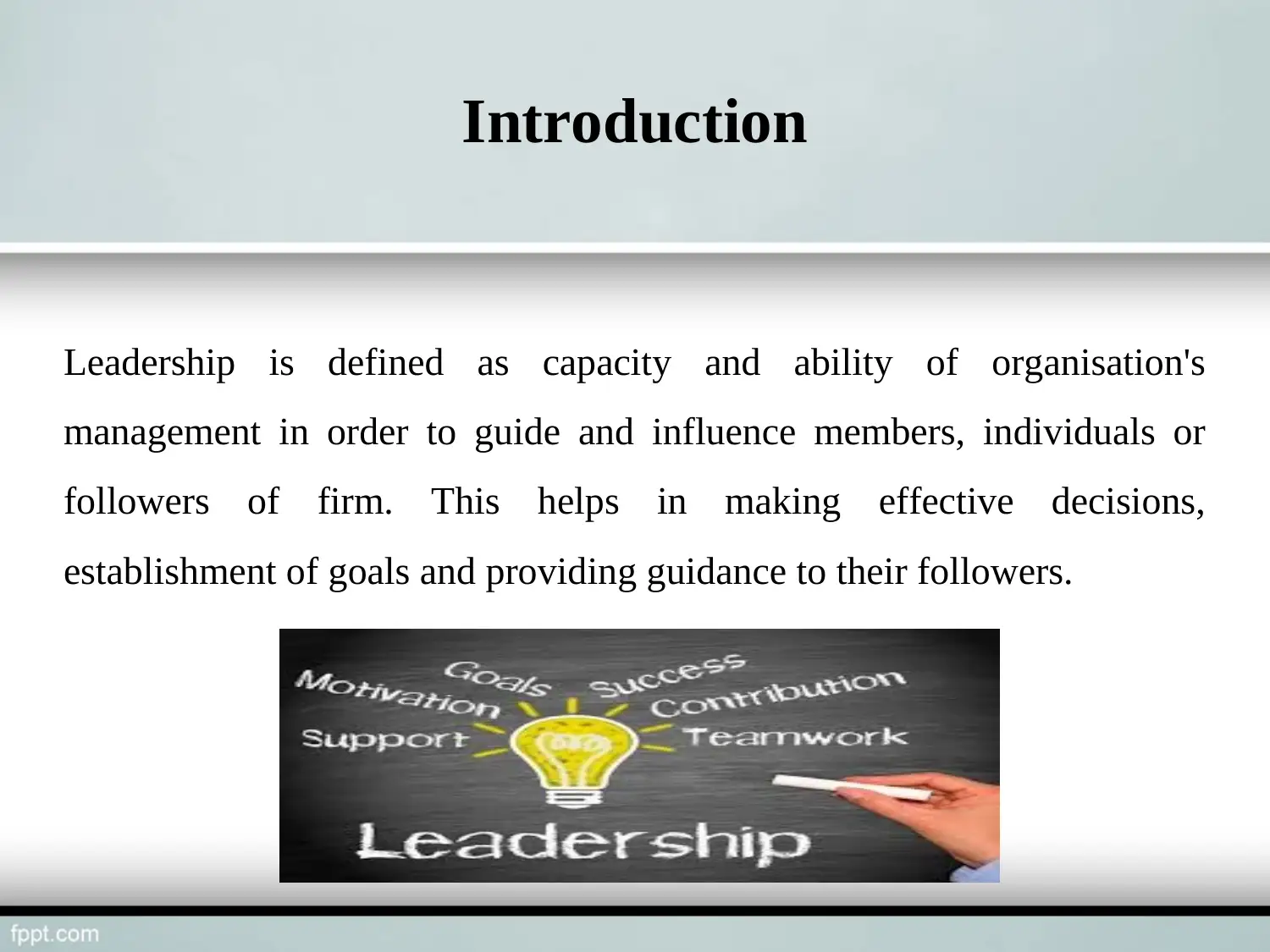
Leadership is defined as capacity and ability of organisation's
management in order to guide and influence members, individuals or
followers of firm. This helps in making effective decisions,
establishment of goals and providing guidance to their followers.
Document Page
Different classical management theories
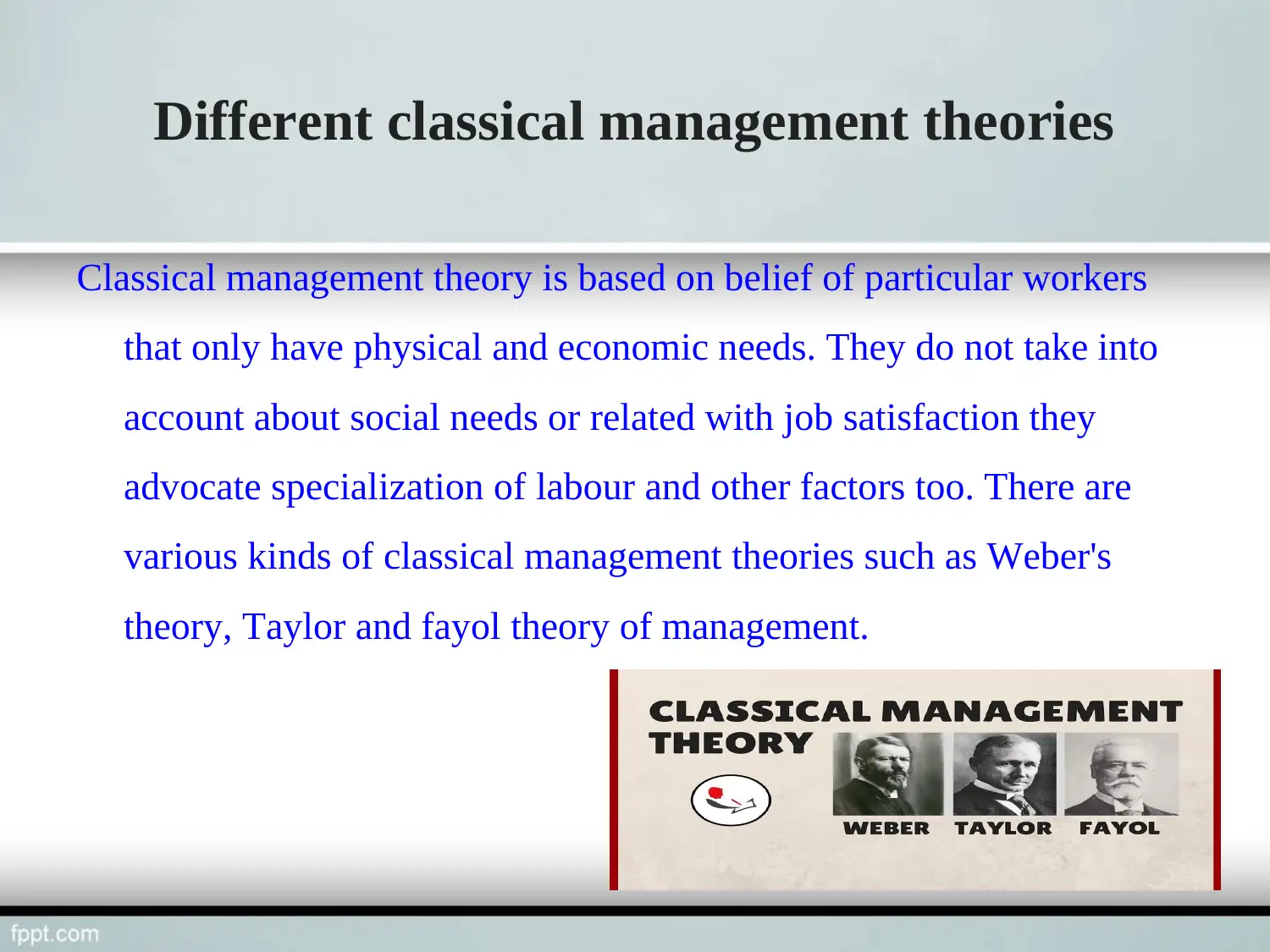
Classical management theory is based on belief of particular workers
that only have physical and economic needs. They do not take into
account about social needs or related with job satisfaction they
advocate specialization of labour and other factors too. There are
various kinds of classical management theories such as Weber's
theory, Taylor and fayol theory of management.
tabler-icon-diamond-filled.svg

Paraphrase This Document

Need a fresh take? Get an instant paraphrase of this document with our AI Paraphraser
Document Page
Cont...
Different classical theories of management
The functions related to various theories of management are:
Classical Management:
Administrative Theory
Scientific Theory
Document Page
Organizational structure
It is defined as system which outlines various activities that direct for
achievement of goals and objectives of organisation. It includes various
roles, rules and responsibilities. The various types of organisational
structure are as follows:
Unitary
Centralised
Decentralised
Divisional
Matrix
Document Page
Culture
Organisational Culture
It is defined as behaviour and values which contribute to unique
psychological and social environment of firm. This includes
organisation's experiences, philosophy, expectations, values which hold
together and expressed in inner working, interaction and self image
with other world and meeting future expectations.
tabler-icon-diamond-filled.svg

Paraphrase This Document

Need a fresh take? Get an instant paraphrase of this document with our AI Paraphraser
Document Page
Handy's Theory
There are various types of organisational culture theory which are
described below:
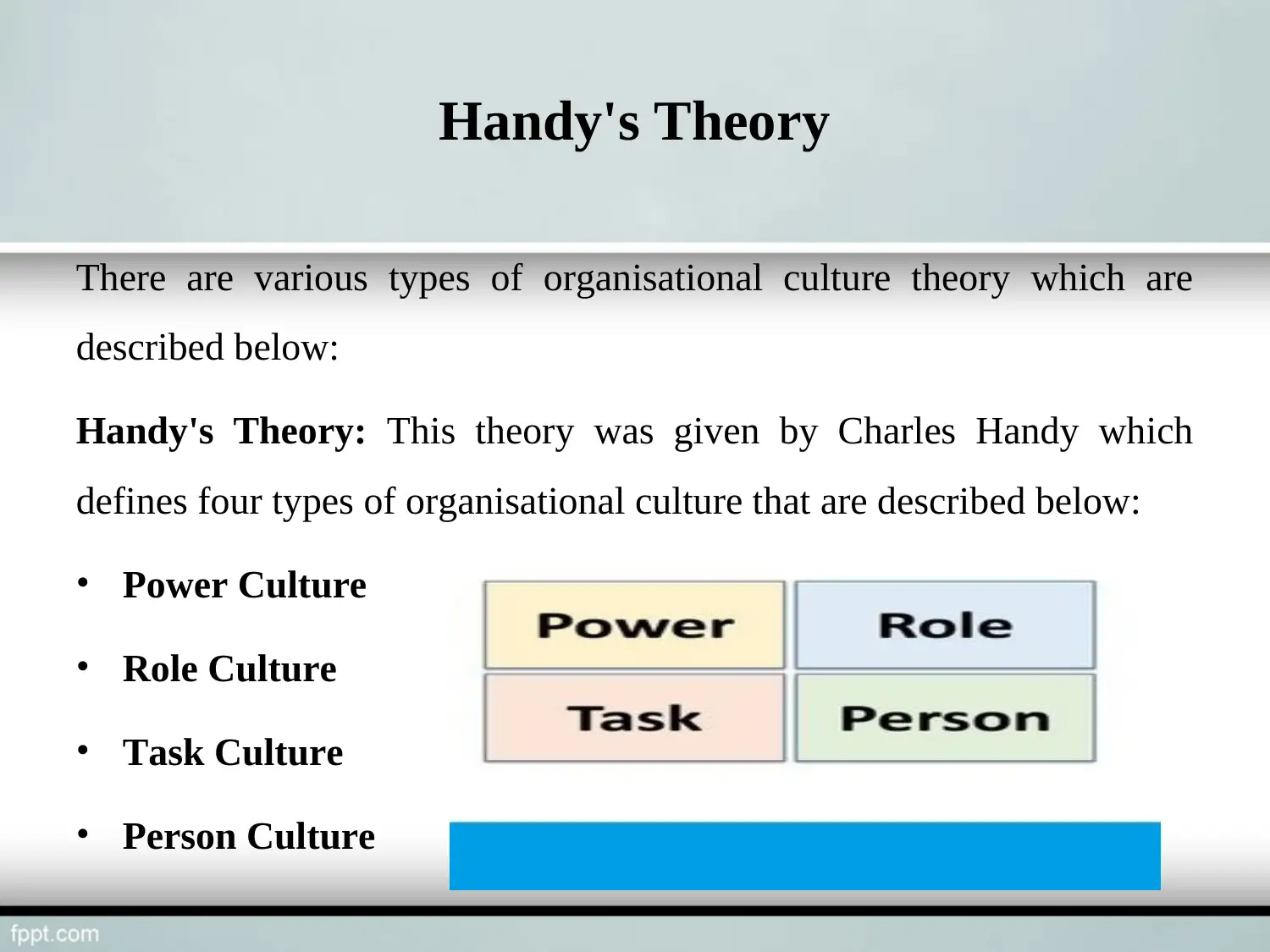
Handy's Theory: This theory was given by Charles Handy which
defines four types of organisational culture that are described below:
Power Culture
Role Culture
Task Culture
Person Culture
Document Page
Deal and Kennedy Model of culture
Respective model of culture based on the characteristics of four kinds
of organisation regarding the how they gain feedback and rewards as
per the level of risk they are taken. There are four kinds of culture that
are
work hard, play hard culture, tough guy macho culture, process culture
and bet the company culture that all are very much important for an
organisation to maintain and coordinate the positive culture within
the organisation.
Document Page
Role of a leader and manager
The major role of a leader is to coordinate and instruct to the whole
organisation by building plans and policies in positive manner. On
other hand manager by taking instructions from the higher authority
apply at subordinate level so that they can proceed with new rules and
regulations in positive manner. So both leader and manager is very
much important for an organisation to control and coordinate activities
of the whole organisation.
tabler-icon-diamond-filled.svg

Paraphrase This Document

Need a fresh take? Get an instant paraphrase of this document with our AI Paraphraser
Document Page
Role of leader and different leadership
styles
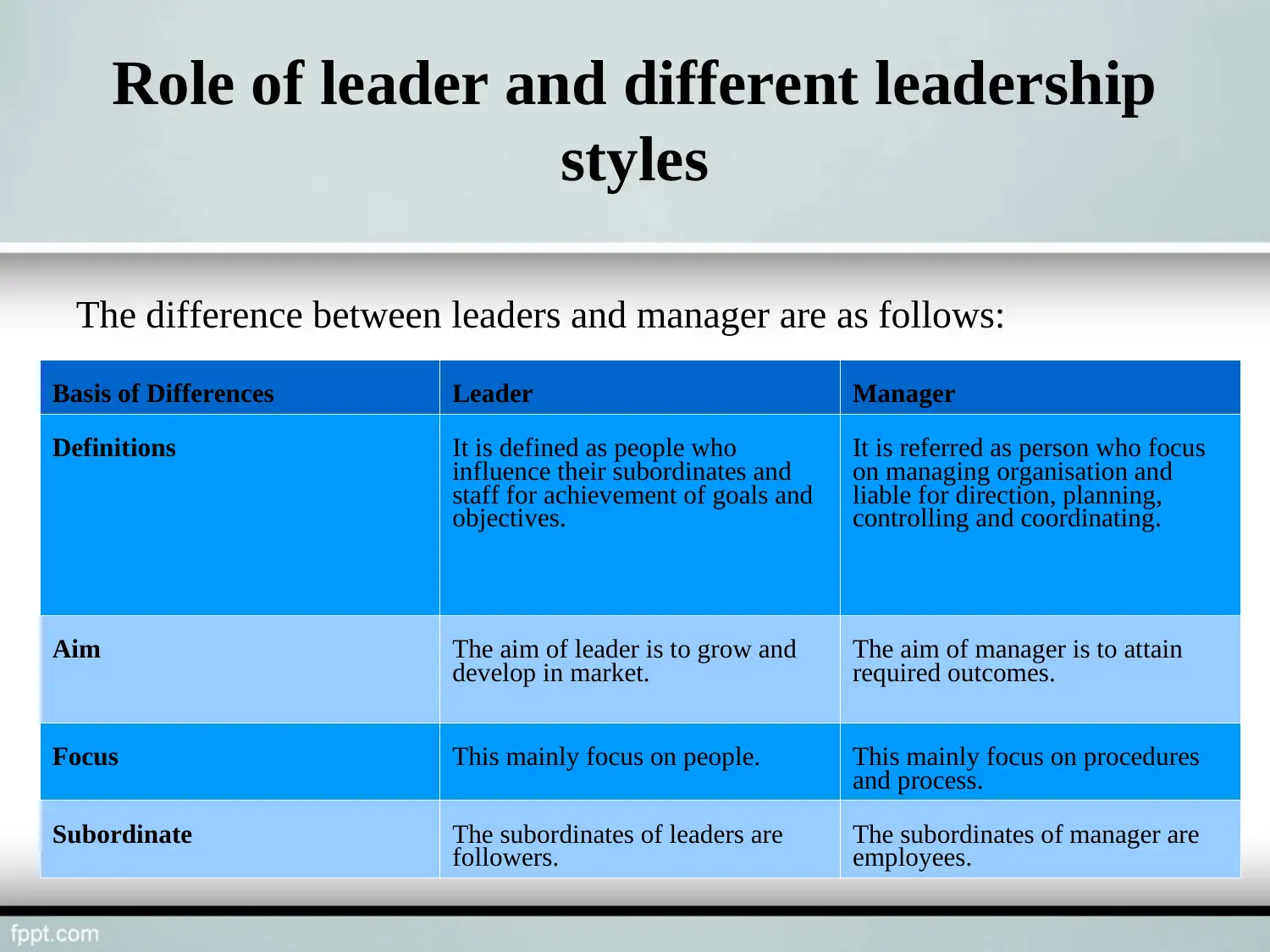
The difference between leaders and manager are as follows:
Basis of Differences Leader Manager
Definitions It is defined as people who
influence their subordinates and
staff for achievement of goals and
objectives.
It is referred as person who focus
on managing organisation and
liable for direction, planning,
controlling and coordinating.
Aim The aim of leader is to grow and
develop in market. The aim of manager is to attain
required outcomes.
Focus This mainly focus on people. This mainly focus on procedures
and process.
Subordinate The subordinates of leaders are
followers. The subordinates of manager are
employees.
Document Page
Management and leadership styles
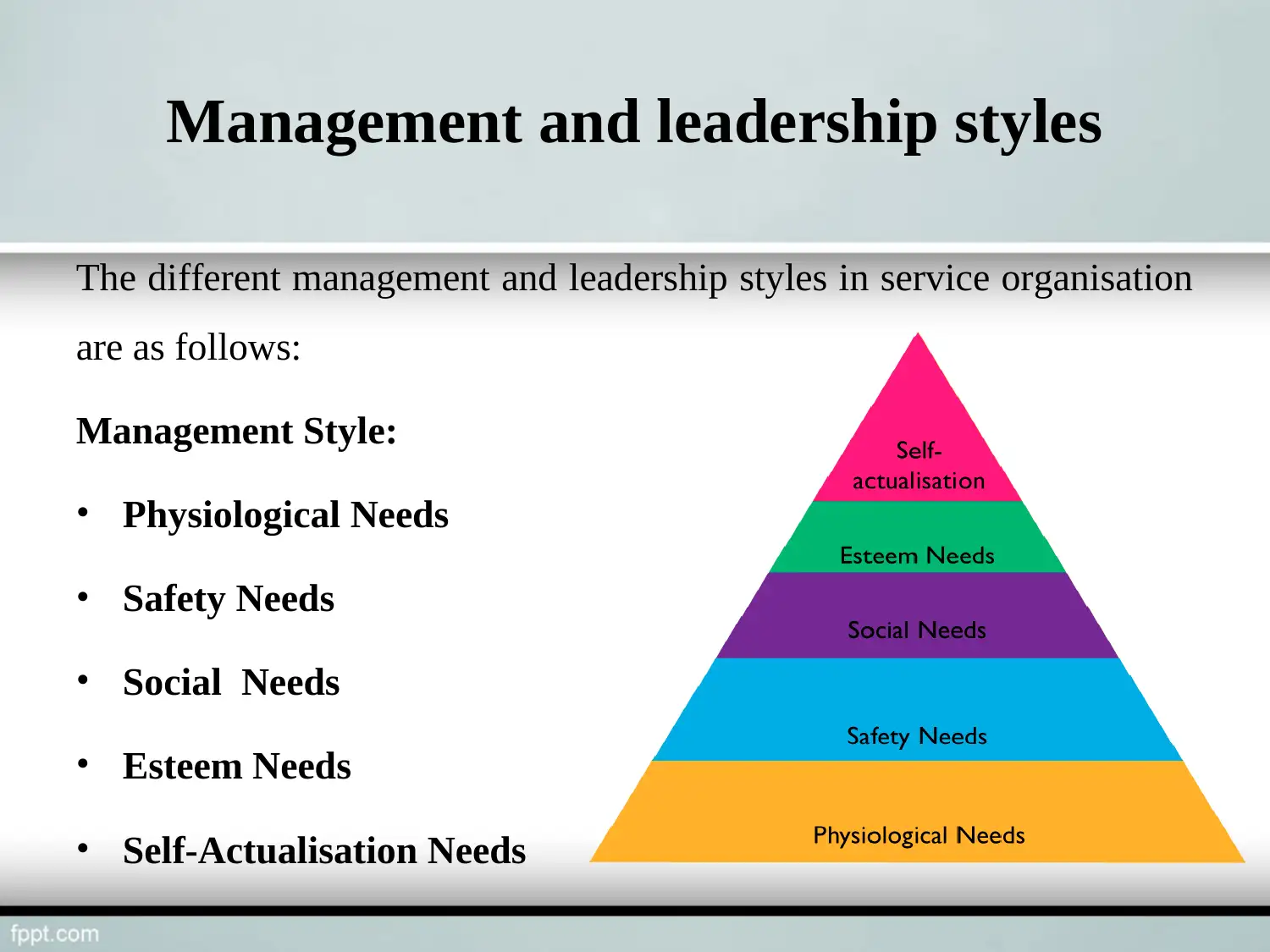
The different management and leadership styles in service organisation
are as follows:
Management Style:
Physiological Needs
Safety Needs
Social Needs
Esteem Needs
Self-Actualisation Needs
chevron_up_icon
1 out of 17
circle_padding
hide_on_mobile
zoom_out_icon
[object Object]