Leadership and Management: A Comparative Analysis in Operations
VerifiedAdded on 2023/03/20
|24
|5712
|56
Report
AI Summary
This report provides a detailed analysis of leadership versus management within the context of Fountain Car Company. It explores the distinct roles of a CEO, representing leadership, and an operations manager, representing management. The report delves into key differences, such as leaders creating vision versus managers setting goals, leaders being change agents versus managers maintaining the status quo, and leaders making fans versus managers having employees. It examines Kotter's leadership versus management theory and other scholarly perspectives to highlight these distinctions. The report covers organizational structure, internal influences, and applications of operational management, offering a comprehensive comparison to enhance understanding of these critical concepts in business operations. The report emphasizes how effective leadership and management contribute to organizational success and efficiency.
OPERATIONS 1
MANAGEMENT AND OPERATIONS
University
Name
Course
MANAGEMENT AND OPERATIONS
University
Name
Course

Paraphrase This Document
Need a fresh take? Get an instant paraphrase of this document with our AI Paraphraser
OPERATIONS 2
Abstract
The purpose of this report is to analyze on the leadership versus management. The roles
played by the managers are very distinct from the ones played by leaders but all the roles are
directed towards making an organization to be efficient in its whole operations. In this scenario,
promoting an individual into a position of manager does not guarantee him or her to be also a
leader in an automatic manner. The roles played by the managers are very distinct from the ones
played by leaders but all the roles are directed towards making an organization to be efficient in
its whole operations. In this scenario, promoting an individual into a position of manager does
not guarantee him or her to be also a leader in an automatic manner. The differences between
these 2 terms can be brought out clearly using several theories by different pools of scholars. The
main concept of differences is that not all those who are managers automatically become leaders
in that leaders have fans who stand by them whereas managers have employees who are given
directions on what to do as well as the methodologies of doing them.
Abstract
The purpose of this report is to analyze on the leadership versus management. The roles
played by the managers are very distinct from the ones played by leaders but all the roles are
directed towards making an organization to be efficient in its whole operations. In this scenario,
promoting an individual into a position of manager does not guarantee him or her to be also a
leader in an automatic manner. The roles played by the managers are very distinct from the ones
played by leaders but all the roles are directed towards making an organization to be efficient in
its whole operations. In this scenario, promoting an individual into a position of manager does
not guarantee him or her to be also a leader in an automatic manner. The differences between
these 2 terms can be brought out clearly using several theories by different pools of scholars. The
main concept of differences is that not all those who are managers automatically become leaders
in that leaders have fans who stand by them whereas managers have employees who are given
directions on what to do as well as the methodologies of doing them.
OPERATIONS 3
Table of Contents
Abstract......................................................................................................................................................2
LO1.............................................................................................................................................................4
Introduction...............................................................................................................................................4
Organization and management structure................................................................................................5
Roles of Manager and a leader.................................................................................................................6
LO2...........................................................................................................................................................11
Leadership vs. Management...................................................................................................................11
LO3...........................................................................................................................................................18
Approaches to operation management..................................................................................................18
LO4...........................................................................................................................................................19
Roles of a managers and functions of a leader..................................................................................19
Importance and value of operations management............................................................................20
Internal influences on operational management...............................................................................21
Applications of operation management.............................................................................................22
Conclusion................................................................................................................................................22
References................................................................................................................................................23
Table of Contents
Abstract......................................................................................................................................................2
LO1.............................................................................................................................................................4
Introduction...............................................................................................................................................4
Organization and management structure................................................................................................5
Roles of Manager and a leader.................................................................................................................6
LO2...........................................................................................................................................................11
Leadership vs. Management...................................................................................................................11
LO3...........................................................................................................................................................18
Approaches to operation management..................................................................................................18
LO4...........................................................................................................................................................19
Roles of a managers and functions of a leader..................................................................................19
Importance and value of operations management............................................................................20
Internal influences on operational management...............................................................................21
Applications of operation management.............................................................................................22
Conclusion................................................................................................................................................22
References................................................................................................................................................23
⊘ This is a preview!⊘
Do you want full access?
Subscribe today to unlock all pages.

Trusted by 1+ million students worldwide
OPERATIONS 4
LO1
Introduction
The society we live in is an organizational space which managing as well as leading the
existing in it, either internally or those forces found on the external part of any setting. These
forces are featured as internal environment and the external one. As compared to the ancient
world, the modern world is characterized by a higher morale as far as ensuring effectiveness and
rationality within any given setting of operation is concerned. Furthermore, the current has
portrayed stronger relationship between the people and the organizational itself than the ancient
world. This is agitated by management theories which tend to bring an organization together
with its key operations closer to the staffs (Ashikali & Groeneveld, 2015)
Therefore, management has been used interchangeably the word leadership to provide
the same meaning. In practice, leadership means the part of the organization which takes part in
setting the policies to govern the long relationship of an organization with its staffs. Practical
overlapping is the problem that brings confusions as far as distinguishing the terms leadership
from management.
Many theories have been put across by different scholars in order to bring out clear
definitions, distinctions as well as similarities that exist between management and the concept of
leadership as far as any organization is concerned. Such theories have helped organizations in
answering the questions as to whether leadership should be a management facet or the other way
LO1
Introduction
The society we live in is an organizational space which managing as well as leading the
existing in it, either internally or those forces found on the external part of any setting. These
forces are featured as internal environment and the external one. As compared to the ancient
world, the modern world is characterized by a higher morale as far as ensuring effectiveness and
rationality within any given setting of operation is concerned. Furthermore, the current has
portrayed stronger relationship between the people and the organizational itself than the ancient
world. This is agitated by management theories which tend to bring an organization together
with its key operations closer to the staffs (Ashikali & Groeneveld, 2015)
Therefore, management has been used interchangeably the word leadership to provide
the same meaning. In practice, leadership means the part of the organization which takes part in
setting the policies to govern the long relationship of an organization with its staffs. Practical
overlapping is the problem that brings confusions as far as distinguishing the terms leadership
from management.
Many theories have been put across by different scholars in order to bring out clear
definitions, distinctions as well as similarities that exist between management and the concept of
leadership as far as any organization is concerned. Such theories have helped organizations in
answering the questions as to whether leadership should be a management facet or the other way
Paraphrase This Document
Need a fresh take? Get an instant paraphrase of this document with our AI Paraphraser
OPERATIONS 5
round. Bringing out a clear picture of separation in terms of roles played by each phenomenon
helps to form a basis of definition.
The key aim of this report is towards bringing a clear distinction of the concepts by
examining the role of a company’s CEO to represent the leadership concept while the
management concept has been represented by an operation manager. This report concerns
Fountain Car Company (Arena& Uhl-Bien, 2016).
Organization and management structure
Fountain Car company is not basically seen as a structure containing some arrays of
practices or plans but rather it is seen to be a composure of the people as well as their mutual
association. Furthermore, an organization is alleged to be existing when people mutually
interdepend on each other to pursue certain dynamic roles for the purpose of succeeding intents.
Fountain Car Company therefore, is made up of employees starting from the company’s CEO up
to the operational managers and their subordinates.
round. Bringing out a clear picture of separation in terms of roles played by each phenomenon
helps to form a basis of definition.
The key aim of this report is towards bringing a clear distinction of the concepts by
examining the role of a company’s CEO to represent the leadership concept while the
management concept has been represented by an operation manager. This report concerns
Fountain Car Company (Arena& Uhl-Bien, 2016).
Organization and management structure
Fountain Car company is not basically seen as a structure containing some arrays of
practices or plans but rather it is seen to be a composure of the people as well as their mutual
association. Furthermore, an organization is alleged to be existing when people mutually
interdepend on each other to pursue certain dynamic roles for the purpose of succeeding intents.
Fountain Car Company therefore, is made up of employees starting from the company’s CEO up
to the operational managers and their subordinates.
OPERATIONS 6
Roles of Manager and a leader
The roles played by the organization’s managers are very distinct from the ones played
by leaders but all the roles are directed towards making Fountain Car Company to be efficient in
its whole operations. In this scenario, promoting an individual into a position of manager of
Fountain Car Company does not guarantee him to be also a leader in an automatic manner. This
is because an individual is bestowed the roles which best suit his/her place of offering services
and to the concerned parties of any organization. In a broad perspective, managers manage while
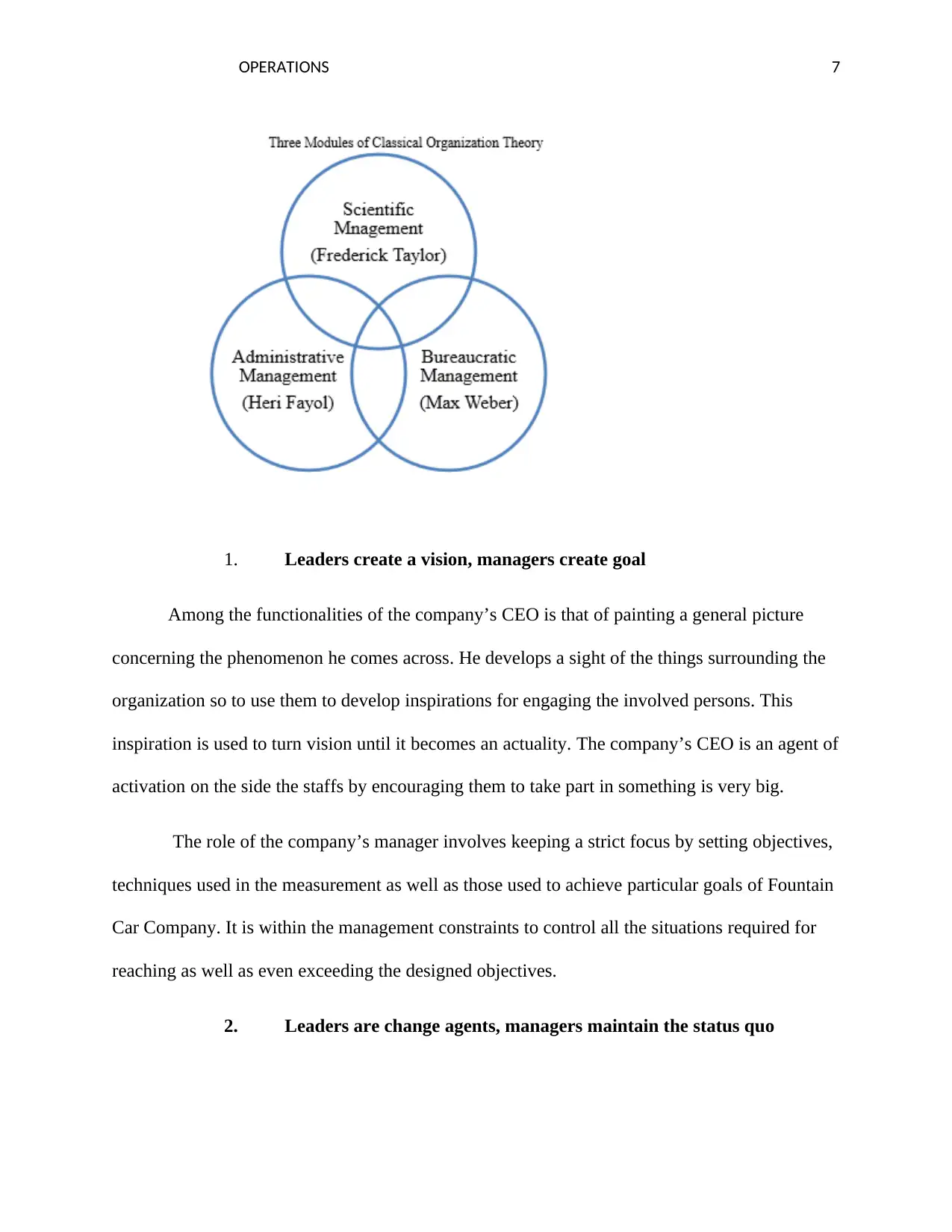
leaders leads (Anderson, Baur, Griffith & Buckley, 2017). In order to display a clear distinction
of the roles of the two prospects, the following points have been used;
Roles of Manager and a leader
The roles played by the organization’s managers are very distinct from the ones played
by leaders but all the roles are directed towards making Fountain Car Company to be efficient in
its whole operations. In this scenario, promoting an individual into a position of manager of
Fountain Car Company does not guarantee him to be also a leader in an automatic manner. This
is because an individual is bestowed the roles which best suit his/her place of offering services
and to the concerned parties of any organization. In a broad perspective, managers manage while
leaders leads (Anderson, Baur, Griffith & Buckley, 2017). In order to display a clear distinction
of the roles of the two prospects, the following points have been used;
⊘ This is a preview!⊘
Do you want full access?
Subscribe today to unlock all pages.
Trusted by 1+ million students worldwide
OPERATIONS 7
1. Leaders create a vision, managers create goal
Among the functionalities of the company’s CEO is that of painting a general picture
concerning the phenomenon he comes across. He develops a sight of the things surrounding the
organization so to use them to develop inspirations for engaging the involved persons. This
inspiration is used to turn vision until it becomes an actuality. The company’s CEO is an agent of
activation on the side the staffs by encouraging them to take part in something is very big.
The role of the company’s manager involves keeping a strict focus by setting objectives,
techniques used in the measurement as well as those used to achieve particular goals of Fountain
Car Company. It is within the management constraints to control all the situations required for
reaching as well as even exceeding the designed objectives.
2. Leaders are change agents, managers maintain the status quo
1. Leaders create a vision, managers create goal
Among the functionalities of the company’s CEO is that of painting a general picture
concerning the phenomenon he comes across. He develops a sight of the things surrounding the
organization so to use them to develop inspirations for engaging the involved persons. This
inspiration is used to turn vision until it becomes an actuality. The company’s CEO is an agent of
activation on the side the staffs by encouraging them to take part in something is very big.
The role of the company’s manager involves keeping a strict focus by setting objectives,
techniques used in the measurement as well as those used to achieve particular goals of Fountain
Car Company. It is within the management constraints to control all the situations required for
reaching as well as even exceeding the designed objectives.
2. Leaders are change agents, managers maintain the status quo
Paraphrase This Document
Need a fresh take? Get an instant paraphrase of this document with our AI Paraphraser
OPERATIONS 8
Innovation is the main mantra of a CEO for he is always a gratified disrupter. Embracing
change is one of the roles of the company’s CEO as a leader. This involves identifying other
better means of perfecting a given process even if is in a stabilized state. He has a very strong
believe that any change made to the system is likely to create dynamic waves.
Manager’s role is constrained to only adopting the methodologies that work best for the
organization and sticking to it. His work encircles refining the existing systems, processes as
well as the organizational structures whose impacts results in making the system performs much
better regarding car importation (Ashikali &Groeneveld, 2015).
3. Leaders are unique, managers reproduce from the existing
environment
Fountain Car company’s leader is keen on maintaining the status of being himself. For
instance, the company’s CEO has been very active in building his unique as well as his
distinguished personal marque. He has portrayed a stability in his willingness in standing out of
his shoes. His roles involves authenticity as well as transparency while the manager’s roles on
the other hand has involved mimicking all the desired competencies from his peers. Manager’s
style of leadership involves adopting from the peer rather than coming up with a unique
definition. This is for instance, the company’s manager has been keen on observing what the
competitors are doing concerning the vehicle industry.
4. Leaders take risks, managers control risk
A leader’s life is ever directed towards giving a trial to anything new regardless of the
resulting impact, including even it means a total failure. This is due to the fact that the Fountain
Car Company’s CEO always has a belief that failure is one of the ingredients of victory. In a
Innovation is the main mantra of a CEO for he is always a gratified disrupter. Embracing
change is one of the roles of the company’s CEO as a leader. This involves identifying other
better means of perfecting a given process even if is in a stabilized state. He has a very strong
believe that any change made to the system is likely to create dynamic waves.
Manager’s role is constrained to only adopting the methodologies that work best for the
organization and sticking to it. His work encircles refining the existing systems, processes as
well as the organizational structures whose impacts results in making the system performs much
better regarding car importation (Ashikali &Groeneveld, 2015).
3. Leaders are unique, managers reproduce from the existing
environment
Fountain Car company’s leader is keen on maintaining the status of being himself. For
instance, the company’s CEO has been very active in building his unique as well as his
distinguished personal marque. He has portrayed a stability in his willingness in standing out of
his shoes. His roles involves authenticity as well as transparency while the manager’s roles on
the other hand has involved mimicking all the desired competencies from his peers. Manager’s
style of leadership involves adopting from the peer rather than coming up with a unique
definition. This is for instance, the company’s manager has been keen on observing what the
competitors are doing concerning the vehicle industry.
4. Leaders take risks, managers control risk
A leader’s life is ever directed towards giving a trial to anything new regardless of the
resulting impact, including even it means a total failure. This is due to the fact that the Fountain
Car Company’s CEO always has a belief that failure is one of the ingredients of victory. In a
OPERATIONS 9
contrasting effort, the production manager tries with all his efforts to minimize the risks at
Fountain Car Company. He has been on spending spend his energy in controlling risks instead of
encouraging them.
5. Leaders are long-term oriented, managers reflect short-term
The Company’s CEO is driven by intention because he does everything he
pledges and remain constantly-motivated up until he has realized the desired yield.
His constant motivation is often unrewarded. Short-term goals are what constitute
the main role of the company’s manager (Bird & Mendenhall, 2016). This is
accompanied by seeking some constant tributes.
6. Leaders nurture individually, managers depend on obtainable, proven
skills
A leader is ever driven by curiosity to learn something new and dissimilar on a circadian
basis and failure to stand by this, he considers it as a failure. Therefore, leaders always struggle
to maintain his relevancy as far as dynamicity of workplace globally because he is more willing
even to seek resourceful information for the purpose of expanding his own knowledge. Among
the manager’s roles is that he identifies factors that made him prosperous so as to perfect him as
well as embracing verified models.
7. Leader makes fans, manager has employees
The company’s CEO goes beyond just creating followers to follow him but instead the
purported followers turn into his frantic fans as well as being his major promoters. These actively
contrasting effort, the production manager tries with all his efforts to minimize the risks at
Fountain Car Company. He has been on spending spend his energy in controlling risks instead of
encouraging them.
5. Leaders are long-term oriented, managers reflect short-term
The Company’s CEO is driven by intention because he does everything he
pledges and remain constantly-motivated up until he has realized the desired yield.
His constant motivation is often unrewarded. Short-term goals are what constitute
the main role of the company’s manager (Bird & Mendenhall, 2016). This is
accompanied by seeking some constant tributes.
6. Leaders nurture individually, managers depend on obtainable, proven
skills
A leader is ever driven by curiosity to learn something new and dissimilar on a circadian
basis and failure to stand by this, he considers it as a failure. Therefore, leaders always struggle
to maintain his relevancy as far as dynamicity of workplace globally because he is more willing
even to seek resourceful information for the purpose of expanding his own knowledge. Among
the manager’s roles is that he identifies factors that made him prosperous so as to perfect him as
well as embracing verified models.
7. Leader makes fans, manager has employees
The company’s CEO goes beyond just creating followers to follow him but instead the
purported followers turn into his frantic fans as well as being his major promoters. These actively
⊘ This is a preview!⊘
Do you want full access?
Subscribe today to unlock all pages.
Trusted by 1+ million students worldwide
OPERATIONS 10
get involved in brand-building and helping the leader to meet his goals. Furthermore, a leader’s
fans help him in increasing his visibility as well as accelerating his credibility. The manager’s
role on the other flipside is all concerned with following a given and desired direction which
ensures that Fountain Car company’s goals are headed. The followed direction is always the one
heading to ensure that the manager is seeking to please his.
8. Leaders are coaches, managers direct
The company’s CEO is someone who believes that all the people working for him have
the desired solutions to the problem being handled. He trusts such people with the ability of
handling emerging issues as well as being very optimistic of his potential (Blomme, Kodden &
Beasley-Suffolk, 2015). He does not involve himself in telling others what they ought to do or
even how it ought to be done. Manager is expected in a daily basis to assign responsibilities to
each and every individual falling under his control as well as providing guidance on the
methodologies to use in meeting the goals of the organization.
9. Leaders are relationship-builders, managers are system- builders
For the purpose of b realizing his vision, the company’s CEO is known to be keeping his
strong focus on any stakeholder required to be bring the desired influence (Bratton& Gold,
2017). He is very keen on spending moist of his times with the stakeholders for he knows he is as
well as building a strong bond of trust through constant response to his wants and promise.
Fountain Car company’s manager is always focused towards building the desired structures for
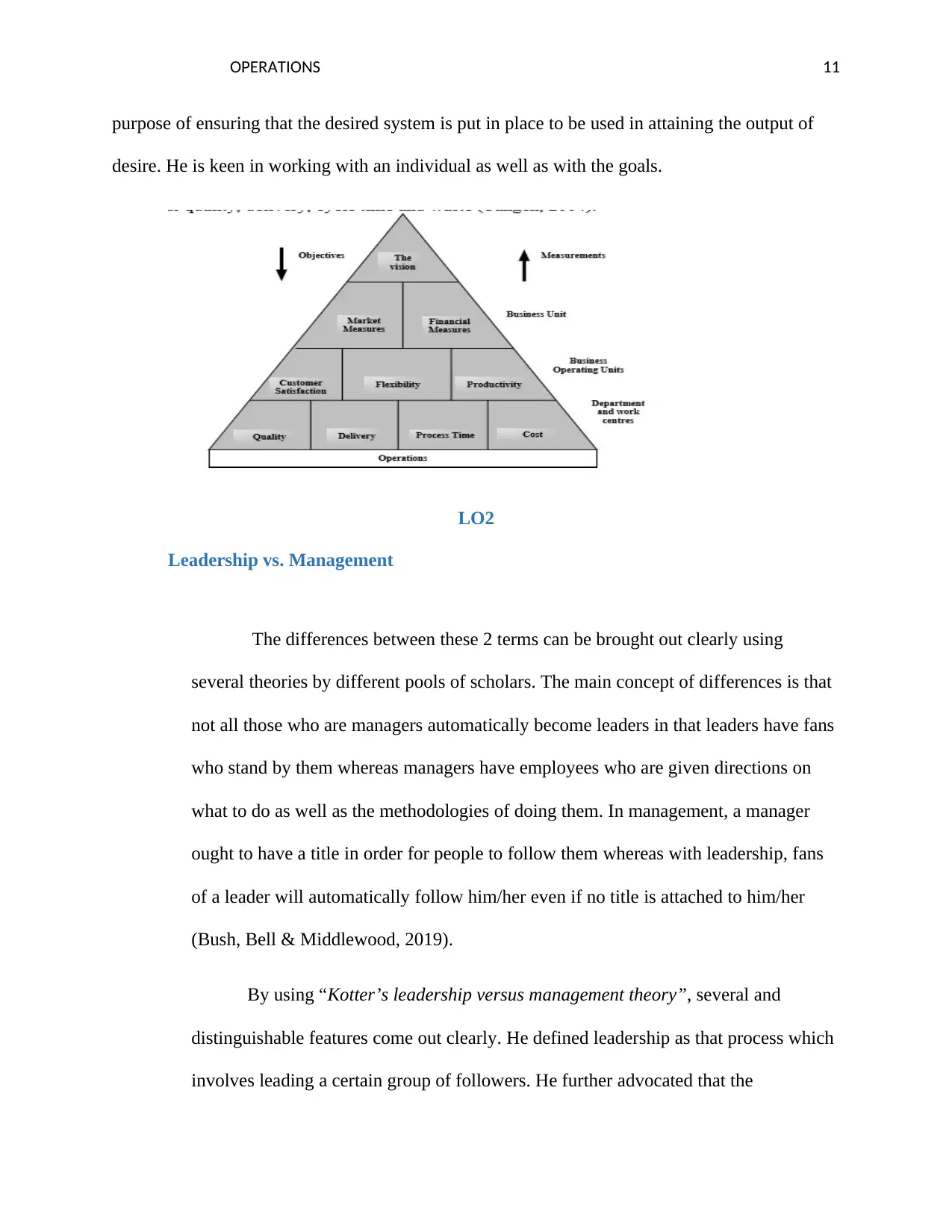
setting as well as achieving goals. Analytics are the major center of focus to any major for the
get involved in brand-building and helping the leader to meet his goals. Furthermore, a leader’s
fans help him in increasing his visibility as well as accelerating his credibility. The manager’s
role on the other flipside is all concerned with following a given and desired direction which
ensures that Fountain Car company’s goals are headed. The followed direction is always the one
heading to ensure that the manager is seeking to please his.
8. Leaders are coaches, managers direct
The company’s CEO is someone who believes that all the people working for him have
the desired solutions to the problem being handled. He trusts such people with the ability of
handling emerging issues as well as being very optimistic of his potential (Blomme, Kodden &
Beasley-Suffolk, 2015). He does not involve himself in telling others what they ought to do or
even how it ought to be done. Manager is expected in a daily basis to assign responsibilities to
each and every individual falling under his control as well as providing guidance on the
methodologies to use in meeting the goals of the organization.
9. Leaders are relationship-builders, managers are system- builders
For the purpose of b realizing his vision, the company’s CEO is known to be keeping his
strong focus on any stakeholder required to be bring the desired influence (Bratton& Gold,
2017). He is very keen on spending moist of his times with the stakeholders for he knows he is as
well as building a strong bond of trust through constant response to his wants and promise.
Fountain Car company’s manager is always focused towards building the desired structures for
setting as well as achieving goals. Analytics are the major center of focus to any major for the
Paraphrase This Document
Need a fresh take? Get an instant paraphrase of this document with our AI Paraphraser
OPERATIONS 11
purpose of ensuring that the desired system is put in place to be used in attaining the output of
desire. He is keen in working with an individual as well as with the goals.
LO2
Leadership vs. Management
The differences between these 2 terms can be brought out clearly using
several theories by different pools of scholars. The main concept of differences is that
not all those who are managers automatically become leaders in that leaders have fans
who stand by them whereas managers have employees who are given directions on
what to do as well as the methodologies of doing them. In management, a manager
ought to have a title in order for people to follow them whereas with leadership, fans
of a leader will automatically follow him/her even if no title is attached to him/her
(Bush, Bell & Middlewood, 2019).
By using “Kotter’s leadership versus management theory”, several and
distinguishable features come out clearly. He defined leadership as that process which
involves leading a certain group of followers. He further advocated that the
purpose of ensuring that the desired system is put in place to be used in attaining the output of
desire. He is keen in working with an individual as well as with the goals.
LO2
Leadership vs. Management
The differences between these 2 terms can be brought out clearly using
several theories by different pools of scholars. The main concept of differences is that
not all those who are managers automatically become leaders in that leaders have fans
who stand by them whereas managers have employees who are given directions on
what to do as well as the methodologies of doing them. In management, a manager
ought to have a title in order for people to follow them whereas with leadership, fans
of a leader will automatically follow him/her even if no title is attached to him/her
(Bush, Bell & Middlewood, 2019).
By using “Kotter’s leadership versus management theory”, several and
distinguishable features come out clearly. He defined leadership as that process which
involves leading a certain group of followers. He further advocated that the
OPERATIONS 12
fundamentality of leadership is all about direction’s establishment as well as coming
up with strategies for instance developing a vision for it is through such vision that
leader’s followers feel happy about (Fischer Dietz & Antonakis, 2017).
Furthermore, leadership implies passing information to the stakeholders in an
effective as well as motivating manner. Such communications should not be
accompanied by force, this is connected to the fact that a true leader does not need to
apply his or her supremacy to make people to be his/her followers. Because of his/her
vision and personal brand, people will follow him/her by default.
In general, leadership has the following key features:
Keeping focus on change
Creating vision for the organization
Motivation as well as inspiration to followers
Communicating
Earning commitment
On the management concept, Kotter’s theory delimits it as an act or a process that
involves controlling people as well as the environment that surrounds people. Also, management
involves using defined processes and systems. In highlighting the points that management
diverges from leadership, “Kotter’s leadership versus management theory” says that focusing on
the order as well as rules is used in describing management to be a combination of processes
(Grint, Jones &Holt, 2016). Also, if a manager has no leadership qualities he/she must apply
his/her authoritative power in order to have people doing things for them. According to him,
fundamentality of leadership is all about direction’s establishment as well as coming
up with strategies for instance developing a vision for it is through such vision that
leader’s followers feel happy about (Fischer Dietz & Antonakis, 2017).
Furthermore, leadership implies passing information to the stakeholders in an
effective as well as motivating manner. Such communications should not be
accompanied by force, this is connected to the fact that a true leader does not need to
apply his or her supremacy to make people to be his/her followers. Because of his/her
vision and personal brand, people will follow him/her by default.
In general, leadership has the following key features:
Keeping focus on change
Creating vision for the organization
Motivation as well as inspiration to followers
Communicating
Earning commitment
On the management concept, Kotter’s theory delimits it as an act or a process that
involves controlling people as well as the environment that surrounds people. Also, management
involves using defined processes and systems. In highlighting the points that management
diverges from leadership, “Kotter’s leadership versus management theory” says that focusing on
the order as well as rules is used in describing management to be a combination of processes
(Grint, Jones &Holt, 2016). Also, if a manager has no leadership qualities he/she must apply
his/her authoritative power in order to have people doing things for them. According to him,
⊘ This is a preview!⊘
Do you want full access?
Subscribe today to unlock all pages.
Trusted by 1+ million students worldwide

1 out of 24


Related Documents


Your All-in-One AI-Powered Toolkit for Academic Success.
+13062052269
info@desklib.com
Available 24*7 on WhatsApp / Email
![[object Object]](/_next/static/media/star-bottom.7253800d.svg)
Unlock your academic potential
Copyright © 2020–2026 A2Z Services. All Rights Reserved. Developed and managed by ZUCOL.