Cross-Cultural Management: Leadership & Culture in Tanzania Project
VerifiedAdded on 2022/12/07
|13
|3149
|216
Report
AI Summary
This report analyzes a case study concerning the construction of a dam in Tanzania, focusing on cross-cultural management challenges. The report identifies two primary problems: nepotism and ineffective leadership styles. It explores the impact of national culture, specifically using Hofstede's cultural dimensions to understand power distance and individualism in Tanzania. The analysis delves into leadership styles, contrasting Laissez-faire and autocratic approaches, and recommends situational leadership. Furthermore, the report examines motivation and HRM, employing Herzberg's two-factor theory to address employee motivation and satisfaction within the Tanzanian context. The report concludes with recommendations for addressing the identified issues and improving project outcomes.

CROSS CULTURAL
MANAGEMENT
MANAGEMENT

Paraphrase This Document
Need a fresh take? Get an instant paraphrase of this document with our AI Paraphraser
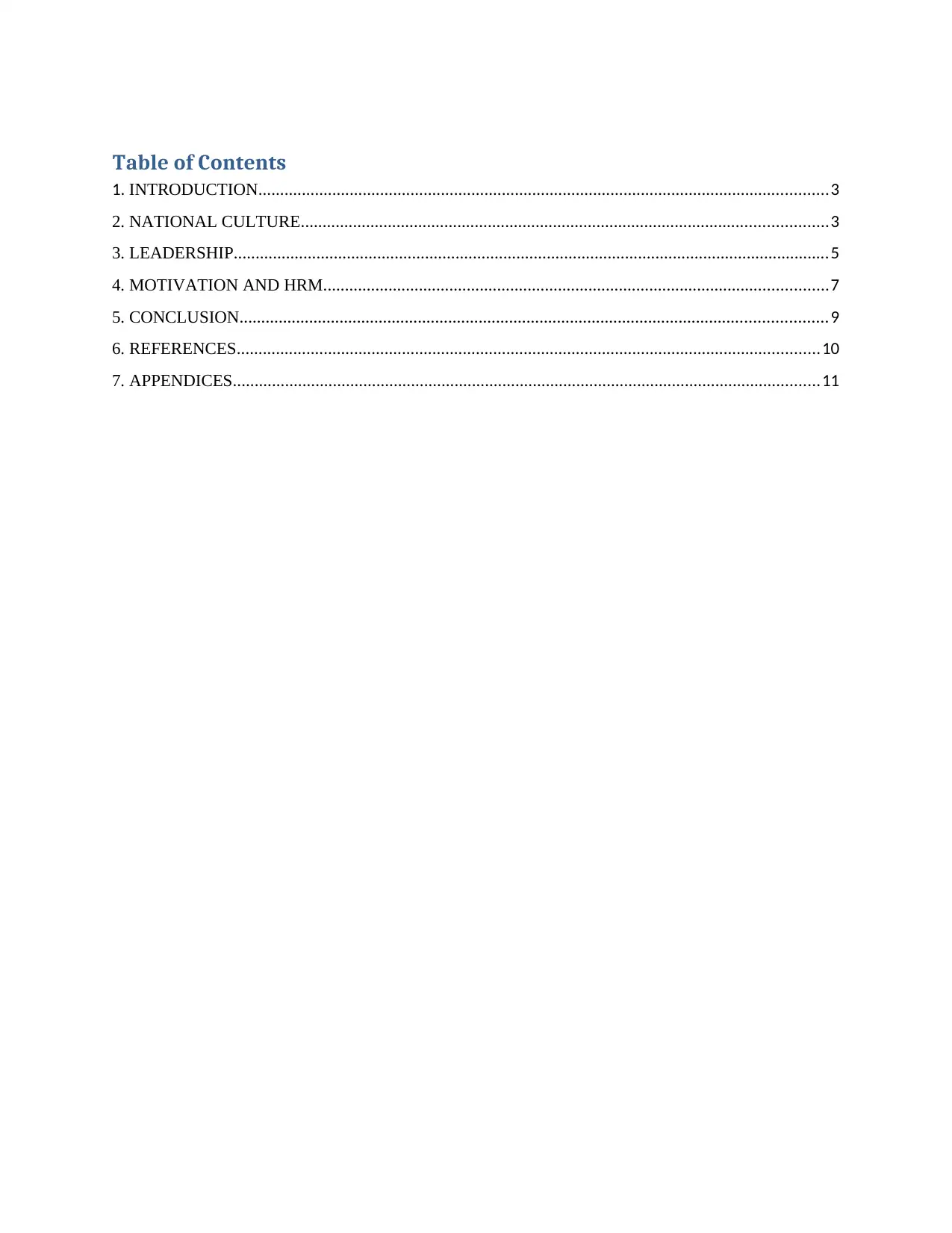
Table of Contents
1. INTRODUCTION...................................................................................................................................3
2. NATIONAL CULTURE.........................................................................................................................3
3. LEADERSHIP.........................................................................................................................................5
4. MOTIVATION AND HRM....................................................................................................................7
5. CONCLUSION.......................................................................................................................................9
6. REFERENCES......................................................................................................................................10
7. APPENDICES.......................................................................................................................................11
1. INTRODUCTION...................................................................................................................................3
2. NATIONAL CULTURE.........................................................................................................................3
3. LEADERSHIP.........................................................................................................................................5
4. MOTIVATION AND HRM....................................................................................................................7
5. CONCLUSION.......................................................................................................................................9
6. REFERENCES......................................................................................................................................10
7. APPENDICES.......................................................................................................................................11
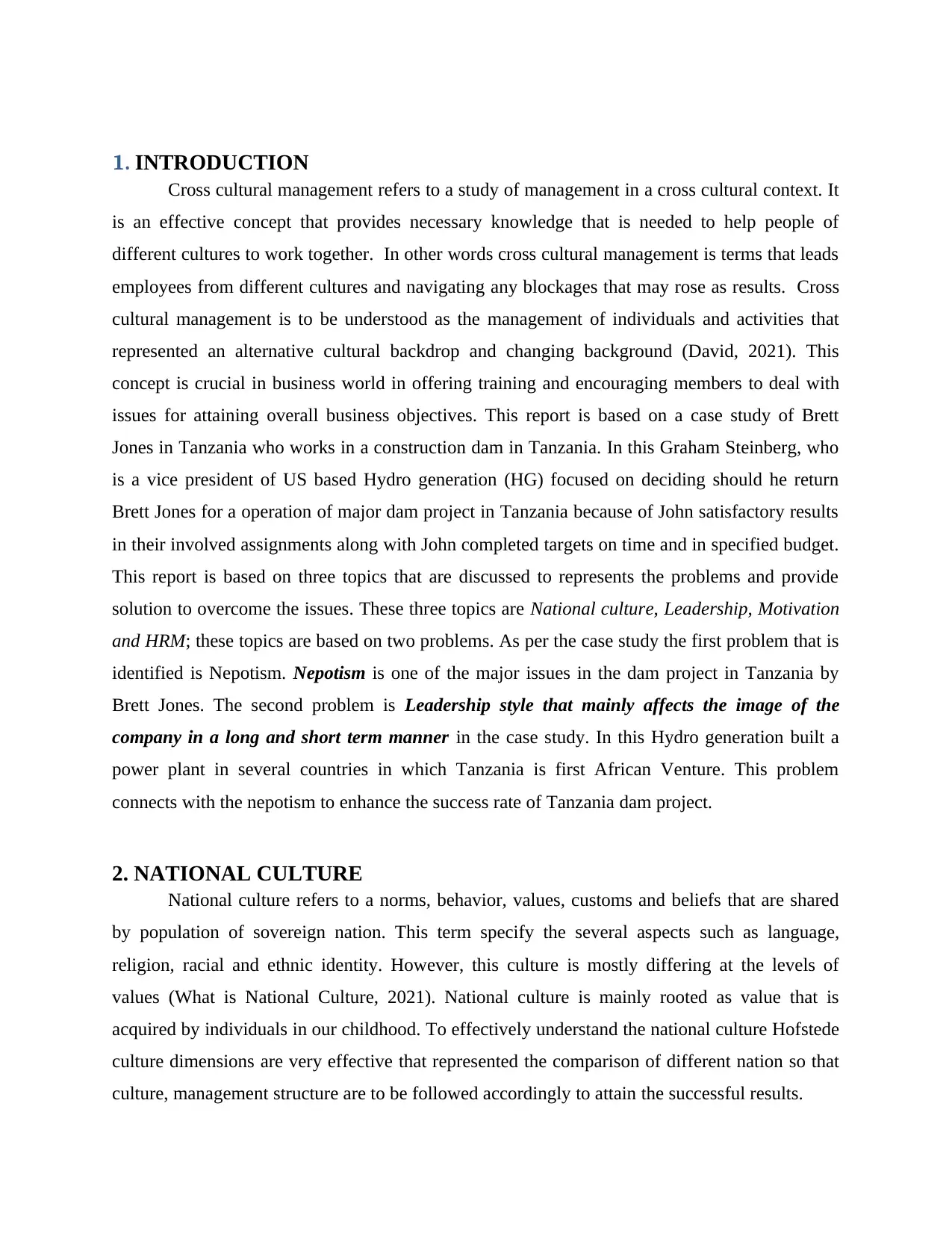
1. INTRODUCTION
Cross cultural management refers to a study of management in a cross cultural context. It
is an effective concept that provides necessary knowledge that is needed to help people of
different cultures to work together. In other words cross cultural management is terms that leads
employees from different cultures and navigating any blockages that may rose as results. Cross
cultural management is to be understood as the management of individuals and activities that
represented an alternative cultural backdrop and changing background (David, 2021). This
concept is crucial in business world in offering training and encouraging members to deal with
issues for attaining overall business objectives. This report is based on a case study of Brett
Jones in Tanzania who works in a construction dam in Tanzania. In this Graham Steinberg, who
is a vice president of US based Hydro generation (HG) focused on deciding should he return
Brett Jones for a operation of major dam project in Tanzania because of John satisfactory results
in their involved assignments along with John completed targets on time and in specified budget.
This report is based on three topics that are discussed to represents the problems and provide
solution to overcome the issues. These three topics are National culture, Leadership, Motivation
and HRM; these topics are based on two problems. As per the case study the first problem that is
identified is Nepotism. Nepotism is one of the major issues in the dam project in Tanzania by
Brett Jones. The second problem is Leadership style that mainly affects the image of the
company in a long and short term manner in the case study. In this Hydro generation built a
power plant in several countries in which Tanzania is first African Venture. This problem
connects with the nepotism to enhance the success rate of Tanzania dam project.
2. NATIONAL CULTURE
National culture refers to a norms, behavior, values, customs and beliefs that are shared
by population of sovereign nation. This term specify the several aspects such as language,
religion, racial and ethnic identity. However, this culture is mostly differing at the levels of
values (What is National Culture, 2021). National culture is mainly rooted as value that is
acquired by individuals in our childhood. To effectively understand the national culture Hofstede
culture dimensions are very effective that represented the comparison of different nation so that
culture, management structure are to be followed accordingly to attain the successful results.
Cross cultural management refers to a study of management in a cross cultural context. It
is an effective concept that provides necessary knowledge that is needed to help people of
different cultures to work together. In other words cross cultural management is terms that leads
employees from different cultures and navigating any blockages that may rose as results. Cross
cultural management is to be understood as the management of individuals and activities that
represented an alternative cultural backdrop and changing background (David, 2021). This
concept is crucial in business world in offering training and encouraging members to deal with
issues for attaining overall business objectives. This report is based on a case study of Brett
Jones in Tanzania who works in a construction dam in Tanzania. In this Graham Steinberg, who
is a vice president of US based Hydro generation (HG) focused on deciding should he return
Brett Jones for a operation of major dam project in Tanzania because of John satisfactory results
in their involved assignments along with John completed targets on time and in specified budget.
This report is based on three topics that are discussed to represents the problems and provide
solution to overcome the issues. These three topics are National culture, Leadership, Motivation
and HRM; these topics are based on two problems. As per the case study the first problem that is
identified is Nepotism. Nepotism is one of the major issues in the dam project in Tanzania by
Brett Jones. The second problem is Leadership style that mainly affects the image of the
company in a long and short term manner in the case study. In this Hydro generation built a
power plant in several countries in which Tanzania is first African Venture. This problem
connects with the nepotism to enhance the success rate of Tanzania dam project.
2. NATIONAL CULTURE
National culture refers to a norms, behavior, values, customs and beliefs that are shared
by population of sovereign nation. This term specify the several aspects such as language,
religion, racial and ethnic identity. However, this culture is mostly differing at the levels of
values (What is National Culture, 2021). National culture is mainly rooted as value that is
acquired by individuals in our childhood. To effectively understand the national culture Hofstede
culture dimensions are very effective that represented the comparison of different nation so that
culture, management structure are to be followed accordingly to attain the successful results.
⊘ This is a preview!⊘
Do you want full access?
Subscribe today to unlock all pages.

Trusted by 1+ million students worldwide
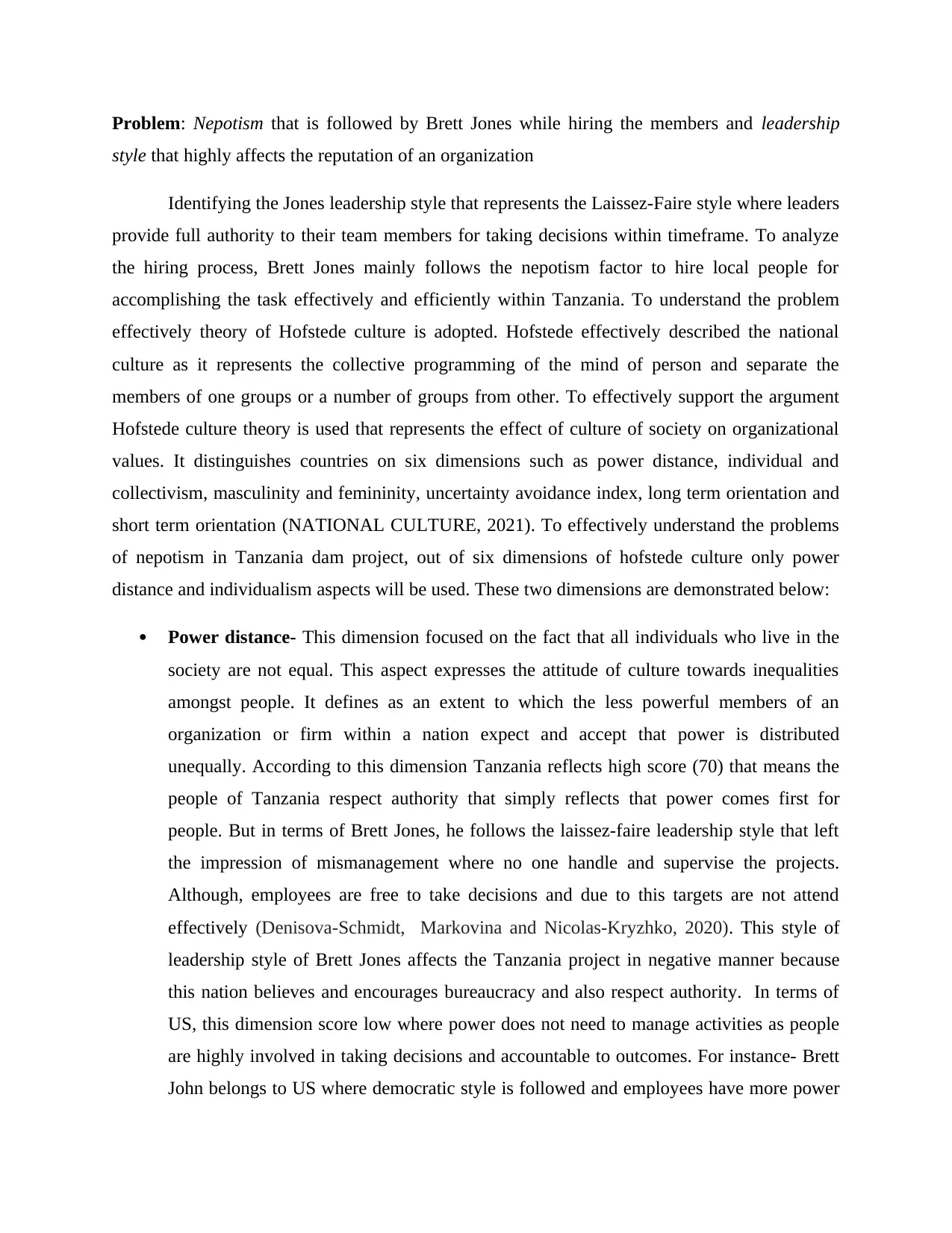
Problem: Nepotism that is followed by Brett Jones while hiring the members and leadership
style that highly affects the reputation of an organization
Identifying the Jones leadership style that represents the Laissez-Faire style where leaders
provide full authority to their team members for taking decisions within timeframe. To analyze
the hiring process, Brett Jones mainly follows the nepotism factor to hire local people for
accomplishing the task effectively and efficiently within Tanzania. To understand the problem
effectively theory of Hofstede culture is adopted. Hofstede effectively described the national
culture as it represents the collective programming of the mind of person and separate the
members of one groups or a number of groups from other. To effectively support the argument
Hofstede culture theory is used that represents the effect of culture of society on organizational
values. It distinguishes countries on six dimensions such as power distance, individual and
collectivism, masculinity and femininity, uncertainty avoidance index, long term orientation and
short term orientation (NATIONAL CULTURE, 2021). To effectively understand the problems
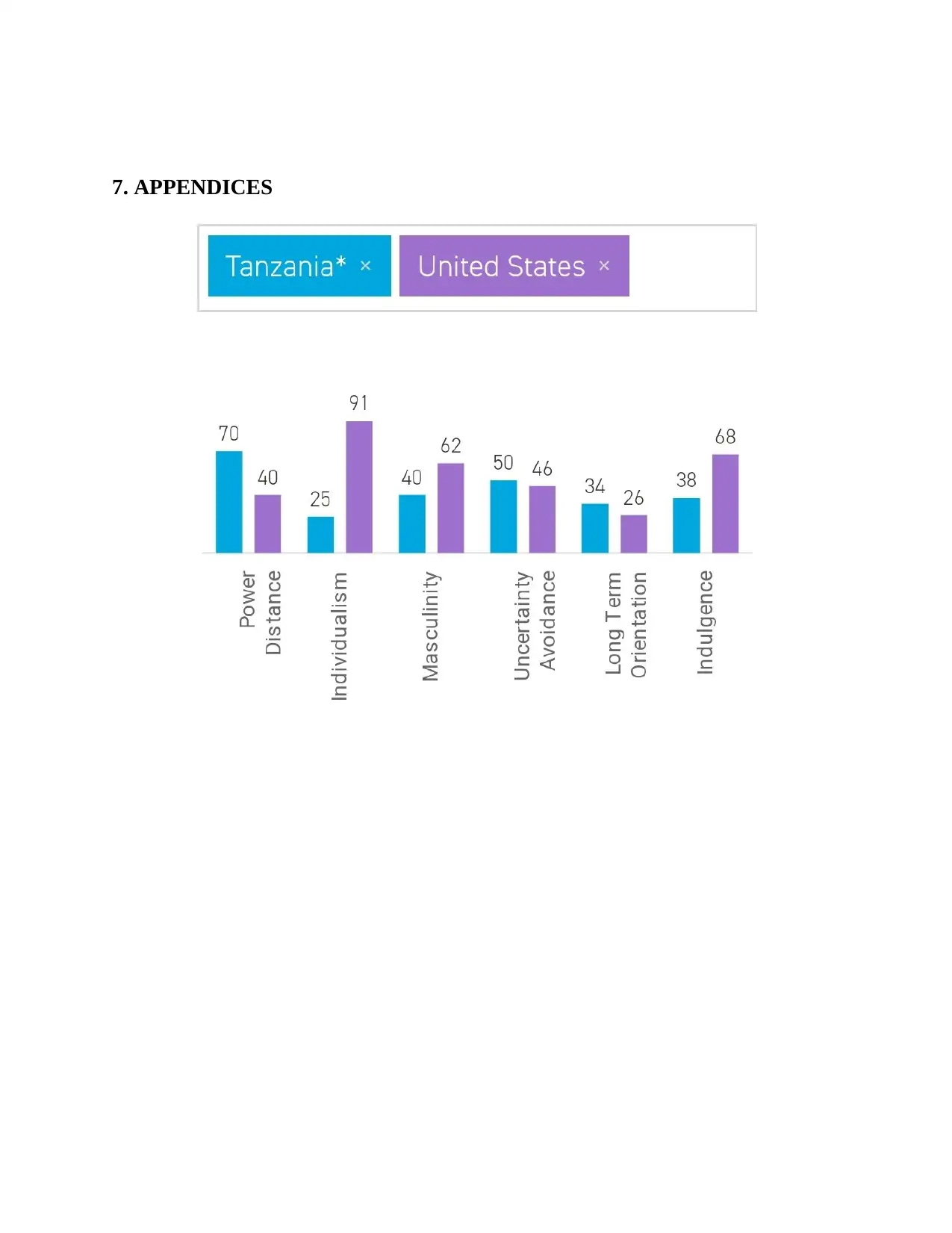
of nepotism in Tanzania dam project, out of six dimensions of hofstede culture only power
distance and individualism aspects will be used. These two dimensions are demonstrated below:
Power distance- This dimension focused on the fact that all individuals who live in the
society are not equal. This aspect expresses the attitude of culture towards inequalities
amongst people. It defines as an extent to which the less powerful members of an
organization or firm within a nation expect and accept that power is distributed
unequally. According to this dimension Tanzania reflects high score (70) that means the
people of Tanzania respect authority that simply reflects that power comes first for
people. But in terms of Brett Jones, he follows the laissez-faire leadership style that left
the impression of mismanagement where no one handle and supervise the projects.
Although, employees are free to take decisions and due to this targets are not attend
effectively (Denisova-Schmidt, Markovina and Nicolas-Kryzhko, 2020). This style of
leadership style of Brett Jones affects the Tanzania project in negative manner because
this nation believes and encourages bureaucracy and also respect authority. In terms of
US, this dimension score low where power does not need to manage activities as people
are highly involved in taking decisions and accountable to outcomes. For instance- Brett
John belongs to US where democratic style is followed and employees have more power
style that highly affects the reputation of an organization
Identifying the Jones leadership style that represents the Laissez-Faire style where leaders
provide full authority to their team members for taking decisions within timeframe. To analyze
the hiring process, Brett Jones mainly follows the nepotism factor to hire local people for
accomplishing the task effectively and efficiently within Tanzania. To understand the problem
effectively theory of Hofstede culture is adopted. Hofstede effectively described the national
culture as it represents the collective programming of the mind of person and separate the
members of one groups or a number of groups from other. To effectively support the argument
Hofstede culture theory is used that represents the effect of culture of society on organizational
values. It distinguishes countries on six dimensions such as power distance, individual and
collectivism, masculinity and femininity, uncertainty avoidance index, long term orientation and
short term orientation (NATIONAL CULTURE, 2021). To effectively understand the problems
of nepotism in Tanzania dam project, out of six dimensions of hofstede culture only power
distance and individualism aspects will be used. These two dimensions are demonstrated below:
Power distance- This dimension focused on the fact that all individuals who live in the
society are not equal. This aspect expresses the attitude of culture towards inequalities
amongst people. It defines as an extent to which the less powerful members of an
organization or firm within a nation expect and accept that power is distributed
unequally. According to this dimension Tanzania reflects high score (70) that means the
people of Tanzania respect authority that simply reflects that power comes first for
people. But in terms of Brett Jones, he follows the laissez-faire leadership style that left
the impression of mismanagement where no one handle and supervise the projects.
Although, employees are free to take decisions and due to this targets are not attend
effectively (Denisova-Schmidt, Markovina and Nicolas-Kryzhko, 2020). This style of
leadership style of Brett Jones affects the Tanzania project in negative manner because
this nation believes and encourages bureaucracy and also respect authority. In terms of
US, this dimension score low where power does not need to manage activities as people
are highly involved in taking decisions and accountable to outcomes. For instance- Brett
John belongs to US where democratic style is followed and employees have more power
Paraphrase This Document
Need a fresh take? Get an instant paraphrase of this document with our AI Paraphraser
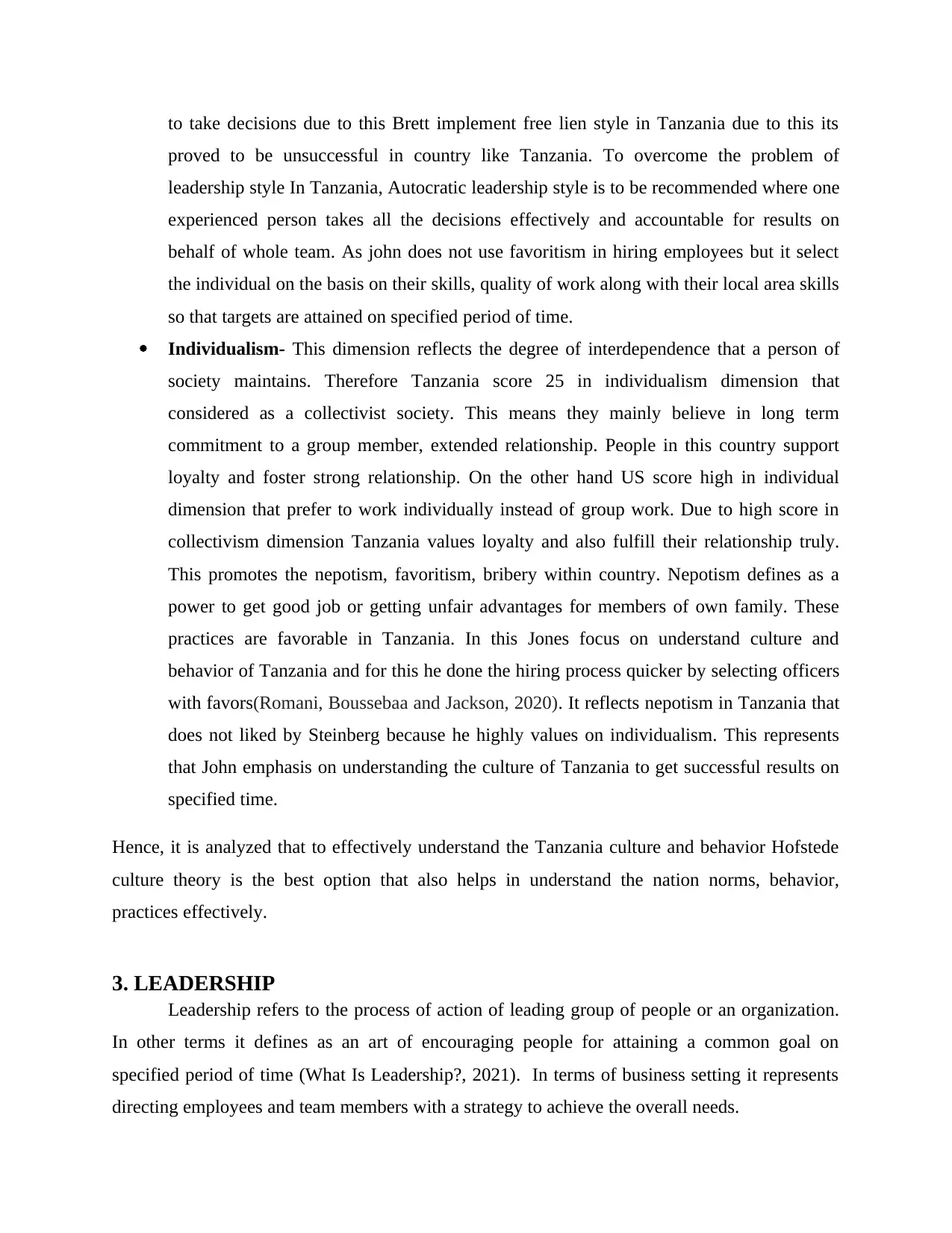
to take decisions due to this Brett implement free lien style in Tanzania due to this its
proved to be unsuccessful in country like Tanzania. To overcome the problem of
leadership style In Tanzania, Autocratic leadership style is to be recommended where one
experienced person takes all the decisions effectively and accountable for results on
behalf of whole team. As john does not use favoritism in hiring employees but it select
the individual on the basis on their skills, quality of work along with their local area skills
so that targets are attained on specified period of time.
Individualism- This dimension reflects the degree of interdependence that a person of
society maintains. Therefore Tanzania score 25 in individualism dimension that
considered as a collectivist society. This means they mainly believe in long term
commitment to a group member, extended relationship. People in this country support
loyalty and foster strong relationship. On the other hand US score high in individual
dimension that prefer to work individually instead of group work. Due to high score in
collectivism dimension Tanzania values loyalty and also fulfill their relationship truly.
This promotes the nepotism, favoritism, bribery within country. Nepotism defines as a
power to get good job or getting unfair advantages for members of own family. These
practices are favorable in Tanzania. In this Jones focus on understand culture and
behavior of Tanzania and for this he done the hiring process quicker by selecting officers
with favors(Romani, Boussebaa and Jackson, 2020). It reflects nepotism in Tanzania that
does not liked by Steinberg because he highly values on individualism. This represents
that John emphasis on understanding the culture of Tanzania to get successful results on
specified time.
Hence, it is analyzed that to effectively understand the Tanzania culture and behavior Hofstede
culture theory is the best option that also helps in understand the nation norms, behavior,
practices effectively.
3. LEADERSHIP
Leadership refers to the process of action of leading group of people or an organization.
In other terms it defines as an art of encouraging people for attaining a common goal on
specified period of time (What Is Leadership?, 2021). In terms of business setting it represents
directing employees and team members with a strategy to achieve the overall needs.
proved to be unsuccessful in country like Tanzania. To overcome the problem of
leadership style In Tanzania, Autocratic leadership style is to be recommended where one
experienced person takes all the decisions effectively and accountable for results on
behalf of whole team. As john does not use favoritism in hiring employees but it select
the individual on the basis on their skills, quality of work along with their local area skills
so that targets are attained on specified period of time.
Individualism- This dimension reflects the degree of interdependence that a person of
society maintains. Therefore Tanzania score 25 in individualism dimension that
considered as a collectivist society. This means they mainly believe in long term
commitment to a group member, extended relationship. People in this country support
loyalty and foster strong relationship. On the other hand US score high in individual
dimension that prefer to work individually instead of group work. Due to high score in
collectivism dimension Tanzania values loyalty and also fulfill their relationship truly.
This promotes the nepotism, favoritism, bribery within country. Nepotism defines as a
power to get good job or getting unfair advantages for members of own family. These
practices are favorable in Tanzania. In this Jones focus on understand culture and
behavior of Tanzania and for this he done the hiring process quicker by selecting officers
with favors(Romani, Boussebaa and Jackson, 2020). It reflects nepotism in Tanzania that
does not liked by Steinberg because he highly values on individualism. This represents
that John emphasis on understanding the culture of Tanzania to get successful results on
specified time.
Hence, it is analyzed that to effectively understand the Tanzania culture and behavior Hofstede
culture theory is the best option that also helps in understand the nation norms, behavior,
practices effectively.
3. LEADERSHIP
Leadership refers to the process of action of leading group of people or an organization.
In other terms it defines as an art of encouraging people for attaining a common goal on
specified period of time (What Is Leadership?, 2021). In terms of business setting it represents
directing employees and team members with a strategy to achieve the overall needs.
Problem- Inefficient style of leadership followed by Brett Jones in Tanzania affects the
reputation of an organization that represents nepotism.
Analyzing from the case study it is formulated HG hires Brett Jones because of his
satisfactory performance on previously done projects. Due to this Steinberg hires Jones to work
in Tanzania. While working in Tanzania Jones follows nepotism at the time of hiring members
that is not acceptable by Steinberg and the employees who already works under the company. As
John also follow Laissez-faire leadership style that is also not beneficial for Tanzania dam
Project. To effectively understand the Jones leadership style Kurt Lewin leadership model is very
effective. This theory is oldest of situational models that represent three leadership styles that are
Authoritarian leadership, participative leadership, delegate leadership. In these styles John
adopts the delegating leadership style that provides power to people to take decisions of their
own. As John belongs to US where high power distance is low and considering this Brett follow
same structure in Tanzania that represents unsuccessful. To become an effective leader it is very
essential for leader to apply leadership style as per culture and situation of particular nation and
organization (Jackson, 2019). For this situational leadership theory is to be recommended for
them where Jones adapts leadership style as per situation and culture of Tanzania. Therefore,
Tanzania culture is collectivist in nature where people are supportive in nature and also thinks
that they also get proper supports from the leaders. Due to this participative leadership style is to
be recommend where John listen every employees views and issues and works according to their
happiness and satisfaction level. To hires employees John apply participative leaderships style so
that employees provides references to their family and friends for working and attaining the task
for specified job role. As this style supports nepotism in Tanzania that helps Jones to satisfy their
team members. This style leads nepotism and in favor of nepotism due to this high turnover of
staff is done; employees also get less incentive for performing their responsibilities. In Tanzania,
there is high need of experienced person who take decisions on behalf of whole team so that
targets of dam project is successful effectively. For this John implement autocratic style of
leadership to make the decisions quickly and effectively. This helps in maintaining the reputation
of Hydro generation.
reputation of an organization that represents nepotism.
Analyzing from the case study it is formulated HG hires Brett Jones because of his
satisfactory performance on previously done projects. Due to this Steinberg hires Jones to work
in Tanzania. While working in Tanzania Jones follows nepotism at the time of hiring members
that is not acceptable by Steinberg and the employees who already works under the company. As
John also follow Laissez-faire leadership style that is also not beneficial for Tanzania dam
Project. To effectively understand the Jones leadership style Kurt Lewin leadership model is very
effective. This theory is oldest of situational models that represent three leadership styles that are
Authoritarian leadership, participative leadership, delegate leadership. In these styles John
adopts the delegating leadership style that provides power to people to take decisions of their
own. As John belongs to US where high power distance is low and considering this Brett follow
same structure in Tanzania that represents unsuccessful. To become an effective leader it is very
essential for leader to apply leadership style as per culture and situation of particular nation and
organization (Jackson, 2019). For this situational leadership theory is to be recommended for
them where Jones adapts leadership style as per situation and culture of Tanzania. Therefore,
Tanzania culture is collectivist in nature where people are supportive in nature and also thinks
that they also get proper supports from the leaders. Due to this participative leadership style is to
be recommend where John listen every employees views and issues and works according to their
happiness and satisfaction level. To hires employees John apply participative leaderships style so
that employees provides references to their family and friends for working and attaining the task
for specified job role. As this style supports nepotism in Tanzania that helps Jones to satisfy their
team members. This style leads nepotism and in favor of nepotism due to this high turnover of
staff is done; employees also get less incentive for performing their responsibilities. In Tanzania,
there is high need of experienced person who take decisions on behalf of whole team so that
targets of dam project is successful effectively. For this John implement autocratic style of
leadership to make the decisions quickly and effectively. This helps in maintaining the reputation
of Hydro generation.
⊘ This is a preview!⊘
Do you want full access?
Subscribe today to unlock all pages.
Trusted by 1+ million students worldwide
Hence, it is to be reflected that to overcome the problems under the Tanzania dam
project, situational leadership theory is the best and effective theory that provides viable and
authentic results to maintains the reputation of Hydro Generation in African countries.
4. MOTIVATION AND HRM
Motivation refers to a process that guides, initiatives and maintains goal oriented
behaviors. It refers to a driving force that reflects actions, willingness and goals. It is an activity
of stimulating people to action to fulfill the company goals. This represents a type of desires of
individual person for attaining goals by satisfying individual needs (What is Motivation ?, 2021).
Human resource management refers to a practice of managing people for attaining better
performance. It includes several aspects such as employing people, compensating, training and
development, recruiting and selecting to encourage and retain employees within an organization
(Chai. W., 2021).
Problem- selecting ineffective leadership style and follow nepotism is the problems faced under
Tanzania dam project.
To understand the issues within the case study, Herzberg model is to be implemented that
helps in understanding the motivation factor of Steinberg to encourage Jones and in what manner
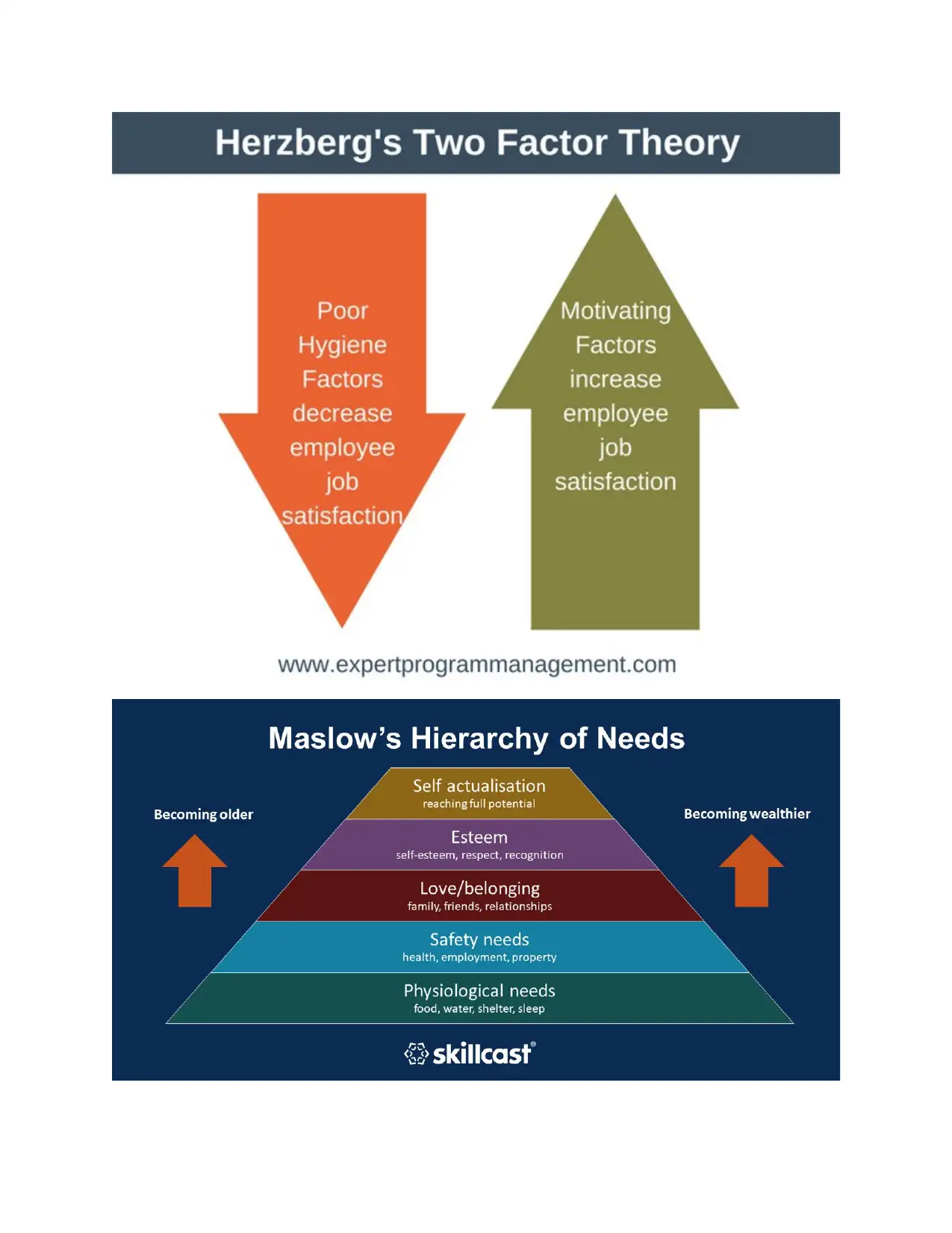
Jones takes the initiatives to encourage their team members. Herzberg two factor theory states
two factors that are motivators and hygiene factors. In these motivators is that factor which
encourages employees to work harder that is denoted as intrinsic factor. Whereas Hygiene factor
defines that they won’t motivates employees to work harder but they cause them to become
unmotivated if they are not present. As this factor considered as an extrinsic factor that does not
create satisfaction but creates dissatisfaction related to security, pay, leadership style etc.
By analyzing the case study, it is demonstrates that Brett Jones followed motivation
factor to motivate their members for working under the African culture. After understanding the
culture of Tanzania, Jones possesses to follow nepotism culture because in Tanzania family
values are on peak. After analyzing the case study Steinberg focus on encouraging Brett jones so
that he takes responsibility to take over the project in the African country i.e. Tanzania. Steinberg
selected Jones because of his successful results on time even in specified budget. In terms of
Extrinsic factor, Jones motivates to work within Tanzania because Hydro generation offers high
project, situational leadership theory is the best and effective theory that provides viable and
authentic results to maintains the reputation of Hydro Generation in African countries.
4. MOTIVATION AND HRM
Motivation refers to a process that guides, initiatives and maintains goal oriented
behaviors. It refers to a driving force that reflects actions, willingness and goals. It is an activity
of stimulating people to action to fulfill the company goals. This represents a type of desires of
individual person for attaining goals by satisfying individual needs (What is Motivation ?, 2021).
Human resource management refers to a practice of managing people for attaining better
performance. It includes several aspects such as employing people, compensating, training and
development, recruiting and selecting to encourage and retain employees within an organization
(Chai. W., 2021).
Problem- selecting ineffective leadership style and follow nepotism is the problems faced under
Tanzania dam project.
To understand the issues within the case study, Herzberg model is to be implemented that
helps in understanding the motivation factor of Steinberg to encourage Jones and in what manner
Jones takes the initiatives to encourage their team members. Herzberg two factor theory states
two factors that are motivators and hygiene factors. In these motivators is that factor which
encourages employees to work harder that is denoted as intrinsic factor. Whereas Hygiene factor
defines that they won’t motivates employees to work harder but they cause them to become
unmotivated if they are not present. As this factor considered as an extrinsic factor that does not
create satisfaction but creates dissatisfaction related to security, pay, leadership style etc.
By analyzing the case study, it is demonstrates that Brett Jones followed motivation
factor to motivate their members for working under the African culture. After understanding the
culture of Tanzania, Jones possesses to follow nepotism culture because in Tanzania family
values are on peak. After analyzing the case study Steinberg focus on encouraging Brett jones so
that he takes responsibility to take over the project in the African country i.e. Tanzania. Steinberg
selected Jones because of his successful results on time even in specified budget. In terms of
Extrinsic factor, Jones motivates to work within Tanzania because Hydro generation offers high
Paraphrase This Document
Need a fresh take? Get an instant paraphrase of this document with our AI Paraphraser
pay along with an luxury accommodation within Tanzania for living so that Brett Jones does not
resist to take the responsibility of fulfill the task in effective manner even in set budget. Jones
also motivates with the Steinberg leadership style because of this he takes decisions of their own
due to this performance will impress the organization and become a reason of success. As getting
encouragement from the manager helps in developing performance and efficiency due to which
productive results are to be attained on time that enhances overall reputation of business
enterprise.
In terms of working in Tanzania, it is very essential to understand the motivation level of
their local workers and in this hofstede culture dimension is very useful. In Tanzania power
index is very high which means employees needs supervisor who supervise and take decisions on
which they work. For this autocratic leadership style is very suitable that shows the intrinsic
motivation that helps workers to complete the task on time but also dissatisfy because of not
taking the decisions on their own. On the other hand, Tanzania is a country that follows
collectivist dimension to promote this culture Jones adopts the nepotism in hiring employees that
demotivates workers in terms of job insecurity, low- pay etc. Therefore, it also creates high
pressure on the employees mind due to this high employee turnover is reflected. To motivate
employees effectively Jones adopts the use of Maslow need hierarchy theory so that employees
are motivates and this helps business to maintain its reputation in HG.
Maslow need hierarchy theory
Psychological factor- This factor denotes basic needs of a person. In terms of Tanzania
Project, Jones focus on fulfilling the employees basic needs that are basically pay that
does not effect after the new hiring by nepotism. It helps in motivating employees for
effective working.
Safety needs- This factor reflects the safety and security of a person. In this to motivates
and hire employees, Jones represents the safety and security activities to members so that
high involvement of members is to be done and targets are attained on time (Bouranta
and et. al., 2019).
Love and belongingness need- This need shows connection of people within an
organization. In Tanzania collectivist approach is to be adopted due to which people are
resist to take the responsibility of fulfill the task in effective manner even in set budget. Jones
also motivates with the Steinberg leadership style because of this he takes decisions of their own
due to this performance will impress the organization and become a reason of success. As getting
encouragement from the manager helps in developing performance and efficiency due to which
productive results are to be attained on time that enhances overall reputation of business
enterprise.
In terms of working in Tanzania, it is very essential to understand the motivation level of
their local workers and in this hofstede culture dimension is very useful. In Tanzania power
index is very high which means employees needs supervisor who supervise and take decisions on
which they work. For this autocratic leadership style is very suitable that shows the intrinsic
motivation that helps workers to complete the task on time but also dissatisfy because of not
taking the decisions on their own. On the other hand, Tanzania is a country that follows
collectivist dimension to promote this culture Jones adopts the nepotism in hiring employees that
demotivates workers in terms of job insecurity, low- pay etc. Therefore, it also creates high
pressure on the employees mind due to this high employee turnover is reflected. To motivate
employees effectively Jones adopts the use of Maslow need hierarchy theory so that employees
are motivates and this helps business to maintain its reputation in HG.
Maslow need hierarchy theory
Psychological factor- This factor denotes basic needs of a person. In terms of Tanzania
Project, Jones focus on fulfilling the employees basic needs that are basically pay that
does not effect after the new hiring by nepotism. It helps in motivating employees for
effective working.
Safety needs- This factor reflects the safety and security of a person. In this to motivates
and hire employees, Jones represents the safety and security activities to members so that
high involvement of members is to be done and targets are attained on time (Bouranta
and et. al., 2019).
Love and belongingness need- This need shows connection of people within an
organization. In Tanzania collectivist approach is to be adopted due to which people are
connected with each other. This helps Jones to effectively and quickly hire employees
that maintains connection between members.
Esteem needs- After fulfill above needs people need to gain respect and appreciation at
workplace. In this Jones provides power to those employees who work effectively and
efficiently that motivates other person too to attain targets on time. This will develops
reputation of HG.
5. CONCLUSION
From the above report it is to be concluded that cross cultural management is a
significant term for doing the business on international level. As Steinberg is doing the business
in American but fail to examine and identify the differences between two countries. Due to this
Steinberg hires Jones for Tanzania project after analyzing his previous performance. Jones has
effective skills and knowledge to complete the task on time even on specified budget. Due to
Jones ability and have an experience of Tanzanian culture Steinberg hires him. In this Jones
follows the nepotism within Tanzania for hiring employees as it is a collectivist society. In this
Jones faces challenges related to employee turnover, dissatisfaction etc. This report studied the
three categories for solving the two problems that was faced under the Tanzania project. These
categories include national culture, leadership and motivation & HRM. All these categories are
very efficient to provide successful recommendations for solving issues. These recommendations
are implementing supportive leadership styles, Maslow need hierarchy theory, situational
leadership theory so that fruitful results are attained on time and also in specified budget.
that maintains connection between members.
Esteem needs- After fulfill above needs people need to gain respect and appreciation at
workplace. In this Jones provides power to those employees who work effectively and
efficiently that motivates other person too to attain targets on time. This will develops
reputation of HG.
5. CONCLUSION
From the above report it is to be concluded that cross cultural management is a
significant term for doing the business on international level. As Steinberg is doing the business
in American but fail to examine and identify the differences between two countries. Due to this
Steinberg hires Jones for Tanzania project after analyzing his previous performance. Jones has
effective skills and knowledge to complete the task on time even on specified budget. Due to
Jones ability and have an experience of Tanzanian culture Steinberg hires him. In this Jones
follows the nepotism within Tanzania for hiring employees as it is a collectivist society. In this
Jones faces challenges related to employee turnover, dissatisfaction etc. This report studied the
three categories for solving the two problems that was faced under the Tanzania project. These
categories include national culture, leadership and motivation & HRM. All these categories are
very efficient to provide successful recommendations for solving issues. These recommendations
are implementing supportive leadership styles, Maslow need hierarchy theory, situational
leadership theory so that fruitful results are attained on time and also in specified budget.
⊘ This is a preview!⊘
Do you want full access?
Subscribe today to unlock all pages.
Trusted by 1+ million students worldwide
6. REFERENCES
Books and Journal
Bouranta, N. and et. al., 2019. The key factors of total quality management in the service sector:
a cross-cultural study. Benchmarking: An International Journal.
Denisova-Schmidt, E., Markovina, I. and Nicolas-Kryzhko, L., 2020. The lacuna model: A new
approach to cross-cultural management research. International Journal of Cross Cultural
Management. 20(3). pp.329-344.
Jackson, T., 2019. Cross-cultural management: The context is our content.
Romani, L., Boussebaa, M. and Jackson, T., 2020. Critical perspectives on cross-cultural
management. The SAGE Handbook of Contemporary Cross-Cultural Management, p.51.
Online
Chai. W., 2021, human resource management (HRM). [Online]. Available through: <
https://searchhrsoftware.techtarget.com/definition/human-resource-management-HRM>
David. C., 2021. Cross-Cultural Management, [Online]. Available through: <
https://www.oxfordbibliographies.com/view/document/obo-9780199846740/obo-
9780199846740-0074.xml#:~:text=Cross%2Dcultural%20management%20is
%20the,individual%20managers%20and%20organization%20members.>
NATIONAL CULTURE, 2021. [Online], Available through: <
https://hi.hofstede-insights.com/national-culture>
What Is Leadership?, 2021. [Online], Available through: <
https://www.mindtools.com/pages/article/newLDR_41.htm>
What is Motivation ?, 2021. [Online], Available through: <
https://www.managementstudyguide.com/what_is_motivation.htm>
What is National Culture, 2021. [Online]. Available through: <
https://www.igi-global.com/dictionary/national-culture-and-the-social-relations-of-
anywhere-working/19905#:~:text=National%20culture%20is%20the%20norms,identity
%2C%20cultural%20history%20and%20traditions.>
Books and Journal
Bouranta, N. and et. al., 2019. The key factors of total quality management in the service sector:
a cross-cultural study. Benchmarking: An International Journal.
Denisova-Schmidt, E., Markovina, I. and Nicolas-Kryzhko, L., 2020. The lacuna model: A new
approach to cross-cultural management research. International Journal of Cross Cultural
Management. 20(3). pp.329-344.
Jackson, T., 2019. Cross-cultural management: The context is our content.
Romani, L., Boussebaa, M. and Jackson, T., 2020. Critical perspectives on cross-cultural
management. The SAGE Handbook of Contemporary Cross-Cultural Management, p.51.
Online
Chai. W., 2021, human resource management (HRM). [Online]. Available through: <
https://searchhrsoftware.techtarget.com/definition/human-resource-management-HRM>
David. C., 2021. Cross-Cultural Management, [Online]. Available through: <
https://www.oxfordbibliographies.com/view/document/obo-9780199846740/obo-
9780199846740-0074.xml#:~:text=Cross%2Dcultural%20management%20is
%20the,individual%20managers%20and%20organization%20members.>
NATIONAL CULTURE, 2021. [Online], Available through: <
https://hi.hofstede-insights.com/national-culture>
What Is Leadership?, 2021. [Online], Available through: <
https://www.mindtools.com/pages/article/newLDR_41.htm>
What is Motivation ?, 2021. [Online], Available through: <
https://www.managementstudyguide.com/what_is_motivation.htm>
What is National Culture, 2021. [Online]. Available through: <
https://www.igi-global.com/dictionary/national-culture-and-the-social-relations-of-
anywhere-working/19905#:~:text=National%20culture%20is%20the%20norms,identity
%2C%20cultural%20history%20and%20traditions.>
Paraphrase This Document
Need a fresh take? Get an instant paraphrase of this document with our AI Paraphraser
7. APPENDICES
⊘ This is a preview!⊘
Do you want full access?
Subscribe today to unlock all pages.
Trusted by 1+ million students worldwide

1 out of 13


Related Documents


Your All-in-One AI-Powered Toolkit for Academic Success.
+13062052269
info@desklib.com
Available 24*7 on WhatsApp / Email
![[object Object]](/_next/static/media/star-bottom.7253800d.svg)
Unlock your academic potential
Copyright © 2020–2026 A2Z Services. All Rights Reserved. Developed and managed by ZUCOL.