Lean Production: A Contractor's Perspective on Waste Management
VerifiedAdded on 2019/09/22
|30
|7073
|248
Report
AI Summary
This report presents a case study analyzing lean integrated design and production from a contractor's perspective, focusing on waste management within a construction context. The report uses the author's experience as a senior estimator with Abdullah A. M. Al-Khodari Sons Company, a multifaceted contracting firm. It explores the application of Lean principles, drawing parallels to the Toyota Production System (TPS) and its 14 principles, examining how these principles can be applied to reduce waste, improve efficiency, and achieve continuous improvement in construction projects. The report evaluates the effectiveness of these principles through critical assessment of existing practices, providing a framework for understanding and implementing lean methodologies to optimize construction processes and enhance project outcomes. The report includes figures and tables to illustrate the concepts.
Page1
Dublin Institute of Technology ARROW@DIT
School of Real Estate and Construction Economics
2014-03-15
Lean Integrated Design and Production: A
Contractor's Perspective
[Student Name]
[University Name], [Email ID]
Site Waste
1 | P a g e
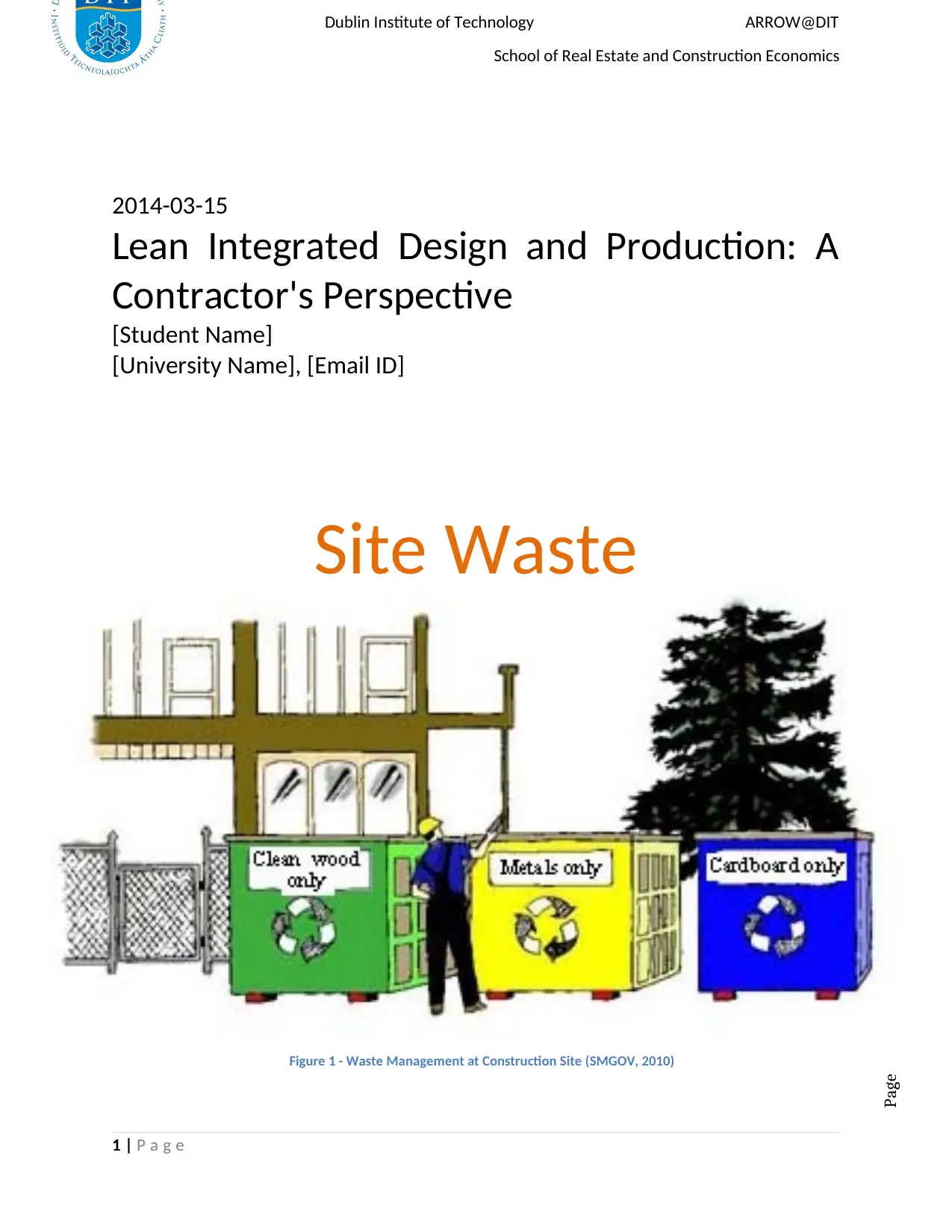
Figure 1 - Waste Management at Construction Site (SMGOV, 2010)
Dublin Institute of Technology ARROW@DIT
School of Real Estate and Construction Economics
2014-03-15
Lean Integrated Design and Production: A
Contractor's Perspective
[Student Name]
[University Name], [Email ID]
Site Waste
1 | P a g e
Figure 1 - Waste Management at Construction Site (SMGOV, 2010)

Paraphrase This Document
Need a fresh take? Get an instant paraphrase of this document with our AI Paraphraser

Page2
Table of Contents
Introduction.................................................................................................................................................4
Case Study...................................................................................................................................................5
Toyota Production System.........................................................................................................................16
Applying TPS and Tools for the case study................................................................................................17
Implementing the TPS principles and tools...............................................................................................19
Continuous Improvement..........................................................................................................................20
Conclusion & Recommendation................................................................................................................25
References.................................................................................................................................................27
Table of Contents
Introduction.................................................................................................................................................4
Case Study...................................................................................................................................................5
Toyota Production System.........................................................................................................................16
Applying TPS and Tools for the case study................................................................................................17
Implementing the TPS principles and tools...............................................................................................19
Continuous Improvement..........................................................................................................................20
Conclusion & Recommendation................................................................................................................25
References.................................................................................................................................................27
Page3
Table of Figures
Figure 1 - Waste Management at Construction Site (SMGOV, 2010)..........................................................1
Figure 2 - Abdullah A. M. Al-Khodari Sons Company Website (Company, 2014).........................................5
Figure 3 - 7 Wastes of Lean (Schume, 2013)................................................................................................6
Figure 4 - Lean Continuous Improvement System (Toyota Production System) (Remedi-Brown, 2014).....7
Figure 6 – Ideal Continuous Flow (Walters, Toyota Way Principle #2: Continuous Flow, 2012)..................8
Figure 5 - Savings (A long term philosophy) ( (Walters, Toyota Way principle Number 1, 2012)................8
Figure 7 – Kanban (Walters, Toyota Way Principle #3: “Pull” Systems, 2012).............................................9
Figure 8 - Tortoise & Hare (Walters, Toyota Way Principle #4: Level Out the Workload, 2012)................10
Figure 9 - Broken Tail Light (Walters, Toyota Way Principle #5: Stopping to Fix Problems, 2012)............10
Figure 10 - Ohio to Georgia (Waltors, Toyota Way Principle #6: Standardized Tasks & Processes, 2012).11
Figure 11 - Speed Limit Radar Visual Control (Waltors, Toyota Way Principle #7 – Visual Controls, 2012)
.................................................................................................................................................................. 11
Figure 12 - Labeled Waste Bins..................................................................................................................12
Figure 13 - Auto Robots (Technology) (Waltors, Toyota Way Principle #8: Use The Proper Technology,
2012).........................................................................................................................................................13
Figure 14 - Lock Step (Leadership) (Waltors, Toyota Way Principle #9: Growing and Developing Leaders,
2012).........................................................................................................................................................13
Figure 15 - Carmelo Anthony (Waltors, Toyota Way Principle #10: Develop Exceptional People and
Teams, 2012).............................................................................................................................................14
Figure 16 - Extended Network (Waltors, The Toyota Way Principle #11: Challenging Your Extended
Network, 2012)..........................................................................................................................................14
Figure 17 - Go & See Yourself ChiHuaHua (Waltors, Toyota Way Principle #12: Go and See For Yourself,
2012).........................................................................................................................................................15
Figure 18 - Decision Implementation (Waltors, Toyota Way Principle #13: Decide Slowly Through
Consensus, Implement Rapidly, 2012).......................................................................................................15
Figure 19 - Rocky Balboa (Waltors, Toyota Way Principle #14: Become a Learning Organization, 2012)..16
Figure 20 - 4 R's ........................................................................................................................................17
Figure 21 - 9 Steps for implementation of the Site Waste Management Plan (NETREGS, 2012)...............18
Figure 22 - Toyota Production System (Logistics, 2012)............................................................................21
Figure 23 - PDCA Process (Mike, 2011)......................................................................................................23
Figure 24 - Typical daily work schedule and progress control board.........................................................26
Table of Figures
Figure 1 - Waste Management at Construction Site (SMGOV, 2010)..........................................................1
Figure 2 - Abdullah A. M. Al-Khodari Sons Company Website (Company, 2014).........................................5
Figure 3 - 7 Wastes of Lean (Schume, 2013)................................................................................................6
Figure 4 - Lean Continuous Improvement System (Toyota Production System) (Remedi-Brown, 2014).....7
Figure 6 – Ideal Continuous Flow (Walters, Toyota Way Principle #2: Continuous Flow, 2012)..................8
Figure 5 - Savings (A long term philosophy) ( (Walters, Toyota Way principle Number 1, 2012)................8
Figure 7 – Kanban (Walters, Toyota Way Principle #3: “Pull” Systems, 2012).............................................9
Figure 8 - Tortoise & Hare (Walters, Toyota Way Principle #4: Level Out the Workload, 2012)................10
Figure 9 - Broken Tail Light (Walters, Toyota Way Principle #5: Stopping to Fix Problems, 2012)............10
Figure 10 - Ohio to Georgia (Waltors, Toyota Way Principle #6: Standardized Tasks & Processes, 2012).11
Figure 11 - Speed Limit Radar Visual Control (Waltors, Toyota Way Principle #7 – Visual Controls, 2012)
.................................................................................................................................................................. 11
Figure 12 - Labeled Waste Bins..................................................................................................................12
Figure 13 - Auto Robots (Technology) (Waltors, Toyota Way Principle #8: Use The Proper Technology,
2012).........................................................................................................................................................13
Figure 14 - Lock Step (Leadership) (Waltors, Toyota Way Principle #9: Growing and Developing Leaders,
2012).........................................................................................................................................................13
Figure 15 - Carmelo Anthony (Waltors, Toyota Way Principle #10: Develop Exceptional People and
Teams, 2012).............................................................................................................................................14
Figure 16 - Extended Network (Waltors, The Toyota Way Principle #11: Challenging Your Extended
Network, 2012)..........................................................................................................................................14
Figure 17 - Go & See Yourself ChiHuaHua (Waltors, Toyota Way Principle #12: Go and See For Yourself,
2012).........................................................................................................................................................15
Figure 18 - Decision Implementation (Waltors, Toyota Way Principle #13: Decide Slowly Through
Consensus, Implement Rapidly, 2012).......................................................................................................15
Figure 19 - Rocky Balboa (Waltors, Toyota Way Principle #14: Become a Learning Organization, 2012)..16
Figure 20 - 4 R's ........................................................................................................................................17
Figure 21 - 9 Steps for implementation of the Site Waste Management Plan (NETREGS, 2012)...............18
Figure 22 - Toyota Production System (Logistics, 2012)............................................................................21
Figure 23 - PDCA Process (Mike, 2011)......................................................................................................23
Figure 24 - Typical daily work schedule and progress control board.........................................................26
⊘ This is a preview!⊘
Do you want full access?
Subscribe today to unlock all pages.

Trusted by 1+ million students worldwide

Page4
Introduction
The situation I have picked for my paper focuses on my encounters while utilized as a senior
estimator with Abdullah A. M. Al-Khodari Sons Company in 2009. Abdullah A. M. Al-
Khodari Sons Company was a multifaceted contracting company situated in the Middle East.
The wide extent of exercises compasses: Roads and bridges, railways, structures and framework,
water & waste water treatment, civil engineering, oil & gas and pipelines in backing of
petrochemical generation, city cleaning, ecological control, land transportation and operation &
upkeep exercises. The association being alluded to having a yearly turnover of 1,737$ Millions.
My responsibilities included assessing individual tenders, and gathering all the key
documentation enveloping the acquisition process for that association. (Company, 2014)
Case Study
Report Scenario for Upper Management
Figure 2 - Abdullah A. M. Al-Khodari Sons Company Website (Company, 2014)
Introduction
The situation I have picked for my paper focuses on my encounters while utilized as a senior
estimator with Abdullah A. M. Al-Khodari Sons Company in 2009. Abdullah A. M. Al-
Khodari Sons Company was a multifaceted contracting company situated in the Middle East.
The wide extent of exercises compasses: Roads and bridges, railways, structures and framework,
water & waste water treatment, civil engineering, oil & gas and pipelines in backing of
petrochemical generation, city cleaning, ecological control, land transportation and operation &
upkeep exercises. The association being alluded to having a yearly turnover of 1,737$ Millions.
My responsibilities included assessing individual tenders, and gathering all the key
documentation enveloping the acquisition process for that association. (Company, 2014)
Case Study
Report Scenario for Upper Management
Figure 2 - Abdullah A. M. Al-Khodari Sons Company Website (Company, 2014)
Paraphrase This Document
Need a fresh take? Get an instant paraphrase of this document with our AI Paraphraser

Page5
Brief discussion of Lean Principles
Numerous organizations are battling to make due in today's profoundly focused worldwide
economy. Lean production offers them a proven system to decrease expenses, kill waste, expand
benefit, keep up elevated amounts of value and still make a benefit.
It is a framework that can be utilized as a part of the generation zone as well as some other
territory that you are looking to streamline. It obliges top-down responsibility and base up the
association.
Lean is a technique that enhances forms through continuous improvement (Kaizen) and disposal
of waste. It is the North American likeness the Toyota Production System. The establishment of
Lean Manufacturing is leveling off creation, known as Heijunka. Basically, the work stacks
every day is level. Expanding upon that establishment are two principal pillars which speak to
"Just in time creation" and "Automation with a human touch". (Junction, 2014)
Koskella (2008) tells us that if we don’t notice the problems like waste, resting on the site un-
managed, it will keep increasing at a rapid rate because it will be the “Accepted Waste”. Unless,
we notice it and minimize it by adopting some appropriate principles, it will keep creating itself
more and more. The seven wastes which are relevant to this report are:
Figure 3 - 7 Wastes of Lean (Schume, 2013)
Brief discussion of Lean Principles
Numerous organizations are battling to make due in today's profoundly focused worldwide
economy. Lean production offers them a proven system to decrease expenses, kill waste, expand
benefit, keep up elevated amounts of value and still make a benefit.
It is a framework that can be utilized as a part of the generation zone as well as some other
territory that you are looking to streamline. It obliges top-down responsibility and base up the
association.
Lean is a technique that enhances forms through continuous improvement (Kaizen) and disposal
of waste. It is the North American likeness the Toyota Production System. The establishment of
Lean Manufacturing is leveling off creation, known as Heijunka. Basically, the work stacks
every day is level. Expanding upon that establishment are two principal pillars which speak to
"Just in time creation" and "Automation with a human touch". (Junction, 2014)
Koskella (2008) tells us that if we don’t notice the problems like waste, resting on the site un-
managed, it will keep increasing at a rapid rate because it will be the “Accepted Waste”. Unless,
we notice it and minimize it by adopting some appropriate principles, it will keep creating itself
more and more. The seven wastes which are relevant to this report are:
Figure 3 - 7 Wastes of Lean (Schume, 2013)

Page6
To deal with these wastes to reduce them effectively, we followed the TPS System. Or we can
say, Lean Production System. Here is the complete Lean production System:
We will discuss about it completely later in the report. Before going further in the report, we
need to focus on the major principles required to be followed for a better waste management.
Critical assessment
I have chosen to lead a Critical assessment of the procedure as it existed before tending to the
waste issue by utilizing the 14 principles delineated as a part of TPS as a performance evaluation
system (Liker, 2004). Here are those 14 principles:
Long Term Philosophy
“Base your management decisions on a long-term philosophy, even at the expense of short-term
financial goals.”
Figure 4 - Lean Continuous Improvement System (Toyota Production System) (Remedi-Brown, 2014)
To deal with these wastes to reduce them effectively, we followed the TPS System. Or we can
say, Lean Production System. Here is the complete Lean production System:
We will discuss about it completely later in the report. Before going further in the report, we
need to focus on the major principles required to be followed for a better waste management.
Critical assessment
I have chosen to lead a Critical assessment of the procedure as it existed before tending to the
waste issue by utilizing the 14 principles delineated as a part of TPS as a performance evaluation
system (Liker, 2004). Here are those 14 principles:
Long Term Philosophy
“Base your management decisions on a long-term philosophy, even at the expense of short-term
financial goals.”
Figure 4 - Lean Continuous Improvement System (Toyota Production System) (Remedi-Brown, 2014)
⊘ This is a preview!⊘
Do you want full access?
Subscribe today to unlock all pages.
Trusted by 1+ million students worldwide

Page7
For an association to be practical, it needs to give worth to its
client base, individuals, employees/members, and suppliers.
A long-term rationality will join giving quality to the
customer and the association. Long-term arrangements may
take years to execute minus all potential limitations degree,
yet their motivation is to make a foundation for long-term
development and maintainability.
Concentrate on the genuine clients in your long-term
philosophy. That is a big start.
The Company managed the Waste on the sites by handling over each unit of the construction site
for individuals. So, as a long term workability thinking, it was a perfect measure.
Continuous Flow
“Create a continuous process flow to bring problems to the surface.”
Figure 6 – Ideal Continuous Flow (Walters, Toyota Way Principle #2: Continuous Flow, 2012)
All lean exercises ought to be sorted out with the expectation of producing continuous flow –
distinguishing problems and solving them, adjusting the load and the lines, decreasing inefficient
activities amid and between process steps.
By attempting to drive the continuous flow of a process, the protection goes away and the issues
rise up to the top – this implies you need to assault those issues as opposed to disregarding them.
Figure 5 - Savings (A long term philosophy)
( (Walters, Toyota Way principle Number 1,
2012)
For an association to be practical, it needs to give worth to its
client base, individuals, employees/members, and suppliers.
A long-term rationality will join giving quality to the
customer and the association. Long-term arrangements may
take years to execute minus all potential limitations degree,
yet their motivation is to make a foundation for long-term
development and maintainability.
Concentrate on the genuine clients in your long-term
philosophy. That is a big start.
The Company managed the Waste on the sites by handling over each unit of the construction site
for individuals. So, as a long term workability thinking, it was a perfect measure.
Continuous Flow
“Create a continuous process flow to bring problems to the surface.”
Figure 6 – Ideal Continuous Flow (Walters, Toyota Way Principle #2: Continuous Flow, 2012)
All lean exercises ought to be sorted out with the expectation of producing continuous flow –
distinguishing problems and solving them, adjusting the load and the lines, decreasing inefficient
activities amid and between process steps.
By attempting to drive the continuous flow of a process, the protection goes away and the issues
rise up to the top – this implies you need to assault those issues as opposed to disregarding them.
Figure 5 - Savings (A long term philosophy)
( (Walters, Toyota Way principle Number 1,
2012)
Paraphrase This Document
Need a fresh take? Get an instant paraphrase of this document with our AI Paraphraser

Page8
You can't have a waste-less process without continuous flow, as it is the genuinely perfect
procedure state. (Liker, 2004)
As there were problems, evaluating the first principle, we couldn’t accomplish the second one
also, efficiently. Continuous flow causes a great flow in the whole process as experienced during
the waste disposal process steps.
Pull Systems
“Use ‘pull’ systems to avoid overproduction.”
The motivation behind the pull system (additionally called "Kanban" system) is to have a
deliberate line of materials (raw materials, work-in-methodology, components, whatever)
prepared to be "pulled" by the following procedure step. After the materials are "pulled", a sign
is sent to the former process venture to replace what was taken.
The Company was very critical about this principle of TPS System. All the materials were
ordered in a very procedural way.
Level Out the Workload
“Level out the workload (work like the tortoise, not the hare.)”
Figure 7 – Kanban (Walters, Toyota Way Principle #3: “Pull” Systems, 2012)
You can't have a waste-less process without continuous flow, as it is the genuinely perfect
procedure state. (Liker, 2004)
As there were problems, evaluating the first principle, we couldn’t accomplish the second one
also, efficiently. Continuous flow causes a great flow in the whole process as experienced during
the waste disposal process steps.
Pull Systems
“Use ‘pull’ systems to avoid overproduction.”
The motivation behind the pull system (additionally called "Kanban" system) is to have a
deliberate line of materials (raw materials, work-in-methodology, components, whatever)
prepared to be "pulled" by the following procedure step. After the materials are "pulled", a sign
is sent to the former process venture to replace what was taken.
The Company was very critical about this principle of TPS System. All the materials were
ordered in a very procedural way.
Level Out the Workload
“Level out the workload (work like the tortoise, not the hare.)”
Figure 7 – Kanban (Walters, Toyota Way Principle #3: “Pull” Systems, 2012)

Page9
Figure 8 - Tortoise & Hare (Walters, Toyota Way Principle #4: Level Out the Workload, 2012)
Like with the tale about the tortoise and the rabbit, "steady minded individuals will win the race
in the end." Maintaining ideal exertion from administrators is important, whether request goes up
or down.
In this present world, not all steps are adjusted and interest doesn't generally scale so effortlessly.
That being said, there are methodologies you can apply to discover intriguing approaches to
balance the workloads.
This was very commonly visible on many of our sites. Mistakes followed by more mistakes
because of an urge of finishing the job as soon as possible. While, at some sites, we could easily
observe the managed process for evaluating the work. (Liker, 2004)
Stopping to Fix Problems
“Build a culture of stopping to fix
problems, to get quality right the
first time.”
The more you assault problems
and fix them, the more the
hierarchical society will start to
Figure 9 - Broken Tail Light (Walters, Toyota Way Principle #5: Stopping to Fix
Problems, 2012)
Figure 8 - Tortoise & Hare (Walters, Toyota Way Principle #4: Level Out the Workload, 2012)
Like with the tale about the tortoise and the rabbit, "steady minded individuals will win the race
in the end." Maintaining ideal exertion from administrators is important, whether request goes up
or down.
In this present world, not all steps are adjusted and interest doesn't generally scale so effortlessly.
That being said, there are methodologies you can apply to discover intriguing approaches to
balance the workloads.
This was very commonly visible on many of our sites. Mistakes followed by more mistakes
because of an urge of finishing the job as soon as possible. While, at some sites, we could easily
observe the managed process for evaluating the work. (Liker, 2004)
Stopping to Fix Problems
“Build a culture of stopping to fix
problems, to get quality right the
first time.”
The more you assault problems
and fix them, the more the
hierarchical society will start to
Figure 9 - Broken Tail Light (Walters, Toyota Way Principle #5: Stopping to Fix
Problems, 2012)
⊘ This is a preview!⊘
Do you want full access?
Subscribe today to unlock all pages.
Trusted by 1+ million students worldwide

Page10
see the effortlessness in doing as such and the profits acknowledged by not having the same
number of breakdowns or rehashed repairs.
This will build resistance and momentum toward a change in society of not enduring problems
and nonstop repairs. Fixes are speedier, simpler, and less expensive over the long-term.
This varied site-wise throughout the project. If the problem was ignored and just repaired for a
while, it occurred again and again. For example, there was a leak in one of the waste tanks,
which was repaired temporarily by using concrete. But, it created problems later as the size of
the leak increased due to pressure & was problematic to fix.
Standardized tasks & processes
“Standardized tasks and processes are the foundation for
continuous improvement and employee empowerment.”
When you have a standard process and apply
experimentation with adjustments to the standard, you can
make sense of how to improve or with higher rates of value.
Standardize your procedures, whether they are great or
terrible, and afterward begin searching for approaches to
make improvements.
In the internal process of the waste management, it was easy
to determine the exact costing because of the standardization
of the point of origin and the process. Everything was well clear and understandable.
Visual Controls
“Use visual controls so no problems are hidden.”
Visual controls ought to be intended to rapidly impart
information to individuals, showing whether a condition is
worthy/not satisfactory and, similarly as fast, give some bearing
of activity in the interest of individuals.
Figure 10 - Ohio to Georgia (Waltors, Toyota
Way Principle #6: Standardized Tasks &
Processes, 2012)
Figure 11 - Speed Limit Radar Visual Control (Waltors,
Toyota Way Principle #7 – Visual Controls, 2012)
see the effortlessness in doing as such and the profits acknowledged by not having the same
number of breakdowns or rehashed repairs.
This will build resistance and momentum toward a change in society of not enduring problems
and nonstop repairs. Fixes are speedier, simpler, and less expensive over the long-term.
This varied site-wise throughout the project. If the problem was ignored and just repaired for a
while, it occurred again and again. For example, there was a leak in one of the waste tanks,
which was repaired temporarily by using concrete. But, it created problems later as the size of
the leak increased due to pressure & was problematic to fix.
Standardized tasks & processes
“Standardized tasks and processes are the foundation for
continuous improvement and employee empowerment.”
When you have a standard process and apply
experimentation with adjustments to the standard, you can
make sense of how to improve or with higher rates of value.
Standardize your procedures, whether they are great or
terrible, and afterward begin searching for approaches to
make improvements.
In the internal process of the waste management, it was easy
to determine the exact costing because of the standardization
of the point of origin and the process. Everything was well clear and understandable.
Visual Controls
“Use visual controls so no problems are hidden.”
Visual controls ought to be intended to rapidly impart
information to individuals, showing whether a condition is
worthy/not satisfactory and, similarly as fast, give some bearing
of activity in the interest of individuals.
Figure 10 - Ohio to Georgia (Waltors, Toyota
Way Principle #6: Standardized Tasks &
Processes, 2012)
Figure 11 - Speed Limit Radar Visual Control (Waltors,
Toyota Way Principle #7 – Visual Controls, 2012)
Paraphrase This Document
Need a fresh take? Get an instant paraphrase of this document with our AI Paraphraser

Page11
At the site, it was very important to use the visual controls for a better understanding for the co-
workers and also the people around.
There were many areas where the waste was lying un-noticed because of the non labeling of the
waste. But, at some places, it was well maintained and arranged so that it could be recycled
properly.
Use the Proper Technology
“Use only reliable, thoroughly-tested technology that serves your people and process.”
Figure 12 - Labeled Waste Bins
Figure 13 - Auto Robots (Technology) (Waltors, Toyota Way Principle #8: Use
The Proper Technology, 2012)
At the site, it was very important to use the visual controls for a better understanding for the co-
workers and also the people around.
There were many areas where the waste was lying un-noticed because of the non labeling of the
waste. But, at some places, it was well maintained and arranged so that it could be recycled
properly.
Use the Proper Technology
“Use only reliable, thoroughly-tested technology that serves your people and process.”
Figure 12 - Labeled Waste Bins
Figure 13 - Auto Robots (Technology) (Waltors, Toyota Way Principle #8: Use
The Proper Technology, 2012)

Page12
Generally, new technologies are being followed by most of the companies at the sites. They are
first tested on the site itself. At the site, it was pretty focused on that the technology being used is
professionally tested and properly for the following work. (Liker, 2004)
Growing & Developing Leaders
“Grow leaders who thoroughly understand the work, live the philosophy, and teach it to others.”
Leaders truly experience the
rationality and have the capacity to
show it either by immediate strategies
or by "leading by examples." If the
leader maintains a strong philosophy,
backed up by perfect logics, the
Company’s efficiency rises to an
unpredictable level.
Al-Khodari employed the best of the
managers for the job of waste
management on each and every unit of
the construction site. All of them maintained a good respect in their own fields of work and
created a long term philosophy for managing the waste in an appropriate way.
Develop Exceptional People & Teams
“Develop exceptional people and teams who follow your company’s philosophy.”
A philosophy that is taught by leaders that put stock in it and
took after by people and teams has a stronger chance for
accomplishment than an arrangement of people & teams pulling
in diverse directions than their leader.
Figure 14 - Lock Step (Leadership) (Waltors, Toyota Way Principle #9:
Growing and Developing Leaders, 2012)
Figure 15 - Carmelo Anthony
(Waltors, Toyota Way Principle #10:
Develop Exceptional People and
Teams, 2012)
Generally, new technologies are being followed by most of the companies at the sites. They are
first tested on the site itself. At the site, it was pretty focused on that the technology being used is
professionally tested and properly for the following work. (Liker, 2004)
Growing & Developing Leaders
“Grow leaders who thoroughly understand the work, live the philosophy, and teach it to others.”
Leaders truly experience the
rationality and have the capacity to
show it either by immediate strategies
or by "leading by examples." If the
leader maintains a strong philosophy,
backed up by perfect logics, the
Company’s efficiency rises to an
unpredictable level.
Al-Khodari employed the best of the
managers for the job of waste
management on each and every unit of
the construction site. All of them maintained a good respect in their own fields of work and
created a long term philosophy for managing the waste in an appropriate way.
Develop Exceptional People & Teams
“Develop exceptional people and teams who follow your company’s philosophy.”
A philosophy that is taught by leaders that put stock in it and
took after by people and teams has a stronger chance for
accomplishment than an arrangement of people & teams pulling
in diverse directions than their leader.
Figure 14 - Lock Step (Leadership) (Waltors, Toyota Way Principle #9:
Growing and Developing Leaders, 2012)
Figure 15 - Carmelo Anthony
(Waltors, Toyota Way Principle #10:
Develop Exceptional People and
Teams, 2012)
⊘ This is a preview!⊘
Do you want full access?
Subscribe today to unlock all pages.
Trusted by 1+ million students worldwide

1 out of 30


Related Documents


Your All-in-One AI-Powered Toolkit for Academic Success.
+13062052269
info@desklib.com
Available 24*7 on WhatsApp / Email
![[object Object]](/_next/static/media/star-bottom.7253800d.svg)
Unlock your academic potential
Copyright © 2020–2026 A2Z Services. All Rights Reserved. Developed and managed by ZUCOL.