A Comprehensive Report on Lean Operations and Nestle's Success
VerifiedAdded on 2020/04/21
|18
|5143
|417
Report
AI Summary
This report provides a detailed analysis of Nestle's implementation of lean operations, highlighting the company's strategic approach to enhance efficiency and productivity. The report examines Nestle's utilization of lean principles, including Six Sigma and value stream mapping, to reduce waste, lower production costs, and improve product quality. It explores how Nestle has achieved significant cost savings and increased profits by focusing on shorter cycle times, customer satisfaction, and continuous improvement. The report also discusses the application of lean methodologies such as just-in-time production, total quality management, and customer pull strategies. Furthermore, the report analyzes the company's efforts to standardize work processes, engage employees, and establish a consistent approach across its global operations. The analysis covers the implementation of value stream management, the identification of customer needs, and the adoption of work cell layouts to optimize production flow. Overall, the report demonstrates Nestle's commitment to lean principles and their positive impact on the company's performance and competitiveness.

1
Lean Operations in Nestle
Name:
Course:
Tutor:
College:
Date:
Lean Operations in Nestle
Name:
Course:
Tutor:
College:
Date:

Paraphrase This Document
Need a fresh take? Get an instant paraphrase of this document with our AI Paraphraser
LEAN OPERATIONS IN NESTLE 2
Understanding of Lean throughout its years
The application of Lean operation in Nestle firm leads to effective and efficient
utilization of resources. It is made possible because of the implementation of this flexible system
which allows the use of fewer resources in manufacturing. The application of Lean since 2008
in Nestle and throughout its operative years, the company has managed to make an annual
savings of CHF 1.5 billion. This saving is enabled by higher productivity, low manufacturing
costs, shorter cycle time and more top quality in Nestle. The more significant productivity
through the use of lean means massive sales of the manufactured products to esteemed
customers. This higher productivity entails accommodation of particular products features from
customers placed orders (Rahaman & Lal 2017, p. 39).
The employment of Lean systems has led to less production cost. This because lean
systems incorporate the application of modern technology in manufacturing of goods. Current
innovation uses capital-intensive production techniques which exclude the number of people
required in business operation. The reduction in labor means low production expenses hence
high-profit levels. Nestle managers concerned with product improvement and quality has
managed this through the utilization of lean operation (Mohamad 2014, p. 83). The attainment of
1.5 billion saving in Nestle has been made possible through the consideration of shorter cycle
time. This technique fastens and shortens the manufacturing process. The response to individual
customers placed orders means their maintenance in the company. Despite the fact that Nestle
rapidly responses to customer’s needs, it puts into consideration the quality of the product. High
technology enhanced through lean operation makes it possible for high-quality manufacturing
goods. These high-quality products are fast moving and have contributed significantly to the
realization of the 1.5 billion profits.
Understanding of Lean throughout its years
The application of Lean operation in Nestle firm leads to effective and efficient
utilization of resources. It is made possible because of the implementation of this flexible system
which allows the use of fewer resources in manufacturing. The application of Lean since 2008
in Nestle and throughout its operative years, the company has managed to make an annual
savings of CHF 1.5 billion. This saving is enabled by higher productivity, low manufacturing
costs, shorter cycle time and more top quality in Nestle. The more significant productivity
through the use of lean means massive sales of the manufactured products to esteemed
customers. This higher productivity entails accommodation of particular products features from
customers placed orders (Rahaman & Lal 2017, p. 39).
The employment of Lean systems has led to less production cost. This because lean
systems incorporate the application of modern technology in manufacturing of goods. Current
innovation uses capital-intensive production techniques which exclude the number of people
required in business operation. The reduction in labor means low production expenses hence
high-profit levels. Nestle managers concerned with product improvement and quality has
managed this through the utilization of lean operation (Mohamad 2014, p. 83). The attainment of
1.5 billion saving in Nestle has been made possible through the consideration of shorter cycle
time. This technique fastens and shortens the manufacturing process. The response to individual
customers placed orders means their maintenance in the company. Despite the fact that Nestle
rapidly responses to customer’s needs, it puts into consideration the quality of the product. High
technology enhanced through lean operation makes it possible for high-quality manufacturing
goods. These high-quality products are fast moving and have contributed significantly to the
realization of the 1.5 billion profits.
LEAN OPERATIONS IN NESTLE 3
The application of Lean system includes the employment of the Sigma six models by
Nestle. Throughout its existence years, the company has been fighting the war on wastage,
implementation of simplified process and aggregate value goals. Six Sigma is a technique, data-
driven tactic, and approach for reducing defects in any progression from production to
transitional in goods. The company aims at increasing the annual 1.5 billion profits to 2 billion
through the six sigma model. This anticipated approach by Nestle considers just in time
production, total quality management, and lean manufacturing.
Just in time creates a highly synchronized dispensation technique in which products move
through the system and services are executed, only as they are desired. This method which is
currently implemented aims at timely delivery of goods to customers. The approach as under
lean will get enabled by advancement in technology by Nestle. It is because timely delivery is
facilitated by the speedy manufacturing process (Tshuma & Rivera 2015, p. 77). This process is
currently implemented by the company also strategizing on how to respond to placed orders from
esteemed customers. Just in time too cuts down additional operation costs. Between 1997 and
2007, Nestlé went from 495 factories and CHF 67 billion in sales to 480 plants and over CHF
100 billion in sales.
The Lean technique of six sigma has also maintained total quality management in Nestle.
The CEO Peter Brabeck recognizes overall quality management in Nestle. It ensures inclusion of
specific features as required by potential customers while maintaining quality. Brabeck postulate
that administration of total quality includes cost saving in the entire production process.
Through the enhancement of lean process, the quality is maintained and improved in all
products. In the year 2006, the CEO Brabeck said that the lean process though consideration of
The application of Lean system includes the employment of the Sigma six models by
Nestle. Throughout its existence years, the company has been fighting the war on wastage,
implementation of simplified process and aggregate value goals. Six Sigma is a technique, data-
driven tactic, and approach for reducing defects in any progression from production to
transitional in goods. The company aims at increasing the annual 1.5 billion profits to 2 billion
through the six sigma model. This anticipated approach by Nestle considers just in time
production, total quality management, and lean manufacturing.
Just in time creates a highly synchronized dispensation technique in which products move
through the system and services are executed, only as they are desired. This method which is
currently implemented aims at timely delivery of goods to customers. The approach as under
lean will get enabled by advancement in technology by Nestle. It is because timely delivery is
facilitated by the speedy manufacturing process (Tshuma & Rivera 2015, p. 77). This process is
currently implemented by the company also strategizing on how to respond to placed orders from
esteemed customers. Just in time too cuts down additional operation costs. Between 1997 and
2007, Nestlé went from 495 factories and CHF 67 billion in sales to 480 plants and over CHF
100 billion in sales.
The Lean technique of six sigma has also maintained total quality management in Nestle.
The CEO Peter Brabeck recognizes overall quality management in Nestle. It ensures inclusion of
specific features as required by potential customers while maintaining quality. Brabeck postulate
that administration of total quality includes cost saving in the entire production process.
Through the enhancement of lean process, the quality is maintained and improved in all
products. In the year 2006, the CEO Brabeck said that the lean process though consideration of
⊘ This is a preview!⊘
Do you want full access?
Subscribe today to unlock all pages.

Trusted by 1+ million students worldwide
LEAN OPERATIONS IN NESTLE 4
total quality management would move Nestle from project-driven initiatives to a sustainable,
attitude-inspired approach to maintain product quality.
The company as it practices Lean operation; it currently aims at implementing simplified
manufacturing process. The simplified method means maintaining low costs while producing
goods and maintaining quality. As the company presently aims at this objective, it serves its
customers by through replacement of materials or parts by their demand. The implementation of
lean ensures a shift from a manual system to automatic one which signifies the need for raw
material and their associated cost. Brabeck said that the company branches are aiming at
workload leveling to reduce the cost. It means that the initially placed orders are first sorted
following a planned strict schedule (Rahaman & Lal 2017, p. 99).
Nestle faces a test to connect with everyone at all levels of the association in a frequent
consistent change to quicken execution change and guarantee manageability. José Lopez as the
new vice president of global operation in 2007 was given mandate by Brabeck to solve this
problem. Lopez though the application of Lean process initiated a collective goal strategy. It
requires that labors from different departments in different branches focus on the same goals.
Lopez is presently working on the improvement of the entire Nestle manufacturing system
through the cooperation of workers (Rahaman, & Lal 2017, p. 43). The quality at each source in
different companies was a challenge. Lopez through lean approach suggests the automatic
operation of activities to ensure continuous improvement and accelerate performance.
Implementation of Lean at Nestle Company
In Brazil, Nestlé had executed LEAN Thinking, an administration rationality concentrating on
zero waste and on Total Productive Maintenance (TPM) in its plants starting in 2005. In
total quality management would move Nestle from project-driven initiatives to a sustainable,
attitude-inspired approach to maintain product quality.
The company as it practices Lean operation; it currently aims at implementing simplified
manufacturing process. The simplified method means maintaining low costs while producing
goods and maintaining quality. As the company presently aims at this objective, it serves its
customers by through replacement of materials or parts by their demand. The implementation of
lean ensures a shift from a manual system to automatic one which signifies the need for raw
material and their associated cost. Brabeck said that the company branches are aiming at
workload leveling to reduce the cost. It means that the initially placed orders are first sorted
following a planned strict schedule (Rahaman & Lal 2017, p. 99).
Nestle faces a test to connect with everyone at all levels of the association in a frequent
consistent change to quicken execution change and guarantee manageability. José Lopez as the
new vice president of global operation in 2007 was given mandate by Brabeck to solve this
problem. Lopez though the application of Lean process initiated a collective goal strategy. It
requires that labors from different departments in different branches focus on the same goals.
Lopez is presently working on the improvement of the entire Nestle manufacturing system
through the cooperation of workers (Rahaman, & Lal 2017, p. 43). The quality at each source in
different companies was a challenge. Lopez through lean approach suggests the automatic
operation of activities to ensure continuous improvement and accelerate performance.
Implementation of Lean at Nestle Company
In Brazil, Nestlé had executed LEAN Thinking, an administration rationality concentrating on
zero waste and on Total Productive Maintenance (TPM) in its plants starting in 2005. In
Paraphrase This Document
Need a fresh take? Get an instant paraphrase of this document with our AI Paraphraser
LEAN OPERATIONS IN NESTLE 5
Malaysia, semi-self-sufficient work groups (SAWTs) bleeding edge creation groups that were
enabled to decide their particular objectives and bearings for development in arrangement with
the organization and production line objectives had been set up since 2003 (Alvarez, Aldas &
Reyes 2017, p. 90). In Australia, Nestlé had been working in scaled-down specialty units, which
were like the idea of SAWTs in Malaysia. Due to the company having many branches in
different countries, Lopez aimed at the establishment of a single system through a lean approach
to ensure that zero waste and total manufacturing quality in all departments.
In summation, Nestle in the implementation of lean decided to ensure the sustainability of
the program independently of changes in management and use one validated set of best practices.
It also focused to eliminate duplication of effort and to enable sharing of learning on
implementation. He initiated the targeting of the 3Cs of Lean. These included; delighting the
Consumer, delivering Competitive advantage and excelling in Compliance. It was an objective to
ensure that the application of lean works effectively in the Nestle Company.
The lean approach can only be implemented through the lean methodologies. This
implementation incorporates the five principles of lean thinking. The policies include; Recognize
Customers and State Value, class and Plan the Value Stream, Generate Flow by Eradicating
Waste, Rejoin to Customer Pull and Follow Precision. The identification of buyer’s specific
values entails consideration product requirement as requested by the customer. Some customer’s
needs unique products and thus seek for its design in the manufacturing companies (Rahaman, &
Lal 2017, p. 66). Lean through this particular request; it suggests that Nestle should stick to the
outlined requirements and at the same time maintaining the cost. The lean methodologies require
maintenance of product quality in all branches to ensure customer sustainability. Therefore, since
Malaysia, semi-self-sufficient work groups (SAWTs) bleeding edge creation groups that were
enabled to decide their particular objectives and bearings for development in arrangement with
the organization and production line objectives had been set up since 2003 (Alvarez, Aldas &
Reyes 2017, p. 90). In Australia, Nestlé had been working in scaled-down specialty units, which
were like the idea of SAWTs in Malaysia. Due to the company having many branches in
different countries, Lopez aimed at the establishment of a single system through a lean approach
to ensure that zero waste and total manufacturing quality in all departments.
In summation, Nestle in the implementation of lean decided to ensure the sustainability of
the program independently of changes in management and use one validated set of best practices.
It also focused to eliminate duplication of effort and to enable sharing of learning on
implementation. He initiated the targeting of the 3Cs of Lean. These included; delighting the
Consumer, delivering Competitive advantage and excelling in Compliance. It was an objective to
ensure that the application of lean works effectively in the Nestle Company.
The lean approach can only be implemented through the lean methodologies. This
implementation incorporates the five principles of lean thinking. The policies include; Recognize
Customers and State Value, class and Plan the Value Stream, Generate Flow by Eradicating
Waste, Rejoin to Customer Pull and Follow Precision. The identification of buyer’s specific
values entails consideration product requirement as requested by the customer. Some customer’s
needs unique products and thus seek for its design in the manufacturing companies (Rahaman, &
Lal 2017, p. 66). Lean through this particular request; it suggests that Nestle should stick to the
outlined requirements and at the same time maintaining the cost. The lean methodologies require
maintenance of product quality in all branches to ensure customer sustainability. Therefore, since
LEAN OPERATIONS IN NESTLE 6
Nestle has many departments across the world, the placed customer’s orders should be responded
while focusing on cost.
Value Stream Mapping and Application to the Current State
Value streaming is the route of generating, fabricating, and providing a good or service to the
market. Value streaming can be internal to the organization or external dealers in addition to
internal operations. This process is enhanced through value stream management which means
planning and connecting lean creativities through systematic information apprehension and
analysis. The steps to value stream management include commitment to lean. It means focusing
on lean vital elements such as reduction of waste and low product generation costs. The
subsequent step is to choose the value stream which ensures sustainability of customer needs and
maintenance of aggregate operation costs.
Value streaming also entails at learning on current trends on lean. It includes the
elimination of operation disruption, making the system flexible and eliminating wastes. For
example, the emphasis on removing wastes by Nestle ensures avoidance of overproduction,
cutting off unnecessary transport expenses and avoiding product defects. The application of lean
methodologies at all levels targets at customer satisfaction and increase in profits. All this is
made practical by the elimination of the above pre-mentioned elements (Mohamad 2014, p. 11).
Nestle is a corporation with branches in 86 countries globally. An efficient and effective
lean technique requires the use of the same system in the generation of goods. It guarantees a
constant flow of products with the elimination of wastes. The consideration of this makes sure
that all branches produce high-quality goods appealing to the targeted customers. The consistent
and continuous flow of products focuses on different principles. Lean approach requires that
Nestle has many departments across the world, the placed customer’s orders should be responded
while focusing on cost.
Value Stream Mapping and Application to the Current State
Value streaming is the route of generating, fabricating, and providing a good or service to the
market. Value streaming can be internal to the organization or external dealers in addition to
internal operations. This process is enhanced through value stream management which means
planning and connecting lean creativities through systematic information apprehension and
analysis. The steps to value stream management include commitment to lean. It means focusing
on lean vital elements such as reduction of waste and low product generation costs. The
subsequent step is to choose the value stream which ensures sustainability of customer needs and
maintenance of aggregate operation costs.
Value streaming also entails at learning on current trends on lean. It includes the
elimination of operation disruption, making the system flexible and eliminating wastes. For
example, the emphasis on removing wastes by Nestle ensures avoidance of overproduction,
cutting off unnecessary transport expenses and avoiding product defects. The application of lean
methodologies at all levels targets at customer satisfaction and increase in profits. All this is
made practical by the elimination of the above pre-mentioned elements (Mohamad 2014, p. 11).
Nestle is a corporation with branches in 86 countries globally. An efficient and effective
lean technique requires the use of the same system in the generation of goods. It guarantees a
constant flow of products with the elimination of wastes. The consideration of this makes sure
that all branches produce high-quality goods appealing to the targeted customers. The consistent
and continuous flow of products focuses on different principles. Lean approach requires that
⊘ This is a preview!⊘
Do you want full access?
Subscribe today to unlock all pages.
Trusted by 1+ million students worldwide
LEAN OPERATIONS IN NESTLE 7
making what is the need at the time it is necessary and in the exact amount. Therefore Nestle
through the implementation of lean methodologies should ensure that it manufactures goods
demanded by customers at the specified time and in requested quantity (Tshuma & Rivera 2015,
p. 77).
The Nestle implementation of Lean approaches needs responding to customer pull.
Customer pull means the orders placed by different buyers. This calls for the focusing of work
cells as appraised in lean. Work cells guarantee continuous production of goods and
configuration of work in each manufacturing process. There are principles to follow when
planning the cell layout as per the lean policies (Tshuma & Rivera 2015, p. 90). Firstly, it needs
the arrangement of production processes sequentially. This means that placed orders are attended
one after the other referring to the time they were requested. It also targets at maintaining the
system in the same level to ensure quality maintenance of the products. In the cell layout
arrangement, the entire process aims at responding to the demands of the customers as per the
methodologies.
The customer pull is managed through strain diagram. It means the placement of
equipment and furniture in work areas is often done without accounting for the positioning that
will make the work easier. The result is that much more moving about is required to accomplish
the task. The String Illustration is a simple implement for examining and scheming workspaces
so that association can be reduced. The basic diagram consists merely of a map of the work area,
with the actual changes drawn on top. The strain diagram works closely with the lean cell
policies following the basic nagare principles. The principles include flowing of materials
smoothly through the multi-process cell. Obstacles that prevent the stream of materials and data
making what is the need at the time it is necessary and in the exact amount. Therefore Nestle
through the implementation of lean methodologies should ensure that it manufactures goods
demanded by customers at the specified time and in requested quantity (Tshuma & Rivera 2015,
p. 77).
The Nestle implementation of Lean approaches needs responding to customer pull.
Customer pull means the orders placed by different buyers. This calls for the focusing of work
cells as appraised in lean. Work cells guarantee continuous production of goods and
configuration of work in each manufacturing process. There are principles to follow when
planning the cell layout as per the lean policies (Tshuma & Rivera 2015, p. 90). Firstly, it needs
the arrangement of production processes sequentially. This means that placed orders are attended
one after the other referring to the time they were requested. It also targets at maintaining the
system in the same level to ensure quality maintenance of the products. In the cell layout
arrangement, the entire process aims at responding to the demands of the customers as per the
methodologies.
The customer pull is managed through strain diagram. It means the placement of
equipment and furniture in work areas is often done without accounting for the positioning that
will make the work easier. The result is that much more moving about is required to accomplish
the task. The String Illustration is a simple implement for examining and scheming workspaces
so that association can be reduced. The basic diagram consists merely of a map of the work area,
with the actual changes drawn on top. The strain diagram works closely with the lean cell
policies following the basic nagare principles. The principles include flowing of materials
smoothly through the multi-process cell. Obstacles that prevent the stream of materials and data
Paraphrase This Document
Need a fresh take? Get an instant paraphrase of this document with our AI Paraphraser
LEAN OPERATIONS IN NESTLE 8
are expelled. Watchful flowchart investigation is done first. Apparatuses and bolster materials all
have a pre-decided place and are looked after neatly (Mohamad 2014, p. 21).
The Nagare policies as outlined in lean methodologies also focus on the product
operations. The administrator strolls around the cell. Machines are stacked physically and
emptied naturally; the gadgets keep on running as the administrator advances around the phone.
The last operation is neighboring the first. Activities are arranged in the sequence that they will
be used. It also includes optimizing the utilization of the operators. Maximize the use of multi-
skilled individuals by training. The output as per the methodologies aims at producing just what
is required and without surplus. Match the assembling cycle to the client request cycle. Add
administrators to build yield. The implementation in Nestle involves consideration of total
process perfection. Work perfection is achieved through standardization of work. Standardized
work is an agreed upon set of work procedures that establish the best method and sequence for
each manufacturing and assembly process. Graded work provides the basis for consistently high
levels of productivity, quality and safety (Mohamad 2014, p. 44). Standard Operating Procedures
(SOPs) are essential to help workers adhere to standardized work. From the implementation of
Lean methodologies, employees need to develop Kaizen ideas when they understand the
standardization of their work. The unification of work aims quality production while minimizing
the associated costs.
Lead methodologies implementation also focuses on free maintenance. Autonomous
maintenance has proven effective at reducing breakdowns and quality problems that disrupt the
continuous flow. The maintenance steps comprise of cleaning and inspection of equipment. This
eliminates failure of during the production process and thus responding to customer’s deadline.
The self-directed maintenance establishes workplace management and control (Lomas 2016, p.
are expelled. Watchful flowchart investigation is done first. Apparatuses and bolster materials all
have a pre-decided place and are looked after neatly (Mohamad 2014, p. 21).
The Nagare policies as outlined in lean methodologies also focus on the product
operations. The administrator strolls around the cell. Machines are stacked physically and
emptied naturally; the gadgets keep on running as the administrator advances around the phone.
The last operation is neighboring the first. Activities are arranged in the sequence that they will
be used. It also includes optimizing the utilization of the operators. Maximize the use of multi-
skilled individuals by training. The output as per the methodologies aims at producing just what
is required and without surplus. Match the assembling cycle to the client request cycle. Add
administrators to build yield. The implementation in Nestle involves consideration of total
process perfection. Work perfection is achieved through standardization of work. Standardized
work is an agreed upon set of work procedures that establish the best method and sequence for
each manufacturing and assembly process. Graded work provides the basis for consistently high
levels of productivity, quality and safety (Mohamad 2014, p. 44). Standard Operating Procedures
(SOPs) are essential to help workers adhere to standardized work. From the implementation of
Lean methodologies, employees need to develop Kaizen ideas when they understand the
standardization of their work. The unification of work aims quality production while minimizing
the associated costs.
Lead methodologies implementation also focuses on free maintenance. Autonomous
maintenance has proven effective at reducing breakdowns and quality problems that disrupt the
continuous flow. The maintenance steps comprise of cleaning and inspection of equipment. This
eliminates failure of during the production process and thus responding to customer’s deadline.
The self-directed maintenance establishes workplace management and control (Lomas 2016, p.
LEAN OPERATIONS IN NESTLE 9
88). The regulation and supervision in workplace ensure coordination of activities to maintain
the targeted operation costs while maintaining quality. In conclusion, lean methodologies
improve the company’s performance by reducing cost and sustaining product quality.
Contribution of Lean to Current Position
The contribution of lean practices to the current position in Nestle includes customer
engagement. Customer objections diminished by more than 30 percent, the Master Schedule
Attainment level enhanced by more than 14 percent, transformation cost decrease was around
more than 9 percent, and effectiveness was at 90 percent with zero mischances. The complaints
reduced because the customer’s specific needs were included in the product. Lean has also
contributed to low operating costs and high annual profits of 1.5 billion (Choothian 2014, p. 65).
Goal alignment within all branches of Nestle is highly observed. Lean policies require the
company to work while aiming at the set goals. The outlined goals as per lean comprise of low
production costs, response to demand and customer satisfaction. The technical operations
through lean influence are matched with the company’s overall strategy.
Leans methodologies in Nestle aimed at balancing the local agility and global efficiency.
The organization has many branches across the world. The local customers have different
demands with the external customers. Their satisfaction is made through the integration of the
lean policies. Each of these two distinct buyers provides special requirements to be met through
the generation of goods. Elements such as just in time and maintenance of quality are core
aspects customer’s needs despite their localities. The lean has enhanced the scheduling of
production and controlling inventory based on the downstream operation closest to the customer.
88). The regulation and supervision in workplace ensure coordination of activities to maintain
the targeted operation costs while maintaining quality. In conclusion, lean methodologies
improve the company’s performance by reducing cost and sustaining product quality.
Contribution of Lean to Current Position
The contribution of lean practices to the current position in Nestle includes customer
engagement. Customer objections diminished by more than 30 percent, the Master Schedule
Attainment level enhanced by more than 14 percent, transformation cost decrease was around
more than 9 percent, and effectiveness was at 90 percent with zero mischances. The complaints
reduced because the customer’s specific needs were included in the product. Lean has also
contributed to low operating costs and high annual profits of 1.5 billion (Choothian 2014, p. 65).
Goal alignment within all branches of Nestle is highly observed. Lean policies require the
company to work while aiming at the set goals. The outlined goals as per lean comprise of low
production costs, response to demand and customer satisfaction. The technical operations
through lean influence are matched with the company’s overall strategy.
Leans methodologies in Nestle aimed at balancing the local agility and global efficiency.
The organization has many branches across the world. The local customers have different
demands with the external customers. Their satisfaction is made through the integration of the
lean policies. Each of these two distinct buyers provides special requirements to be met through
the generation of goods. Elements such as just in time and maintenance of quality are core
aspects customer’s needs despite their localities. The lean has enhanced the scheduling of
production and controlling inventory based on the downstream operation closest to the customer.
⊘ This is a preview!⊘
Do you want full access?
Subscribe today to unlock all pages.
Trusted by 1+ million students worldwide
LEAN OPERATIONS IN NESTLE 10
Preparation and forecasting of production ensure timely delivery of placed orders at a minimal
cost (Anholon & Sano 2016, p. 43).
The contribution of lean has enabled the company to carry out manufacturing assessment.
Lean manufacturing assessment or gap examination is intended to be a team’s self-analysis used
to ascertain precise areas for upgrading initiatives. This evaluation also allows you to set a
baseline and perform “gap” analysis to compare your current state to a Lean future state.
Currently, through the application of Lean policies, Nestle has been able to focus on demand.
This is through determining whether the customer needs buffer and safety inventories. Buffer
inventory is finished goods available to meet customer demand when ordering patterns and take
vary (Choothian 2014, p. 77). Safety inventory is a finished good available to meet customer
demand when internal constraints or inefficiencies disrupt the process flow. Presently, through
the power of lean tactics, Nestle determines which improvement methods to use to improve
process capability and to meet customer demand.
The contribution of lean has made Nestle focus on method analysis and standardization
of work. Method analysis ensures that each product is manufactured through its usual generation
standards to maintain the anticipated quality. On the other hand, standardization of work
enhances planning on how currently placed orders will be responded to ensure timely delivery.
At the moment Nestle has been able to determine the best production methods for each product.
The consideration of standardization has made Nestle lower the manufacturing costs since it is in
a position plan on the raw materials to be used in the generation of placed orders.
Nestle can cope with the change emerging in the industry. These changes include current
trends in productions and marketing techniques. Lean provides a background of the trends in all
Preparation and forecasting of production ensure timely delivery of placed orders at a minimal
cost (Anholon & Sano 2016, p. 43).
The contribution of lean has enabled the company to carry out manufacturing assessment.
Lean manufacturing assessment or gap examination is intended to be a team’s self-analysis used
to ascertain precise areas for upgrading initiatives. This evaluation also allows you to set a
baseline and perform “gap” analysis to compare your current state to a Lean future state.
Currently, through the application of Lean policies, Nestle has been able to focus on demand.
This is through determining whether the customer needs buffer and safety inventories. Buffer
inventory is finished goods available to meet customer demand when ordering patterns and take
vary (Choothian 2014, p. 77). Safety inventory is a finished good available to meet customer
demand when internal constraints or inefficiencies disrupt the process flow. Presently, through
the power of lean tactics, Nestle determines which improvement methods to use to improve
process capability and to meet customer demand.
The contribution of lean has made Nestle focus on method analysis and standardization
of work. Method analysis ensures that each product is manufactured through its usual generation
standards to maintain the anticipated quality. On the other hand, standardization of work
enhances planning on how currently placed orders will be responded to ensure timely delivery.
At the moment Nestle has been able to determine the best production methods for each product.
The consideration of standardization has made Nestle lower the manufacturing costs since it is in
a position plan on the raw materials to be used in the generation of placed orders.
Nestle can cope with the change emerging in the industry. These changes include current
trends in productions and marketing techniques. Lean provides a background of the trends in all
Paraphrase This Document
Need a fresh take? Get an instant paraphrase of this document with our AI Paraphraser
LEAN OPERATIONS IN NESTLE 11
areas of productions. Consideration of all these has made the company to satisfy customer needs
through ensuring that they involve the customer in initial product design (Setianto & Haddud
2016, p. 65). The company has also maintained the supply base to ensure that all the required
raw materials are provided as requested by the manufacturing unit.
Through the power of lean approaches, Nestle is in position to integrate management
systems which ensures the health, safety and quality guidelines are maintained. Health
considerations make sure that products do not harm the users and this builds positive image to
the company. Lean aspects have enabled Nestle to consider the total quality management. It
entails making sure that the produced goods are of high quality as the customers demand. The
non-value added activities which increase the cost of operation are excluded through the lean
practices. It has made it possible for the company to evade the unnecessary operating costs
(Elnadi 2015, p. 76).
Presently the company can create value for all its activities. Lean approaches have
enhanced this through sustainability of quality product quality as desired by its customer’s. The
company can strategize on product development. The Lean Development approach efficiently
constitutes product development for Lean manufacturing. The basic premise is to incorporate
Lean preproduction preparation activities upstream in the product. By incorporating Lean
grounding and scheduling activities within the suitable product advancement phases, an
organization can ensure readiness at a product launch in the Lean manufacturing and supply
chain environments. It eliminates wastes such as waiting time, waste or over-processing. All this
has made Nestle dominate a significant market share and realizing substantial profit amounts.
The company is presently enjoying the benefits of the lean product development (Beckers 2015,
p. 90). Lean Development primarily represents the more significant part of the components of the
areas of productions. Consideration of all these has made the company to satisfy customer needs
through ensuring that they involve the customer in initial product design (Setianto & Haddud
2016, p. 65). The company has also maintained the supply base to ensure that all the required
raw materials are provided as requested by the manufacturing unit.
Through the power of lean approaches, Nestle is in position to integrate management
systems which ensures the health, safety and quality guidelines are maintained. Health
considerations make sure that products do not harm the users and this builds positive image to
the company. Lean aspects have enabled Nestle to consider the total quality management. It
entails making sure that the produced goods are of high quality as the customers demand. The
non-value added activities which increase the cost of operation are excluded through the lean
practices. It has made it possible for the company to evade the unnecessary operating costs
(Elnadi 2015, p. 76).
Presently the company can create value for all its activities. Lean approaches have
enhanced this through sustainability of quality product quality as desired by its customer’s. The
company can strategize on product development. The Lean Development approach efficiently
constitutes product development for Lean manufacturing. The basic premise is to incorporate
Lean preproduction preparation activities upstream in the product. By incorporating Lean
grounding and scheduling activities within the suitable product advancement phases, an
organization can ensure readiness at a product launch in the Lean manufacturing and supply
chain environments. It eliminates wastes such as waiting time, waste or over-processing. All this
has made Nestle dominate a significant market share and realizing substantial profit amounts.
The company is presently enjoying the benefits of the lean product development (Beckers 2015,
p. 90). Lean Development primarily represents the more significant part of the components of the
LEAN OPERATIONS IN NESTLE 12
Lean assembling and store network conditions amid item advancement. Lean Development
accomplishes lessened item advancement process durations and better coordination at item
dispatch bringing about the decreased hazard, enhanced quality, more astounding yields, and
higher edges at new item presentation. Lean Development gives a direct approach to start the
Lean adventure in designing because the procedure is moderately un-nosy and in this manner has
an insignificant social effect on the building association.
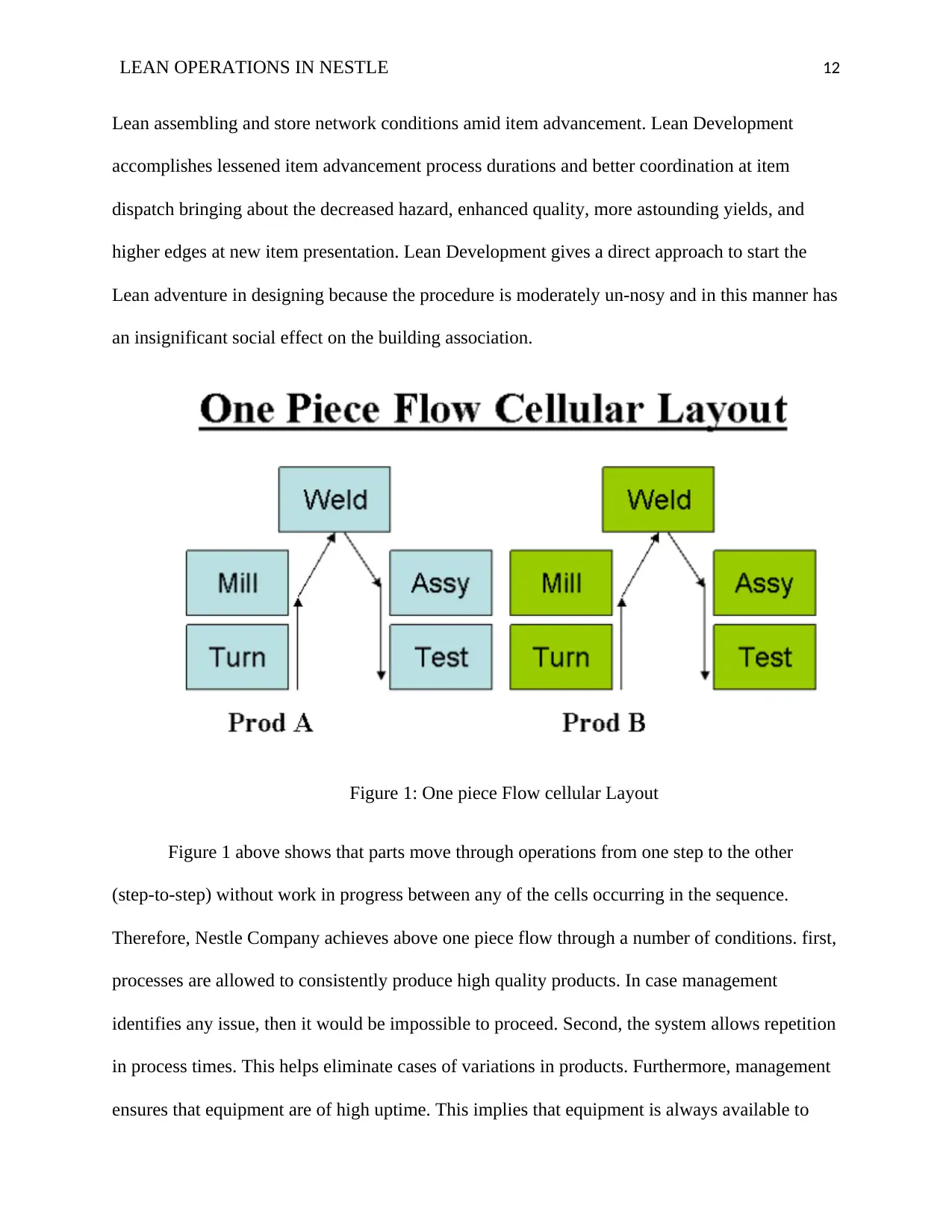
Figure 1: One piece Flow cellular Layout
Figure 1 above shows that parts move through operations from one step to the other
(step-to-step) without work in progress between any of the cells occurring in the sequence.
Therefore, Nestle Company achieves above one piece flow through a number of conditions. first,
processes are allowed to consistently produce high quality products. In case management
identifies any issue, then it would be impossible to proceed. Second, the system allows repetition
in process times. This helps eliminate cases of variations in products. Furthermore, management
ensures that equipment are of high uptime. This implies that equipment is always available to
Lean assembling and store network conditions amid item advancement. Lean Development
accomplishes lessened item advancement process durations and better coordination at item
dispatch bringing about the decreased hazard, enhanced quality, more astounding yields, and
higher edges at new item presentation. Lean Development gives a direct approach to start the
Lean adventure in designing because the procedure is moderately un-nosy and in this manner has
an insignificant social effect on the building association.
Figure 1: One piece Flow cellular Layout
Figure 1 above shows that parts move through operations from one step to the other
(step-to-step) without work in progress between any of the cells occurring in the sequence.
Therefore, Nestle Company achieves above one piece flow through a number of conditions. first,
processes are allowed to consistently produce high quality products. In case management
identifies any issue, then it would be impossible to proceed. Second, the system allows repetition
in process times. This helps eliminate cases of variations in products. Furthermore, management
ensures that equipment are of high uptime. This implies that equipment is always available to
⊘ This is a preview!⊘
Do you want full access?
Subscribe today to unlock all pages.
Trusted by 1+ million students worldwide

1 out of 18


Related Documents


Your All-in-One AI-Powered Toolkit for Academic Success.
+13062052269
info@desklib.com
Available 24*7 on WhatsApp / Email
![[object Object]](/_next/static/media/star-bottom.7253800d.svg)
Unlock your academic potential
Copyright © 2020–2026 A2Z Services. All Rights Reserved. Developed and managed by ZUCOL.