Comprehensive Report on Lab-on-a-Chip Technology & Nanotechnology
VerifiedAdded on 2023/06/04
|6
|2055
|187
Report
AI Summary
This report provides a detailed overview of lab-on-a-chip (LOC) technology, which miniaturizes laboratory analysis and chemical synthesis processes into portable devices. It discusses the benefits of LOC systems, including high parallelization, cost efficiency, and high analytic speed. The report covers various technological aspects, such as microfluidics and nanofluidics, and highlights the use of nanotechnology in improving LOC systems, particularly in medical diagnostics and food safety. It also addresses the challenges in designing and manufacturing LOC devices and emphasizes the role of molecular biology and microfluidics in future advancements. The report concludes that LOC technology will become increasingly essential in the chemical and medical industries, offering rapid and efficient diagnostic solutions.
Lab On A Chip Technology 1
LAB-ON-A-CHIP TECHNOLOGY
By (Name)
Course
Professor’s name
University name
City, State
Date of submission
LAB-ON-A-CHIP TECHNOLOGY
By (Name)
Course
Professor’s name
University name
City, State
Date of submission

Paraphrase This Document
Need a fresh take? Get an instant paraphrase of this document with our AI Paraphraser
Lab On A Chip Technology 2
Introduction
Lab-on-chip (LOC) discusses the technologies that enable processes which
usually entail laboratory analysis and synthesis of chemicals. The operations occur on a
scale that is minimized within a handheld or portable device (Christodoulides, et al.,
2007). LOC refers to the diminishment of analytical schemes that incorporate various
laboratory procedures such as DNA sequencing and PCR progressions into a separate
chip at a minimized scale (Christodoulides, et al., 2007). Downscaling the practice units
offers the LOC systems with several benefits such as high parallelization, cost
efficiency, ergonomy, low volume components, high expandability, high sensitivity and
high analytic speed (Didar, and Tabrizian 2010).
Lab-on-a-chip device
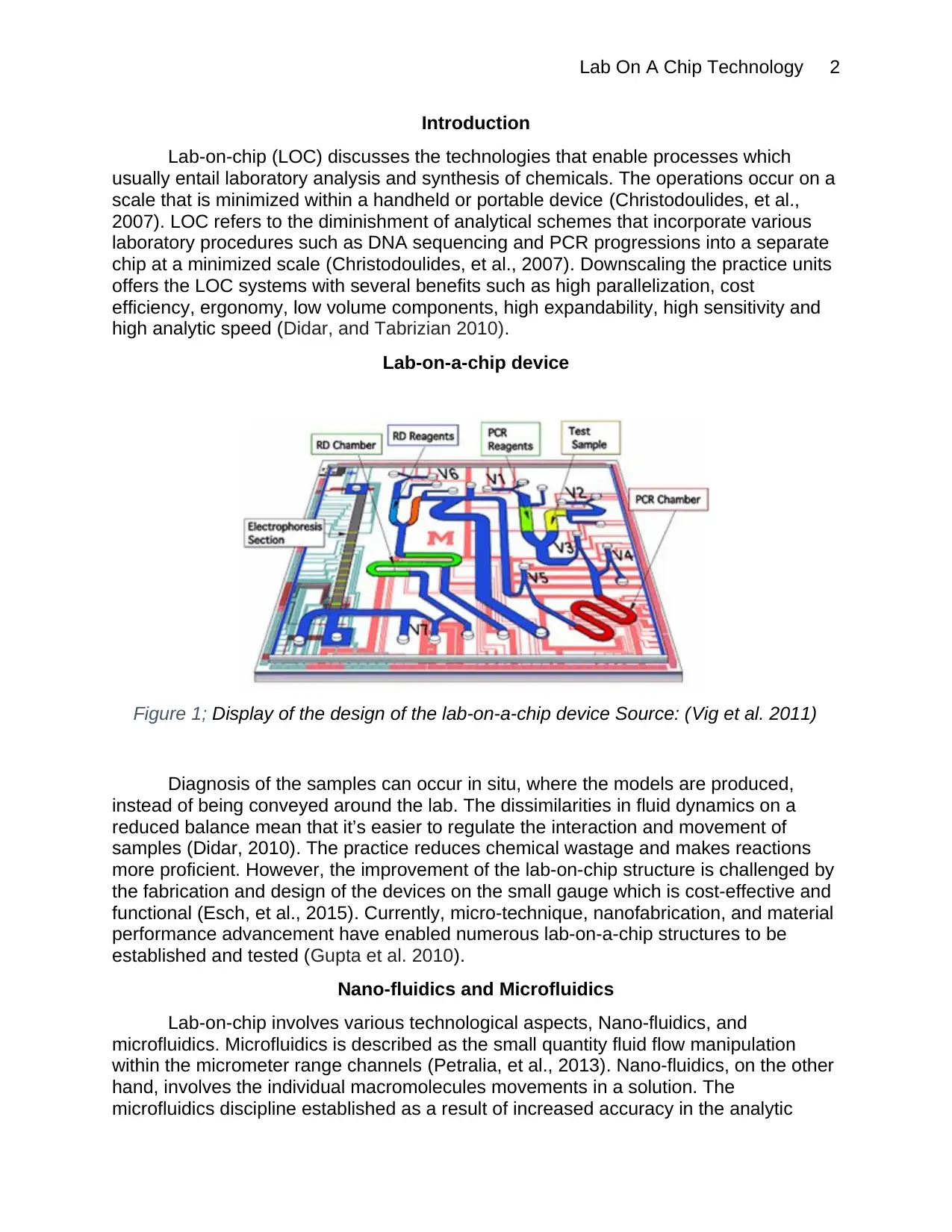
Figure 1; Display of the design of the lab-on-a-chip device Source: (Vig et al. 2011)
Diagnosis of the samples can occur in situ, where the models are produced,
instead of being conveyed around the lab. The dissimilarities in fluid dynamics on a
reduced balance mean that it’s easier to regulate the interaction and movement of
samples (Didar, 2010). The practice reduces chemical wastage and makes reactions
more proficient. However, the improvement of the lab-on-chip structure is challenged by
the fabrication and design of the devices on the small gauge which is cost-effective and
functional (Esch, et al., 2015). Currently, micro-technique, nanofabrication, and material
performance advancement have enabled numerous lab-on-a-chip structures to be
established and tested (Gupta et al. 2010).
Nano-fluidics and Microfluidics
Lab-on-chip involves various technological aspects, Nano-fluidics, and
microfluidics. Microfluidics is described as the small quantity fluid flow manipulation
within the micrometer range channels (Petralia, et al., 2013). Nano-fluidics, on the other
hand, involves the individual macromolecules movements in a solution. The
microfluidics discipline established as a result of increased accuracy in the analytic
Introduction
Lab-on-chip (LOC) discusses the technologies that enable processes which
usually entail laboratory analysis and synthesis of chemicals. The operations occur on a
scale that is minimized within a handheld or portable device (Christodoulides, et al.,
2007). LOC refers to the diminishment of analytical schemes that incorporate various
laboratory procedures such as DNA sequencing and PCR progressions into a separate
chip at a minimized scale (Christodoulides, et al., 2007). Downscaling the practice units
offers the LOC systems with several benefits such as high parallelization, cost
efficiency, ergonomy, low volume components, high expandability, high sensitivity and
high analytic speed (Didar, and Tabrizian 2010).
Lab-on-a-chip device
Figure 1; Display of the design of the lab-on-a-chip device Source: (Vig et al. 2011)
Diagnosis of the samples can occur in situ, where the models are produced,
instead of being conveyed around the lab. The dissimilarities in fluid dynamics on a
reduced balance mean that it’s easier to regulate the interaction and movement of
samples (Didar, 2010). The practice reduces chemical wastage and makes reactions
more proficient. However, the improvement of the lab-on-chip structure is challenged by
the fabrication and design of the devices on the small gauge which is cost-effective and
functional (Esch, et al., 2015). Currently, micro-technique, nanofabrication, and material
performance advancement have enabled numerous lab-on-a-chip structures to be
established and tested (Gupta et al. 2010).
Nano-fluidics and Microfluidics
Lab-on-chip involves various technological aspects, Nano-fluidics, and
microfluidics. Microfluidics is described as the small quantity fluid flow manipulation
within the micrometer range channels (Petralia, et al., 2013). Nano-fluidics, on the other
hand, involves the individual macromolecules movements in a solution. The
microfluidics discipline established as a result of increased accuracy in the analytic
Lab On A Chip Technology 3
techniques like the capillary electrophoresis (CE) and high-performance liquid
chromatography (HPLC) (Petralia, et al., 2013). The diagnostic methodologies are
capable of obtaining correct results from a lesser size of the sample. As the abilities of
the methods progressed, they were tried and applied in the short process (Petralia et al.
2013).
Lab-on-chip with molecular biology
The commercialization and understanding of the microfluidics and Nano-fluidics
are essential in the improvement of available lab-on-chip devices. Some construction
techniques are accessible for the manufacture of Nano-fluidic equipment and making an
interface of the devices with the microfluidic structures (Mirasoli, et al., 2014). The
operation motivates the learning of Nano-fluidic instruments as models present in the
microfluidic systems, for instance, detection and analysis of DNA or the study of pre-
concentrate analytes (Vig et al. 2011). However, the use of an electric field through a
Nano-fluidic scheme forms areas of depleted and enriched ion concentration; the effect
is referred to as concentration polarization (CP) (Vig, et al., 2011). CP changes the
electric and conductivity field in the adjacent microchannels due to magnitude control
which then affects the sample transportation through the entire system. CP reduction
and augmentation zones are capable of propagation through the fused microchannel-
nanochannel equipment; this intensely affects the behavior of the whole system (Luka
et al. 2015).
The Use of Nanotechnology
Some enhancements in the Nanotechnological field have been essential in the
advancement of the lab-on-chip machinery. Particularly, lithography, which is applied in
the creation of the Nano-scale features on semiconductor and metal exteriors has been
modified to generate small, micro-scale valves, pumps and various appliances for
controlling the flow from the polydimethylsiloxane (PDMS) (Ríos, et al., 2012). PDMS is
a flexible and clear elastomer, which is suited for enabling visual assessments and
quick prototyping in the microfluidic systems. Nano-sensors are said to be essential
elements of several lab-on-chip systems (Petralia, et al., 2013). Sensors are established
by the use of nanomaterials such as the carbon nanotubes; the gears can detect limited
concentrations as low as a single molecule (Mirasoli et al. 2014). These appliances are
extremely valuable in permitting a significant degree of methodical flexibility in the
systems of lab-on-chip technologies without the buildup of the general dimension of the
structure (Mirasoli, et al., 2014).
Application of Nanotechnology in the Improvement of Lab-on-a-Chip
System
The present art state in the LOC technology offers a standard shift for the
medical diagnostics. In the cases of sending test samples to the outside labs for
investigation, the healthcare professionals can apply LOC appliances in testing the
patients at the point-of-care centers (Gupta, et al., 2010). This will result in a reduction
of the diagnostic period to the minute from days. The analytical speed is very significant
in the medical scenarios that are time-dependent like detecting a viral impurity in an
aged person who is immune-compromised or when locating a biohazard from an
techniques like the capillary electrophoresis (CE) and high-performance liquid
chromatography (HPLC) (Petralia, et al., 2013). The diagnostic methodologies are
capable of obtaining correct results from a lesser size of the sample. As the abilities of
the methods progressed, they were tried and applied in the short process (Petralia et al.
2013).
Lab-on-chip with molecular biology
The commercialization and understanding of the microfluidics and Nano-fluidics
are essential in the improvement of available lab-on-chip devices. Some construction
techniques are accessible for the manufacture of Nano-fluidic equipment and making an
interface of the devices with the microfluidic structures (Mirasoli, et al., 2014). The
operation motivates the learning of Nano-fluidic instruments as models present in the
microfluidic systems, for instance, detection and analysis of DNA or the study of pre-
concentrate analytes (Vig et al. 2011). However, the use of an electric field through a
Nano-fluidic scheme forms areas of depleted and enriched ion concentration; the effect
is referred to as concentration polarization (CP) (Vig, et al., 2011). CP changes the
electric and conductivity field in the adjacent microchannels due to magnitude control
which then affects the sample transportation through the entire system. CP reduction
and augmentation zones are capable of propagation through the fused microchannel-
nanochannel equipment; this intensely affects the behavior of the whole system (Luka
et al. 2015).
The Use of Nanotechnology
Some enhancements in the Nanotechnological field have been essential in the
advancement of the lab-on-chip machinery. Particularly, lithography, which is applied in
the creation of the Nano-scale features on semiconductor and metal exteriors has been
modified to generate small, micro-scale valves, pumps and various appliances for
controlling the flow from the polydimethylsiloxane (PDMS) (Ríos, et al., 2012). PDMS is
a flexible and clear elastomer, which is suited for enabling visual assessments and
quick prototyping in the microfluidic systems. Nano-sensors are said to be essential
elements of several lab-on-chip systems (Petralia, et al., 2013). Sensors are established
by the use of nanomaterials such as the carbon nanotubes; the gears can detect limited
concentrations as low as a single molecule (Mirasoli et al. 2014). These appliances are
extremely valuable in permitting a significant degree of methodical flexibility in the
systems of lab-on-chip technologies without the buildup of the general dimension of the
structure (Mirasoli, et al., 2014).
Application of Nanotechnology in the Improvement of Lab-on-a-Chip
System
The present art state in the LOC technology offers a standard shift for the
medical diagnostics. In the cases of sending test samples to the outside labs for
investigation, the healthcare professionals can apply LOC appliances in testing the
patients at the point-of-care centers (Gupta, et al., 2010). This will result in a reduction
of the diagnostic period to the minute from days. The analytical speed is very significant
in the medical scenarios that are time-dependent like detecting a viral impurity in an
aged person who is immune-compromised or when locating a biohazard from an
⊘ This is a preview!⊘
Do you want full access?
Subscribe today to unlock all pages.

Trusted by 1+ million students worldwide
Lab On A Chip Technology 4
exposed individual (Esch, et al., 2015). By contracting a modernized chemistry
workshop on a micro-sized LOC equipment, indicative examination in resource-poor or
remote locations is made possible. LOC has compelling advantages to the medical field,
however, designing and manufacturing the devices is difficult (Christodoulides et
al.2007). LOC appliances usually consist of a compound linkage of chambers, channels
and valves/pumps.
Bio-recognition agents that are physically/chemically attached to the instrument
detection area bind with the targeted analyte in the media under a motion to initiate an
optical/electoral signal transduction (Christodoulides, et al., 2007). These strategies for
LOC bio-detection have produced promising outcomes, including the application of
smaller sample and reagent volumes with high-throughput production resulting in quick
turnaround times (Didar, 2010). However, the present shortcomings to LOC expertise
comprise of the failure to perceive and enumerate low levels of concentration, multiplex
inability, and complex bio-functionalization or fabrication protocols which are expensive
and hard to replicate (Luka et al. 2015).
Lab-on-chip with cell biology
The incorporation of the Förster Resonance Energy Transfer (FRET) reduces the
microchip scheme complexity through eliminating the nanostructured separation
requirement, as well as eradicating the need for bio-detection regions immobilized in the
system (Didar, 2010). Enzyme-substrate association, DNA hybridization, and antibody-
antigen linkage occur rapidly in the solution (Luka, et al., 2015). The free/bound sample,
slow, and diffusion-restricted kinetics washing and separating steps linked to the
dissimilar bio-sensing are eliminated (Ríos, Zougagh, and Avila 2012). Notably, the
application of the luminous semiconducting Quantum Dots (QDs) holds the essentiality
to the FRET-based, opt fluidic bio-detection outline that has the capability of the
sensitive, multiplexed bio-diagnostic analysis (Ríos, et al., 2012). The Nano-crystalline
matter possesses assets that are suited for ocular bio-sensing comprising of the size-
tunable photoluminescence (PL), enhanced sensitivity/avidity bio-molecular probes;
high quantum produces and opposition to photo-bleaching. Coupling QDs with the
glowing dye-labeled biological analyses leads to FRET radars that are superior to the
standard sensors in various ways (Gupta, et al., 2010). The QD-illumination dye bio-
conjugates detect an extensive variety of biomarker substances via the decrease and
increase in the FRET efficiencies (Christodoulides, et al., 2007).
Applications of Nanotechnology
Life science and Medical applications that have been explored include
sequencing of RNA or DNA, protein crystallization for the screening of conditions
(Mirasoli, et al., 2014). The Rapid, bespoke productivity of radioactively-characterized
substances for positron emission tomography (PET) techniques are also explored. In
food safety, pathogen detection is a significant aspect (Didar, 2010). A variety of
identification schemes have been created to attain accurate, fast and sensitive results.
The Nano-material have been essential in the monitoring of chemical and biological
contaminants present in food (Mirasoli, et al., 2014). Their unique electrical and optical
exposed individual (Esch, et al., 2015). By contracting a modernized chemistry
workshop on a micro-sized LOC equipment, indicative examination in resource-poor or
remote locations is made possible. LOC has compelling advantages to the medical field,
however, designing and manufacturing the devices is difficult (Christodoulides et
al.2007). LOC appliances usually consist of a compound linkage of chambers, channels
and valves/pumps.
Bio-recognition agents that are physically/chemically attached to the instrument
detection area bind with the targeted analyte in the media under a motion to initiate an
optical/electoral signal transduction (Christodoulides, et al., 2007). These strategies for
LOC bio-detection have produced promising outcomes, including the application of
smaller sample and reagent volumes with high-throughput production resulting in quick
turnaround times (Didar, 2010). However, the present shortcomings to LOC expertise
comprise of the failure to perceive and enumerate low levels of concentration, multiplex
inability, and complex bio-functionalization or fabrication protocols which are expensive
and hard to replicate (Luka et al. 2015).
Lab-on-chip with cell biology
The incorporation of the Förster Resonance Energy Transfer (FRET) reduces the
microchip scheme complexity through eliminating the nanostructured separation
requirement, as well as eradicating the need for bio-detection regions immobilized in the
system (Didar, 2010). Enzyme-substrate association, DNA hybridization, and antibody-
antigen linkage occur rapidly in the solution (Luka, et al., 2015). The free/bound sample,
slow, and diffusion-restricted kinetics washing and separating steps linked to the
dissimilar bio-sensing are eliminated (Ríos, Zougagh, and Avila 2012). Notably, the
application of the luminous semiconducting Quantum Dots (QDs) holds the essentiality
to the FRET-based, opt fluidic bio-detection outline that has the capability of the
sensitive, multiplexed bio-diagnostic analysis (Ríos, et al., 2012). The Nano-crystalline
matter possesses assets that are suited for ocular bio-sensing comprising of the size-
tunable photoluminescence (PL), enhanced sensitivity/avidity bio-molecular probes;
high quantum produces and opposition to photo-bleaching. Coupling QDs with the
glowing dye-labeled biological analyses leads to FRET radars that are superior to the
standard sensors in various ways (Gupta, et al., 2010). The QD-illumination dye bio-
conjugates detect an extensive variety of biomarker substances via the decrease and
increase in the FRET efficiencies (Christodoulides, et al., 2007).
Applications of Nanotechnology
Life science and Medical applications that have been explored include
sequencing of RNA or DNA, protein crystallization for the screening of conditions
(Mirasoli, et al., 2014). The Rapid, bespoke productivity of radioactively-characterized
substances for positron emission tomography (PET) techniques are also explored. In
food safety, pathogen detection is a significant aspect (Didar, 2010). A variety of
identification schemes have been created to attain accurate, fast and sensitive results.
The Nano-material have been essential in the monitoring of chemical and biological
contaminants present in food (Mirasoli, et al., 2014). Their unique electrical and optical
Paraphrase This Document
Need a fresh take? Get an instant paraphrase of this document with our AI Paraphraser
Lab On A Chip Technology 5
possessions highly relay on the local surroundings thus making the Nano-materials
useful for the development of sensors (Didar, and Tabrizian 2010
Conclusion
Future progressions in lab-on-a-chip knowledge always rely on molecular biology
and microfluidics. Nanotechnology plays a vital role in combining the fields as
technology advances. In spite of the difficulties associated with the commercialization
and of this technology, sustainable examples of the appliances have begun to cover the
present market. Therefore, in a few years’ time, lab-in-chip will increasingly become
essential in various industrial fields particularly the chemical and medical companies
(Vig et al. 2011).
possessions highly relay on the local surroundings thus making the Nano-materials
useful for the development of sensors (Didar, and Tabrizian 2010
Conclusion
Future progressions in lab-on-a-chip knowledge always rely on molecular biology
and microfluidics. Nanotechnology plays a vital role in combining the fields as
technology advances. In spite of the difficulties associated with the commercialization
and of this technology, sustainable examples of the appliances have begun to cover the
present market. Therefore, in a few years’ time, lab-in-chip will increasingly become
essential in various industrial fields particularly the chemical and medical companies
(Vig et al. 2011).
Lab On A Chip Technology 6
References
Christodoulides, N., Floriano, P.N., Miller, C.S., Ebersole, J.L., Mohanty, S., Dharshan,
P., Griffin, M., Lennart, A., Ballard, K.L.M., KING, C.P. and Langub, M.C., 2007. Lab‐on‐
a‐chip methods for point‐of‐care measurements of salivary biomarkers of
periodontitis. Annals of the New York Academy of Sciences, 1098(1), pp.411-428.
Didar, T.F., and Tabrizian, M., 2010. Adhesion based detection, sorting and enrichment
of cells in microfluidic Lab-on-Chip devices. Lab on a Chip, 10(22), pp.3043-3053.
Gupta, K., Kim, D.H., Ellison, D., Smith, C., Kundu, A., Tuan, J., Suh, K.Y. and
Levchenko, A., 2010. Lab-on-a-chip devices as an emerging platform for stem cell
biology. Lab on a Chip, 10(16), pp.2019-2031.
Esch, E.W., Bahinski, A. and Huh, D., 2015. Organs-on-chips at the frontiers of drug
discovery. Nature reviews Drug discovery, 14(4), p.248.
Mirasoli, M., Guardigli, M., Michelini, E. and Roda, A., 2014. Recent advancements in
chemical luminescence-based lab-on-chip and microfluidic platforms for
bioanalysis. Journal of pharmaceutical and biomedical analysis, 87, pp.36-52.
Luka, G., Ahmadi, A., Najjaran, H., Alocilja, E., DeRosa, M., Wolthers, K., Malki, A.,
Aziz, H., Althani, A. and Hoorfar, M., 2015. Microfluidics integrated biosensors: a
leading technology towards lab-on-a-chip and sensing applications. Sensors, 15(12),
pp.30011-30031.
Petralia, S., Verardo, R., Klaric, E., Cavallaro, S., Alessi, E. and Schneider, C., 2013. In-
Check system: A highly integrated silicon Lab-on-Chip for sample preparation, PCR
amplification and microarray detection of nucleic acids directly from biological
samples. Sensors and Actuators B: Chemical, 187, pp.99-105.
Ríos, Á., Zougagh, M. and Avila, M., 2012. Miniaturization through lab-on-a-chip: Utopia
or reality for routine laboratories? A review. Analytica Chimica Acta, 740, pp.1-11.
Vig, A.L., Mäkelä, T., Majander, P., Lambertini, V., Ahopelto, J. and Kristensen, A.,
2011. Roll-to-roll fabricated lab-on-a-chip devices. Journal of Micromechanics and
Microengineering, 21(3), p.035006.
References
Christodoulides, N., Floriano, P.N., Miller, C.S., Ebersole, J.L., Mohanty, S., Dharshan,
P., Griffin, M., Lennart, A., Ballard, K.L.M., KING, C.P. and Langub, M.C., 2007. Lab‐on‐
a‐chip methods for point‐of‐care measurements of salivary biomarkers of
periodontitis. Annals of the New York Academy of Sciences, 1098(1), pp.411-428.
Didar, T.F., and Tabrizian, M., 2010. Adhesion based detection, sorting and enrichment
of cells in microfluidic Lab-on-Chip devices. Lab on a Chip, 10(22), pp.3043-3053.
Gupta, K., Kim, D.H., Ellison, D., Smith, C., Kundu, A., Tuan, J., Suh, K.Y. and
Levchenko, A., 2010. Lab-on-a-chip devices as an emerging platform for stem cell
biology. Lab on a Chip, 10(16), pp.2019-2031.
Esch, E.W., Bahinski, A. and Huh, D., 2015. Organs-on-chips at the frontiers of drug
discovery. Nature reviews Drug discovery, 14(4), p.248.
Mirasoli, M., Guardigli, M., Michelini, E. and Roda, A., 2014. Recent advancements in
chemical luminescence-based lab-on-chip and microfluidic platforms for
bioanalysis. Journal of pharmaceutical and biomedical analysis, 87, pp.36-52.
Luka, G., Ahmadi, A., Najjaran, H., Alocilja, E., DeRosa, M., Wolthers, K., Malki, A.,
Aziz, H., Althani, A. and Hoorfar, M., 2015. Microfluidics integrated biosensors: a
leading technology towards lab-on-a-chip and sensing applications. Sensors, 15(12),
pp.30011-30031.
Petralia, S., Verardo, R., Klaric, E., Cavallaro, S., Alessi, E. and Schneider, C., 2013. In-
Check system: A highly integrated silicon Lab-on-Chip for sample preparation, PCR
amplification and microarray detection of nucleic acids directly from biological
samples. Sensors and Actuators B: Chemical, 187, pp.99-105.
Ríos, Á., Zougagh, M. and Avila, M., 2012. Miniaturization through lab-on-a-chip: Utopia
or reality for routine laboratories? A review. Analytica Chimica Acta, 740, pp.1-11.
Vig, A.L., Mäkelä, T., Majander, P., Lambertini, V., Ahopelto, J. and Kristensen, A.,
2011. Roll-to-roll fabricated lab-on-a-chip devices. Journal of Micromechanics and
Microengineering, 21(3), p.035006.
⊘ This is a preview!⊘
Do you want full access?
Subscribe today to unlock all pages.
Trusted by 1+ million students worldwide

1 out of 6


Your All-in-One AI-Powered Toolkit for Academic Success.
+13062052269
info@desklib.com
Available 24*7 on WhatsApp / Email
![[object Object]](/_next/static/media/star-bottom.7253800d.svg)
Unlock your academic potential
Copyright © 2020–2026 A2Z Services. All Rights Reserved. Developed and managed by ZUCOL.