Design, Operation, and Maintenance of LEV Systems for Hazardous Agents

Verified

Added on  2023/05/30

|25
|764
|370
Report
AI Summary
This report provides a comprehensive overview of local exhaust ventilation (LEV) systems, crucial for controlling hazardous agents in various environments. The report delves into the core principles of ventilation systems, differentiating between general/dilution and local ventilation approaches, with a strong emphasis on the advantages and applications of LEV. It outlines the key design considerations for effective LEV systems, including the characteristics of contaminants, design principles of hoods, and the impact of enclosure design on capture velocity. The report also examines typical sources of contaminants and common problems associated with LEV systems. Furthermore, it highlights the importance of periodic inspection and maintenance, providing guidance and referencing relevant standards and manuals, such as those from ACGIH. The document concludes by summarizing key points influencing LEV performance and providing a selection of recommended designs, making it a valuable resource for anyone involved in designing, operating, or maintaining LEV systems.
Document Page

LOCAL EXHAUST
VENTILATION (LEV)
SYSTEMS
tabler-icon-diamond-filled.svg

Paraphrase This Document

Need a fresh take? Get an instant paraphrase of this document with our AI Paraphraser
Document Page
Outline
Ventilation systems approaches
Main features
Proper design considerations for local
ventilation
Maintenance and inspection
Document Page
Main types of Ventilation
General/Dilution
o Control of heat and/or contaminants removal
o Also called dilution ventilation
o Used in controlling contaminants only in cases local
exhaust cant work
o Uneconomical and ineffective
Local ventilation
o Traps contaminants at source
o Is a preferred control method because:
o more economical
o more effective
Document Page
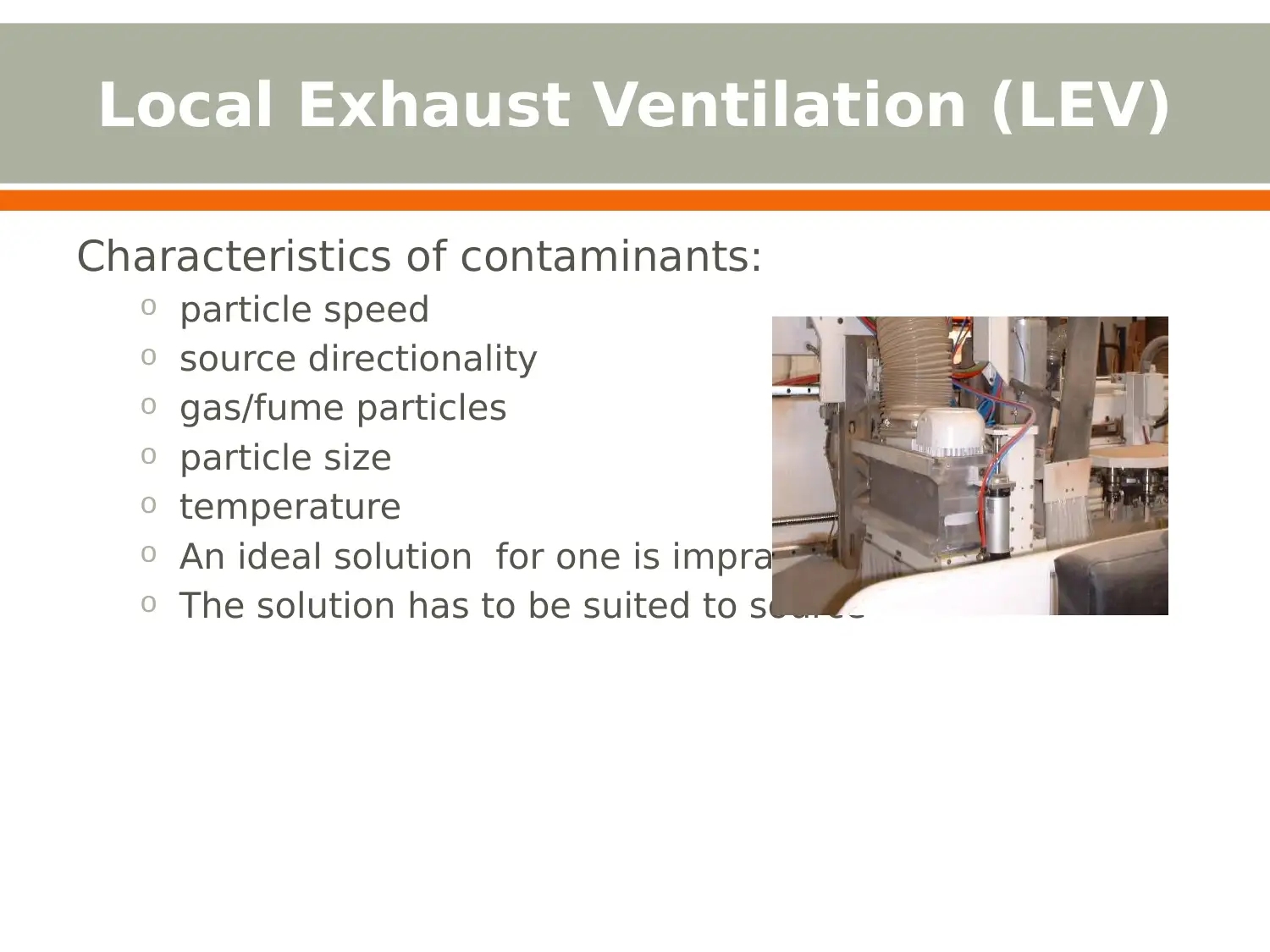
Local Exhaust Ventilation (LEV)
Characteristics of contaminants:
o particle speed
o source directionality
o gas/fume particles
o particle size
o temperature
o An ideal solution for one is impractical in another
o The solution has to be suited to source
tabler-icon-diamond-filled.svg

Paraphrase This Document

Need a fresh take? Get an instant paraphrase of this document with our AI Paraphraser
Document Page
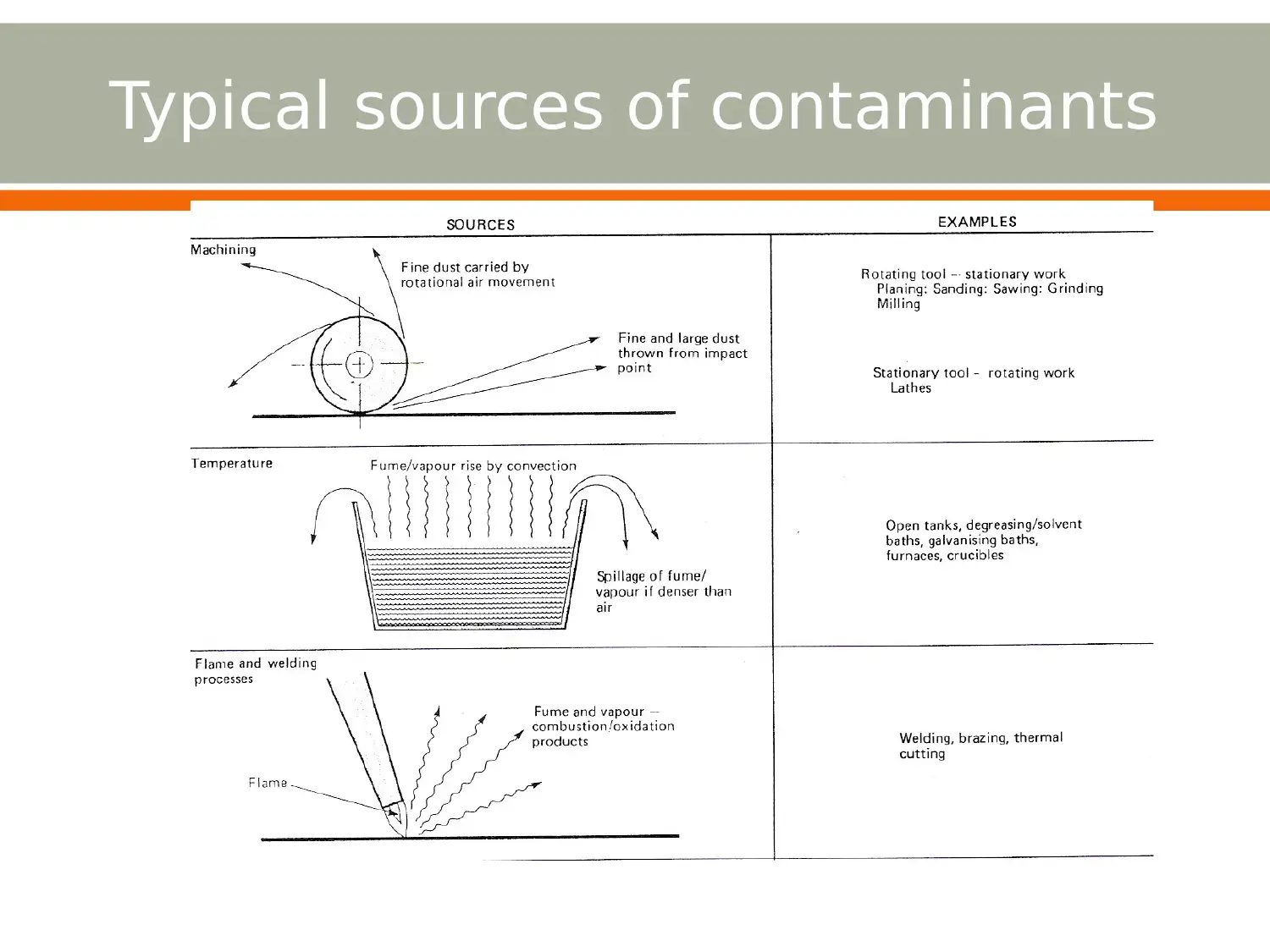
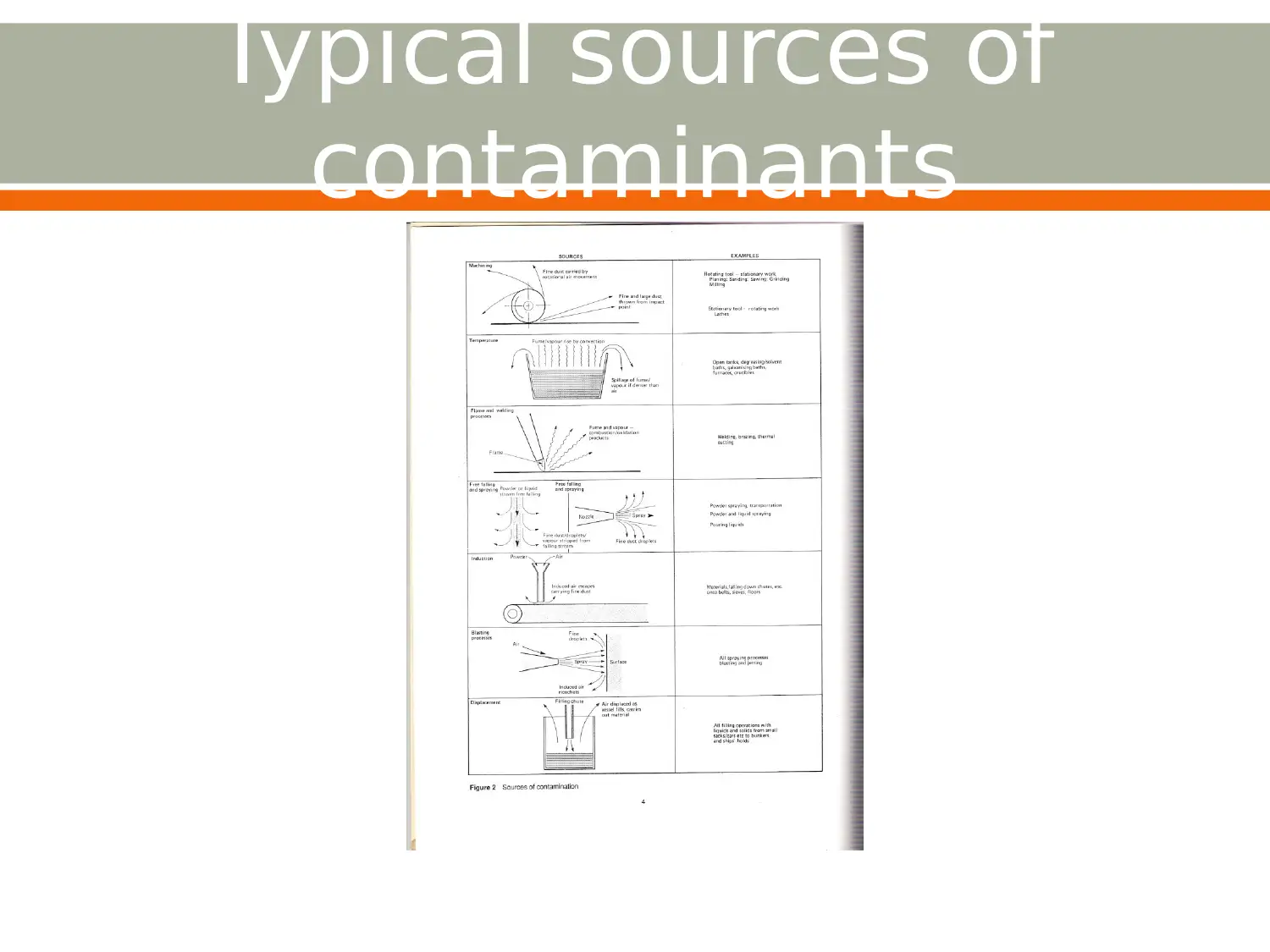
Typical sources of contaminants
Document Page
Typical sources of
contaminants
Document Page
LEV: Design Principles of Hood
Key parameters influencing effective
operation
o Design of openings
o Distance for contaminant source
o Design of enclosure
tabler-icon-diamond-filled.svg

Paraphrase This Document

Need a fresh take? Get an instant paraphrase of this document with our AI Paraphraser
Document Page
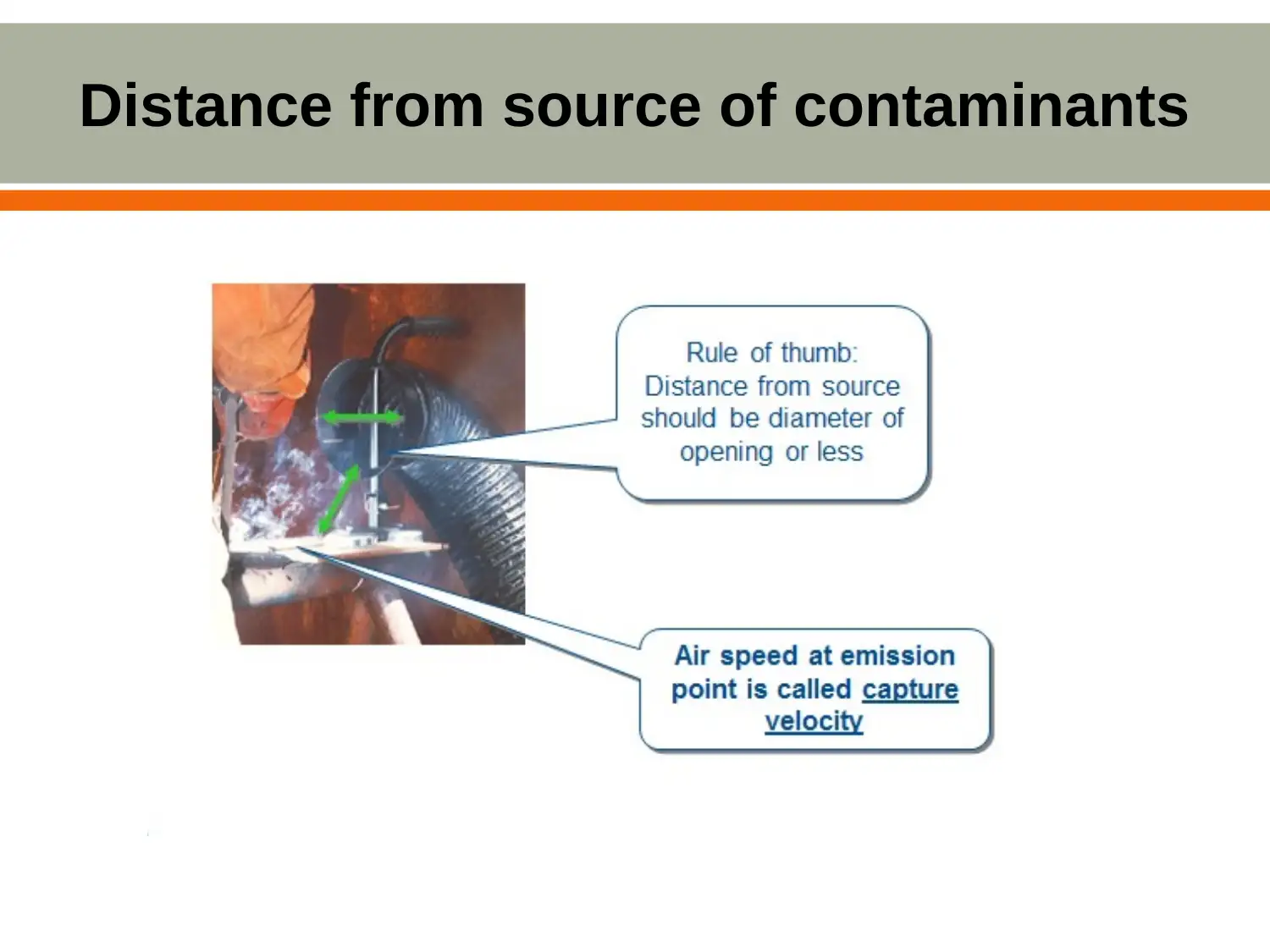
Distance from source of contaminants
Document Page
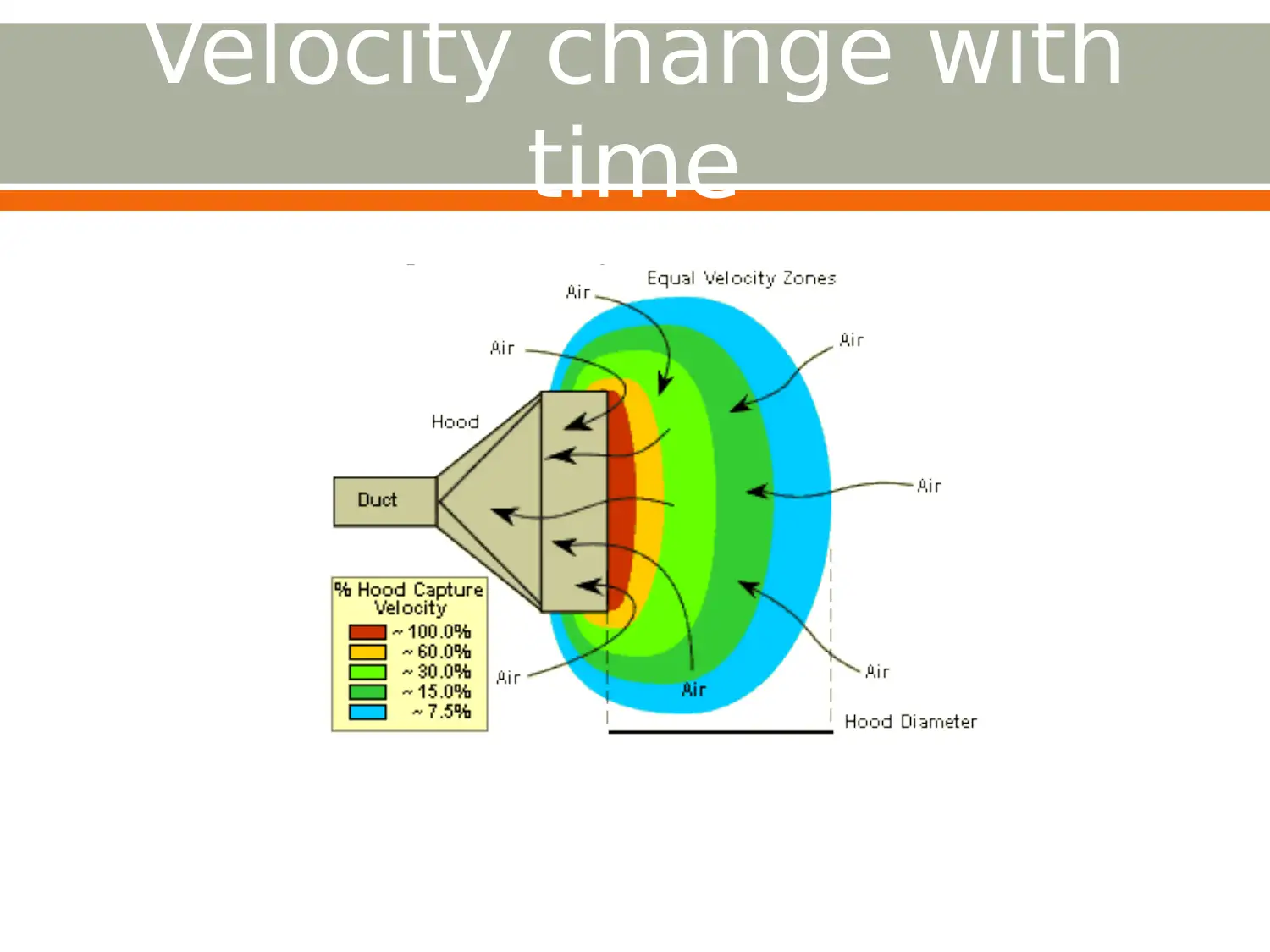
Velocity change with
time
Document Page
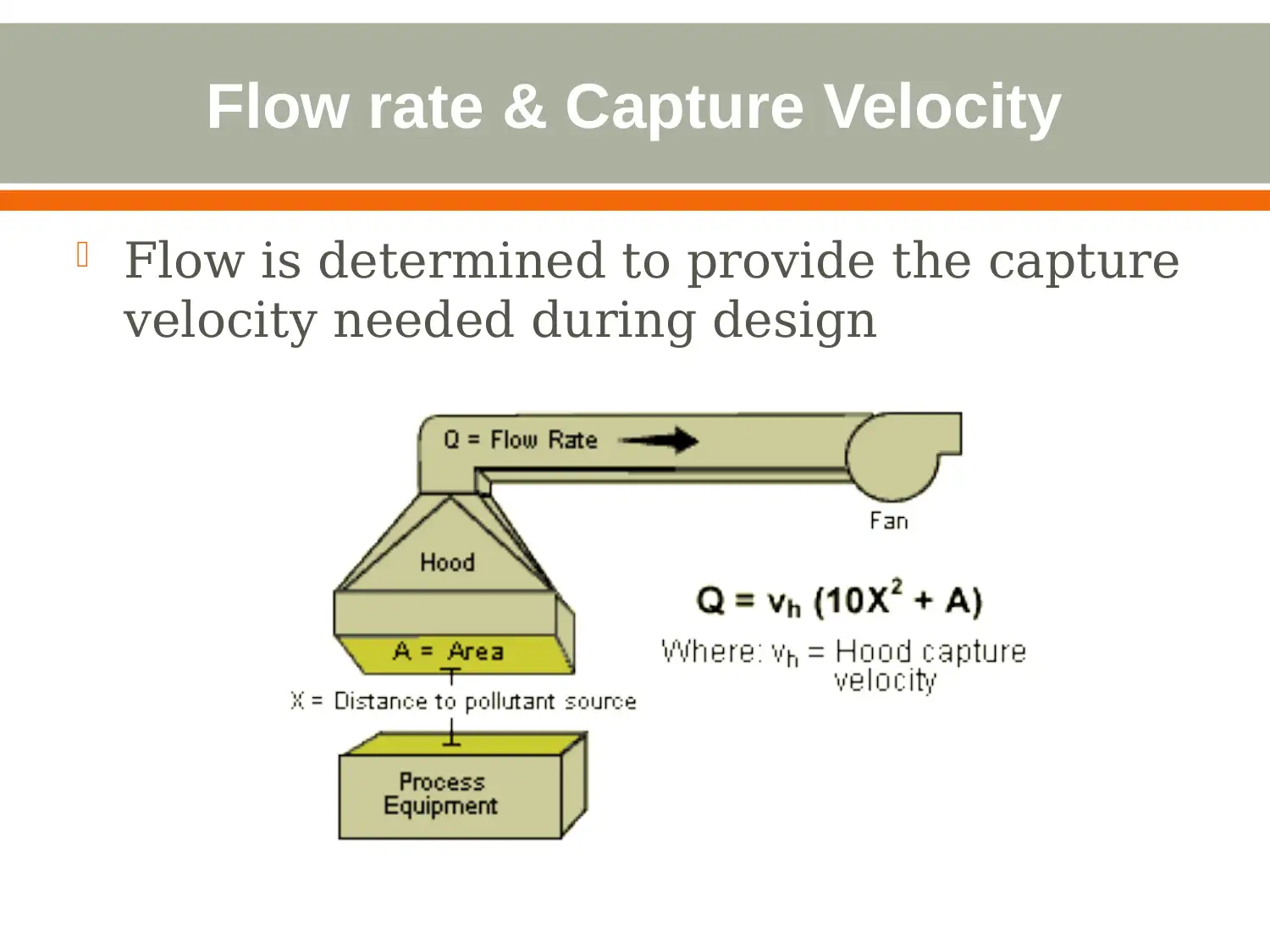
Flow rate & Capture Velocity
Flow is determined to provide the capture
velocity needed during design
tabler-icon-diamond-filled.svg

Paraphrase This Document

Need a fresh take? Get an instant paraphrase of this document with our AI Paraphraser
Document Page
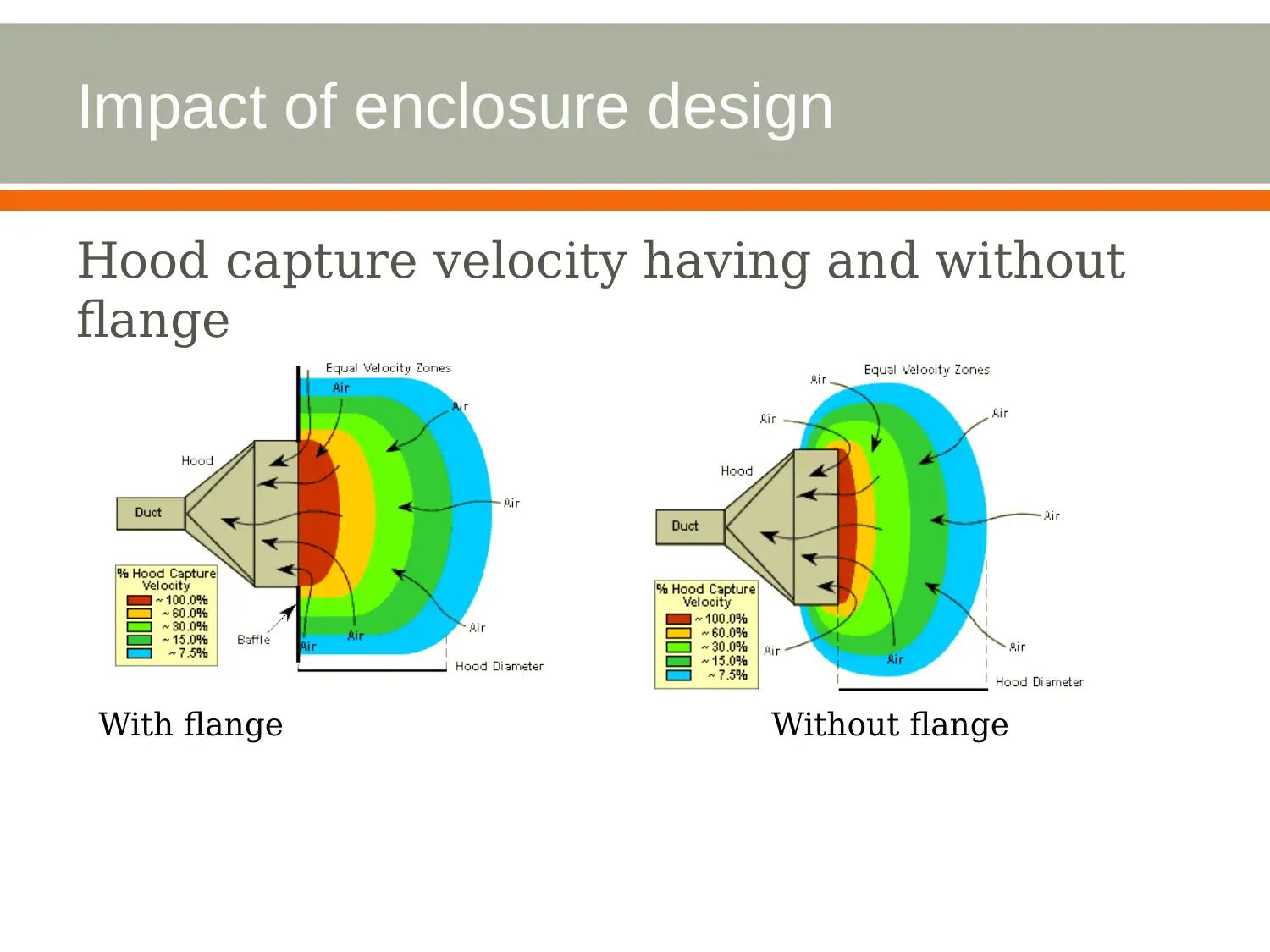
Impact of enclosure design
Hood capture velocity having and without
flange
With flange Without flange
Document Page
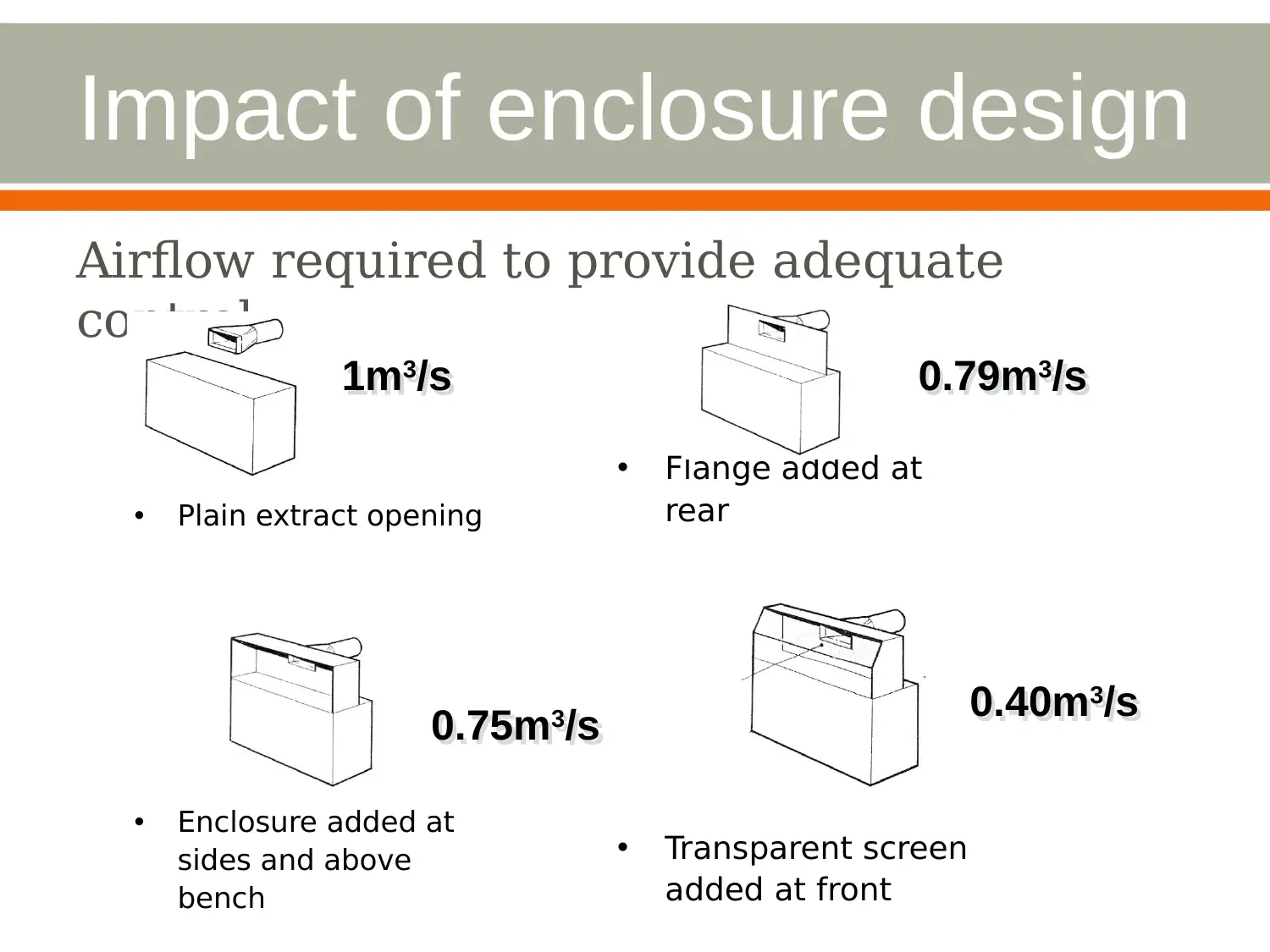
Impact of enclosure design
Airflow required to provide adequate
control
Plain extract opening
Enclosure added at
sides and above
bench
Flange added at
rear
Transparent screen
added at front
1m3/s
0.40m3/s
0.79m3/s
0.75m3/s
chevron_up_icon
1 out of 25
circle_padding
hide_on_mobile
zoom_out_icon
[object Object]