The Economic and Social Effects of Low Birth Rates in the US
VerifiedAdded on 2022/10/13
|12
|2350
|13
Report
AI Summary
This report provides a comprehensive analysis of the declining birth rates in the United States, examining the historical context, causes, and far-reaching impacts on the nation's population and economy. The study begins by defining birth rates and highlighting the growing concern over their decline, citing lifestyle choices, economic factors, and infertility as primary drivers. It presents statistical data, including figures illustrating fertility rates and state-by-state comparisons, emphasizing the severity of the issue. The report then delves into the economic consequences, detailing how low birth rates can hinder innovation, impact productivity, and strain social security systems. Furthermore, the report explores potential remedies, advocating for government-sponsored health and social care programs, educational initiatives, and support for fertility treatments, including research on infertility. It also suggests the consideration of immigration policies and financial incentives to encourage larger families. The report concludes by emphasizing the need for regulated policies to address this pressing issue and ensure balanced outcomes, acknowledging the significant challenges low birth rates pose to the United States' prosperity and economic growth.

Running head: LOW BIRTH RATES IN THE UNITED STATES
Low Birth Rates in the United States
Name of the Student:
Name of the University:
Author Note:
Low Birth Rates in the United States
Name of the Student:
Name of the University:
Author Note:

Paraphrase This Document
Need a fresh take? Get an instant paraphrase of this document with our AI Paraphraser

1LOW BIRTH RATES IN THE UNITED STATES
Executive Summary:
The declining of birth rates is posing as one of the most pressing problems in the United
States. There are multitudes of causes that are fuelling and powering and this issue. Not only
are there economic repercussions but these consequences spread throughout all levels of the
society. A lot of research is being done to fully analyze and examine the extent of the
problem. Nonetheless, it cannot be denied that the declination of birth rates is a trouble that
has not been properly and effectively evaded yet. However, with proper precaution and
implementation of certain plans and programs, this issue can be reduced and even eliminated
to a great extent. The main aim of this discussion is to analyze the impacts of the
continuously decreasing birth rate. Additionally, the remedies of this acute issue is also
thoroughly analyzed.
Executive Summary:
The declining of birth rates is posing as one of the most pressing problems in the United
States. There are multitudes of causes that are fuelling and powering and this issue. Not only
are there economic repercussions but these consequences spread throughout all levels of the
society. A lot of research is being done to fully analyze and examine the extent of the
problem. Nonetheless, it cannot be denied that the declination of birth rates is a trouble that
has not been properly and effectively evaded yet. However, with proper precaution and
implementation of certain plans and programs, this issue can be reduced and even eliminated
to a great extent. The main aim of this discussion is to analyze the impacts of the
continuously decreasing birth rate. Additionally, the remedies of this acute issue is also
thoroughly analyzed.

2LOW BIRTH RATES IN THE UNITED STATES
Table of Contents
Introduction................................................................................................................................3
Low Birth Rates.........................................................................................................................3
Impact of Low Birth Rates.........................................................................................................7
Remedy for Low Birth Rates.....................................................................................................8
Conclusion..................................................................................................................................9
References................................................................................................................................10
Table of Contents
Introduction................................................................................................................................3
Low Birth Rates.........................................................................................................................3
Impact of Low Birth Rates.........................................................................................................7
Remedy for Low Birth Rates.....................................................................................................8
Conclusion..................................................................................................................................9
References................................................................................................................................10
⊘ This is a preview!⊘
Do you want full access?
Subscribe today to unlock all pages.

Trusted by 1+ million students worldwide
3LOW BIRTH RATES IN THE UNITED STATES
Introduction
Birth rate is identified as the total number of births per every thousand individuals in a
given population. There are multitudes of methods utilized in order to accurately calculate
birth rates. However, the decline of birth rates are a growing concern for countries all around
the world (Maheshwari, McLernon & Bhattacharya, 2015). Even though there was previously
a growing concern regarding the rapidly increasing population, now this has been replaced
with the speedily declining birth rates. There are multitudes of reasons for this swiftly
increasing problem. Many are concerned that if this decline continues then there will be
threatening consequences. It is identified that the national population will be severely
influenced and impacted if the problem persists (Coale, 2017). These issues pervade and
impact every part of the society. The focal aim of this discussion is to analyze the various
reasons for the rapidly declining birth rate. Additionally, the remedies for this swiftly
spreading problem will also be examined.
Low Birth Rates
In order to tackle the issue of low birth rates, the causes need to be identified and
minutely examined. After conducting extensive studies, it is deciphered that previously the
average age for women to bear children was 26.3. However, in the modern times, women are
choosing to have children at a later age. Thus, the average age of women giving birth in
the United States is 30.3 years (Whelpton, Campbell & Patterson, 2015). Additionally, from
various researches, it is concluded that the rate of birth in the United States has been in steady
decline (Schoen et al., 2015). Since the fertility rate of a country is a clear indicator of their
well-being, this steady decline is a cause for grave concern. Moreover, it is also interpreted
that the fertility rate in the United States is greatly below the level that is required to replace
the current population (Day, 2002).
Introduction
Birth rate is identified as the total number of births per every thousand individuals in a
given population. There are multitudes of methods utilized in order to accurately calculate
birth rates. However, the decline of birth rates are a growing concern for countries all around
the world (Maheshwari, McLernon & Bhattacharya, 2015). Even though there was previously
a growing concern regarding the rapidly increasing population, now this has been replaced
with the speedily declining birth rates. There are multitudes of reasons for this swiftly
increasing problem. Many are concerned that if this decline continues then there will be
threatening consequences. It is identified that the national population will be severely
influenced and impacted if the problem persists (Coale, 2017). These issues pervade and
impact every part of the society. The focal aim of this discussion is to analyze the various
reasons for the rapidly declining birth rate. Additionally, the remedies for this swiftly
spreading problem will also be examined.
Low Birth Rates
In order to tackle the issue of low birth rates, the causes need to be identified and
minutely examined. After conducting extensive studies, it is deciphered that previously the
average age for women to bear children was 26.3. However, in the modern times, women are
choosing to have children at a later age. Thus, the average age of women giving birth in
the United States is 30.3 years (Whelpton, Campbell & Patterson, 2015). Additionally, from
various researches, it is concluded that the rate of birth in the United States has been in steady
decline (Schoen et al., 2015). Since the fertility rate of a country is a clear indicator of their
well-being, this steady decline is a cause for grave concern. Moreover, it is also interpreted
that the fertility rate in the United States is greatly below the level that is required to replace
the current population (Day, 2002).
Paraphrase This Document
Need a fresh take? Get an instant paraphrase of this document with our AI Paraphraser
4LOW BIRTH RATES IN THE UNITED STATES
There are several reasons why there has been a rise in the declination of birth
rates. A major cause for the decrease of birth rates is lifestyle choices. The citizens of
developed countries are indulging in lifestyle choices associated with economic affluence.
Since children are often interlinked with an economic strain, many families are choosing
against having children (Gilman, 2018). The excessive cost of higher education is also a
demotivating factor for families. Another major reason for the lack of women’s ability to
conceive can also be attributed to the rise of obesity in the United States (Yang & Colditz,
2015). Moreover, the increase in male and female infertility, due to the adverse effects of
urbanization has also lead to the inability of families to have children. Socio-economic
factors have also led to the starkly declining fertility rates (Martin, Hamilton & Osterman,
2014). In addition, the lack of affordable housing is one of the primal reasons that women are
choosing to conceive at a later age. The undersupply of career opportunities and development
for women also fuel the reason for women choosing to start a family at a later age.
Nonetheless, these delays are leading to the decline of fertility levels in ageing women and
thus declining birth rates.
There are several reasons why there has been a rise in the declination of birth
rates. A major cause for the decrease of birth rates is lifestyle choices. The citizens of
developed countries are indulging in lifestyle choices associated with economic affluence.
Since children are often interlinked with an economic strain, many families are choosing
against having children (Gilman, 2018). The excessive cost of higher education is also a
demotivating factor for families. Another major reason for the lack of women’s ability to
conceive can also be attributed to the rise of obesity in the United States (Yang & Colditz,
2015). Moreover, the increase in male and female infertility, due to the adverse effects of
urbanization has also lead to the inability of families to have children. Socio-economic
factors have also led to the starkly declining fertility rates (Martin, Hamilton & Osterman,
2014). In addition, the lack of affordable housing is one of the primal reasons that women are
choosing to conceive at a later age. The undersupply of career opportunities and development
for women also fuel the reason for women choosing to start a family at a later age.
Nonetheless, these delays are leading to the decline of fertility levels in ageing women and
thus declining birth rates.
5LOW BIRTH RATES IN THE UNITED STATES
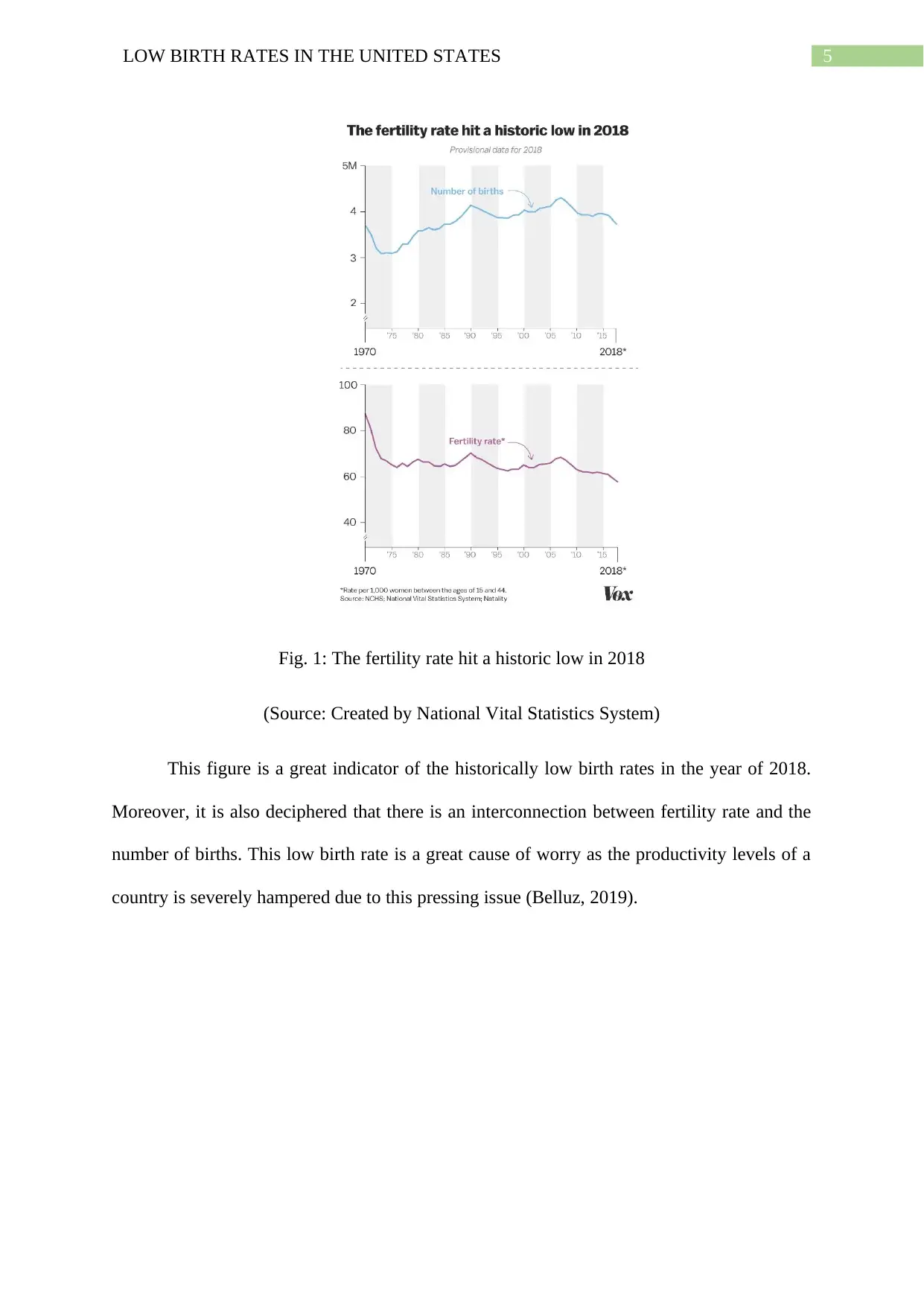
Fig. 1: The fertility rate hit a historic low in 2018
(Source: Created by National Vital Statistics System)
This figure is a great indicator of the historically low birth rates in the year of 2018.
Moreover, it is also deciphered that there is an interconnection between fertility rate and the
number of births. This low birth rate is a great cause of worry as the productivity levels of a
country is severely hampered due to this pressing issue (Belluz, 2019).
Fig. 1: The fertility rate hit a historic low in 2018
(Source: Created by National Vital Statistics System)
This figure is a great indicator of the historically low birth rates in the year of 2018.
Moreover, it is also deciphered that there is an interconnection between fertility rate and the
number of births. This low birth rate is a great cause of worry as the productivity levels of a
country is severely hampered due to this pressing issue (Belluz, 2019).
⊘ This is a preview!⊘
Do you want full access?
Subscribe today to unlock all pages.
Trusted by 1+ million students worldwide
6LOW BIRTH RATES IN THE UNITED STATES
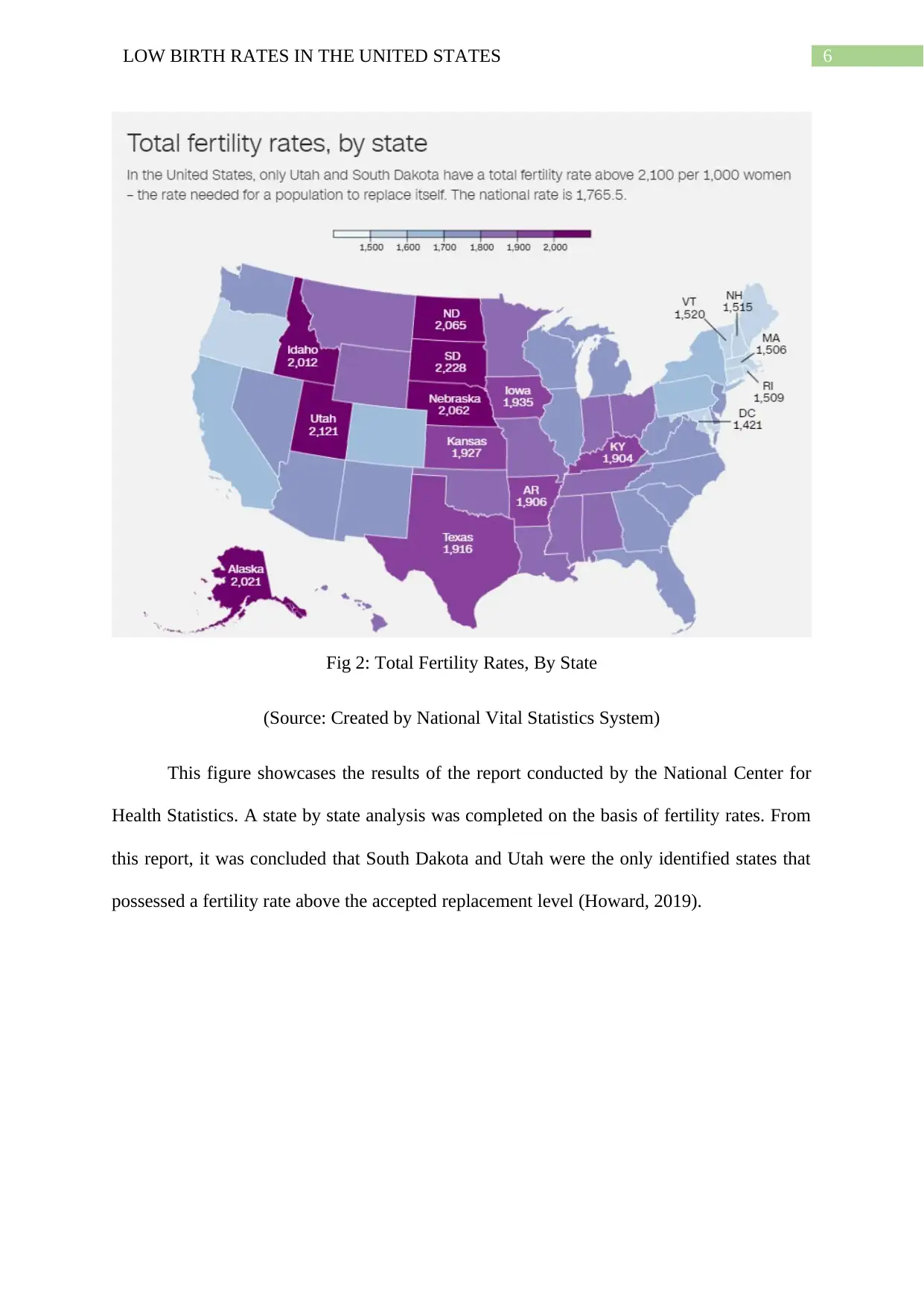
Fig 2: Total Fertility Rates, By State
(Source: Created by National Vital Statistics System)
This figure showcases the results of the report conducted by the National Center for
Health Statistics. A state by state analysis was completed on the basis of fertility rates. From
this report, it was concluded that South Dakota and Utah were the only identified states that
possessed a fertility rate above the accepted replacement level (Howard, 2019).
Fig 2: Total Fertility Rates, By State
(Source: Created by National Vital Statistics System)
This figure showcases the results of the report conducted by the National Center for
Health Statistics. A state by state analysis was completed on the basis of fertility rates. From
this report, it was concluded that South Dakota and Utah were the only identified states that
possessed a fertility rate above the accepted replacement level (Howard, 2019).
Paraphrase This Document
Need a fresh take? Get an instant paraphrase of this document with our AI Paraphraser
7LOW BIRTH RATES IN THE UNITED STATES
Impact of Low Birth Rates
The continuous decline of birth rates have severely affected and even hampered the
economy of the United States. A nation’s demography impacts its economic growth over a
prolonged period of time. Firstly, the greater the population of a nation is, there are greater
chances that new innovators will emerge. Since innovators contribute to the technological
development of a nation, low birth rates are also an indicator of the loss of technological
advances. Secondly, the population also has to face the hurdles of ageing (Marešová,
Mohelská & Kuča, 2015). The shrinking of citizens in the working age also hampers the
productivity and hence the economy directly. The non-availability of the working class, who
can directly contribute to the economy, directly affects the falling condition of the economy.
Since younger individuals prove to be more adaptable, this decline in birth rate would have
adverse effects on the state of the nation. Furthermore, the declining state of the industries
that attract the younger age group will also adversely affect the economic progress.
Furthermore, with the falling birth rate there will also be a decrease in the opportunities for
intellectual interchange when it comes to diverse human resources (Stolnitz, 2017). Thus,
this will further negatively impact the technological progress of the nation. Moreover, as
the population is continuously declining the pioneers of the engineering department also
decrease. This negatively impacts the nation’s research and development performance. Thus,
the developmental aspects of a nation is also hampered.
There are several reasons why the economic growth of a country is severely
examined. Firstly, without the maintenance of the economic development, it will be near to
impossible to maintain the current standard of living. Secondly, the excessive ageing of
individuals will lead to the rapid growth of social security expenses and consequently burden
the working population of the nation. Finally, the economic growth of a nation is also
Impact of Low Birth Rates
The continuous decline of birth rates have severely affected and even hampered the
economy of the United States. A nation’s demography impacts its economic growth over a
prolonged period of time. Firstly, the greater the population of a nation is, there are greater
chances that new innovators will emerge. Since innovators contribute to the technological
development of a nation, low birth rates are also an indicator of the loss of technological
advances. Secondly, the population also has to face the hurdles of ageing (Marešová,
Mohelská & Kuča, 2015). The shrinking of citizens in the working age also hampers the
productivity and hence the economy directly. The non-availability of the working class, who
can directly contribute to the economy, directly affects the falling condition of the economy.
Since younger individuals prove to be more adaptable, this decline in birth rate would have
adverse effects on the state of the nation. Furthermore, the declining state of the industries
that attract the younger age group will also adversely affect the economic progress.
Furthermore, with the falling birth rate there will also be a decrease in the opportunities for
intellectual interchange when it comes to diverse human resources (Stolnitz, 2017). Thus,
this will further negatively impact the technological progress of the nation. Moreover, as
the population is continuously declining the pioneers of the engineering department also
decrease. This negatively impacts the nation’s research and development performance. Thus,
the developmental aspects of a nation is also hampered.
There are several reasons why the economic growth of a country is severely
examined. Firstly, without the maintenance of the economic development, it will be near to
impossible to maintain the current standard of living. Secondly, the excessive ageing of
individuals will lead to the rapid growth of social security expenses and consequently burden
the working population of the nation. Finally, the economic growth of a nation is also
8LOW BIRTH RATES IN THE UNITED STATES
necessary in order to repay any debt that is placed on the country. Thus, the decrease of birth
rates places the nation at a great risk of a declining economy.
Remedy for Low Birth Rates
Seeing the current state of declining birth rates, it is essential that some practices and
policies be sternly put into action. Firstly, it is essential that the government starts providing
publicly sponsored health as well as social care programs. This should be implemented so
that the nation is aware of the pressing problem that will invite catastrophe in the future if not
actively dealt with in the present. Moreover, numerous amounts of projects and plans need to
be incorporated in order to deal with this issue. One of these projects may be executed in
order to raise awareness amongst individuals regarding male and female infertility. However,
this program should not only focus on individuals, but also target to impart education to
families, communities and all other constituents of society as well. Moreover, educational
programs that explain to both men and women regarding the methods they can embrace in
order to protect their fertility levels are also extremely necessary. These programs can be
implemented as early as secondary school so that this foundation of knowledge is laid early
on. Moreover, adequate stress must be put on fertility treatment in the healthcare sector. This
will enable women who desire to have children to seek support and facilities. Just as cancer is
being extensively researched, minute and thorough research should also be conducted on
infertility. This is the biggest method that will work towards increasing birth rates. In
addition, the welcoming of new immigrants will also help tackle the severe problem of
declining population rates. This will subsequently encourage more individuals to participate
in fuelling the economy. Hence, the advent of new immigrants will work towards a
prosperous economy as well. However, it must also be considered that an explosion of
population is also not recommended. Thus, all of these policies need to be strictly regulated
in order to produce fruitful and preferred results. Lastly, the government can provide schemes
necessary in order to repay any debt that is placed on the country. Thus, the decrease of birth
rates places the nation at a great risk of a declining economy.
Remedy for Low Birth Rates
Seeing the current state of declining birth rates, it is essential that some practices and
policies be sternly put into action. Firstly, it is essential that the government starts providing
publicly sponsored health as well as social care programs. This should be implemented so
that the nation is aware of the pressing problem that will invite catastrophe in the future if not
actively dealt with in the present. Moreover, numerous amounts of projects and plans need to
be incorporated in order to deal with this issue. One of these projects may be executed in
order to raise awareness amongst individuals regarding male and female infertility. However,
this program should not only focus on individuals, but also target to impart education to
families, communities and all other constituents of society as well. Moreover, educational
programs that explain to both men and women regarding the methods they can embrace in
order to protect their fertility levels are also extremely necessary. These programs can be
implemented as early as secondary school so that this foundation of knowledge is laid early
on. Moreover, adequate stress must be put on fertility treatment in the healthcare sector. This
will enable women who desire to have children to seek support and facilities. Just as cancer is
being extensively researched, minute and thorough research should also be conducted on
infertility. This is the biggest method that will work towards increasing birth rates. In
addition, the welcoming of new immigrants will also help tackle the severe problem of
declining population rates. This will subsequently encourage more individuals to participate
in fuelling the economy. Hence, the advent of new immigrants will work towards a
prosperous economy as well. However, it must also be considered that an explosion of
population is also not recommended. Thus, all of these policies need to be strictly regulated
in order to produce fruitful and preferred results. Lastly, the government can provide schemes
⊘ This is a preview!⊘
Do you want full access?
Subscribe today to unlock all pages.
Trusted by 1+ million students worldwide
9LOW BIRTH RATES IN THE UNITED STATES
that encourage families to produce more children. This will heavily motivate families to
consider this option and fight to decrease this growing and expanding issue.
Conclusion
Thus, it can be deciphered that the rapid decreasing of birth rates that began during
the times of the Great Depression is still posing to be a large and looming threat in the nation
in the present times. Low birth rates, just like abortion rates, greatly effect the economic and
social structures of a nation. Not only is it hampering the economic state of the nation but it
also affecting other productive aspects of the country. Thus, tackling this hurdle should be a
major priority for the administration. Even though this problem may threaten the nation in
many aspects, there are certain steps that can be taken in order to ensure that this problem is
eliminated from the roots. However, all of the policies that are being implemented must be
regulated in order to ensure balanced and preferable results. Hence, it can be concluded that
even though low birth rates pose to be an obstacle to the prosperity and economic growth of
the United States, if handled properly these issues can be annihilated.
that encourage families to produce more children. This will heavily motivate families to
consider this option and fight to decrease this growing and expanding issue.
Conclusion
Thus, it can be deciphered that the rapid decreasing of birth rates that began during
the times of the Great Depression is still posing to be a large and looming threat in the nation
in the present times. Low birth rates, just like abortion rates, greatly effect the economic and
social structures of a nation. Not only is it hampering the economic state of the nation but it
also affecting other productive aspects of the country. Thus, tackling this hurdle should be a
major priority for the administration. Even though this problem may threaten the nation in
many aspects, there are certain steps that can be taken in order to ensure that this problem is
eliminated from the roots. However, all of the policies that are being implemented must be
regulated in order to ensure balanced and preferable results. Hence, it can be concluded that
even though low birth rates pose to be an obstacle to the prosperity and economic growth of
the United States, if handled properly these issues can be annihilated.
Paraphrase This Document
Need a fresh take? Get an instant paraphrase of this document with our AI Paraphraser
10LOW BIRTH RATES IN THE UNITED STATES
References
Belluz, J. (2019). The historically low birthrate, explained in 3 charts. [online] Vox.
Available at: https://www.vox.com/science-and-health/2018/5/22/17376536/fertility-
rate-united-states-births-women [Accessed 29 Jul. 2019].
Coale, A. J. (2017). How a population ages or grows younger. In Population Growth (pp. 47-
58). Routledge.
Day, L. H. (2002). The Future of Low Birth-Rate Populations. Routledge.
Gilman, C. P. (2018). Women and economics. In Inequality in the 21st Century (pp. 31-33).
Routledge.
Howard, J. (2019). These states have lowest, highest fertility rates. Retrieved 29 July 2019,
from https://www.cnn.com/2019/01/10/health/us-fertility-rate-replacement-cdc-
study/index.html
Maheshwari, A., McLernon, D., & Bhattacharya, S. (2015). Cumulative live birth rate: time
for a consensus?. Human reproduction, 30(12), 2703-2707.
Marešová, P., Mohelská, H., & Kuča, K. (2015). Economics aspects of ageing
population. Procedia Economics and Finance, 23, 534-538.
Martin, J. A., Hamilton, B. E., & Osterman, M. J. (2014). Births in the united states, 2013.
Schoen, C. N., Tabbah, S., Iams, J. D., Caughey, A. B., & Berghella, V. (2015). Why the
United States preterm birth rate is declining. American journal of obstetrics and
gynecology, 213(2), 175-180.
Stolnitz, G. J. (2017). The demographic transition: from high to low birth rates and death
rates. In Population Growth (pp. 30-46). Routledge.
References
Belluz, J. (2019). The historically low birthrate, explained in 3 charts. [online] Vox.
Available at: https://www.vox.com/science-and-health/2018/5/22/17376536/fertility-
rate-united-states-births-women [Accessed 29 Jul. 2019].
Coale, A. J. (2017). How a population ages or grows younger. In Population Growth (pp. 47-
58). Routledge.
Day, L. H. (2002). The Future of Low Birth-Rate Populations. Routledge.
Gilman, C. P. (2018). Women and economics. In Inequality in the 21st Century (pp. 31-33).
Routledge.
Howard, J. (2019). These states have lowest, highest fertility rates. Retrieved 29 July 2019,
from https://www.cnn.com/2019/01/10/health/us-fertility-rate-replacement-cdc-
study/index.html
Maheshwari, A., McLernon, D., & Bhattacharya, S. (2015). Cumulative live birth rate: time
for a consensus?. Human reproduction, 30(12), 2703-2707.
Marešová, P., Mohelská, H., & Kuča, K. (2015). Economics aspects of ageing
population. Procedia Economics and Finance, 23, 534-538.
Martin, J. A., Hamilton, B. E., & Osterman, M. J. (2014). Births in the united states, 2013.
Schoen, C. N., Tabbah, S., Iams, J. D., Caughey, A. B., & Berghella, V. (2015). Why the
United States preterm birth rate is declining. American journal of obstetrics and
gynecology, 213(2), 175-180.
Stolnitz, G. J. (2017). The demographic transition: from high to low birth rates and death
rates. In Population Growth (pp. 30-46). Routledge.

11LOW BIRTH RATES IN THE UNITED STATES
Whelpton, P. K., Campbell, A. A., & Patterson, J. E. (2015). Fertility and family planning in
the United States (Vol. 2200). Princeton University Press.
Yang, L., & Colditz, G. A. (2015). Prevalence of overweight and obesity in the United States,
2007-2012. JAMA internal medicine, 175(8), 1412-1413.
Whelpton, P. K., Campbell, A. A., & Patterson, J. E. (2015). Fertility and family planning in
the United States (Vol. 2200). Princeton University Press.
Yang, L., & Colditz, G. A. (2015). Prevalence of overweight and obesity in the United States,
2007-2012. JAMA internal medicine, 175(8), 1412-1413.
⊘ This is a preview!⊘
Do you want full access?
Subscribe today to unlock all pages.
Trusted by 1+ million students worldwide

1 out of 12


Related Documents


Your All-in-One AI-Powered Toolkit for Academic Success.
+13062052269
info@desklib.com
Available 24*7 on WhatsApp / Email
![[object Object]](/_next/static/media/star-bottom.7253800d.svg)
Unlock your academic potential
Copyright © 2020–2026 A2Z Services. All Rights Reserved. Developed and managed by ZUCOL.