Personal Development Portfolio: BSBWOR501 - Assessment
VerifiedAdded on 2021/02/20
|28
|9630
|77
Portfolio
AI Summary
This document presents a comprehensive personal development portfolio assessment for the unit BSBWOR501, focusing on managing personal work priorities and professional development. The assessment is divided into two parts: a knowledge evidence section (Part A) and a personal development portfolio (Part B). Part A includes ten knowledge-based questions covering learning styles, work-life balance, methods to improve personal performance, essential elements of effective time management, and strategies for maintaining professional competence. Part B requires the student to create a personal development portfolio, either based on their current employment or a simulated organizational context (CoffeeVille), to demonstrate their ability to establish work goals, set priorities, and maintain professional competence through feedback and networking. The assessment evaluates the student's ability to apply theoretical knowledge to practical scenarios, manage their time, and continuously improve their skills and performance within a professional setting. The portfolio aims to provide evidence of the student's ability to meet the unit's competency standards, including serving as a positive role model, aligning personal goals with organizational plans, managing work-life balance, and identifying development opportunities.
T-1.8.1
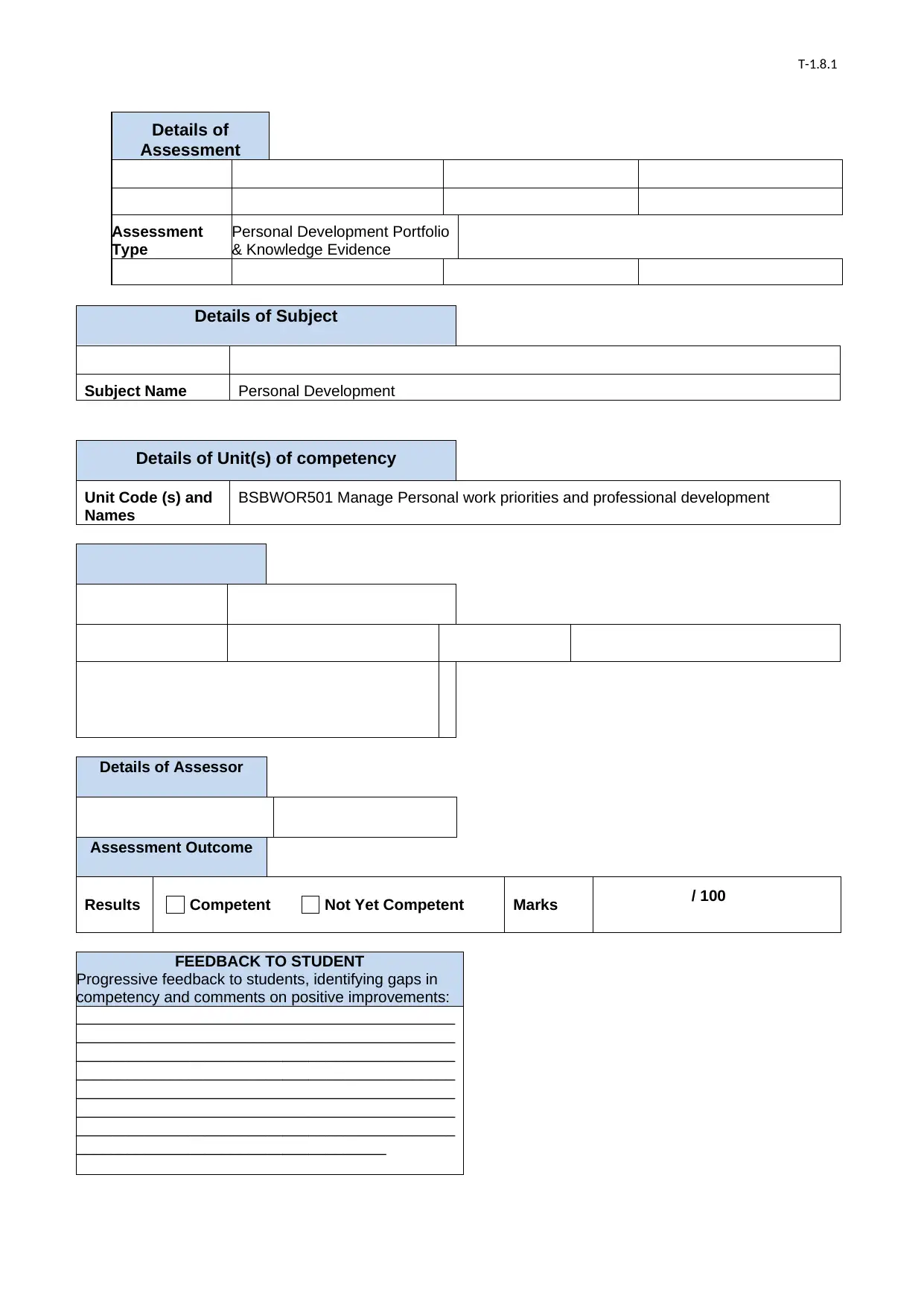
Details of
Assessment
Assessment
Type
Personal Development Portfolio
& Knowledge Evidence
Details of Subject
Subject Name Personal Development
Details of Unit(s) of competency
Unit Code (s) and
Names
BSBWOR501 Manage Personal work priorities and professional development
Details of Assessor
Assessment Outcome
Results Competent Not Yet Competent Marks / 100
FEEDBACK TO STUDENT
Progressive feedback to students, identifying gaps in
competency and comments on positive improvements:
____________________________________________
____________________________________________
____________________________________________
____________________________________________
____________________________________________
____________________________________________
____________________________________________
____________________________________
Details of
Assessment
Assessment
Type
Personal Development Portfolio
& Knowledge Evidence
Details of Subject
Subject Name Personal Development
Details of Unit(s) of competency
Unit Code (s) and
Names
BSBWOR501 Manage Personal work priorities and professional development
Details of Assessor
Assessment Outcome
Results Competent Not Yet Competent Marks / 100
FEEDBACK TO STUDENT
Progressive feedback to students, identifying gaps in
competency and comments on positive improvements:
____________________________________________
____________________________________________
____________________________________________
____________________________________________
____________________________________________
____________________________________________
____________________________________________
____________________________________

Paraphrase This Document
Need a fresh take? Get an instant paraphrase of this document with our AI Paraphraser
T-1.8.1
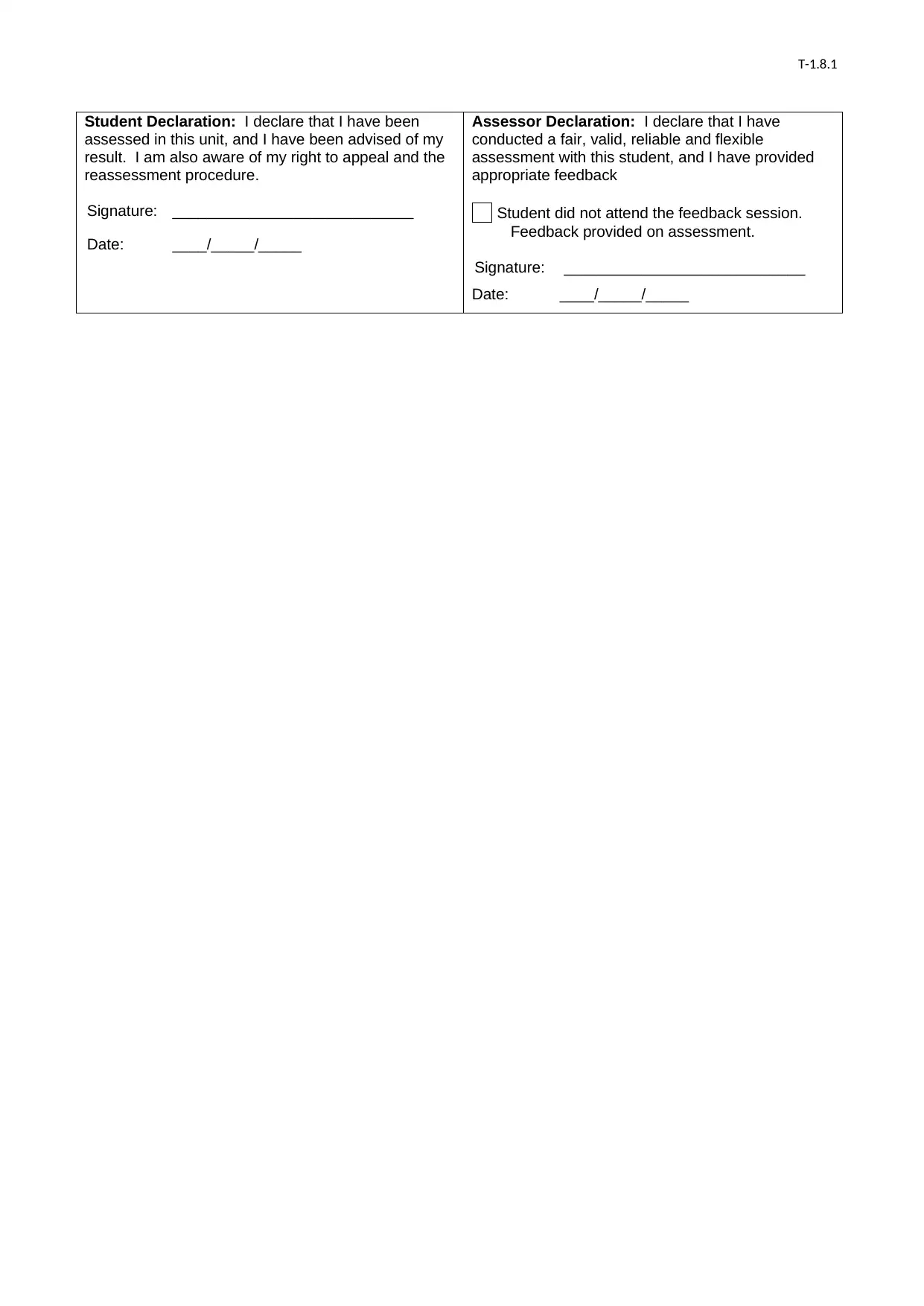
Student Declaration: I declare that I have been
assessed in this unit, and I have been advised of my
result. I am also aware of my right to appeal and the
reassessment procedure.
Signature: ____________________________
Date: ____/_____/_____
Assessor Declaration: I declare that I have
conducted a fair, valid, reliable and flexible
assessment with this student, and I have provided
appropriate feedback
Student did not attend the feedback session.
Feedback provided on assessment.
Signature: ____________________________
Date: ____/_____/_____
Student Declaration: I declare that I have been
assessed in this unit, and I have been advised of my
result. I am also aware of my right to appeal and the
reassessment procedure.
Signature: ____________________________
Date: ____/_____/_____
Assessor Declaration: I declare that I have
conducted a fair, valid, reliable and flexible
assessment with this student, and I have provided
appropriate feedback
Student did not attend the feedback session.
Feedback provided on assessment.
Signature: ____________________________
Date: ____/_____/_____
T-1.8.1
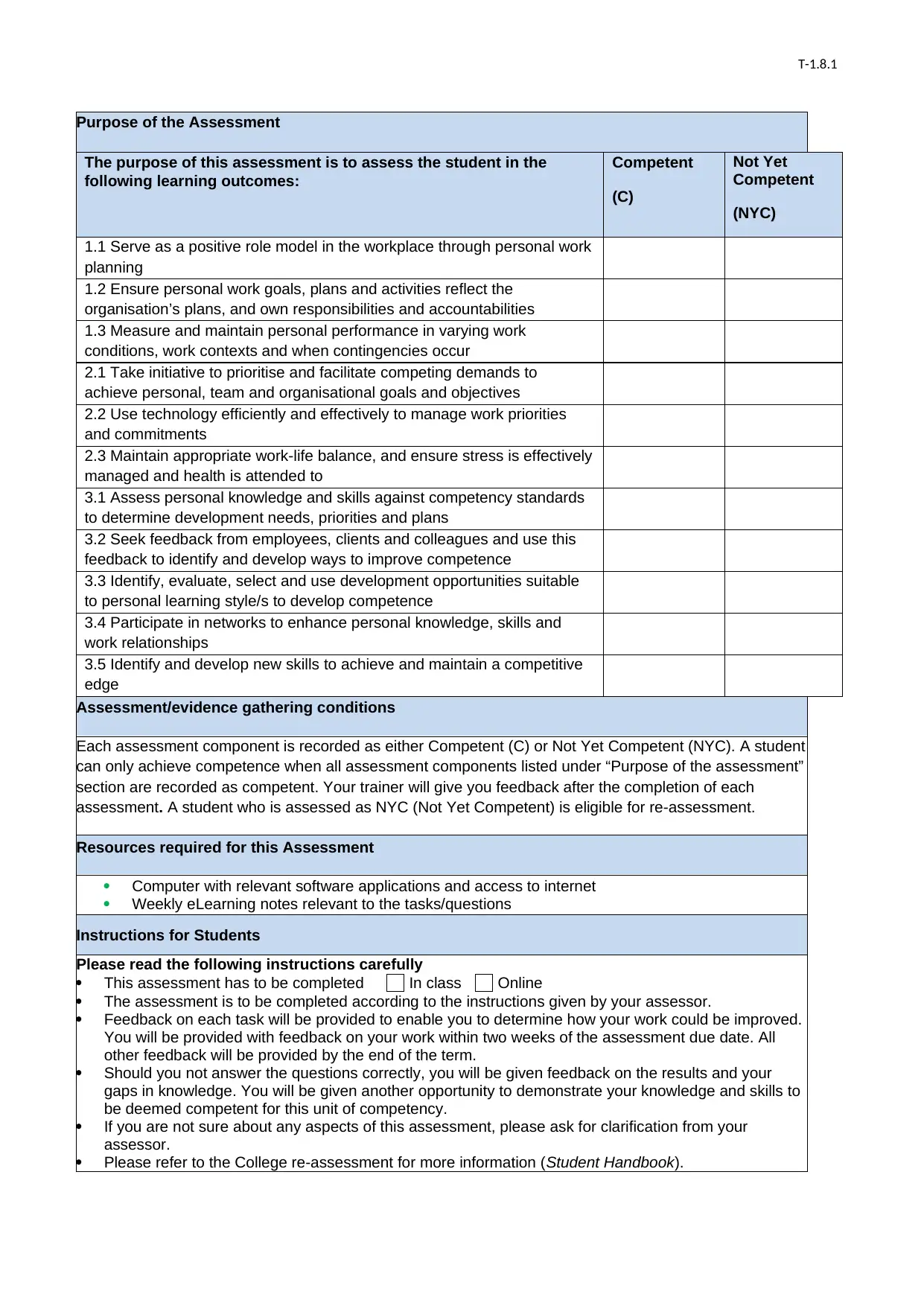
Purpose of the Assessment
The purpose of this assessment is to assess the student in the
following learning outcomes:
Competent
(C)
Not Yet
Competent
(NYC)
1.1 Serve as a positive role model in the workplace through personal work
planning
1.2 Ensure personal work goals, plans and activities reflect the
organisation’s plans, and own responsibilities and accountabilities
1.3 Measure and maintain personal performance in varying work
conditions, work contexts and when contingencies occur
2.1 Take initiative to prioritise and facilitate competing demands to
achieve personal, team and organisational goals and objectives
2.2 Use technology efficiently and effectively to manage work priorities
and commitments
2.3 Maintain appropriate work-life balance, and ensure stress is effectively
managed and health is attended to
3.1 Assess personal knowledge and skills against competency standards
to determine development needs, priorities and plans
3.2 Seek feedback from employees, clients and colleagues and use this
feedback to identify and develop ways to improve competence
3.3 Identify, evaluate, select and use development opportunities suitable
to personal learning style/s to develop competence
3.4 Participate in networks to enhance personal knowledge, skills and
work relationships
3.5 Identify and develop new skills to achieve and maintain a competitive
edge
Assessment/evidence gathering conditions
Each assessment component is recorded as either Competent (C) or Not Yet Competent (NYC). A student
can only achieve competence when all assessment components listed under “Purpose of the assessment”
section are recorded as competent. Your trainer will give you feedback after the completion of each
assessment. A student who is assessed as NYC (Not Yet Competent) is eligible for re-assessment.
Resources required for this Assessment
Computer with relevant software applications and access to internet
Weekly eLearning notes relevant to the tasks/questions
Instructions for Students
Please read the following instructions carefully
This assessment has to be completed In class Online
The assessment is to be completed according to the instructions given by your assessor.
Feedback on each task will be provided to enable you to determine how your work could be improved.
You will be provided with feedback on your work within two weeks of the assessment due date. All
other feedback will be provided by the end of the term.
Should you not answer the questions correctly, you will be given feedback on the results and your
gaps in knowledge. You will be given another opportunity to demonstrate your knowledge and skills to
be deemed competent for this unit of competency.
If you are not sure about any aspects of this assessment, please ask for clarification from your
assessor.
Please refer to the College re-assessment for more information (Student Handbook).
Purpose of the Assessment
The purpose of this assessment is to assess the student in the
following learning outcomes:
Competent
(C)
Not Yet
Competent
(NYC)
1.1 Serve as a positive role model in the workplace through personal work
planning
1.2 Ensure personal work goals, plans and activities reflect the
organisation’s plans, and own responsibilities and accountabilities
1.3 Measure and maintain personal performance in varying work
conditions, work contexts and when contingencies occur
2.1 Take initiative to prioritise and facilitate competing demands to
achieve personal, team and organisational goals and objectives
2.2 Use technology efficiently and effectively to manage work priorities
and commitments
2.3 Maintain appropriate work-life balance, and ensure stress is effectively
managed and health is attended to
3.1 Assess personal knowledge and skills against competency standards
to determine development needs, priorities and plans
3.2 Seek feedback from employees, clients and colleagues and use this
feedback to identify and develop ways to improve competence
3.3 Identify, evaluate, select and use development opportunities suitable
to personal learning style/s to develop competence
3.4 Participate in networks to enhance personal knowledge, skills and
work relationships
3.5 Identify and develop new skills to achieve and maintain a competitive
edge
Assessment/evidence gathering conditions
Each assessment component is recorded as either Competent (C) or Not Yet Competent (NYC). A student
can only achieve competence when all assessment components listed under “Purpose of the assessment”
section are recorded as competent. Your trainer will give you feedback after the completion of each
assessment. A student who is assessed as NYC (Not Yet Competent) is eligible for re-assessment.
Resources required for this Assessment
Computer with relevant software applications and access to internet
Weekly eLearning notes relevant to the tasks/questions
Instructions for Students
Please read the following instructions carefully
This assessment has to be completed In class Online
The assessment is to be completed according to the instructions given by your assessor.
Feedback on each task will be provided to enable you to determine how your work could be improved.
You will be provided with feedback on your work within two weeks of the assessment due date. All
other feedback will be provided by the end of the term.
Should you not answer the questions correctly, you will be given feedback on the results and your
gaps in knowledge. You will be given another opportunity to demonstrate your knowledge and skills to
be deemed competent for this unit of competency.
If you are not sure about any aspects of this assessment, please ask for clarification from your
assessor.
Please refer to the College re-assessment for more information (Student Handbook).
⊘ This is a preview!⊘
Do you want full access?
Subscribe today to unlock all pages.

Trusted by 1+ million students worldwide

T-1.8.1
Paraphrase This Document
Need a fresh take? Get an instant paraphrase of this document with our AI Paraphraser
T-1.8.1
ASSESSMENT BRIEF & INSTRUCTIONS
This assessment comprises both the knowledge evidence in PART A and the evidence on
management of personal development in the portfolio in PART B. You are required to respond to
the knowledge evidence questions (PART A) and as well as complete the personal development
portfolio (PART A) to be deemed competent. In this assessment learners are required to govern the
developmental needs, establish personal work goals, set and meet own work priorities and maintain
professional aptitude, needed to attain personal and organisation’s goals.
PART A: KNOWLEDGE EVIDENCE– 20%
In this PART, there are total of 10 (ten) knowledge evidence questions that you must respond in order
to be evaluated for the underpinning knowledge requirements attached to the unit.
This part of the assessment has been established with the aim to measure your personal knowledge,
skills and attributes in contradiction of competency standards that are critical to develop and maintain
professional competency. Through this assessment you are required to provide evidence of your
developmental needs and the knowledge required to establish personal work goals, set and meet own
work priorities and maintain professional aptitude and performance, that are required to attain
personal and organisational goals.
PART B: PERSONAL DEVELOPMENT PORTFOLIO – 80%
Using the Personal Development Portfolio template provided in this part of the assessment, you
will develop your own development folio that relates to your current employment at an enterprise of
your choice (within Australia) or use the simulated organisational context of CoffeeVille. The
link to the simulated organisation information is attached within the PART B section.
In the simulated organisational context you will assume responsibility as a newly hired manger of the
workplace who will lead a team of service people. You will be progressively completing all the tasks
relating to establishing your personal work goals, setting up attainable goals for your team and
yourself, develop and maintain professional competence by getting feedback from various
stakeholders and by participating in related professional networks. To demonstrate competency you
will need to complete all the tasks assigned to you in relation to your personal development portfolio.
ASSESSMENT BRIEF & INSTRUCTIONS
This assessment comprises both the knowledge evidence in PART A and the evidence on
management of personal development in the portfolio in PART B. You are required to respond to
the knowledge evidence questions (PART A) and as well as complete the personal development
portfolio (PART A) to be deemed competent. In this assessment learners are required to govern the
developmental needs, establish personal work goals, set and meet own work priorities and maintain
professional aptitude, needed to attain personal and organisation’s goals.
PART A: KNOWLEDGE EVIDENCE– 20%
In this PART, there are total of 10 (ten) knowledge evidence questions that you must respond in order
to be evaluated for the underpinning knowledge requirements attached to the unit.
This part of the assessment has been established with the aim to measure your personal knowledge,
skills and attributes in contradiction of competency standards that are critical to develop and maintain
professional competency. Through this assessment you are required to provide evidence of your
developmental needs and the knowledge required to establish personal work goals, set and meet own
work priorities and maintain professional aptitude and performance, that are required to attain
personal and organisational goals.
PART B: PERSONAL DEVELOPMENT PORTFOLIO – 80%
Using the Personal Development Portfolio template provided in this part of the assessment, you
will develop your own development folio that relates to your current employment at an enterprise of
your choice (within Australia) or use the simulated organisational context of CoffeeVille. The
link to the simulated organisation information is attached within the PART B section.
In the simulated organisational context you will assume responsibility as a newly hired manger of the
workplace who will lead a team of service people. You will be progressively completing all the tasks
relating to establishing your personal work goals, setting up attainable goals for your team and
yourself, develop and maintain professional competence by getting feedback from various
stakeholders and by participating in related professional networks. To demonstrate competency you
will need to complete all the tasks assigned to you in relation to your personal development portfolio.
T-1.8.1
PART A – KNOWLEDGE EVIDENCE
Instructions: The PART includes 10 knowledge evidence questions and you must respond to all. Use
the provided spaces below each question to respond to the question. Your responses to these
questions will be evaluated for assessing the underpinning knowledge requirements attached to the
unit. You can find the related resources and learning materials in the subject e-learning page.
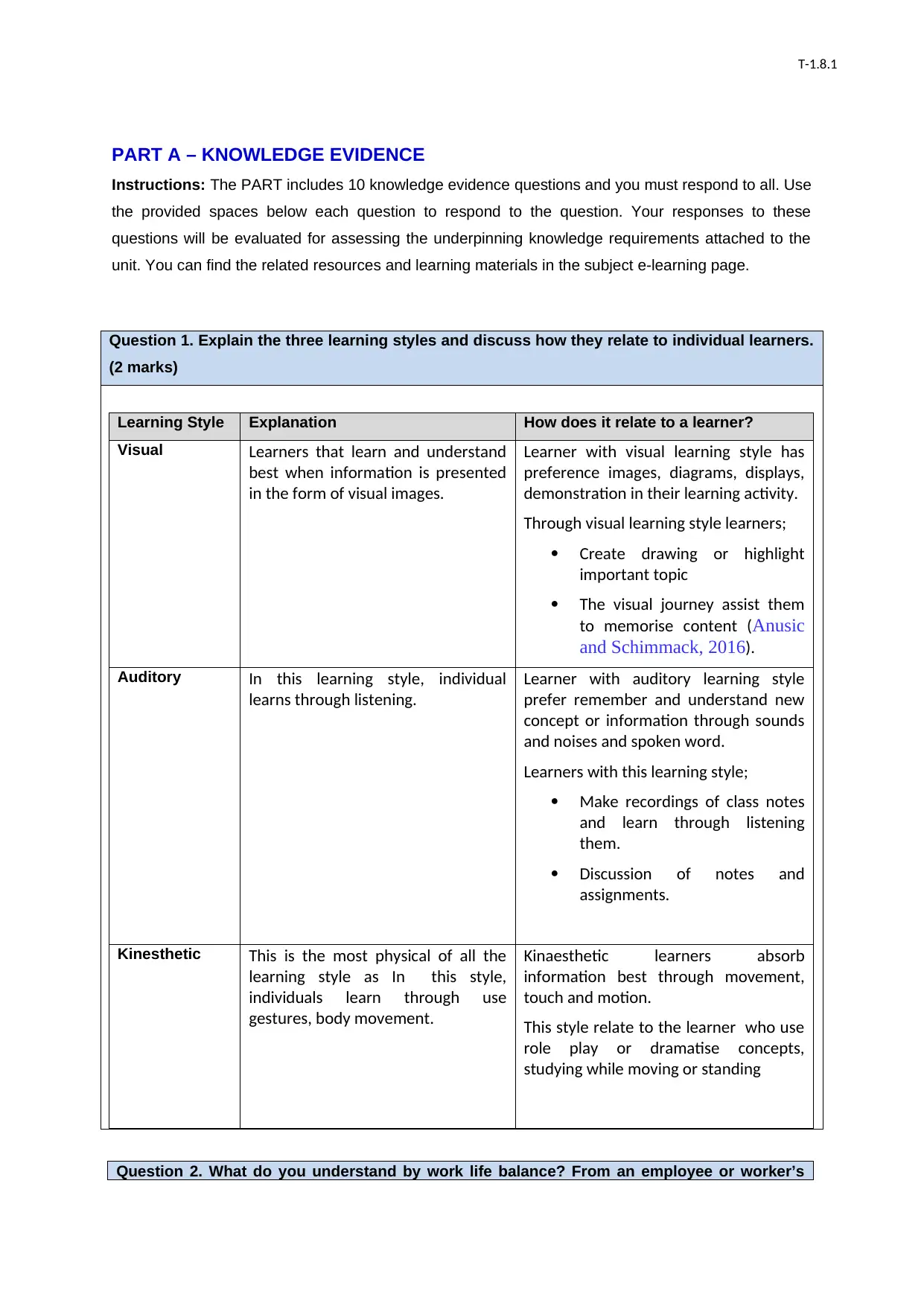
Question 1. Explain the three learning styles and discuss how they relate to individual learners.
(2 marks)
Learning Style Explanation How does it relate to a learner?
Visual Learners that learn and understand
best when information is presented
in the form of visual images.
Learner with visual learning style has
preference images, diagrams, displays,
demonstration in their learning activity.
Through visual learning style learners;
Create drawing or highlight
important topic
The visual journey assist them
to memorise content (Anusic
and Schimmack, 2016).
Auditory In this learning style, individual
learns through listening.
Learner with auditory learning style
prefer remember and understand new
concept or information through sounds
and noises and spoken word.
Learners with this learning style;
Make recordings of class notes
and learn through listening
them.
Discussion of notes and
assignments.
Kinesthetic This is the most physical of all the
learning style as In this style,
individuals learn through use
gestures, body movement.
Kinaesthetic learners absorb
information best through movement,
touch and motion.
This style relate to the learner who use
role play or dramatise concepts,
studying while moving or standing
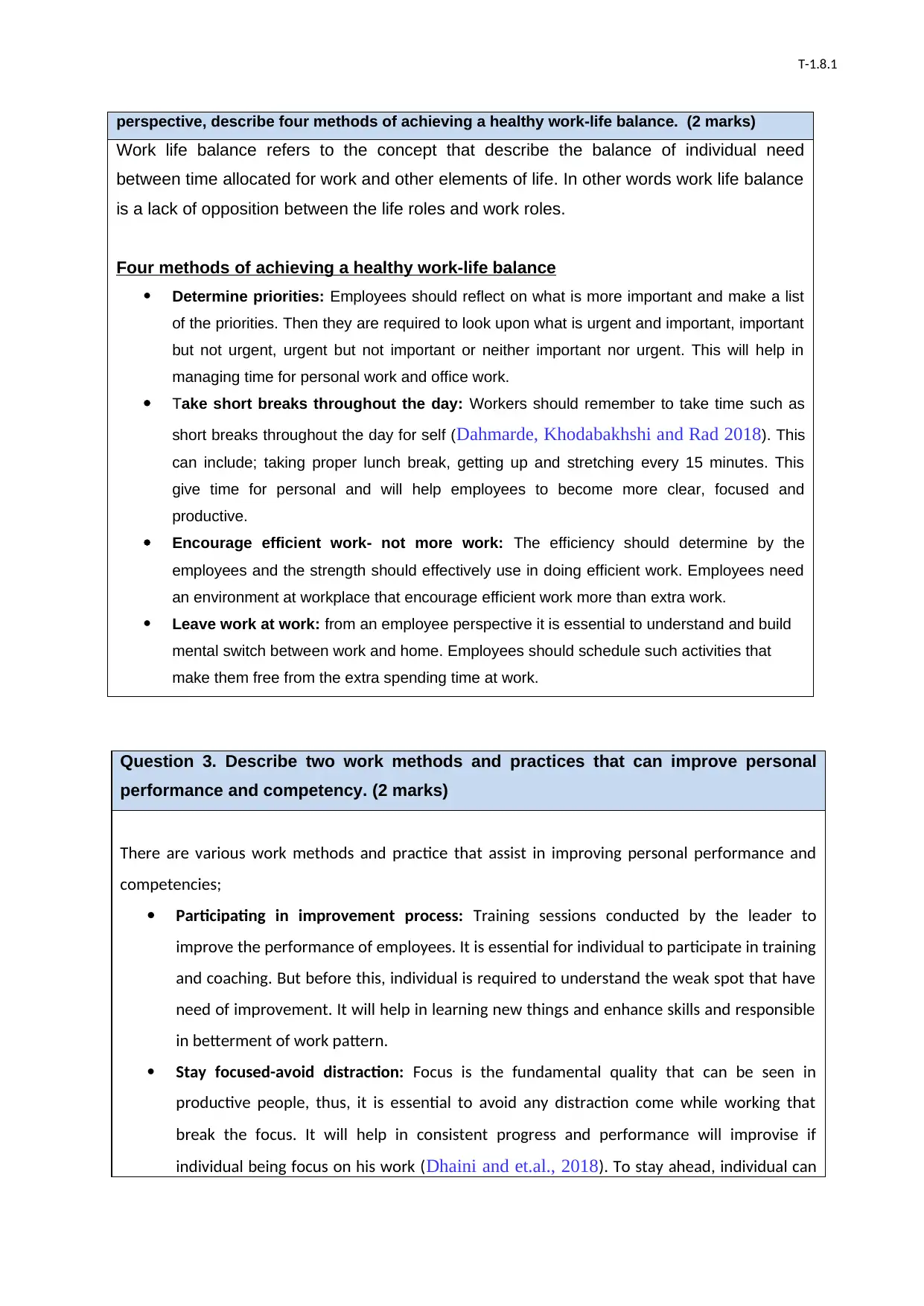
Question 2. What do you understand by work life balance? From an employee or worker’s
PART A – KNOWLEDGE EVIDENCE
Instructions: The PART includes 10 knowledge evidence questions and you must respond to all. Use
the provided spaces below each question to respond to the question. Your responses to these
questions will be evaluated for assessing the underpinning knowledge requirements attached to the
unit. You can find the related resources and learning materials in the subject e-learning page.
Question 1. Explain the three learning styles and discuss how they relate to individual learners.
(2 marks)
Learning Style Explanation How does it relate to a learner?
Visual Learners that learn and understand
best when information is presented
in the form of visual images.
Learner with visual learning style has
preference images, diagrams, displays,
demonstration in their learning activity.
Through visual learning style learners;
Create drawing or highlight
important topic
The visual journey assist them
to memorise content (Anusic
and Schimmack, 2016).
Auditory In this learning style, individual
learns through listening.
Learner with auditory learning style
prefer remember and understand new
concept or information through sounds
and noises and spoken word.
Learners with this learning style;
Make recordings of class notes
and learn through listening
them.
Discussion of notes and
assignments.
Kinesthetic This is the most physical of all the
learning style as In this style,
individuals learn through use
gestures, body movement.
Kinaesthetic learners absorb
information best through movement,
touch and motion.
This style relate to the learner who use
role play or dramatise concepts,
studying while moving or standing
Question 2. What do you understand by work life balance? From an employee or worker’s
⊘ This is a preview!⊘
Do you want full access?
Subscribe today to unlock all pages.
Trusted by 1+ million students worldwide
T-1.8.1
perspective, describe four methods of achieving a healthy work-life balance. (2 marks)
Work life balance refers to the concept that describe the balance of individual need
between time allocated for work and other elements of life. In other words work life balance
is a lack of opposition between the life roles and work roles.
Four methods of achieving a healthy work-life balance
Determine priorities: Employees should reflect on what is more important and make a list
of the priorities. Then they are required to look upon what is urgent and important, important
but not urgent, urgent but not important or neither important nor urgent. This will help in
managing time for personal work and office work.
Take short breaks throughout the day: Workers should remember to take time such as
short breaks throughout the day for self (Dahmarde, Khodabakhshi and Rad 2018). This
can include; taking proper lunch break, getting up and stretching every 15 minutes. This
give time for personal and will help employees to become more clear, focused and
productive.
Encourage efficient work- not more work: The efficiency should determine by the
employees and the strength should effectively use in doing efficient work. Employees need
an environment at workplace that encourage efficient work more than extra work.
Leave work at work: from an employee perspective it is essential to understand and build
mental switch between work and home. Employees should schedule such activities that
make them free from the extra spending time at work.
Question 3. Describe two work methods and practices that can improve personal
performance and competency. (2 marks)
There are various work methods and practice that assist in improving personal performance and
competencies;
Participating in improvement process: Training sessions conducted by the leader to
improve the performance of employees. It is essential for individual to participate in training
and coaching. But before this, individual is required to understand the weak spot that have
need of improvement. It will help in learning new things and enhance skills and responsible
in betterment of work pattern.
Stay focused-avoid distraction: Focus is the fundamental quality that can be seen in
productive people, thus, it is essential to avoid any distraction come while working that
break the focus. It will help in consistent progress and performance will improvise if
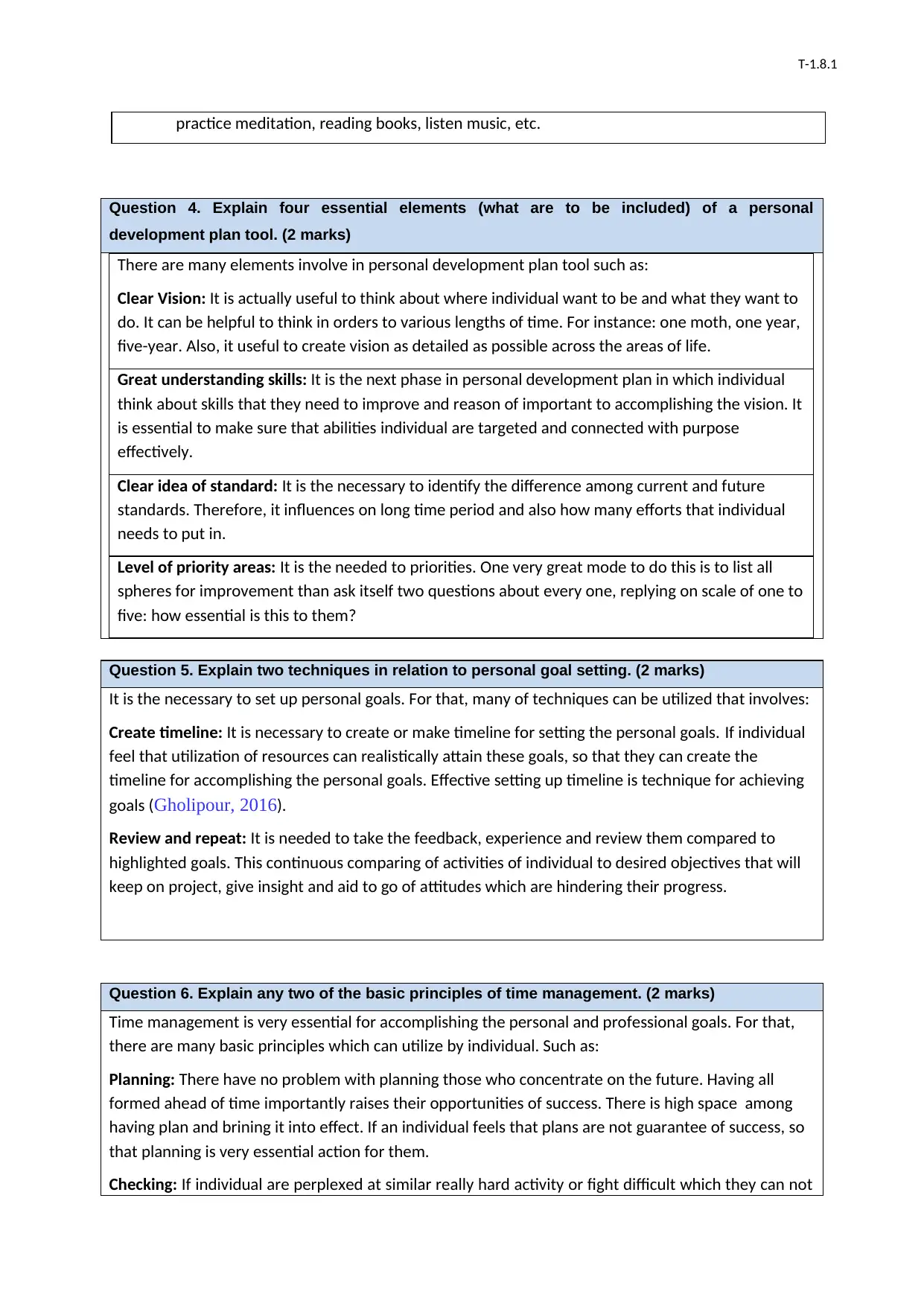
individual being focus on his work (Dhaini and et.al., 2018). To stay ahead, individual can
perspective, describe four methods of achieving a healthy work-life balance. (2 marks)
Work life balance refers to the concept that describe the balance of individual need
between time allocated for work and other elements of life. In other words work life balance
is a lack of opposition between the life roles and work roles.
Four methods of achieving a healthy work-life balance
Determine priorities: Employees should reflect on what is more important and make a list
of the priorities. Then they are required to look upon what is urgent and important, important
but not urgent, urgent but not important or neither important nor urgent. This will help in
managing time for personal work and office work.
Take short breaks throughout the day: Workers should remember to take time such as
short breaks throughout the day for self (Dahmarde, Khodabakhshi and Rad 2018). This
can include; taking proper lunch break, getting up and stretching every 15 minutes. This
give time for personal and will help employees to become more clear, focused and
productive.
Encourage efficient work- not more work: The efficiency should determine by the
employees and the strength should effectively use in doing efficient work. Employees need
an environment at workplace that encourage efficient work more than extra work.
Leave work at work: from an employee perspective it is essential to understand and build
mental switch between work and home. Employees should schedule such activities that
make them free from the extra spending time at work.
Question 3. Describe two work methods and practices that can improve personal
performance and competency. (2 marks)
There are various work methods and practice that assist in improving personal performance and
competencies;
Participating in improvement process: Training sessions conducted by the leader to
improve the performance of employees. It is essential for individual to participate in training
and coaching. But before this, individual is required to understand the weak spot that have
need of improvement. It will help in learning new things and enhance skills and responsible
in betterment of work pattern.
Stay focused-avoid distraction: Focus is the fundamental quality that can be seen in
productive people, thus, it is essential to avoid any distraction come while working that
break the focus. It will help in consistent progress and performance will improvise if
individual being focus on his work (Dhaini and et.al., 2018). To stay ahead, individual can
Paraphrase This Document
Need a fresh take? Get an instant paraphrase of this document with our AI Paraphraser
T-1.8.1
practice meditation, reading books, listen music, etc.
Question 4. Explain four essential elements (what are to be included) of a personal
development plan tool. (2 marks)
There are many elements involve in personal development plan tool such as:
Clear Vision: It is actually useful to think about where individual want to be and what they want to
do. It can be helpful to think in orders to various lengths of time. For instance: one moth, one year,
five-year. Also, it useful to create vision as detailed as possible across the areas of life.
Great understanding skills: It is the next phase in personal development plan in which individual
think about skills that they need to improve and reason of important to accomplishing the vision. It
is essential to make sure that abilities individual are targeted and connected with purpose
effectively.
Clear idea of standard: It is the necessary to identify the difference among current and future
standards. Therefore, it influences on long time period and also how many efforts that individual
needs to put in.
Level of priority areas: It is the needed to priorities. One very great mode to do this is to list all
spheres for improvement than ask itself two questions about every one, replying on scale of one to
five: how essential is this to them?
Question 5. Explain two techniques in relation to personal goal setting. (2 marks)
It is the necessary to set up personal goals. For that, many of techniques can be utilized that involves:
Create timeline: It is necessary to create or make timeline for setting the personal goals. If individual
feel that utilization of resources can realistically attain these goals, so that they can create the
timeline for accomplishing the personal goals. Effective setting up timeline is technique for achieving
goals (Gholipour, 2016).
Review and repeat: It is needed to take the feedback, experience and review them compared to
highlighted goals. This continuous comparing of activities of individual to desired objectives that will
keep on project, give insight and aid to go of attitudes which are hindering their progress.
Question 6. Explain any two of the basic principles of time management. (2 marks)
Time management is very essential for accomplishing the personal and professional goals. For that,
there are many basic principles which can utilize by individual. Such as:
Planning: There have no problem with planning those who concentrate on the future. Having all
formed ahead of time importantly raises their opportunities of success. There is high space among
having plan and brining it into effect. If an individual feels that plans are not guarantee of success, so
that planning is very essential action for them.
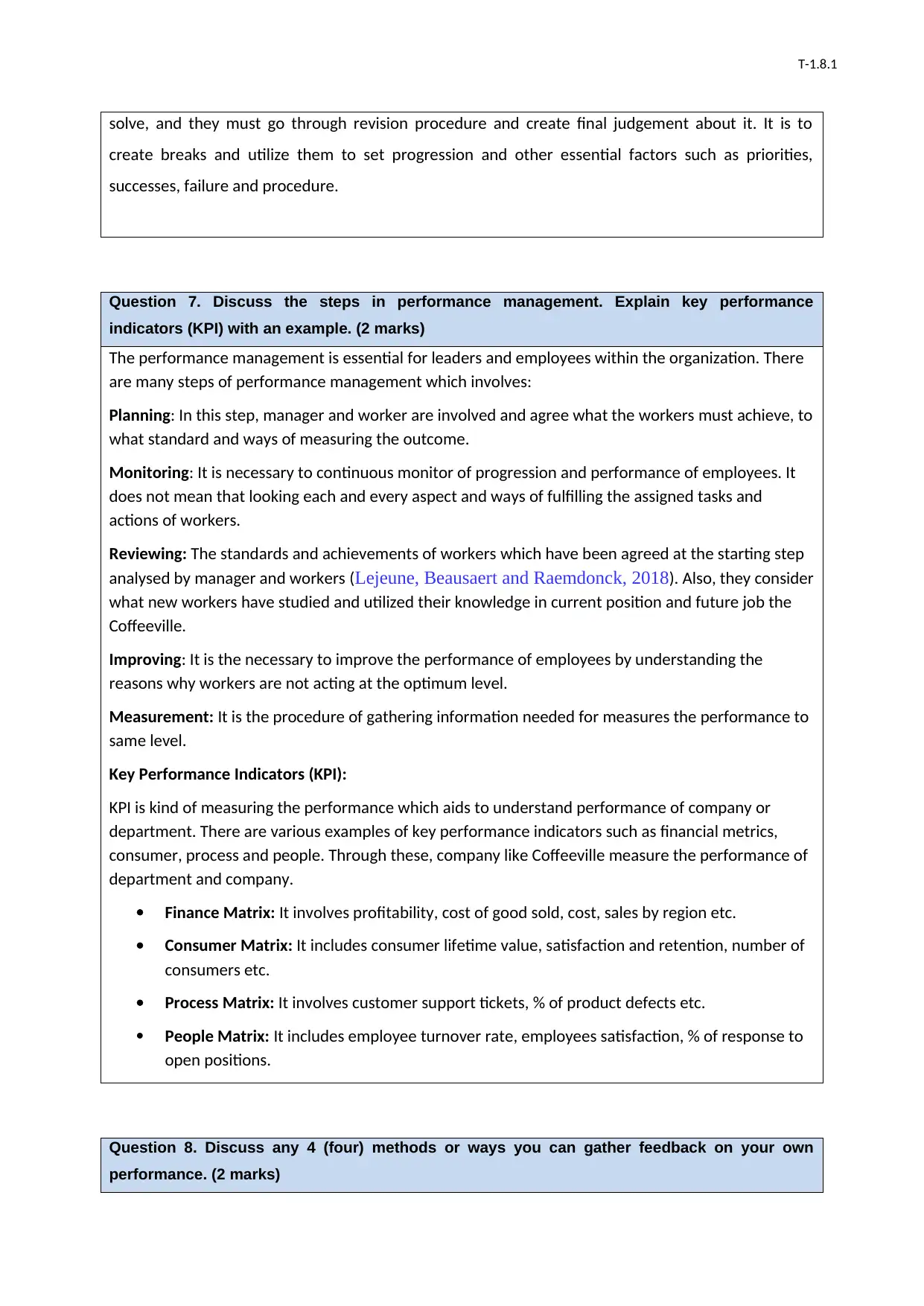
Checking: If individual are perplexed at similar really hard activity or fight difficult which they can not
practice meditation, reading books, listen music, etc.
Question 4. Explain four essential elements (what are to be included) of a personal
development plan tool. (2 marks)
There are many elements involve in personal development plan tool such as:
Clear Vision: It is actually useful to think about where individual want to be and what they want to
do. It can be helpful to think in orders to various lengths of time. For instance: one moth, one year,
five-year. Also, it useful to create vision as detailed as possible across the areas of life.
Great understanding skills: It is the next phase in personal development plan in which individual
think about skills that they need to improve and reason of important to accomplishing the vision. It
is essential to make sure that abilities individual are targeted and connected with purpose
effectively.
Clear idea of standard: It is the necessary to identify the difference among current and future
standards. Therefore, it influences on long time period and also how many efforts that individual
needs to put in.
Level of priority areas: It is the needed to priorities. One very great mode to do this is to list all
spheres for improvement than ask itself two questions about every one, replying on scale of one to
five: how essential is this to them?
Question 5. Explain two techniques in relation to personal goal setting. (2 marks)
It is the necessary to set up personal goals. For that, many of techniques can be utilized that involves:
Create timeline: It is necessary to create or make timeline for setting the personal goals. If individual
feel that utilization of resources can realistically attain these goals, so that they can create the
timeline for accomplishing the personal goals. Effective setting up timeline is technique for achieving
goals (Gholipour, 2016).
Review and repeat: It is needed to take the feedback, experience and review them compared to
highlighted goals. This continuous comparing of activities of individual to desired objectives that will
keep on project, give insight and aid to go of attitudes which are hindering their progress.
Question 6. Explain any two of the basic principles of time management. (2 marks)
Time management is very essential for accomplishing the personal and professional goals. For that,
there are many basic principles which can utilize by individual. Such as:
Planning: There have no problem with planning those who concentrate on the future. Having all
formed ahead of time importantly raises their opportunities of success. There is high space among
having plan and brining it into effect. If an individual feels that plans are not guarantee of success, so
that planning is very essential action for them.
Checking: If individual are perplexed at similar really hard activity or fight difficult which they can not
T-1.8.1
solve, and they must go through revision procedure and create final judgement about it. It is to
create breaks and utilize them to set progression and other essential factors such as priorities,
successes, failure and procedure.
Question 7. Discuss the steps in performance management. Explain key performance
indicators (KPI) with an example. (2 marks)
The performance management is essential for leaders and employees within the organization. There
are many steps of performance management which involves:
Planning: In this step, manager and worker are involved and agree what the workers must achieve, to
what standard and ways of measuring the outcome.
Monitoring: It is necessary to continuous monitor of progression and performance of employees. It
does not mean that looking each and every aspect and ways of fulfilling the assigned tasks and
actions of workers.
Reviewing: The standards and achievements of workers which have been agreed at the starting step
analysed by manager and workers (Lejeune, Beausaert and Raemdonck, 2018). Also, they consider
what new workers have studied and utilized their knowledge in current position and future job the
Coffeeville.
Improving: It is the necessary to improve the performance of employees by understanding the
reasons why workers are not acting at the optimum level.
Measurement: It is the procedure of gathering information needed for measures the performance to
same level.
Key Performance Indicators (KPI):
KPI is kind of measuring the performance which aids to understand performance of company or
department. There are various examples of key performance indicators such as financial metrics,
consumer, process and people. Through these, company like Coffeeville measure the performance of
department and company.
Finance Matrix: It involves profitability, cost of good sold, cost, sales by region etc.
Consumer Matrix: It includes consumer lifetime value, satisfaction and retention, number of
consumers etc.
Process Matrix: It involves customer support tickets, % of product defects etc.
People Matrix: It includes employee turnover rate, employees satisfaction, % of response to
open positions.
Question 8. Discuss any 4 (four) methods or ways you can gather feedback on your own
performance. (2 marks)
solve, and they must go through revision procedure and create final judgement about it. It is to
create breaks and utilize them to set progression and other essential factors such as priorities,
successes, failure and procedure.
Question 7. Discuss the steps in performance management. Explain key performance
indicators (KPI) with an example. (2 marks)
The performance management is essential for leaders and employees within the organization. There
are many steps of performance management which involves:
Planning: In this step, manager and worker are involved and agree what the workers must achieve, to
what standard and ways of measuring the outcome.
Monitoring: It is necessary to continuous monitor of progression and performance of employees. It
does not mean that looking each and every aspect and ways of fulfilling the assigned tasks and
actions of workers.
Reviewing: The standards and achievements of workers which have been agreed at the starting step
analysed by manager and workers (Lejeune, Beausaert and Raemdonck, 2018). Also, they consider
what new workers have studied and utilized their knowledge in current position and future job the
Coffeeville.
Improving: It is the necessary to improve the performance of employees by understanding the
reasons why workers are not acting at the optimum level.
Measurement: It is the procedure of gathering information needed for measures the performance to
same level.
Key Performance Indicators (KPI):
KPI is kind of measuring the performance which aids to understand performance of company or
department. There are various examples of key performance indicators such as financial metrics,
consumer, process and people. Through these, company like Coffeeville measure the performance of
department and company.
Finance Matrix: It involves profitability, cost of good sold, cost, sales by region etc.
Consumer Matrix: It includes consumer lifetime value, satisfaction and retention, number of
consumers etc.
Process Matrix: It involves customer support tickets, % of product defects etc.
People Matrix: It includes employee turnover rate, employees satisfaction, % of response to
open positions.
Question 8. Discuss any 4 (four) methods or ways you can gather feedback on your own
performance. (2 marks)
⊘ This is a preview!⊘
Do you want full access?
Subscribe today to unlock all pages.
Trusted by 1+ million students worldwide
T-1.8.1
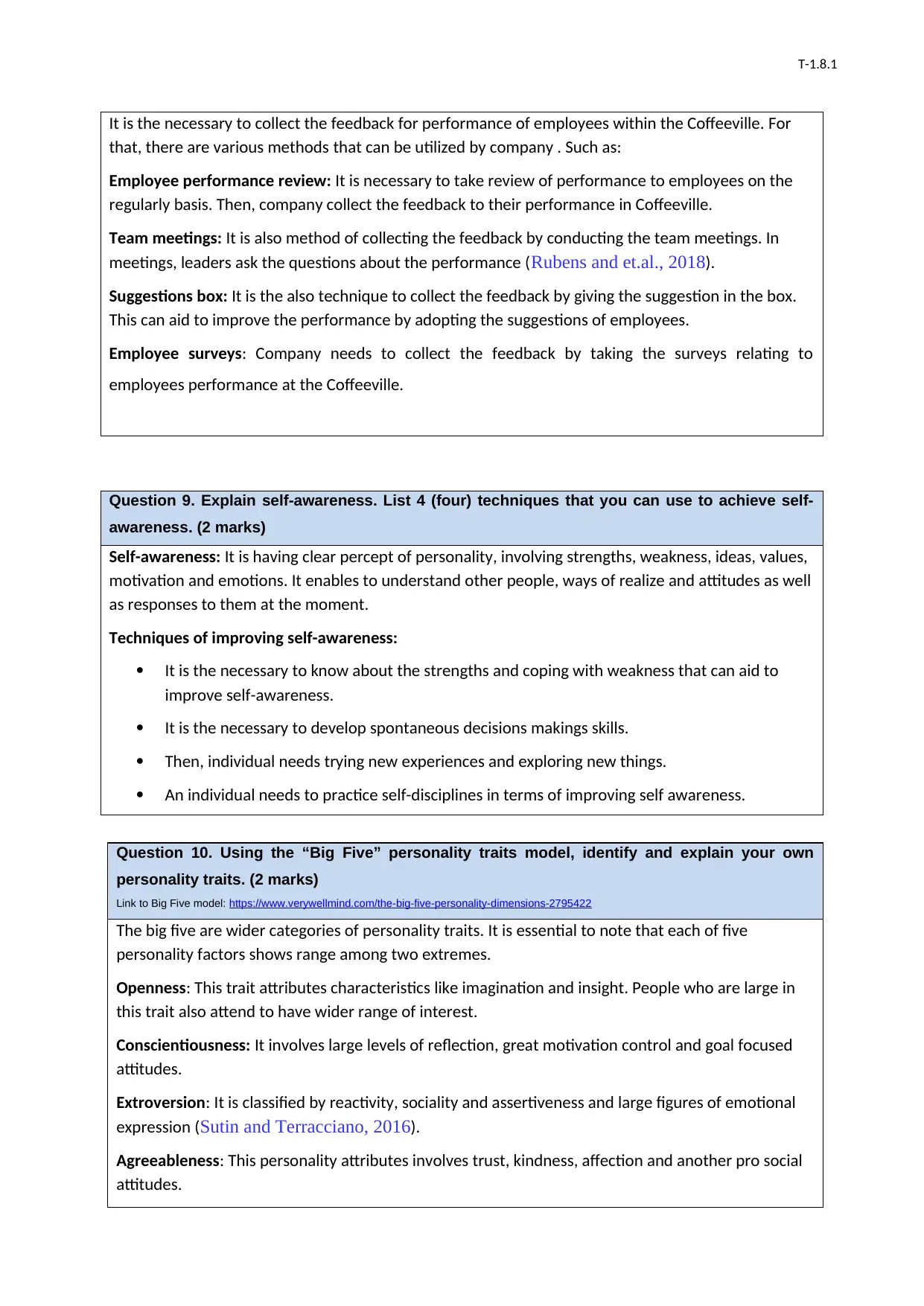
It is the necessary to collect the feedback for performance of employees within the Coffeeville. For
that, there are various methods that can be utilized by company . Such as:
Employee performance review: It is necessary to take review of performance to employees on the
regularly basis. Then, company collect the feedback to their performance in Coffeeville.
Team meetings: It is also method of collecting the feedback by conducting the team meetings. In
meetings, leaders ask the questions about the performance (Rubens and et.al., 2018).
Suggestions box: It is the also technique to collect the feedback by giving the suggestion in the box.
This can aid to improve the performance by adopting the suggestions of employees.
Employee surveys: Company needs to collect the feedback by taking the surveys relating to
employees performance at the Coffeeville.
Question 9. Explain self-awareness. List 4 (four) techniques that you can use to achieve self-
awareness. (2 marks)
Self-awareness: It is having clear percept of personality, involving strengths, weakness, ideas, values,
motivation and emotions. It enables to understand other people, ways of realize and attitudes as well
as responses to them at the moment.
Techniques of improving self-awareness:
It is the necessary to know about the strengths and coping with weakness that can aid to
improve self-awareness.
It is the necessary to develop spontaneous decisions makings skills.
Then, individual needs trying new experiences and exploring new things.
An individual needs to practice self-disciplines in terms of improving self awareness.
Question 10. Using the “Big Five” personality traits model, identify and explain your own
personality traits. (2 marks)
Link to Big Five model: https://www.verywellmind.com/the-big-five-personality-dimensions-2795422
The big five are wider categories of personality traits. It is essential to note that each of five
personality factors shows range among two extremes.
Openness: This trait attributes characteristics like imagination and insight. People who are large in
this trait also attend to have wider range of interest.
Conscientiousness: It involves large levels of reflection, great motivation control and goal focused
attitudes.
Extroversion: It is classified by reactivity, sociality and assertiveness and large figures of emotional
expression (Sutin and Terracciano, 2016).
Agreeableness: This personality attributes involves trust, kindness, affection and another pro social
attitudes.
It is the necessary to collect the feedback for performance of employees within the Coffeeville. For
that, there are various methods that can be utilized by company . Such as:
Employee performance review: It is necessary to take review of performance to employees on the
regularly basis. Then, company collect the feedback to their performance in Coffeeville.
Team meetings: It is also method of collecting the feedback by conducting the team meetings. In
meetings, leaders ask the questions about the performance (Rubens and et.al., 2018).
Suggestions box: It is the also technique to collect the feedback by giving the suggestion in the box.
This can aid to improve the performance by adopting the suggestions of employees.
Employee surveys: Company needs to collect the feedback by taking the surveys relating to
employees performance at the Coffeeville.
Question 9. Explain self-awareness. List 4 (four) techniques that you can use to achieve self-
awareness. (2 marks)
Self-awareness: It is having clear percept of personality, involving strengths, weakness, ideas, values,
motivation and emotions. It enables to understand other people, ways of realize and attitudes as well
as responses to them at the moment.
Techniques of improving self-awareness:
It is the necessary to know about the strengths and coping with weakness that can aid to
improve self-awareness.
It is the necessary to develop spontaneous decisions makings skills.
Then, individual needs trying new experiences and exploring new things.
An individual needs to practice self-disciplines in terms of improving self awareness.
Question 10. Using the “Big Five” personality traits model, identify and explain your own
personality traits. (2 marks)
Link to Big Five model: https://www.verywellmind.com/the-big-five-personality-dimensions-2795422
The big five are wider categories of personality traits. It is essential to note that each of five
personality factors shows range among two extremes.
Openness: This trait attributes characteristics like imagination and insight. People who are large in
this trait also attend to have wider range of interest.
Conscientiousness: It involves large levels of reflection, great motivation control and goal focused
attitudes.
Extroversion: It is classified by reactivity, sociality and assertiveness and large figures of emotional
expression (Sutin and Terracciano, 2016).
Agreeableness: This personality attributes involves trust, kindness, affection and another pro social
attitudes.
Paraphrase This Document
Need a fresh take? Get an instant paraphrase of this document with our AI Paraphraser
T-1.8.1
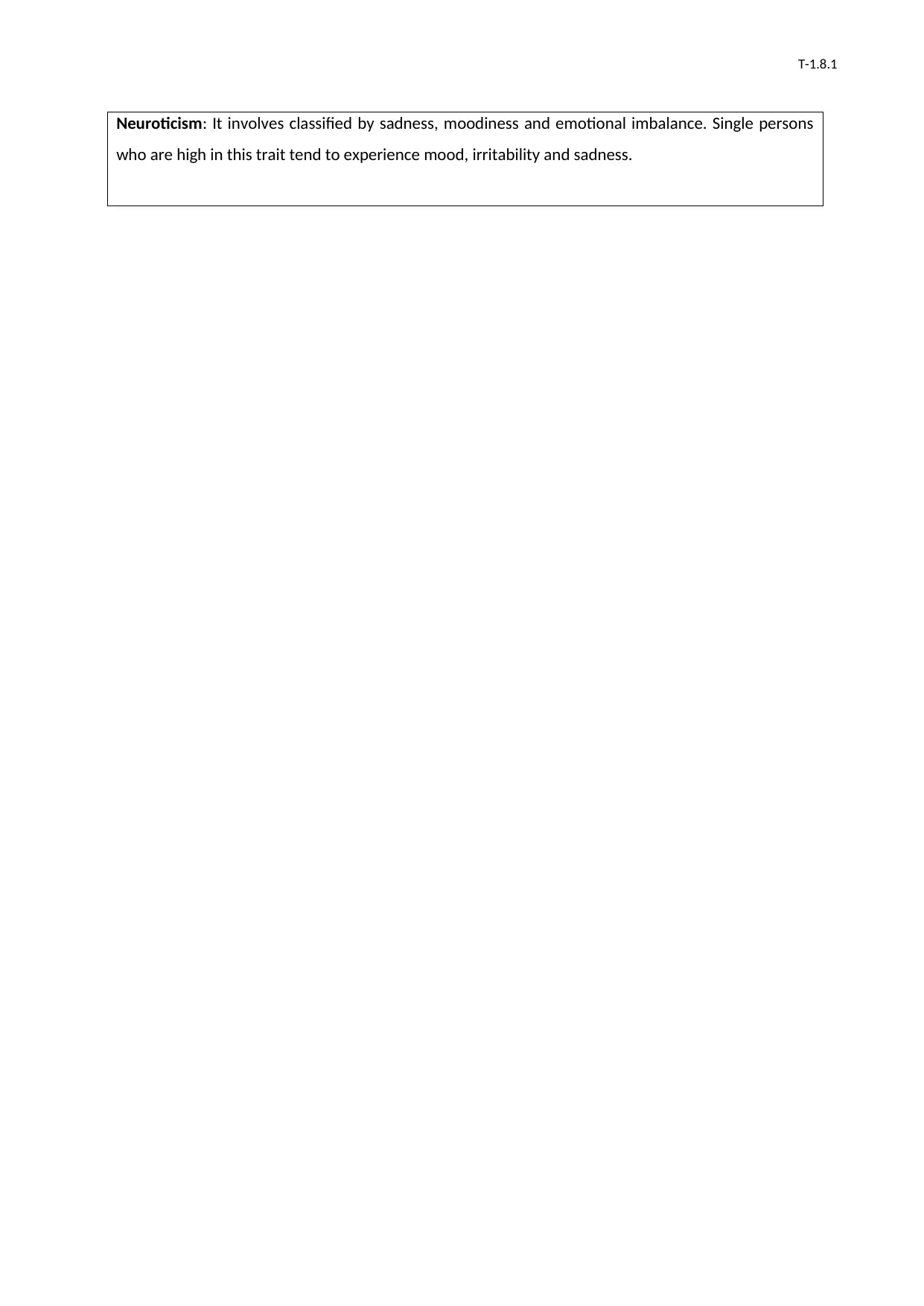
Neuroticism: It involves classified by sadness, moodiness and emotional imbalance. Single persons
who are high in this trait tend to experience mood, irritability and sadness.
Neuroticism: It involves classified by sadness, moodiness and emotional imbalance. Single persons
who are high in this trait tend to experience mood, irritability and sadness.
T-1.8.1
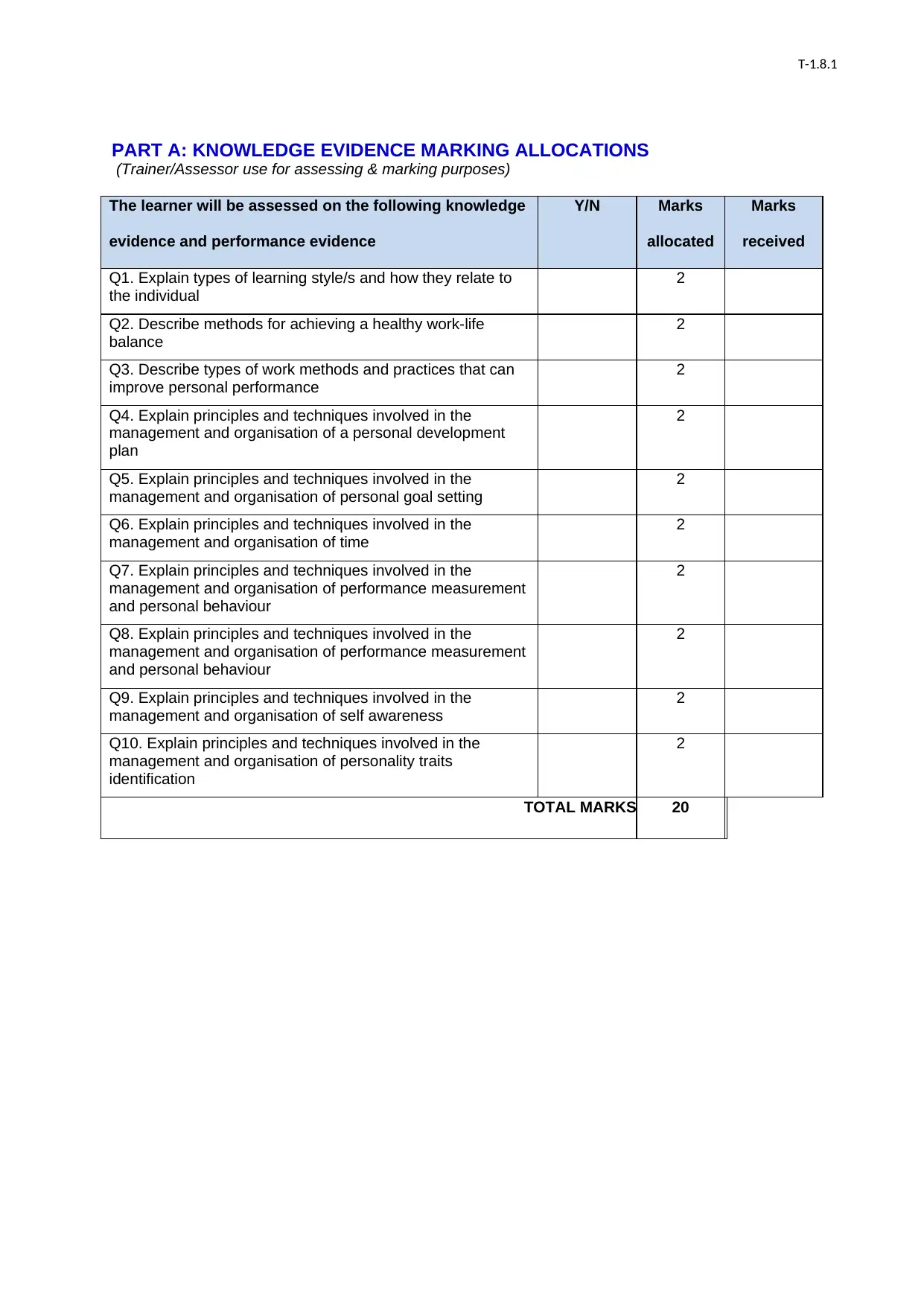
PART A: KNOWLEDGE EVIDENCE MARKING ALLOCATIONS
(Trainer/Assessor use for assessing & marking purposes)
The learner will be assessed on the following knowledge
evidence and performance evidence
Y/N Marks
allocated
Marks
received
Q1. Explain types of learning style/s and how they relate to
the individual
2
Q2. Describe methods for achieving a healthy work-life
balance
2
Q3. Describe types of work methods and practices that can
improve personal performance
2
Q4. Explain principles and techniques involved in the
management and organisation of a personal development
plan
2
Q5. Explain principles and techniques involved in the
management and organisation of personal goal setting
2
Q6. Explain principles and techniques involved in the
management and organisation of time
2
Q7. Explain principles and techniques involved in the
management and organisation of performance measurement
and personal behaviour
2
Q8. Explain principles and techniques involved in the
management and organisation of performance measurement
and personal behaviour
2
Q9. Explain principles and techniques involved in the
management and organisation of self awareness
2
Q10. Explain principles and techniques involved in the
management and organisation of personality traits
identification
2
TOTAL MARKS 20
PART A: KNOWLEDGE EVIDENCE MARKING ALLOCATIONS
(Trainer/Assessor use for assessing & marking purposes)
The learner will be assessed on the following knowledge
evidence and performance evidence
Y/N Marks
allocated
Marks
received
Q1. Explain types of learning style/s and how they relate to
the individual
2
Q2. Describe methods for achieving a healthy work-life
balance
2
Q3. Describe types of work methods and practices that can
improve personal performance
2
Q4. Explain principles and techniques involved in the
management and organisation of a personal development
plan
2
Q5. Explain principles and techniques involved in the
management and organisation of personal goal setting
2
Q6. Explain principles and techniques involved in the
management and organisation of time
2
Q7. Explain principles and techniques involved in the
management and organisation of performance measurement
and personal behaviour
2
Q8. Explain principles and techniques involved in the
management and organisation of performance measurement
and personal behaviour
2
Q9. Explain principles and techniques involved in the
management and organisation of self awareness
2
Q10. Explain principles and techniques involved in the
management and organisation of personality traits
identification
2
TOTAL MARKS 20
⊘ This is a preview!⊘
Do you want full access?
Subscribe today to unlock all pages.
Trusted by 1+ million students worldwide

1 out of 28


Related Documents


Your All-in-One AI-Powered Toolkit for Academic Success.
+13062052269
info@desklib.com
Available 24*7 on WhatsApp / Email
![[object Object]](/_next/static/media/star-bottom.7253800d.svg)
Unlock your academic potential
Copyright © 2020–2026 A2Z Services. All Rights Reserved. Developed and managed by ZUCOL.