University Assignment: Management Accounting for Cost and Control
VerifiedAdded on 2020/02/24
|24
|1837
|33
Homework Assignment
AI Summary
This assignment solution delves into the core principles of management accounting, focusing on cost and control. It provides detailed answers to questions covering various aspects, including the purposes of management accounting, the control function, product costing, and labor cost accounting. The solution explores the allocation of overhead expenses and contrasts traditional costing methods with activity-based costing, highlighting the advantages and disadvantages of each. The document also presents practical applications of overhead allocation, including the direct, step, and reciprocal service methods. Overall, the assignment offers a comprehensive analysis of management accounting concepts, providing a valuable resource for students seeking to understand and apply these principles.
Running head: MANAGEMENT ACCOUNTING FOR COST AND CONTROL
Management Accounting for Cost and Control
Name of the Student
Name of the University
Author’s Note
Management Accounting for Cost and Control
Name of the Student
Name of the University
Author’s Note
Paraphrase This Document
Need a fresh take? Get an instant paraphrase of this document with our AI Paraphraser

1MANAGEMENT ACCOUNTING FOR COST AND CONTROL
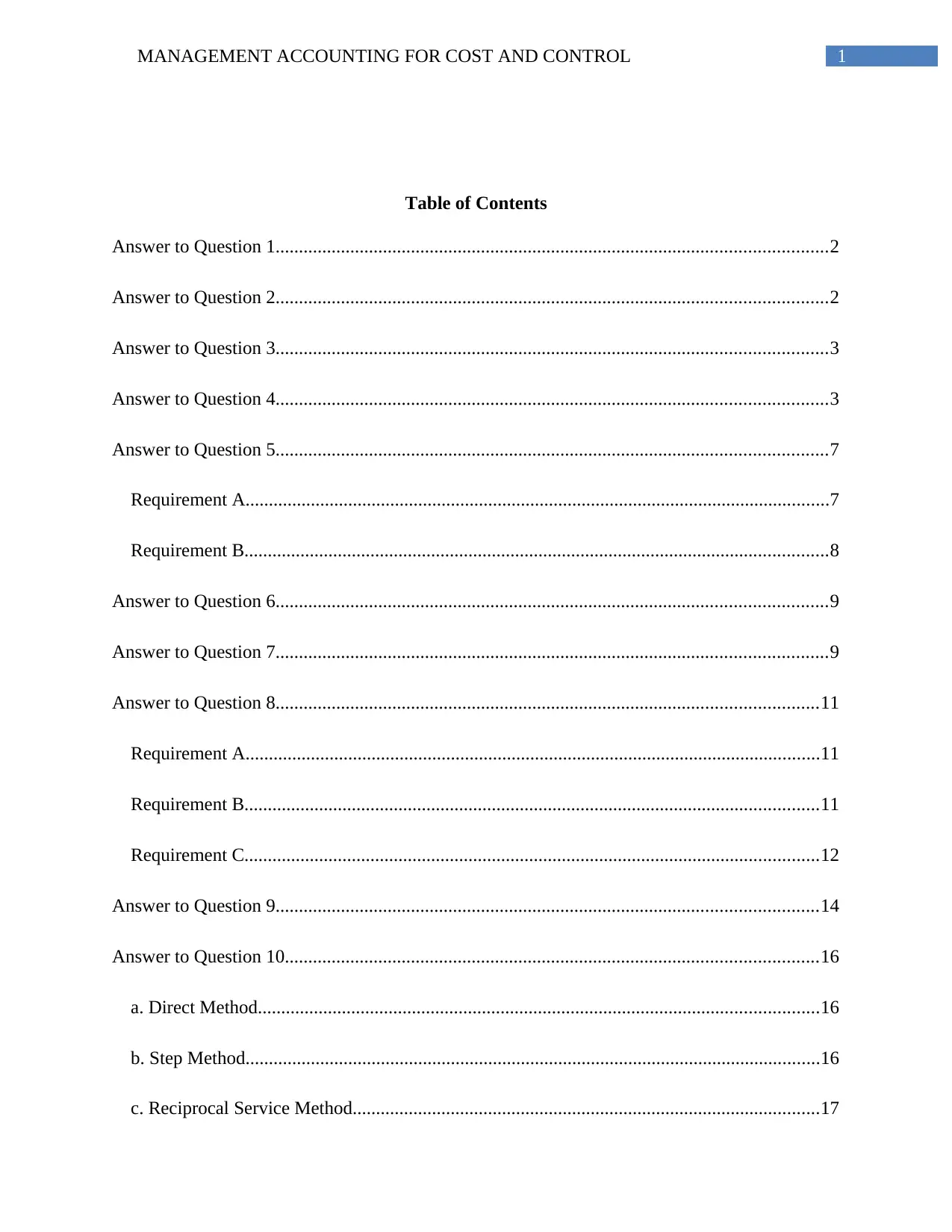
Table of Contents
Answer to Question 1......................................................................................................................2
Answer to Question 2......................................................................................................................2
Answer to Question 3......................................................................................................................3
Answer to Question 4......................................................................................................................3
Answer to Question 5......................................................................................................................7
Requirement A.............................................................................................................................7
Requirement B.............................................................................................................................8
Answer to Question 6......................................................................................................................9
Answer to Question 7......................................................................................................................9
Answer to Question 8....................................................................................................................11
Requirement A...........................................................................................................................11
Requirement B...........................................................................................................................11
Requirement C...........................................................................................................................12
Answer to Question 9....................................................................................................................14
Answer to Question 10..................................................................................................................16
a. Direct Method........................................................................................................................16
b. Step Method...........................................................................................................................16
c. Reciprocal Service Method....................................................................................................17
Table of Contents
Answer to Question 1......................................................................................................................2
Answer to Question 2......................................................................................................................2
Answer to Question 3......................................................................................................................3
Answer to Question 4......................................................................................................................3
Answer to Question 5......................................................................................................................7
Requirement A.............................................................................................................................7
Requirement B.............................................................................................................................8
Answer to Question 6......................................................................................................................9
Answer to Question 7......................................................................................................................9
Answer to Question 8....................................................................................................................11
Requirement A...........................................................................................................................11
Requirement B...........................................................................................................................11
Requirement C...........................................................................................................................12
Answer to Question 9....................................................................................................................14
Answer to Question 10..................................................................................................................16
a. Direct Method........................................................................................................................16
b. Step Method...........................................................................................................................16
c. Reciprocal Service Method....................................................................................................17

2MANAGEMENT ACCOUNTING FOR COST AND CONTROL
References......................................................................................................................................19
⊘ This is a preview!⊘
Do you want full access?
Subscribe today to unlock all pages.

Trusted by 1+ million students worldwide

3MANAGEMENT ACCOUNTING FOR COST AND CONTROL
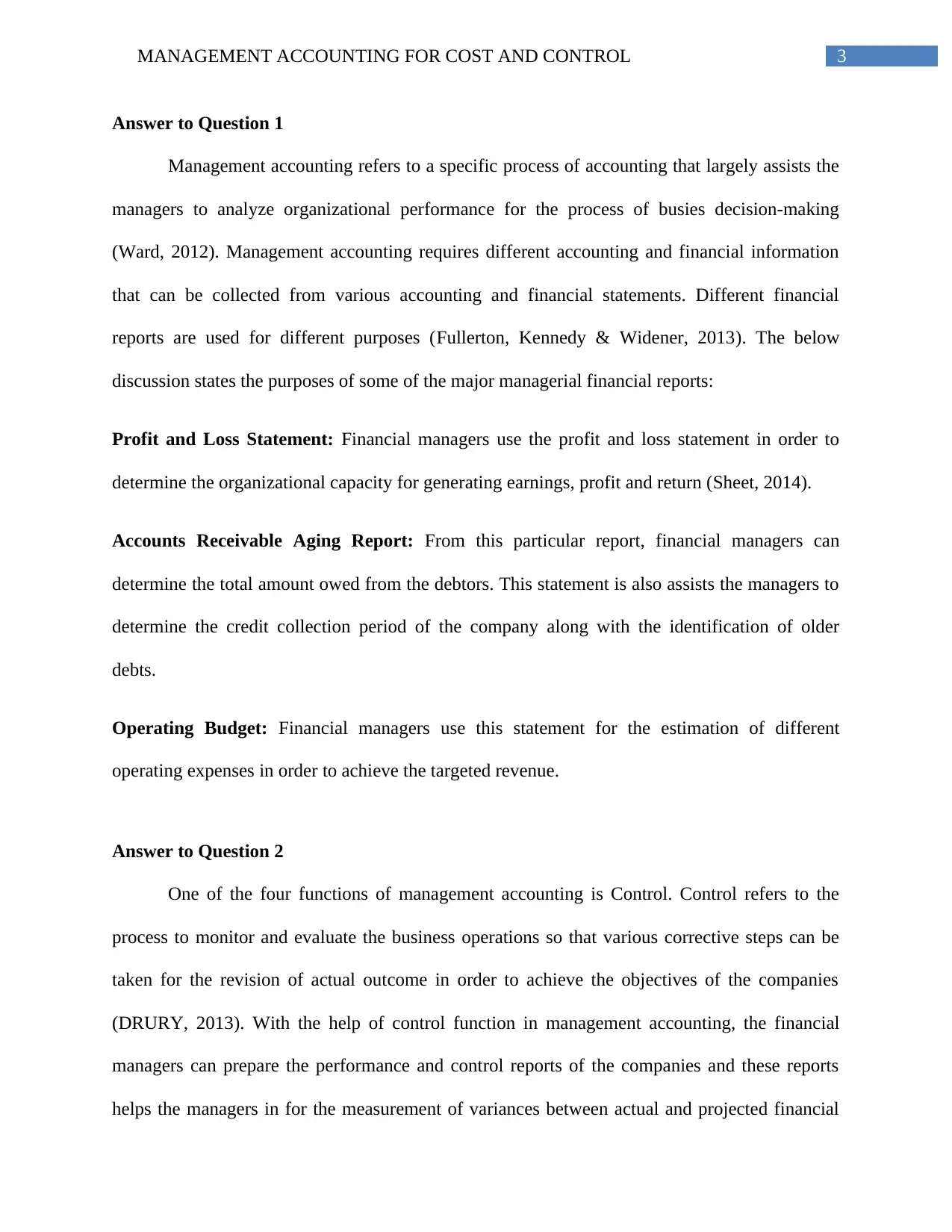
Answer to Question 1
Management accounting refers to a specific process of accounting that largely assists the
managers to analyze organizational performance for the process of busies decision-making
(Ward, 2012). Management accounting requires different accounting and financial information
that can be collected from various accounting and financial statements. Different financial
reports are used for different purposes (Fullerton, Kennedy & Widener, 2013). The below
discussion states the purposes of some of the major managerial financial reports:
Profit and Loss Statement: Financial managers use the profit and loss statement in order to
determine the organizational capacity for generating earnings, profit and return (Sheet, 2014).
Accounts Receivable Aging Report: From this particular report, financial managers can
determine the total amount owed from the debtors. This statement is also assists the managers to
determine the credit collection period of the company along with the identification of older
debts.
Operating Budget: Financial managers use this statement for the estimation of different
operating expenses in order to achieve the targeted revenue.
Answer to Question 2
One of the four functions of management accounting is Control. Control refers to the
process to monitor and evaluate the business operations so that various corrective steps can be
taken for the revision of actual outcome in order to achieve the objectives of the companies
(DRURY, 2013). With the help of control function in management accounting, the financial
managers can prepare the performance and control reports of the companies and these reports
helps the managers in for the measurement of variances between actual and projected financial
Answer to Question 1
Management accounting refers to a specific process of accounting that largely assists the
managers to analyze organizational performance for the process of busies decision-making
(Ward, 2012). Management accounting requires different accounting and financial information
that can be collected from various accounting and financial statements. Different financial
reports are used for different purposes (Fullerton, Kennedy & Widener, 2013). The below
discussion states the purposes of some of the major managerial financial reports:
Profit and Loss Statement: Financial managers use the profit and loss statement in order to
determine the organizational capacity for generating earnings, profit and return (Sheet, 2014).
Accounts Receivable Aging Report: From this particular report, financial managers can
determine the total amount owed from the debtors. This statement is also assists the managers to
determine the credit collection period of the company along with the identification of older
debts.
Operating Budget: Financial managers use this statement for the estimation of different
operating expenses in order to achieve the targeted revenue.
Answer to Question 2
One of the four functions of management accounting is Control. Control refers to the
process to monitor and evaluate the business operations so that various corrective steps can be
taken for the revision of actual outcome in order to achieve the objectives of the companies
(DRURY, 2013). With the help of control function in management accounting, the financial
managers can prepare the performance and control reports of the companies and these reports
helps the managers in for the measurement of variances between actual and projected financial
Paraphrase This Document
Need a fresh take? Get an instant paraphrase of this document with our AI Paraphraser

4MANAGEMENT ACCOUNTING FOR COST AND CONTROL
performance (Hall, 2012). Financial managers use these variances for identifying the factors
causing issues in the achievement of targeted performance so that corrective actions can be taken
against them. Hence, from the above analysis, it can be seen that control function assists in the
identification of issues in the business operations so that the performance of the companies can
be enhanced (Otley, 2015).
Answer to Question 3
Below are the four purposes of product costing.
The accumulation of relative cost of production
To assign of cost of production to the product units
For the determination of costs of production more accurately for large variety of nearly
identical products, and
For the implementation of effective control over the cost of production (Stark, 2015)
Answer to Question 4
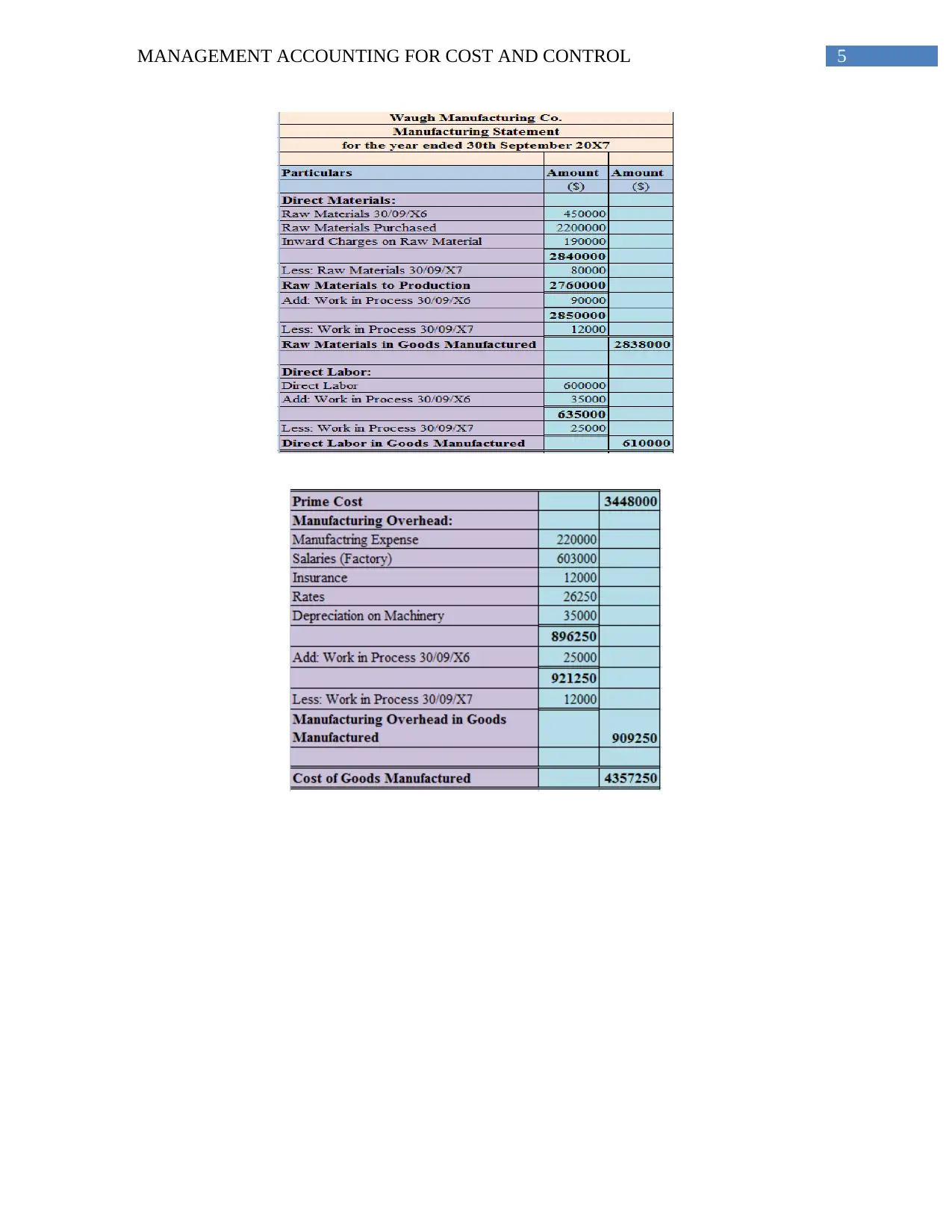
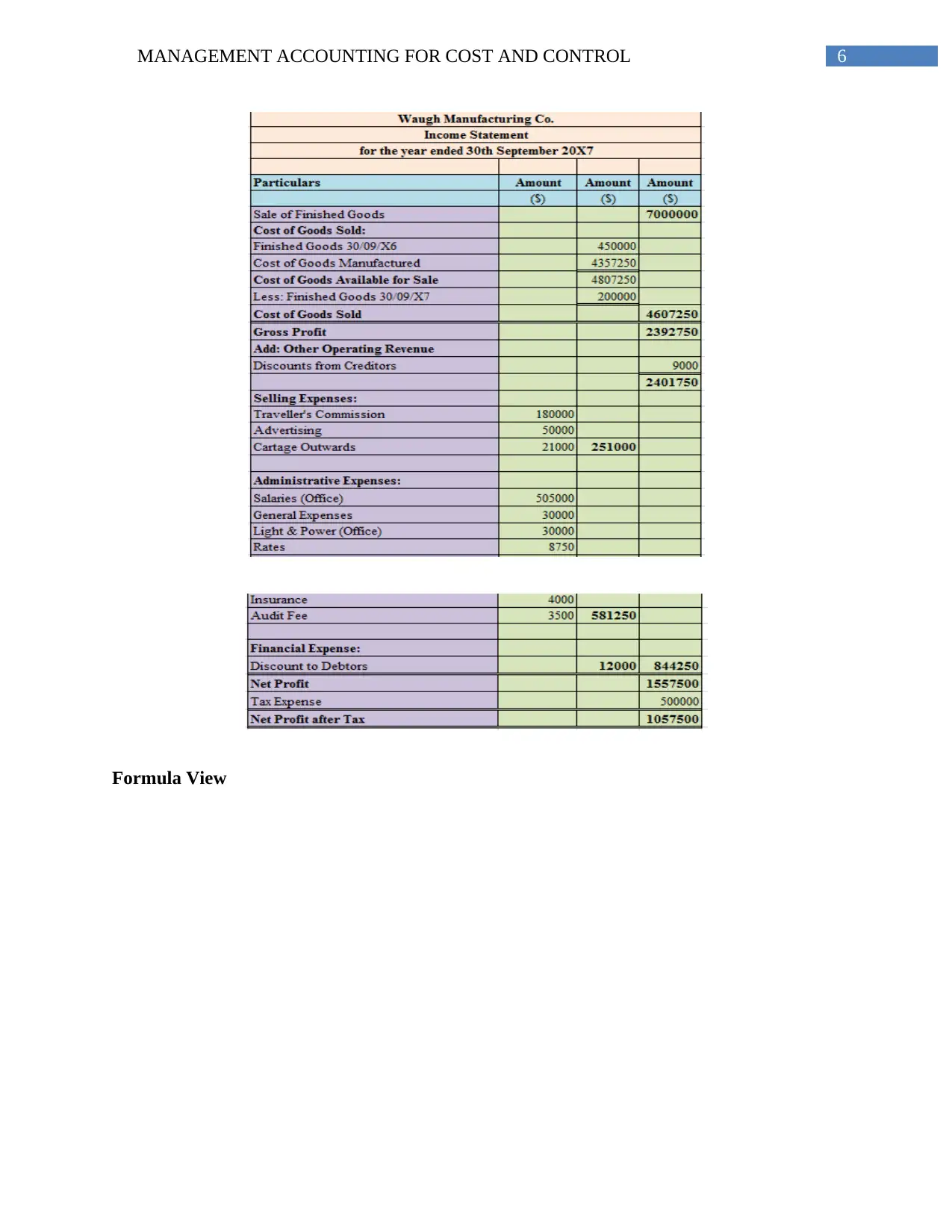
Normal View
performance (Hall, 2012). Financial managers use these variances for identifying the factors
causing issues in the achievement of targeted performance so that corrective actions can be taken
against them. Hence, from the above analysis, it can be seen that control function assists in the
identification of issues in the business operations so that the performance of the companies can
be enhanced (Otley, 2015).
Answer to Question 3
Below are the four purposes of product costing.
The accumulation of relative cost of production
To assign of cost of production to the product units
For the determination of costs of production more accurately for large variety of nearly
identical products, and
For the implementation of effective control over the cost of production (Stark, 2015)
Answer to Question 4
Normal View

5MANAGEMENT ACCOUNTING FOR COST AND CONTROL
⊘ This is a preview!⊘
Do you want full access?
Subscribe today to unlock all pages.

Trusted by 1+ million students worldwide

6MANAGEMENT ACCOUNTING FOR COST AND CONTROL
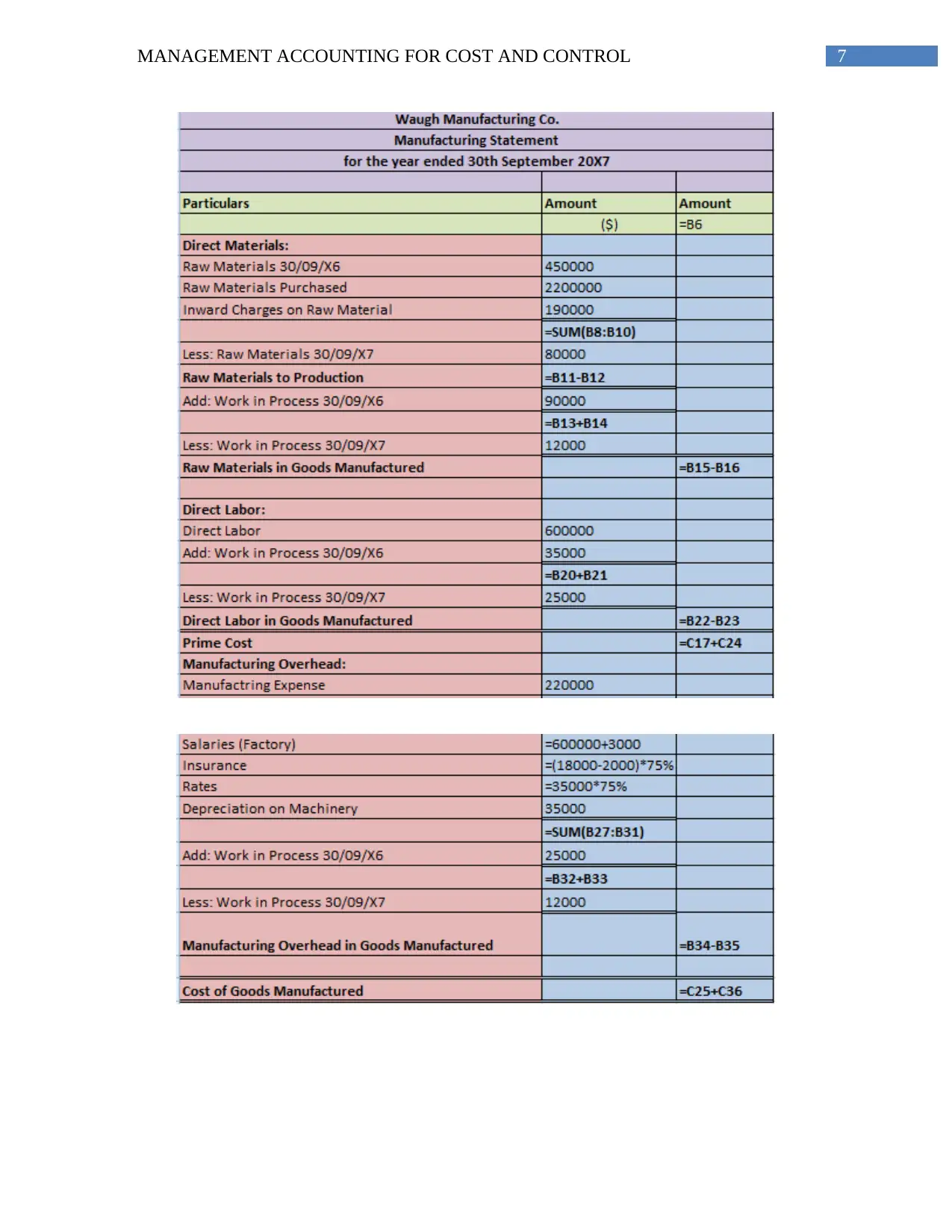
Formula View
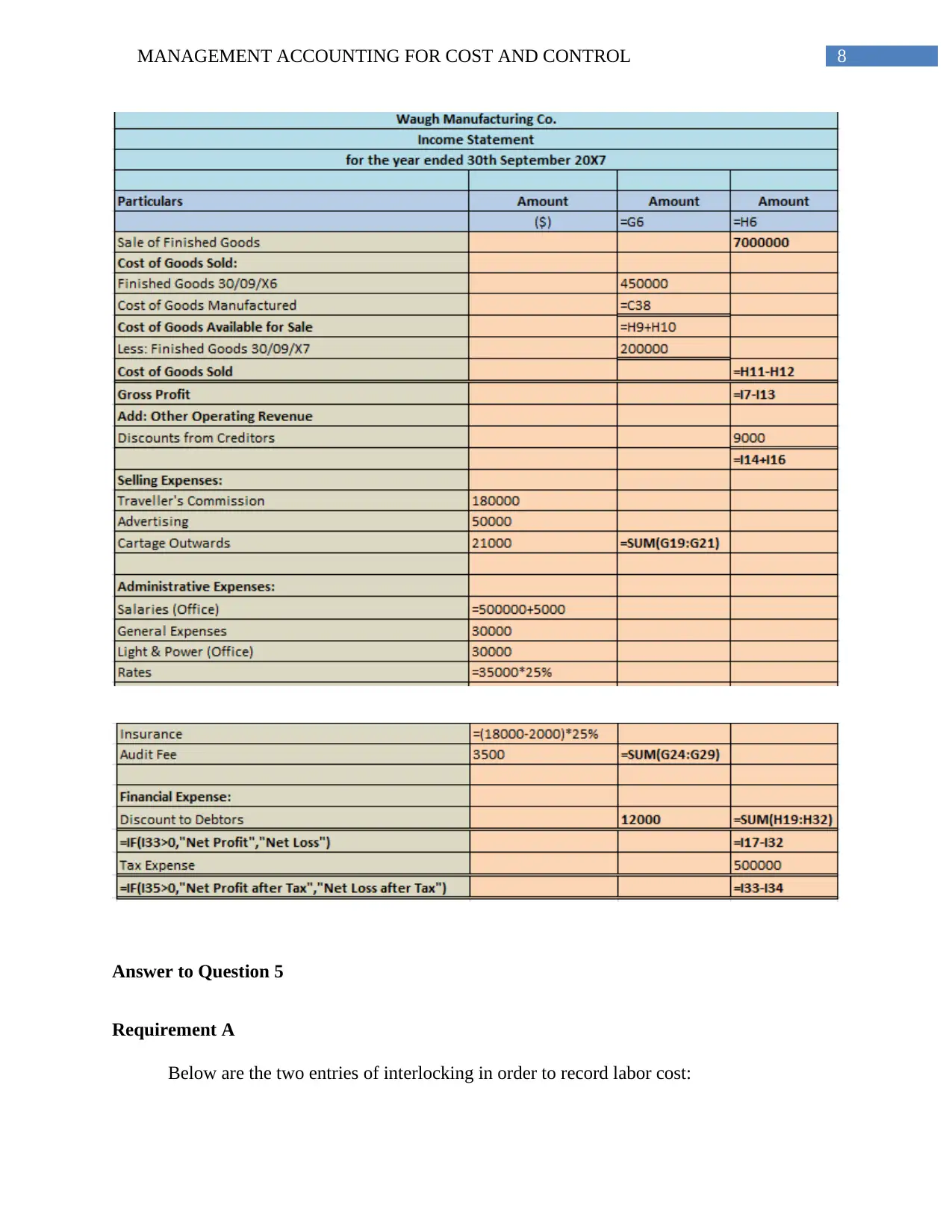
Formula View
Paraphrase This Document
Need a fresh take? Get an instant paraphrase of this document with our AI Paraphraser

7MANAGEMENT ACCOUNTING FOR COST AND CONTROL

8MANAGEMENT ACCOUNTING FOR COST AND CONTROL
Answer to Question 5
Requirement A
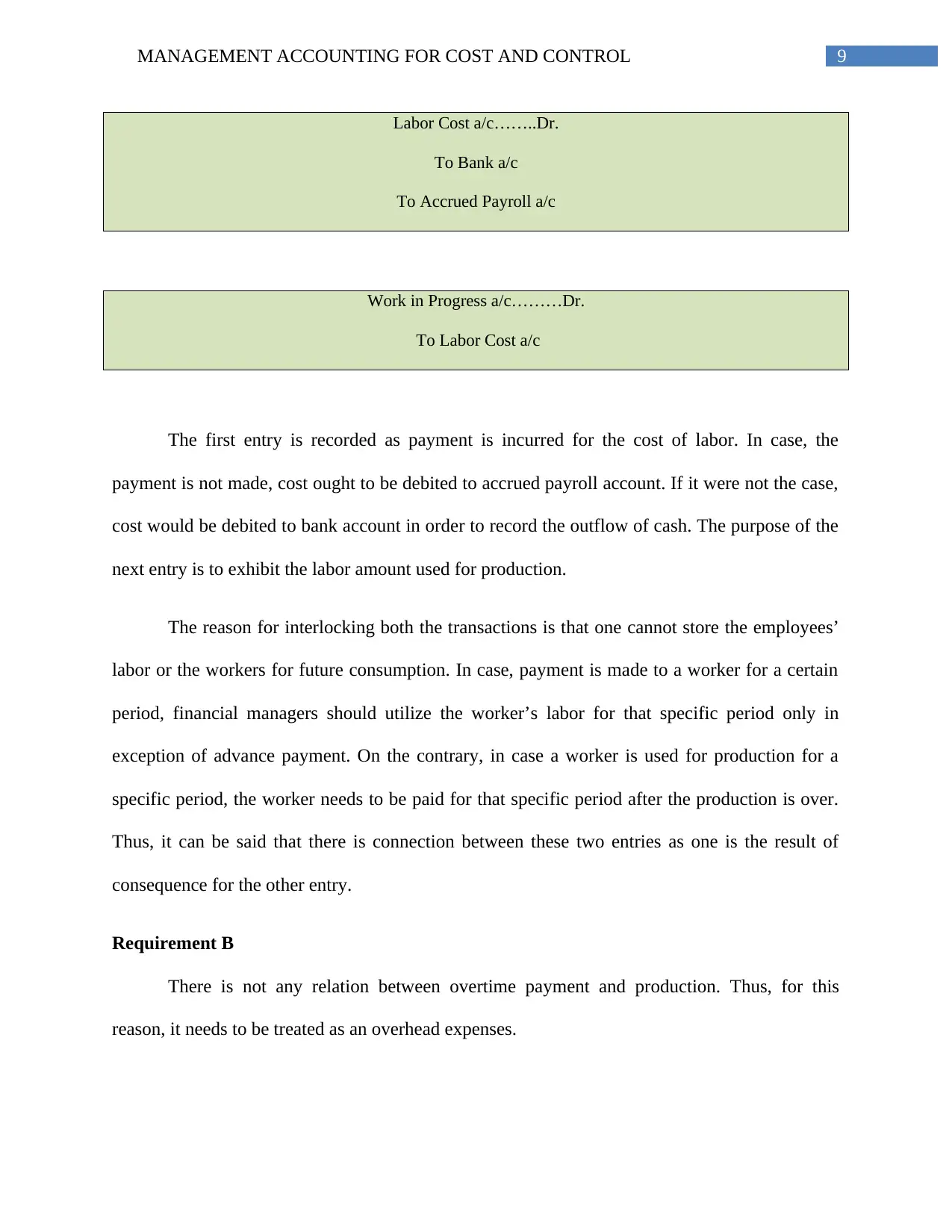
Below are the two entries of interlocking in order to record labor cost:
Answer to Question 5
Requirement A
Below are the two entries of interlocking in order to record labor cost:
⊘ This is a preview!⊘
Do you want full access?
Subscribe today to unlock all pages.

Trusted by 1+ million students worldwide

9MANAGEMENT ACCOUNTING FOR COST AND CONTROL
Labor Cost a/c……..Dr.
To Bank a/c
To Accrued Payroll a/c
Work in Progress a/c………Dr.
To Labor Cost a/c
The first entry is recorded as payment is incurred for the cost of labor. In case, the
payment is not made, cost ought to be debited to accrued payroll account. If it were not the case,
cost would be debited to bank account in order to record the outflow of cash. The purpose of the
next entry is to exhibit the labor amount used for production.
The reason for interlocking both the transactions is that one cannot store the employees’
labor or the workers for future consumption. In case, payment is made to a worker for a certain
period, financial managers should utilize the worker’s labor for that specific period only in
exception of advance payment. On the contrary, in case a worker is used for production for a
specific period, the worker needs to be paid for that specific period after the production is over.
Thus, it can be said that there is connection between these two entries as one is the result of
consequence for the other entry.
Requirement B
There is not any relation between overtime payment and production. Thus, for this
reason, it needs to be treated as an overhead expenses.
Labor Cost a/c……..Dr.
To Bank a/c
To Accrued Payroll a/c
Work in Progress a/c………Dr.
To Labor Cost a/c
The first entry is recorded as payment is incurred for the cost of labor. In case, the
payment is not made, cost ought to be debited to accrued payroll account. If it were not the case,
cost would be debited to bank account in order to record the outflow of cash. The purpose of the
next entry is to exhibit the labor amount used for production.
The reason for interlocking both the transactions is that one cannot store the employees’
labor or the workers for future consumption. In case, payment is made to a worker for a certain
period, financial managers should utilize the worker’s labor for that specific period only in
exception of advance payment. On the contrary, in case a worker is used for production for a
specific period, the worker needs to be paid for that specific period after the production is over.
Thus, it can be said that there is connection between these two entries as one is the result of
consequence for the other entry.
Requirement B
There is not any relation between overtime payment and production. Thus, for this
reason, it needs to be treated as an overhead expenses.
Paraphrase This Document
Need a fresh take? Get an instant paraphrase of this document with our AI Paraphraser

10MANAGEMENT ACCOUNTING FOR COST AND CONTROL
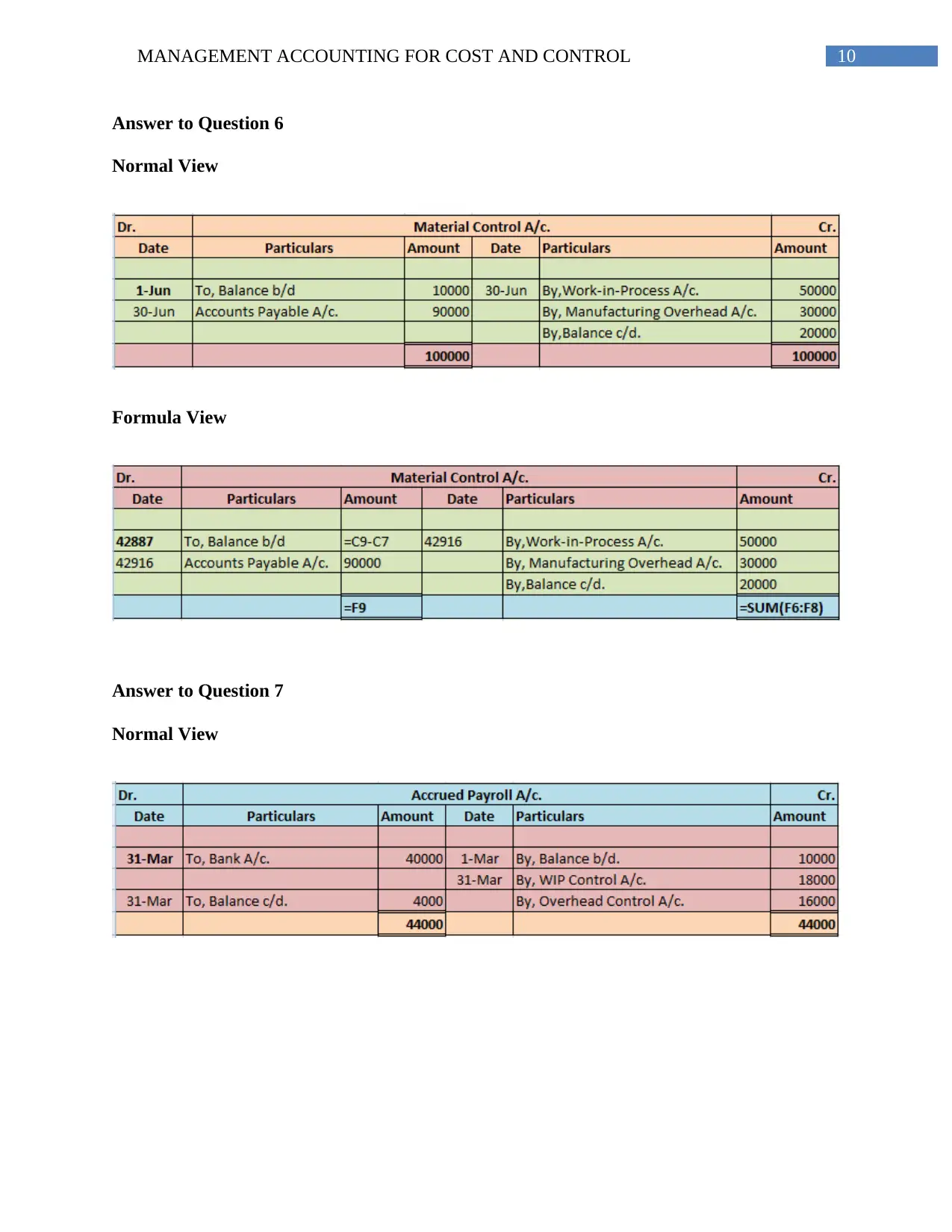
Answer to Question 6
Normal View
Formula View
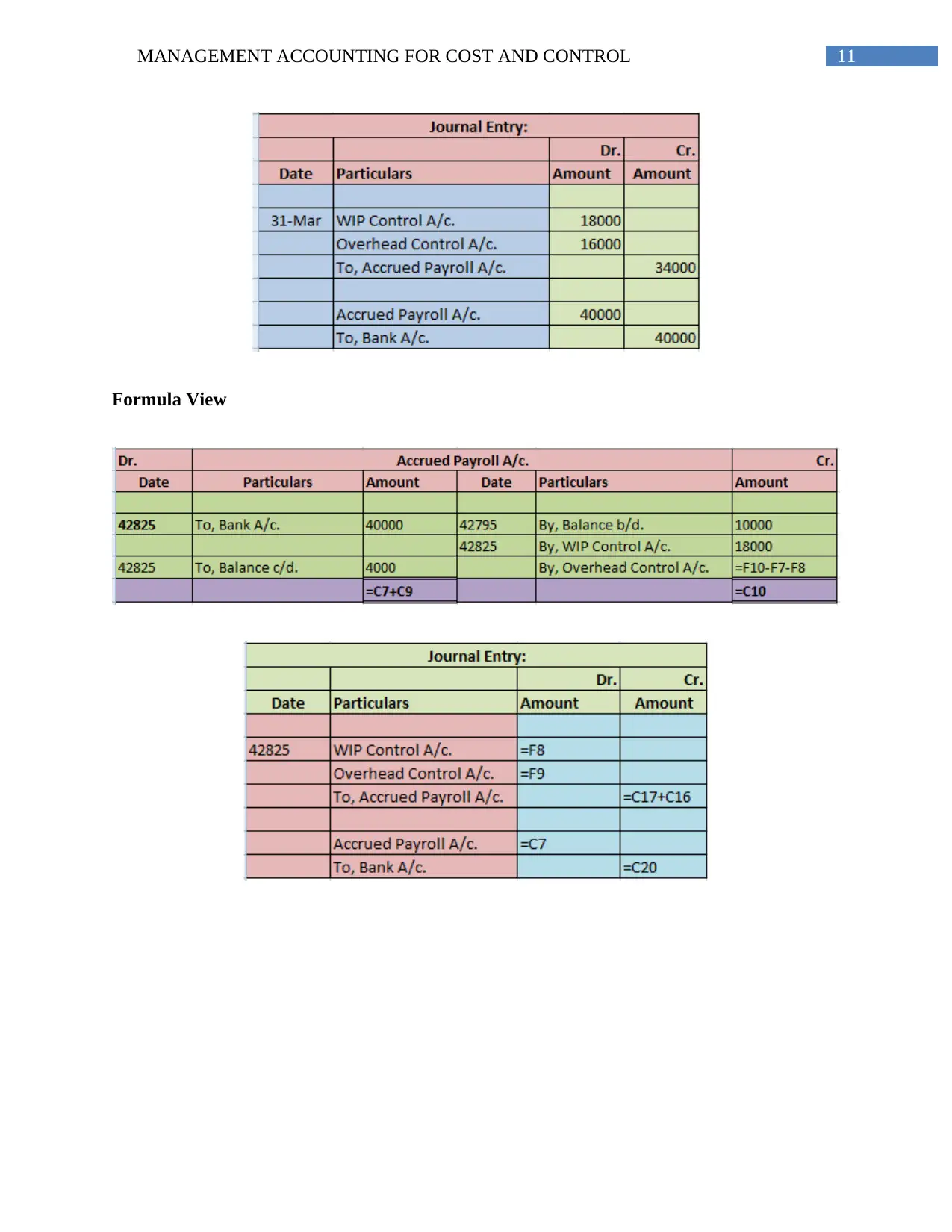
Answer to Question 7
Normal View
Answer to Question 6
Normal View
Formula View
Answer to Question 7
Normal View

11MANAGEMENT ACCOUNTING FOR COST AND CONTROL
Formula View
Formula View
⊘ This is a preview!⊘
Do you want full access?
Subscribe today to unlock all pages.

Trusted by 1+ million students worldwide
1 out of 24
Related Documents
Your All-in-One AI-Powered Toolkit for Academic Success.
+13062052269
info@desklib.com
Available 24*7 on WhatsApp / Email
Unlock your academic potential
Copyright © 2020–2026 A2Z Services. All Rights Reserved. Developed and managed by ZUCOL.