University Management Accounting Report: Costing Techniques Analysis
VerifiedAdded on  2022/11/24
|11
|1497
|174
Report
AI Summary
This report, prepared for a Management Accounting course, delves into the application of various costing techniques within a business context. It begins by introducing the concept of job costing, highlighting its relevance in organizations with unique, customized projects, and discussing its limitations. The report then presents quantitative and qualitative costing data, providing a practical example to illustrate cost accounting principles. An in-depth analysis of the Activity-Based Costing (ABC) model follows, demonstrating its effectiveness in allocating overhead costs. The report concludes with recommendations for improving managerial decision-making processes, emphasizing the importance of understanding and effectively implementing costing techniques for better cost management and profitability.
Running head: MANAGEMENT ACCOUNTING
Management Accounting
Name of the Student:
Name of the University:
Author’s Note:
Management Accounting
Name of the Student:
Name of the University:
Author’s Note:
Paraphrase This Document
Need a fresh take? Get an instant paraphrase of this document with our AI Paraphraser

1MANAGEMENT ACCOUNTING
Executive Summary:
This report aims at analyzing and understanding costing techniques and its application in the
business practice to help in cost and management accounting and managerial decision-making.
There are various cost and management accounting tools and techniques that can be
implemented in business successfully and it can help in better cost management and decision-
making. Some of such important cost and management accounting issues have been discussed in
this report with a practical example to illustrate it in a better way. Lastly, the paper concludes
with outlining some recommendation, which can help an organization to improve their
managerial decision making process.
Executive Summary:
This report aims at analyzing and understanding costing techniques and its application in the
business practice to help in cost and management accounting and managerial decision-making.
There are various cost and management accounting tools and techniques that can be
implemented in business successfully and it can help in better cost management and decision-
making. Some of such important cost and management accounting issues have been discussed in
this report with a practical example to illustrate it in a better way. Lastly, the paper concludes
with outlining some recommendation, which can help an organization to improve their
managerial decision making process.

2MANAGEMENT ACCOUNTING
Table of Contents
Introduction:....................................................................................................................................3
Job Costing Issues and statement of the problem:...........................................................................3
Presentation of Quantitative and Qualitative Costing Data and Analysis:......................................4
Analysis of the Activity Based Costing Model:..........................................................................6
Conclusion:......................................................................................................................................7
References and bibliography:..........................................................................................................8
Appendix:........................................................................................................................................9
Application of Activity Based Costing System:..........................................................................9
Table of Contents
Introduction:....................................................................................................................................3
Job Costing Issues and statement of the problem:...........................................................................3
Presentation of Quantitative and Qualitative Costing Data and Analysis:......................................4
Analysis of the Activity Based Costing Model:..........................................................................6
Conclusion:......................................................................................................................................7
References and bibliography:..........................................................................................................8
Appendix:........................................................................................................................................9
Application of Activity Based Costing System:..........................................................................9
⊘ This is a preview!⊘
Do you want full access?
Subscribe today to unlock all pages.

Trusted by 1+ million students worldwide

3MANAGEMENT ACCOUNTING
Introduction:
There are various cost and management accounting systems and methods, which can be
applied in various issues in real business practices to manage costs or to help in managerial
decision-making. Since the introduction of cost and management accounting, various techniques
and tools have been used in real business practices to manage costs and make decisions, those
techniques are known as traditional systems management accounting. With the advancement of
business and complexities in financial transactions and managerial issues the requirement for
advanced cost and management accounting tools and techniques have been felt and various
advanced and modern management accounting systems have been developed. Some of such cost
accounting issues and techniques have been described in the following paragraphs (Kokubu &
Kitada 2015).
Job Costing Issues and statement of the problem:
Job costing is a type of cost accounting model in which is mostly used in some
organization where, every order or contract differs from each other in terms of specification or
features. In this system, costs are recorded and ascertained for each job separately. As all the jobs
or contracts are different and requires different units and types of material and labors, each jobs
or contracts becomes unique in nature and hence requires separate costing and cost management.
The requirements of job costing keeps on changing with the specification and types of each job,
hence it is an important issue for job costing that there is no specific standard or formats, which
can be applied commonly in all the business organizations (Hilton & Platt 2013).
Introduction:
There are various cost and management accounting systems and methods, which can be
applied in various issues in real business practices to manage costs or to help in managerial
decision-making. Since the introduction of cost and management accounting, various techniques
and tools have been used in real business practices to manage costs and make decisions, those
techniques are known as traditional systems management accounting. With the advancement of
business and complexities in financial transactions and managerial issues the requirement for
advanced cost and management accounting tools and techniques have been felt and various
advanced and modern management accounting systems have been developed. Some of such cost
accounting issues and techniques have been described in the following paragraphs (Kokubu &
Kitada 2015).
Job Costing Issues and statement of the problem:
Job costing is a type of cost accounting model in which is mostly used in some
organization where, every order or contract differs from each other in terms of specification or
features. In this system, costs are recorded and ascertained for each job separately. As all the jobs
or contracts are different and requires different units and types of material and labors, each jobs
or contracts becomes unique in nature and hence requires separate costing and cost management.
The requirements of job costing keeps on changing with the specification and types of each job,
hence it is an important issue for job costing that there is no specific standard or formats, which
can be applied commonly in all the business organizations (Hilton & Platt 2013).
Paraphrase This Document
Need a fresh take? Get an instant paraphrase of this document with our AI Paraphraser

4MANAGEMENT ACCOUNTING
Various big organizations who are serving their customers with customized products and
specified services uses job costing system to ascertain costs related to a particular contract or job
and to determine prices. A major issue in job costing system is its different uses and application
indifferent organization based on the nature and requirements of each jobs. One more
disadvantage of job costing is its limited application, it can only be used in some specific types
of organization, and it cannot be used widely in every organizations (Kaplan & Atkinson 2015).
Presentation of Quantitative and Qualitative Costing Data and Analysis:
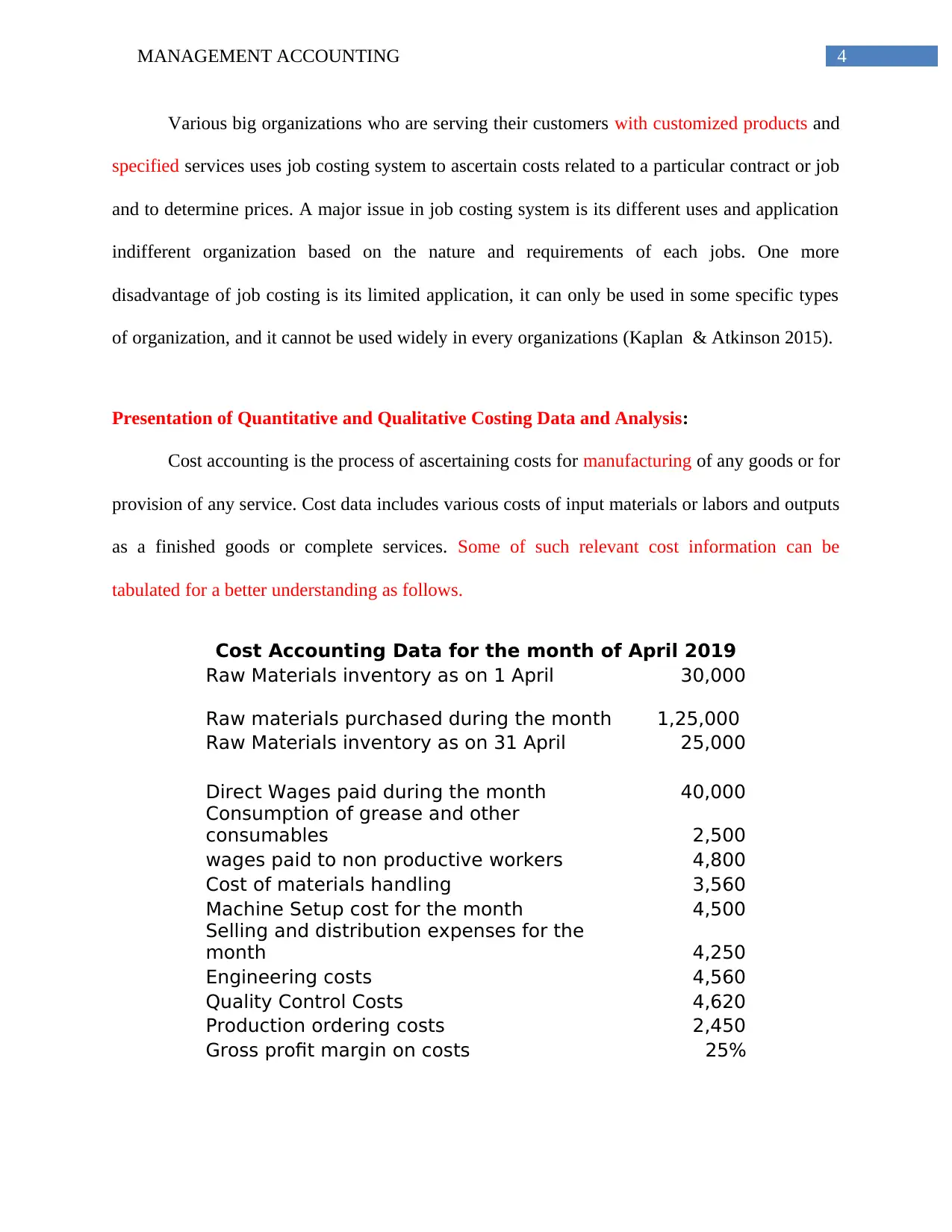
Cost accounting is the process of ascertaining costs for manufacturing of any goods or for
provision of any service. Cost data includes various costs of input materials or labors and outputs
as a finished goods or complete services. Some of such relevant cost information can be
tabulated for a better understanding as follows.
Cost Accounting Data for the month of April 2019
Raw Materials inventory as on 1 April 30,000
Raw materials purchased during the month 1,25,000
Raw Materials inventory as on 31 April 25,000
Direct Wages paid during the month 40,000
Consumption of grease and other
consumables 2,500
wages paid to non productive workers 4,800
Cost of materials handling 3,560
Machine Setup cost for the month 4,500
Selling and distribution expenses for the
month 4,250
Engineering costs 4,560
Quality Control Costs 4,620
Production ordering costs 2,450
Gross profit margin on costs 25%
Various big organizations who are serving their customers with customized products and
specified services uses job costing system to ascertain costs related to a particular contract or job
and to determine prices. A major issue in job costing system is its different uses and application
indifferent organization based on the nature and requirements of each jobs. One more
disadvantage of job costing is its limited application, it can only be used in some specific types
of organization, and it cannot be used widely in every organizations (Kaplan & Atkinson 2015).
Presentation of Quantitative and Qualitative Costing Data and Analysis:
Cost accounting is the process of ascertaining costs for manufacturing of any goods or for
provision of any service. Cost data includes various costs of input materials or labors and outputs
as a finished goods or complete services. Some of such relevant cost information can be
tabulated for a better understanding as follows.
Cost Accounting Data for the month of April 2019
Raw Materials inventory as on 1 April 30,000
Raw materials purchased during the month 1,25,000
Raw Materials inventory as on 31 April 25,000
Direct Wages paid during the month 40,000
Consumption of grease and other
consumables 2,500
wages paid to non productive workers 4,800
Cost of materials handling 3,560
Machine Setup cost for the month 4,500
Selling and distribution expenses for the
month 4,250
Engineering costs 4,560
Quality Control Costs 4,620
Production ordering costs 2,450
Gross profit margin on costs 25%

5MANAGEMENT ACCOUNTING
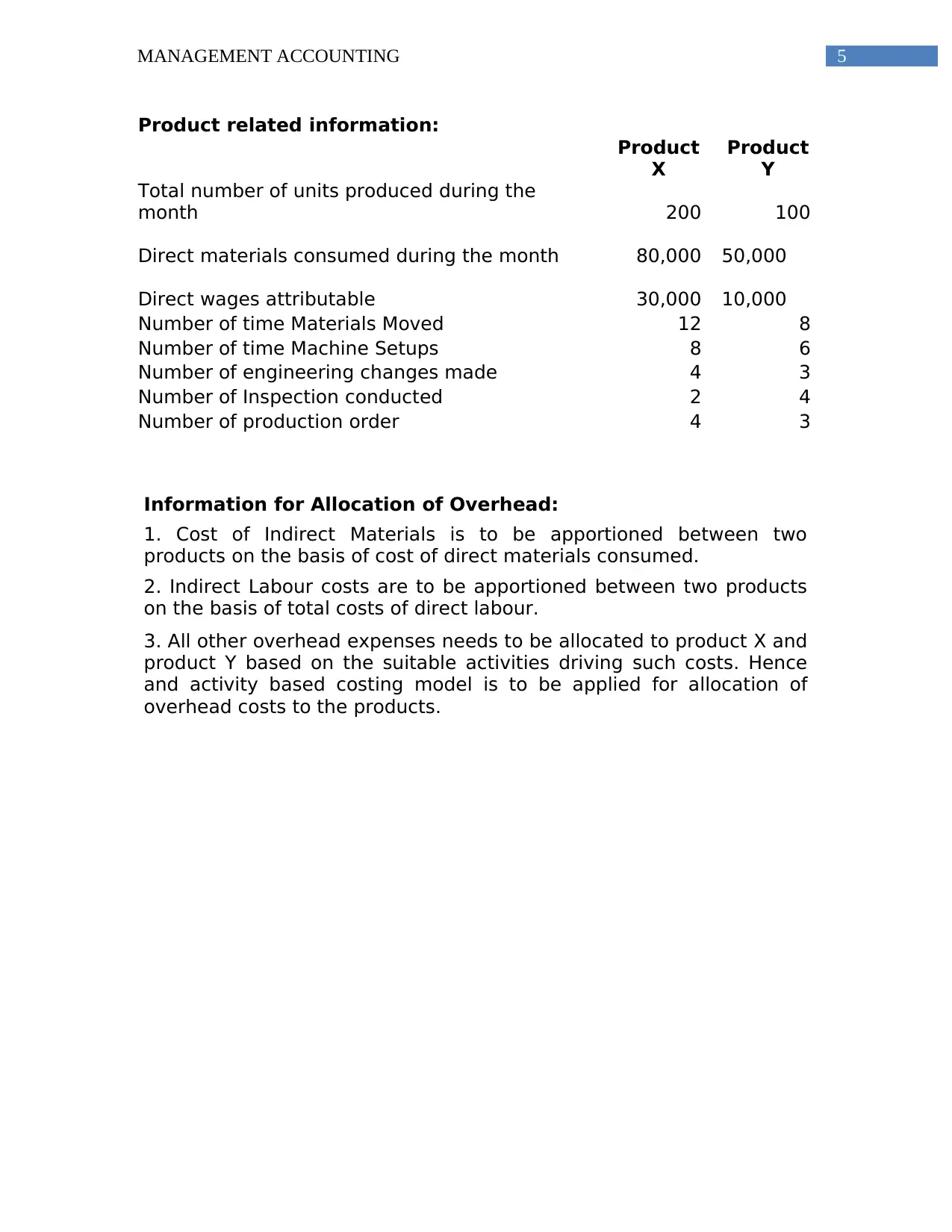
Product related information:
Product
X
Product
Y
Total number of units produced during the
month 200 100
Direct materials consumed during the month 80,000 50,000
Direct wages attributable 30,000 10,000
Number of time Materials Moved 12 8
Number of time Machine Setups 8 6
Number of engineering changes made 4 3
Number of Inspection conducted 2 4
Number of production order 4 3
Information for Allocation of Overhead:
1. Cost of Indirect Materials is to be apportioned between two
products on the basis of cost of direct materials consumed.
2. Indirect Labour costs are to be apportioned between two products
on the basis of total costs of direct labour.
3. All other overhead expenses needs to be allocated to product X and
product Y based on the suitable activities driving such costs. Hence
and activity based costing model is to be applied for allocation of
overhead costs to the products.
Product related information:
Product
X
Product
Y
Total number of units produced during the
month 200 100
Direct materials consumed during the month 80,000 50,000
Direct wages attributable 30,000 10,000
Number of time Materials Moved 12 8
Number of time Machine Setups 8 6
Number of engineering changes made 4 3
Number of Inspection conducted 2 4
Number of production order 4 3
Information for Allocation of Overhead:
1. Cost of Indirect Materials is to be apportioned between two
products on the basis of cost of direct materials consumed.
2. Indirect Labour costs are to be apportioned between two products
on the basis of total costs of direct labour.
3. All other overhead expenses needs to be allocated to product X and
product Y based on the suitable activities driving such costs. Hence
and activity based costing model is to be applied for allocation of
overhead costs to the products.
⊘ This is a preview!⊘
Do you want full access?
Subscribe today to unlock all pages.

Trusted by 1+ million students worldwide

6MANAGEMENT ACCOUNTING
Use of Cost Driver Allocated
overhead Use of Cost Driver Allocated
overhead
Product X Product Y
0
10000
20000
30000
40000
50000
60000
70000
80000
90000
Indirect Materials
Indirect Labor
Materials Handling
Costs
Machine Setup Costs
Engineering costs
Quality Control Costs
Production ordering
costs
Total Allocated
Overhead for Product X
and product Y
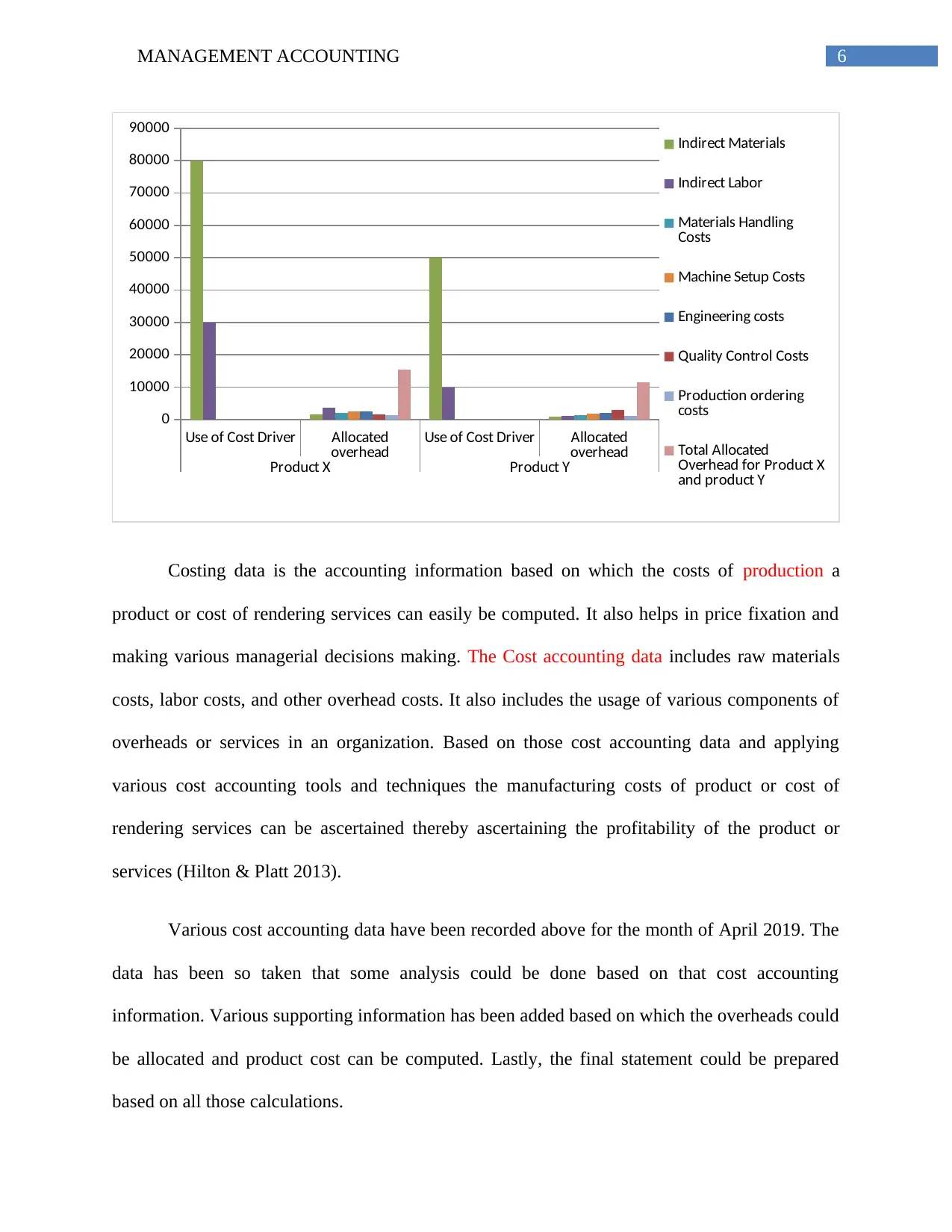
Costing data is the accounting information based on which the costs of production a
product or cost of rendering services can easily be computed. It also helps in price fixation and
making various managerial decisions making. The Cost accounting data includes raw materials
costs, labor costs, and other overhead costs. It also includes the usage of various components of
overheads or services in an organization. Based on those cost accounting data and applying
various cost accounting tools and techniques the manufacturing costs of product or cost of
rendering services can be ascertained thereby ascertaining the profitability of the product or
services (Hilton & Platt 2013).
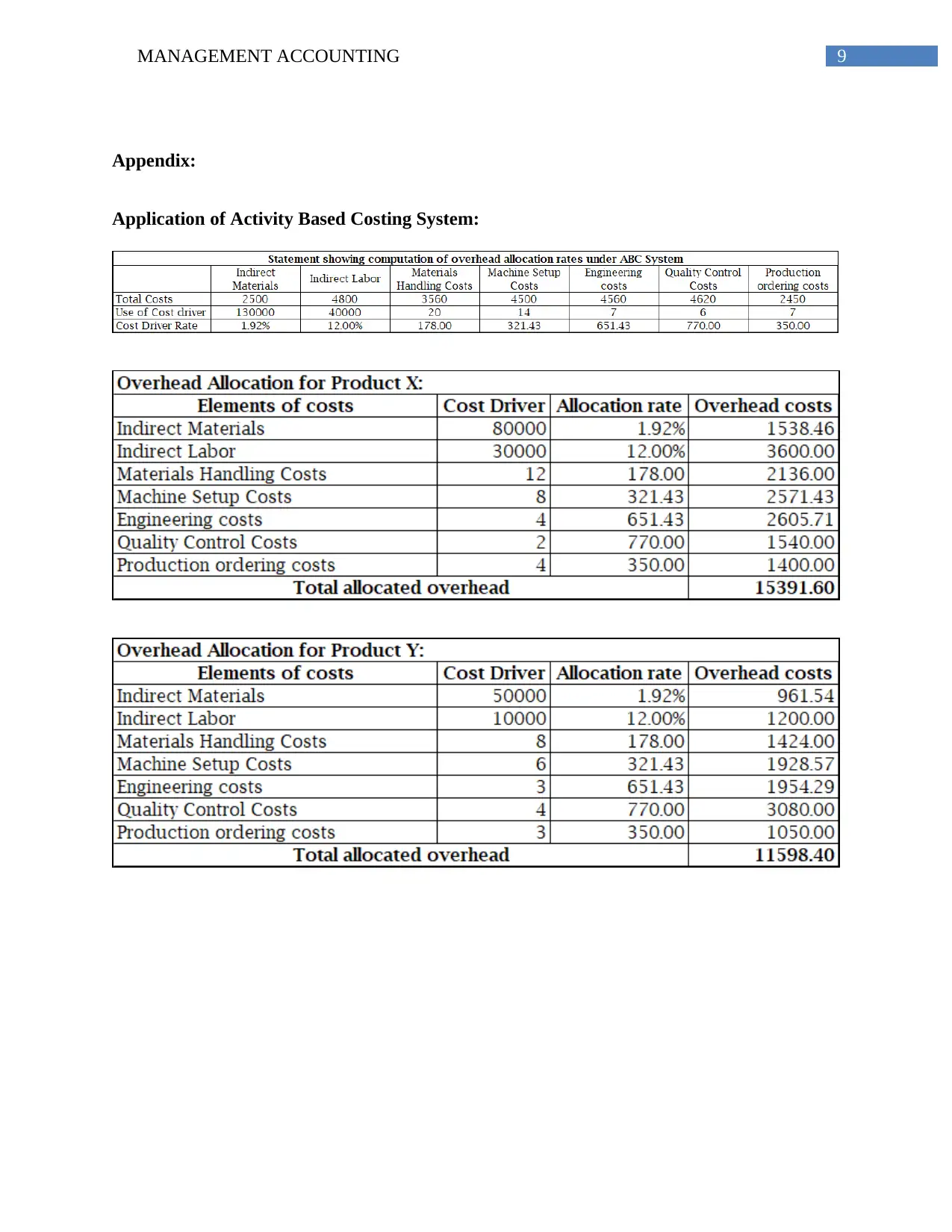
Various cost accounting data have been recorded above for the month of April 2019. The
data has been so taken that some analysis could be done based on that cost accounting
information. Various supporting information has been added based on which the overheads could
be allocated and product cost can be computed. Lastly, the final statement could be prepared
based on all those calculations.
Use of Cost Driver Allocated
overhead Use of Cost Driver Allocated
overhead
Product X Product Y
0
10000
20000
30000
40000
50000
60000
70000
80000
90000
Indirect Materials
Indirect Labor
Materials Handling
Costs
Machine Setup Costs
Engineering costs
Quality Control Costs
Production ordering
costs
Total Allocated
Overhead for Product X
and product Y
Costing data is the accounting information based on which the costs of production a
product or cost of rendering services can easily be computed. It also helps in price fixation and
making various managerial decisions making. The Cost accounting data includes raw materials
costs, labor costs, and other overhead costs. It also includes the usage of various components of
overheads or services in an organization. Based on those cost accounting data and applying
various cost accounting tools and techniques the manufacturing costs of product or cost of
rendering services can be ascertained thereby ascertaining the profitability of the product or
services (Hilton & Platt 2013).
Various cost accounting data have been recorded above for the month of April 2019. The
data has been so taken that some analysis could be done based on that cost accounting
information. Various supporting information has been added based on which the overheads could
be allocated and product cost can be computed. Lastly, the final statement could be prepared
based on all those calculations.
Paraphrase This Document
Need a fresh take? Get an instant paraphrase of this document with our AI Paraphraser

7MANAGEMENT ACCOUNTING
Qualitative information is some meaningful facts and figures which are not numerical in
nature and can help in various decision making process of the management. It not only exhibits
the profitability aspect of any product or services rather it emphasizes the qualitative
characteristics of the products or services. Data related to quality and demand of the products,
customers responsiveness to the products or services are some of the example of qualitative
information (Kaplan & Atkinson 2015).
Analysis of the Activity Based Costing Model:
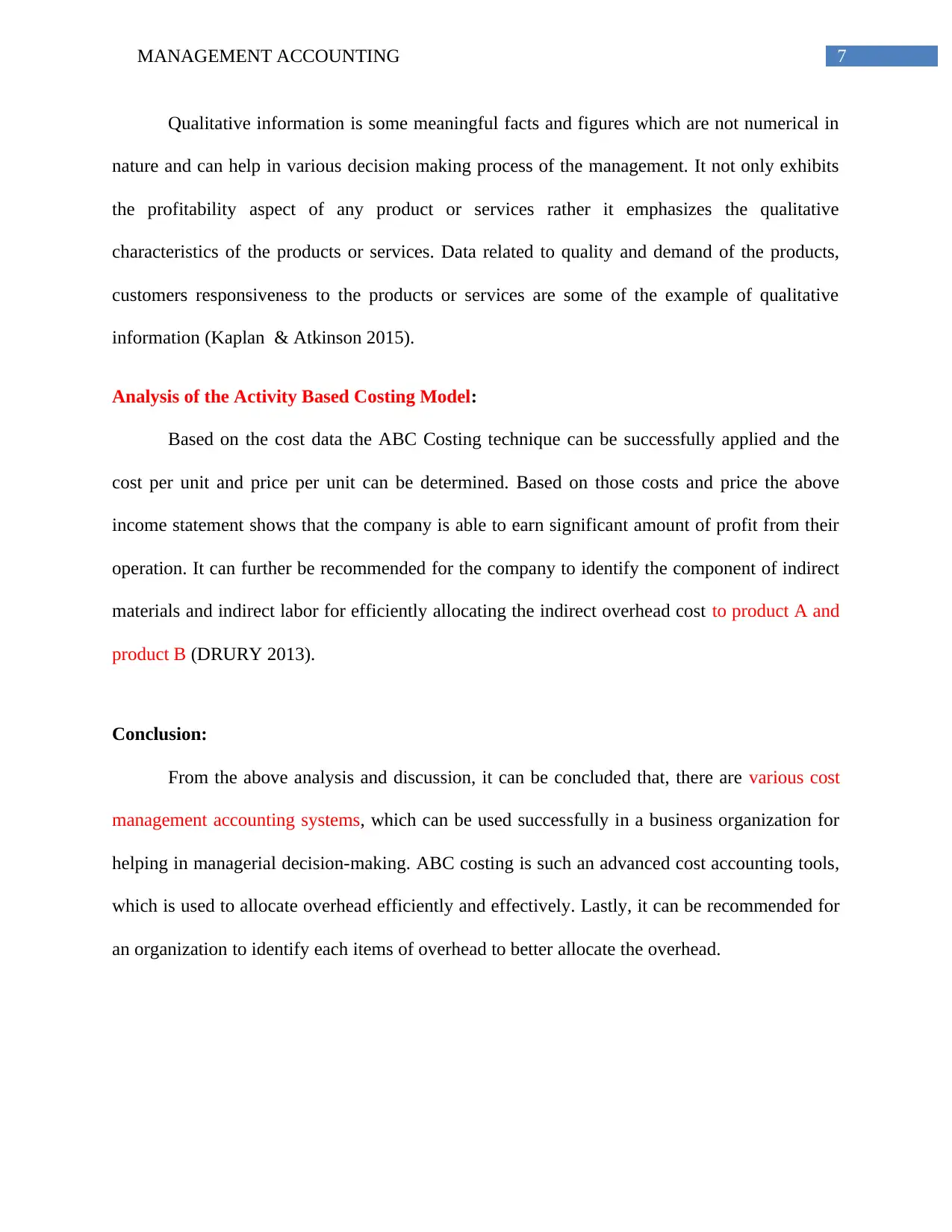
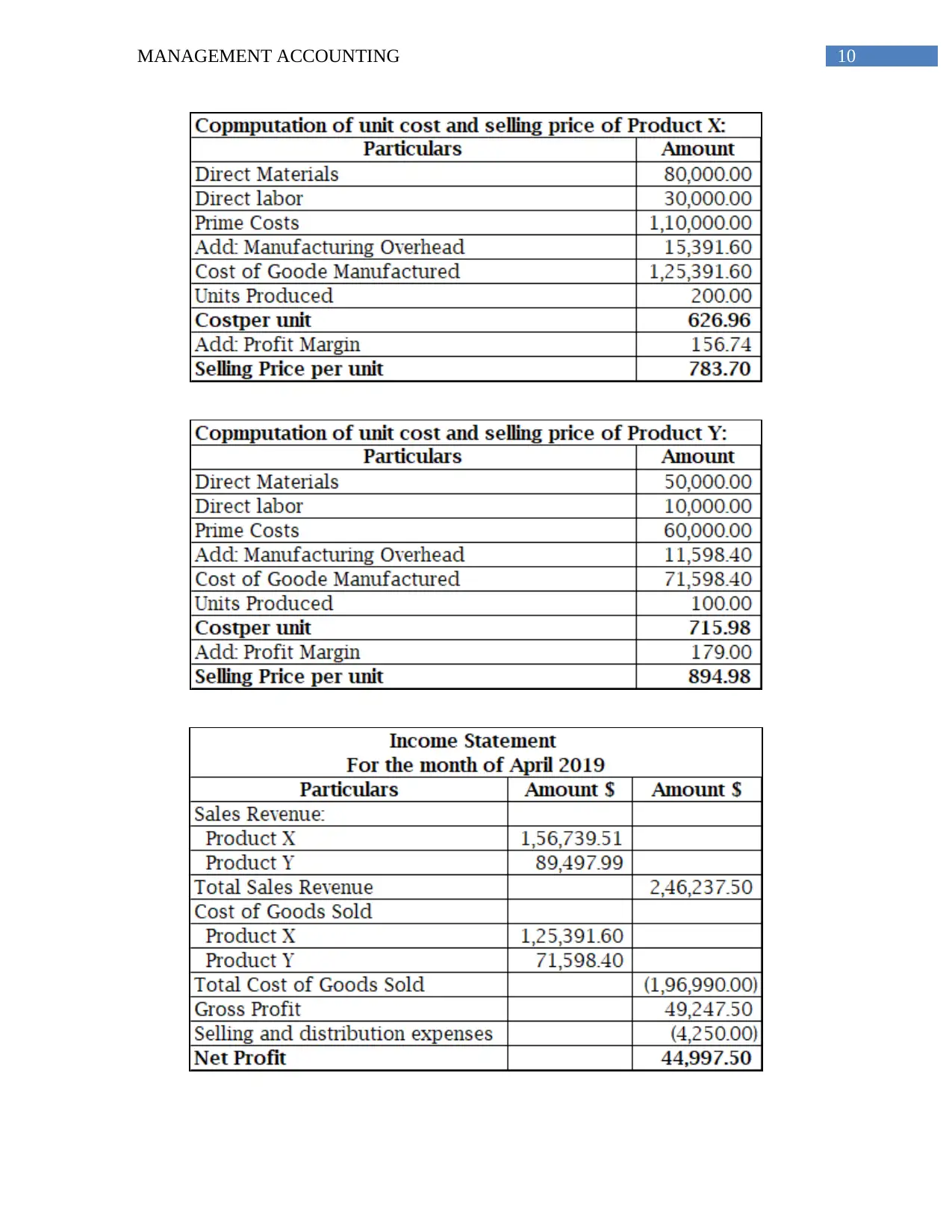
Based on the cost data the ABC Costing technique can be successfully applied and the
cost per unit and price per unit can be determined. Based on those costs and price the above
income statement shows that the company is able to earn significant amount of profit from their
operation. It can further be recommended for the company to identify the component of indirect
materials and indirect labor for efficiently allocating the indirect overhead cost to product A and
product B (DRURY 2013).
Conclusion:
From the above analysis and discussion, it can be concluded that, there are various cost
management accounting systems, which can be used successfully in a business organization for
helping in managerial decision-making. ABC costing is such an advanced cost accounting tools,
which is used to allocate overhead efficiently and effectively. Lastly, it can be recommended for
an organization to identify each items of overhead to better allocate the overhead.
Qualitative information is some meaningful facts and figures which are not numerical in
nature and can help in various decision making process of the management. It not only exhibits
the profitability aspect of any product or services rather it emphasizes the qualitative
characteristics of the products or services. Data related to quality and demand of the products,
customers responsiveness to the products or services are some of the example of qualitative
information (Kaplan & Atkinson 2015).
Analysis of the Activity Based Costing Model:
Based on the cost data the ABC Costing technique can be successfully applied and the
cost per unit and price per unit can be determined. Based on those costs and price the above
income statement shows that the company is able to earn significant amount of profit from their
operation. It can further be recommended for the company to identify the component of indirect
materials and indirect labor for efficiently allocating the indirect overhead cost to product A and
product B (DRURY 2013).
Conclusion:
From the above analysis and discussion, it can be concluded that, there are various cost
management accounting systems, which can be used successfully in a business organization for
helping in managerial decision-making. ABC costing is such an advanced cost accounting tools,
which is used to allocate overhead efficiently and effectively. Lastly, it can be recommended for
an organization to identify each items of overhead to better allocate the overhead.

8MANAGEMENT ACCOUNTING
References and bibliography:
DRURY, C. M. (2013). Management and cost accounting. Springer.
Hilton, R. W., & Platt, D. E. (2013). Managerial accounting: creating value in a dynamic
business environment. McGraw-Hill Education.
Kaplan, R. S., & Atkinson, A. A. (2015). Advanced management accounting. PHI Learning.
Klychova, G. S., Zakirova, A. R., Zakirov, Z. R., & Valieva, G. R. (2015). Management aspects
of production cost accounting in horse breeding. Asian Social Science, 11(11), 308.
Kokubu, K., & Kitada, H. (2015). Material flow cost accounting and existing management
perspectives. Journal of Cleaner Production, 108, 1279-1288.
Lanen, W., Anderson, S., & Maher, M. (2013). Fundamentals of cost accounting. McGraw-Hill
Education.
References and bibliography:
DRURY, C. M. (2013). Management and cost accounting. Springer.
Hilton, R. W., & Platt, D. E. (2013). Managerial accounting: creating value in a dynamic
business environment. McGraw-Hill Education.
Kaplan, R. S., & Atkinson, A. A. (2015). Advanced management accounting. PHI Learning.
Klychova, G. S., Zakirova, A. R., Zakirov, Z. R., & Valieva, G. R. (2015). Management aspects
of production cost accounting in horse breeding. Asian Social Science, 11(11), 308.
Kokubu, K., & Kitada, H. (2015). Material flow cost accounting and existing management
perspectives. Journal of Cleaner Production, 108, 1279-1288.
Lanen, W., Anderson, S., & Maher, M. (2013). Fundamentals of cost accounting. McGraw-Hill
Education.
⊘ This is a preview!⊘
Do you want full access?
Subscribe today to unlock all pages.

Trusted by 1+ million students worldwide

9MANAGEMENT ACCOUNTING
Appendix:
Application of Activity Based Costing System:
Appendix:
Application of Activity Based Costing System:
Paraphrase This Document
Need a fresh take? Get an instant paraphrase of this document with our AI Paraphraser

10MANAGEMENT ACCOUNTING
1 out of 11
Related Documents
Your All-in-One AI-Powered Toolkit for Academic Success.
 +13062052269
info@desklib.com
Available 24*7 on WhatsApp / Email
Unlock your academic potential
Copyright © 2020–2025 A2Z Services. All Rights Reserved. Developed and managed by ZUCOL.