University Management Accounting Homework: Costing and Allocation
VerifiedAdded on 2020/02/24
|17
|1181
|417
Homework Assignment
AI Summary
This management accounting assignment solution covers key concepts including profit and loss statements, accounts receivable aging reports, and operating budgets. It delves into the control function in management accounting, product costing purposes, and labor cost entries. The assignment explores activity-based costing, comparing its benefits and limitations to traditional costing methods. It also provides detailed solutions for cost allocation using direct, step, and reciprocal services methods, demonstrating the calculation of costs for service departments. The document includes a comprehensive reference list supporting the presented analysis and solutions.
Running head: MANAGEMENT ACCOUNTING
Management Accounting
Name of the Student:
Name of the University:
Author Note:
Management Accounting
Name of the Student:
Name of the University:
Author Note:
Paraphrase This Document
Need a fresh take? Get an instant paraphrase of this document with our AI Paraphraser

2MANAGEMENT ACCOUNTING
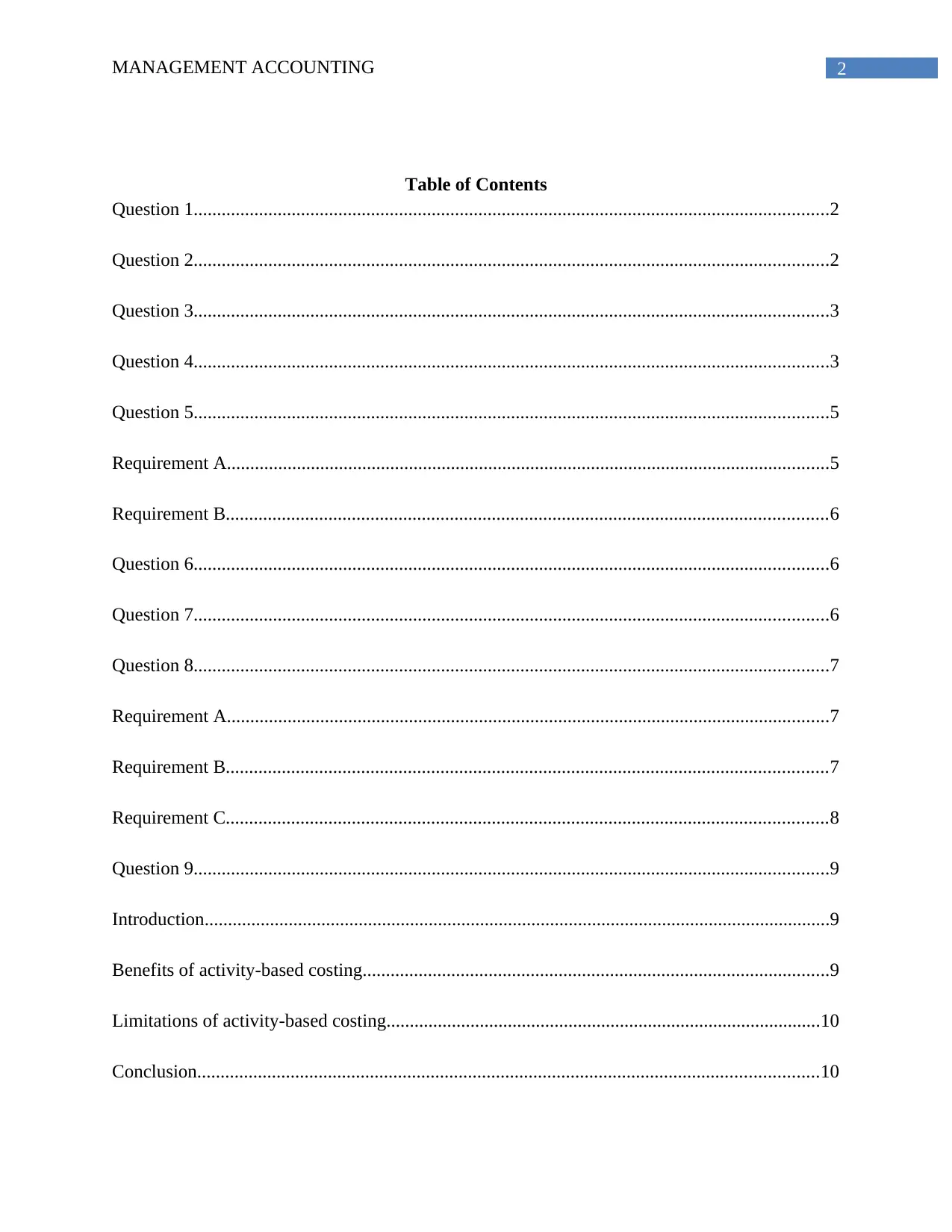
Table of Contents
Question 1........................................................................................................................................2
Question 2........................................................................................................................................2
Question 3........................................................................................................................................3
Question 4........................................................................................................................................3
Question 5........................................................................................................................................5
Requirement A.................................................................................................................................5
Requirement B.................................................................................................................................6
Question 6........................................................................................................................................6
Question 7........................................................................................................................................6
Question 8........................................................................................................................................7
Requirement A.................................................................................................................................7
Requirement B.................................................................................................................................7
Requirement C.................................................................................................................................8
Question 9........................................................................................................................................9
Introduction......................................................................................................................................9
Benefits of activity-based costing....................................................................................................9
Limitations of activity-based costing.............................................................................................10
Conclusion.....................................................................................................................................10
Table of Contents
Question 1........................................................................................................................................2
Question 2........................................................................................................................................2
Question 3........................................................................................................................................3
Question 4........................................................................................................................................3
Question 5........................................................................................................................................5
Requirement A.................................................................................................................................5
Requirement B.................................................................................................................................6
Question 6........................................................................................................................................6
Question 7........................................................................................................................................6
Question 8........................................................................................................................................7
Requirement A.................................................................................................................................7
Requirement B.................................................................................................................................7
Requirement C.................................................................................................................................8
Question 9........................................................................................................................................9
Introduction......................................................................................................................................9
Benefits of activity-based costing....................................................................................................9
Limitations of activity-based costing.............................................................................................10
Conclusion.....................................................................................................................................10

3MANAGEMENT ACCOUNTING
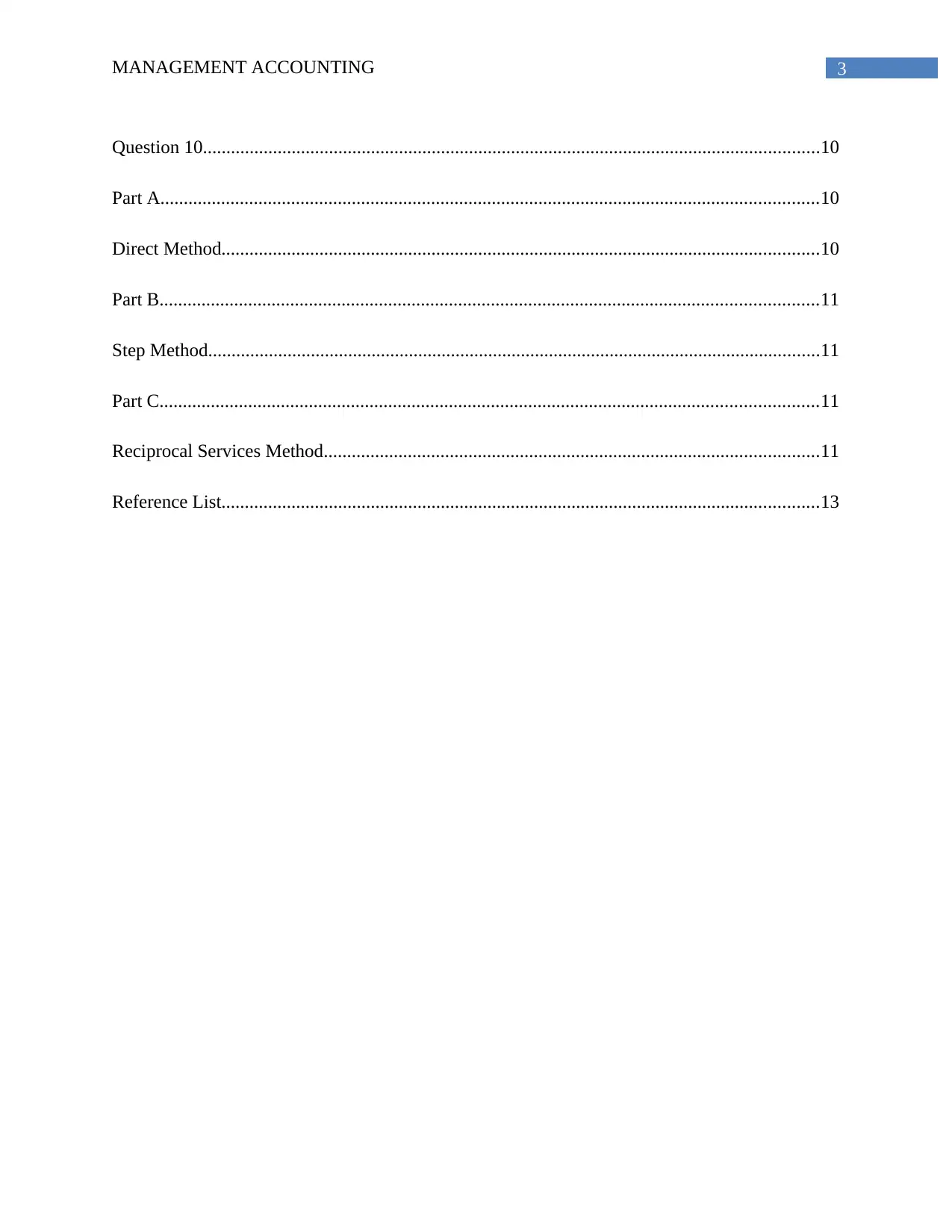
Question 10....................................................................................................................................10
Part A.............................................................................................................................................10
Direct Method................................................................................................................................10
Part B.............................................................................................................................................11
Step Method...................................................................................................................................11
Part C.............................................................................................................................................11
Reciprocal Services Method..........................................................................................................11
Reference List................................................................................................................................13
Question 10....................................................................................................................................10
Part A.............................................................................................................................................10
Direct Method................................................................................................................................10
Part B.............................................................................................................................................11
Step Method...................................................................................................................................11
Part C.............................................................................................................................................11
Reciprocal Services Method..........................................................................................................11
Reference List................................................................................................................................13
⊘ This is a preview!⊘
Do you want full access?
Subscribe today to unlock all pages.

Trusted by 1+ million students worldwide

4MANAGEMENT ACCOUNTING
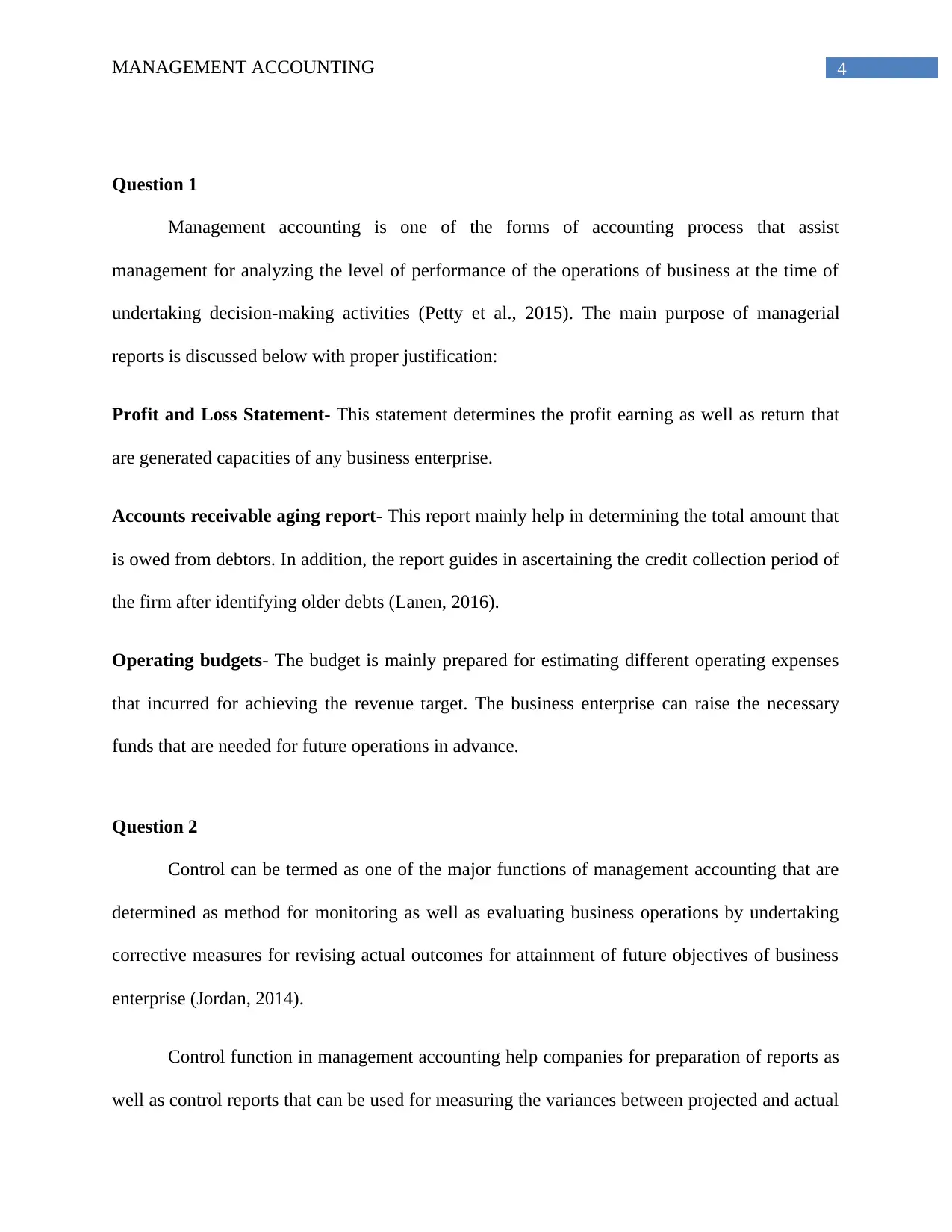
Question 1
Management accounting is one of the forms of accounting process that assist
management for analyzing the level of performance of the operations of business at the time of
undertaking decision-making activities (Petty et al., 2015). The main purpose of managerial
reports is discussed below with proper justification:
Profit and Loss Statement- This statement determines the profit earning as well as return that
are generated capacities of any business enterprise.
Accounts receivable aging report- This report mainly help in determining the total amount that
is owed from debtors. In addition, the report guides in ascertaining the credit collection period of
the firm after identifying older debts (Lanen, 2016).
Operating budgets- The budget is mainly prepared for estimating different operating expenses
that incurred for achieving the revenue target. The business enterprise can raise the necessary
funds that are needed for future operations in advance.
Question 2
Control can be termed as one of the major functions of management accounting that are
determined as method for monitoring as well as evaluating business operations by undertaking
corrective measures for revising actual outcomes for attainment of future objectives of business
enterprise (Jordan, 2014).
Control function in management accounting help companies for preparation of reports as
well as control reports that can be used for measuring the variances between projected and actual
Question 1
Management accounting is one of the forms of accounting process that assist
management for analyzing the level of performance of the operations of business at the time of
undertaking decision-making activities (Petty et al., 2015). The main purpose of managerial
reports is discussed below with proper justification:
Profit and Loss Statement- This statement determines the profit earning as well as return that
are generated capacities of any business enterprise.
Accounts receivable aging report- This report mainly help in determining the total amount that
is owed from debtors. In addition, the report guides in ascertaining the credit collection period of
the firm after identifying older debts (Lanen, 2016).
Operating budgets- The budget is mainly prepared for estimating different operating expenses
that incurred for achieving the revenue target. The business enterprise can raise the necessary
funds that are needed for future operations in advance.
Question 2
Control can be termed as one of the major functions of management accounting that are
determined as method for monitoring as well as evaluating business operations by undertaking
corrective measures for revising actual outcomes for attainment of future objectives of business
enterprise (Jordan, 2014).
Control function in management accounting help companies for preparation of reports as
well as control reports that can be used for measuring the variances between projected and actual
Paraphrase This Document
Need a fresh take? Get an instant paraphrase of this document with our AI Paraphraser

5MANAGEMENT ACCOUNTING
performance. In addition, the management use of these variances is to recognize the factors that
are used for target achievement and take remedial actions. Therefore, the control function help in
identifying the issues as well as eliminating or reducing the negative issues for enhancing the
performance of business related activities (Edmonds et al., 2016).
Question 3
There is various purpose of product costing that is mentioned as under:
To find out the production cost to the unit of product
To evaluate more production costs that give accurate results for multiple numbers of
related identical products
To collect relative production costs (Drury, 2013).
Better control over the cost of production
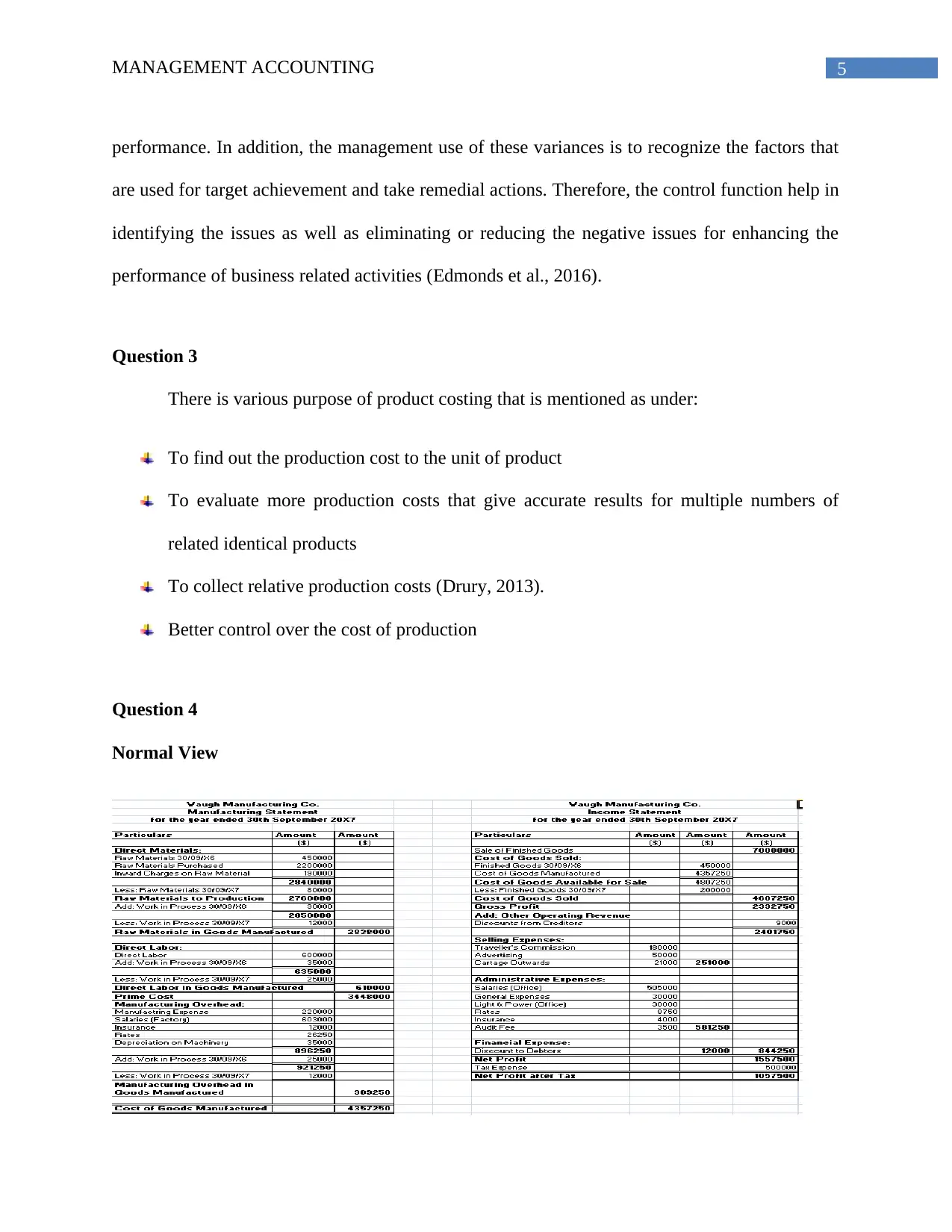
Question 4
Normal View
performance. In addition, the management use of these variances is to recognize the factors that
are used for target achievement and take remedial actions. Therefore, the control function help in
identifying the issues as well as eliminating or reducing the negative issues for enhancing the
performance of business related activities (Edmonds et al., 2016).
Question 3
There is various purpose of product costing that is mentioned as under:
To find out the production cost to the unit of product
To evaluate more production costs that give accurate results for multiple numbers of
related identical products
To collect relative production costs (Drury, 2013).
Better control over the cost of production
Question 4
Normal View

6MANAGEMENT ACCOUNTING
⊘ This is a preview!⊘
Do you want full access?
Subscribe today to unlock all pages.

Trusted by 1+ million students worldwide

7MANAGEMENT ACCOUNTING
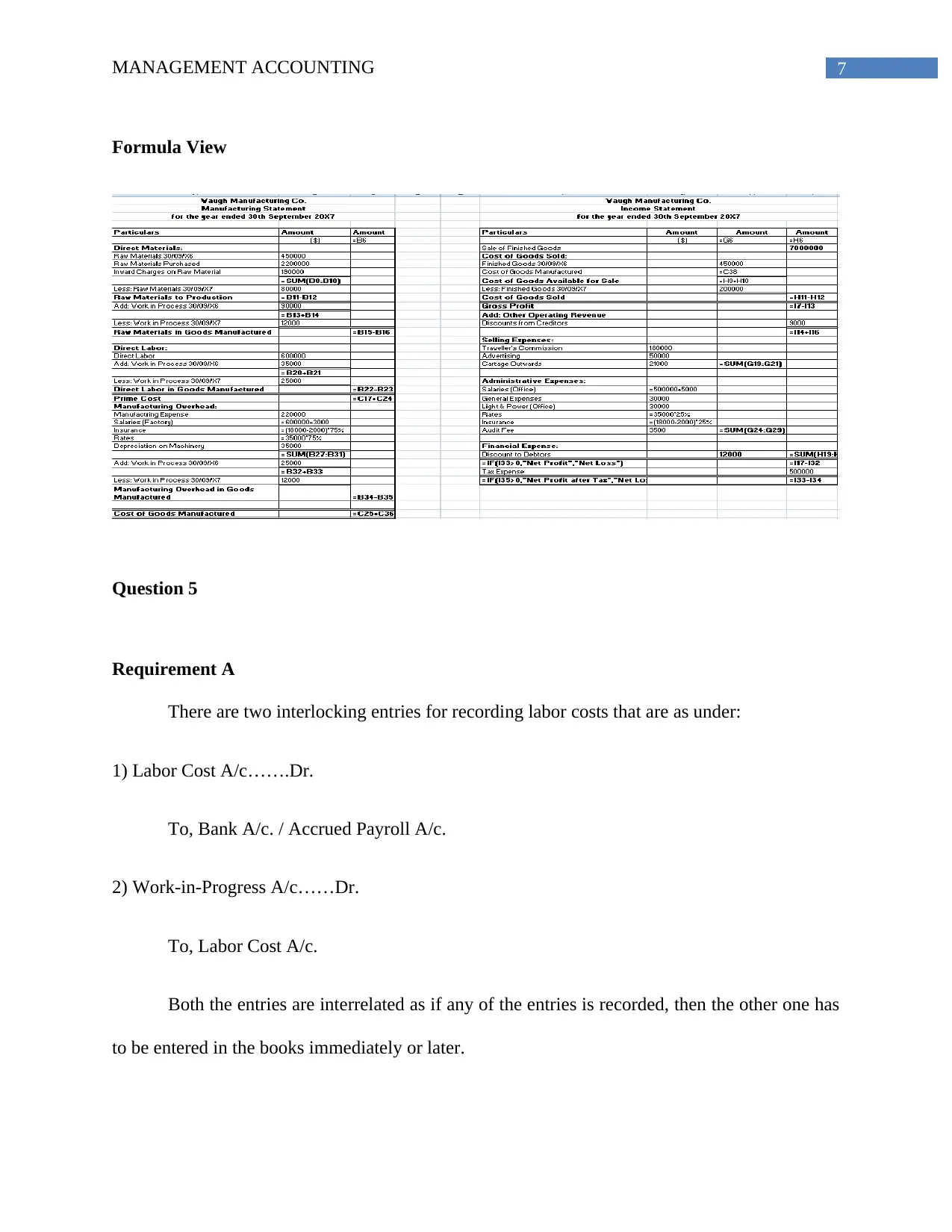
Formula View
Question 5
Requirement A
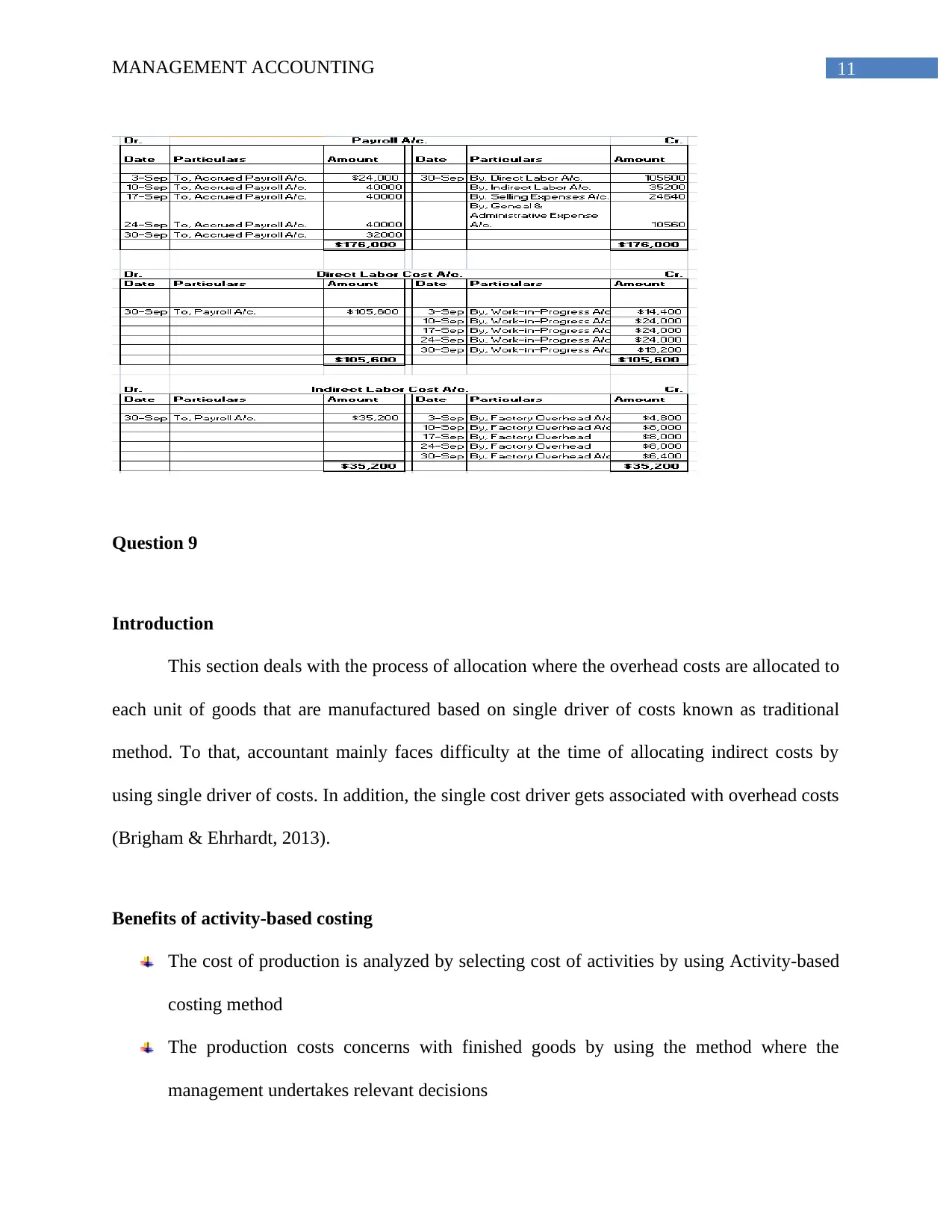
There are two interlocking entries for recording labor costs that are as under:
1) Labor Cost A/c…….Dr.
To, Bank A/c. / Accrued Payroll A/c.
2) Work-in-Progress A/c……Dr.
To, Labor Cost A/c.
Both the entries are interrelated as if any of the entries is recorded, then the other one has
to be entered in the books immediately or later.
Formula View
Question 5
Requirement A
There are two interlocking entries for recording labor costs that are as under:
1) Labor Cost A/c…….Dr.
To, Bank A/c. / Accrued Payroll A/c.
2) Work-in-Progress A/c……Dr.
To, Labor Cost A/c.
Both the entries are interrelated as if any of the entries is recorded, then the other one has
to be entered in the books immediately or later.
Paraphrase This Document
Need a fresh take? Get an instant paraphrase of this document with our AI Paraphraser

8MANAGEMENT ACCOUNTING
Requirement B
It is noted that overtime payment is not directly related with the production and treated as
an overhead expenses.
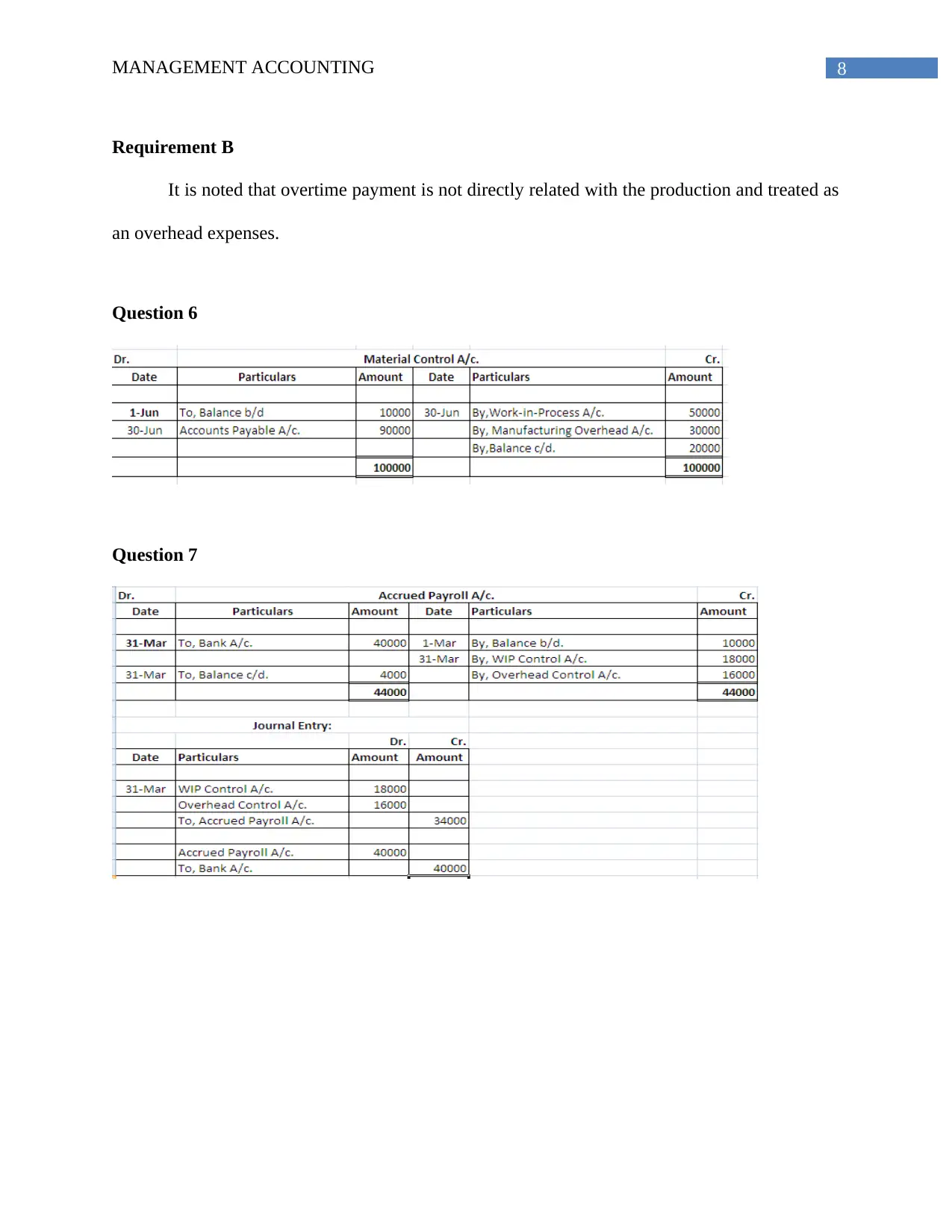
Question 6
Question 7
Requirement B
It is noted that overtime payment is not directly related with the production and treated as
an overhead expenses.
Question 6
Question 7

9MANAGEMENT ACCOUNTING
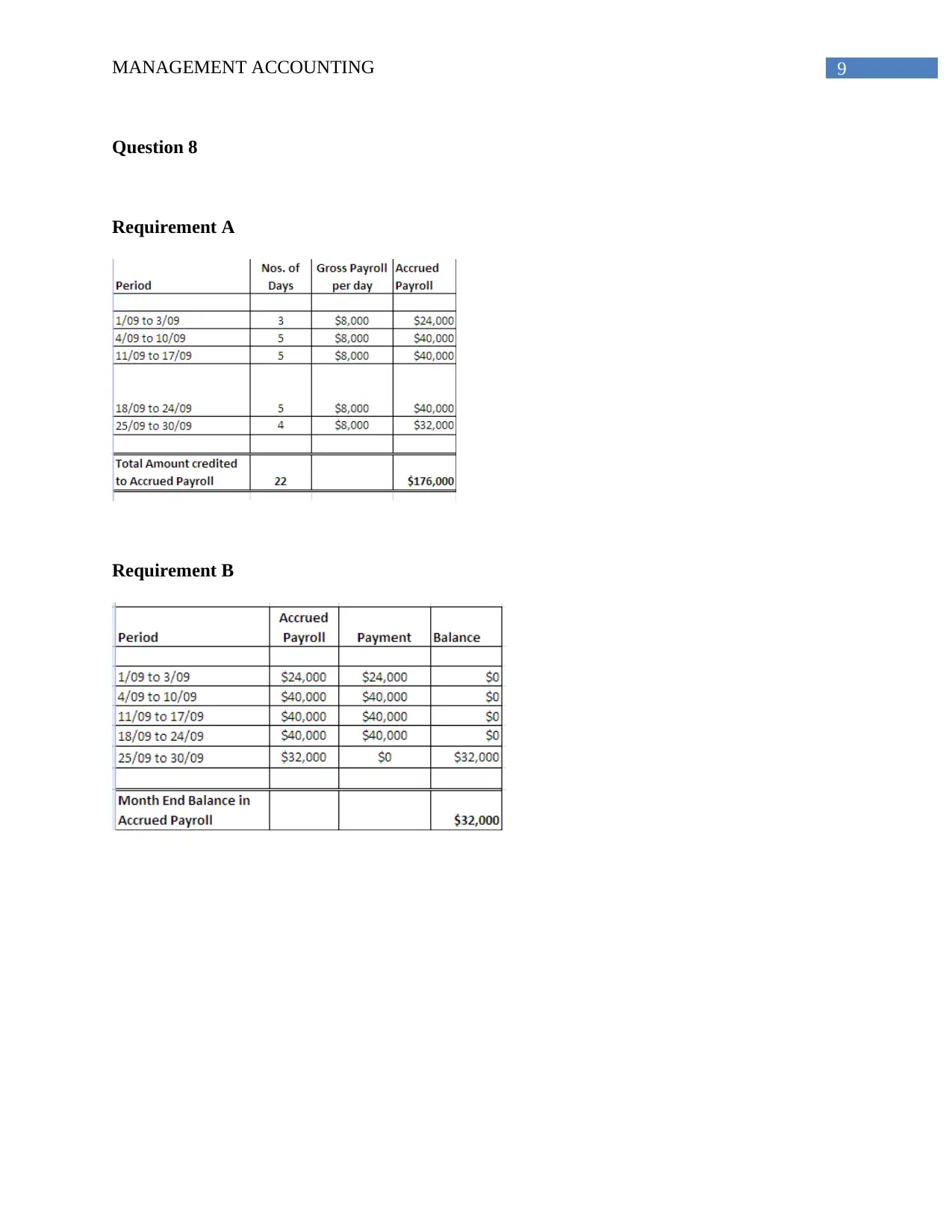
Question 8
Requirement A
Requirement B
Question 8
Requirement A
Requirement B
⊘ This is a preview!⊘
Do you want full access?
Subscribe today to unlock all pages.

Trusted by 1+ million students worldwide

10MANAGEMENT ACCOUNTING
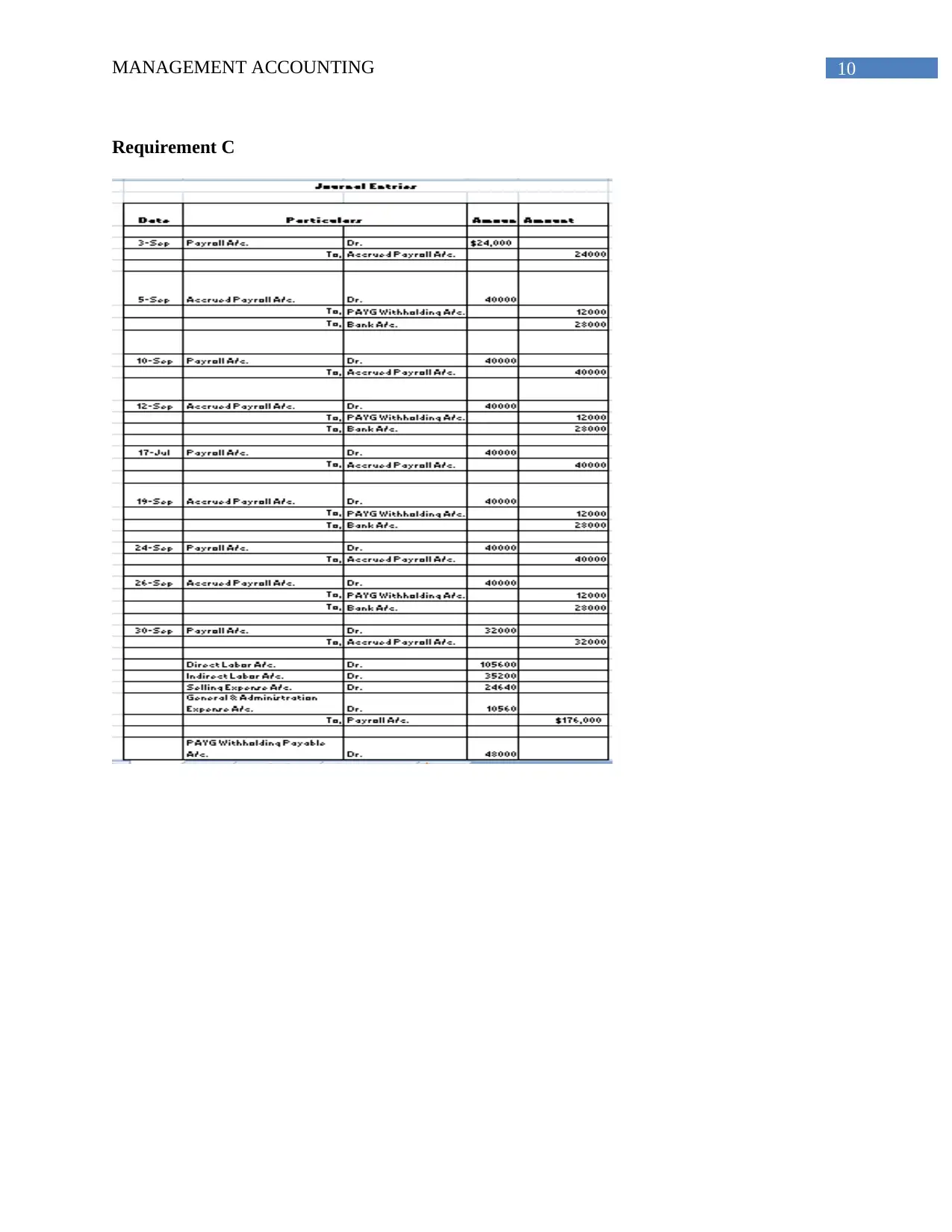
Requirement C
Requirement C
Paraphrase This Document
Need a fresh take? Get an instant paraphrase of this document with our AI Paraphraser

11MANAGEMENT ACCOUNTING
Question 9
Introduction
This section deals with the process of allocation where the overhead costs are allocated to
each unit of goods that are manufactured based on single driver of costs known as traditional
method. To that, accountant mainly faces difficulty at the time of allocating indirect costs by
using single driver of costs. In addition, the single cost driver gets associated with overhead costs
(Brigham & Ehrhardt, 2013).
Benefits of activity-based costing
The cost of production is analyzed by selecting cost of activities by using Activity-based
costing method
The production costs concerns with finished goods by using the method where the
management undertakes relevant decisions
Question 9
Introduction
This section deals with the process of allocation where the overhead costs are allocated to
each unit of goods that are manufactured based on single driver of costs known as traditional
method. To that, accountant mainly faces difficulty at the time of allocating indirect costs by
using single driver of costs. In addition, the single cost driver gets associated with overhead costs
(Brigham & Ehrhardt, 2013).
Benefits of activity-based costing
The cost of production is analyzed by selecting cost of activities by using Activity-based
costing method
The production costs concerns with finished goods by using the method where the
management undertakes relevant decisions

12MANAGEMENT ACCOUNTING
⊘ This is a preview!⊘
Do you want full access?
Subscribe today to unlock all pages.

Trusted by 1+ million students worldwide
1 out of 17
Related Documents
Your All-in-One AI-Powered Toolkit for Academic Success.
+13062052269
info@desklib.com
Available 24*7 on WhatsApp / Email
Unlock your academic potential
Copyright © 2020–2026 A2Z Services. All Rights Reserved. Developed and managed by ZUCOL.