Comprehensive Report on Management Accounting for Cost and Control
VerifiedAdded on 2020/02/24
|23
|2190
|50
Report
AI Summary
This comprehensive report delves into the core principles of management accounting, providing an in-depth analysis of cost control and financial reporting. It explores the purposes of management accounting reports, including budget reports, accounts receivable aging reports, and operational budget reports. The report also examines the control function, product costing systems, and various costing methods. It includes detailed examples, such as manufacturing and income statements, journal entries for labor costs, and the allocation of overhead costs. Furthermore, the report presents arguments for and against activity-based costing (ABC) and traditional costing methods, highlighting their respective advantages and disadvantages. Finally, the report covers direct, step, and reciprocal services methods for cost allocation, providing both normal and formula views, along with algebraic method calculations.
Running head: MANAGEMENT ACCOUNTING FOR COST AND CONTROL
Management Accounting for Cost and Control
Name of the Student:
Name of the University:
Author’s Note:
Course ID:
Management Accounting for Cost and Control
Name of the Student:
Name of the University:
Author’s Note:
Course ID:
Paraphrase This Document
Need a fresh take? Get an instant paraphrase of this document with our AI Paraphraser

1MANAGEMENT ACCOUNTING FOR COST AND CONTROL
Table of Contents
Answer to Question 1:.....................................................................................................................2
Answer to Question 2:.....................................................................................................................3
Answer to Question 3:.....................................................................................................................3
Answer to Question 4:.....................................................................................................................4
Answer to Question 5:.....................................................................................................................6
Answer to Part A:........................................................................................................................6
Answer to Part B:.........................................................................................................................7
Answer to Question 6:.....................................................................................................................7
Answer to Question 7:.....................................................................................................................8
Answer to Question 8:...................................................................................................................10
Answer to Question 9:...................................................................................................................12
Answer to Question 10:.................................................................................................................14
Answer to Part A:......................................................................................................................14
Answer to Part B:.......................................................................................................................15
Answer to Part C:.......................................................................................................................15
References:....................................................................................................................................19
Table of Contents
Answer to Question 1:.....................................................................................................................2
Answer to Question 2:.....................................................................................................................3
Answer to Question 3:.....................................................................................................................3
Answer to Question 4:.....................................................................................................................4
Answer to Question 5:.....................................................................................................................6
Answer to Part A:........................................................................................................................6
Answer to Part B:.........................................................................................................................7
Answer to Question 6:.....................................................................................................................7
Answer to Question 7:.....................................................................................................................8
Answer to Question 8:...................................................................................................................10
Answer to Question 9:...................................................................................................................12
Answer to Question 10:.................................................................................................................14
Answer to Part A:......................................................................................................................14
Answer to Part B:.......................................................................................................................15
Answer to Part C:.......................................................................................................................15
References:....................................................................................................................................19

2MANAGEMENT ACCOUNTING FOR COST AND CONTROL
Answer to Question 1:
The purposes of management accounting reports are several, some of the main purposes
are evaluated as follows:
Budget report:
The budget reports enable the business owners in evaluating the overall financial position
of their organisations and for large-scale organisations, the managers assess the performance of
each department along with costs of control. For example, the business owners and managers of
the organisations could use the budget reports in order to give staff incentives (Black, 2017).
Accounts receivable aging report:
The accounts receivable aging report is a vital tool in order to handle cash flow for the
firms that allow the credit terms of their customers or clients. The managers of the organisations
could segregate the balances of the customers based on their owed timeframe. For example, in a
situation where a huge number of customers could not settle their balances, the organisation is
required to tighten its policies of credit. Moreover, this report is of immense importance for the
collection department, as they could have an overview of the previous debts (Christ & Burritt,
2013).
Operational budget report:
This budget report is developed in order to estimate different expenditures that the
organisation needs to incur in order to accomplish the overall revenue target. The organisation
Answer to Question 1:
The purposes of management accounting reports are several, some of the main purposes
are evaluated as follows:
Budget report:
The budget reports enable the business owners in evaluating the overall financial position
of their organisations and for large-scale organisations, the managers assess the performance of
each department along with costs of control. For example, the business owners and managers of
the organisations could use the budget reports in order to give staff incentives (Black, 2017).
Accounts receivable aging report:
The accounts receivable aging report is a vital tool in order to handle cash flow for the
firms that allow the credit terms of their customers or clients. The managers of the organisations
could segregate the balances of the customers based on their owed timeframe. For example, in a
situation where a huge number of customers could not settle their balances, the organisation is
required to tighten its policies of credit. Moreover, this report is of immense importance for the
collection department, as they could have an overview of the previous debts (Christ & Burritt,
2013).
Operational budget report:
This budget report is developed in order to estimate different expenditures that the
organisation needs to incur in order to accomplish the overall revenue target. The organisation
⊘ This is a preview!⊘
Do you want full access?
Subscribe today to unlock all pages.

Trusted by 1+ million students worldwide

3MANAGEMENT ACCOUNTING FOR COST AND CONTROL
could accumulate the needed funds for conducting its future operations in advance with the help
of this report (Drury, 2013).
Answer to Question 2:
As laid out by Fayard et al., (2014), control is the procedure of analysing, measuring,
correcting and monitoring the actual outcomes to ensure that the business organisations achieve
their overall plans and goals. Feedback is the option available for the organisations in order to
achieve these plans and goals. Feedback could be taken into account as the information in
assessing or correcting the steps undertaken at the time of time implementation. Management
accounting provides immense value to the control function through the production of control
reports and performance reports, which signify variances between the expected and actual
performances.
The above-stated reports abide by the “principle of management by exception”. This is
because they serve as the platform for ensuring necessary corrective measures in order to control
operations. If there are significant differences between budgeted and actual results, a manager
needs to examine for determining the things in line and likely that the departments or
subordinates might need support (Gopalakrishnan et al., 2015).
Answer to Question 3:
As pointed out by Horovitz & Webb (2015), product costing is the procedure to detect
and understanding the various accrued expenses in the sale and manufacture of a specific
product. This begins with the purchase of raw materials to expenditures associated with the
transportation of the final goods to the retail stores. This is widely taken into account as greatly
could accumulate the needed funds for conducting its future operations in advance with the help
of this report (Drury, 2013).
Answer to Question 2:
As laid out by Fayard et al., (2014), control is the procedure of analysing, measuring,
correcting and monitoring the actual outcomes to ensure that the business organisations achieve
their overall plans and goals. Feedback is the option available for the organisations in order to
achieve these plans and goals. Feedback could be taken into account as the information in
assessing or correcting the steps undertaken at the time of time implementation. Management
accounting provides immense value to the control function through the production of control
reports and performance reports, which signify variances between the expected and actual
performances.
The above-stated reports abide by the “principle of management by exception”. This is
because they serve as the platform for ensuring necessary corrective measures in order to control
operations. If there are significant differences between budgeted and actual results, a manager
needs to examine for determining the things in line and likely that the departments or
subordinates might need support (Gopalakrishnan et al., 2015).
Answer to Question 3:
As pointed out by Horovitz & Webb (2015), product costing is the procedure to detect
and understanding the various accrued expenses in the sale and manufacture of a specific
product. This begins with the purchase of raw materials to expenditures associated with the
transportation of the final goods to the retail stores. This is widely taken into account as greatly
Paraphrase This Document
Need a fresh take? Get an instant paraphrase of this document with our AI Paraphraser

4MANAGEMENT ACCOUNTING FOR COST AND CONTROL
significant element on planning and analysing the overall business strategies. Hence, product
costing system accumulates the cost spent in the production process and allocates the costs to the
final output of the organisation. The four primary purposes of the product costing system are
depicted as follows:
To gather the relative cost of production
To apportion the cost of production to the product units
To ascertain greater cost of production with higher accuracy for varied number of nearly
equivalent items
Greater control over the cost of production
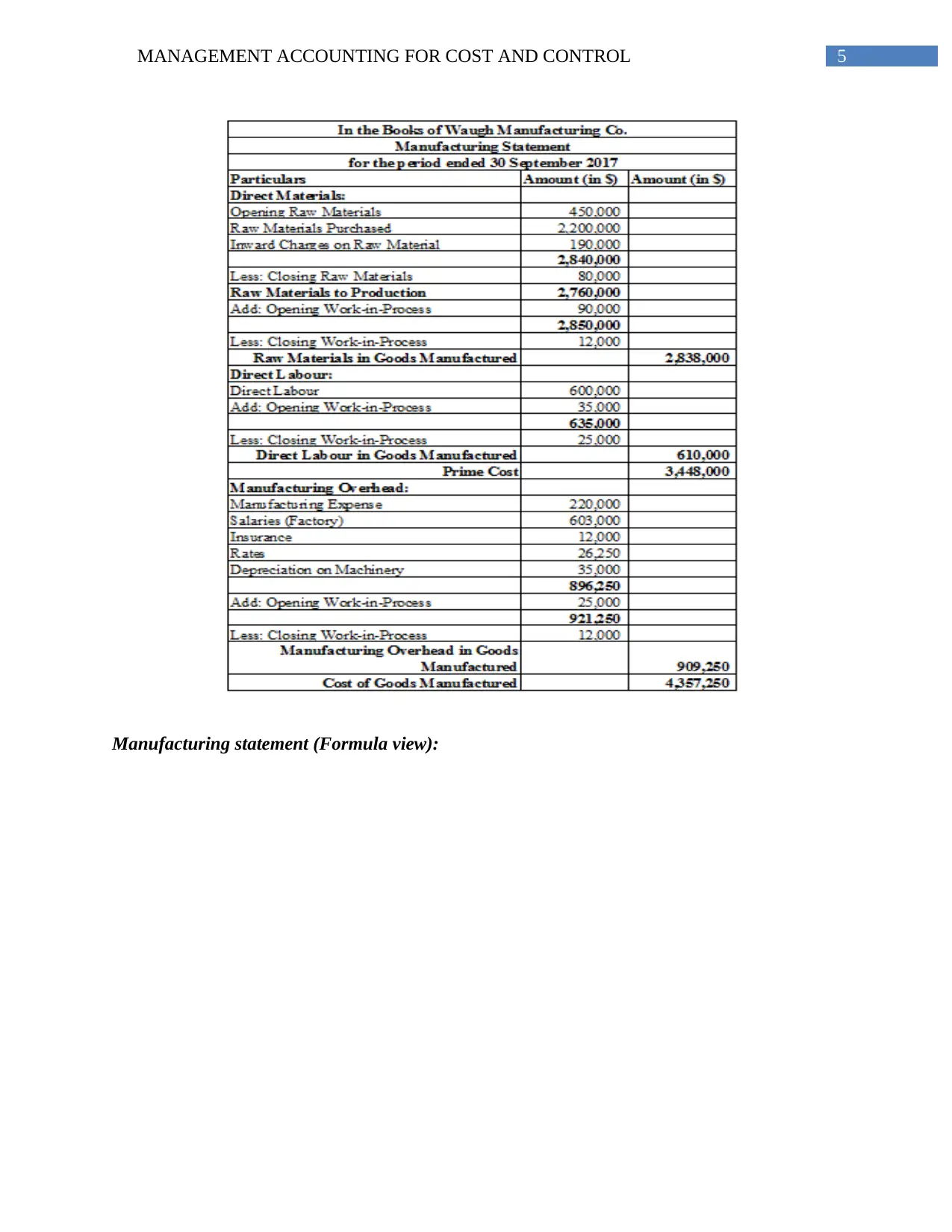
Answer to Question 4:
Manufacturing statement (Normal view):
significant element on planning and analysing the overall business strategies. Hence, product
costing system accumulates the cost spent in the production process and allocates the costs to the
final output of the organisation. The four primary purposes of the product costing system are
depicted as follows:
To gather the relative cost of production
To apportion the cost of production to the product units
To ascertain greater cost of production with higher accuracy for varied number of nearly
equivalent items
Greater control over the cost of production
Answer to Question 4:
Manufacturing statement (Normal view):

5MANAGEMENT ACCOUNTING FOR COST AND CONTROL
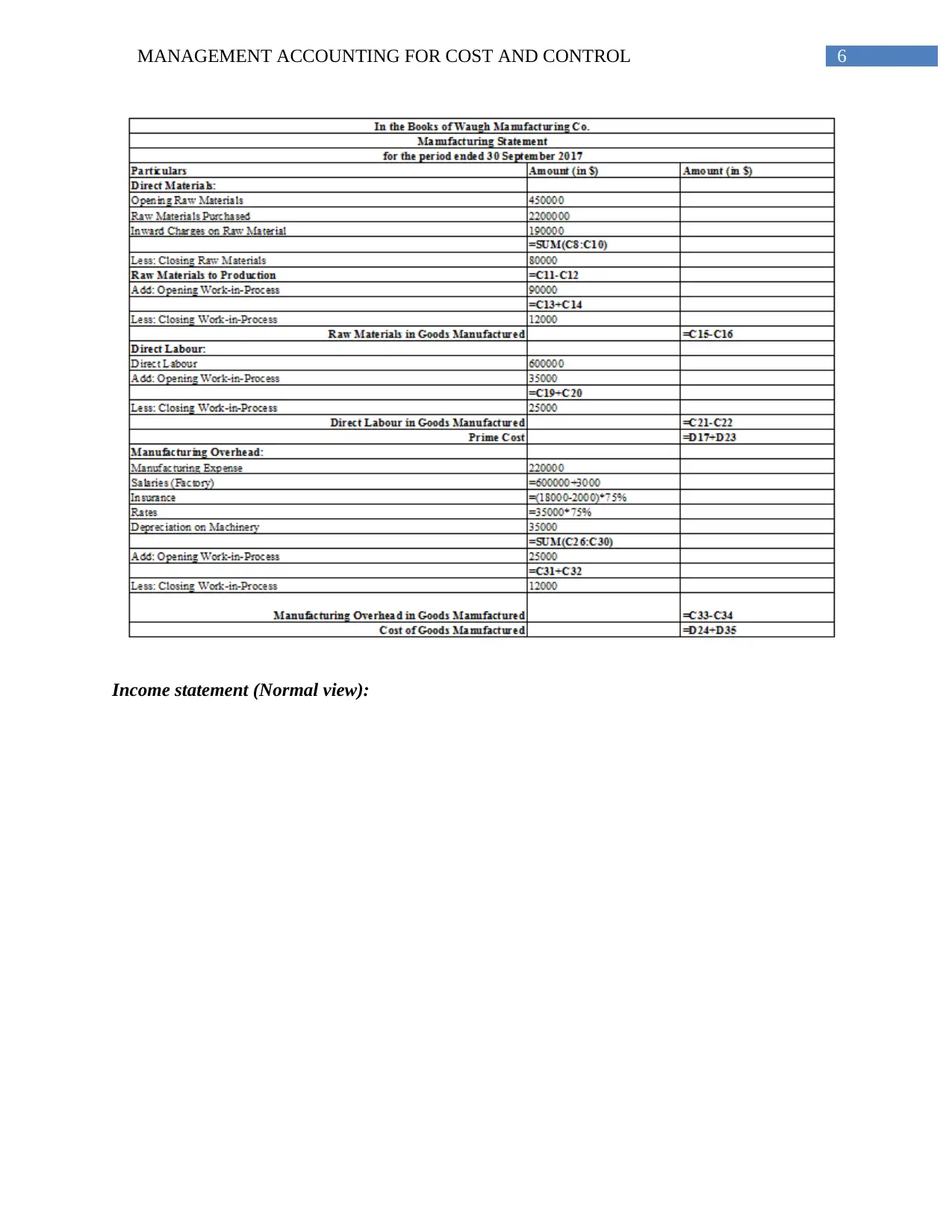
Manufacturing statement (Formula view):
⊘ This is a preview!⊘
Do you want full access?
Subscribe today to unlock all pages.

Trusted by 1+ million students worldwide

6MANAGEMENT ACCOUNTING FOR COST AND CONTROL
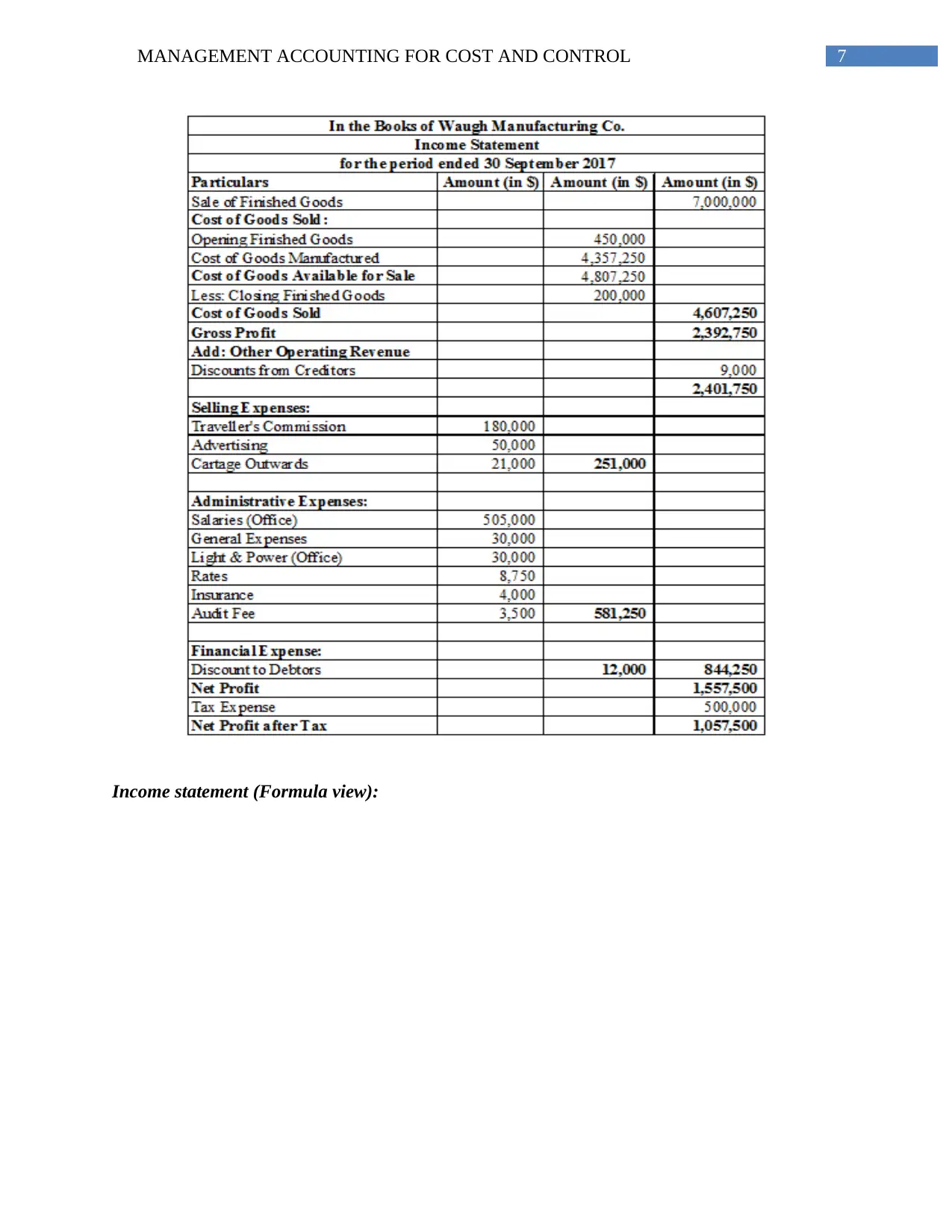
Income statement (Normal view):
Paraphrase This Document
Need a fresh take? Get an instant paraphrase of this document with our AI Paraphraser

7MANAGEMENT ACCOUNTING FOR COST AND CONTROL
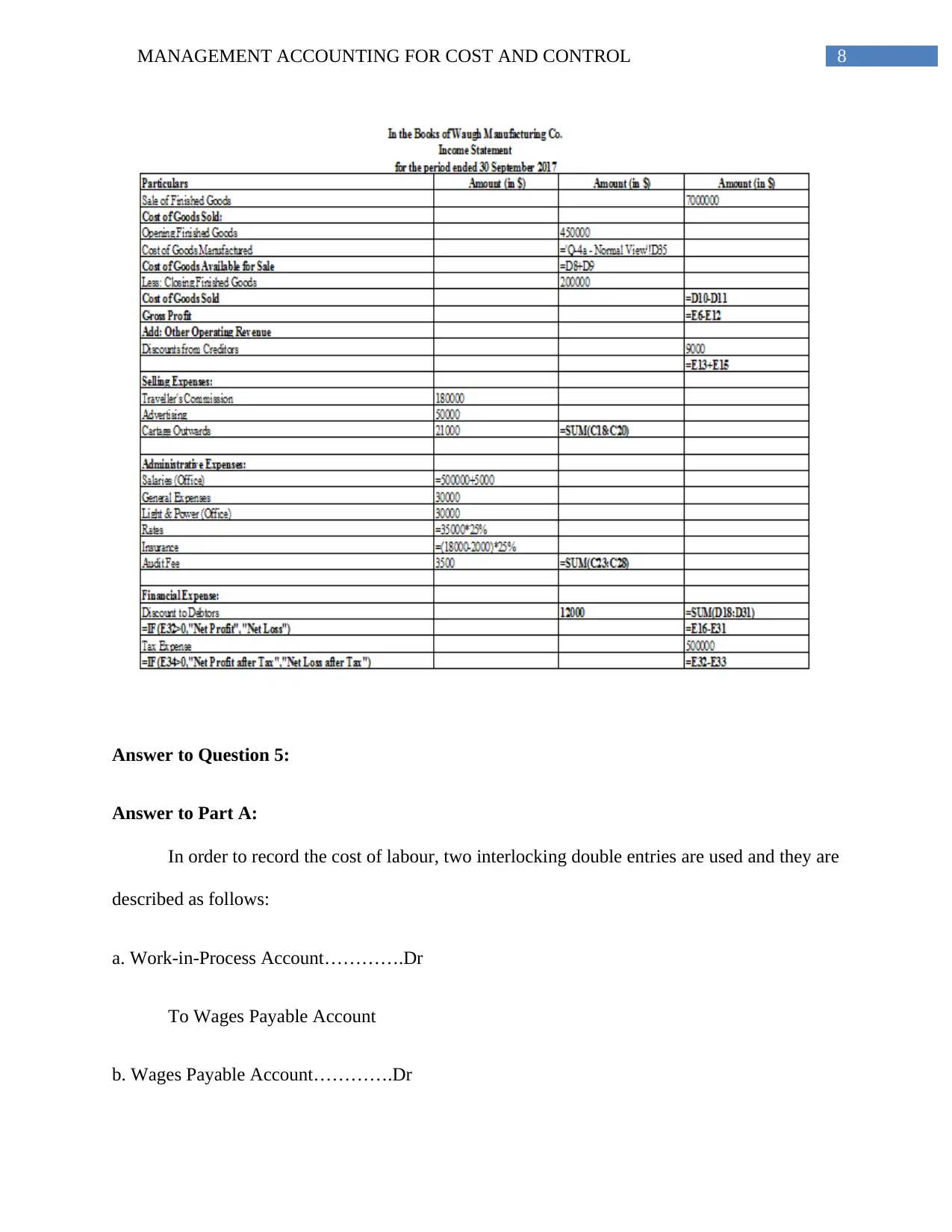
Income statement (Formula view):

8MANAGEMENT ACCOUNTING FOR COST AND CONTROL
Answer to Question 5:
Answer to Part A:
In order to record the cost of labour, two interlocking double entries are used and they are
described as follows:
a. Work-in-Process Account………….Dr
To Wages Payable Account
b. Wages Payable Account………….Dr
Answer to Question 5:
Answer to Part A:
In order to record the cost of labour, two interlocking double entries are used and they are
described as follows:
a. Work-in-Process Account………….Dr
To Wages Payable Account
b. Wages Payable Account………….Dr
⊘ This is a preview!⊘
Do you want full access?
Subscribe today to unlock all pages.

Trusted by 1+ million students worldwide

9MANAGEMENT ACCOUNTING FOR COST AND CONTROL
To Bank Account/ Accrued Payroll Account
The initial entry has been passed to highlight the labour amount used for production of a
particular product or service. The next entry has been passed to record the labour pay. If there is
any outstanding payment, credit side would have accrued payroll account and if there is no
outstanding payment, credit side would have bank account.
The above two entries are interlocked, as the labours could not be kept for future
utilisation. If any labour remains unpaid in a particular period, the same could be utilised for
production rather than advance payment (Klychova, Faskhutdinova & Sadrieva, 2014).
Conversely, if the labours are used for production in case of a particular time, it is required to
make the payment within the particular timeline after the completion of the production process.
Thus, it could be assessed that both the entries are related to each other and one entry leads to the
generation of the other entry.
Answer to Part B:
Overtime payment and purpose of production are not associated directly; thus, overtime
payments are considered as overhead expenses and not direct labour.
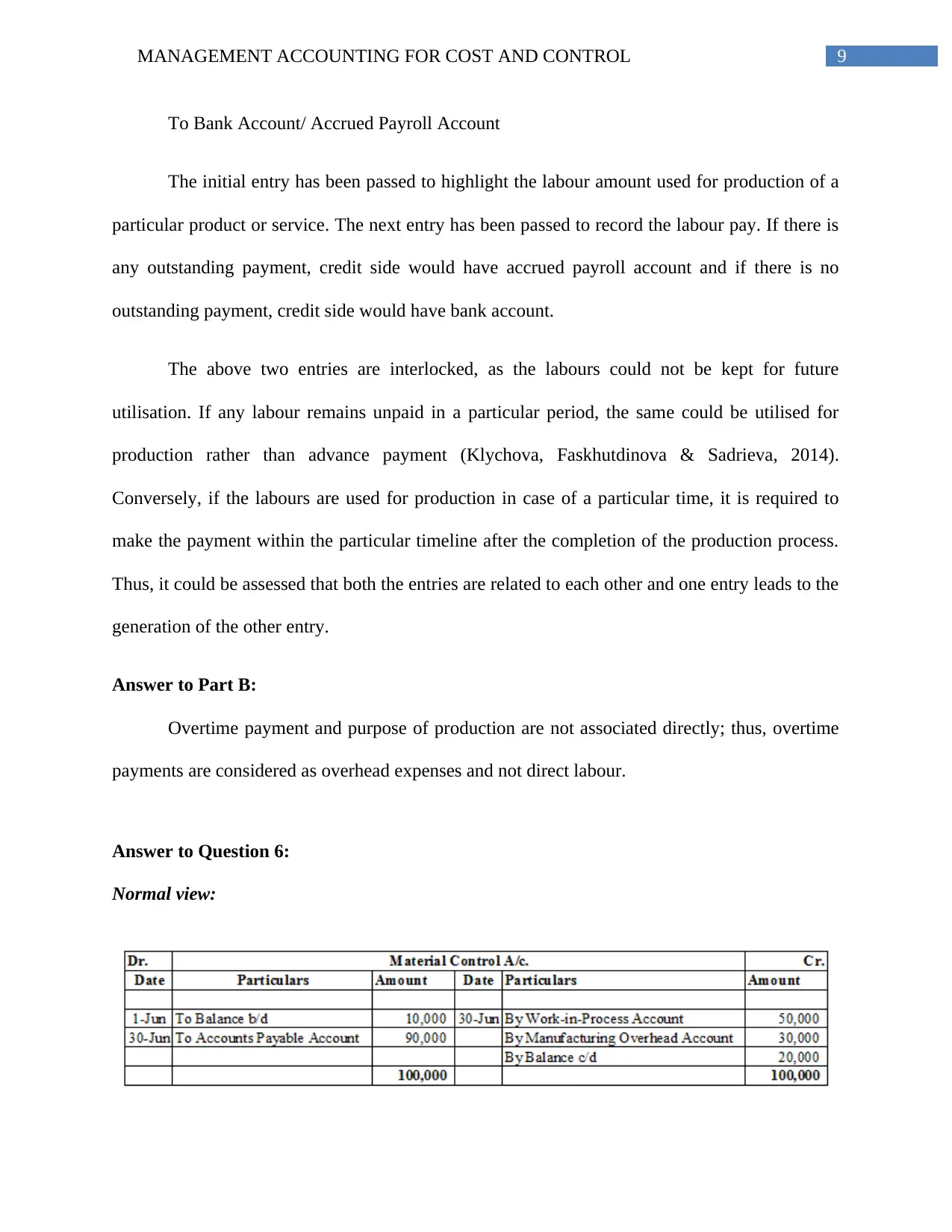
Answer to Question 6:
Normal view:
To Bank Account/ Accrued Payroll Account
The initial entry has been passed to highlight the labour amount used for production of a
particular product or service. The next entry has been passed to record the labour pay. If there is
any outstanding payment, credit side would have accrued payroll account and if there is no
outstanding payment, credit side would have bank account.
The above two entries are interlocked, as the labours could not be kept for future
utilisation. If any labour remains unpaid in a particular period, the same could be utilised for
production rather than advance payment (Klychova, Faskhutdinova & Sadrieva, 2014).
Conversely, if the labours are used for production in case of a particular time, it is required to
make the payment within the particular timeline after the completion of the production process.
Thus, it could be assessed that both the entries are related to each other and one entry leads to the
generation of the other entry.
Answer to Part B:
Overtime payment and purpose of production are not associated directly; thus, overtime
payments are considered as overhead expenses and not direct labour.
Answer to Question 6:
Normal view:
Paraphrase This Document
Need a fresh take? Get an instant paraphrase of this document with our AI Paraphraser

10MANAGEMENT ACCOUNTING FOR COST AND CONTROL
Formula view:
Answer to Question 7:
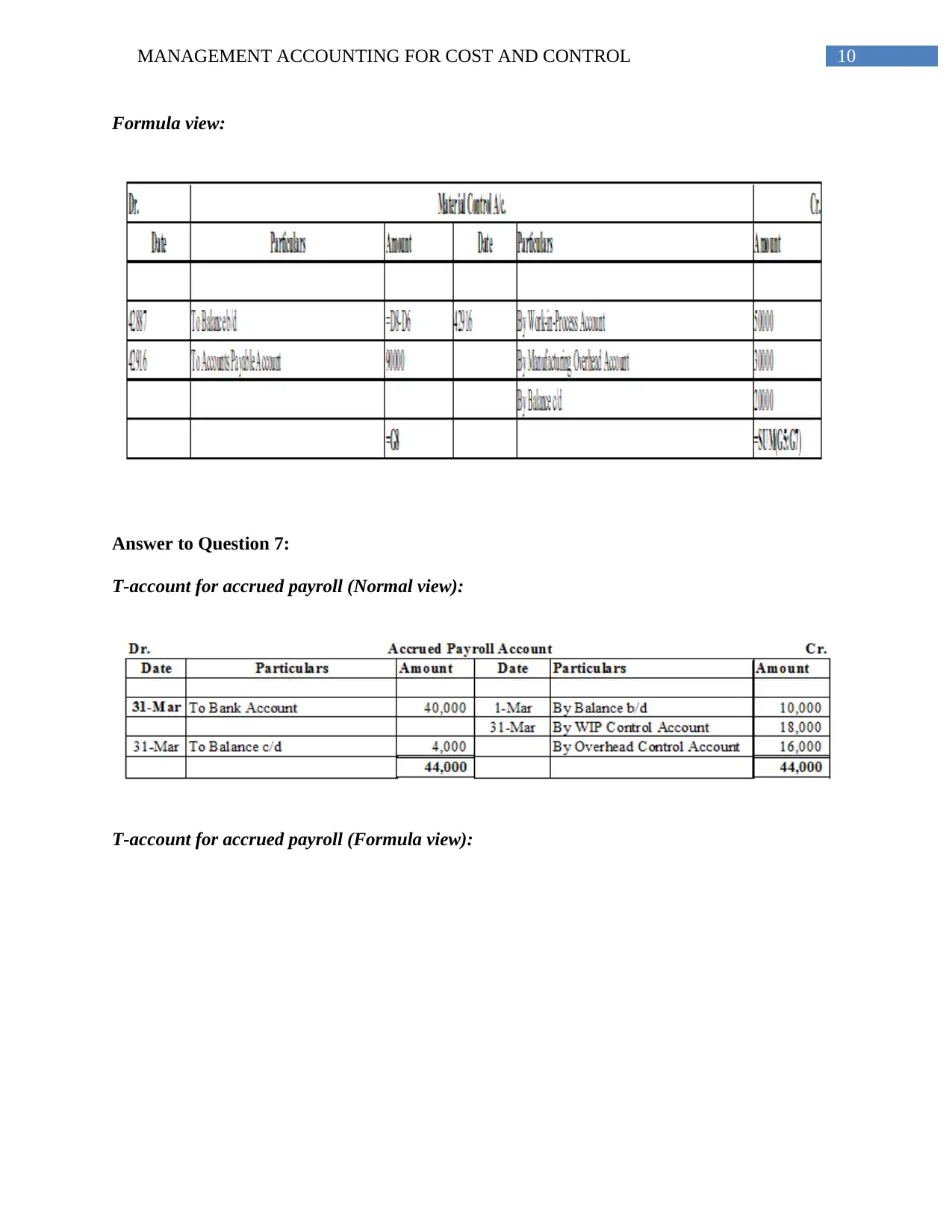
T-account for accrued payroll (Normal view):
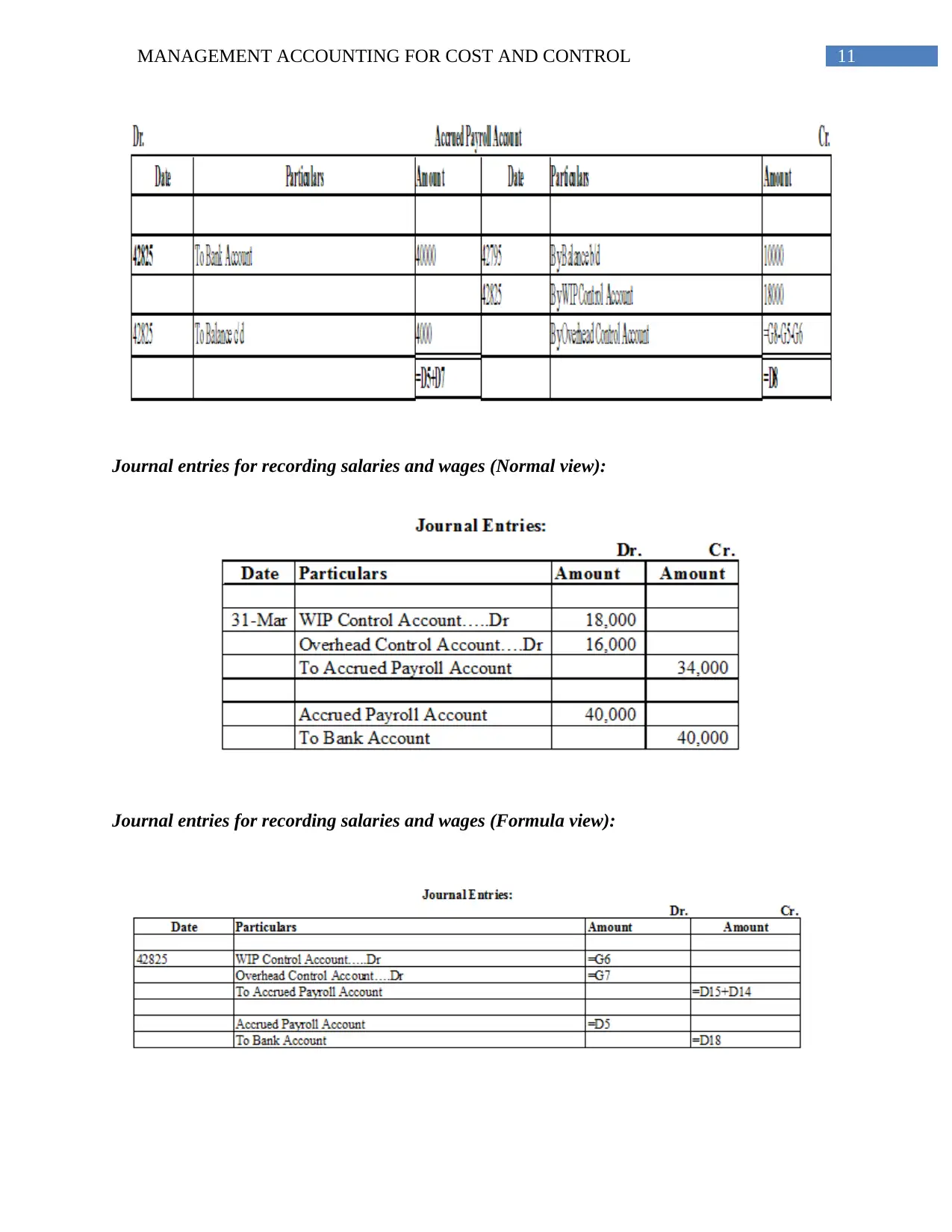
T-account for accrued payroll (Formula view):
Formula view:
Answer to Question 7:
T-account for accrued payroll (Normal view):
T-account for accrued payroll (Formula view):

11MANAGEMENT ACCOUNTING FOR COST AND CONTROL
Journal entries for recording salaries and wages (Normal view):
Journal entries for recording salaries and wages (Formula view):
Journal entries for recording salaries and wages (Normal view):
Journal entries for recording salaries and wages (Formula view):
⊘ This is a preview!⊘
Do you want full access?
Subscribe today to unlock all pages.

Trusted by 1+ million students worldwide
1 out of 23
Related Documents
Your All-in-One AI-Powered Toolkit for Academic Success.
+13062052269
info@desklib.com
Available 24*7 on WhatsApp / Email
Unlock your academic potential
Copyright © 2020–2026 A2Z Services. All Rights Reserved. Developed and managed by ZUCOL.