Managerial Accounting Report: PWC Value-Framework Analysis

Verified

Added on  2020/03/28

|34
|2200
|465
Report
AI Summary
This report offers a comprehensive analysis of managerial accounting, focusing on the application of the PWC Value-Framework to assess the business performance of ASSA ABLOY and The Eastern Company. The report dissects seventeen key elements of the PWC Value-Framework, including strategy and objectives, business models, governance, risk management, remuneration, financial and physical assets, customer relations, people and culture, innovation, intellectual assets, processes and supply chains, operational, economic, social, and environmental performance, as well as segmental reporting. Each element is evaluated based on accessibility, comprehensiveness, and overall conclusion. The analysis highlights the strengths and weaknesses of both companies across these different areas, providing insights into their strategic approaches and operational effectiveness. The report also examines the reporting of material matters for both companies, detailing their methods for identifying and addressing potential misstatements in financial reports. The findings provide a comparative perspective on the companies' management accounting practices and their alignment with the PWC Value-Framework principles.

Document Page
Running head: MANEGERIAL ACCOUNTING
Managerial Accounting
Name of the Student
Name of the University
Author’s Note
tabler-icon-diamond-filled.svg

Paraphrase This Document

Need a fresh take? Get an instant paraphrase of this document with our AI Paraphraser
Document Page
1MANEGERIAL ACCOUNTING
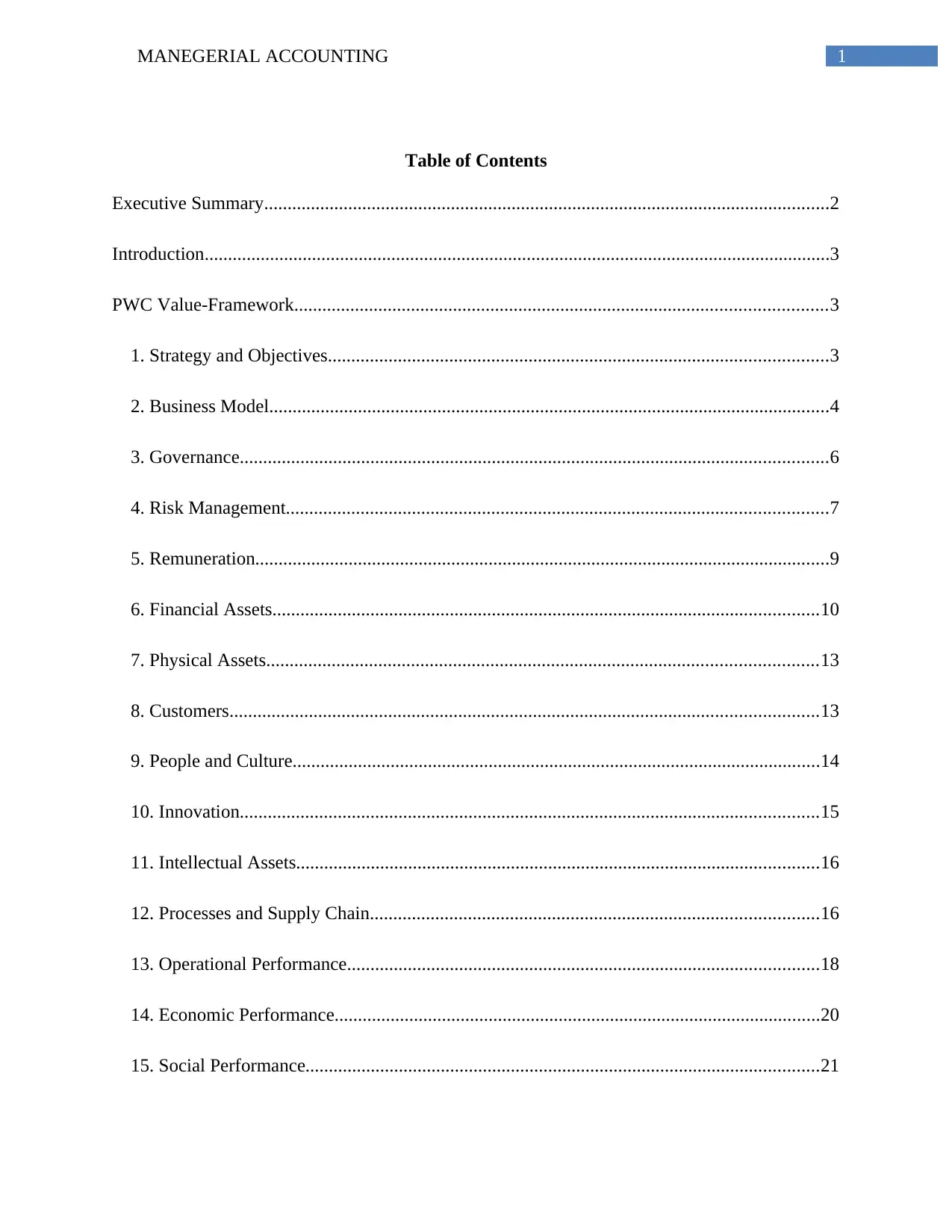
Table of Contents
Executive Summary.........................................................................................................................2
Introduction......................................................................................................................................3
PWC Value-Framework..................................................................................................................3
1. Strategy and Objectives...........................................................................................................3
2. Business Model........................................................................................................................4
3. Governance..............................................................................................................................6
4. Risk Management....................................................................................................................7
5. Remuneration...........................................................................................................................9
6. Financial Assets.....................................................................................................................10
7. Physical Assets......................................................................................................................13
8. Customers..............................................................................................................................13
9. People and Culture.................................................................................................................14
10. Innovation............................................................................................................................15
11. Intellectual Assets................................................................................................................16
12. Processes and Supply Chain................................................................................................16
13. Operational Performance.....................................................................................................18
14. Economic Performance........................................................................................................20
15. Social Performance..............................................................................................................21
Document Page
2MANEGERIAL ACCOUNTING
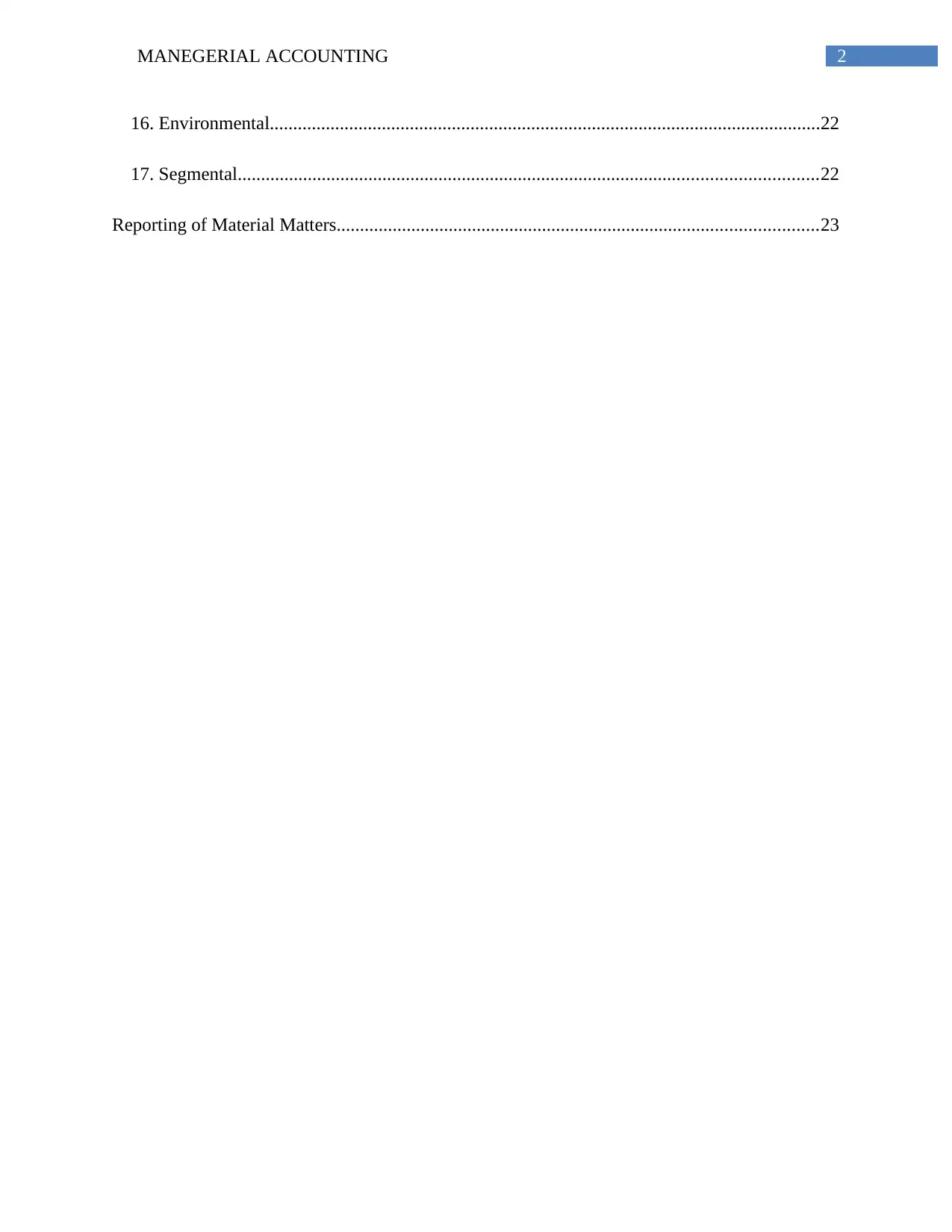
16. Environmental......................................................................................................................22
17. Segmental............................................................................................................................22
Reporting of Material Matters.......................................................................................................23
Document Page
3MANEGERIAL ACCOUNTING
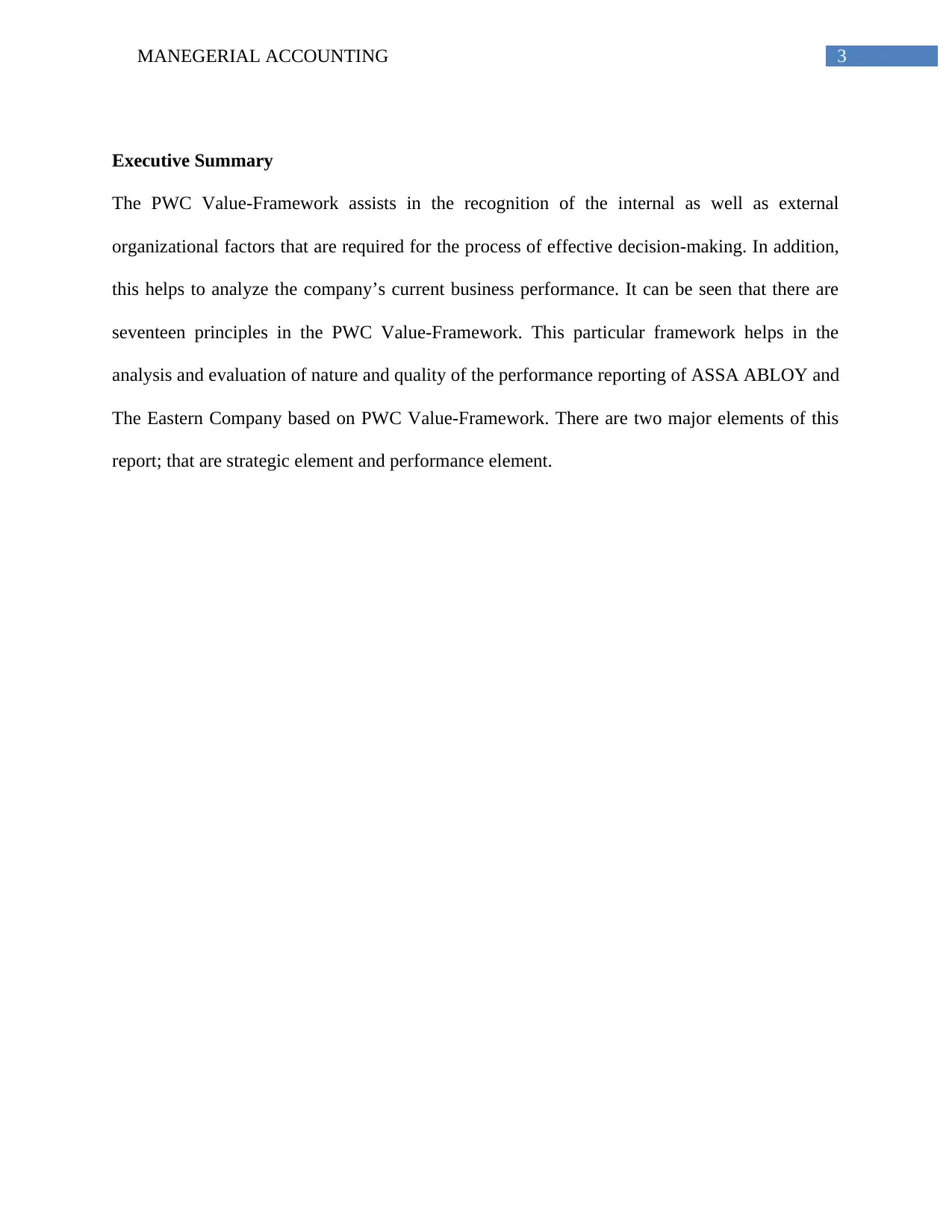
Executive Summary
The PWC Value-Framework assists in the recognition of the internal as well as external
organizational factors that are required for the process of effective decision-making. In addition,
this helps to analyze the company’s current business performance. It can be seen that there are
seventeen principles in the PWC Value-Framework. This particular framework helps in the
analysis and evaluation of nature and quality of the performance reporting of ASSA ABLOY and
The Eastern Company based on PWC Value-Framework. There are two major elements of this
report; that are strategic element and performance element.
tabler-icon-diamond-filled.svg

Paraphrase This Document

Need a fresh take? Get an instant paraphrase of this document with our AI Paraphraser
Document Page
4MANEGERIAL ACCOUNTING
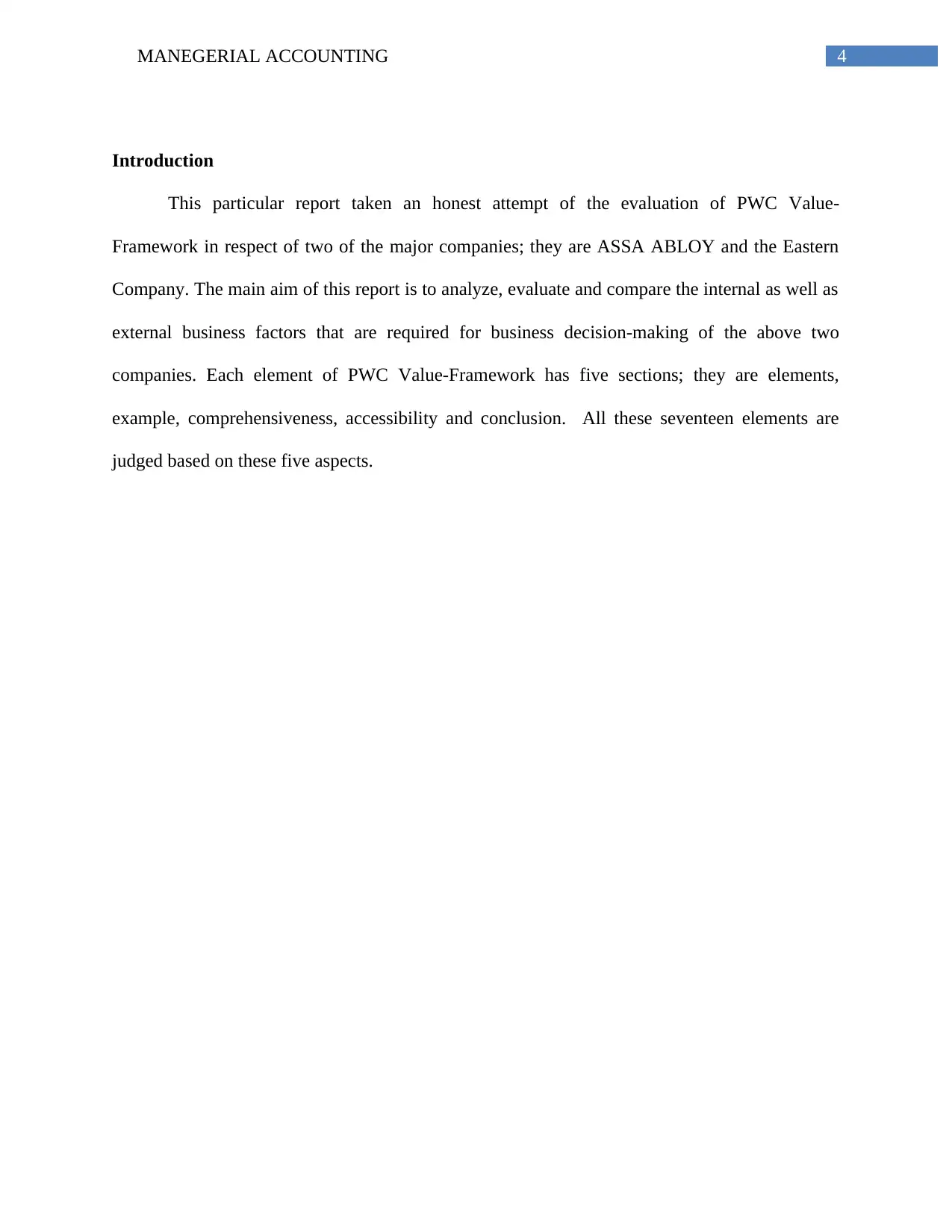
Introduction
This particular report taken an honest attempt of the evaluation of PWC Value-
Framework in respect of two of the major companies; they are ASSA ABLOY and the Eastern
Company. The main aim of this report is to analyze, evaluate and compare the internal as well as
external business factors that are required for business decision-making of the above two
companies. Each element of PWC Value-Framework has five sections; they are elements,
example, comprehensiveness, accessibility and conclusion. All these seventeen elements are
judged based on these five aspects.
Document Page
5MANEGERIAL ACCOUNTING
PWC Value-Framework
1. Strategy and Objectives
ASSA ABLOY
The Eastern Company
Document Page
6MANEGERIAL ACCOUNTING
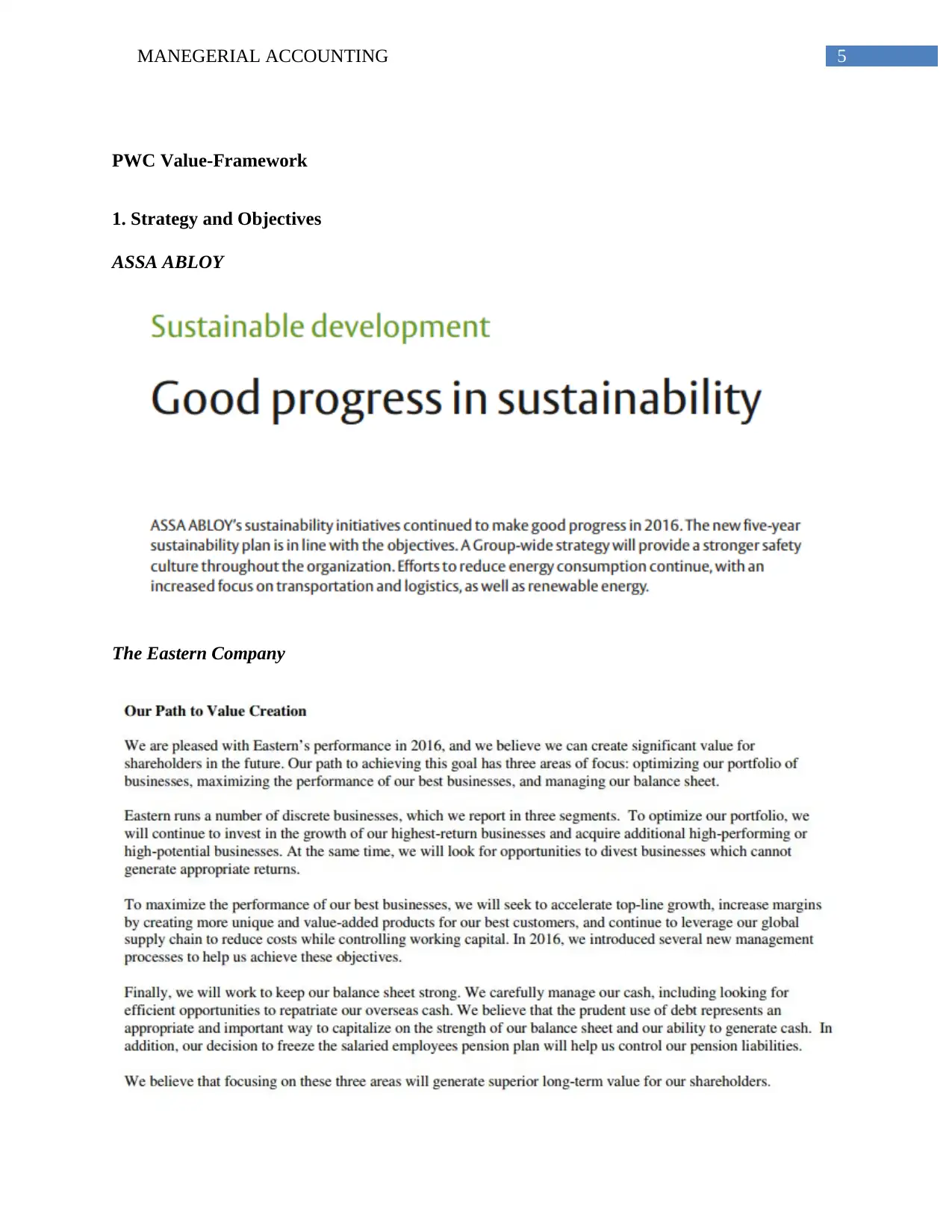
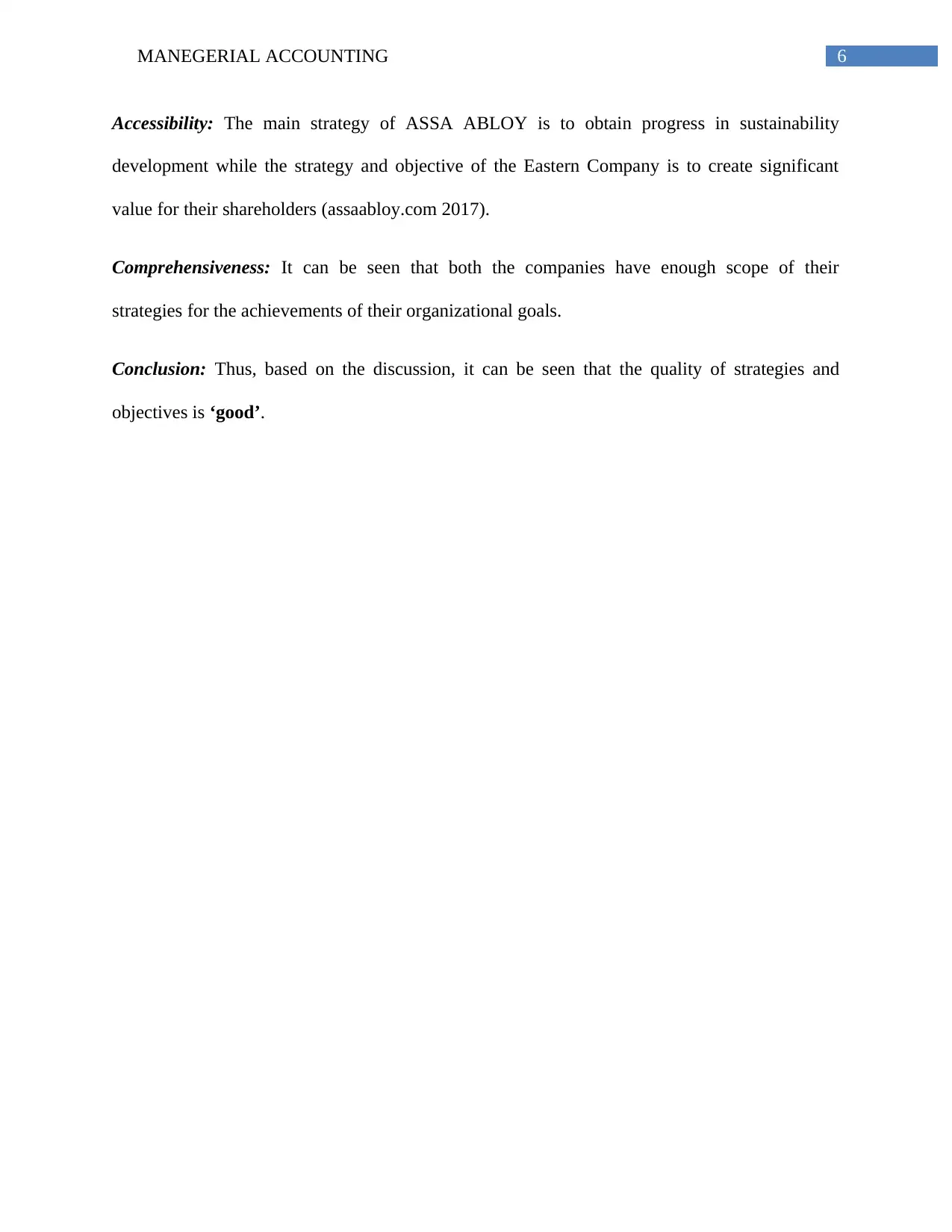
Accessibility: The main strategy of ASSA ABLOY is to obtain progress in sustainability
development while the strategy and objective of the Eastern Company is to create significant
value for their shareholders (assaabloy.com 2017).
Comprehensiveness: It can be seen that both the companies have enough scope of their
strategies for the achievements of their organizational goals.
Conclusion: Thus, based on the discussion, it can be seen that the quality of strategies and
objectives is ‘good’.
tabler-icon-diamond-filled.svg

Paraphrase This Document

Need a fresh take? Get an instant paraphrase of this document with our AI Paraphraser
Document Page
7MANEGERIAL ACCOUNTING
2. Business Model
ASSA ABLOY
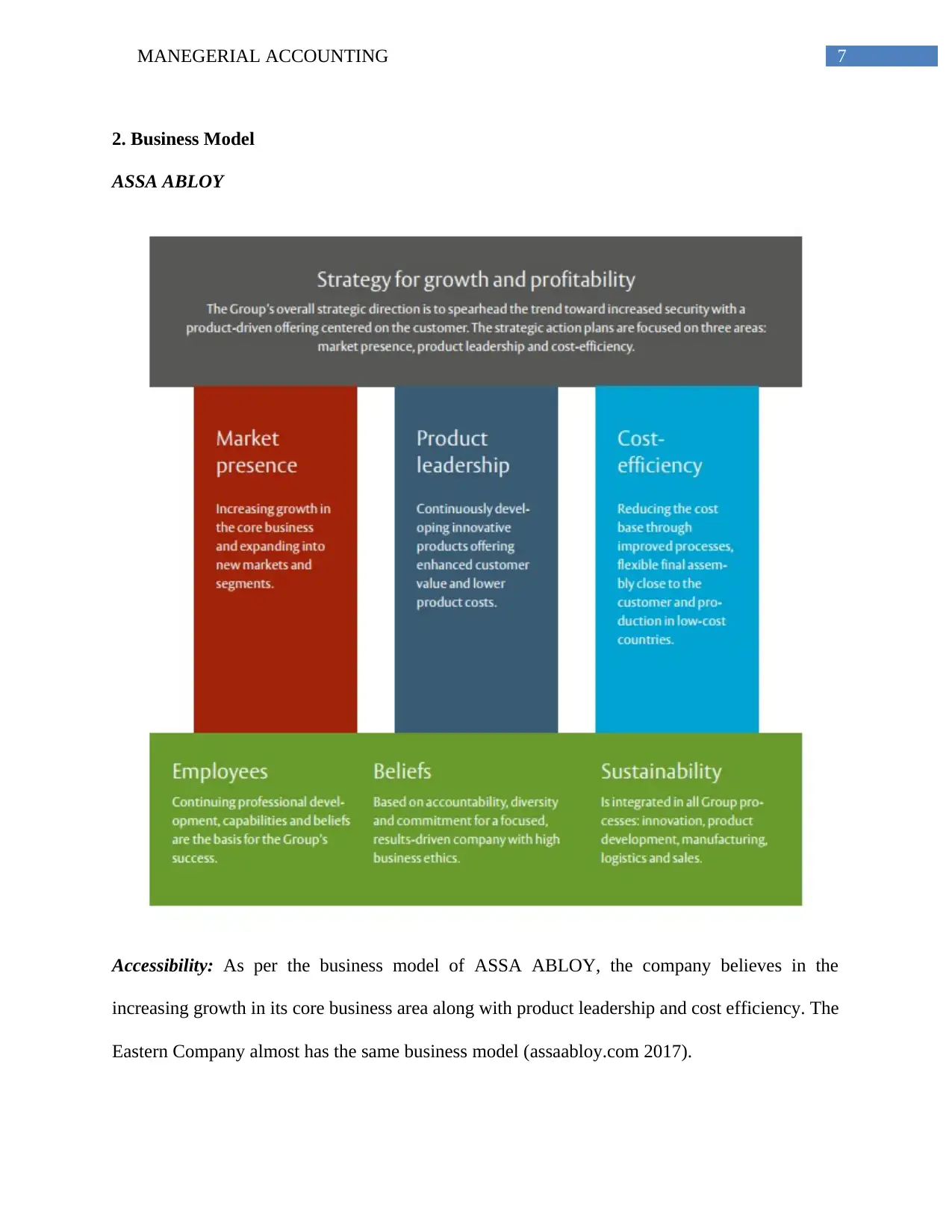
Accessibility: As per the business model of ASSA ABLOY, the company believes in the
increasing growth in its core business area along with product leadership and cost efficiency. The
Eastern Company almost has the same business model (assaabloy.com 2017).
Document Page
8MANEGERIAL ACCOUNTING
Comprehensiveness: The business model of these two companies helps to achieve the objectives
and goals of the companies.
Conclusion: Thus, this aspect can be considered as ‘good’.
Document Page
9MANEGERIAL ACCOUNTING
3. Governance
ASSA ABLOY
The Eastern Company
tabler-icon-diamond-filled.svg

Paraphrase This Document

Need a fresh take? Get an instant paraphrase of this document with our AI Paraphraser
Document Page
10MANEGERIAL ACCOUNTING
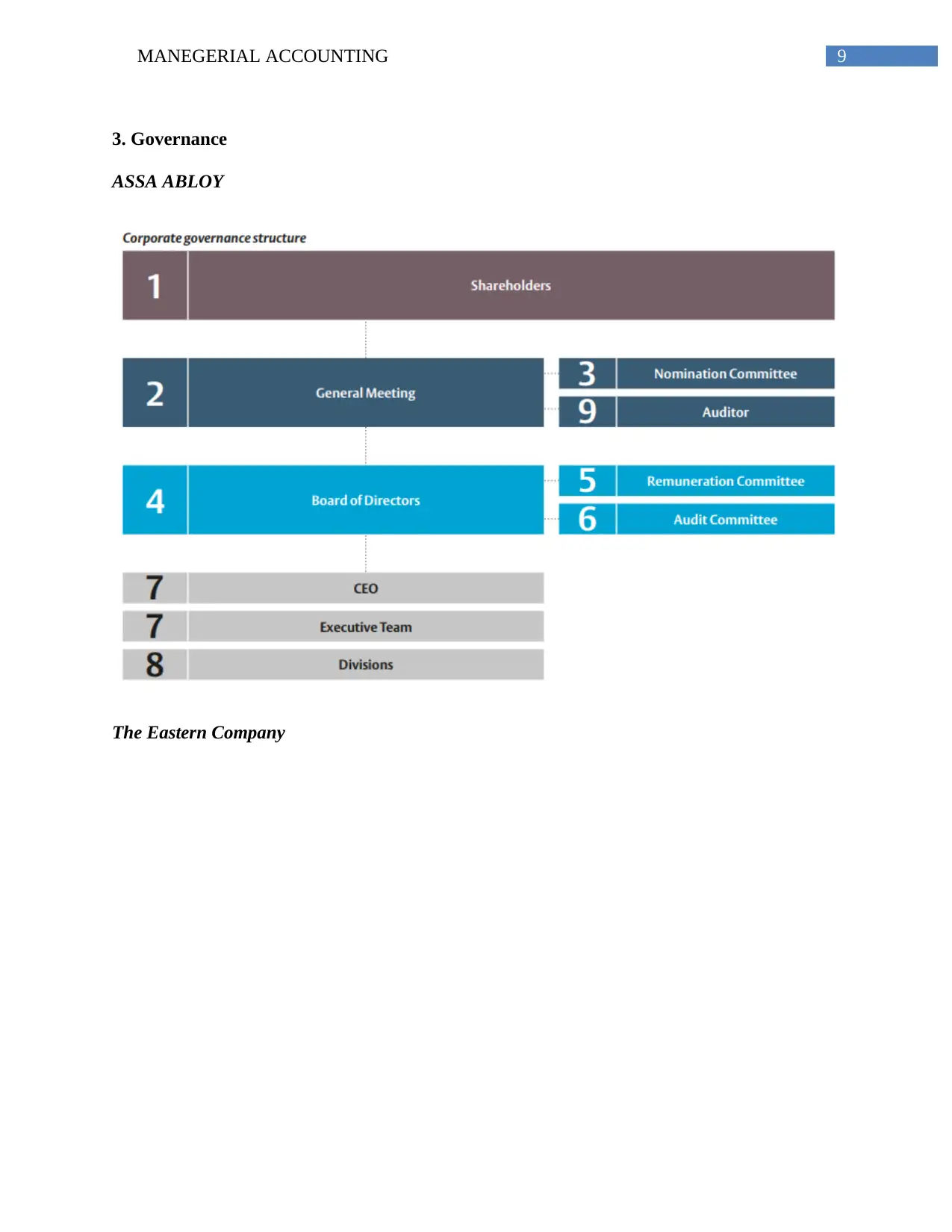
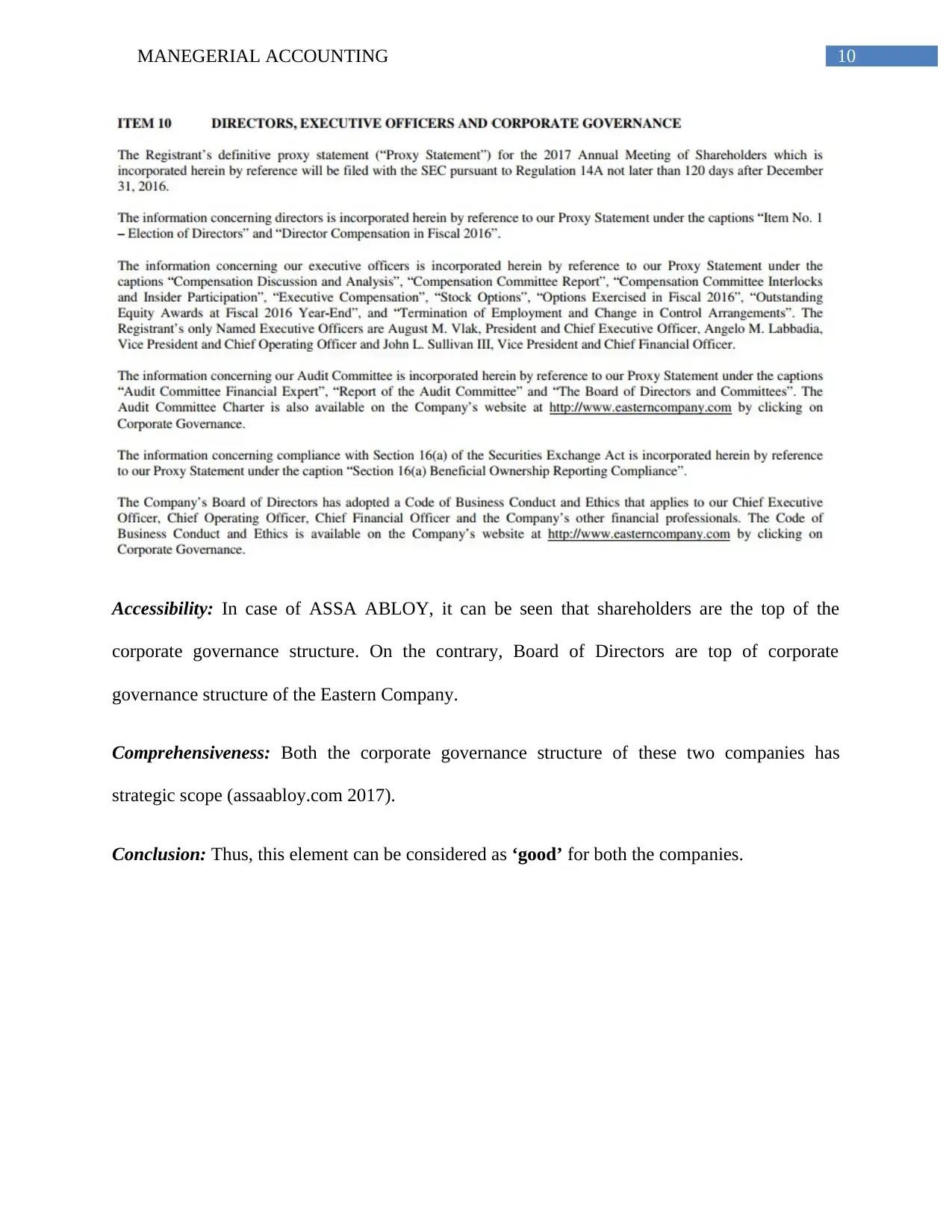
Accessibility: In case of ASSA ABLOY, it can be seen that shareholders are the top of the
corporate governance structure. On the contrary, Board of Directors are top of corporate
governance structure of the Eastern Company.
Comprehensiveness: Both the corporate governance structure of these two companies has
strategic scope (assaabloy.com 2017).
Conclusion: Thus, this element can be considered as ‘good’ for both the companies.
Document Page
11MANEGERIAL ACCOUNTING
4. Risk Management
ASSA ABLOY
The Eastern Company
chevron_up_icon
1 out of 34
circle_padding
hide_on_mobile
zoom_out_icon
[object Object]