Investigating Marine Paints Manufacturing: A Sustainability Proposal

Verified

Added on  2023/01/13

|5
|578
|95
Project
AI Summary
This document presents a project proposal focusing on the investigation of marine paints manufacturing, specifically examining the latest technologies used in the antifouling paint industry. The study aims to evaluate the key factors that maximize the contribution of companies like Chugoku Marine Paints to sustainability, balancing ecological improvements with energy savings. The objectives include improving ecological sustainability through new biocides, comparing them with environmentally damaging products, determining the advantages and disadvantages of new antifouling products, and evaluating a model for consideration by manufacturers. The research will employ a secondary data collection method, utilizing journals and articles, along with convenience sampling for participant selection, and a qualitative research approach to gain in-depth knowledge. The proposal outlines a timeline for development, including draft proposals and dissertation completion, and references key literature on antifouling technologies and research methodologies.

Document Page
Proposal Draft
1
tabler-icon-diamond-filled.svg

Paraphrase This Document

Need a fresh take? Get an instant paraphrase of this document with our AI Paraphraser
Document Page
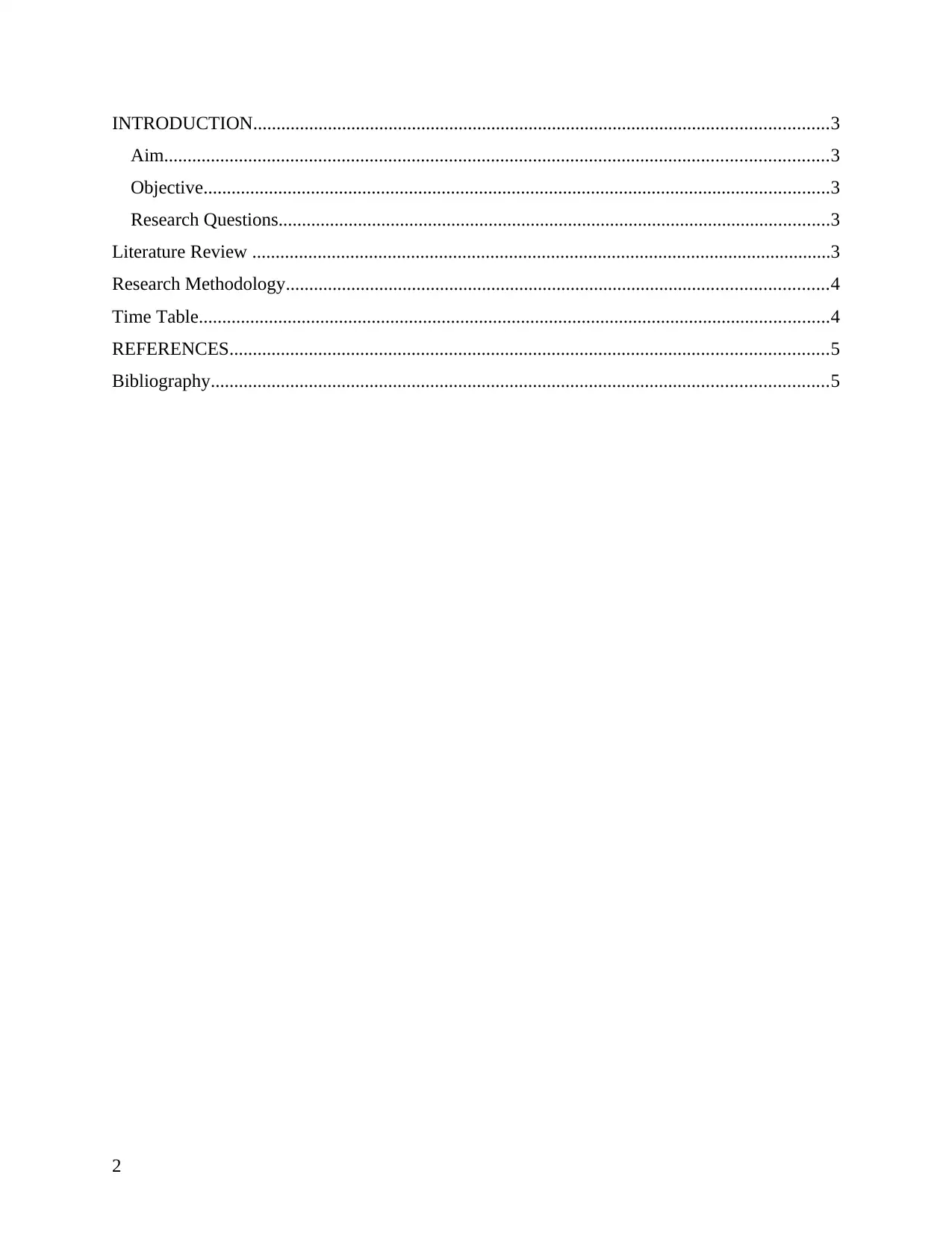
INTRODUCTION...........................................................................................................................3
Aim..............................................................................................................................................3
Objective......................................................................................................................................3
Research Questions......................................................................................................................3
Literature Review ............................................................................................................................3
Research Methodology....................................................................................................................4
Time Table.......................................................................................................................................4
REFERENCES................................................................................................................................5
Bibliography....................................................................................................................................5
2
Document Page
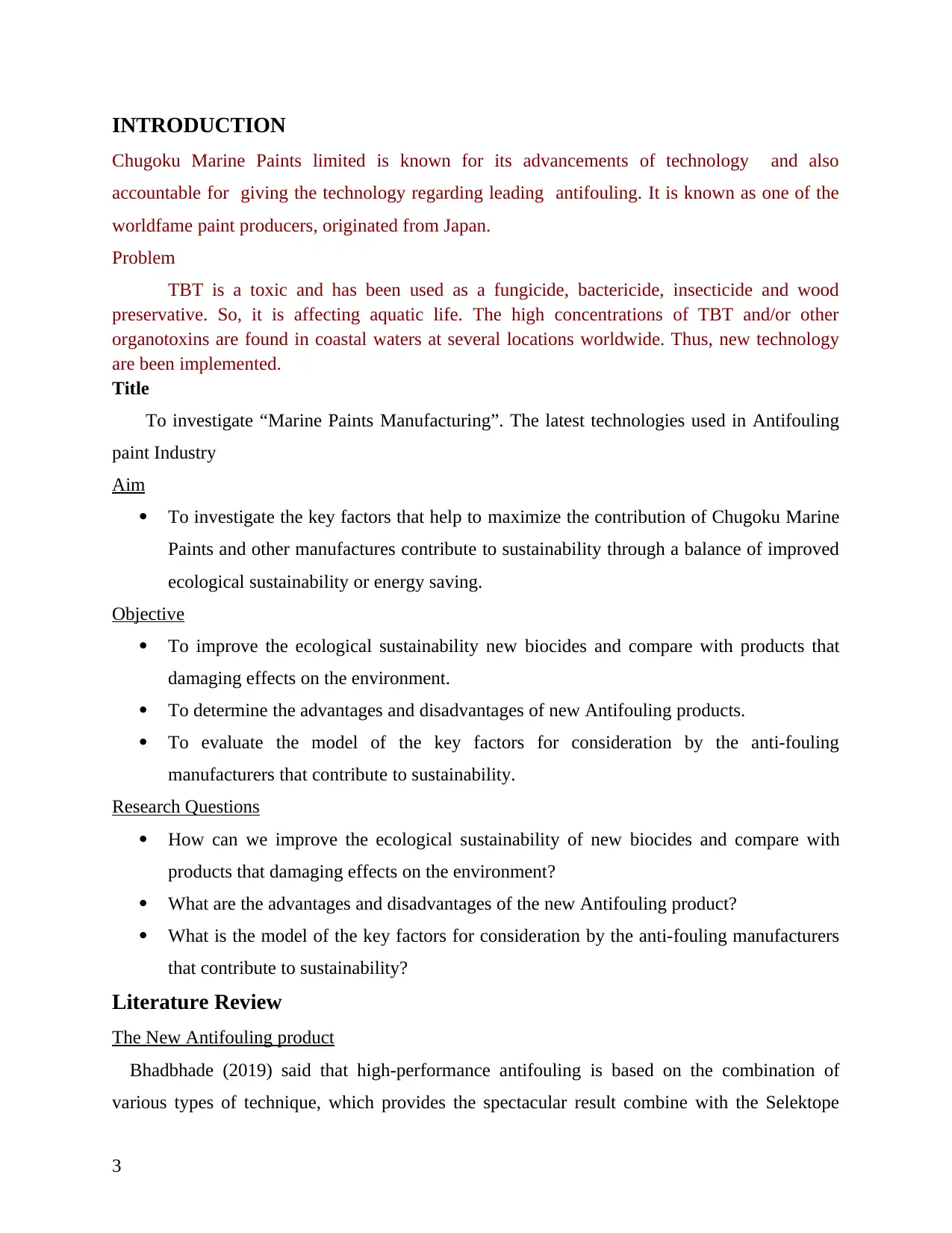
INTRODUCTION
Chugoku Marine Paints limited is known for its advancements of technology and also
accountable for giving the technology regarding leading antifouling. It is known as one of the
worldfame paint producers, originated from Japan.
Problem
TBT is a toxic and has been used as a fungicide, bactericide, insecticide and wood
preservative. So, it is affecting aquatic life. The high concentrations of TBT and/or other
organotoxins are found in coastal waters at several locations worldwide. Thus, new technology
are been implemented.
Title
To investigate “Marine Paints Manufacturing”. The latest technologies used in Antifouling
paint Industry
Aim
To investigate the key factors that help to maximize the contribution of Chugoku Marine
Paints and other manufactures contribute to sustainability through a balance of improved
ecological sustainability or energy saving.
Objective
To improve the ecological sustainability new biocides and compare with products that
damaging effects on the environment.
To determine the advantages and disadvantages of new Antifouling products.
To evaluate the model of the key factors for consideration by the anti-fouling
manufacturers that contribute to sustainability.
Research Questions
How can we improve the ecological sustainability of new biocides and compare with
products that damaging effects on the environment?
What are the advantages and disadvantages of the new Antifouling product?
What is the model of the key factors for consideration by the anti-fouling manufacturers
that contribute to sustainability?
Literature Review
The New Antifouling product
Bhadbhade (2019) said that high-performance antifouling is based on the combination of
various types of technique, which provides the spectacular result combine with the Selektope
3
Document Page
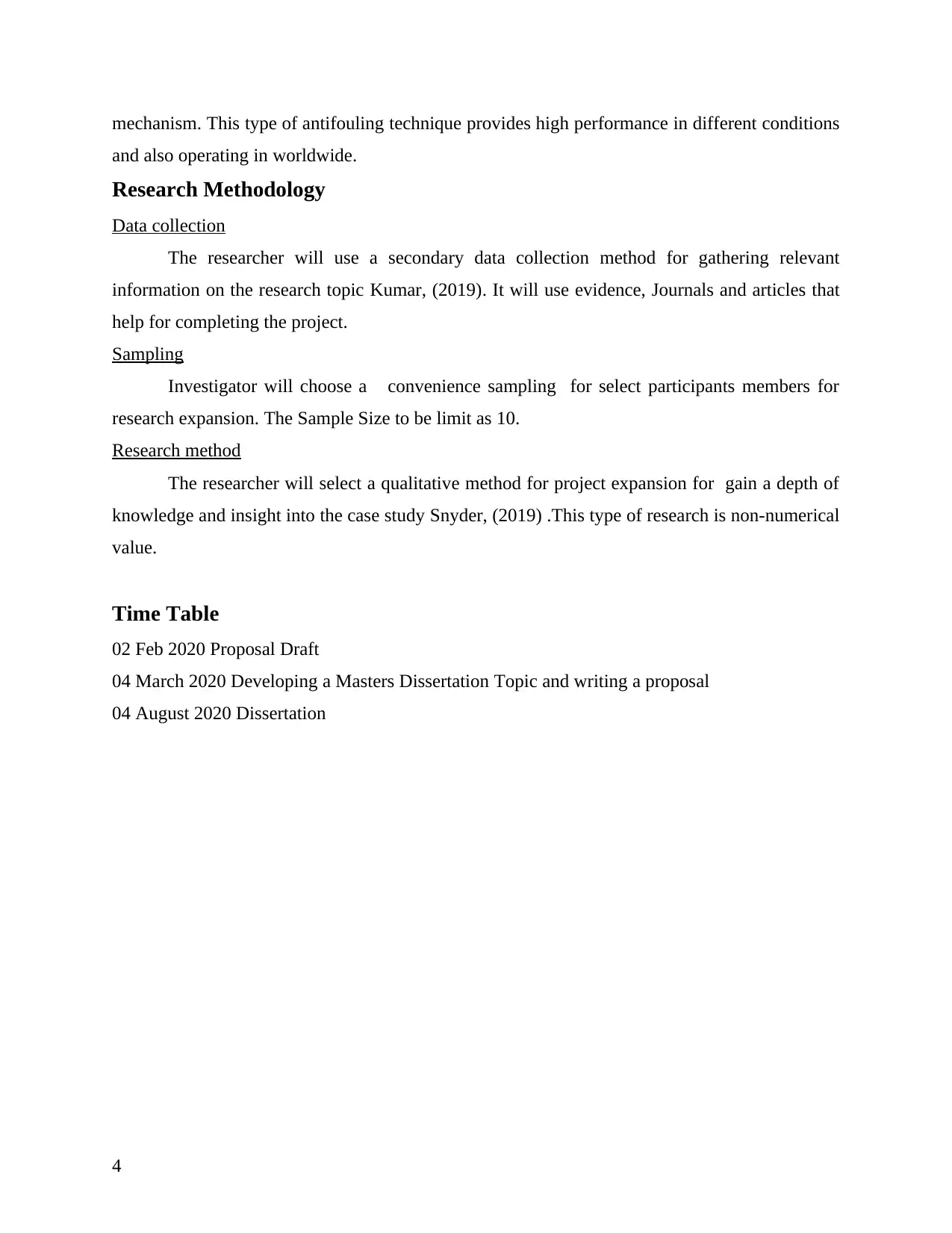
mechanism. This type of antifouling technique provides high performance in different conditions
and also operating in worldwide.
Research Methodology
Data collection
The researcher will use a secondary data collection method for gathering relevant
information on the research topic Kumar, (2019). It will use evidence, Journals and articles that
help for completing the project.
Sampling
Investigator will choose a convenience sampling for select participants members for
research expansion. The Sample Size to be limit as 10.
Research method
The researcher will select a qualitative method for project expansion for gain a depth of
knowledge and insight into the case study Snyder, (2019) .This type of research is non-numerical
value.
Time Table
02 Feb 2020 Proposal Draft
04 March 2020 Developing a Masters Dissertation Topic and writing a proposal
04 August 2020 Dissertation
4
tabler-icon-diamond-filled.svg

Paraphrase This Document

Need a fresh take? Get an instant paraphrase of this document with our AI Paraphraser
Document Page
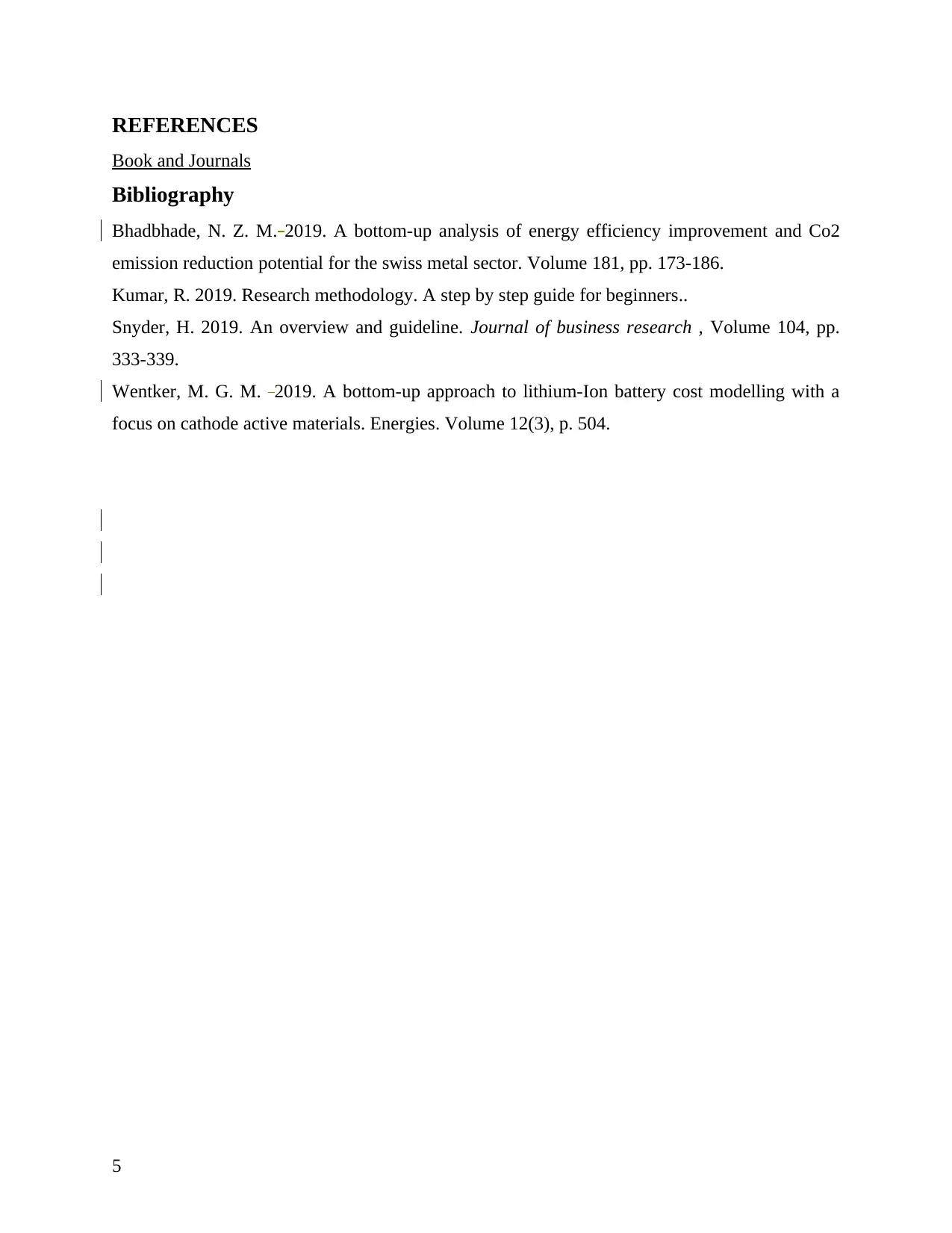
REFERENCES
Book and Journals
Bibliography
Bhadbhade, N. Z. M. 2019. A bottom-up analysis of energy efficiency improvement and Co2
emission reduction potential for the swiss metal sector. Volume 181, pp. 173-186.
Kumar, R. 2019. Research methodology. A step by step guide for beginners..
Snyder, H. 2019. An overview and guideline. Journal of business research , Volume 104, pp.
333-339.
Wentker, M. G. M. 2019. A bottom-up approach to lithium-Ion battery cost modelling with a
focus on cathode active materials. Energies. Volume 12(3), p. 504.
5
chevron_up_icon
1 out of 5
circle_padding
hide_on_mobile
zoom_out_icon
[object Object]