Using the Five-Step Process to Revitalize Nonprofit Memberships

Verified

Added on  2023/06/09

|14
|852
|398
Presentation
AI Summary
This presentation addresses the problem of declining new and repeat memberships in a local nonprofit charity by implementing the Five-Step Marketing Research Process. It defines each step—problem definition, research plan development, data gathering, data interpretation, and action-taking—and discusses their importance in identifying market problems, formulating strategies, and understanding customer needs. The presentation also contrasts qualitative and quantitative data and compares the five-step process with alternative methods like observation and surveys. Furthermore, it emphasizes service differentiation strategies, such as appealing to emotions and personalizing the organization, to distinguish the nonprofit from comparable entities and attract prospective members. The conclusion highlights the role of the five-step process in analyzing the problem and the importance of service differentiation in enhancing the organization's position.
Document Page
Marketing and ManagementMarketing and Management
tabler-icon-diamond-filled.svg

Paraphrase This Document

Need a fresh take? Get an instant paraphrase of this document with our AI Paraphraser
Document Page
IntroductionIntroduction
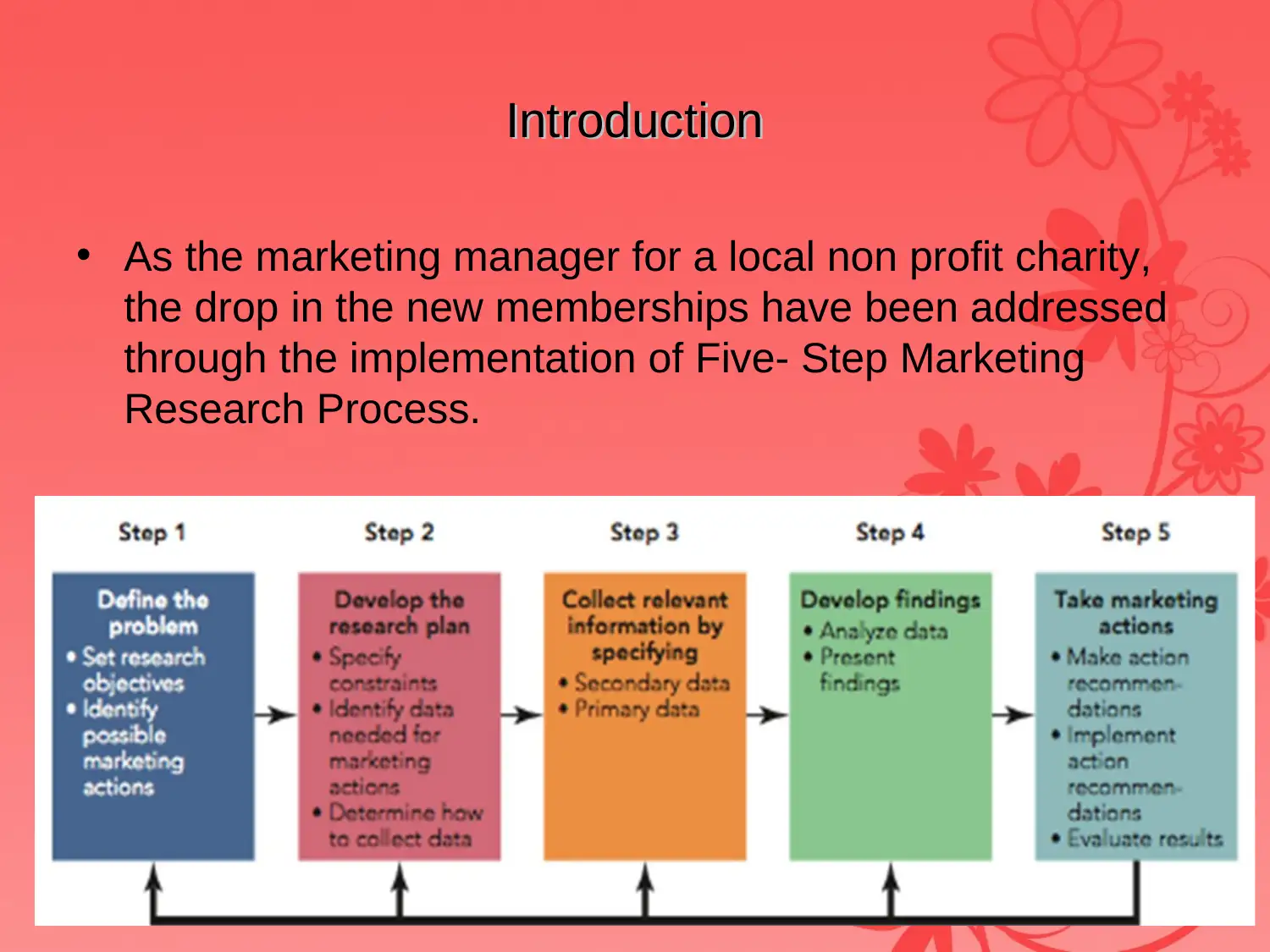
As the marketing manager for a local non profit charity,
the drop in the new memberships have been addressed
through the implementation of Five- Step Marketing
Research Process.
Document Page
Five-Step Marketing Research Approach and ItsFive-Step Marketing Research Approach and Its
ImportanceImportance
Five-step market research approach follows five steps for completing the
research:
Define the Problem
Develop the Research Plan
Gathering Problem Specific Data
Interpretation of Data and Report Findings
Taking Actions and Solving Problems
Importance of Research in Marketing-
Identification of problems and opportunities in the market
Formulating market strategies
Determining needs and wants of the customers
Effective communication mix
Improving selling activities
Document Page
Define the Problem
The goal of this step is to prevent the wastage of resources, time and effort
on research job on wrong problem. Therefore, it aims at determining the
problem to be addressed.
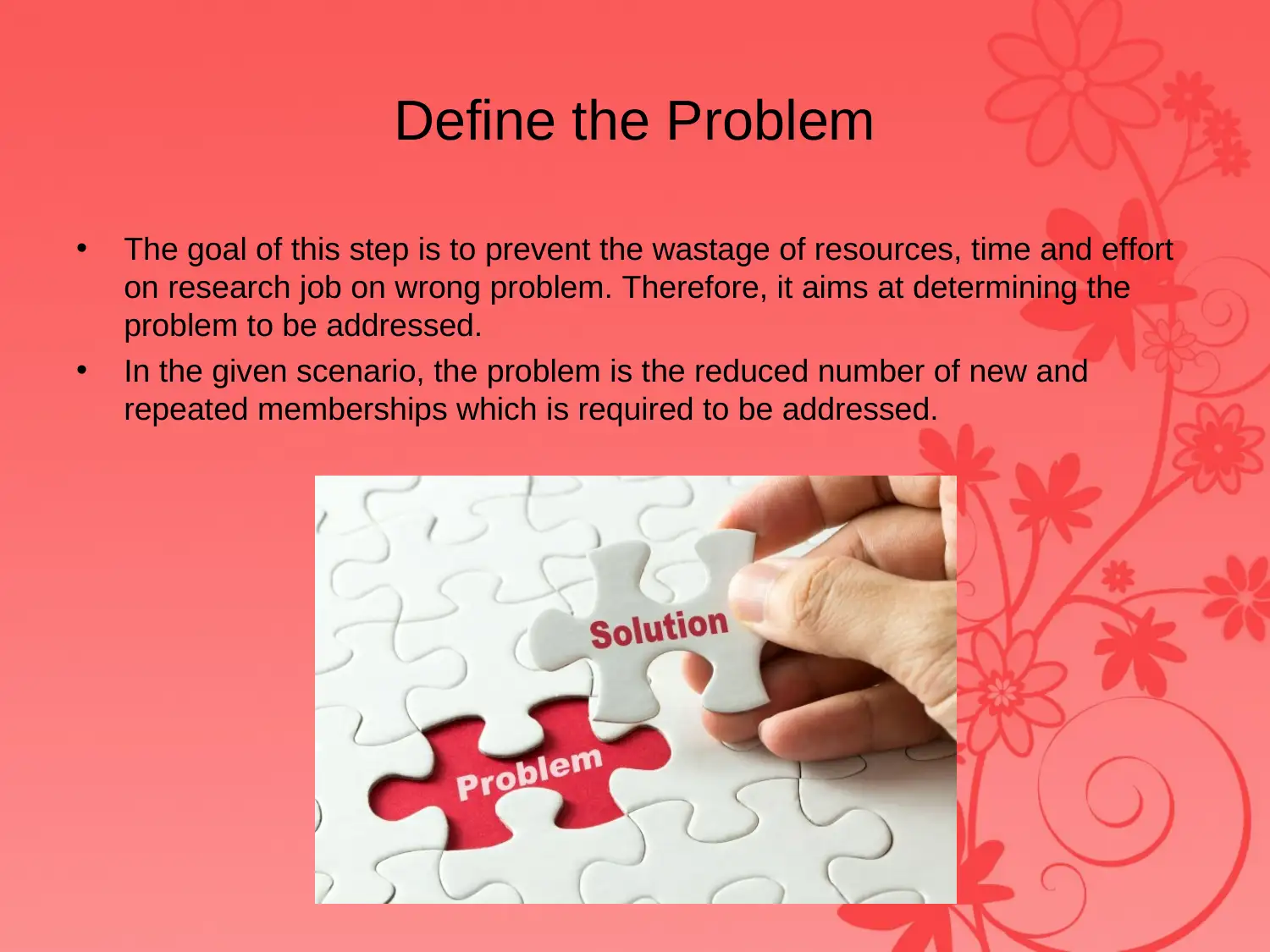
In the given scenario, the problem is the reduced number of new and
repeated memberships which is required to be addressed.
tabler-icon-diamond-filled.svg

Paraphrase This Document

Need a fresh take? Get an instant paraphrase of this document with our AI Paraphraser
Document Page
Develop the Research Plan
The goal of this stage is formulating and designing of a research
plan along with determining the type of research to be conducted
and the sources to be used.
In the given scenario, the implementation this stage will require
creation of the research plan which includes the use of techniques
like conducting surveys, interviewing customers, researching online,
etc.
Document Page
Gathering Problem Specific Data
The goal of this stage is the collection of unbiased and valid data by
using the appropriate techniques.
In the given scenario, this stage will help in deriving the information
regarding why the members are not interested in repeated
membership and why the new memberships are declining.
Document Page
Interpretation of Data and Report
Findings
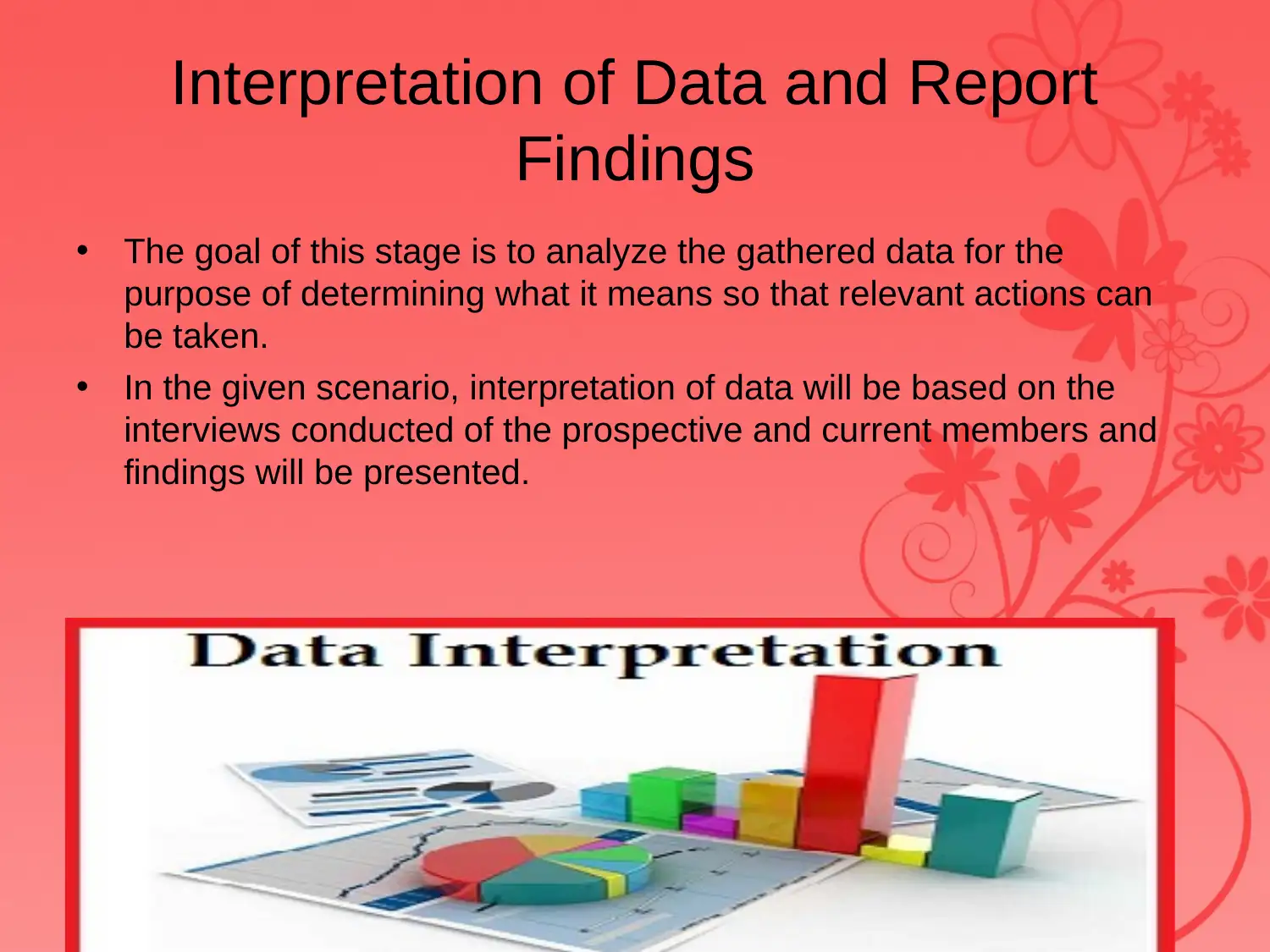
The goal of this stage is to analyze the gathered data for the
purpose of determining what it means so that relevant actions can
be taken.
In the given scenario, interpretation of data will be based on the
interviews conducted of the prospective and current members and
findings will be presented.
tabler-icon-diamond-filled.svg

Paraphrase This Document

Need a fresh take? Get an instant paraphrase of this document with our AI Paraphraser
Document Page
Taking Actions and Solving Problems
The goal of this stage is to present the findings and
taking the required actions.
In the given scenario, the implementation of this stage
will require adoption of differentiation strategy for
defeating the comparable organizations and increasing
the number of memberships.
Document Page
Types of Research Data
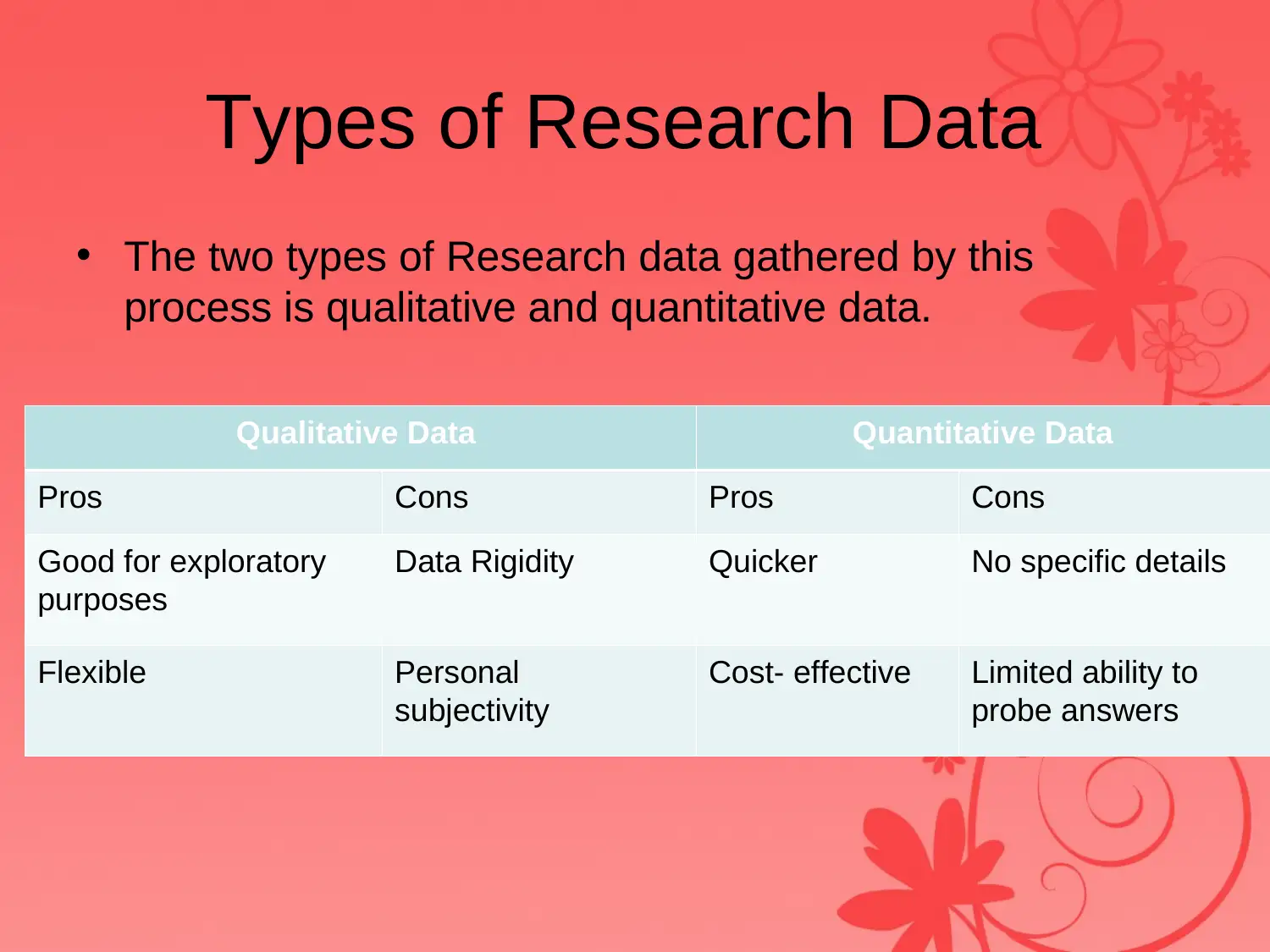
The two types of Research data gathered by this
process is qualitative and quantitative data.
Qualitative Data Quantitative Data
Pros Cons Pros Cons
Good for exploratory
purposes
Data Rigidity Quicker No specific details
Flexible Personal
subjectivity
Cost- effective Limited ability to
probe answers
Document Page
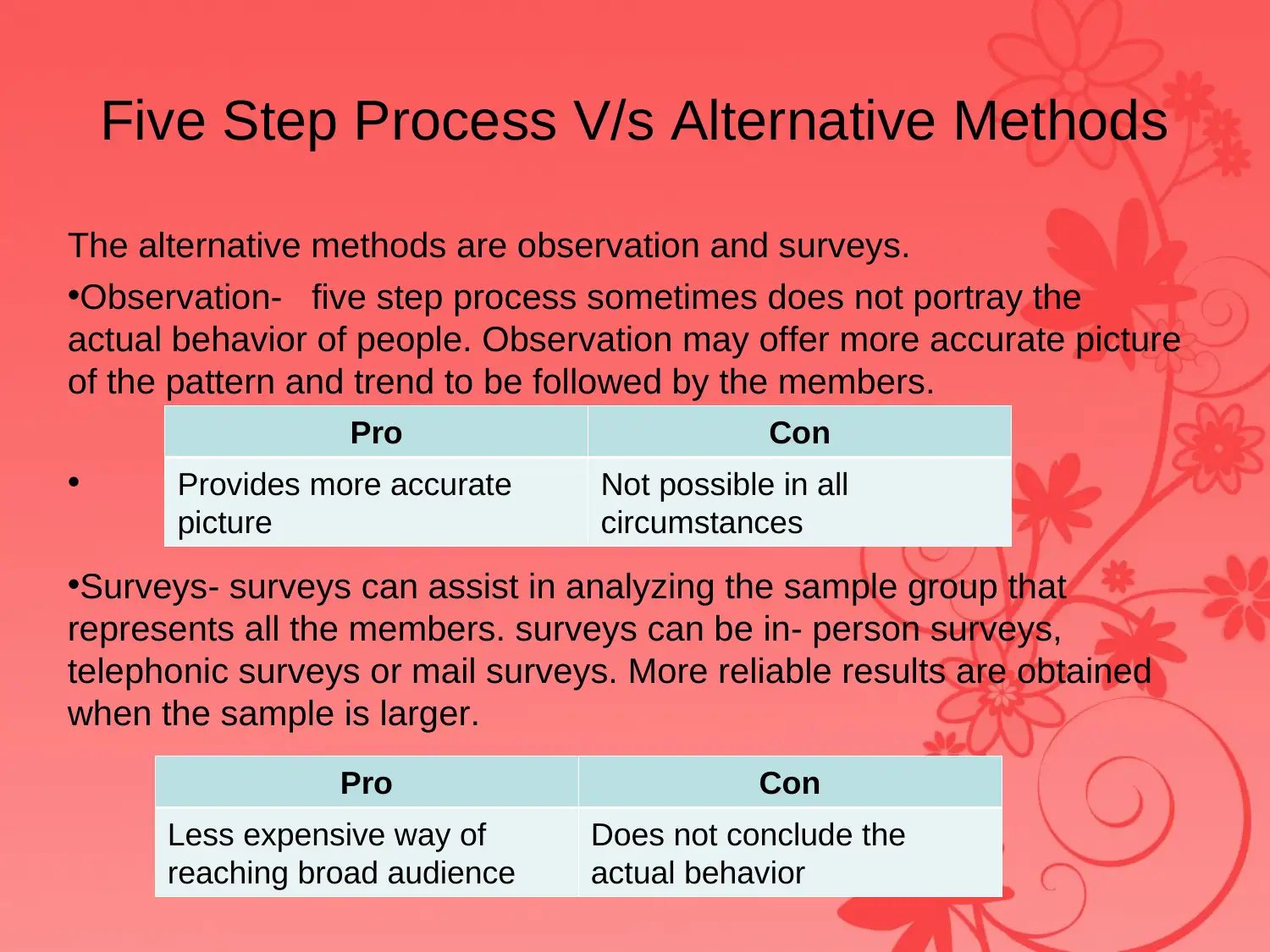
Five Step Process V/s Alternative Methods
The alternative methods are observation and surveys.
Observation- five step process sometimes does not portray the
actual behavior of people. Observation may offer more accurate picture
of the pattern and trend to be followed by the members.

Surveys- surveys can assist in analyzing the sample group that
represents all the members. surveys can be in- person surveys,
telephonic surveys or mail surveys. More reliable results are obtained
when the sample is larger.
Pro Con
Provides more accurate
picture
Not possible in all
circumstances
Pro Con
Less expensive way of
reaching broad audience
Does not conclude the
actual behavior
tabler-icon-diamond-filled.svg

Paraphrase This Document

Need a fresh take? Get an instant paraphrase of this document with our AI Paraphraser
Document Page
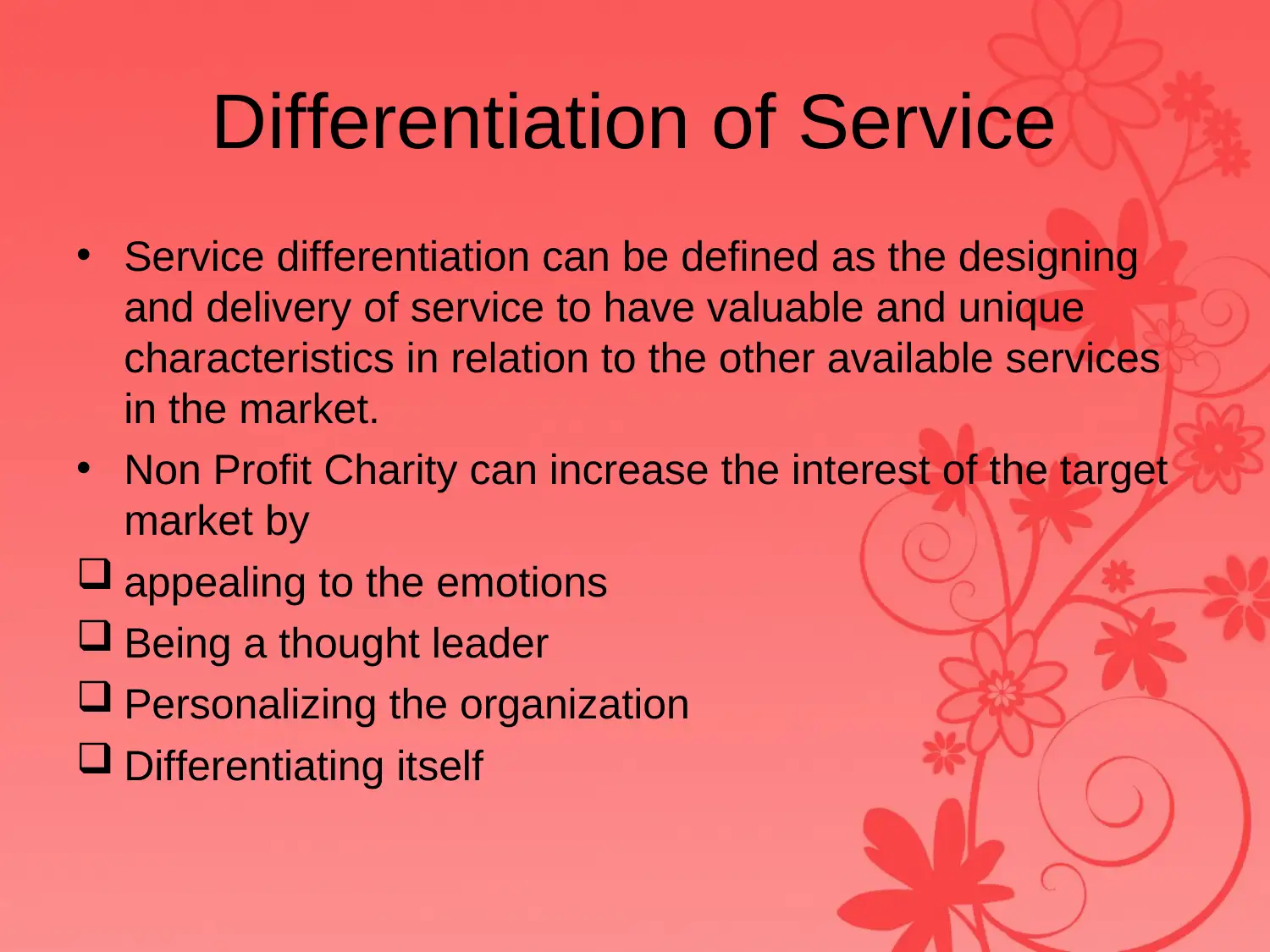
Differentiation of Service
Service differentiation can be defined as the designing
and delivery of service to have valuable and unique
characteristics in relation to the other available services
in the market.
Non Profit Charity can increase the interest of the target
market by
appealing to the emotions
Being a thought leader
Personalizing the organization
Differentiating itself
Document Page
Role of Differentiation in
Positioning the Organization
Distinguish it from comparable organizations
Provision of more effective and efficient services
Creation of a strong organization
Attraction to prospective members
chevron_up_icon
1 out of 14
circle_padding
hide_on_mobile
zoom_out_icon
[object Object]