Report: Brand Heritage and Marketing of Maryland Cookies Brand
VerifiedAdded on 2023/06/08
|11
|2615
|143
Report
AI Summary
This report provides a comprehensive analysis of the Maryland Cookies brand, examining its brand heritage, brand name, and brand image. It delves into the company's marketing performance, utilizing theories such as brand heritage, brand name analysis, brand image analysis, and the four building blocks of brand building. The report also applies the brand image transfer and STP (Segmentation, Targeting, and Positioning) models to evaluate the brand's effectiveness. Furthermore, it explores the brand's strengths, weaknesses, and market position, offering insights into the strategies employed by Burton's Biscuits Company. The analysis includes a detailed look at brand associations, consumer perceptions, and the brand's ability to differentiate itself in the competitive food and beverage industry. The report concludes with a summary of the brand's performance and the effectiveness of its marketing strategies, highlighting the importance of brand heritage and emotional connection with consumers. Finally, the report includes a concept board for a new brand.
Maryland Cookies 1
Maryland Cookies
Student’s Name:
Course:
Tutor:
Institutional Affiliation:
Date:
Maryland Cookies
Student’s Name:
Course:
Tutor:
Institutional Affiliation:
Date:

Paraphrase This Document
Need a fresh take? Get an instant paraphrase of this document with our AI Paraphraser
Maryland Cookies 2
Maryland Cookies
Introduction
The current business environment boasts popular and famous brand names from
varied companies in the world, such as Coca-Cola, Nike, and Gucci. When compared to other
industries, the food and beverage industry evidence the existence of different brands that
define and distinguish companies from their competitors. The purpose of creating strong
brands correlates with the objectives of a company and the need to identify the personal
needs of their respective customers in different market segments. Moreover, the embrace of a
branding strategy enables a company to not only survive in the current competitive market
but also foster future business success and financial returns.
This report will evaluate the brand and marketing performance of the Maryland
Cookies brand through the following theories, namely, brand heritage, brand name analysis,
brand image analysis, and the four building blocks. Moreover, this report will analyse the
Maryland Cookies brand using the brand image, and the segmentation, targeting, and
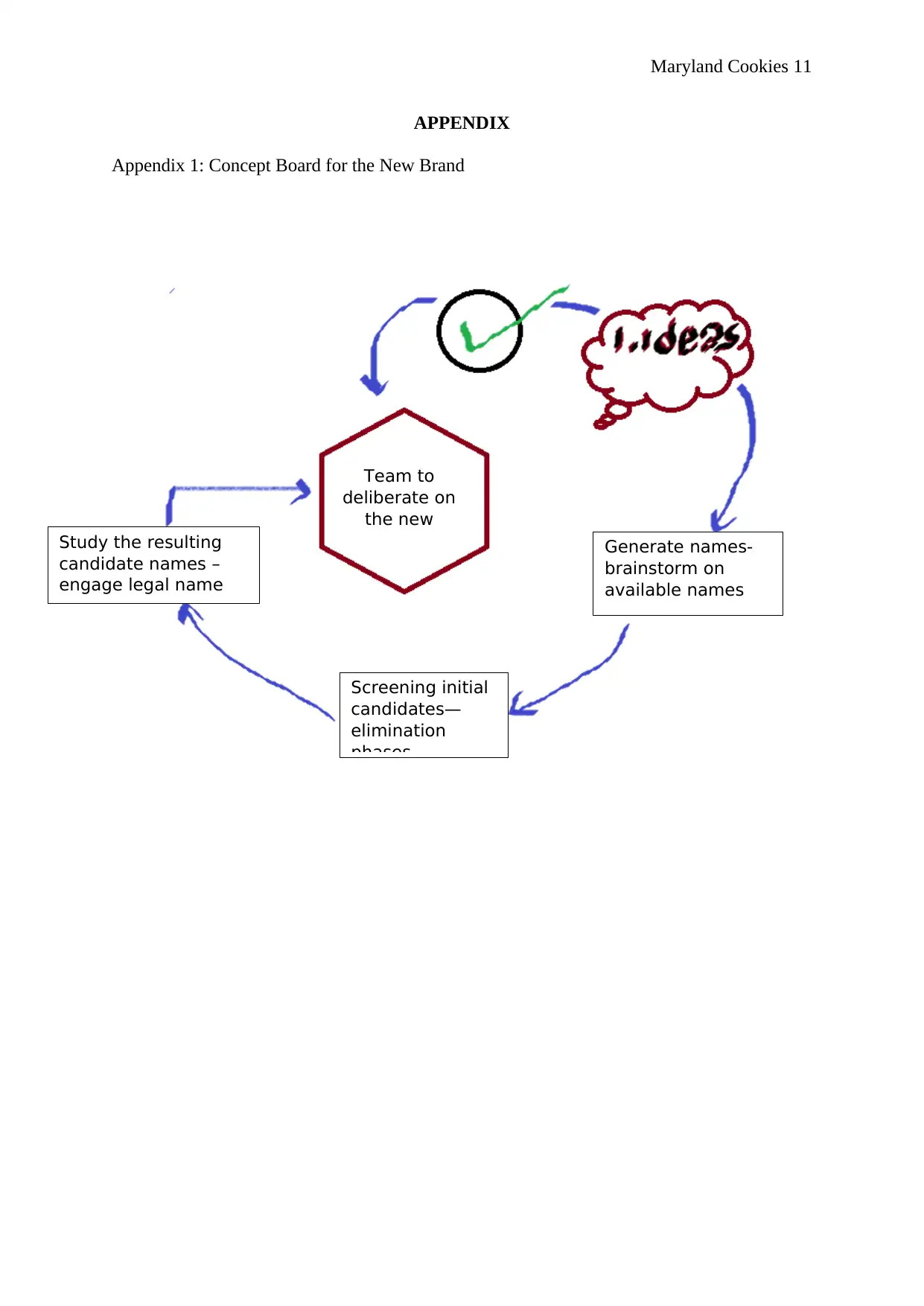
positioning (STP) model. The last section of the report (See Appendix 1) will highlight the
concept board for the new brand.
Brand and Market Performance
Brand Heritage
Despite the fact that brand heritage has existed for many years, it is currently
identified as an emerging marketing concept adopted by companies to utilize the historical
and emotional connection customers have towards particular products (Merchant and Rose
2013; Wiedmann, Hennigs, Schmidt, and Wuestefeld 2011). In addition to highlighting the
relevance of the history of a brand, Riezeboz (2003) provides a comprehensive discussion on
the measures that companies adopt to develop, manage, and protect their brand identities. The
Maryland Cookies, which is a brand name for the cookies produced by Burton’s Biscuits
Maryland Cookies
Introduction
The current business environment boasts popular and famous brand names from
varied companies in the world, such as Coca-Cola, Nike, and Gucci. When compared to other
industries, the food and beverage industry evidence the existence of different brands that
define and distinguish companies from their competitors. The purpose of creating strong
brands correlates with the objectives of a company and the need to identify the personal
needs of their respective customers in different market segments. Moreover, the embrace of a
branding strategy enables a company to not only survive in the current competitive market
but also foster future business success and financial returns.
This report will evaluate the brand and marketing performance of the Maryland
Cookies brand through the following theories, namely, brand heritage, brand name analysis,
brand image analysis, and the four building blocks. Moreover, this report will analyse the
Maryland Cookies brand using the brand image, and the segmentation, targeting, and
positioning (STP) model. The last section of the report (See Appendix 1) will highlight the
concept board for the new brand.
Brand and Market Performance
Brand Heritage
Despite the fact that brand heritage has existed for many years, it is currently
identified as an emerging marketing concept adopted by companies to utilize the historical
and emotional connection customers have towards particular products (Merchant and Rose
2013; Wiedmann, Hennigs, Schmidt, and Wuestefeld 2011). In addition to highlighting the
relevance of the history of a brand, Riezeboz (2003) provides a comprehensive discussion on
the measures that companies adopt to develop, manage, and protect their brand identities. The
Maryland Cookies, which is a brand name for the cookies produced by Burton’s Biscuits
Maryland Cookies 3
Company not only strengthens the emotional connection with their consumers in the United
Kingdom but also gives the company an edge of their fiercest competitors.
Findings from a study carried out by Hudson and Balmer (2013) reveal reasons how
corporate heritage brands attract customers from different market segments. In their
discussion, Hudson and Balmer (2013) expound on the ideas borrowed from Mead’s theory
of the past to discuss the connection between consumer behaviour and corporate heritage
brands. Whereas the aspect of brand heritage elicits nostalgia and authenticity, the resulting
findings elucidate its role of linking consumers with a particular history of the brand.
As businesses seek to identify and strengthen their brand identities, Pecot and De
Barnier (2017), and Hakala, Lätti, and Sandberg (2011) elaborate on the dynamic construct
posed by the aspect of brand heritage. Findings from these studies indicate that companies
utilise principles drawn from the brand heritage purposely to differentiate their products from
their competitors. Correspondingly, the authors attribute the relevance of brand heritage
adopted by different companies to increase the consistency of their products based on ideas
borrowed from their history. Therefore, it vital to note that there exists a multitude of studies
elaborating on the significance of brand heritage and various strategies that companies
embrace to define their brand identities. These traits are evidenced by the Maryland cookies
brand that has existed for over seven decades since its launch in the late 1950s (Burton’s
Biscuits Company 2018).
Brand Name Analysis
Kapferer (2012) accounts for the strategies adopted in the current business
environment by businesses for survival because of the growing levels of competition in their
industries. Many successful companies have distinguished brand names for their products as
they seek to increase the global market share. Whereas other companies flourish by using
their names on their varied products, there are those that only seek to change the brand names
Company not only strengthens the emotional connection with their consumers in the United
Kingdom but also gives the company an edge of their fiercest competitors.
Findings from a study carried out by Hudson and Balmer (2013) reveal reasons how
corporate heritage brands attract customers from different market segments. In their
discussion, Hudson and Balmer (2013) expound on the ideas borrowed from Mead’s theory
of the past to discuss the connection between consumer behaviour and corporate heritage
brands. Whereas the aspect of brand heritage elicits nostalgia and authenticity, the resulting
findings elucidate its role of linking consumers with a particular history of the brand.
As businesses seek to identify and strengthen their brand identities, Pecot and De
Barnier (2017), and Hakala, Lätti, and Sandberg (2011) elaborate on the dynamic construct
posed by the aspect of brand heritage. Findings from these studies indicate that companies
utilise principles drawn from the brand heritage purposely to differentiate their products from
their competitors. Correspondingly, the authors attribute the relevance of brand heritage
adopted by different companies to increase the consistency of their products based on ideas
borrowed from their history. Therefore, it vital to note that there exists a multitude of studies
elaborating on the significance of brand heritage and various strategies that companies
embrace to define their brand identities. These traits are evidenced by the Maryland cookies
brand that has existed for over seven decades since its launch in the late 1950s (Burton’s
Biscuits Company 2018).
Brand Name Analysis
Kapferer (2012) accounts for the strategies adopted in the current business
environment by businesses for survival because of the growing levels of competition in their
industries. Many successful companies have distinguished brand names for their products as
they seek to increase the global market share. Whereas other companies flourish by using
their names on their varied products, there are those that only seek to change the brand names
⊘ This is a preview!⊘
Do you want full access?
Subscribe today to unlock all pages.

Trusted by 1+ million students worldwide
Maryland Cookies 4
of their commodities. The Maryland Cookies, which has become a household name in the
U.K. is the brand name of the cookies produced by the Burton’s Biscuits Company. The
existing statistics gives Maryland Cookies an edge over other cookies because of its
popularity among customers from different age groups.
The need for a company to create a brand, therefore, entails the process of embracing
certain characteristics that are unique and different, for example, logo, design and packaging,
and name. These characteristics notably referred to as brand elements play helps consumers
to identify and distinguish products of companies in the market (Riezeboz, 2003). On the
other hand, product management provides vital information that ascertains the role of a brand
name in prompting the first point of communication with potential and existing customers
(Anandan, 2009). Accordingly, Aaker (2012) highlights the successes of appropriate brand
names that connects customers to products. As a valuable asset, principles manifested in
brand name strategies strengthen the identity and the projected image of a particular product
against similar products on the market. In this regard, Maryland cookies brand is
characterised with a unique brand name that evidently continues to create success for the
Burton’s Biscuits Company.
Brand Image
According to Keller (2013), branding has been around for many centuries with
businesses embracing the concept to differentiate their products from each other. Moreover,
Keller (2013) relates the brand image to the consumer’s perception of a brand manifested
through associations, uniqueness, and favourability. This report will adopt Keller’s
knowledge model to outline Maryland’s cookies brand awareness and brand knowledge. The
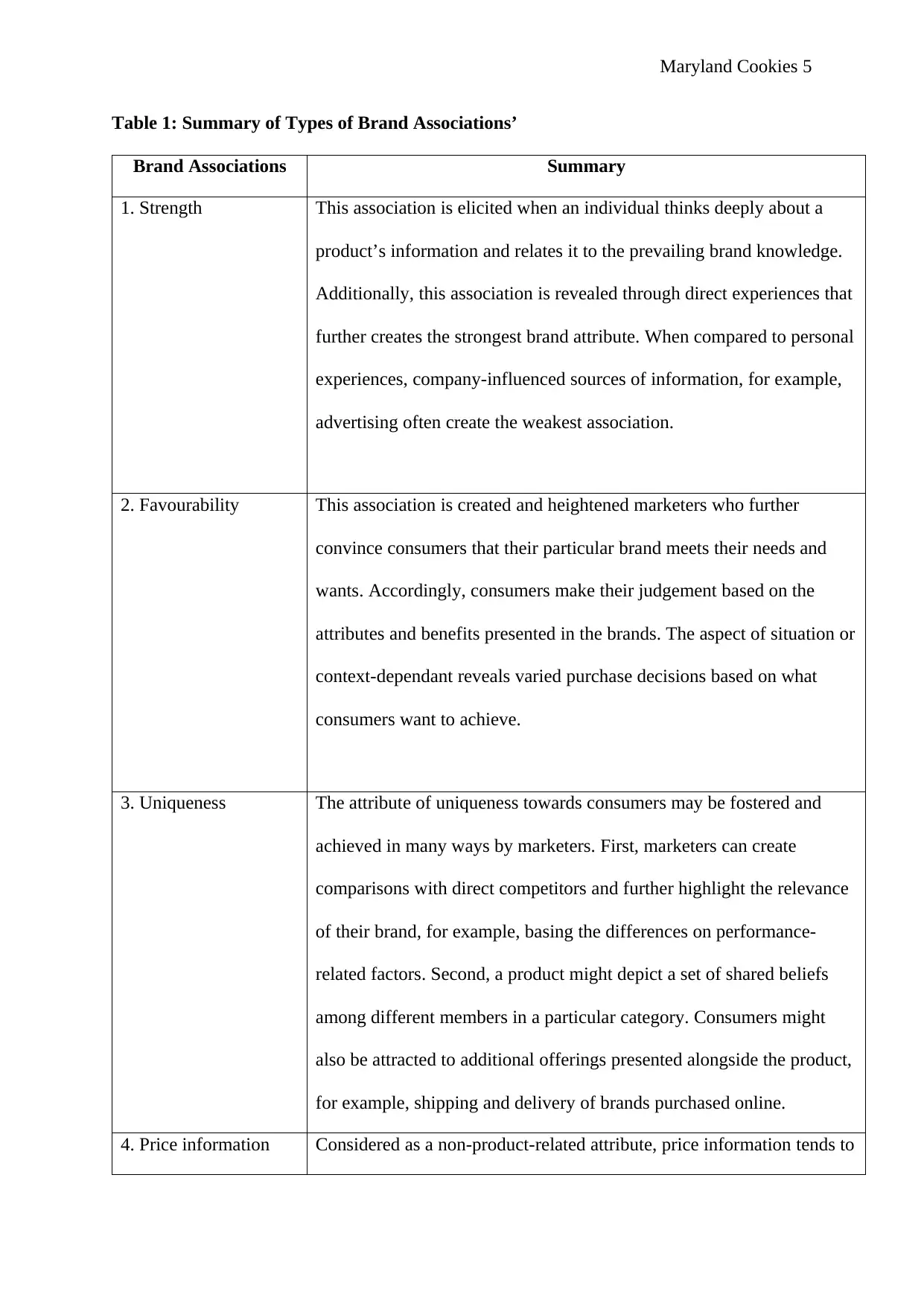
table below presents different brand associations as elaborated by Keller (2013).
of their commodities. The Maryland Cookies, which has become a household name in the
U.K. is the brand name of the cookies produced by the Burton’s Biscuits Company. The
existing statistics gives Maryland Cookies an edge over other cookies because of its
popularity among customers from different age groups.
The need for a company to create a brand, therefore, entails the process of embracing
certain characteristics that are unique and different, for example, logo, design and packaging,
and name. These characteristics notably referred to as brand elements play helps consumers
to identify and distinguish products of companies in the market (Riezeboz, 2003). On the
other hand, product management provides vital information that ascertains the role of a brand
name in prompting the first point of communication with potential and existing customers
(Anandan, 2009). Accordingly, Aaker (2012) highlights the successes of appropriate brand
names that connects customers to products. As a valuable asset, principles manifested in
brand name strategies strengthen the identity and the projected image of a particular product
against similar products on the market. In this regard, Maryland cookies brand is
characterised with a unique brand name that evidently continues to create success for the
Burton’s Biscuits Company.
Brand Image
According to Keller (2013), branding has been around for many centuries with
businesses embracing the concept to differentiate their products from each other. Moreover,
Keller (2013) relates the brand image to the consumer’s perception of a brand manifested
through associations, uniqueness, and favourability. This report will adopt Keller’s
knowledge model to outline Maryland’s cookies brand awareness and brand knowledge. The
table below presents different brand associations as elaborated by Keller (2013).
Paraphrase This Document
Need a fresh take? Get an instant paraphrase of this document with our AI Paraphraser
Maryland Cookies 5
Table 1: Summary of Types of Brand Associations’
Brand Associations Summary
1. Strength This association is elicited when an individual thinks deeply about a
product’s information and relates it to the prevailing brand knowledge.
Additionally, this association is revealed through direct experiences that
further creates the strongest brand attribute. When compared to personal
experiences, company-influenced sources of information, for example,
advertising often create the weakest association.
2. Favourability This association is created and heightened marketers who further
convince consumers that their particular brand meets their needs and
wants. Accordingly, consumers make their judgement based on the
attributes and benefits presented in the brands. The aspect of situation or
context-dependant reveals varied purchase decisions based on what
consumers want to achieve.
3. Uniqueness The attribute of uniqueness towards consumers may be fostered and
achieved in many ways by marketers. First, marketers can create
comparisons with direct competitors and further highlight the relevance
of their brand, for example, basing the differences on performance-
related factors. Second, a product might depict a set of shared beliefs
among different members in a particular category. Consumers might
also be attracted to additional offerings presented alongside the product,
for example, shipping and delivery of brands purchased online.
4. Price information Considered as a non-product-related attribute, price information tends to
Table 1: Summary of Types of Brand Associations’
Brand Associations Summary
1. Strength This association is elicited when an individual thinks deeply about a
product’s information and relates it to the prevailing brand knowledge.
Additionally, this association is revealed through direct experiences that
further creates the strongest brand attribute. When compared to personal
experiences, company-influenced sources of information, for example,
advertising often create the weakest association.
2. Favourability This association is created and heightened marketers who further
convince consumers that their particular brand meets their needs and
wants. Accordingly, consumers make their judgement based on the
attributes and benefits presented in the brands. The aspect of situation or
context-dependant reveals varied purchase decisions based on what
consumers want to achieve.
3. Uniqueness The attribute of uniqueness towards consumers may be fostered and
achieved in many ways by marketers. First, marketers can create
comparisons with direct competitors and further highlight the relevance
of their brand, for example, basing the differences on performance-
related factors. Second, a product might depict a set of shared beliefs
among different members in a particular category. Consumers might
also be attracted to additional offerings presented alongside the product,
for example, shipping and delivery of brands purchased online.
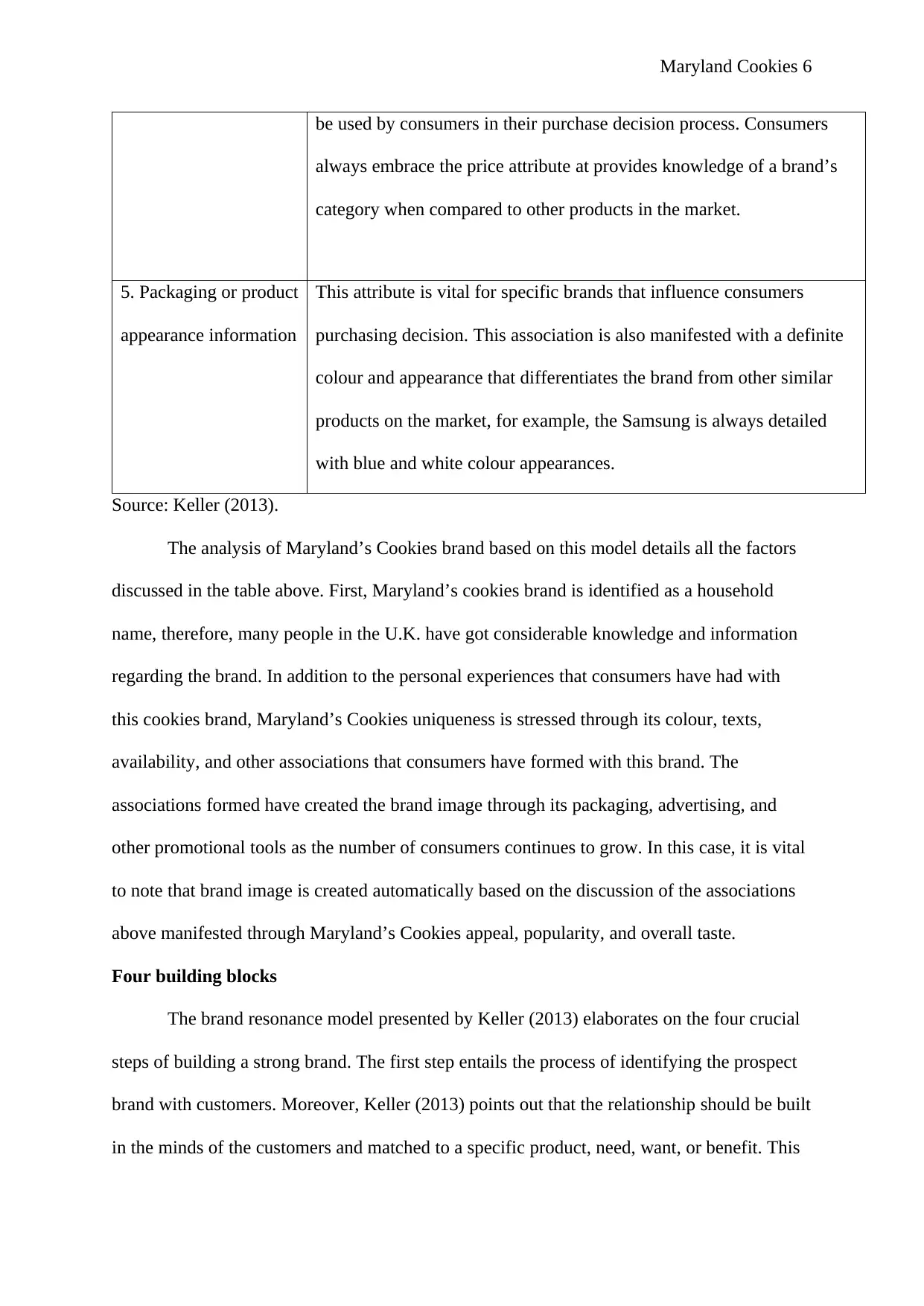
4. Price information Considered as a non-product-related attribute, price information tends to
Maryland Cookies 6
be used by consumers in their purchase decision process. Consumers
always embrace the price attribute at provides knowledge of a brand’s
category when compared to other products in the market.
5. Packaging or product
appearance information
This attribute is vital for specific brands that influence consumers
purchasing decision. This association is also manifested with a definite
colour and appearance that differentiates the brand from other similar
products on the market, for example, the Samsung is always detailed
with blue and white colour appearances.
Source: Keller (2013).
The analysis of Maryland’s Cookies brand based on this model details all the factors
discussed in the table above. First, Maryland’s cookies brand is identified as a household
name, therefore, many people in the U.K. have got considerable knowledge and information
regarding the brand. In addition to the personal experiences that consumers have had with
this cookies brand, Maryland’s Cookies uniqueness is stressed through its colour, texts,
availability, and other associations that consumers have formed with this brand. The
associations formed have created the brand image through its packaging, advertising, and
other promotional tools as the number of consumers continues to grow. In this case, it is vital
to note that brand image is created automatically based on the discussion of the associations
above manifested through Maryland’s Cookies appeal, popularity, and overall taste.
Four building blocks
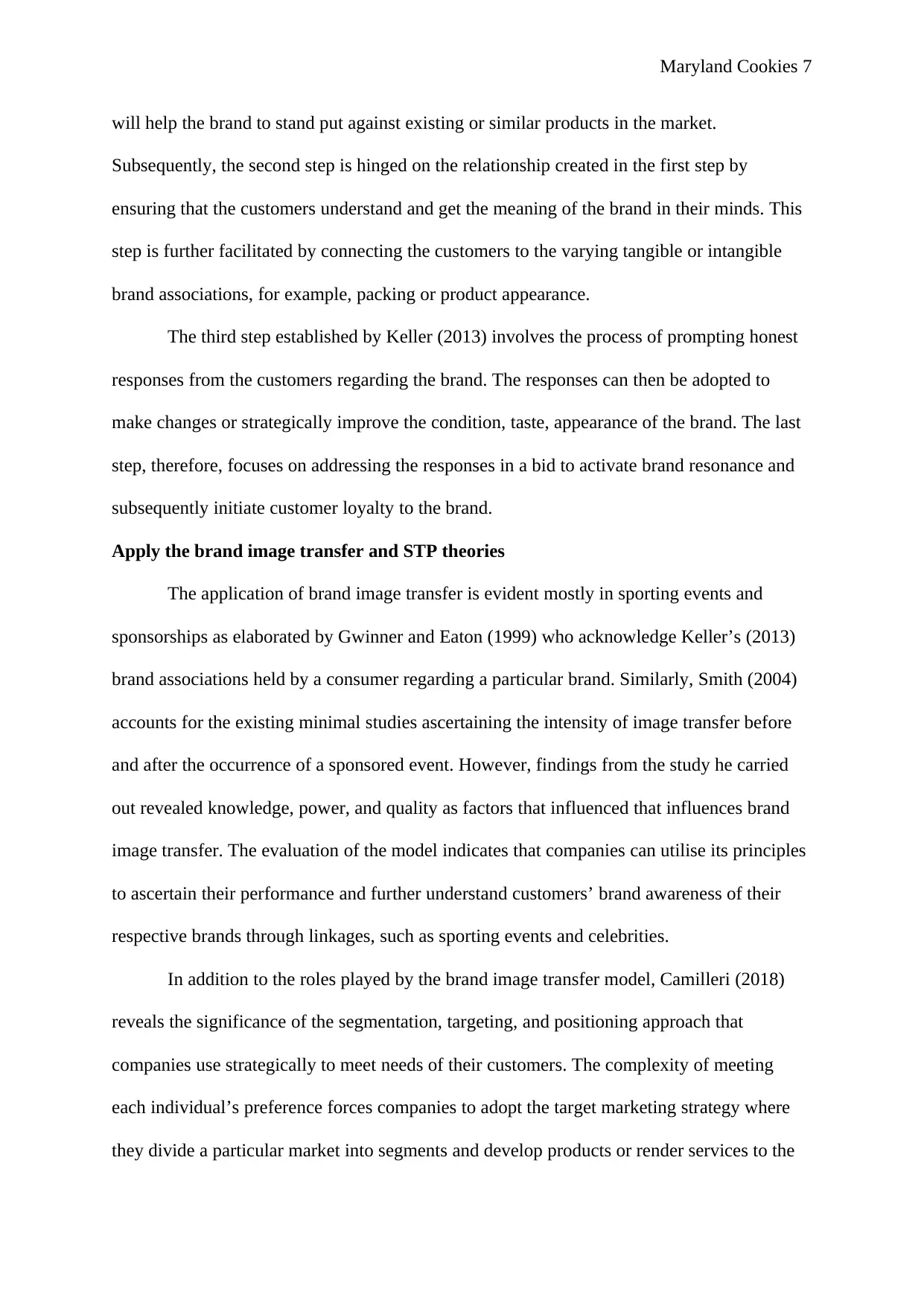
The brand resonance model presented by Keller (2013) elaborates on the four crucial
steps of building a strong brand. The first step entails the process of identifying the prospect
brand with customers. Moreover, Keller (2013) points out that the relationship should be built
in the minds of the customers and matched to a specific product, need, want, or benefit. This
be used by consumers in their purchase decision process. Consumers
always embrace the price attribute at provides knowledge of a brand’s
category when compared to other products in the market.
5. Packaging or product
appearance information
This attribute is vital for specific brands that influence consumers
purchasing decision. This association is also manifested with a definite
colour and appearance that differentiates the brand from other similar
products on the market, for example, the Samsung is always detailed
with blue and white colour appearances.
Source: Keller (2013).
The analysis of Maryland’s Cookies brand based on this model details all the factors
discussed in the table above. First, Maryland’s cookies brand is identified as a household
name, therefore, many people in the U.K. have got considerable knowledge and information
regarding the brand. In addition to the personal experiences that consumers have had with
this cookies brand, Maryland’s Cookies uniqueness is stressed through its colour, texts,
availability, and other associations that consumers have formed with this brand. The
associations formed have created the brand image through its packaging, advertising, and
other promotional tools as the number of consumers continues to grow. In this case, it is vital
to note that brand image is created automatically based on the discussion of the associations
above manifested through Maryland’s Cookies appeal, popularity, and overall taste.
Four building blocks
The brand resonance model presented by Keller (2013) elaborates on the four crucial
steps of building a strong brand. The first step entails the process of identifying the prospect
brand with customers. Moreover, Keller (2013) points out that the relationship should be built
in the minds of the customers and matched to a specific product, need, want, or benefit. This
⊘ This is a preview!⊘
Do you want full access?
Subscribe today to unlock all pages.
Trusted by 1+ million students worldwide
Maryland Cookies 7
will help the brand to stand put against existing or similar products in the market.
Subsequently, the second step is hinged on the relationship created in the first step by
ensuring that the customers understand and get the meaning of the brand in their minds. This
step is further facilitated by connecting the customers to the varying tangible or intangible
brand associations, for example, packing or product appearance.
The third step established by Keller (2013) involves the process of prompting honest
responses from the customers regarding the brand. The responses can then be adopted to
make changes or strategically improve the condition, taste, appearance of the brand. The last
step, therefore, focuses on addressing the responses in a bid to activate brand resonance and
subsequently initiate customer loyalty to the brand.
Apply the brand image transfer and STP theories
The application of brand image transfer is evident mostly in sporting events and
sponsorships as elaborated by Gwinner and Eaton (1999) who acknowledge Keller’s (2013)
brand associations held by a consumer regarding a particular brand. Similarly, Smith (2004)
accounts for the existing minimal studies ascertaining the intensity of image transfer before
and after the occurrence of a sponsored event. However, findings from the study he carried
out revealed knowledge, power, and quality as factors that influenced that influences brand
image transfer. The evaluation of the model indicates that companies can utilise its principles
to ascertain their performance and further understand customers’ brand awareness of their
respective brands through linkages, such as sporting events and celebrities.
In addition to the roles played by the brand image transfer model, Camilleri (2018)
reveals the significance of the segmentation, targeting, and positioning approach that
companies use strategically to meet needs of their customers. The complexity of meeting
each individual’s preference forces companies to adopt the target marketing strategy where
they divide a particular market into segments and develop products or render services to the
will help the brand to stand put against existing or similar products in the market.
Subsequently, the second step is hinged on the relationship created in the first step by
ensuring that the customers understand and get the meaning of the brand in their minds. This
step is further facilitated by connecting the customers to the varying tangible or intangible
brand associations, for example, packing or product appearance.
The third step established by Keller (2013) involves the process of prompting honest
responses from the customers regarding the brand. The responses can then be adopted to
make changes or strategically improve the condition, taste, appearance of the brand. The last
step, therefore, focuses on addressing the responses in a bid to activate brand resonance and
subsequently initiate customer loyalty to the brand.
Apply the brand image transfer and STP theories
The application of brand image transfer is evident mostly in sporting events and
sponsorships as elaborated by Gwinner and Eaton (1999) who acknowledge Keller’s (2013)
brand associations held by a consumer regarding a particular brand. Similarly, Smith (2004)
accounts for the existing minimal studies ascertaining the intensity of image transfer before
and after the occurrence of a sponsored event. However, findings from the study he carried
out revealed knowledge, power, and quality as factors that influenced that influences brand
image transfer. The evaluation of the model indicates that companies can utilise its principles
to ascertain their performance and further understand customers’ brand awareness of their
respective brands through linkages, such as sporting events and celebrities.
In addition to the roles played by the brand image transfer model, Camilleri (2018)
reveals the significance of the segmentation, targeting, and positioning approach that
companies use strategically to meet needs of their customers. The complexity of meeting
each individual’s preference forces companies to adopt the target marketing strategy where
they divide a particular market into segments and develop products or render services to the
Paraphrase This Document
Need a fresh take? Get an instant paraphrase of this document with our AI Paraphraser
Maryland Cookies 8
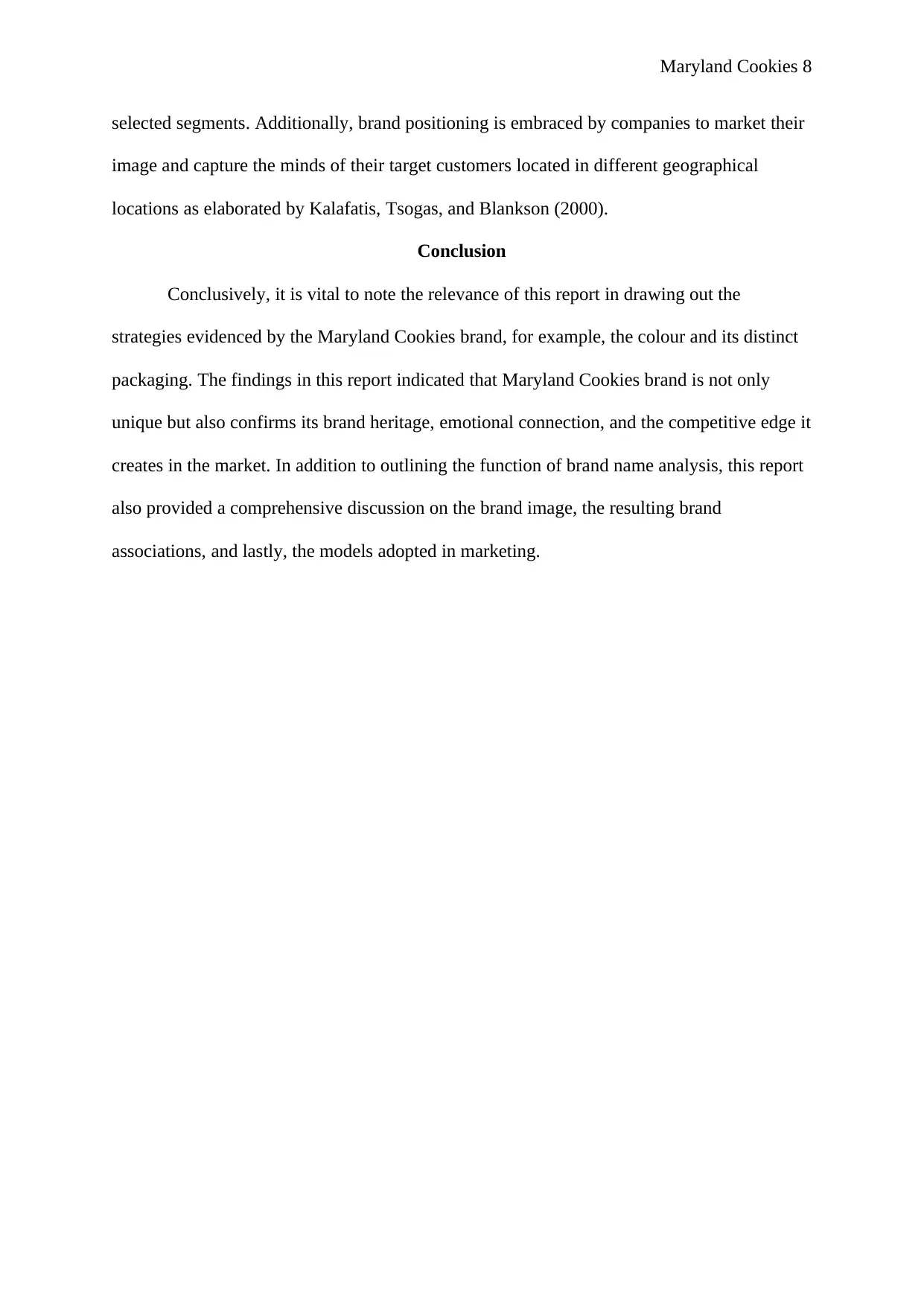
selected segments. Additionally, brand positioning is embraced by companies to market their
image and capture the minds of their target customers located in different geographical
locations as elaborated by Kalafatis, Tsogas, and Blankson (2000).
Conclusion
Conclusively, it is vital to note the relevance of this report in drawing out the
strategies evidenced by the Maryland Cookies brand, for example, the colour and its distinct
packaging. The findings in this report indicated that Maryland Cookies brand is not only
unique but also confirms its brand heritage, emotional connection, and the competitive edge it
creates in the market. In addition to outlining the function of brand name analysis, this report
also provided a comprehensive discussion on the brand image, the resulting brand
associations, and lastly, the models adopted in marketing.
selected segments. Additionally, brand positioning is embraced by companies to market their
image and capture the minds of their target customers located in different geographical
locations as elaborated by Kalafatis, Tsogas, and Blankson (2000).
Conclusion
Conclusively, it is vital to note the relevance of this report in drawing out the
strategies evidenced by the Maryland Cookies brand, for example, the colour and its distinct
packaging. The findings in this report indicated that Maryland Cookies brand is not only
unique but also confirms its brand heritage, emotional connection, and the competitive edge it
creates in the market. In addition to outlining the function of brand name analysis, this report
also provided a comprehensive discussion on the brand image, the resulting brand
associations, and lastly, the models adopted in marketing.
Maryland Cookies 9
References
Aaker, D. A. (2012) Building strong brands. New York: Simon and Schuster.
Anandan, C. (2009) Product management. New Delhi: Tata McGraw-Hill Education.
Burton’s Biscuits Company (2018) Our brands. Available from:
http://www.burtonsbiscuits.com/our-brands/ [Accessed on 7 August, 2018].
Camilleri, M. A. (2018) Market Segmentation, Targeting and Positioning. In Travel
Marketing, Tourism Economics and the Airline Product (pp. 69-83). Springer, Cham.
Gwinner, K.P. and Eaton, J. (1999) Building brand image through event sponsorship: The
role of image transfer. Journal of Advertising. 28(4), pp.47-57.
Hakala, U., Lätti, S. and Sandberg, B. (2011) Operationalising brand heritage and cultural
heritage. Journal of Product & Brand Management. 20(6), pp.447-456.
Hudson, B.T. and Balmer, J.M. (2013) Corporate heritage brands: Mead's theory of the
past. Corporate Communications: An International Journal. 18(3), pp.347-361.
Kalafatis, S. P., Tsogas, M. H., & Blankson, C. (2000) Positioning strategies in business
markets. Journal of Business & Industrial Marketing. 15(6), 416-437.
Kapferer, J. N. (2012) The new strategic brand management: Advanced insights and
strategic thinking. London: Kogan page publishers.
Keller, K. L. (2013) Strategic brand management: Building, measuring, and managing brand
equity. Harlow: Pearson.
Merchant, A., and Rose, G. M. (2013) Effects of advertising-evoked vicarious nostalgia on
brand heritage. Journal of Business Research. 66(12), 2619-2625.
Pecot, F. and De Barnier, V. (2017) Brand heritage: The past in the service of brand
management. Sage Journals. 32(4), pp.72-90.
Riezeboz, R. (2003) Brand Management - A theoretical and Practical Approach. Harlow:
Pearson Education Limited.
References
Aaker, D. A. (2012) Building strong brands. New York: Simon and Schuster.
Anandan, C. (2009) Product management. New Delhi: Tata McGraw-Hill Education.
Burton’s Biscuits Company (2018) Our brands. Available from:
http://www.burtonsbiscuits.com/our-brands/ [Accessed on 7 August, 2018].
Camilleri, M. A. (2018) Market Segmentation, Targeting and Positioning. In Travel
Marketing, Tourism Economics and the Airline Product (pp. 69-83). Springer, Cham.
Gwinner, K.P. and Eaton, J. (1999) Building brand image through event sponsorship: The
role of image transfer. Journal of Advertising. 28(4), pp.47-57.
Hakala, U., Lätti, S. and Sandberg, B. (2011) Operationalising brand heritage and cultural
heritage. Journal of Product & Brand Management. 20(6), pp.447-456.
Hudson, B.T. and Balmer, J.M. (2013) Corporate heritage brands: Mead's theory of the
past. Corporate Communications: An International Journal. 18(3), pp.347-361.
Kalafatis, S. P., Tsogas, M. H., & Blankson, C. (2000) Positioning strategies in business
markets. Journal of Business & Industrial Marketing. 15(6), 416-437.
Kapferer, J. N. (2012) The new strategic brand management: Advanced insights and
strategic thinking. London: Kogan page publishers.
Keller, K. L. (2013) Strategic brand management: Building, measuring, and managing brand
equity. Harlow: Pearson.
Merchant, A., and Rose, G. M. (2013) Effects of advertising-evoked vicarious nostalgia on
brand heritage. Journal of Business Research. 66(12), 2619-2625.
Pecot, F. and De Barnier, V. (2017) Brand heritage: The past in the service of brand
management. Sage Journals. 32(4), pp.72-90.
Riezeboz, R. (2003) Brand Management - A theoretical and Practical Approach. Harlow:
Pearson Education Limited.
⊘ This is a preview!⊘
Do you want full access?
Subscribe today to unlock all pages.
Trusted by 1+ million students worldwide

Maryland Cookies 10
Smith, G. (2004) Brand image transfer through sponsorship: A consumer learning
perspective. Journal of Marketing Management. 20(3-4), pp.457-474.
Wiedmann, K. P., Hennigs, N., Schmidt, S. and Wuestefeld, T. (2011) Drivers and outcomes
of brand heritage: consumers' perception of heritage brands in the automotive
industry. Journal of Marketing Theory and Practice. 19(2), pp.205-220.
Smith, G. (2004) Brand image transfer through sponsorship: A consumer learning
perspective. Journal of Marketing Management. 20(3-4), pp.457-474.
Wiedmann, K. P., Hennigs, N., Schmidt, S. and Wuestefeld, T. (2011) Drivers and outcomes
of brand heritage: consumers' perception of heritage brands in the automotive
industry. Journal of Marketing Theory and Practice. 19(2), pp.205-220.
Paraphrase This Document
Need a fresh take? Get an instant paraphrase of this document with our AI Paraphraser
Maryland Cookies 11
APPENDIX
Appendix 1: Concept Board for the New Brand
Generate names-
brainstorm on
available names
Screening initial
candidates—
elimination
phases
Study the resulting
candidate names –
engage legal name
screening
Team to
deliberate on
the new
name
APPENDIX
Appendix 1: Concept Board for the New Brand
Generate names-
brainstorm on
available names
Screening initial
candidates—
elimination
phases
Study the resulting
candidate names –
engage legal name
screening
Team to
deliberate on
the new
name

1 out of 11


Related Documents


Your All-in-One AI-Powered Toolkit for Academic Success.
+13062052269
info@desklib.com
Available 24*7 on WhatsApp / Email
![[object Object]](/_next/static/media/star-bottom.7253800d.svg)
Unlock your academic potential
Copyright © 2020–2026 A2Z Services. All Rights Reserved. Developed and managed by ZUCOL.