Mathematical Modelling (Maths): SIS Model Analysis and Solutions
VerifiedAdded on 2022/12/28
|4
|674
|46
Homework Assignment
AI Summary
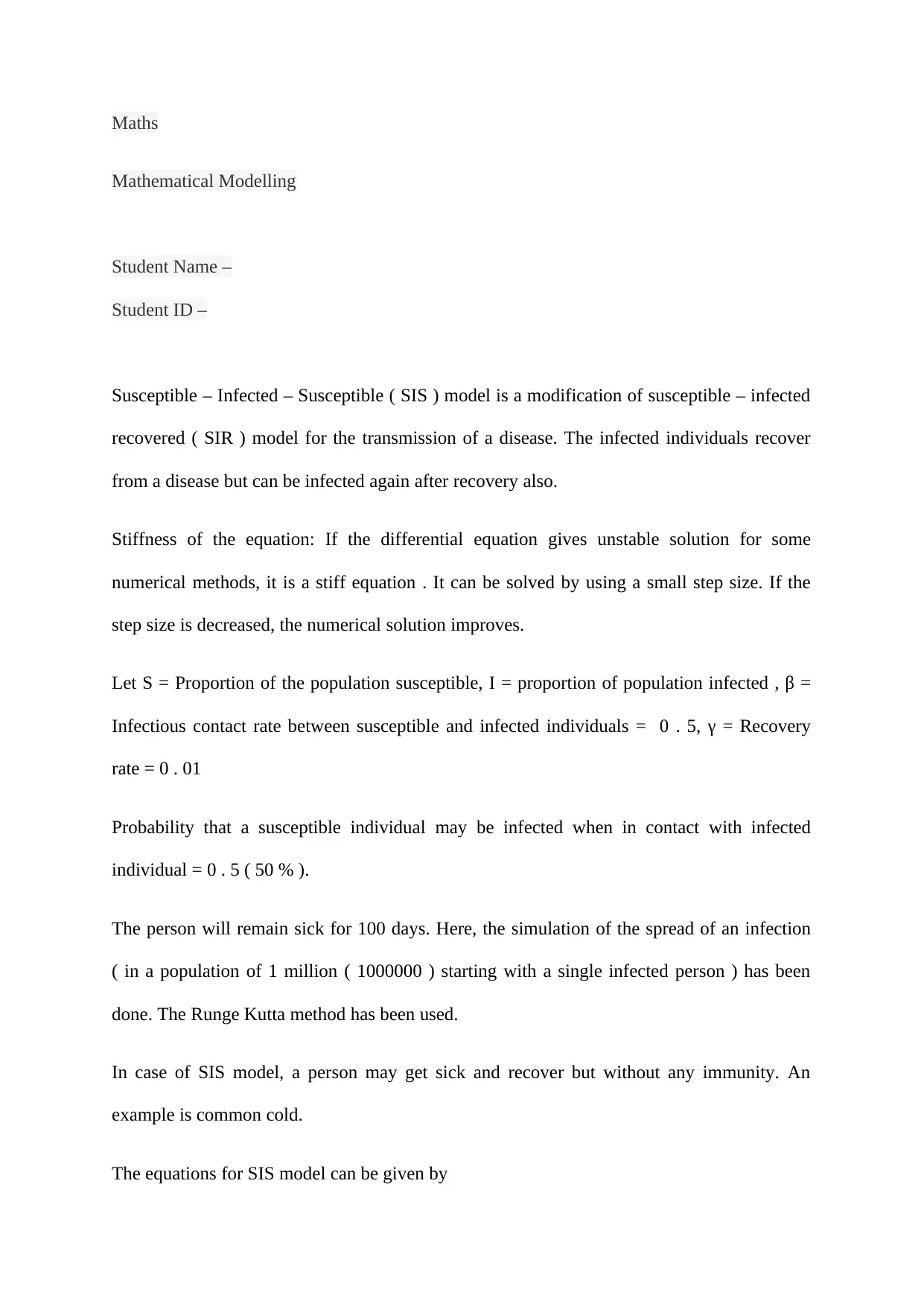
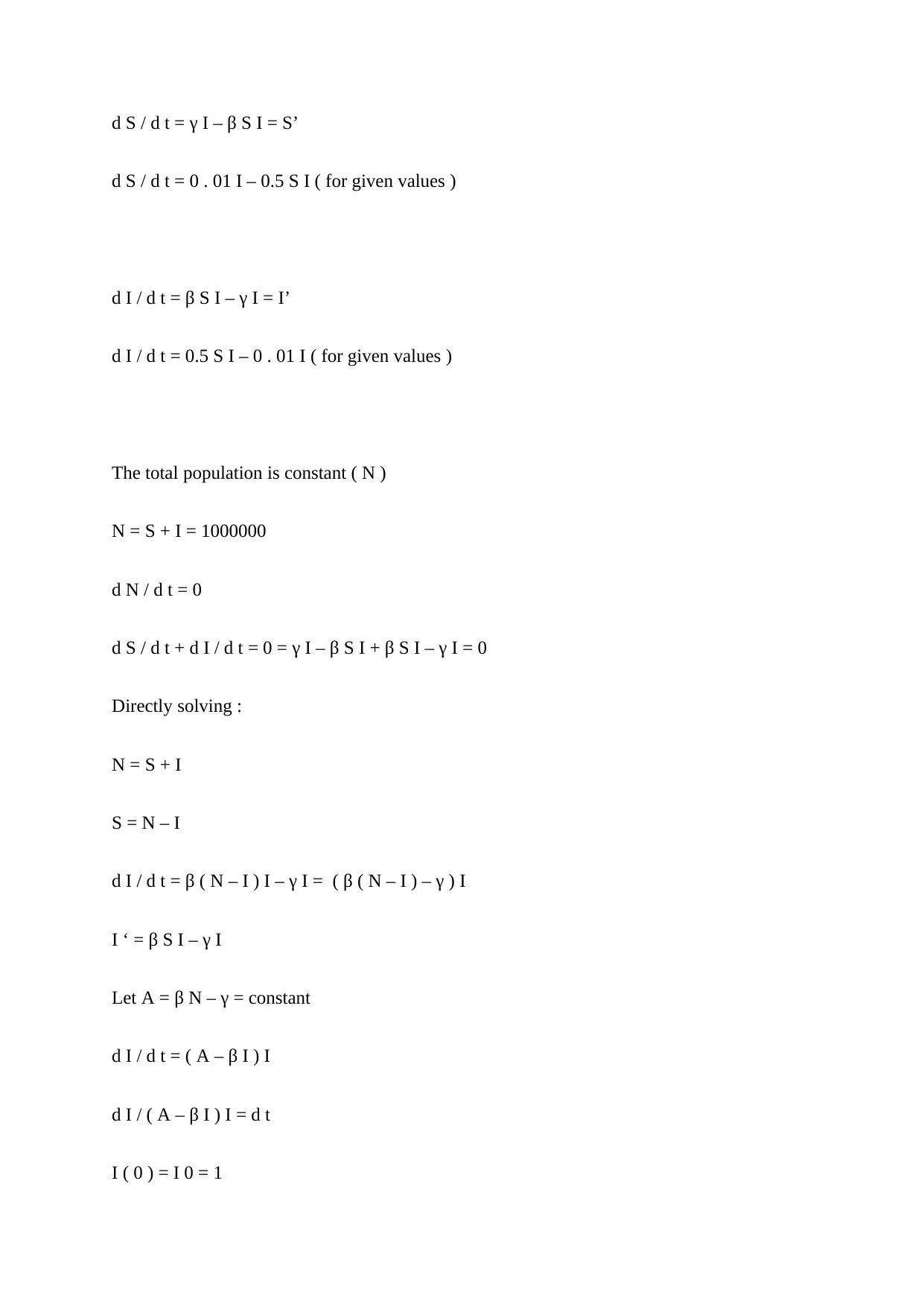
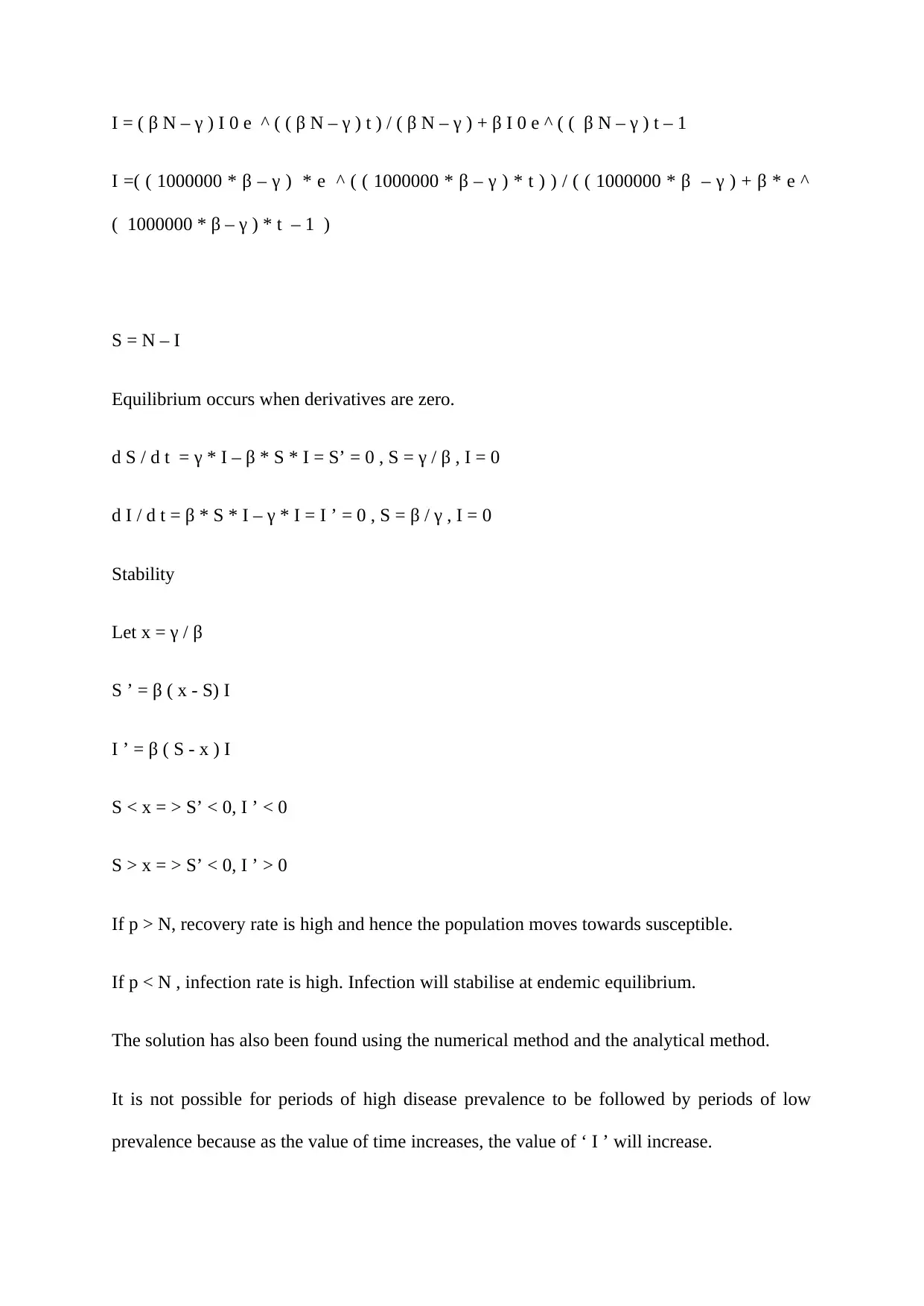
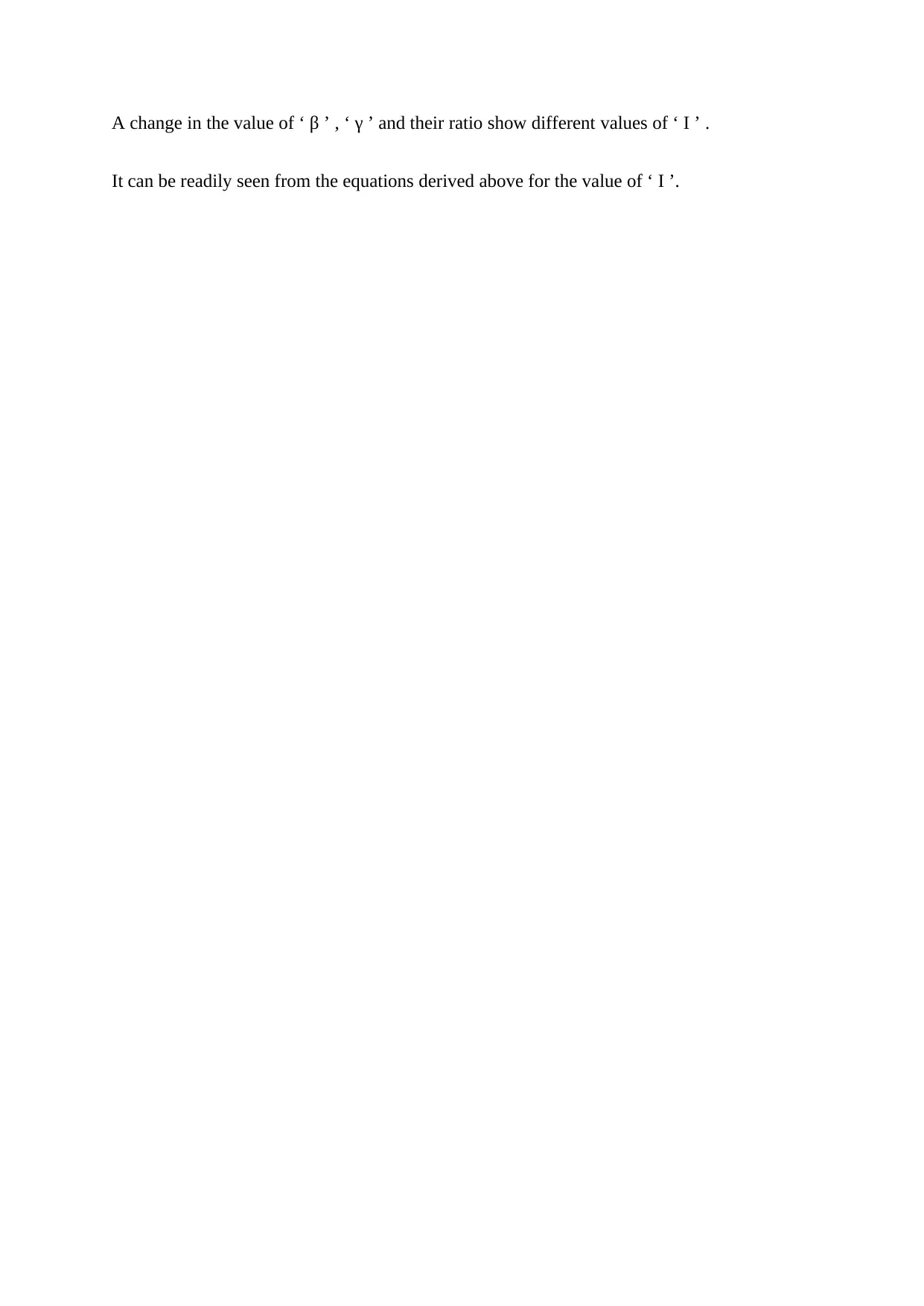
This assignment analyzes the Susceptible-Infected-Susceptible (SIS) model, a mathematical model used to simulate the spread of infectious diseases. It begins with an explanation of the SIS model, its equations (dS/dt = γI – βSI and dI/dt = βSI – γI), and the parameters involved, including the infectious contact rate (β) and the recovery rate (γ). The document explores the stiffness of the equations and the impact of step size on numerical solutions. The solution employs the Runge-Kutta method and derives both numerical and analytical solutions for the model. The analysis includes the derivation of equations for the infected population (I) and susceptible population (S), considering a constant total population (N). It also discusses the equilibrium conditions (dS/dt = 0, dI/dt = 0) and the stability of the system, relating the infection rate to the recovery rate. The document concludes by highlighting the relationship between parameter values (β, γ) and the infected population (I), and the simulation of the spread of an infection in a population of 1 million.



1 out of 4


Your All-in-One AI-Powered Toolkit for Academic Success.
+13062052269
info@desklib.com
Available 24*7 on WhatsApp / Email
![[object Object]](/_next/static/media/star-bottom.7253800d.svg)
Copyright © 2020–2026 A2Z Services. All Rights Reserved. Developed and managed by ZUCOL.