Auditing Report: Comprehensive Analysis of Medibank Private Limited
VerifiedAdded on 2020/02/24
|23
|4079
|88
Report
AI Summary
This report provides a comprehensive business risk analysis of Medibank Private Limited, examining various aspects including business operations, industry dynamics, and the legal environment. The report delves into the company's financial reporting practices, investment activities, and financing strategies. It explores the industry size, growth, major players, and market shares within the private health insurance sector. External environmental factors are assessed using PEST, SWOT, and Porter's Five Forces analyses. The report further investigates Medibank's objectives, strategies, and potential business risks, including industry developments, new products, and regulatory requirements. Analytical procedures are performed to evaluate the company's performance, comparing it to QBE Insurance Group using profitability, liquidity, and leverage ratios. The study also considers management and governance structures, concluding with an overview of key findings and recommendations. The report is a student contribution, available on Desklib, a platform offering AI-based study tools.

Running head: AUDITING
Auditing
Name of Student:
Name of University:
Author’s Note:
Auditing
Name of Student:
Name of University:
Author’s Note:

Paraphrase This Document
Need a fresh take? Get an instant paraphrase of this document with our AI Paraphraser
1AUDITING
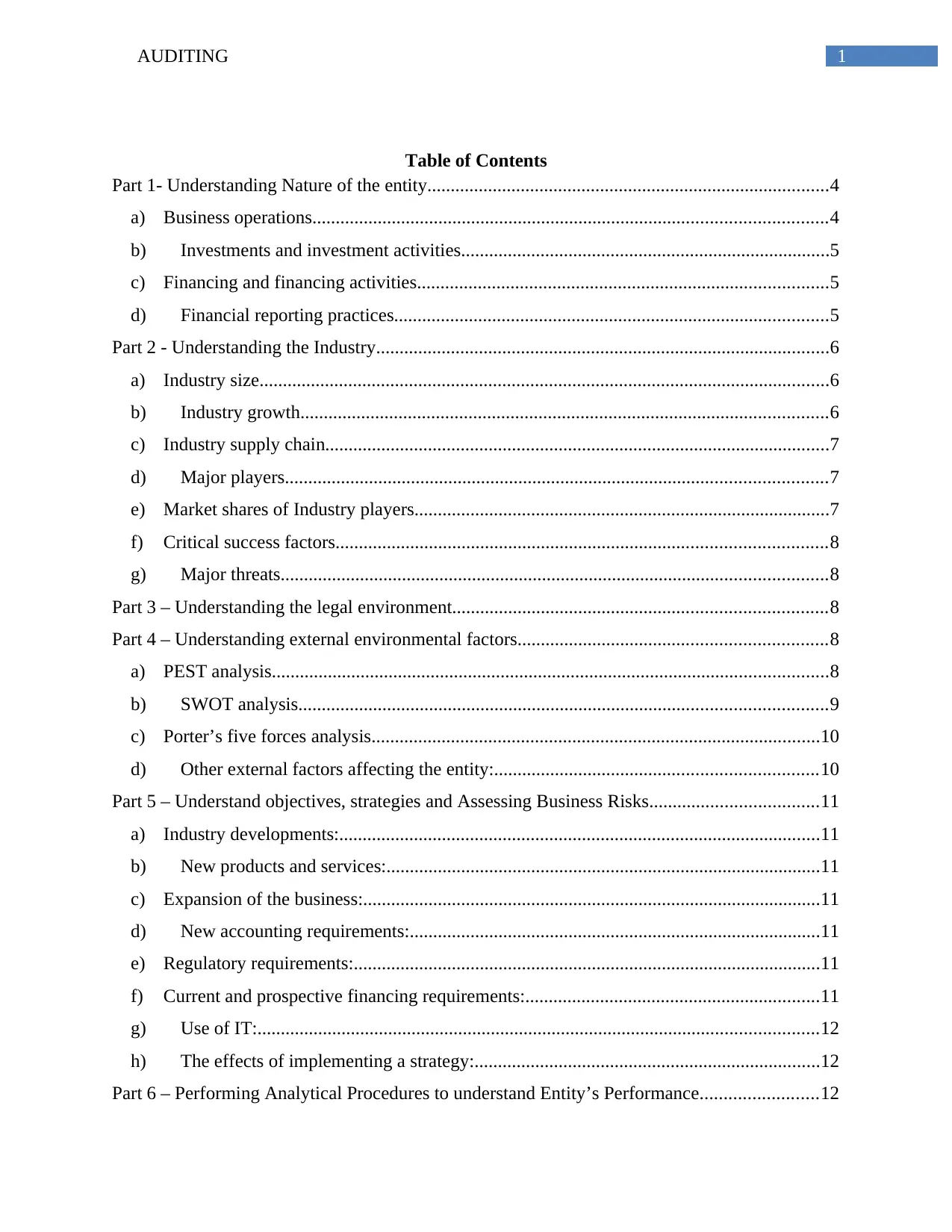
Table of Contents
Part 1- Understanding Nature of the entity......................................................................................4
a) Business operations..............................................................................................................4
b) Investments and investment activities...............................................................................5
c) Financing and financing activities........................................................................................5
d) Financial reporting practices.............................................................................................5
Part 2 - Understanding the Industry.................................................................................................6
a) Industry size..........................................................................................................................6
b) Industry growth.................................................................................................................6
c) Industry supply chain............................................................................................................7
d) Major players....................................................................................................................7
e) Market shares of Industry players.........................................................................................7
f) Critical success factors.........................................................................................................8
g) Major threats.....................................................................................................................8
Part 3 – Understanding the legal environment................................................................................8
Part 4 – Understanding external environmental factors..................................................................8
a) PEST analysis.......................................................................................................................8
b) SWOT analysis.................................................................................................................9
c) Porter’s five forces analysis................................................................................................10
d) Other external factors affecting the entity:.....................................................................10
Part 5 – Understand objectives, strategies and Assessing Business Risks....................................11
a) Industry developments:.......................................................................................................11
b) New products and services:.............................................................................................11
c) Expansion of the business:..................................................................................................11
d) New accounting requirements:........................................................................................11
e) Regulatory requirements:....................................................................................................11
f) Current and prospective financing requirements:...............................................................11
g) Use of IT:........................................................................................................................12
h) The effects of implementing a strategy:..........................................................................12
Part 6 – Performing Analytical Procedures to understand Entity’s Performance.........................12
Table of Contents
Part 1- Understanding Nature of the entity......................................................................................4
a) Business operations..............................................................................................................4
b) Investments and investment activities...............................................................................5
c) Financing and financing activities........................................................................................5
d) Financial reporting practices.............................................................................................5
Part 2 - Understanding the Industry.................................................................................................6
a) Industry size..........................................................................................................................6
b) Industry growth.................................................................................................................6
c) Industry supply chain............................................................................................................7
d) Major players....................................................................................................................7
e) Market shares of Industry players.........................................................................................7
f) Critical success factors.........................................................................................................8
g) Major threats.....................................................................................................................8
Part 3 – Understanding the legal environment................................................................................8
Part 4 – Understanding external environmental factors..................................................................8
a) PEST analysis.......................................................................................................................8
b) SWOT analysis.................................................................................................................9
c) Porter’s five forces analysis................................................................................................10
d) Other external factors affecting the entity:.....................................................................10
Part 5 – Understand objectives, strategies and Assessing Business Risks....................................11
a) Industry developments:.......................................................................................................11
b) New products and services:.............................................................................................11
c) Expansion of the business:..................................................................................................11
d) New accounting requirements:........................................................................................11
e) Regulatory requirements:....................................................................................................11
f) Current and prospective financing requirements:...............................................................11
g) Use of IT:........................................................................................................................12
h) The effects of implementing a strategy:..........................................................................12
Part 6 – Performing Analytical Procedures to understand Entity’s Performance.........................12
2AUDITING
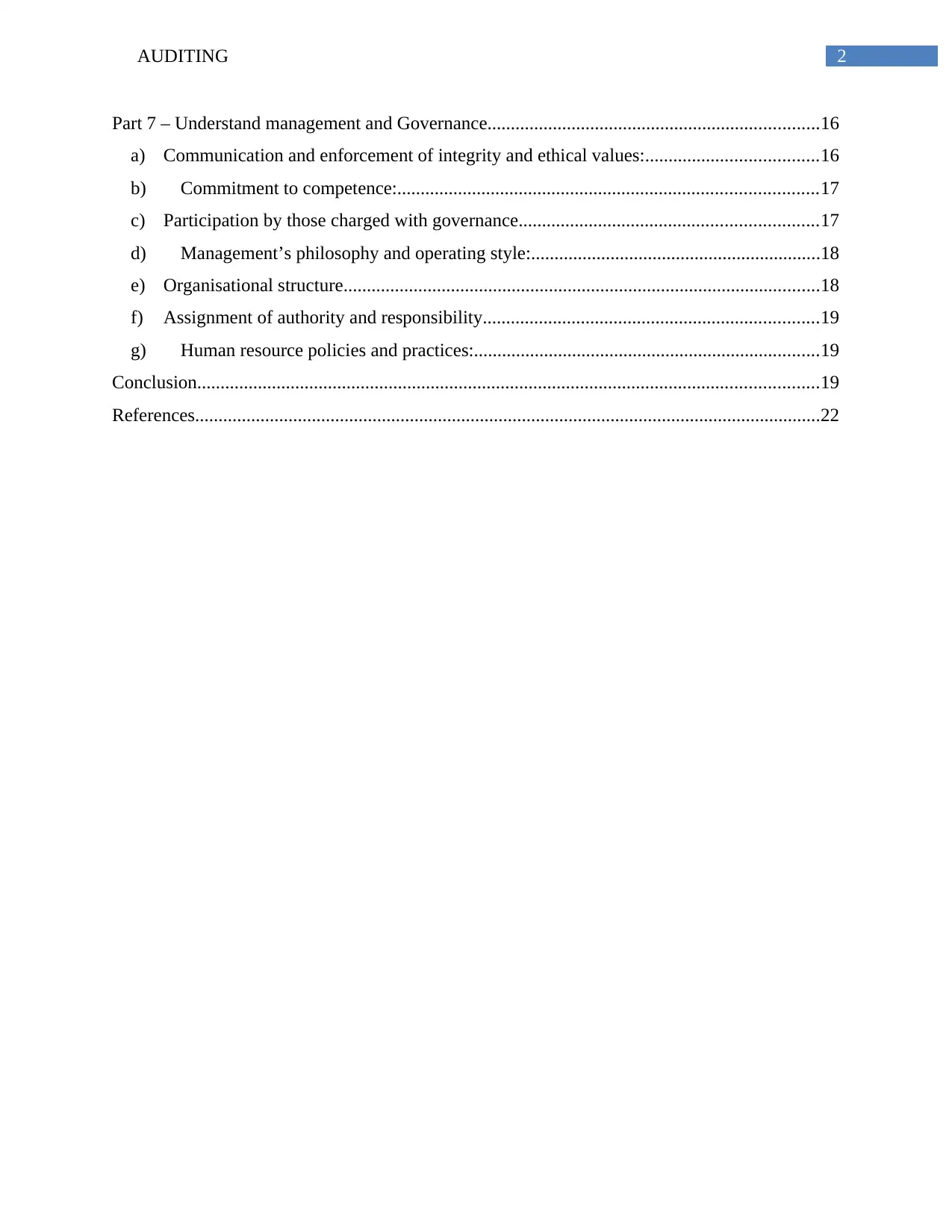
Part 7 – Understand management and Governance.......................................................................16
a) Communication and enforcement of integrity and ethical values:.....................................16
b) Commitment to competence:..........................................................................................17
c) Participation by those charged with governance................................................................17
d) Management’s philosophy and operating style:..............................................................18
e) Organisational structure......................................................................................................18
f) Assignment of authority and responsibility........................................................................19
g) Human resource policies and practices:..........................................................................19
Conclusion.....................................................................................................................................19
References......................................................................................................................................22
Part 7 – Understand management and Governance.......................................................................16
a) Communication and enforcement of integrity and ethical values:.....................................16
b) Commitment to competence:..........................................................................................17
c) Participation by those charged with governance................................................................17
d) Management’s philosophy and operating style:..............................................................18
e) Organisational structure......................................................................................................18
f) Assignment of authority and responsibility........................................................................19
g) Human resource policies and practices:..........................................................................19
Conclusion.....................................................................................................................................19
References......................................................................................................................................22
⊘ This is a preview!⊘
Do you want full access?
Subscribe today to unlock all pages.

Trusted by 1+ million students worldwide
3AUDITING
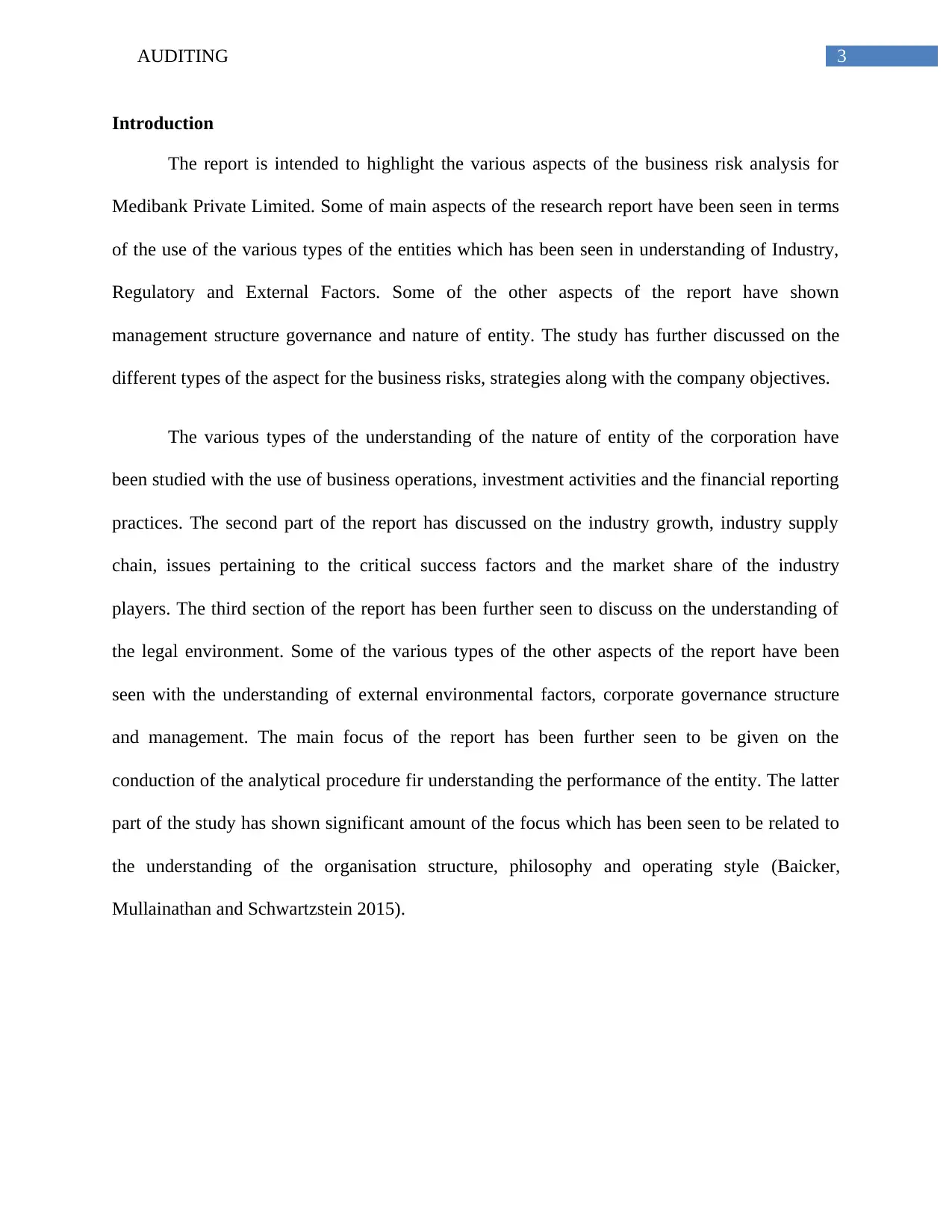
Introduction
The report is intended to highlight the various aspects of the business risk analysis for
Medibank Private Limited. Some of main aspects of the research report have been seen in terms
of the use of the various types of the entities which has been seen in understanding of Industry,
Regulatory and External Factors. Some of the other aspects of the report have shown
management structure governance and nature of entity. The study has further discussed on the
different types of the aspect for the business risks, strategies along with the company objectives.
The various types of the understanding of the nature of entity of the corporation have
been studied with the use of business operations, investment activities and the financial reporting
practices. The second part of the report has discussed on the industry growth, industry supply
chain, issues pertaining to the critical success factors and the market share of the industry
players. The third section of the report has been further seen to discuss on the understanding of
the legal environment. Some of the various types of the other aspects of the report have been
seen with the understanding of external environmental factors, corporate governance structure
and management. The main focus of the report has been further seen to be given on the
conduction of the analytical procedure fir understanding the performance of the entity. The latter
part of the study has shown significant amount of the focus which has been seen to be related to
the understanding of the organisation structure, philosophy and operating style (Baicker,
Mullainathan and Schwartzstein 2015).
Introduction
The report is intended to highlight the various aspects of the business risk analysis for
Medibank Private Limited. Some of main aspects of the research report have been seen in terms
of the use of the various types of the entities which has been seen in understanding of Industry,
Regulatory and External Factors. Some of the other aspects of the report have shown
management structure governance and nature of entity. The study has further discussed on the
different types of the aspect for the business risks, strategies along with the company objectives.
The various types of the understanding of the nature of entity of the corporation have
been studied with the use of business operations, investment activities and the financial reporting
practices. The second part of the report has discussed on the industry growth, industry supply
chain, issues pertaining to the critical success factors and the market share of the industry
players. The third section of the report has been further seen to discuss on the understanding of
the legal environment. Some of the various types of the other aspects of the report have been
seen with the understanding of external environmental factors, corporate governance structure
and management. The main focus of the report has been further seen to be given on the
conduction of the analytical procedure fir understanding the performance of the entity. The latter
part of the study has shown significant amount of the focus which has been seen to be related to
the understanding of the organisation structure, philosophy and operating style (Baicker,
Mullainathan and Schwartzstein 2015).
Paraphrase This Document
Need a fresh take? Get an instant paraphrase of this document with our AI Paraphraser
4AUDITING
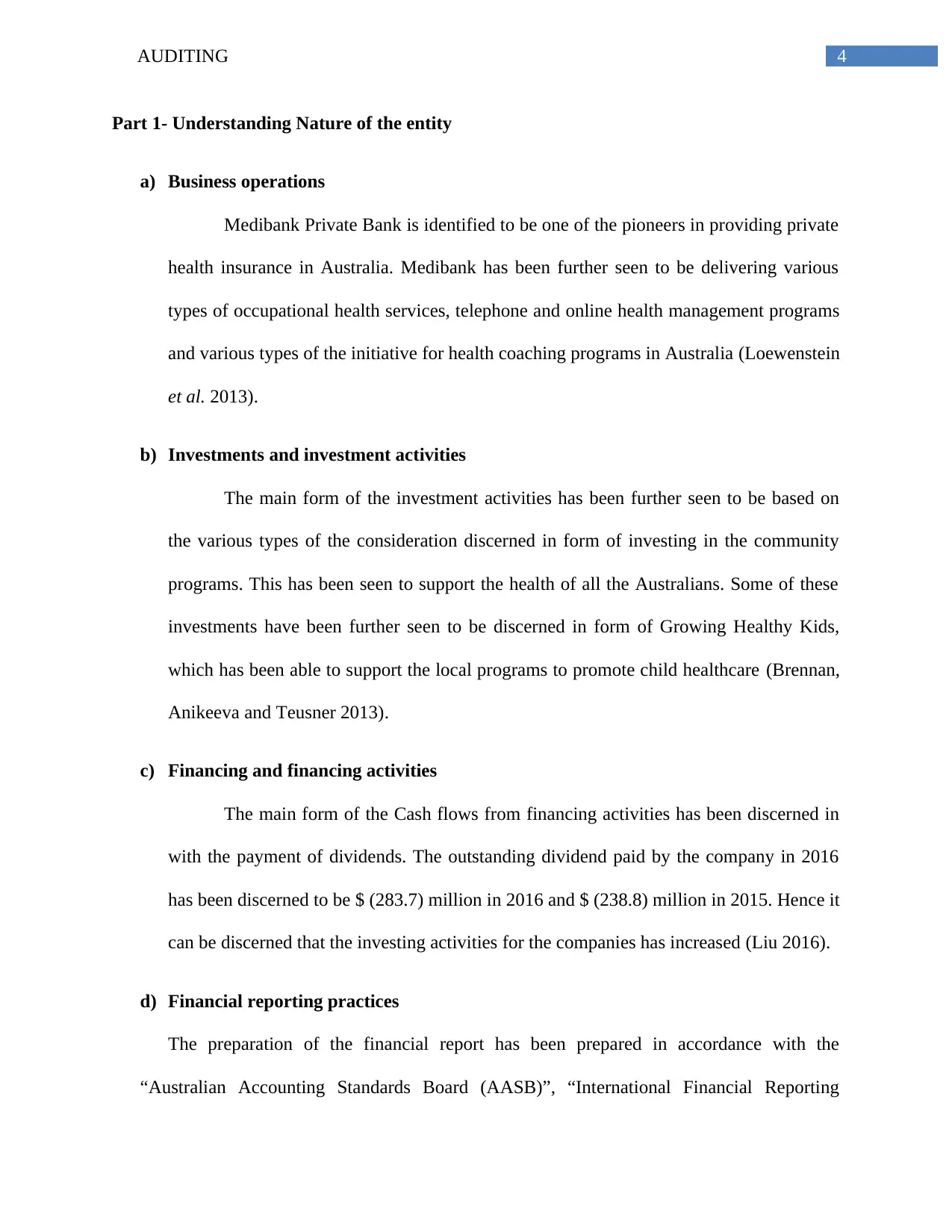
Part 1- Understanding Nature of the entity
a) Business operations
Medibank Private Bank is identified to be one of the pioneers in providing private
health insurance in Australia. Medibank has been further seen to be delivering various
types of occupational health services, telephone and online health management programs
and various types of the initiative for health coaching programs in Australia (Loewenstein
et al. 2013).
b) Investments and investment activities
The main form of the investment activities has been further seen to be based on
the various types of the consideration discerned in form of investing in the community
programs. This has been seen to support the health of all the Australians. Some of these
investments have been further seen to be discerned in form of Growing Healthy Kids,
which has been able to support the local programs to promote child healthcare (Brennan,
Anikeeva and Teusner 2013).
c) Financing and financing activities
The main form of the Cash flows from financing activities has been discerned in
with the payment of dividends. The outstanding dividend paid by the company in 2016
has been discerned to be $ (283.7) million in 2016 and $ (238.8) million in 2015. Hence it
can be discerned that the investing activities for the companies has increased (Liu 2016).
d) Financial reporting practices
The preparation of the financial report has been prepared in accordance with the
“Australian Accounting Standards Board (AASB)”, “International Financial Reporting
Part 1- Understanding Nature of the entity
a) Business operations
Medibank Private Bank is identified to be one of the pioneers in providing private
health insurance in Australia. Medibank has been further seen to be delivering various
types of occupational health services, telephone and online health management programs
and various types of the initiative for health coaching programs in Australia (Loewenstein
et al. 2013).
b) Investments and investment activities
The main form of the investment activities has been further seen to be based on
the various types of the consideration discerned in form of investing in the community
programs. This has been seen to support the health of all the Australians. Some of these
investments have been further seen to be discerned in form of Growing Healthy Kids,
which has been able to support the local programs to promote child healthcare (Brennan,
Anikeeva and Teusner 2013).
c) Financing and financing activities
The main form of the Cash flows from financing activities has been discerned in
with the payment of dividends. The outstanding dividend paid by the company in 2016
has been discerned to be $ (283.7) million in 2016 and $ (238.8) million in 2015. Hence it
can be discerned that the investing activities for the companies has increased (Liu 2016).
d) Financial reporting practices
The preparation of the financial report has been prepared in accordance with the
“Australian Accounting Standards Board (AASB)”, “International Financial Reporting
5AUDITING
Standards (IFRS)’, this has been further seen to be issued by the “International Accounting
Standards Board (IASB)” and the “Corporations Act 2001”.
Part 2 - Understanding the Industry
a) Industry size
Private health insurance in Australia is regulated by The “Private Health
Insurance Administration Council (PHIAC)”. This has been further identified that more
than 13.2 million Australians are covered under private health insurance. This has been
able to access 46500 health insurance products provided across 34 registered private
health insurers (Willis, Reynolds and Keleher 2016).
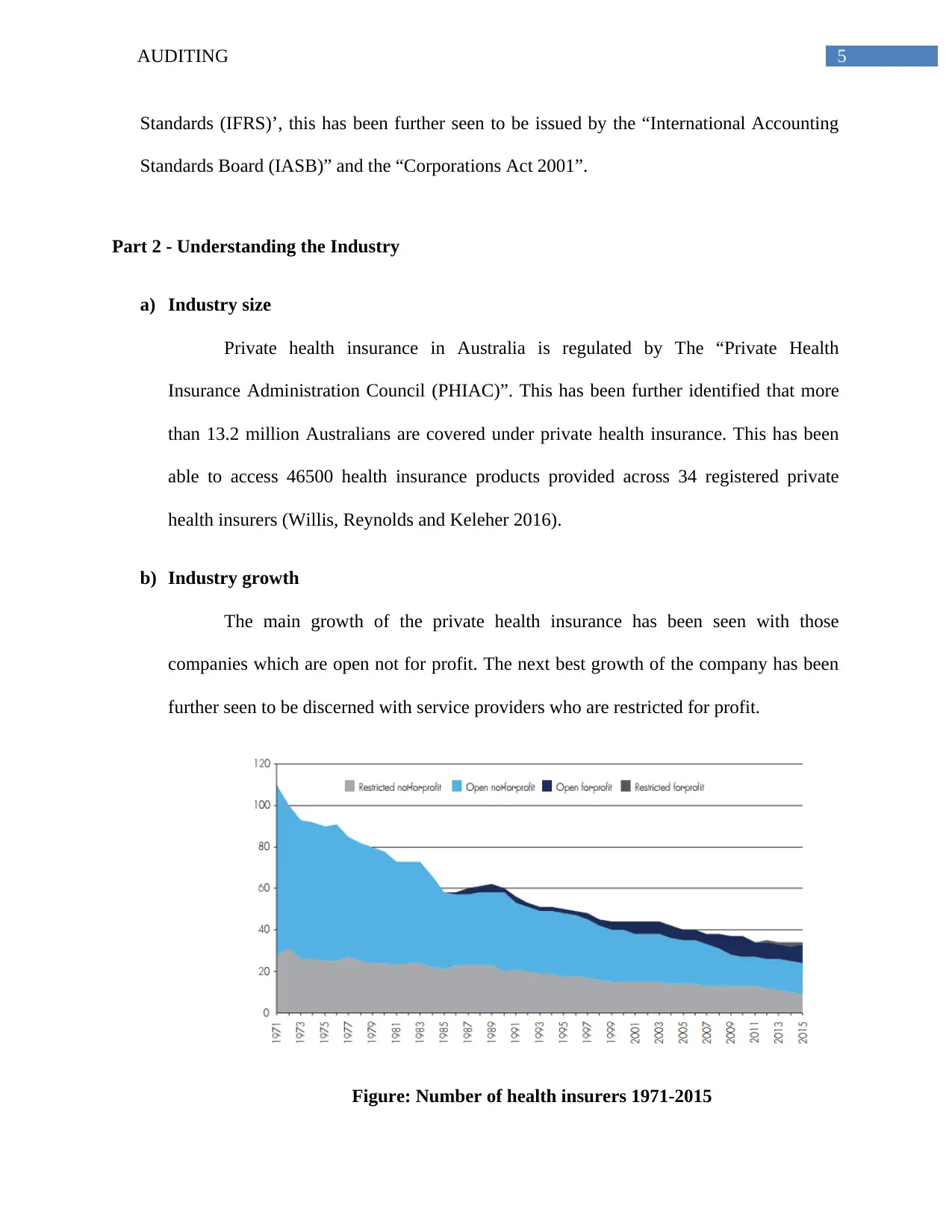
b) Industry growth
The main growth of the private health insurance has been seen with those
companies which are open not for profit. The next best growth of the company has been
further seen to be discerned with service providers who are restricted for profit.
Figure: Number of health insurers 1971-2015
Standards (IFRS)’, this has been further seen to be issued by the “International Accounting
Standards Board (IASB)” and the “Corporations Act 2001”.
Part 2 - Understanding the Industry
a) Industry size
Private health insurance in Australia is regulated by The “Private Health
Insurance Administration Council (PHIAC)”. This has been further identified that more
than 13.2 million Australians are covered under private health insurance. This has been
able to access 46500 health insurance products provided across 34 registered private
health insurers (Willis, Reynolds and Keleher 2016).
b) Industry growth
The main growth of the private health insurance has been seen with those
companies which are open not for profit. The next best growth of the company has been
further seen to be discerned with service providers who are restricted for profit.
Figure: Number of health insurers 1971-2015
⊘ This is a preview!⊘
Do you want full access?
Subscribe today to unlock all pages.
Trusted by 1+ million students worldwide
6AUDITING
(Source: Apra.gov.au. 2017)
c) Industry supply chain
The main form of the industry supply chain has been viewed with the important determinants
responsible for the level of competition.
d) Major players
The main players in the market have been seen with Medibank Private. This has been seen to
establish a major network of the health solutions with significant medical workforce and seen to
deliver integrated health care service. The second largest major player in the private health
insurance industry has been further seen with BUPA (Hall 2015).
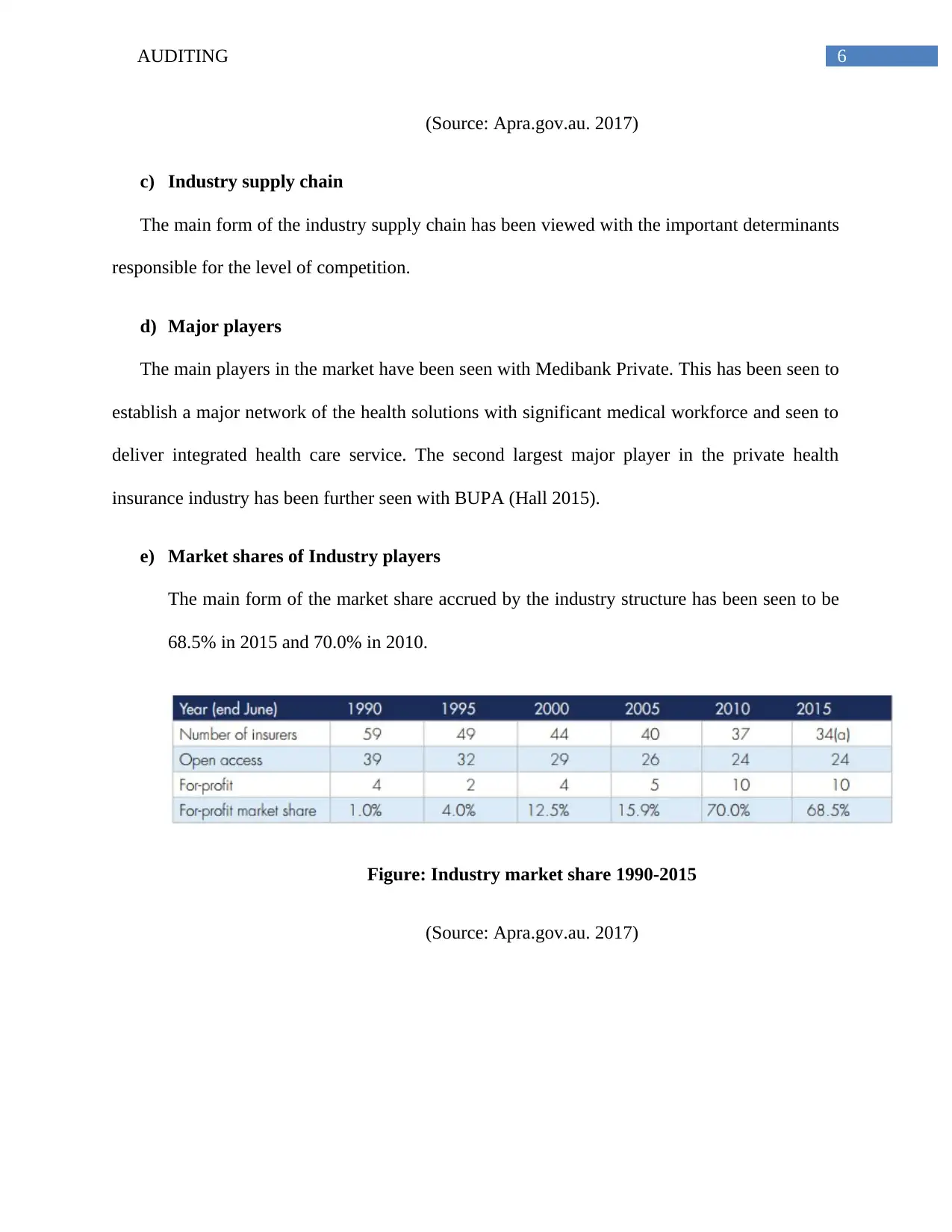
e) Market shares of Industry players
The main form of the market share accrued by the industry structure has been seen to be
68.5% in 2015 and 70.0% in 2010.
Figure: Industry market share 1990-2015
(Source: Apra.gov.au. 2017)
(Source: Apra.gov.au. 2017)
c) Industry supply chain
The main form of the industry supply chain has been viewed with the important determinants
responsible for the level of competition.
d) Major players
The main players in the market have been seen with Medibank Private. This has been seen to
establish a major network of the health solutions with significant medical workforce and seen to
deliver integrated health care service. The second largest major player in the private health
insurance industry has been further seen with BUPA (Hall 2015).
e) Market shares of Industry players
The main form of the market share accrued by the industry structure has been seen to be
68.5% in 2015 and 70.0% in 2010.
Figure: Industry market share 1990-2015
(Source: Apra.gov.au. 2017)
Paraphrase This Document
Need a fresh take? Get an instant paraphrase of this document with our AI Paraphraser
7AUDITING
f) Critical success factors
Some of the main success factor of the industry has been further seen to be based
on achieve the equity objectives and the identical to the objectives. The collaborative
planning with the stakeholders and a customer centric approach has been further seen to
conducive for the success (Eckermann, Sheridan and Ivers 2016).
g) Major threats
Some of the main threat has been identified with the issues concerning new market
entrants and material risks (Seah, Cheong and Anstey 2013).
Part 3 – Understanding the legal environment
The private health insurance business has been subject to various types of laws set under
the “Private Health Insurance Act 2007 (PHI Act)”.
Part 4 – Understanding external environmental factors
a) PEST analysis
Political
The common wealth of the country is identified as the constitutional monarchy
under parliamentary democracy.
Economic
The economic growth has been seen with 17 consecutive years before the GCF.
f) Critical success factors
Some of the main success factor of the industry has been further seen to be based
on achieve the equity objectives and the identical to the objectives. The collaborative
planning with the stakeholders and a customer centric approach has been further seen to
conducive for the success (Eckermann, Sheridan and Ivers 2016).
g) Major threats
Some of the main threat has been identified with the issues concerning new market
entrants and material risks (Seah, Cheong and Anstey 2013).
Part 3 – Understanding the legal environment
The private health insurance business has been subject to various types of laws set under
the “Private Health Insurance Act 2007 (PHI Act)”.
Part 4 – Understanding external environmental factors
a) PEST analysis
Political
The common wealth of the country is identified as the constitutional monarchy
under parliamentary democracy.
Economic
The economic growth has been seen with 17 consecutive years before the GCF.
8AUDITING
Social
The social analysis has been seen with the influence of aborigines. English is seen
to be the most spoken language with 81%.
Technological
The development in terms of the research and development has been seen to be
evident $ 19.2 billion growth in 2014-2015.
b) SWOT analysis
Strength
The strength has been seen with the joint purchasing and the accessing contracts with the
sales intermediaries to support smaller insurers.
Weakness
The profit making insurance companies has been seen to include, higher premium pay up
plans. This may not be able to be afforded by the middle income group of consumers. Some of
the various types the operating insurance service has been seen to be subject to the market risk
and complicated claim procedure.
Opportunities
The opportunities are seen with the gaining better understanding of the benefits and
rebates as per the service level.
Social
The social analysis has been seen with the influence of aborigines. English is seen
to be the most spoken language with 81%.
Technological
The development in terms of the research and development has been seen to be
evident $ 19.2 billion growth in 2014-2015.
b) SWOT analysis
Strength
The strength has been seen with the joint purchasing and the accessing contracts with the
sales intermediaries to support smaller insurers.
Weakness
The profit making insurance companies has been seen to include, higher premium pay up
plans. This may not be able to be afforded by the middle income group of consumers. Some of
the various types the operating insurance service has been seen to be subject to the market risk
and complicated claim procedure.
Opportunities
The opportunities are seen with the gaining better understanding of the benefits and
rebates as per the service level.
⊘ This is a preview!⊘
Do you want full access?
Subscribe today to unlock all pages.
Trusted by 1+ million students worldwide
9AUDITING
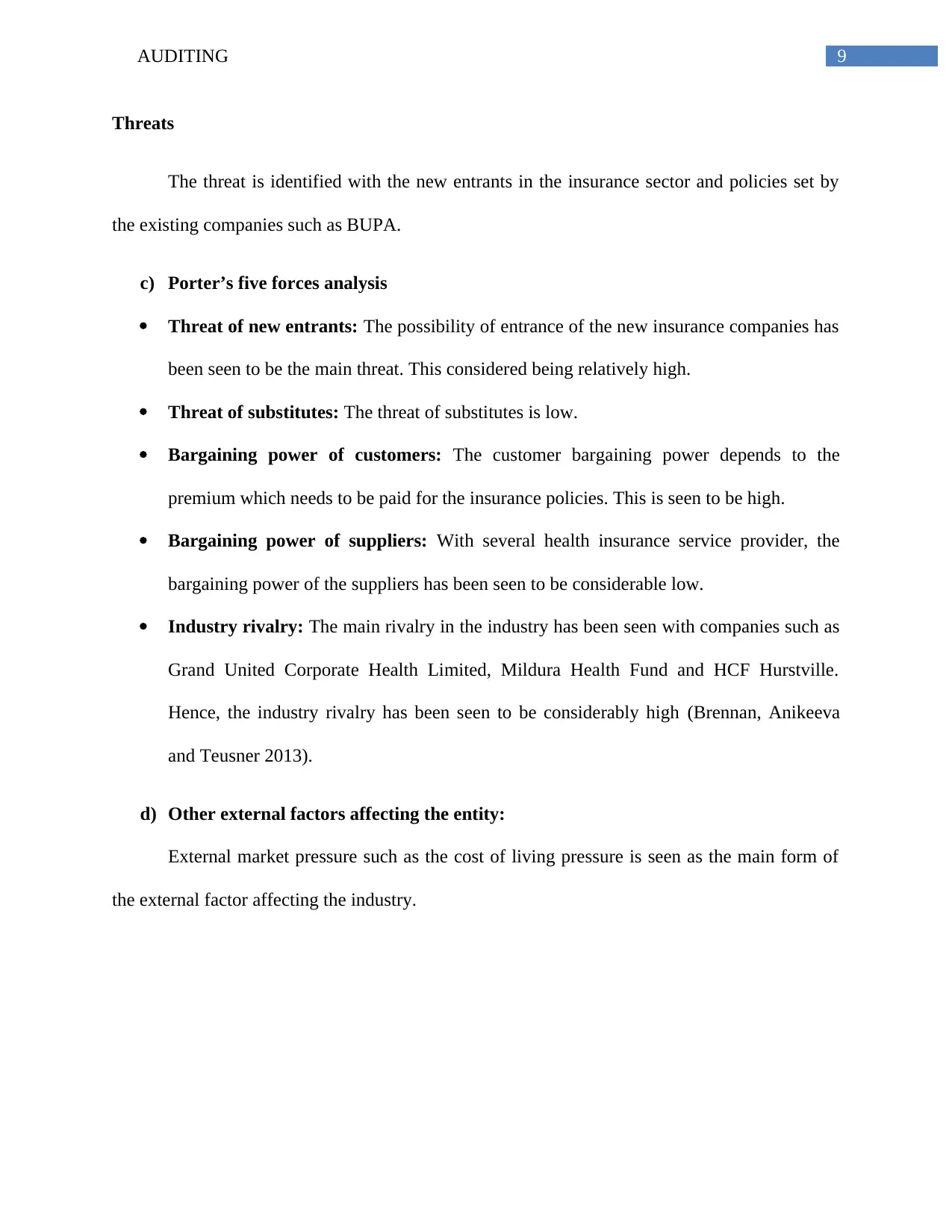
Threats
The threat is identified with the new entrants in the insurance sector and policies set by
the existing companies such as BUPA.
c) Porter’s five forces analysis
Threat of new entrants: The possibility of entrance of the new insurance companies has
been seen to be the main threat. This considered being relatively high.
Threat of substitutes: The threat of substitutes is low.
Bargaining power of customers: The customer bargaining power depends to the
premium which needs to be paid for the insurance policies. This is seen to be high.
Bargaining power of suppliers: With several health insurance service provider, the
bargaining power of the suppliers has been seen to be considerable low.
Industry rivalry: The main rivalry in the industry has been seen with companies such as
Grand United Corporate Health Limited, Mildura Health Fund and HCF Hurstville.
Hence, the industry rivalry has been seen to be considerably high (Brennan, Anikeeva
and Teusner 2013).
d) Other external factors affecting the entity:
External market pressure such as the cost of living pressure is seen as the main form of
the external factor affecting the industry.
Threats
The threat is identified with the new entrants in the insurance sector and policies set by
the existing companies such as BUPA.
c) Porter’s five forces analysis
Threat of new entrants: The possibility of entrance of the new insurance companies has
been seen to be the main threat. This considered being relatively high.
Threat of substitutes: The threat of substitutes is low.
Bargaining power of customers: The customer bargaining power depends to the
premium which needs to be paid for the insurance policies. This is seen to be high.
Bargaining power of suppliers: With several health insurance service provider, the
bargaining power of the suppliers has been seen to be considerable low.
Industry rivalry: The main rivalry in the industry has been seen with companies such as
Grand United Corporate Health Limited, Mildura Health Fund and HCF Hurstville.
Hence, the industry rivalry has been seen to be considerably high (Brennan, Anikeeva
and Teusner 2013).
d) Other external factors affecting the entity:
External market pressure such as the cost of living pressure is seen as the main form of
the external factor affecting the industry.
Paraphrase This Document
Need a fresh take? Get an instant paraphrase of this document with our AI Paraphraser
10AUDITING
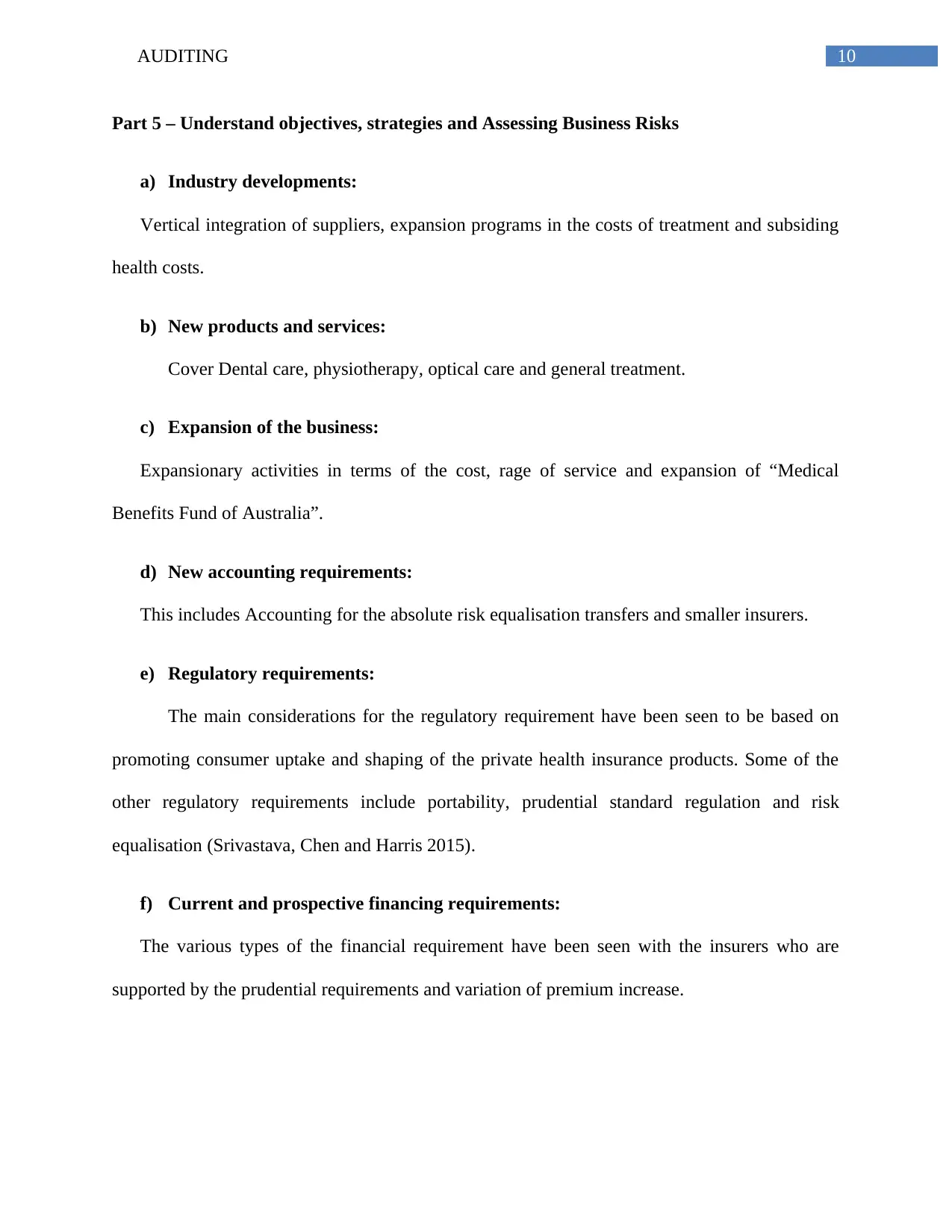
Part 5 – Understand objectives, strategies and Assessing Business Risks
a) Industry developments:
Vertical integration of suppliers, expansion programs in the costs of treatment and subsiding
health costs.
b) New products and services:
Cover Dental care, physiotherapy, optical care and general treatment.
c) Expansion of the business:
Expansionary activities in terms of the cost, rage of service and expansion of “Medical
Benefits Fund of Australia”.
d) New accounting requirements:
This includes Accounting for the absolute risk equalisation transfers and smaller insurers.
e) Regulatory requirements:
The main considerations for the regulatory requirement have been seen to be based on
promoting consumer uptake and shaping of the private health insurance products. Some of the
other regulatory requirements include portability, prudential standard regulation and risk
equalisation (Srivastava, Chen and Harris 2015).
f) Current and prospective financing requirements:
The various types of the financial requirement have been seen with the insurers who are
supported by the prudential requirements and variation of premium increase.
Part 5 – Understand objectives, strategies and Assessing Business Risks
a) Industry developments:
Vertical integration of suppliers, expansion programs in the costs of treatment and subsiding
health costs.
b) New products and services:
Cover Dental care, physiotherapy, optical care and general treatment.
c) Expansion of the business:
Expansionary activities in terms of the cost, rage of service and expansion of “Medical
Benefits Fund of Australia”.
d) New accounting requirements:
This includes Accounting for the absolute risk equalisation transfers and smaller insurers.
e) Regulatory requirements:
The main considerations for the regulatory requirement have been seen to be based on
promoting consumer uptake and shaping of the private health insurance products. Some of the
other regulatory requirements include portability, prudential standard regulation and risk
equalisation (Srivastava, Chen and Harris 2015).
f) Current and prospective financing requirements:
The various types of the financial requirement have been seen with the insurers who are
supported by the prudential requirements and variation of premium increase.
11AUDITING
g) Use of IT:
The use of the relevant IT tools has been seen to be conducive in maintaining various types
of the information associated to the maintaining the insurance policies.
h) The effects of implementing a strategy:
The implementation of various types of the corporate strategy has been seen to be
conducive for consistent growth in the health insurance sector and constant innovation in the
service delivery model (Einav et al. 2013).
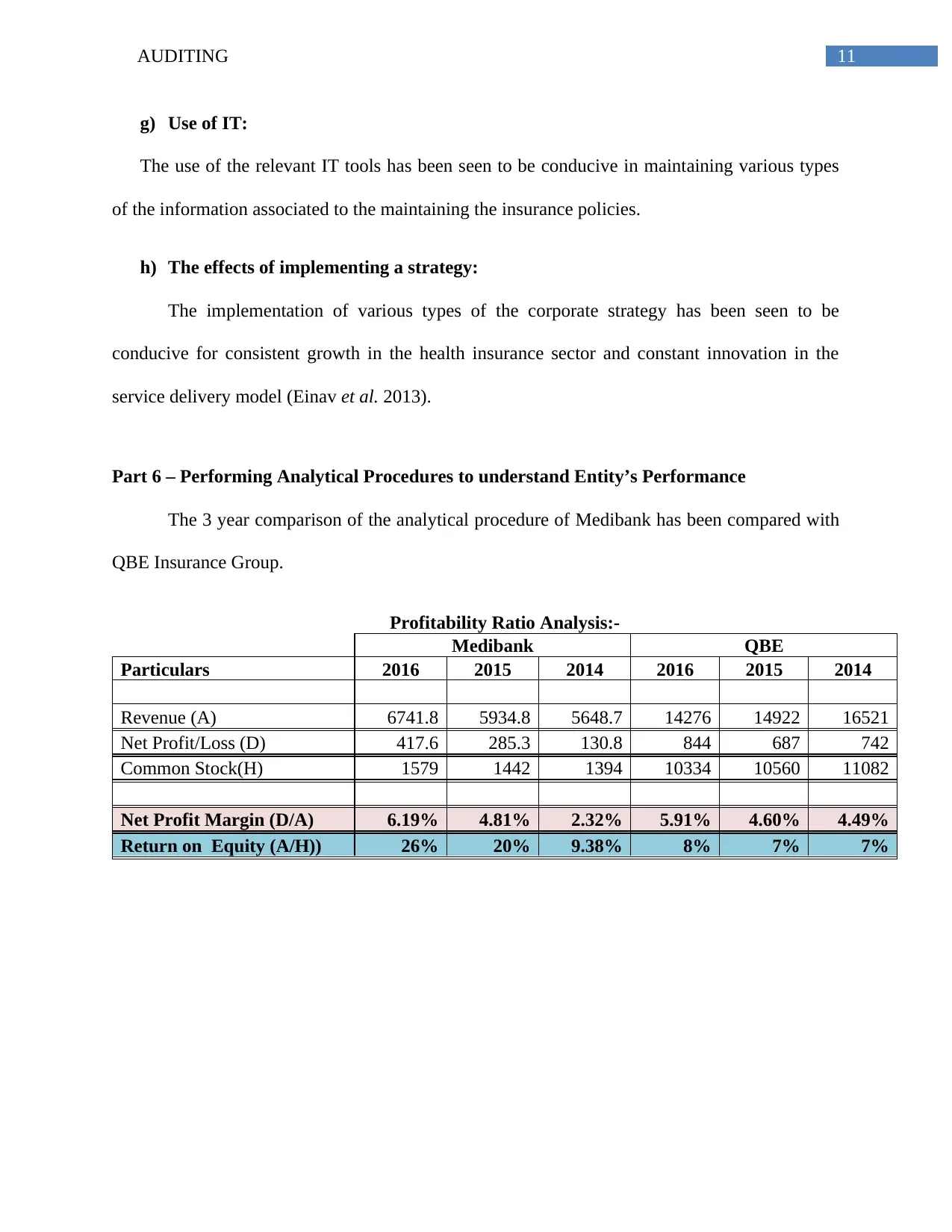
Part 6 – Performing Analytical Procedures to understand Entity’s Performance
The 3 year comparison of the analytical procedure of Medibank has been compared with
QBE Insurance Group.
Profitability Ratio Analysis:-
Medibank QBE
Particulars 2016 2015 2014 2016 2015 2014
Revenue (A) 6741.8 5934.8 5648.7 14276 14922 16521
Net Profit/Loss (D) 417.6 285.3 130.8 844 687 742
Common Stock(H) 1579 1442 1394 10334 10560 11082
Net Profit Margin (D/A) 6.19% 4.81% 2.32% 5.91% 4.60% 4.49%
Return on Equity (A/H)) 26% 20% 9.38% 8% 7% 7%
g) Use of IT:
The use of the relevant IT tools has been seen to be conducive in maintaining various types
of the information associated to the maintaining the insurance policies.
h) The effects of implementing a strategy:
The implementation of various types of the corporate strategy has been seen to be
conducive for consistent growth in the health insurance sector and constant innovation in the
service delivery model (Einav et al. 2013).
Part 6 – Performing Analytical Procedures to understand Entity’s Performance
The 3 year comparison of the analytical procedure of Medibank has been compared with
QBE Insurance Group.
Profitability Ratio Analysis:-
Medibank QBE
Particulars 2016 2015 2014 2016 2015 2014
Revenue (A) 6741.8 5934.8 5648.7 14276 14922 16521
Net Profit/Loss (D) 417.6 285.3 130.8 844 687 742
Common Stock(H) 1579 1442 1394 10334 10560 11082
Net Profit Margin (D/A) 6.19% 4.81% 2.32% 5.91% 4.60% 4.49%
Return on Equity (A/H)) 26% 20% 9.38% 8% 7% 7%
⊘ This is a preview!⊘
Do you want full access?
Subscribe today to unlock all pages.
Trusted by 1+ million students worldwide

1 out of 23


Related Documents


Your All-in-One AI-Powered Toolkit for Academic Success.
+13062052269
info@desklib.com
Available 24*7 on WhatsApp / Email
![[object Object]](/_next/static/media/star-bottom.7253800d.svg)
Unlock your academic potential
Copyright © 2020–2026 A2Z Services. All Rights Reserved. Developed and managed by ZUCOL.