Enterprise Architecture Analysis of MediCo's Claims and Payments
VerifiedAdded on 2020/03/28
|29
|3018
|281
Report
AI Summary
This report provides a comprehensive analysis of the MediCo enterprise architecture, focusing on the outsourcing of claims and payments. It begins with an abstract summarizing the report's objectives, which include sketching the importance of enterprise architecture, communication, and the "To-Be" architecture. The report then details the current "As-Is" architecture, outlining its structure, actors (Member and Third-party), and viewpoints for different stakeholders. The report also presents the "To-Be" architecture using the ArchiMate modeling tool, along with the vision, mission, products, services, and principles guiding the transformation. It addresses the challenges, approach, deliverables, and best practices for a successful enterprise architecture implementation. Stakeholder needs and concerns, including those of the CIO, directors, application architects, and systems architects, are thoroughly examined. The report concludes by emphasizing the importance of Enterprise Lifecycle Management and provides a clear understanding of the business, application, and technology architectures. The report's structure is process-oriented, delivery-oriented, rigid, flexible, and realistic, providing a high-level overview and decision support.
Enterprise Architecture Application
Assignment 4
0
Assignment 4
0
Paraphrase This Document
Need a fresh take? Get an instant paraphrase of this document with our AI Paraphraser

Abstract
The MediCo enterprise’s case study is studied and analysed. This report is intended to sketch out
the importance of enterprise's architecture and the importance of communication in processing
the processes. It provides detail information about the current and the future expected state of the
enterprise, with the help of a "To-Be" architecture. The intension is to process and deliver the
required outsourcing service. The problem of the enterprise, its approach towards the solution
and the best practices are determined. The importance of Enterprise Lifecycle Management is
also determined. The aim is to provide a clear understanding of the architecture, to the
stakeholders, Chief information officer (CIO), directors, application architects and systems
architects. On the other hand, this report focuses to provide a clear picture of the business
architecture, application architecture and technology architecture. The enterprise involves
medical claims and payments as its functions and processes. The ArchiMate modelling tool is
used for generating the “To-Be” architecture.
The MediCo enterprise’s case study is studied and analysed. This report is intended to sketch out
the importance of enterprise's architecture and the importance of communication in processing
the processes. It provides detail information about the current and the future expected state of the
enterprise, with the help of a "To-Be" architecture. The intension is to process and deliver the
required outsourcing service. The problem of the enterprise, its approach towards the solution
and the best practices are determined. The importance of Enterprise Lifecycle Management is
also determined. The aim is to provide a clear understanding of the architecture, to the
stakeholders, Chief information officer (CIO), directors, application architects and systems
architects. On the other hand, this report focuses to provide a clear picture of the business
architecture, application architecture and technology architecture. The enterprise involves
medical claims and payments as its functions and processes. The ArchiMate modelling tool is
used for generating the “To-Be” architecture.

Table of Contents
Abstract......................................................................................................................................................1
1. Introduction.......................................................................................................................................1
2. As-Is architecture of MediCo........................................................................................................1
2.1 Viewpoints and Discussion per Stakeholder................................................................................2
3.1 Vision..........................................................................................................................................7
3.2 Mission........................................................................................................................................7
3.3 Products and Services................................................................................................................8
3.4 Reason for Transformation.......................................................................................................8
3.5 Principles of the Architecture...................................................................................................8
3.6 Actors..........................................................................................................................................8
3.7 Challenges..................................................................................................................................9
3.8 Approach....................................................................................................................................9
3.9 Deliverable..................................................................................................................................9
3.10 Best Practices or Solutions........................................................................................................9
4. Overview of Stakeholders and their Concerns..............................................................................10
4.1 Needs of the Stakeholders.......................................................................................................10
4.2 Concerns...................................................................................................................................10
5. Viewpoints and Discussion per Stakeholder..................................................................................11
5.1 To-Be Architecture..................................................................................................................12
6. Conclusion........................................................................................................................................21
References................................................................................................................................................22
Abstract......................................................................................................................................................1
1. Introduction.......................................................................................................................................1
2. As-Is architecture of MediCo........................................................................................................1
2.1 Viewpoints and Discussion per Stakeholder................................................................................2
3.1 Vision..........................................................................................................................................7
3.2 Mission........................................................................................................................................7
3.3 Products and Services................................................................................................................8
3.4 Reason for Transformation.......................................................................................................8
3.5 Principles of the Architecture...................................................................................................8
3.6 Actors..........................................................................................................................................8
3.7 Challenges..................................................................................................................................9
3.8 Approach....................................................................................................................................9
3.9 Deliverable..................................................................................................................................9
3.10 Best Practices or Solutions........................................................................................................9
4. Overview of Stakeholders and their Concerns..............................................................................10
4.1 Needs of the Stakeholders.......................................................................................................10
4.2 Concerns...................................................................................................................................10
5. Viewpoints and Discussion per Stakeholder..................................................................................11
5.1 To-Be Architecture..................................................................................................................12
6. Conclusion........................................................................................................................................21
References................................................................................................................................................22
⊘ This is a preview!⊘
Do you want full access?
Subscribe today to unlock all pages.

Trusted by 1+ million students worldwide

1. Introduction
At present, the business practices are mostly integrated with the IT infrastructure, which
is essential and its demand is increasing day-by-day. The business architecture, application
architecture and technology architecture provides a clear understanding of the processes
followed in the enterprise or an organization. The stakeholders possess a key role in the
enterprise and it is necessary to effectively communicate the enterprise to them. The enterprise
architecture helps in representing the working of the enterprise. The case study of MediCo is
represented in this report. It has decided to outsource the claims and payment function to one of
its Administrative partners. Because, it no more intends to directly manage and handle the
claims, of the medical payments from its members. The enterprise involves medical claims and
payments are the functions and process. At present, it is planning to add additional members to
manage the general relationships with the customers and partners. The addition of outsourcing
includes various decision processes, in the overall process. It also contains certain exceptions
that are handled only by MediCo.
The objectives are listed below:
1) To provide a To-Be architecture from the ArchiMate modelling tool.
2) To provide viewpoints to communicate the To-Be architecture, to the
stakeholders.
3) Demonstrate the understanding of stakeholders and their needs.
4) To provide business architecture, application architecture and technology
architecture.
5) The importance of Enterprise Lifecycle Management will be determined.
2. As-Is architecture of MediCo
The AS-IS structure of the Medico is presented as the PDF document to the
stakeholders, the problem is that it is very technical and hard to understand the document.
The legacy system is maintained by one of the third-party service providers. With the
help of the terminal emulation the all the user log into the system that is physically
located in one data center. The current core function of the Medicos are subdivided into
three main business functions and areas of continuous activity.
1
At present, the business practices are mostly integrated with the IT infrastructure, which
is essential and its demand is increasing day-by-day. The business architecture, application
architecture and technology architecture provides a clear understanding of the processes
followed in the enterprise or an organization. The stakeholders possess a key role in the
enterprise and it is necessary to effectively communicate the enterprise to them. The enterprise
architecture helps in representing the working of the enterprise. The case study of MediCo is
represented in this report. It has decided to outsource the claims and payment function to one of
its Administrative partners. Because, it no more intends to directly manage and handle the
claims, of the medical payments from its members. The enterprise involves medical claims and
payments are the functions and process. At present, it is planning to add additional members to
manage the general relationships with the customers and partners. The addition of outsourcing
includes various decision processes, in the overall process. It also contains certain exceptions
that are handled only by MediCo.
The objectives are listed below:
1) To provide a To-Be architecture from the ArchiMate modelling tool.
2) To provide viewpoints to communicate the To-Be architecture, to the
stakeholders.
3) Demonstrate the understanding of stakeholders and their needs.
4) To provide business architecture, application architecture and technology
architecture.
5) The importance of Enterprise Lifecycle Management will be determined.
2. As-Is architecture of MediCo
The AS-IS structure of the Medico is presented as the PDF document to the
stakeholders, the problem is that it is very technical and hard to understand the document.
The legacy system is maintained by one of the third-party service providers. With the
help of the terminal emulation the all the user log into the system that is physically
located in one data center. The current core function of the Medicos are subdivided into
three main business functions and areas of continuous activity.
1
Paraphrase This Document
Need a fresh take? Get an instant paraphrase of this document with our AI Paraphraser

Actors:
In the AS-IS structure there are 2 actors
1. Member
The member handle all the functions that is related to the member lifecycle
management
2. Third-party
The third-party handles the functions of the third-party management.
2.1Viewpoints and Discussion per Stakeholder
The viewpoint-oriented method supports to know the issues. The key intension of the
viewpoints is to provide a quick guide to various stakeholders to different parts of the AS-IS
Architecture Diagram. Every views can be presented by using the language and notation suitable
to the knowledge, proficiency, and concerns of the projected leadership. The necessities are
considered as the viewpoints.
As-Is (baseline) architecture diagrams
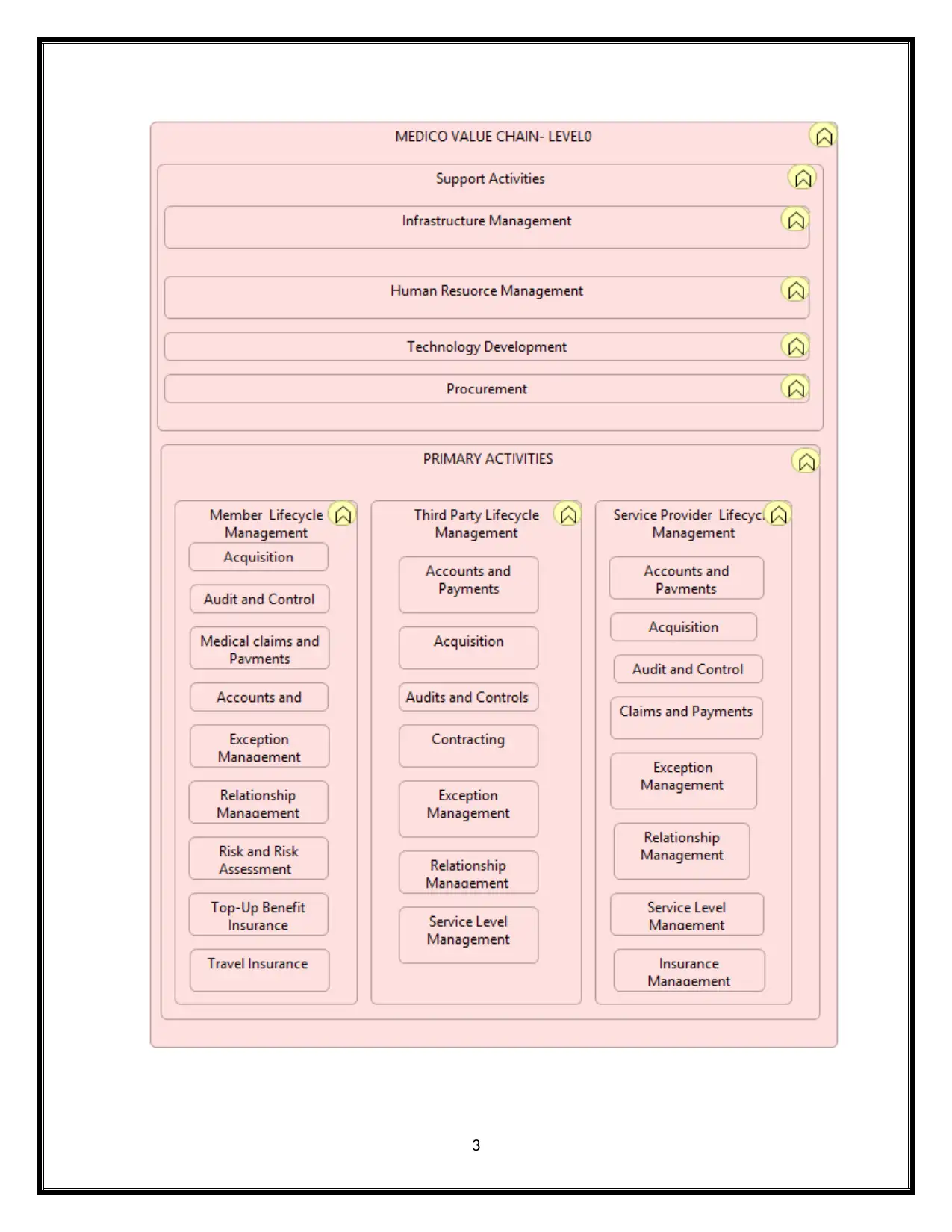
Level 0: MediCo’s Value Chain
The core business functions are subdivided into three member lifecycle management (MLM),
third-party lifecycle management (TLM) and service provider lifecycle management (SLM) and
particular activities that is to be done are being allotted to each actors. Medical claims and
payments, relationship management and other top-up benefits are under the MLM. Audit control
and contract are under the TLM, insurance management and service level management are
provided by the SLM.
2
In the AS-IS structure there are 2 actors
1. Member
The member handle all the functions that is related to the member lifecycle
management
2. Third-party
The third-party handles the functions of the third-party management.
2.1Viewpoints and Discussion per Stakeholder
The viewpoint-oriented method supports to know the issues. The key intension of the
viewpoints is to provide a quick guide to various stakeholders to different parts of the AS-IS
Architecture Diagram. Every views can be presented by using the language and notation suitable
to the knowledge, proficiency, and concerns of the projected leadership. The necessities are
considered as the viewpoints.
As-Is (baseline) architecture diagrams
Level 0: MediCo’s Value Chain
The core business functions are subdivided into three member lifecycle management (MLM),
third-party lifecycle management (TLM) and service provider lifecycle management (SLM) and
particular activities that is to be done are being allotted to each actors. Medical claims and
payments, relationship management and other top-up benefits are under the MLM. Audit control
and contract are under the TLM, insurance management and service level management are
provided by the SLM.
2

3
⊘ This is a preview!⊘
Do you want full access?
Subscribe today to unlock all pages.

Trusted by 1+ million students worldwide

Source file is attached here.
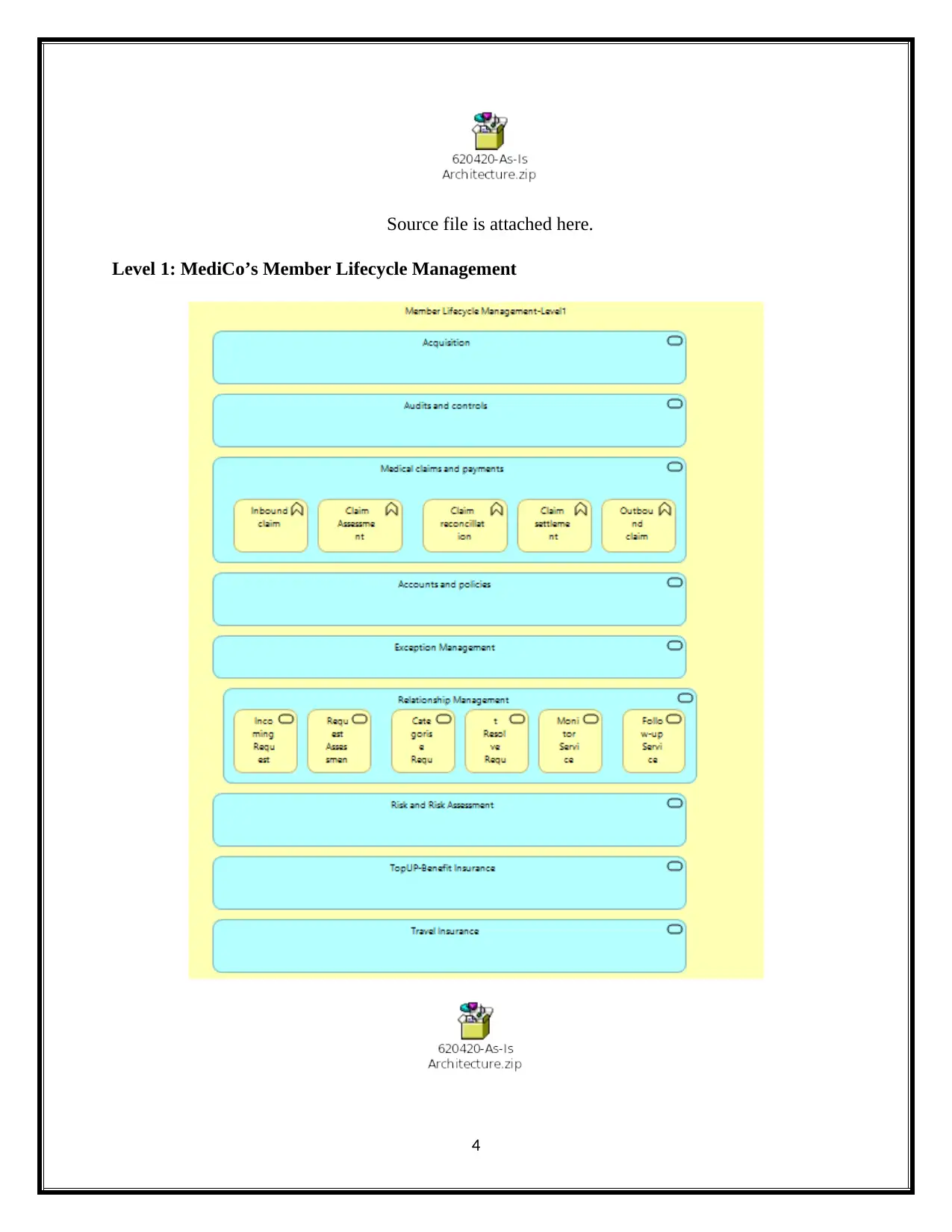
Level 1: MediCo’s Member Lifecycle Management
4
Level 1: MediCo’s Member Lifecycle Management
4
Paraphrase This Document
Need a fresh take? Get an instant paraphrase of this document with our AI Paraphraser

Source file is attached here.
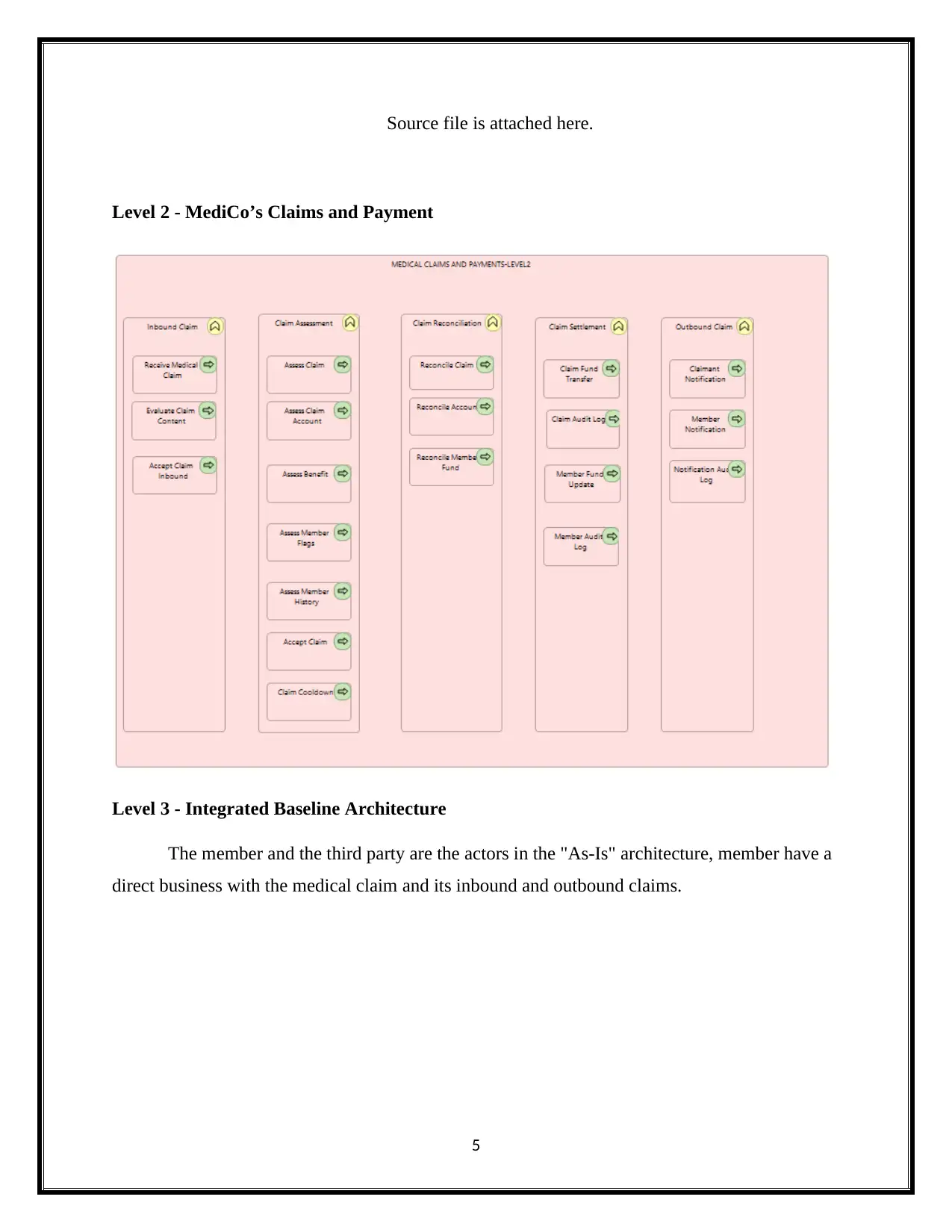
Level 2 - MediCo’s Claims and Payment
Level 3 - Integrated Baseline Architecture
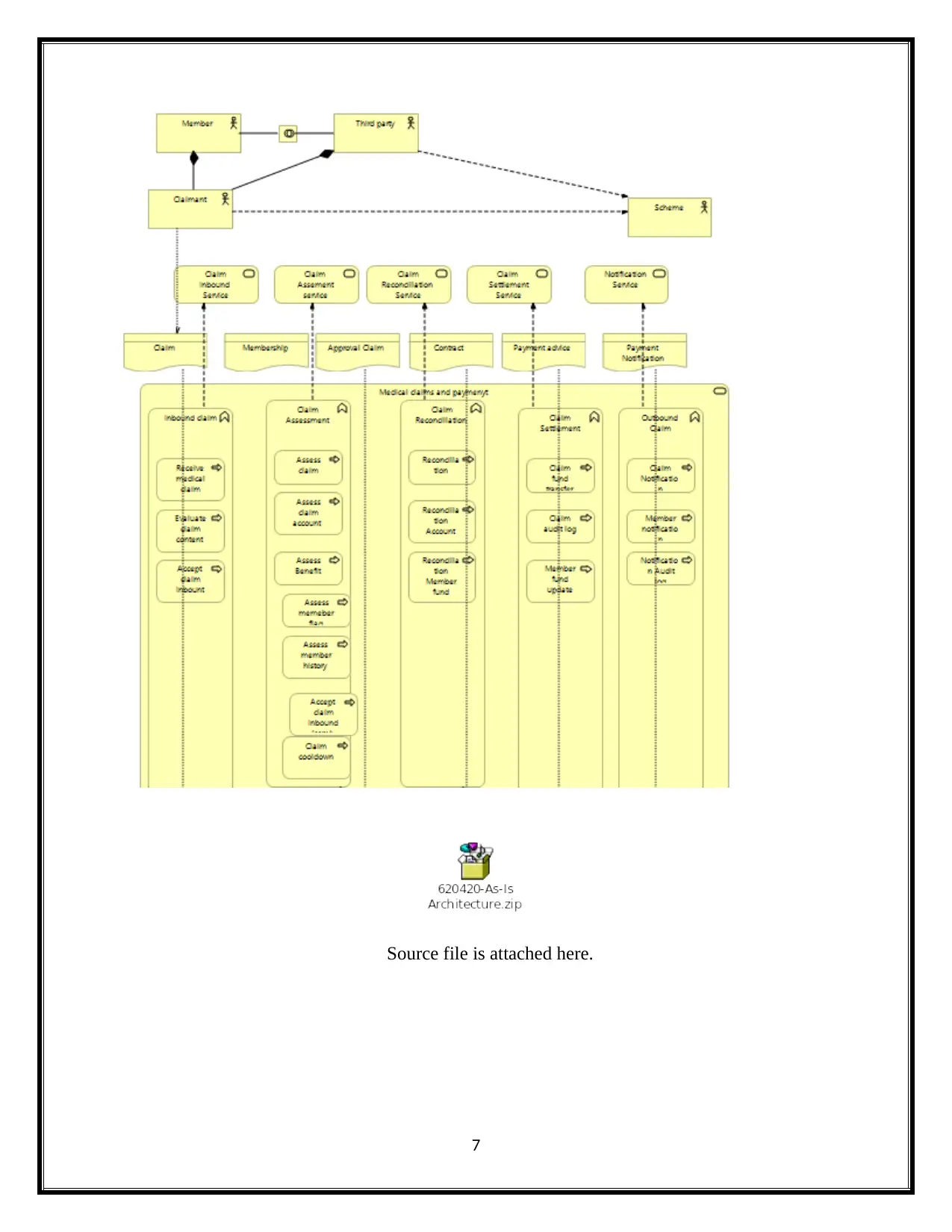
The member and the third party are the actors in the "As-Is" architecture, member have a
direct business with the medical claim and its inbound and outbound claims.
5
Level 2 - MediCo’s Claims and Payment
Level 3 - Integrated Baseline Architecture
The member and the third party are the actors in the "As-Is" architecture, member have a
direct business with the medical claim and its inbound and outbound claims.
5

Source file is attached here.
Level 3 - Baseline Business Architecture
6
Level 3 - Baseline Business Architecture
6
⊘ This is a preview!⊘
Do you want full access?
Subscribe today to unlock all pages.

Trusted by 1+ million students worldwide

Source file is attached here.
7
7
Paraphrase This Document
Need a fresh take? Get an instant paraphrase of this document with our AI Paraphraser

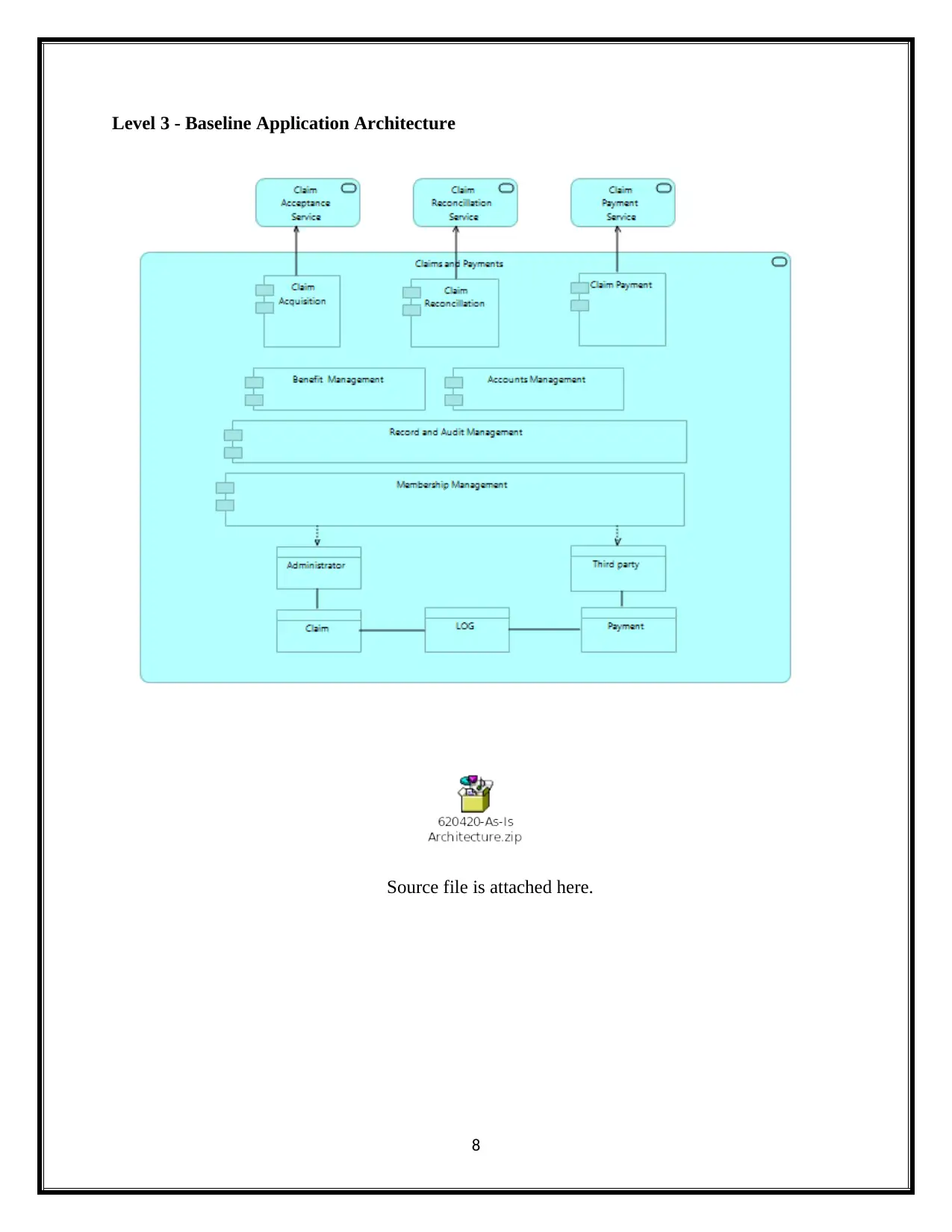
Level 3 - Baseline Application Architecture
Source file is attached here.
8
Source file is attached here.
8

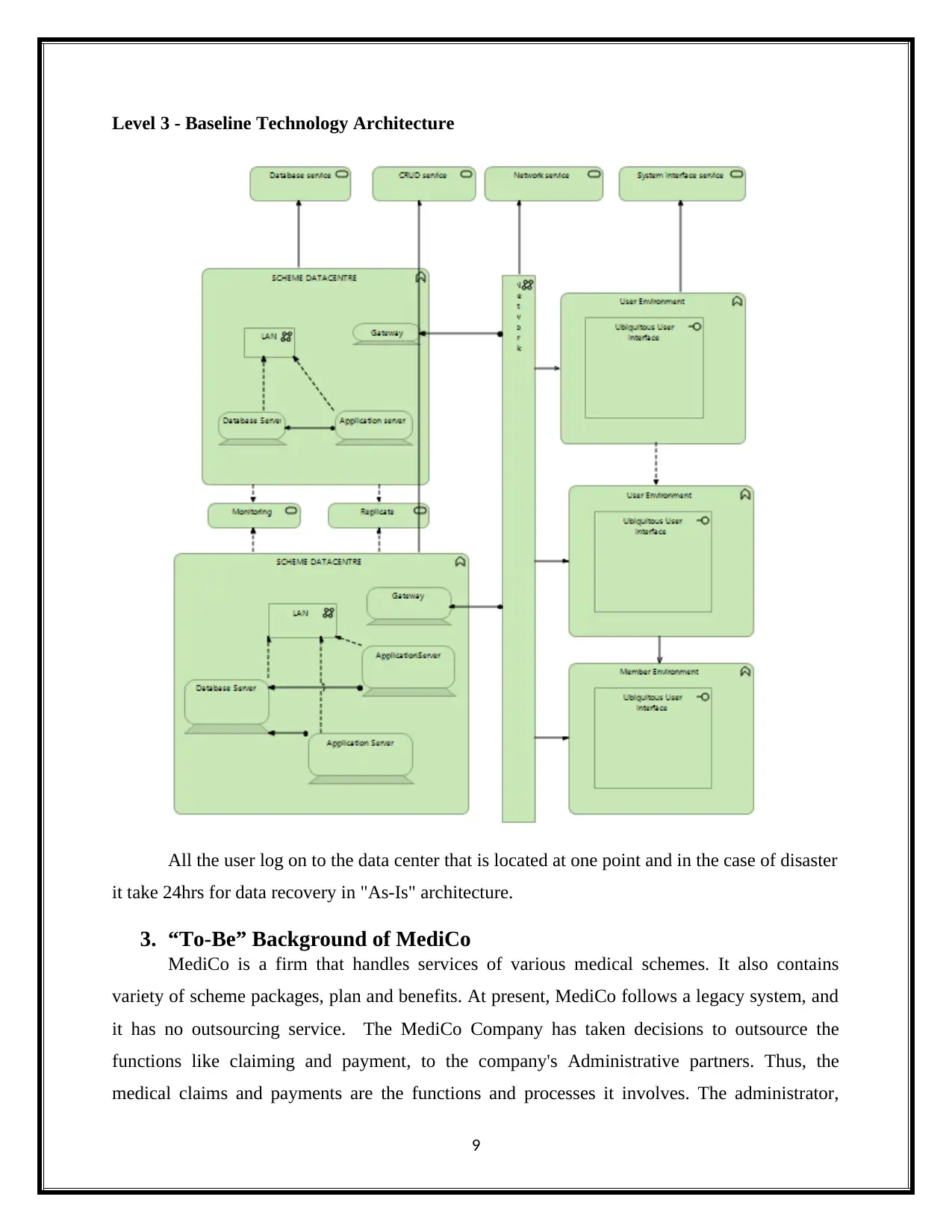
Level 3 - Baseline Technology Architecture
All the user log on to the data center that is located at one point and in the case of disaster
it take 24hrs for data recovery in "As-Is" architecture.
3. “To-Be” Background of MediCo
MediCo is a firm that handles services of various medical schemes. It also contains
variety of scheme packages, plan and benefits. At present, MediCo follows a legacy system, and
it has no outsourcing service. The MediCo Company has taken decisions to outsource the
functions like claiming and payment, to the company's Administrative partners. Thus, the
medical claims and payments are the functions and processes it involves. The administrator,
9
All the user log on to the data center that is located at one point and in the case of disaster
it take 24hrs for data recovery in "As-Is" architecture.
3. “To-Be” Background of MediCo
MediCo is a firm that handles services of various medical schemes. It also contains
variety of scheme packages, plan and benefits. At present, MediCo follows a legacy system, and
it has no outsourcing service. The MediCo Company has taken decisions to outsource the
functions like claiming and payment, to the company's Administrative partners. Thus, the
medical claims and payments are the functions and processes it involves. The administrator,
9
⊘ This is a preview!⊘
Do you want full access?
Subscribe today to unlock all pages.

Trusted by 1+ million students worldwide
1 out of 29
Related Documents
Your All-in-One AI-Powered Toolkit for Academic Success.
+13062052269
info@desklib.com
Available 24*7 on WhatsApp / Email
Unlock your academic potential
Copyright © 2020–2025 A2Z Services. All Rights Reserved. Developed and managed by ZUCOL.